“No Money” For Working People. Unlimited Money For War And Bailouts. Same System.
So Where Does The Money Actually Come From?

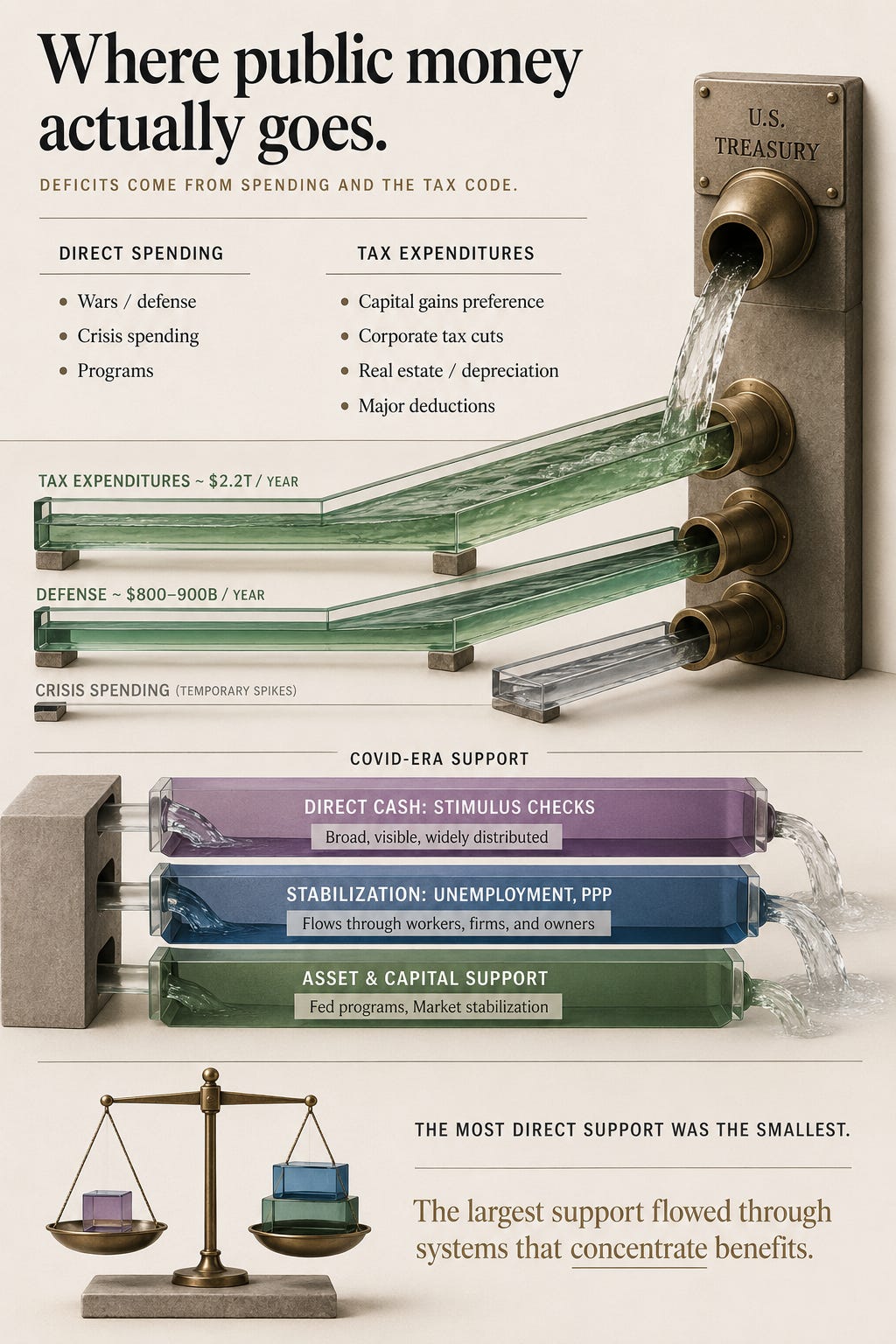
Unlimited Wall Street bailouts…

Unlimited war…

So where does the money actually come from?
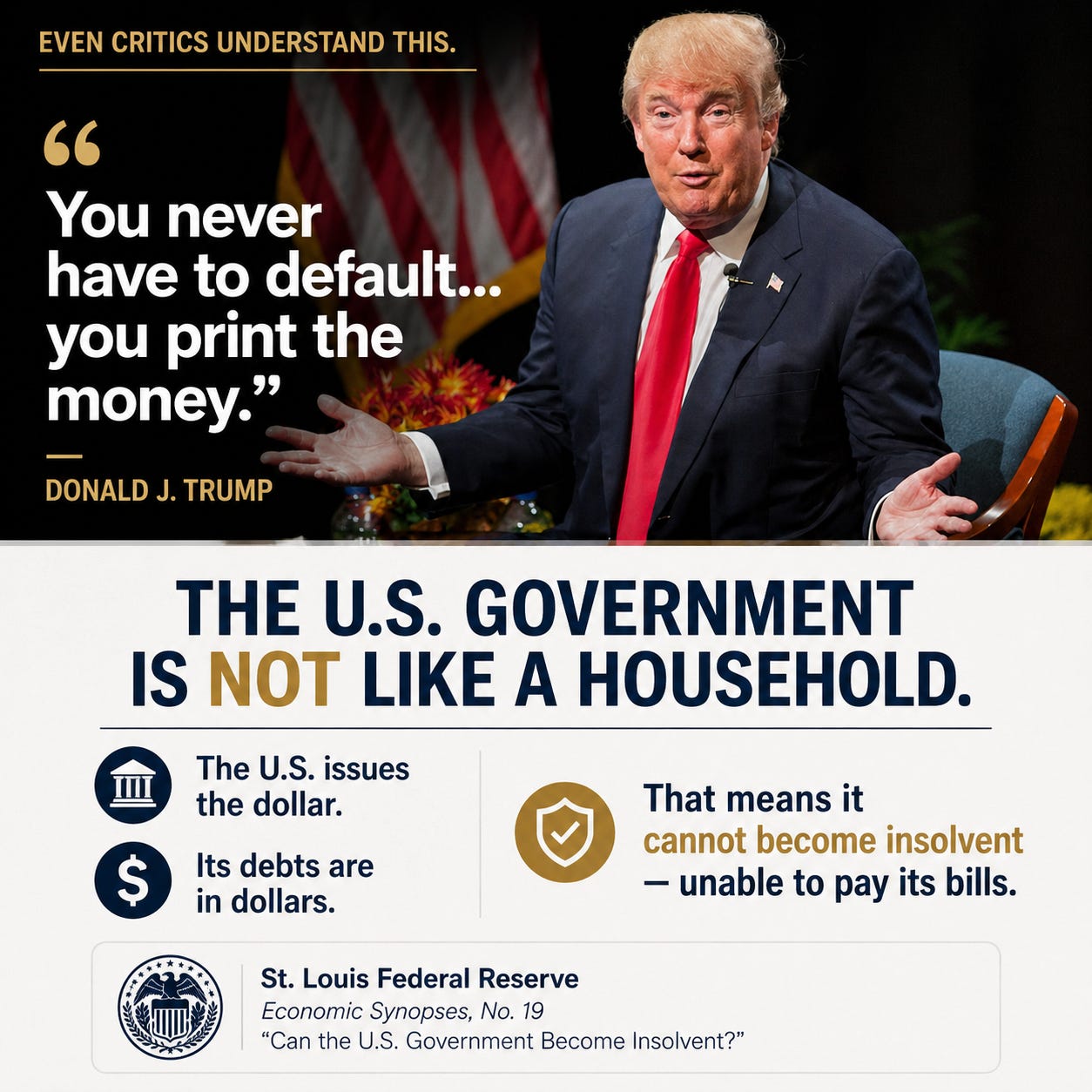
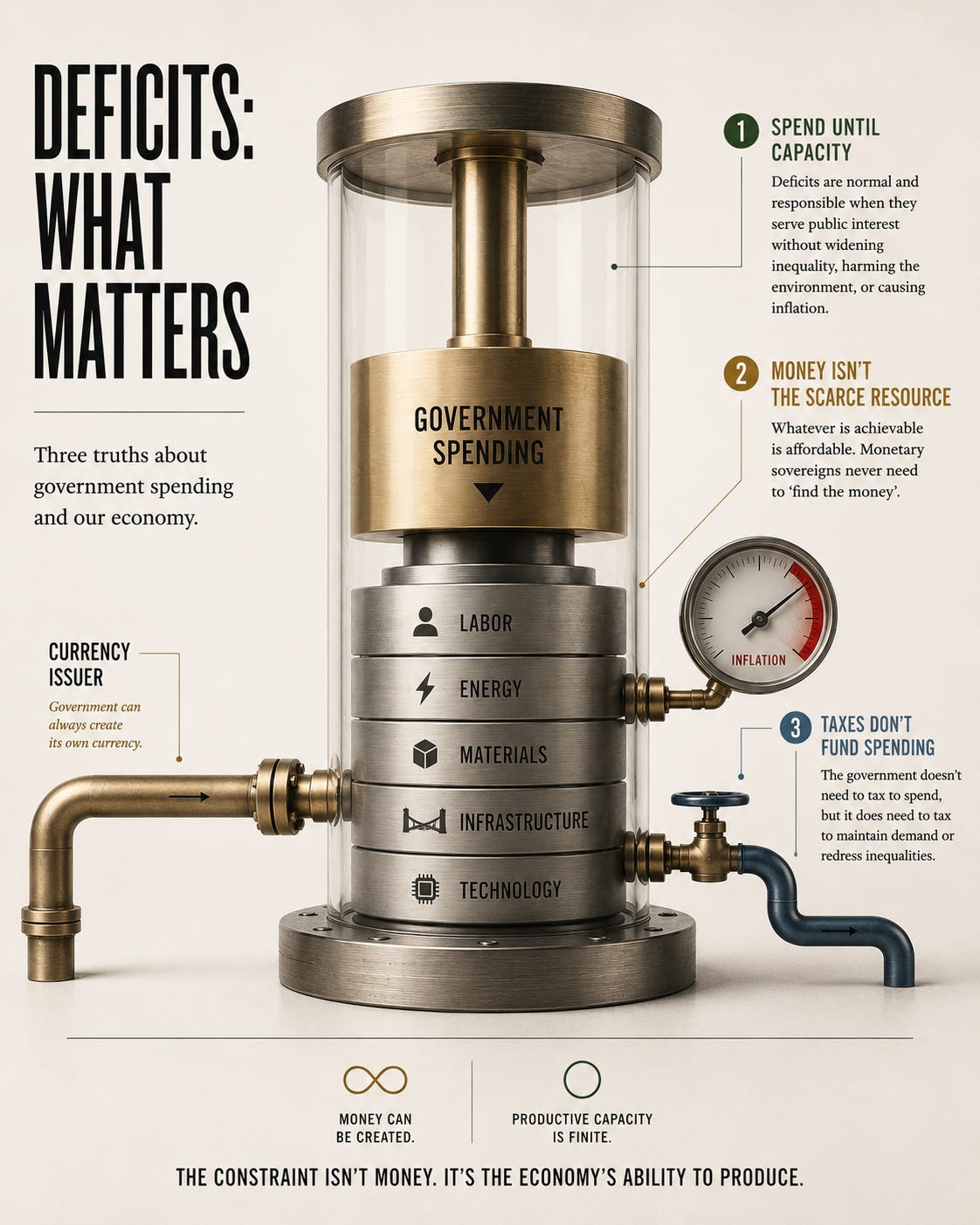
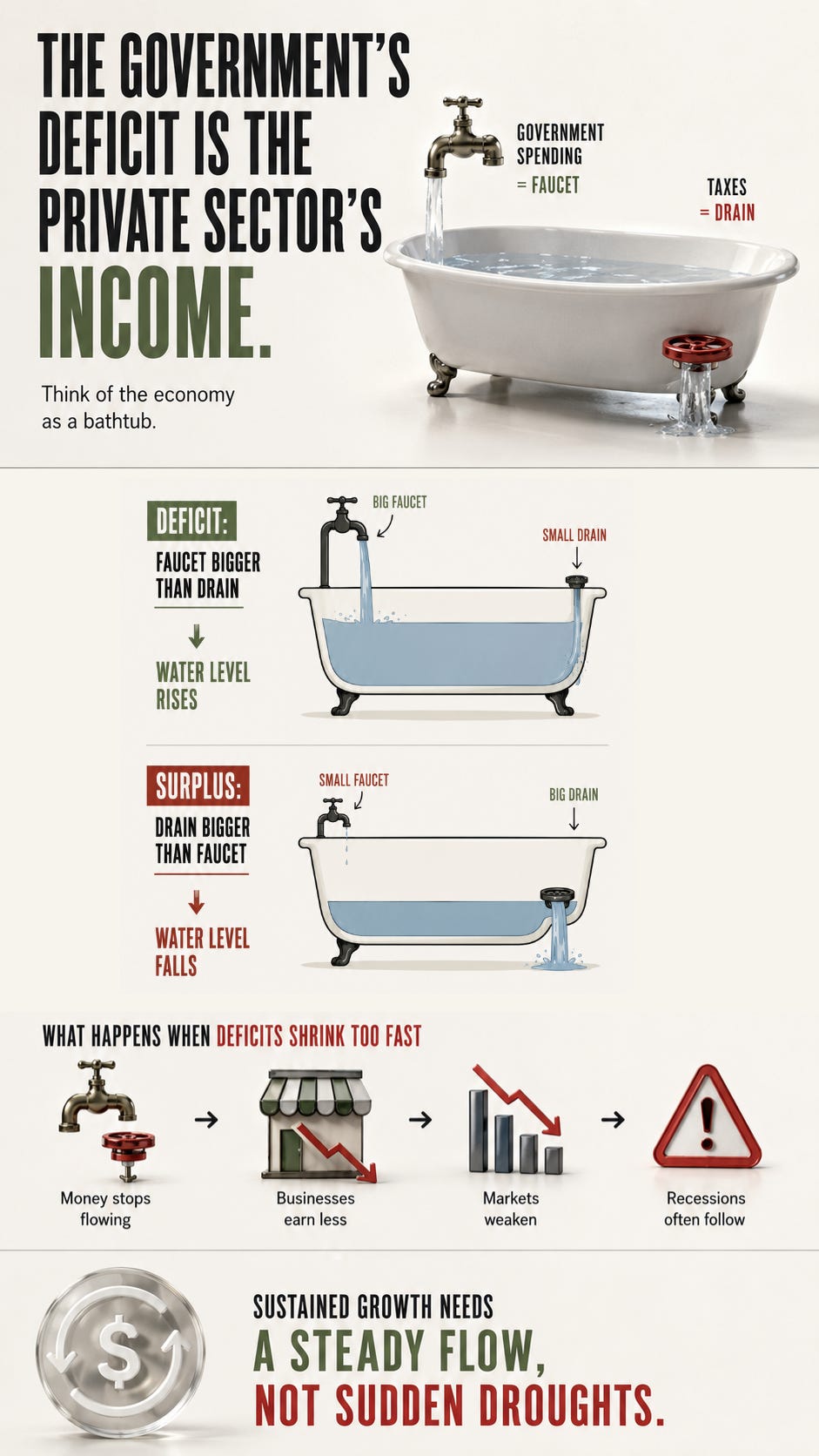
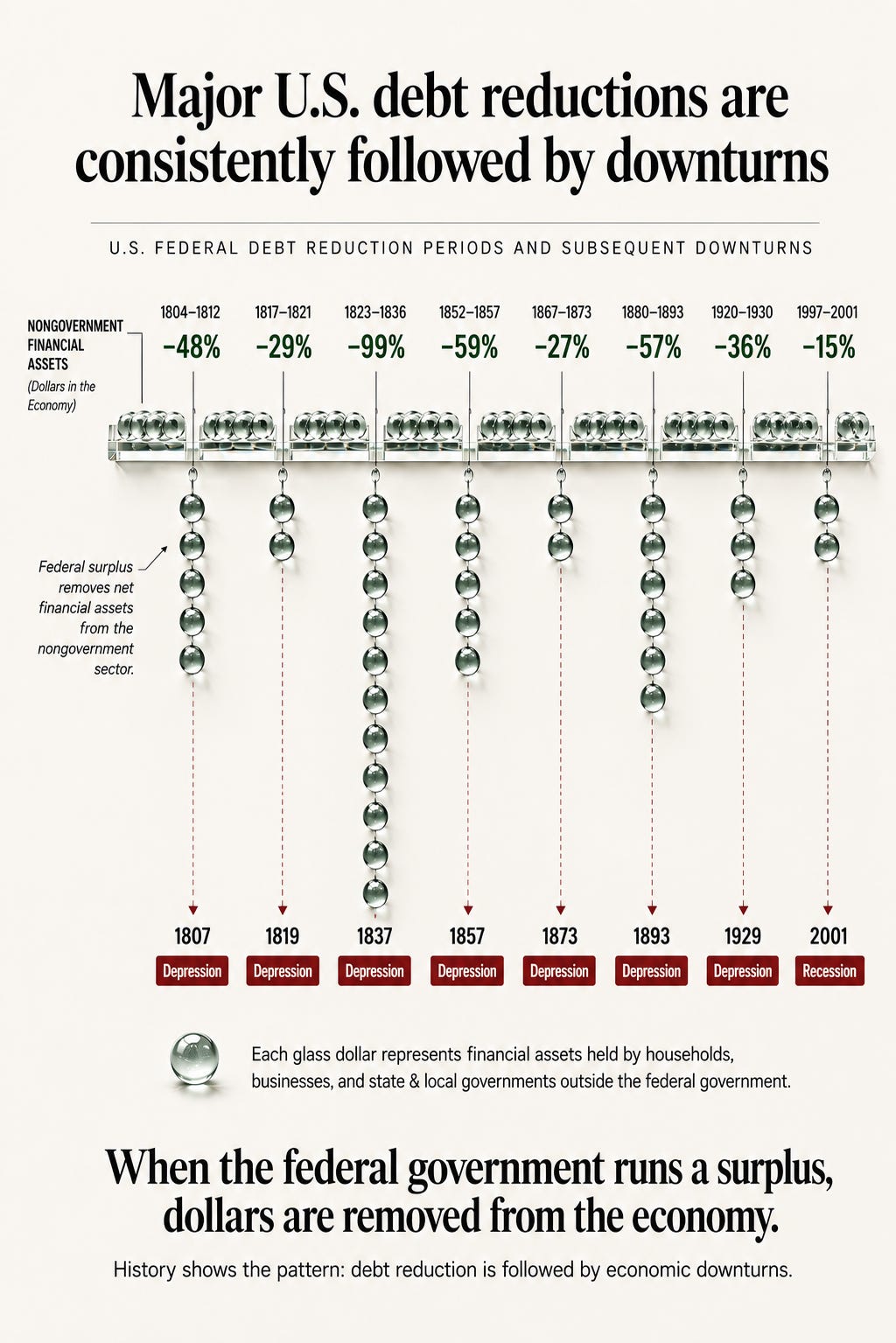
Chapter 1: How Deficit Spending Works
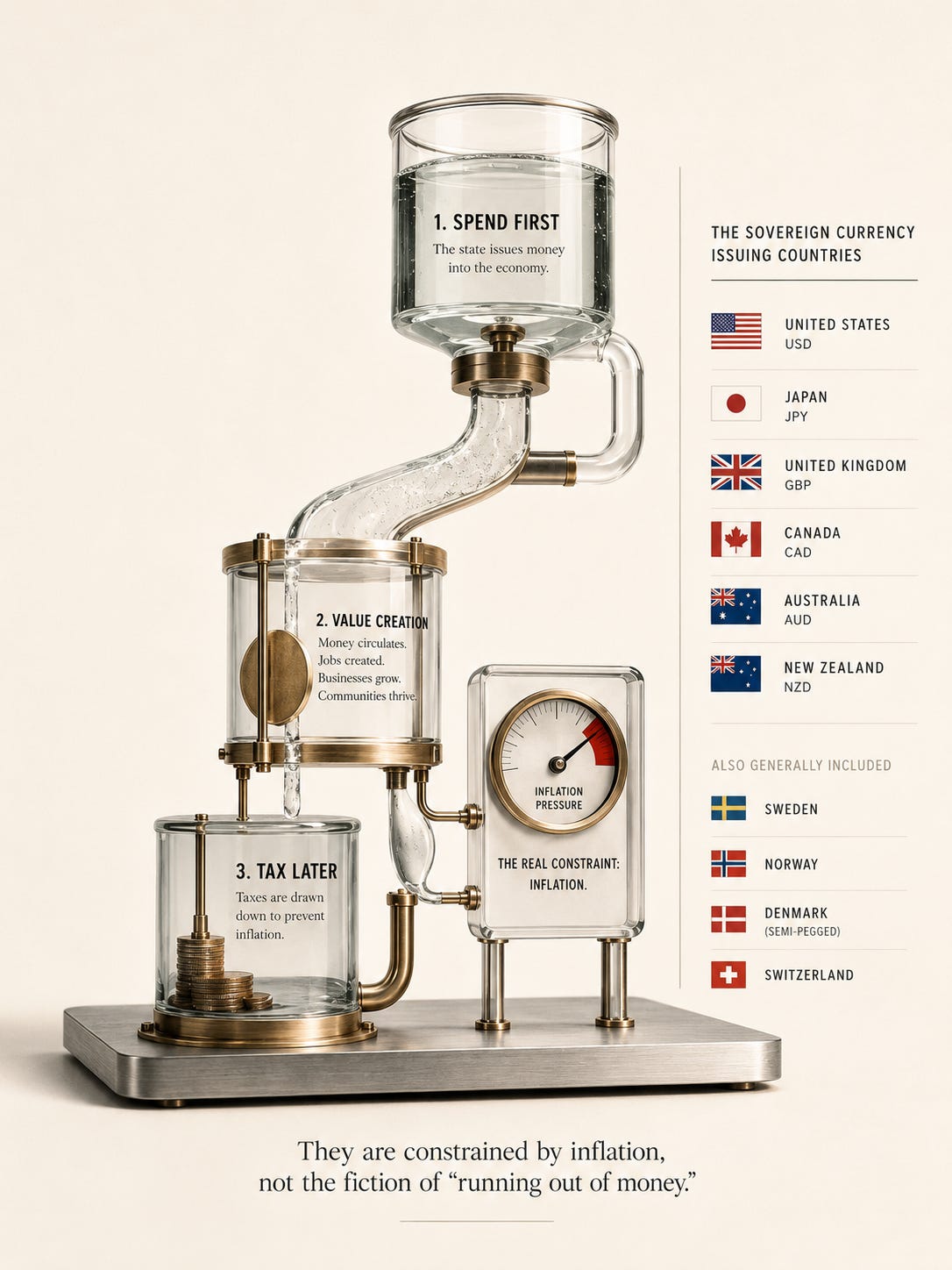
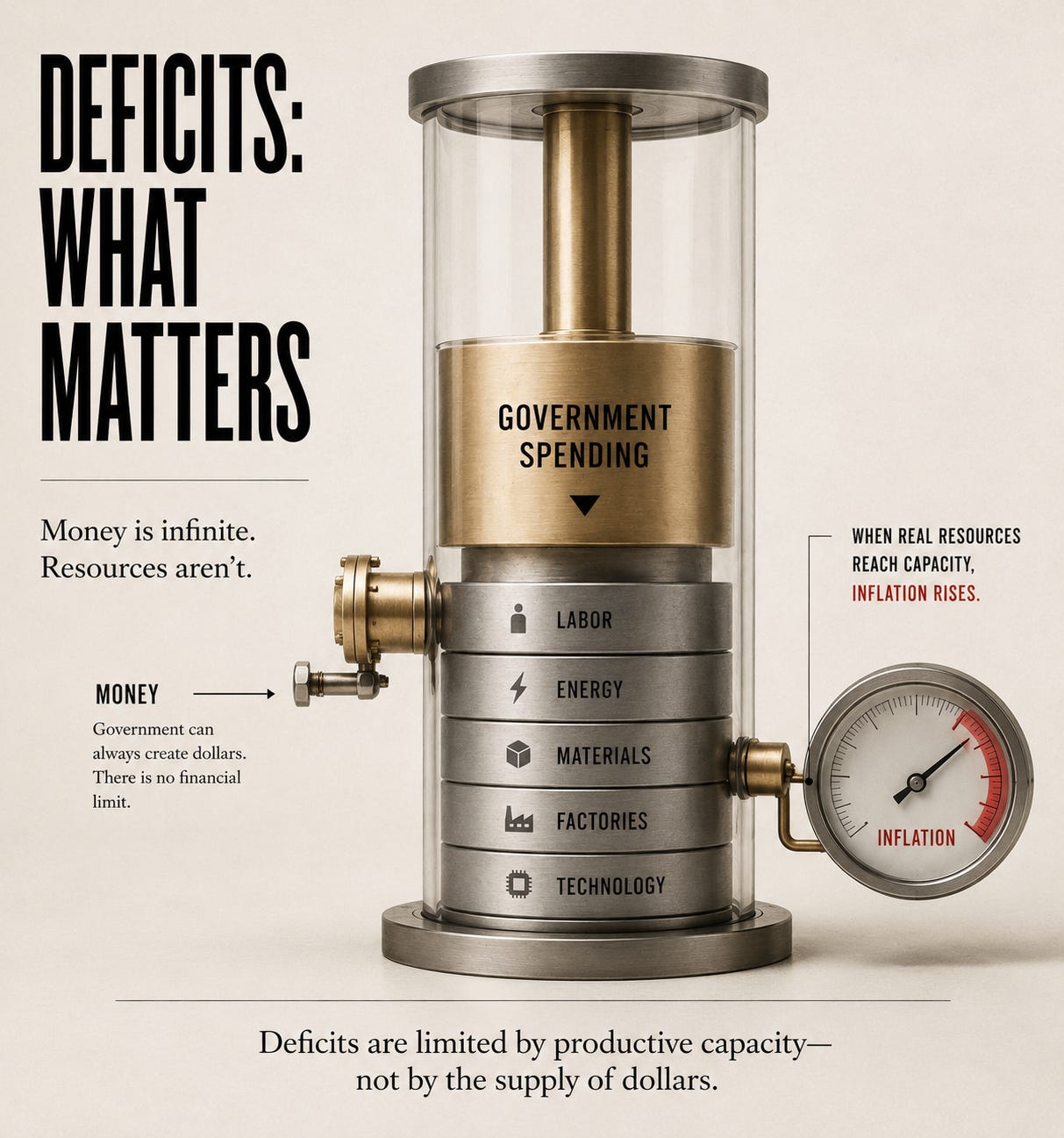
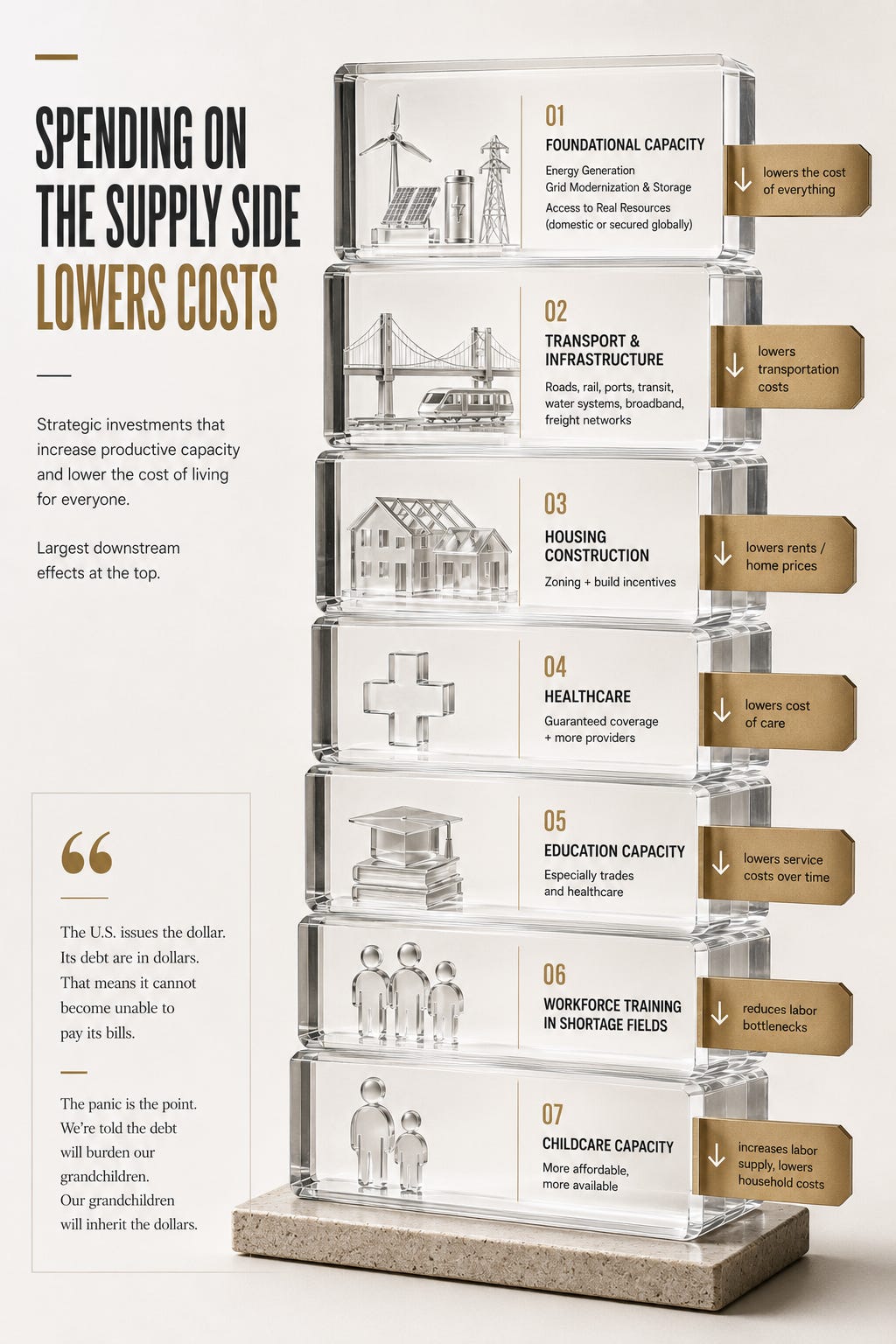
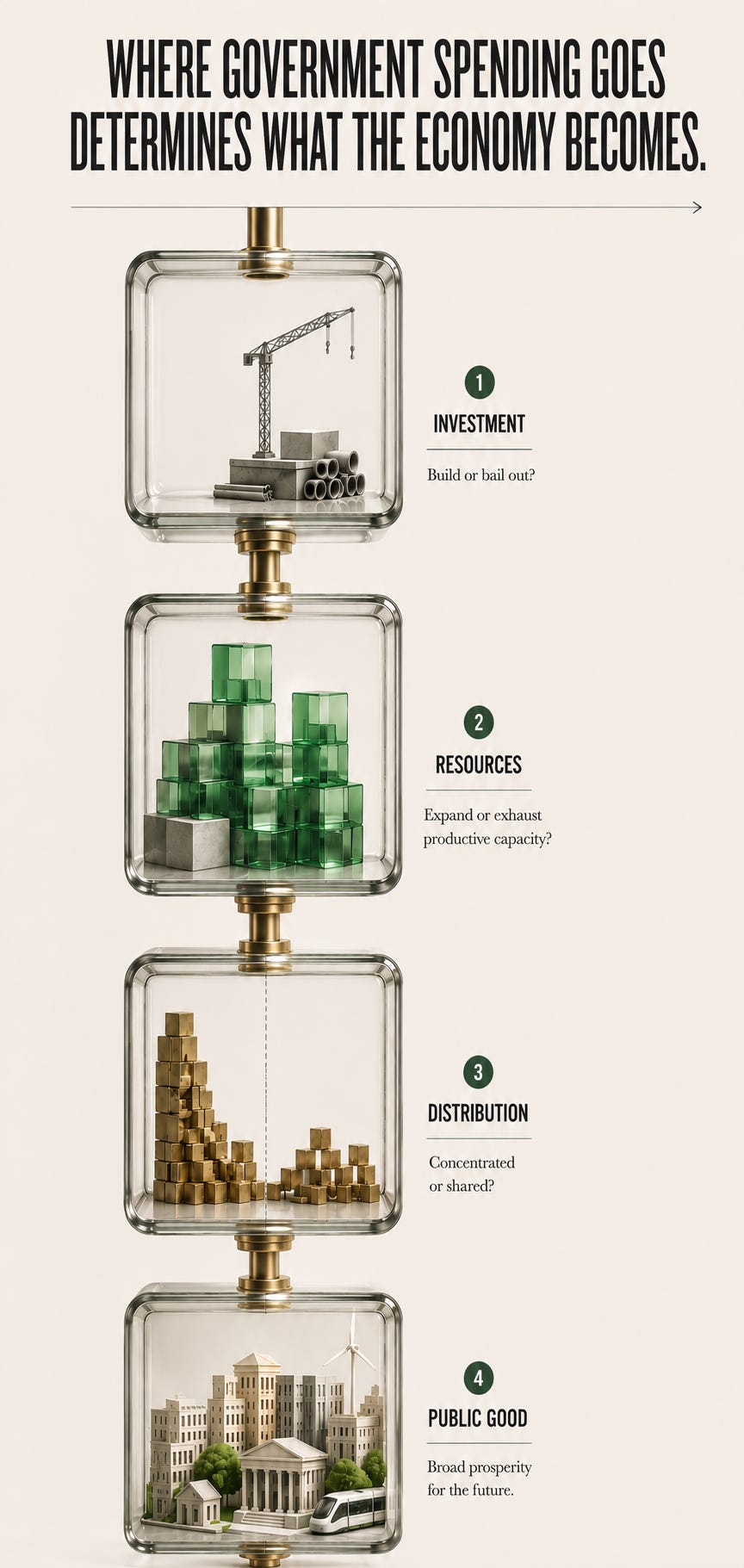
Spending on the supply side can be deflationary. That's the unlock.
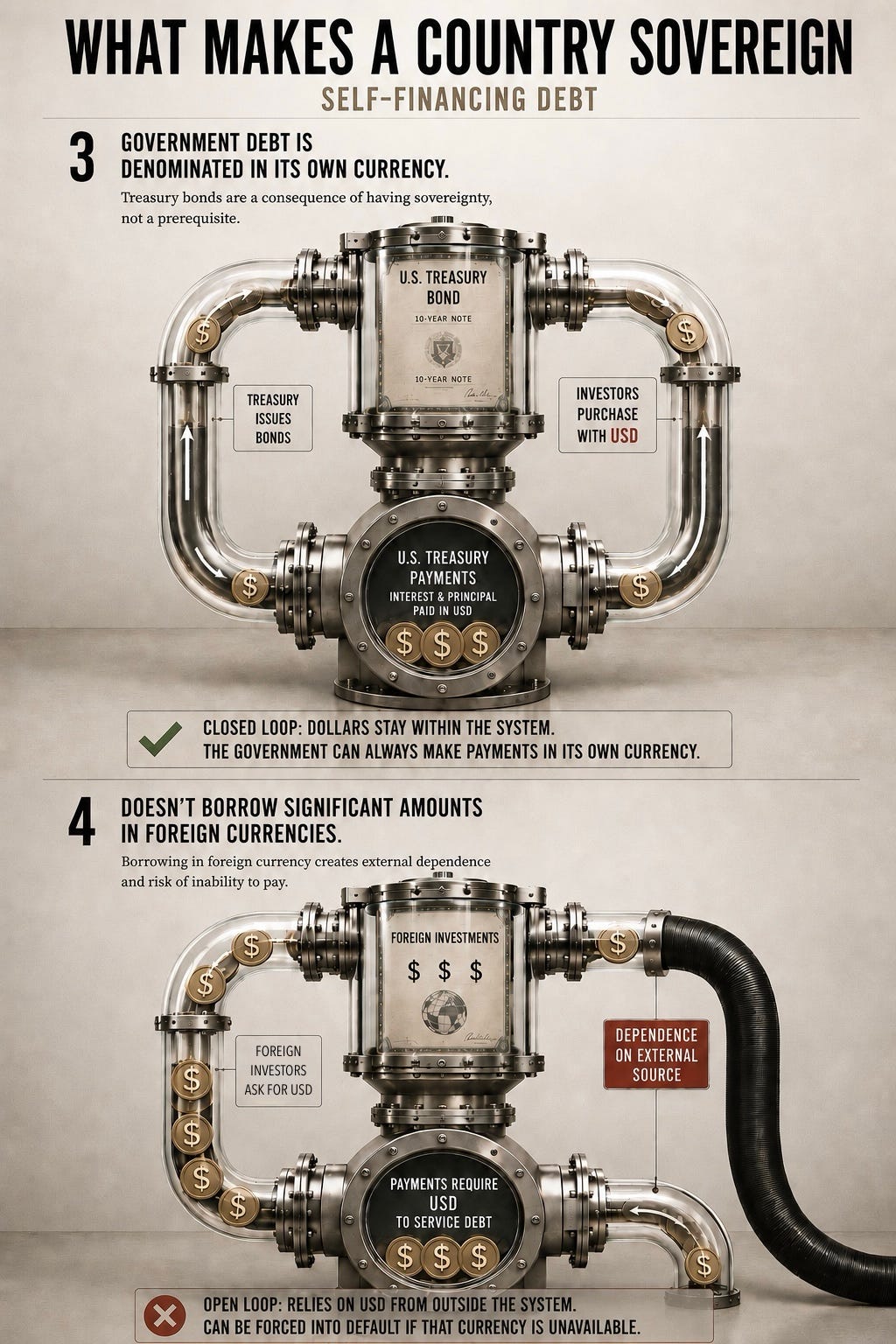
Chapter 2: What Makes A Country Sovereign
Issues its own currency
Taxes in that currency
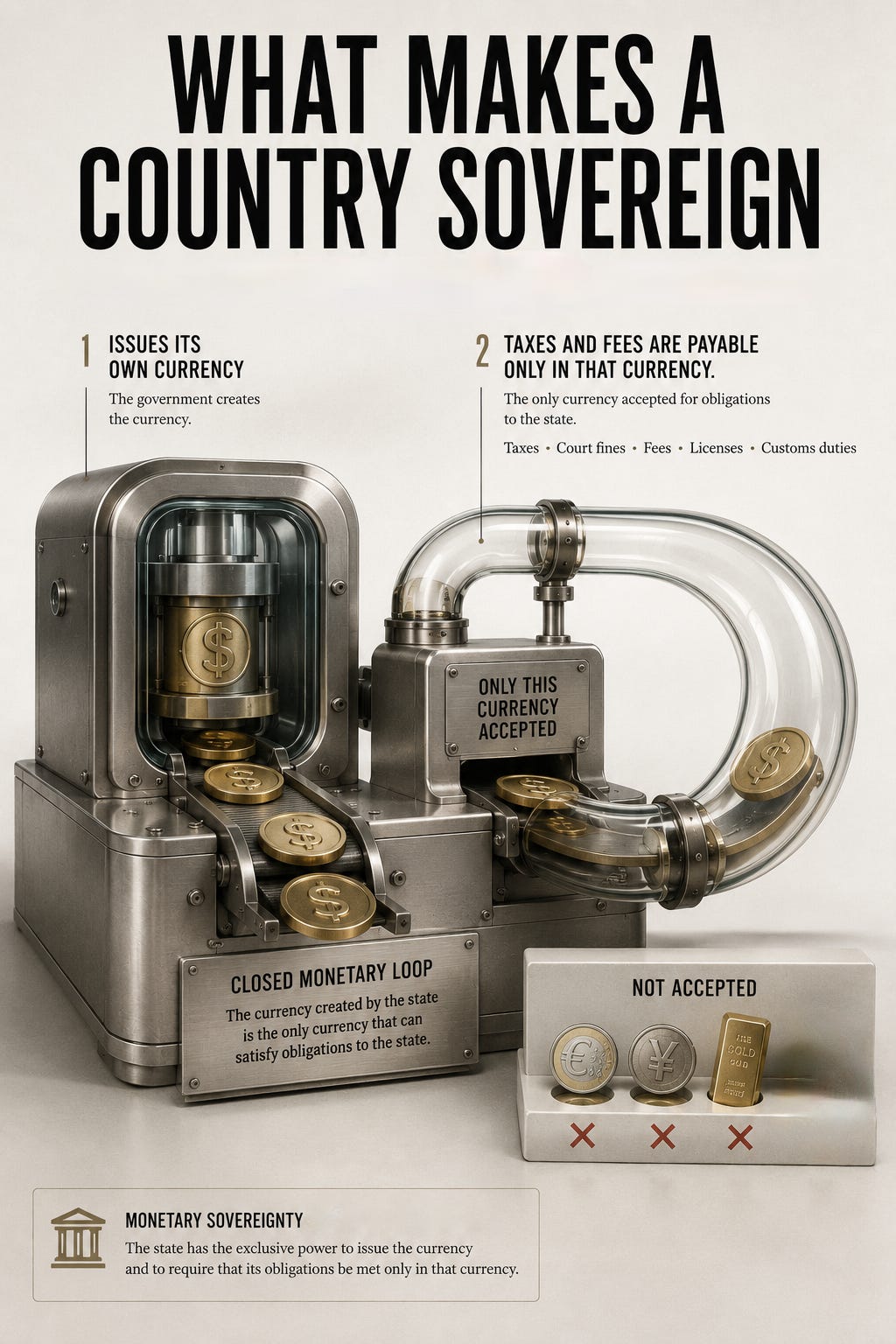
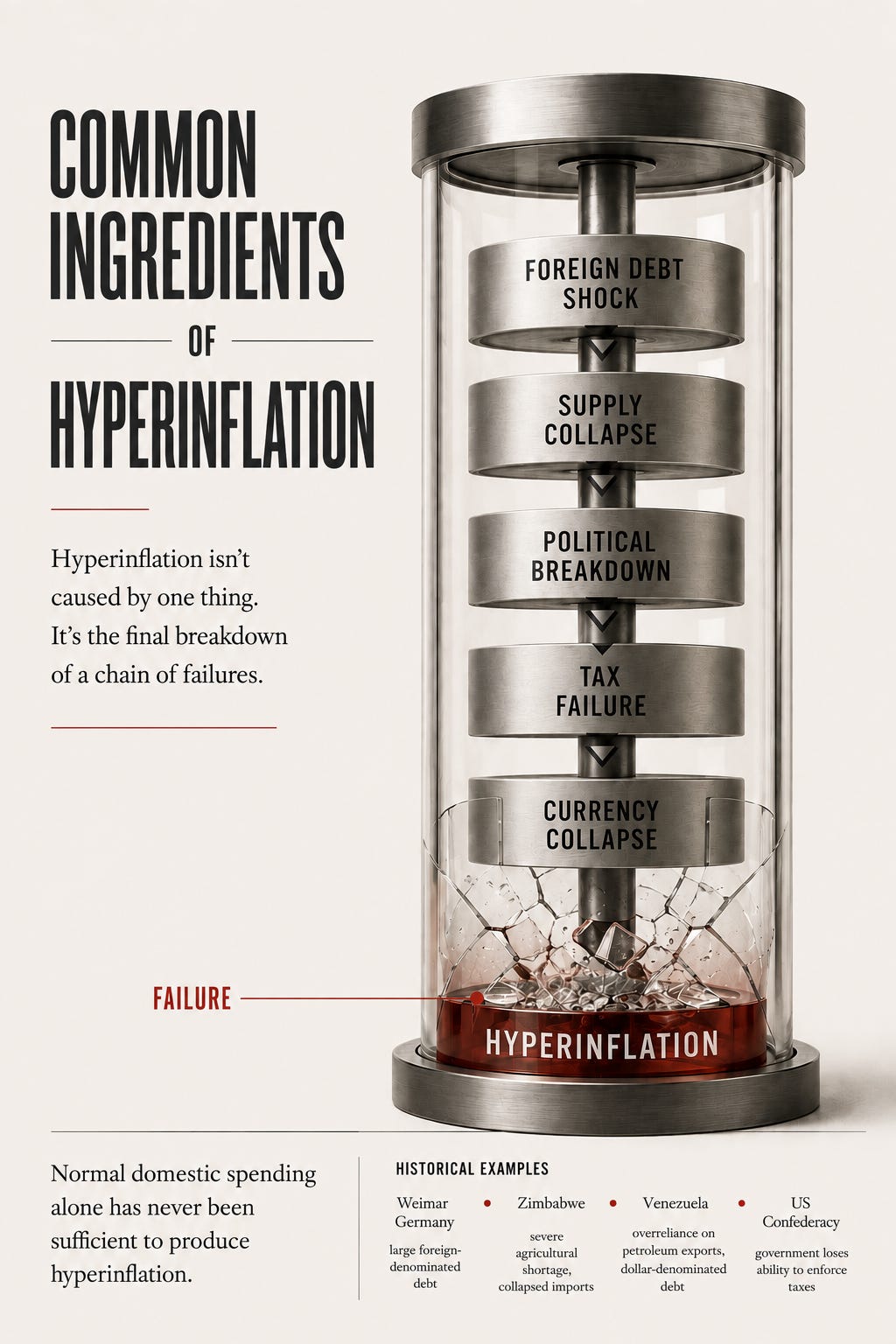
Doesn’t borrow in foreign currencies. It doesn’t borrow what it doesn’t control.
Lets its currency float. Freedom from the chain.
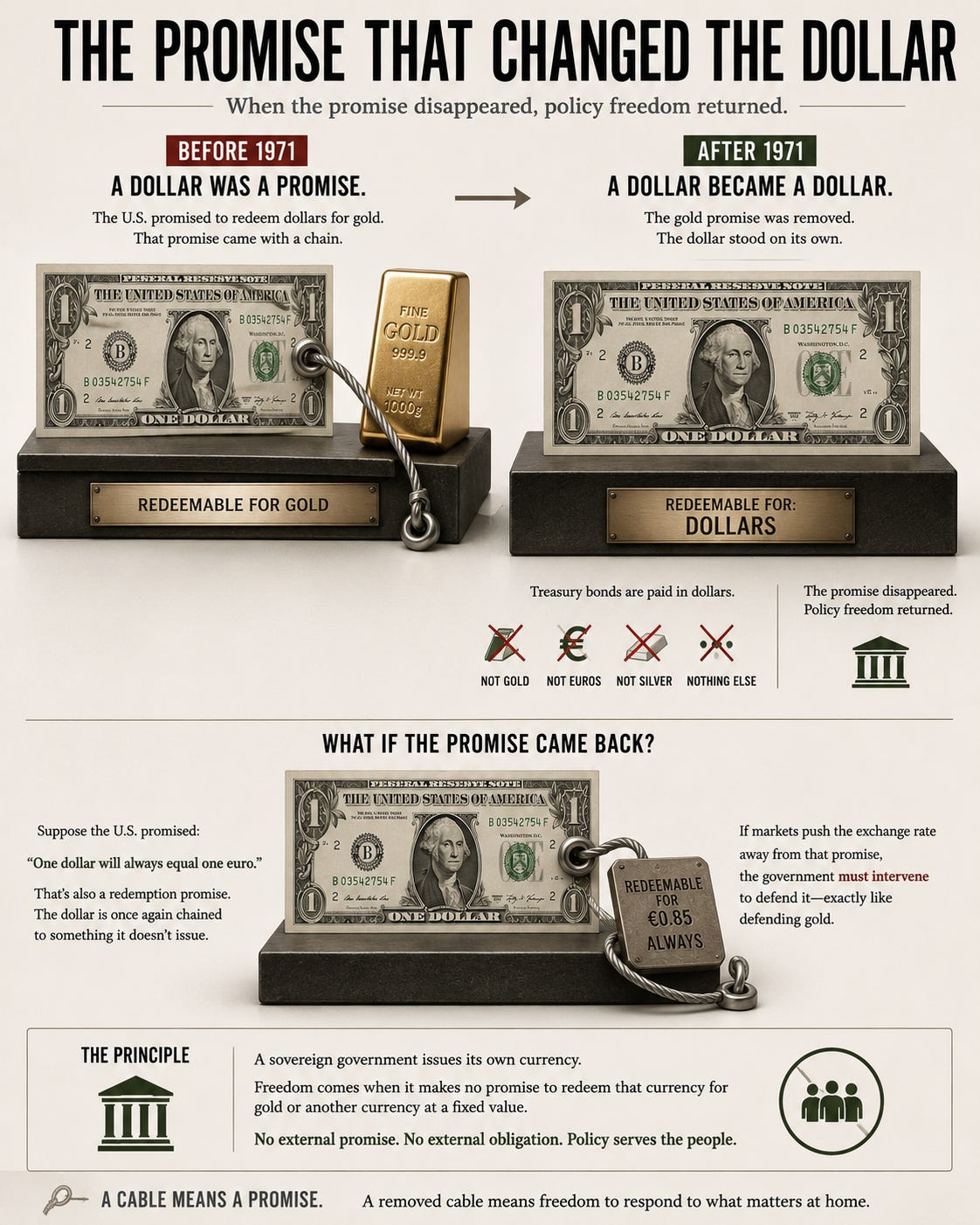
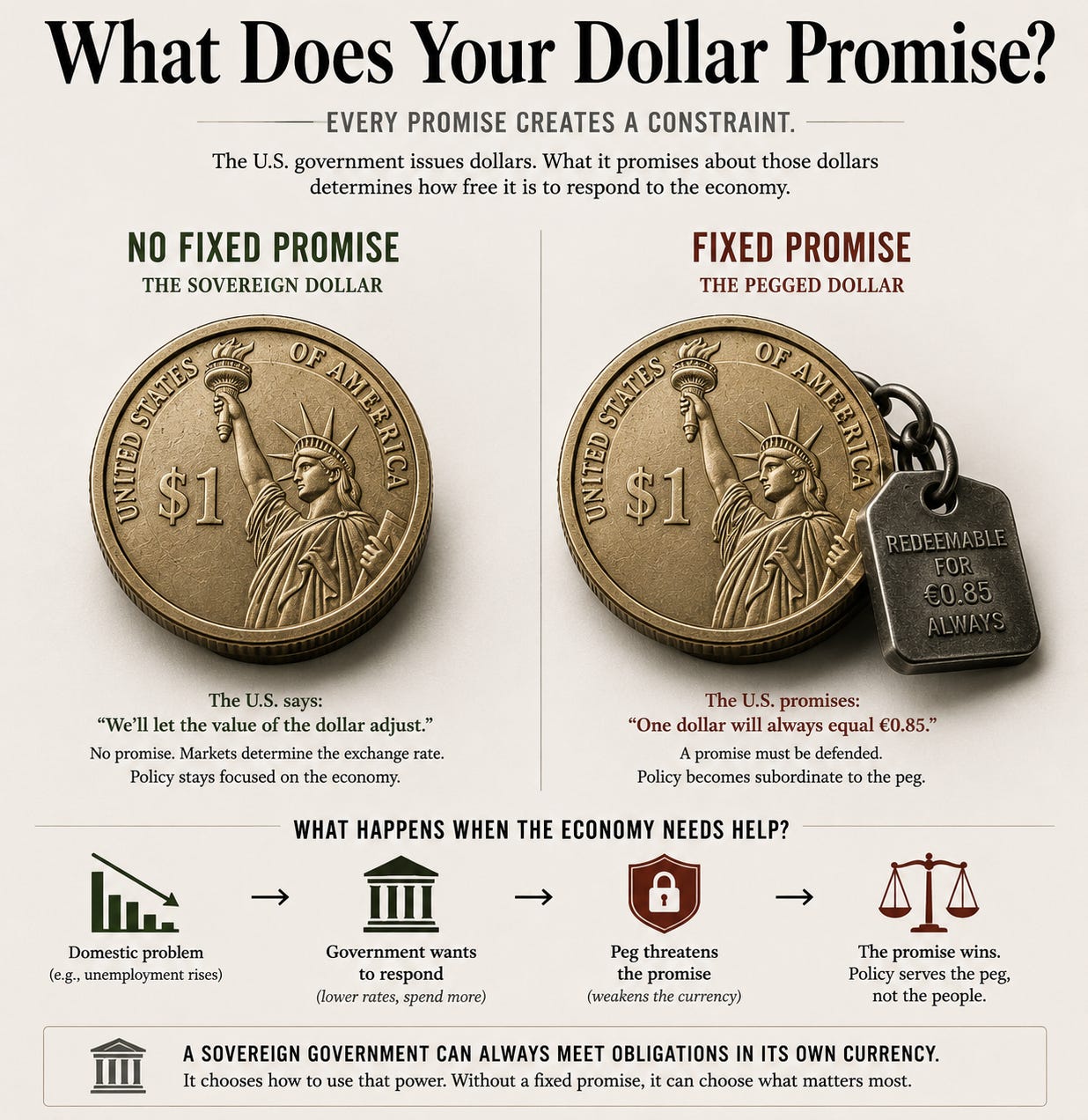
Sovereign countries face another constraint:
Whether the voting method forces power to listen — or just offers voters a choice between traps
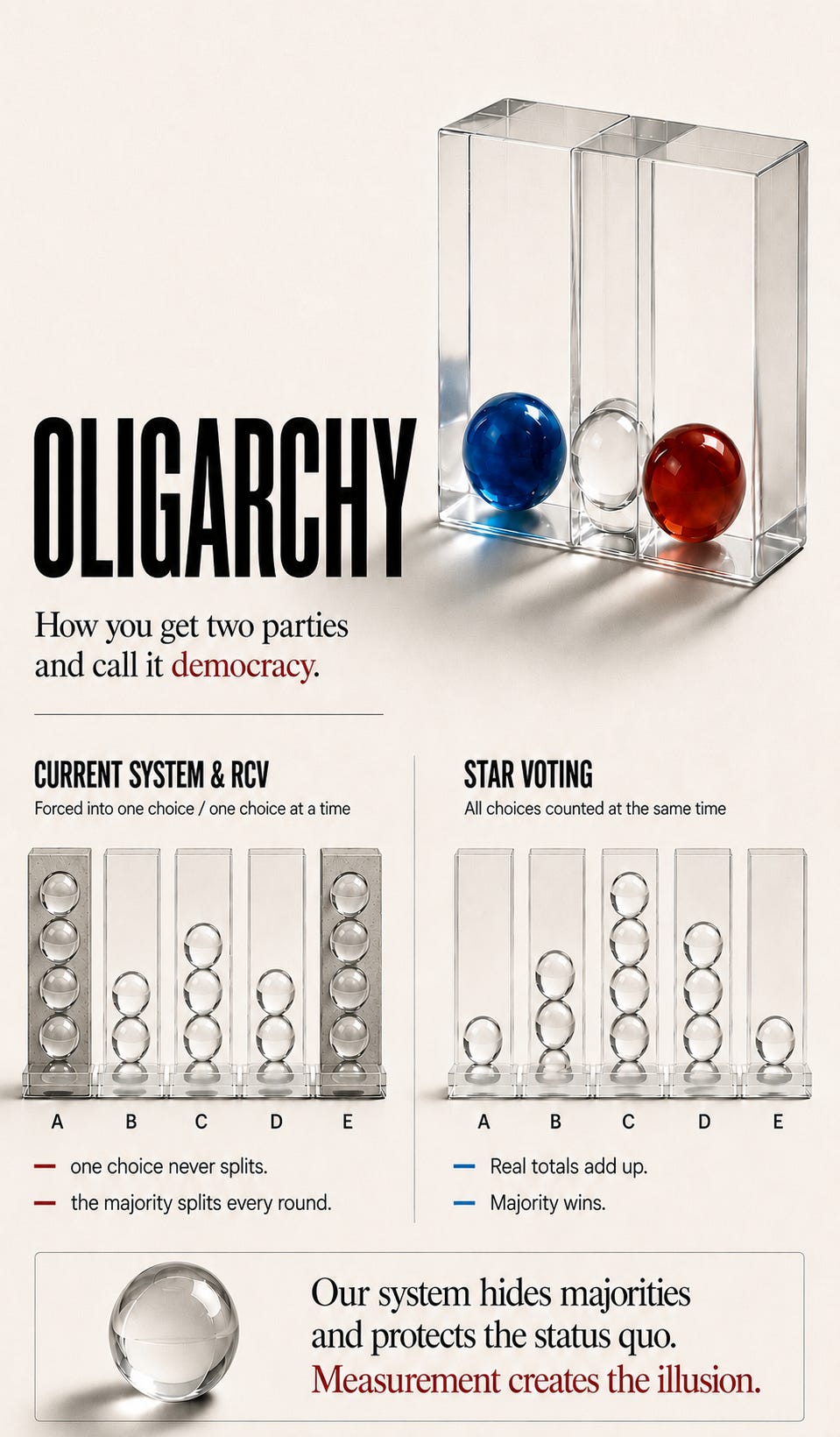
Voting Methods Finally Explained in Plain English

This Isn’t A Culture War. It’s A Cost of Living War.
The Constrained Countries

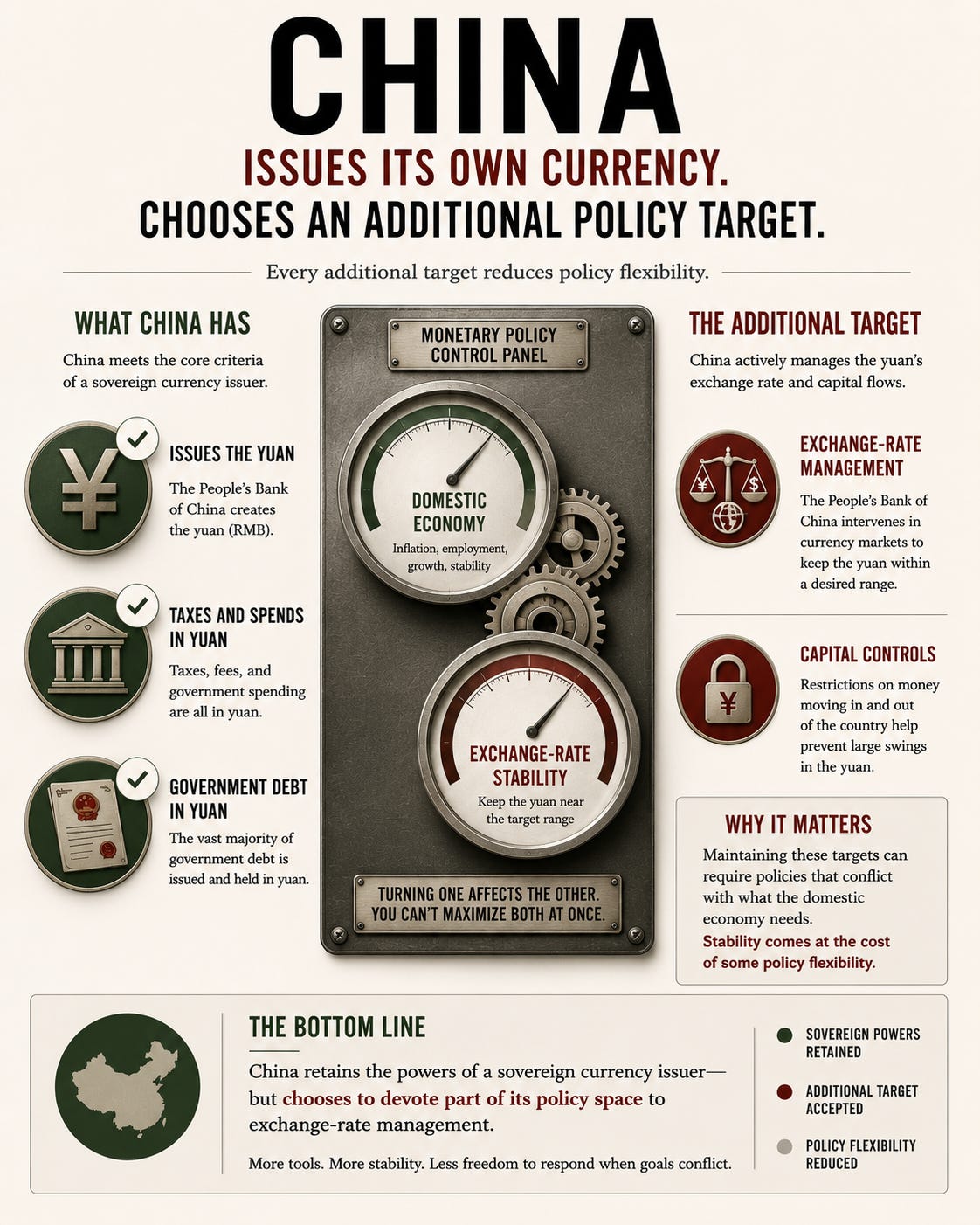
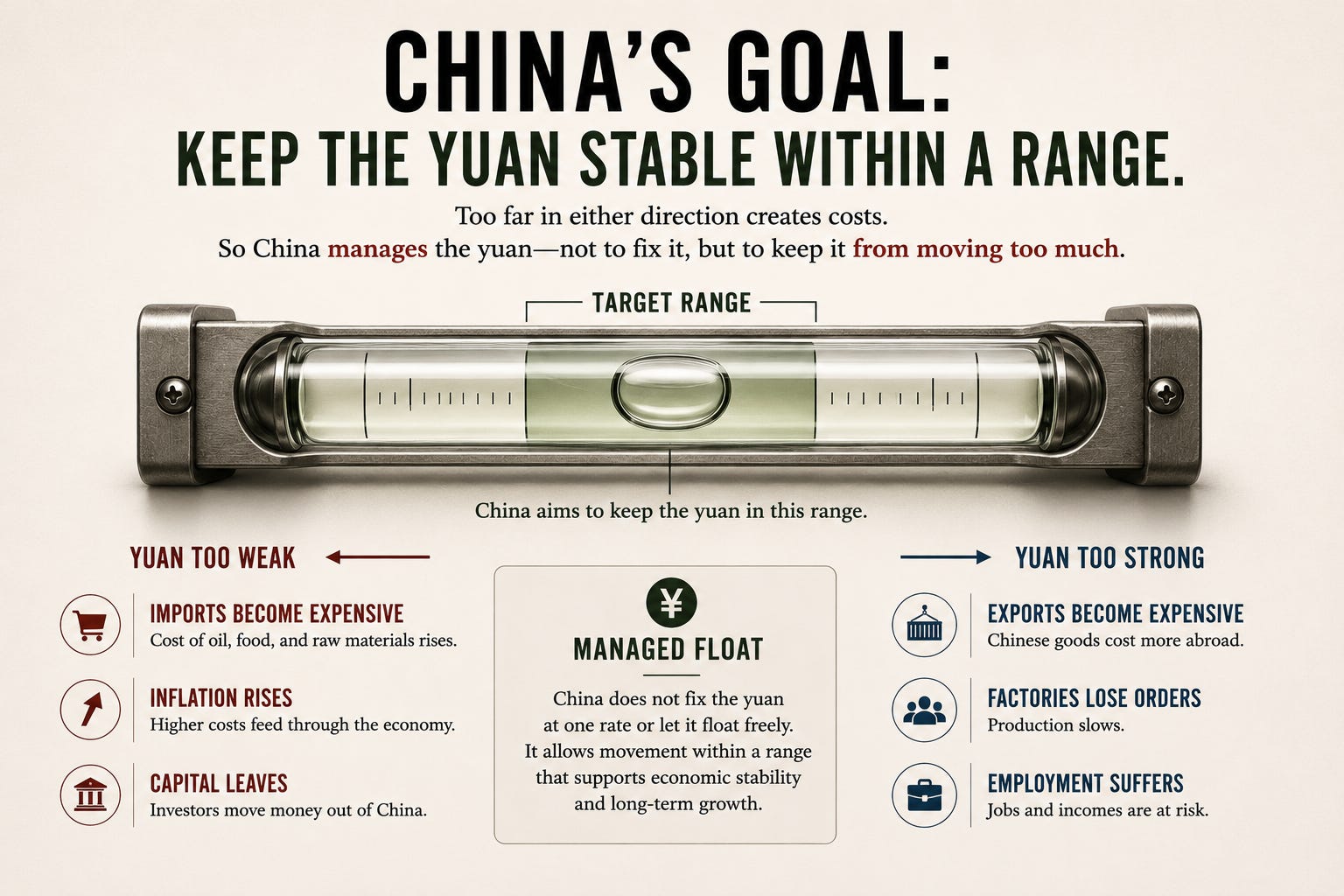
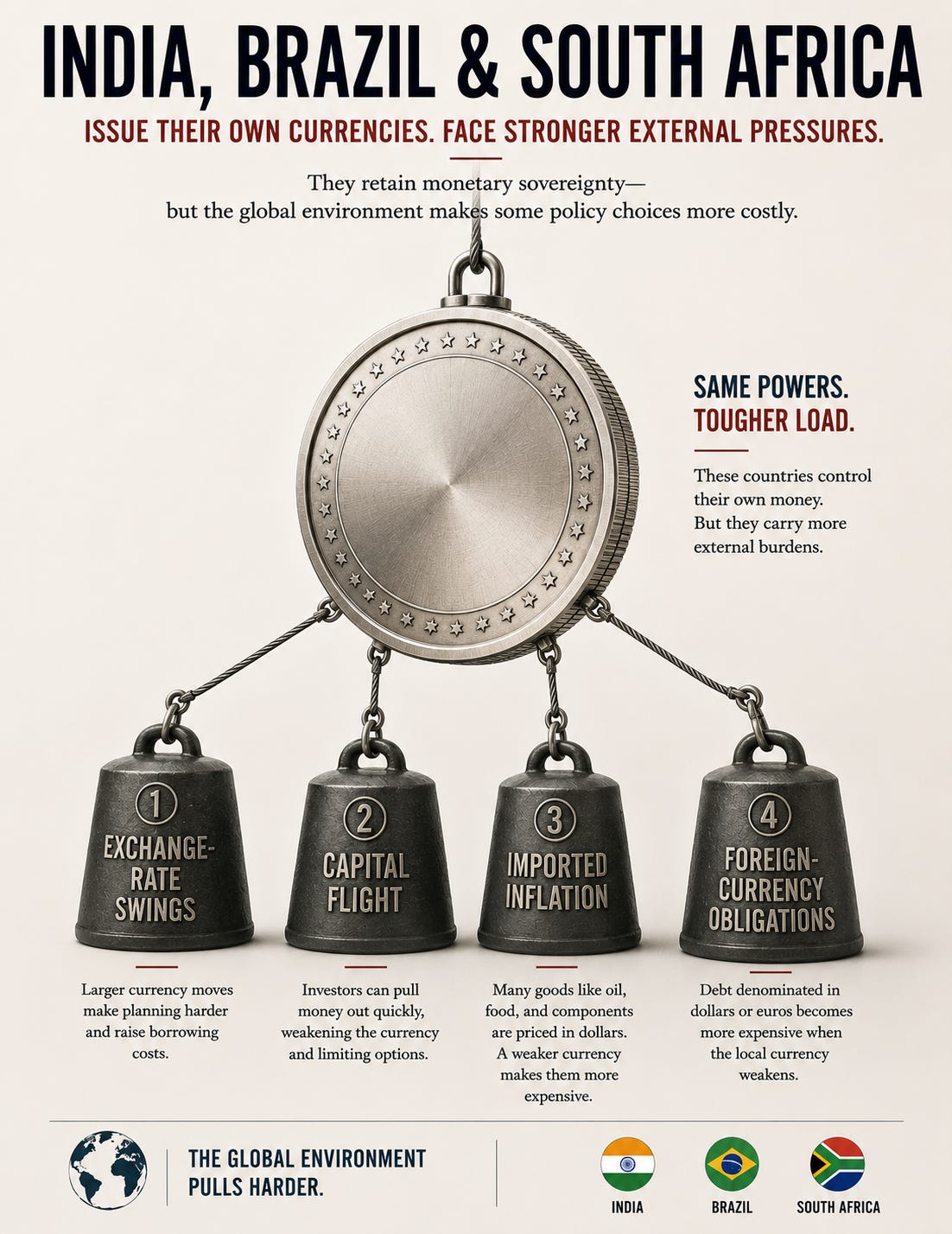
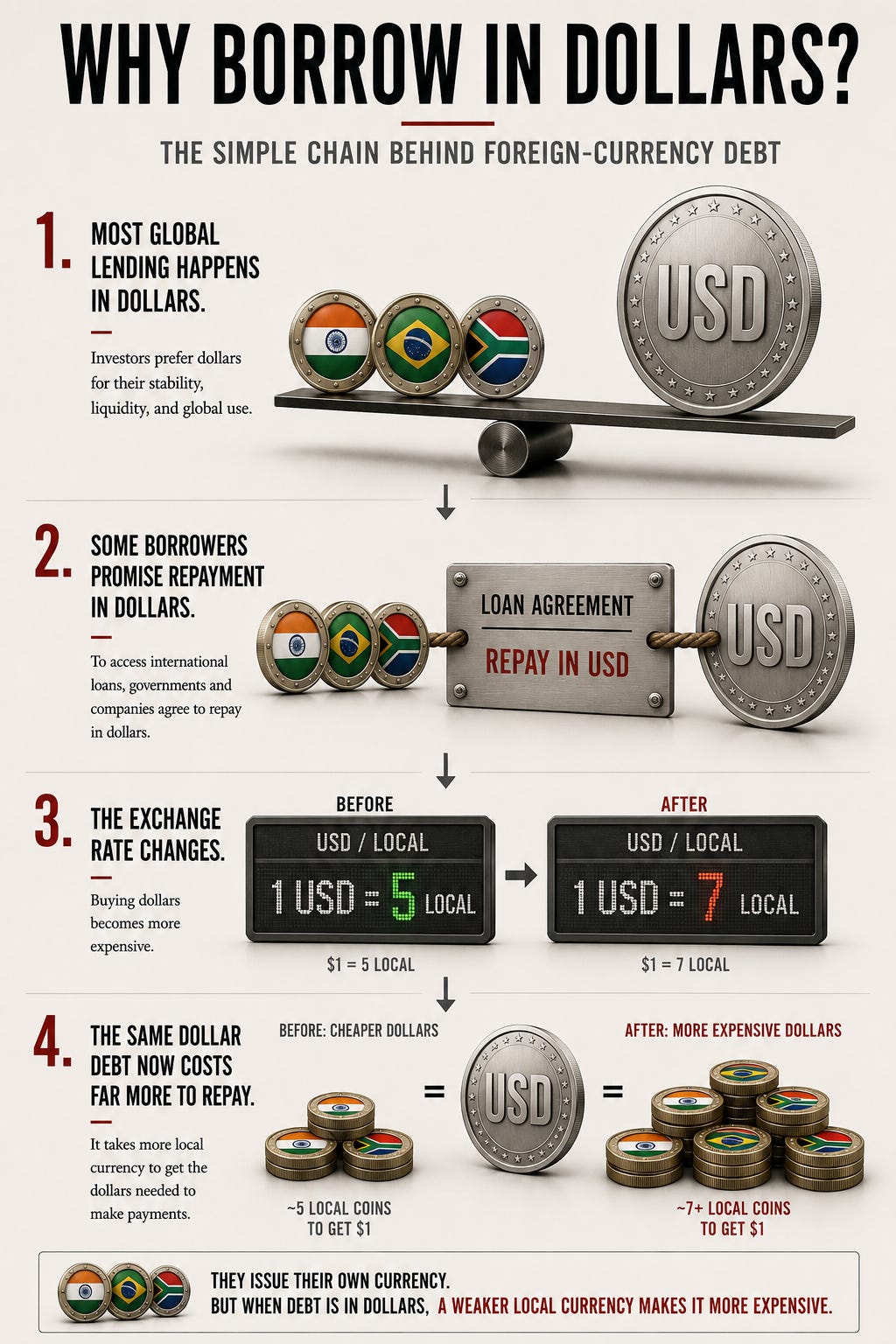
Chapter 3: One Can Go Broke. One Can't.
Chapter 3: The Point Is — Where Does The Money Go?
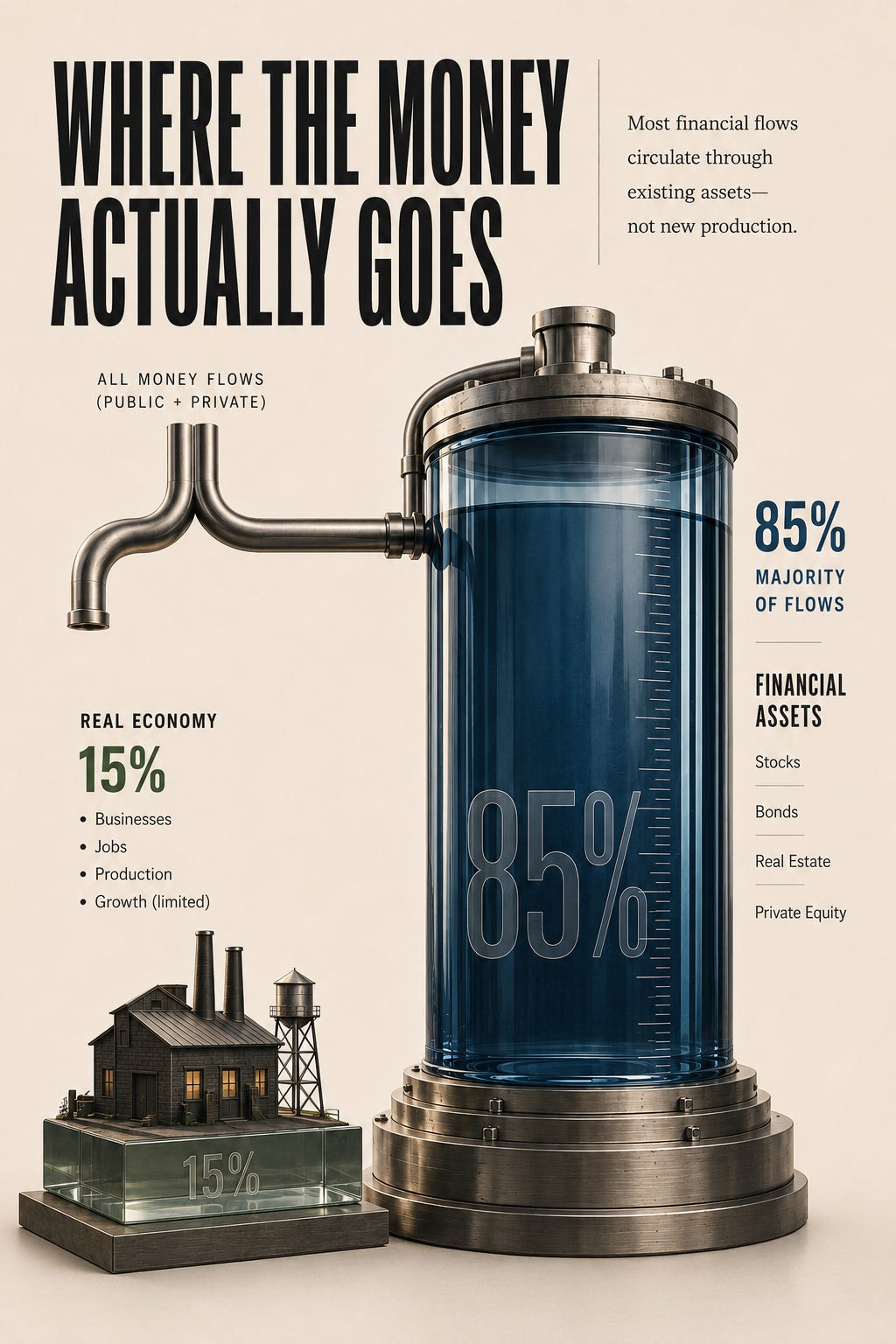
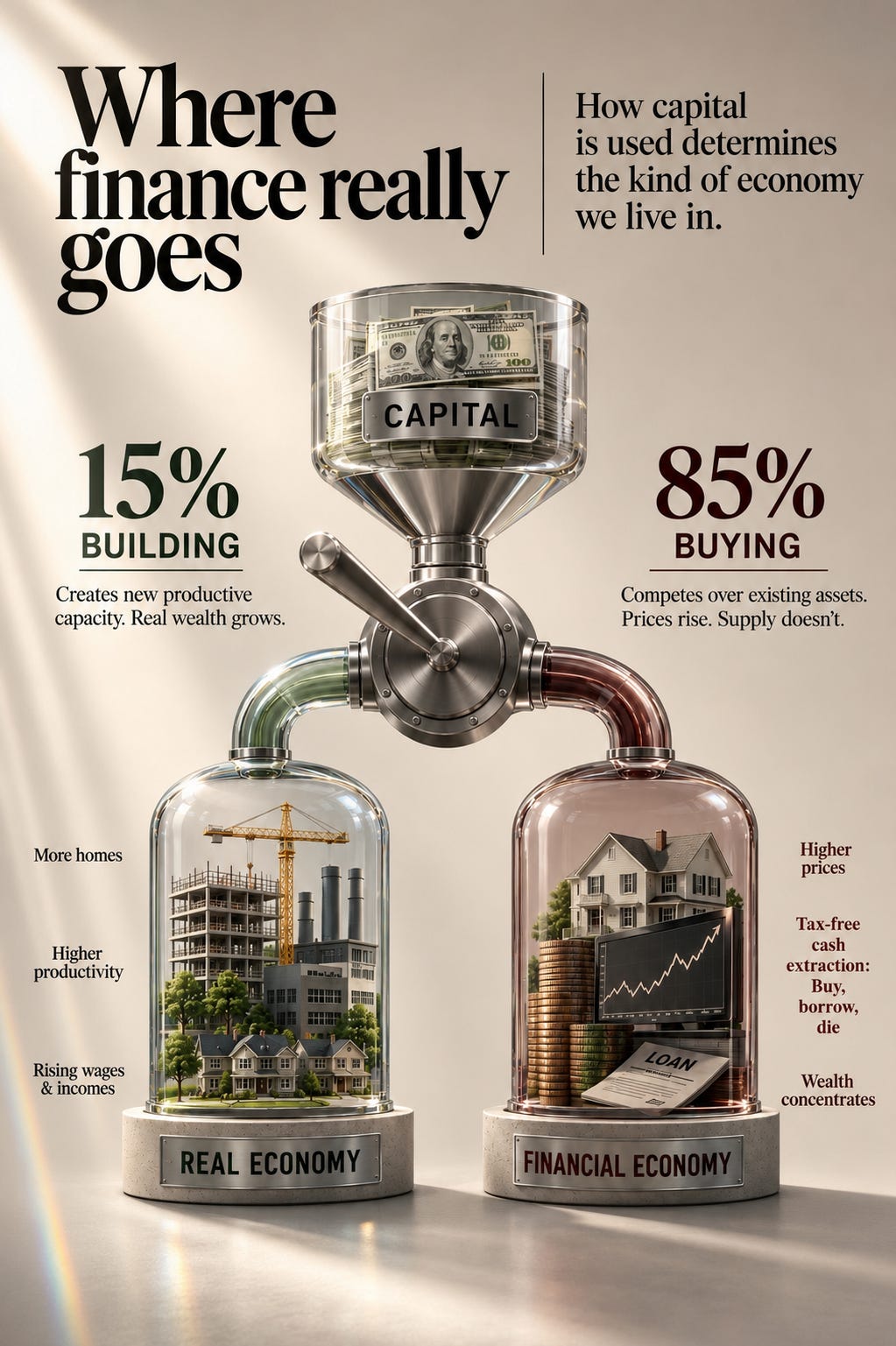
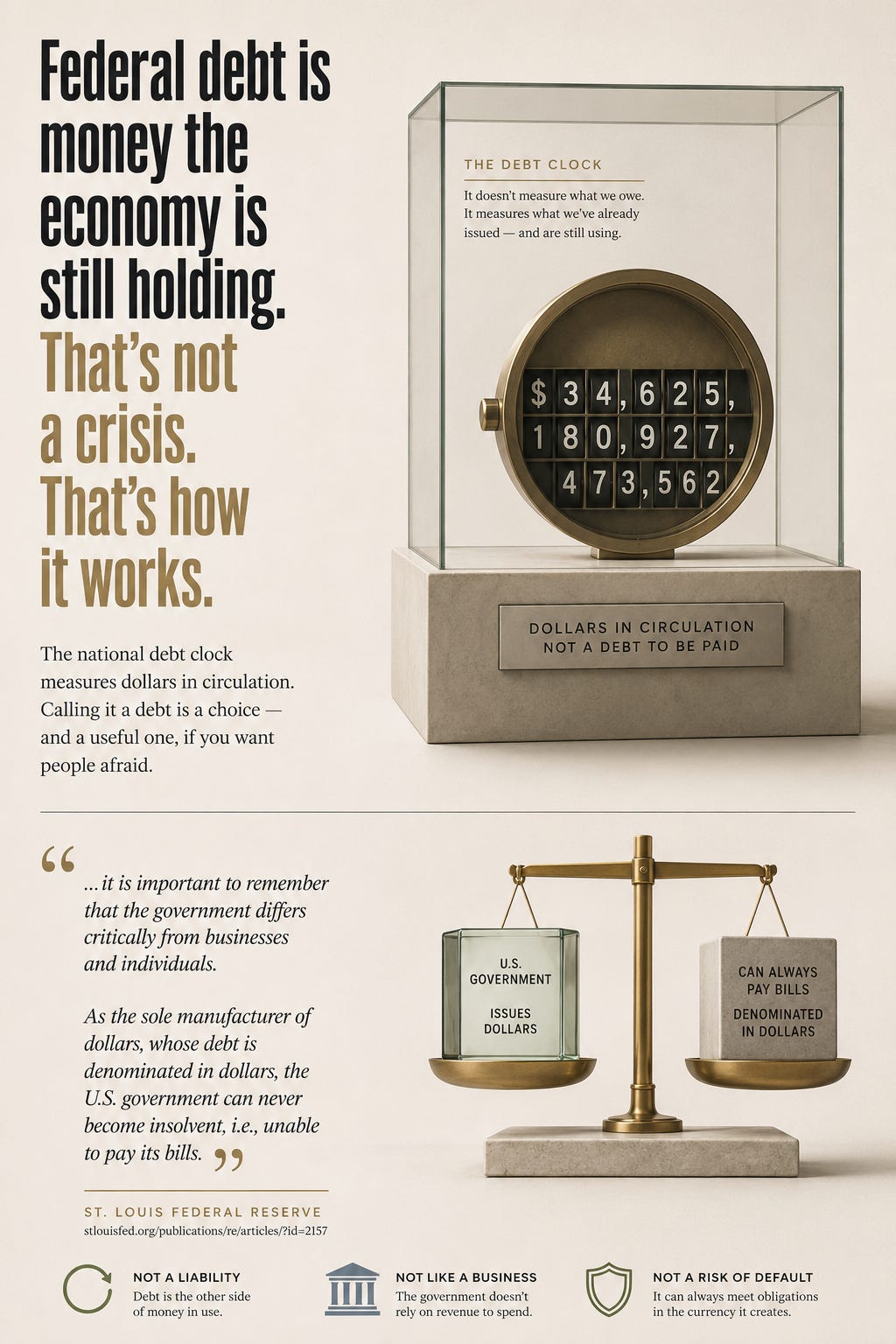
Chapter 4: The Useful Myth
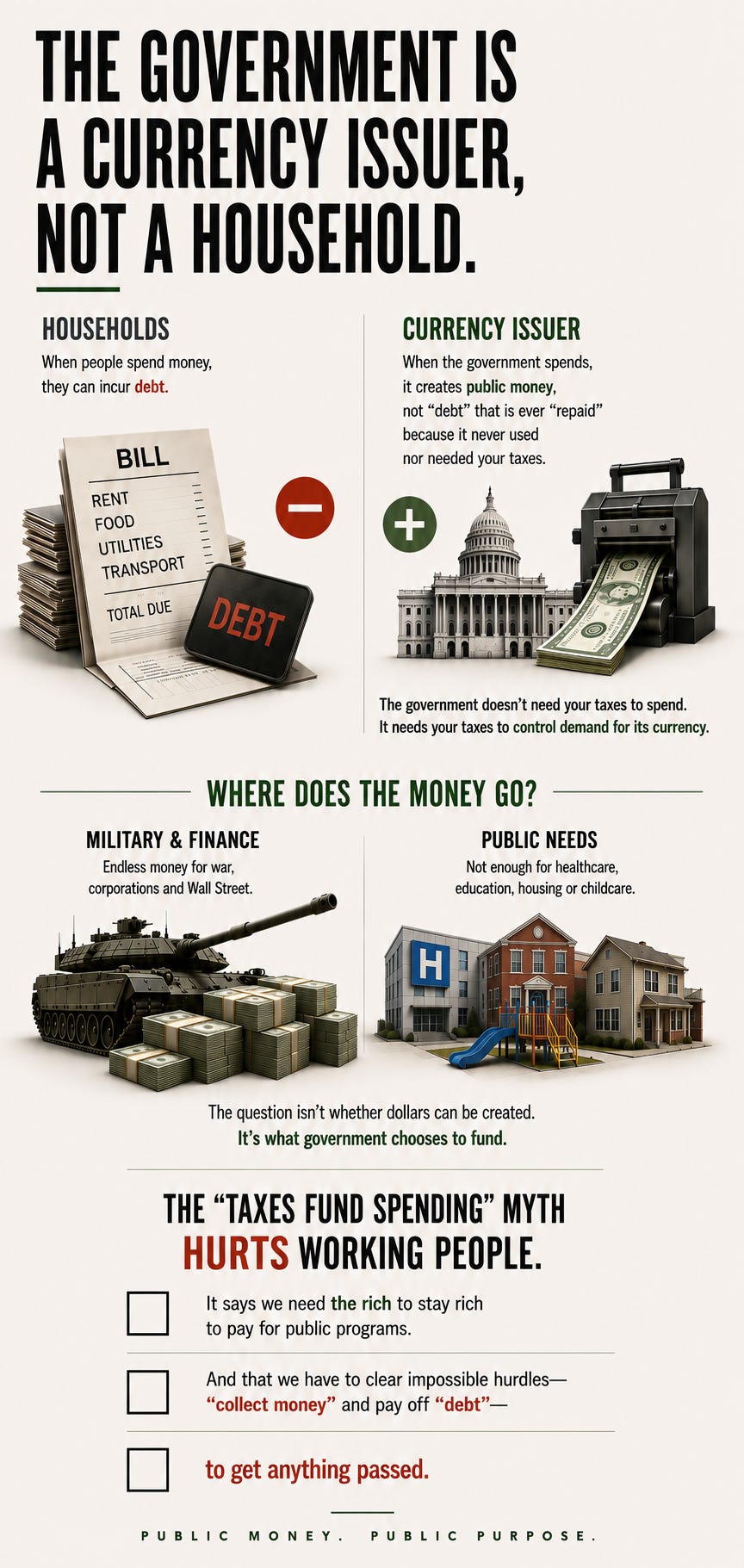
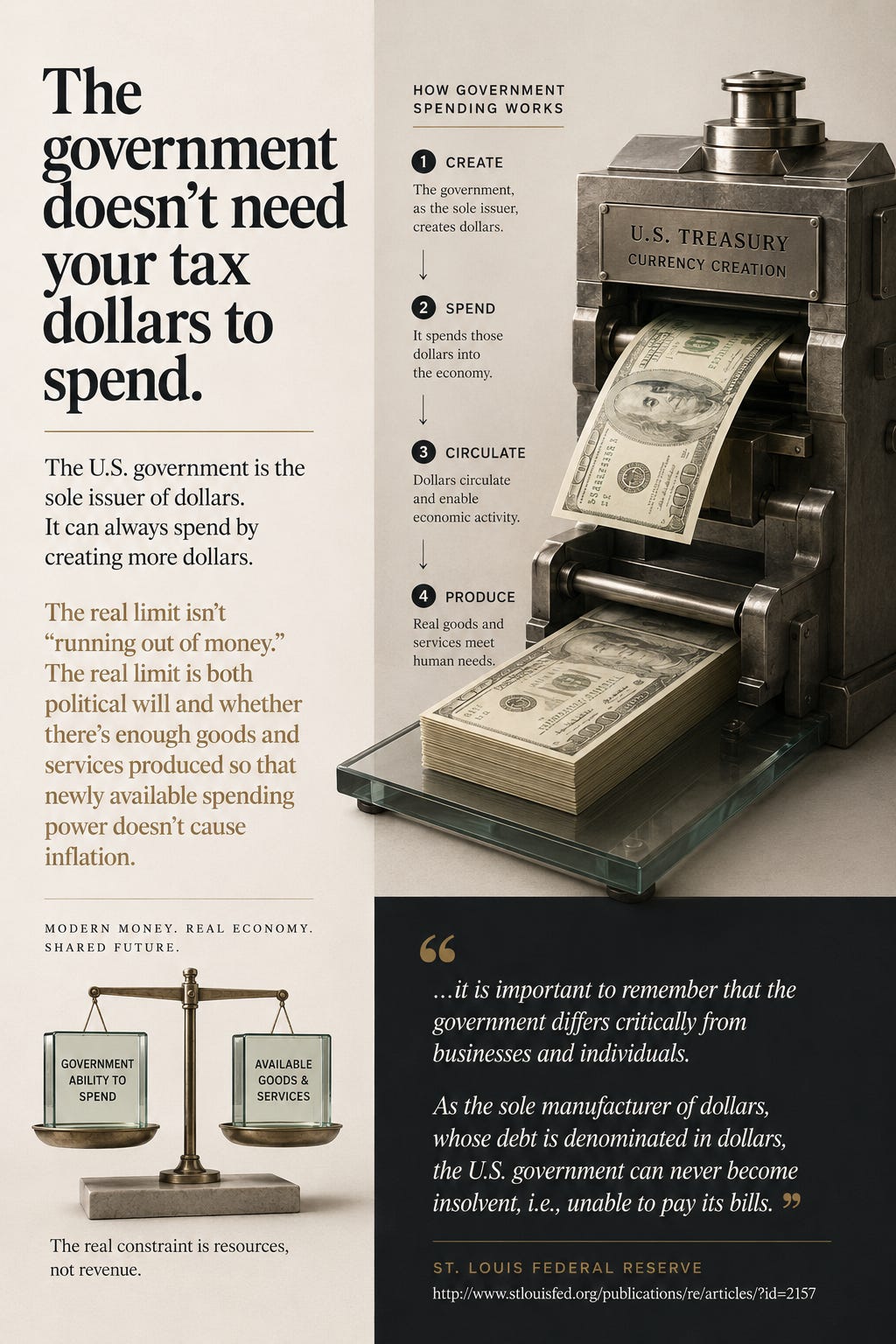
We’re told the government is “out of money.” But it literally creates the money.
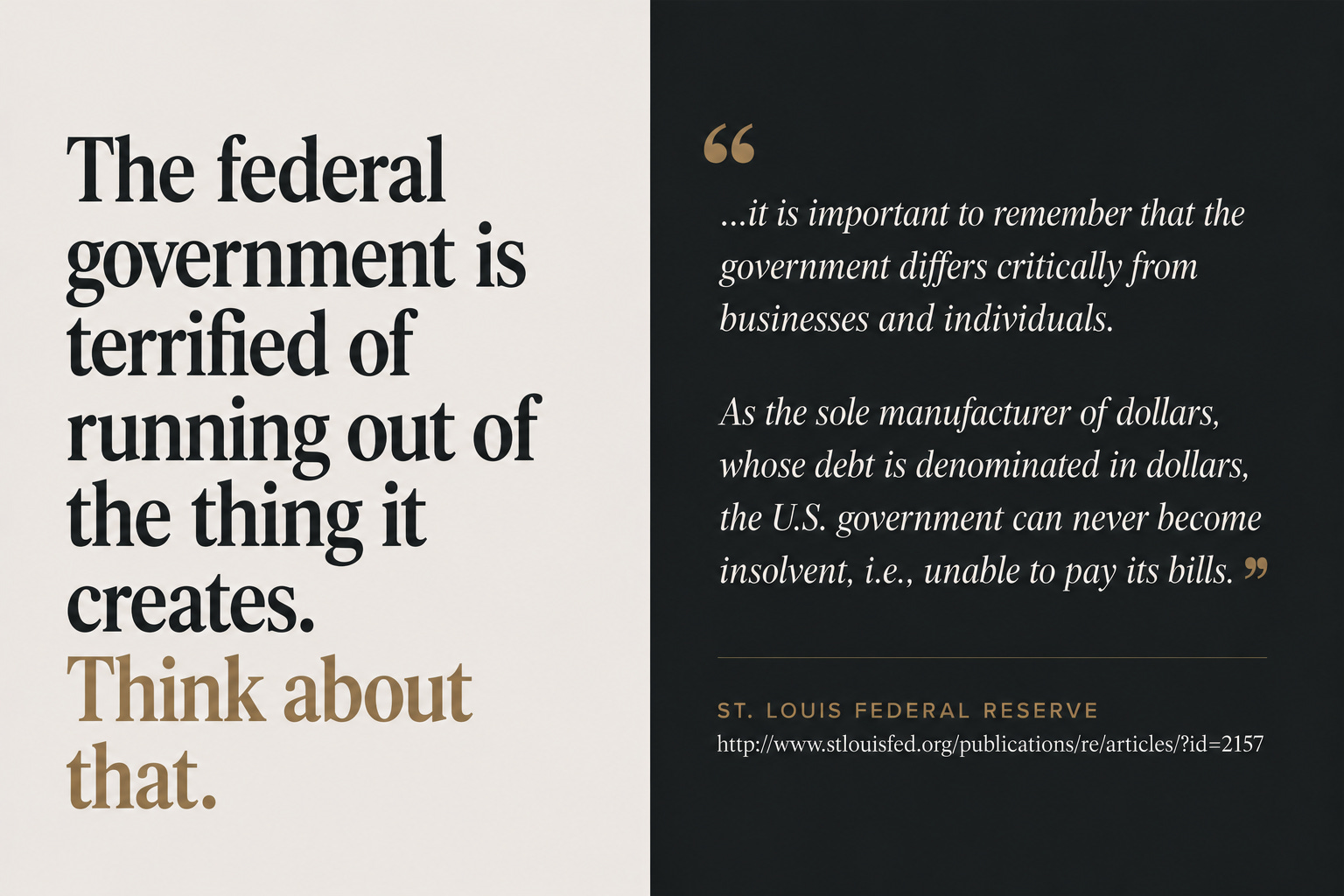
So why is there always money for some things… and never for others?
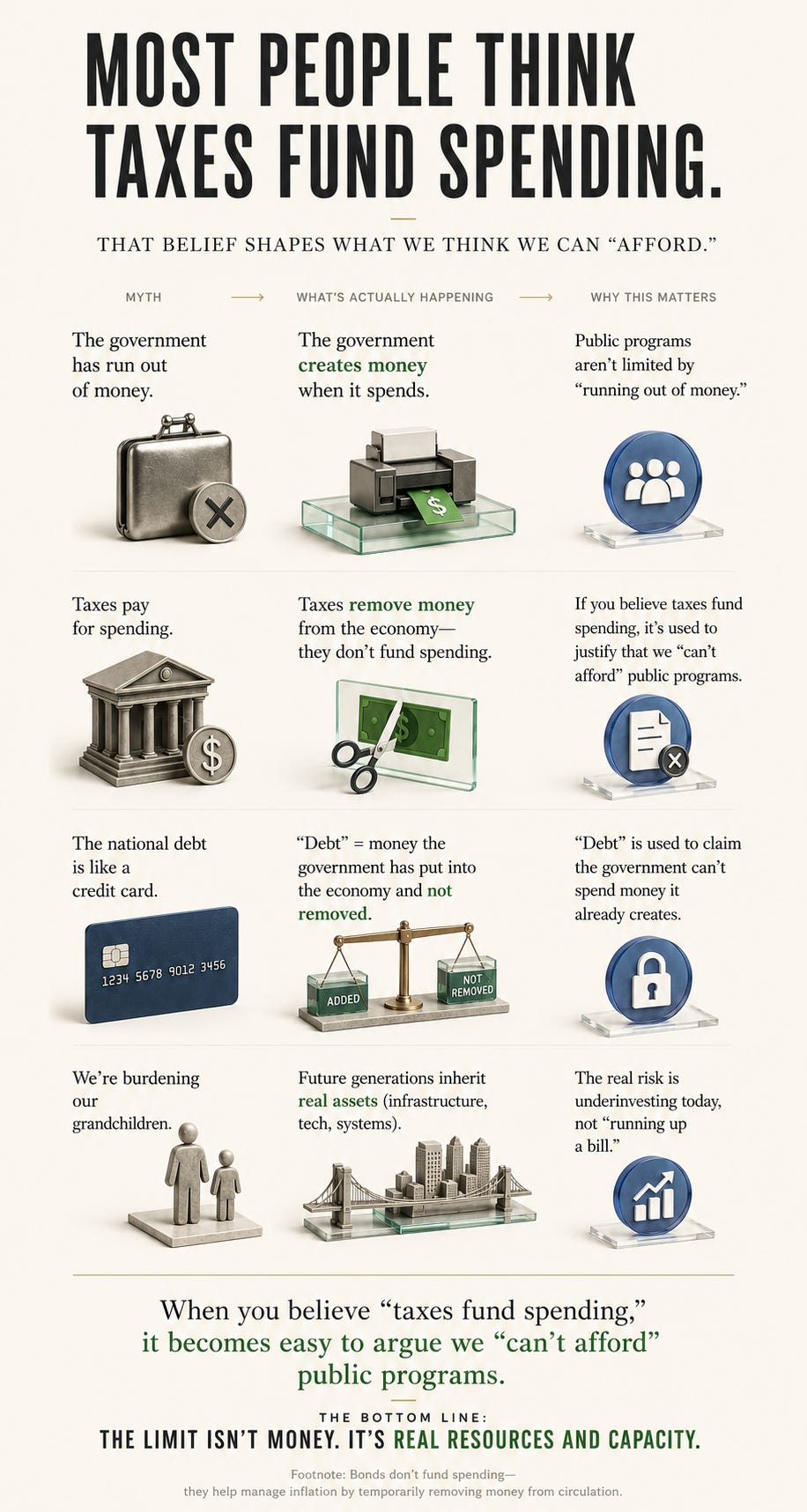
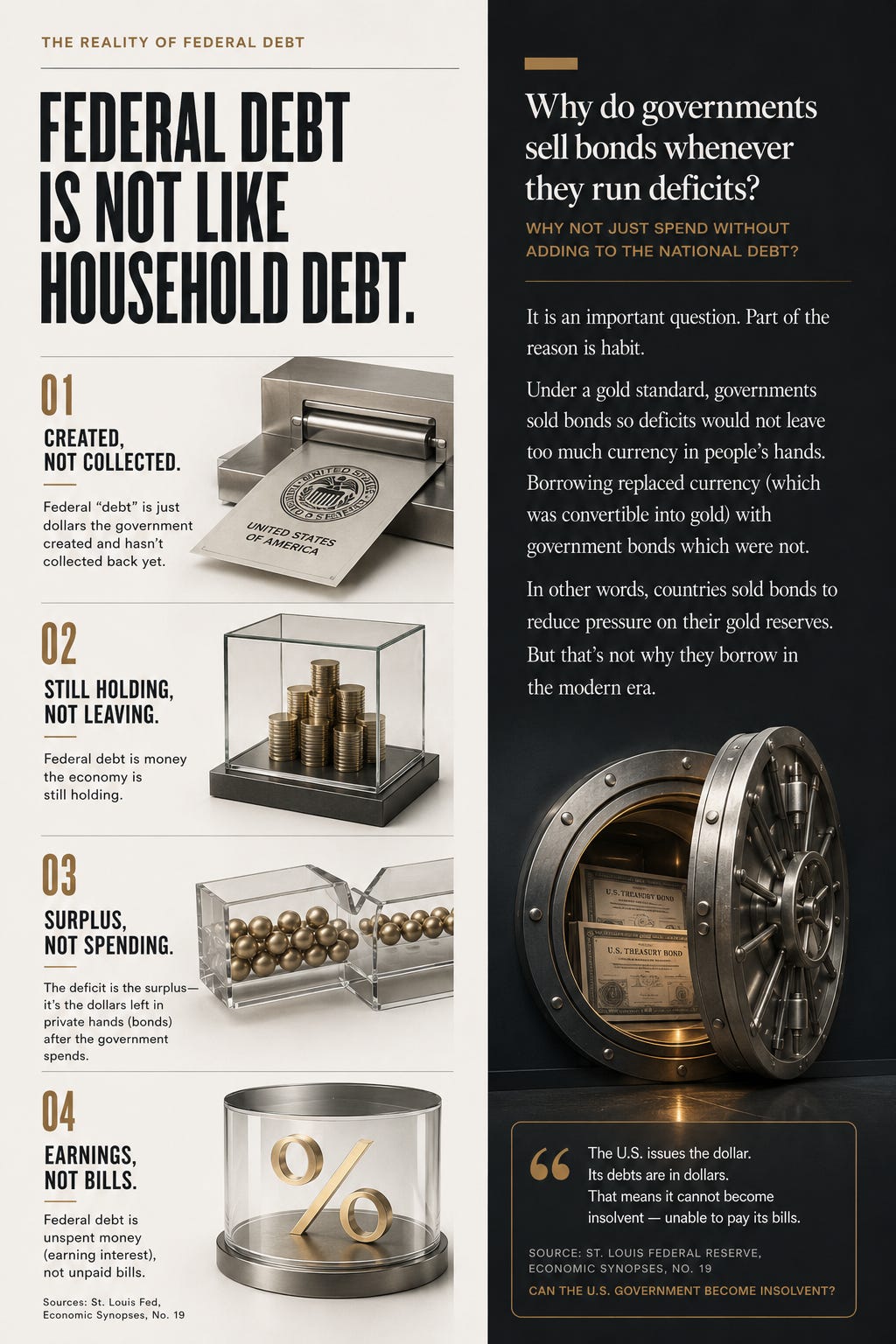
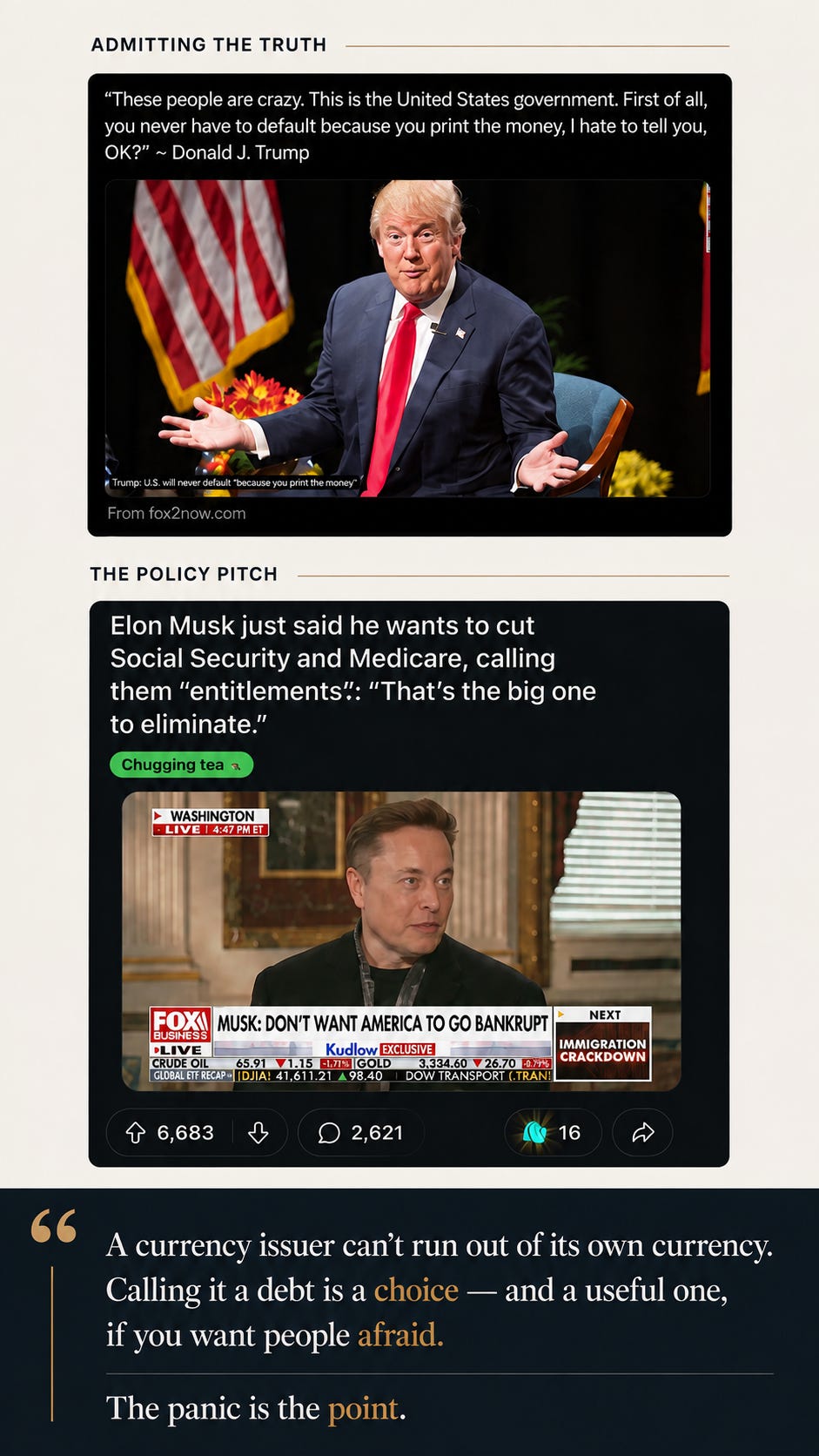
It's a useful myth if your ideology is built around shrinking government until wealthy entitlement can rule unhindered — and anyone you've labeled "lazy" can be cut off.
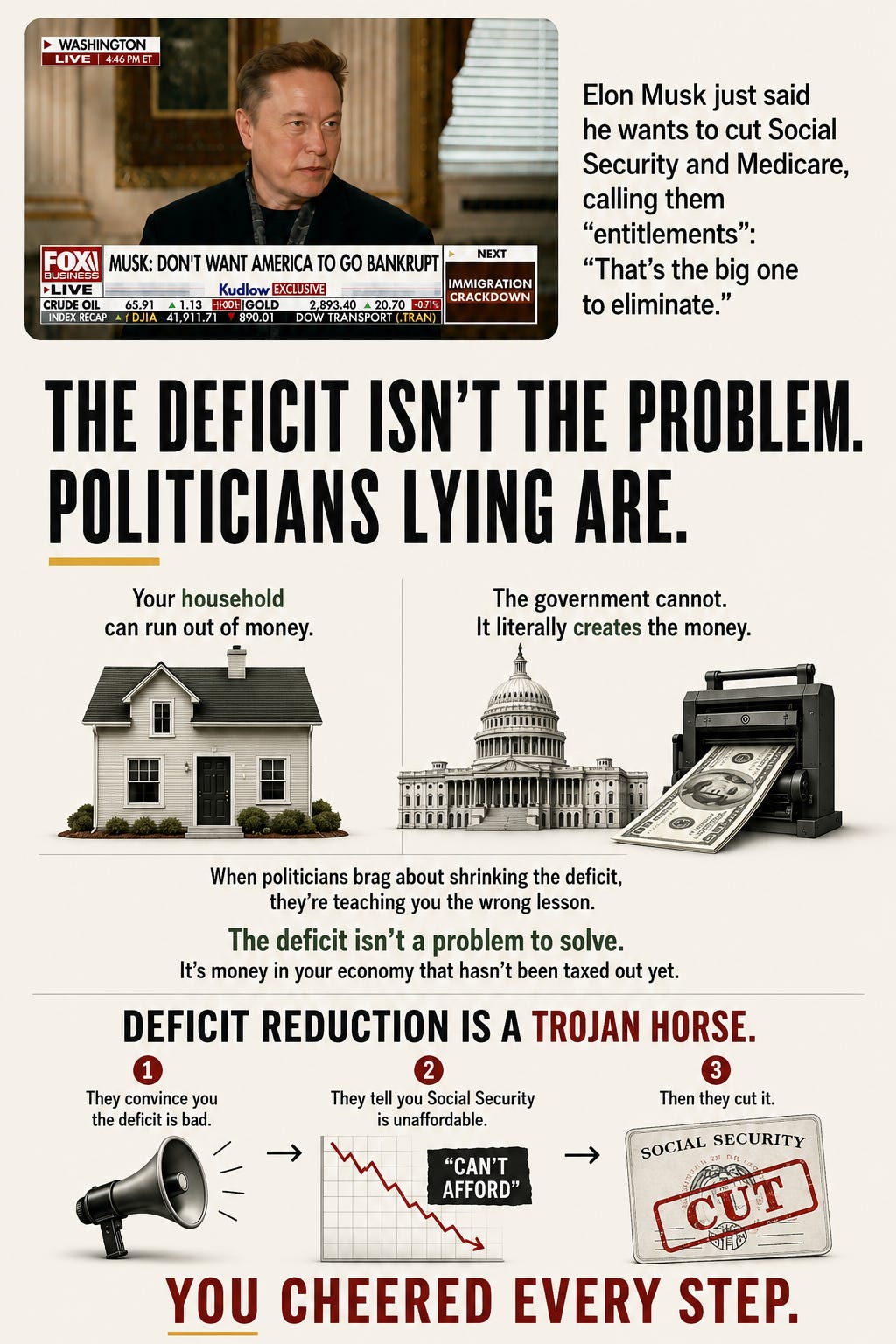
Chapter 5: The Evidence Under Oath
In the words of the Federal Reserve, under oath in Congress, about whether Social Security can run out of money:
“We can guarantee cash benefits as far out, and at whatever size you like, but we cannot guarantee their purchasing power.”
“We don’t have a system that’s working. We have one that basically moves cash around.”
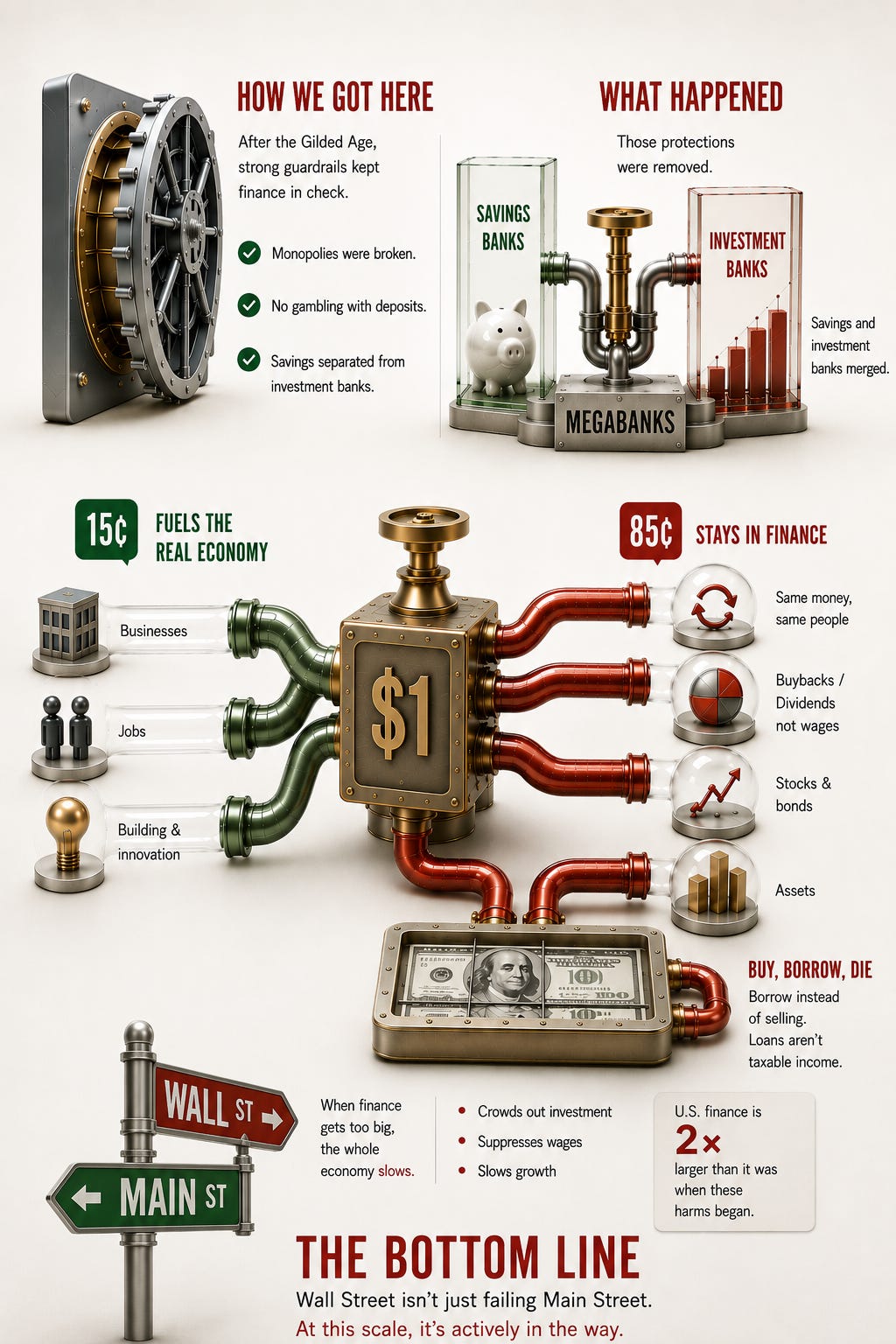
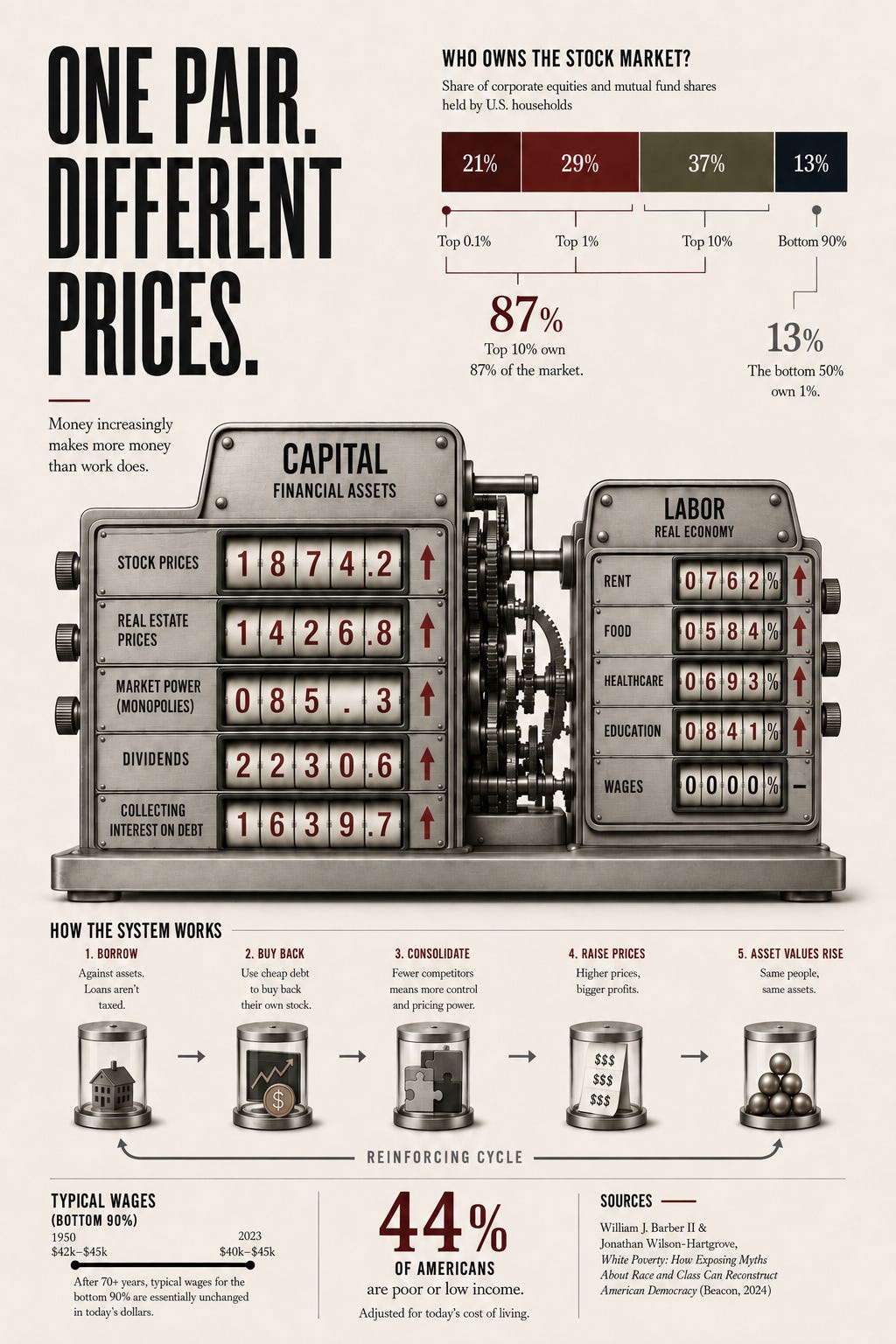
We switched to fiat, made bailouts unlimited, and built financial products complex enough to do one thing well — compound wealth back to Gilded Age levels.
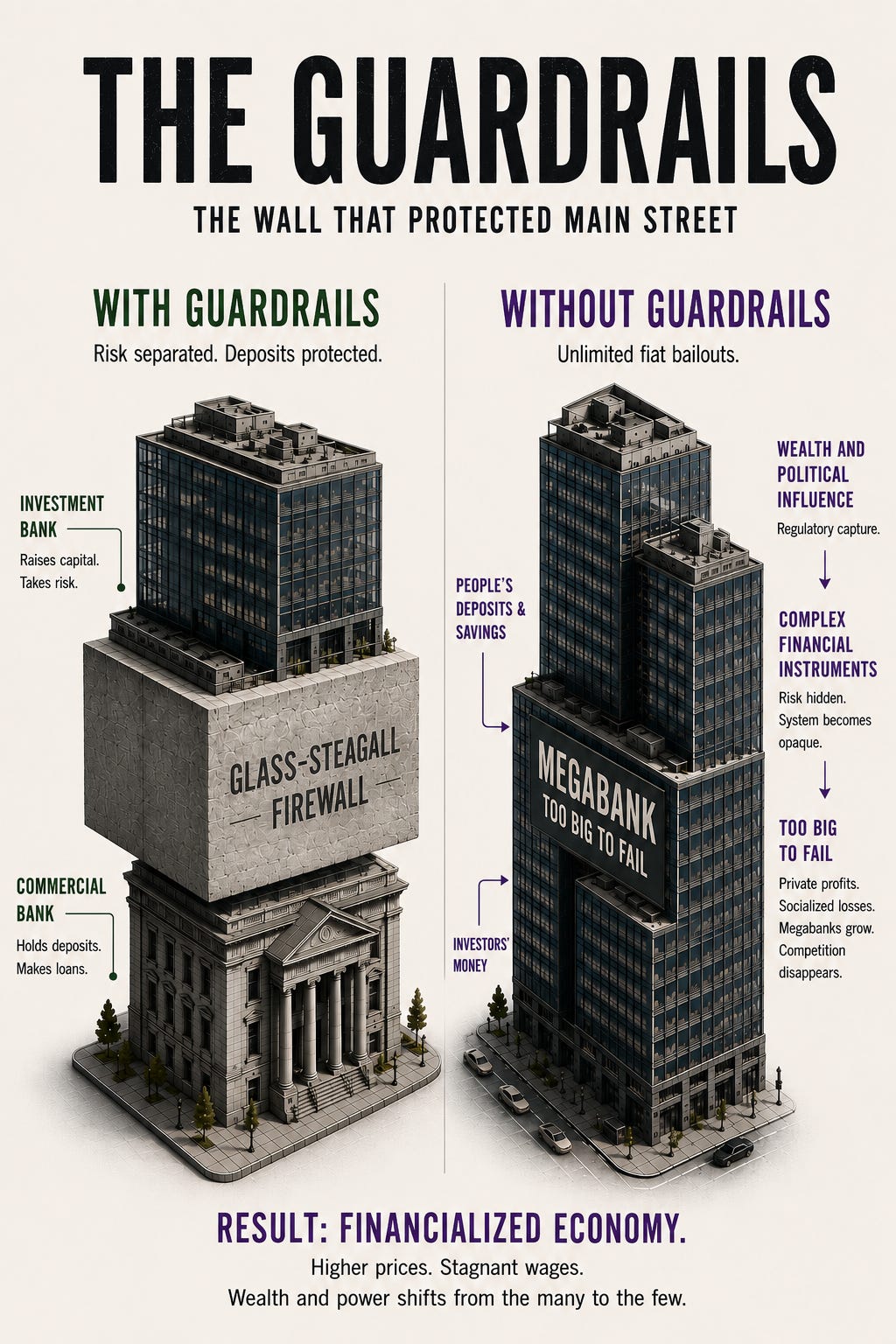
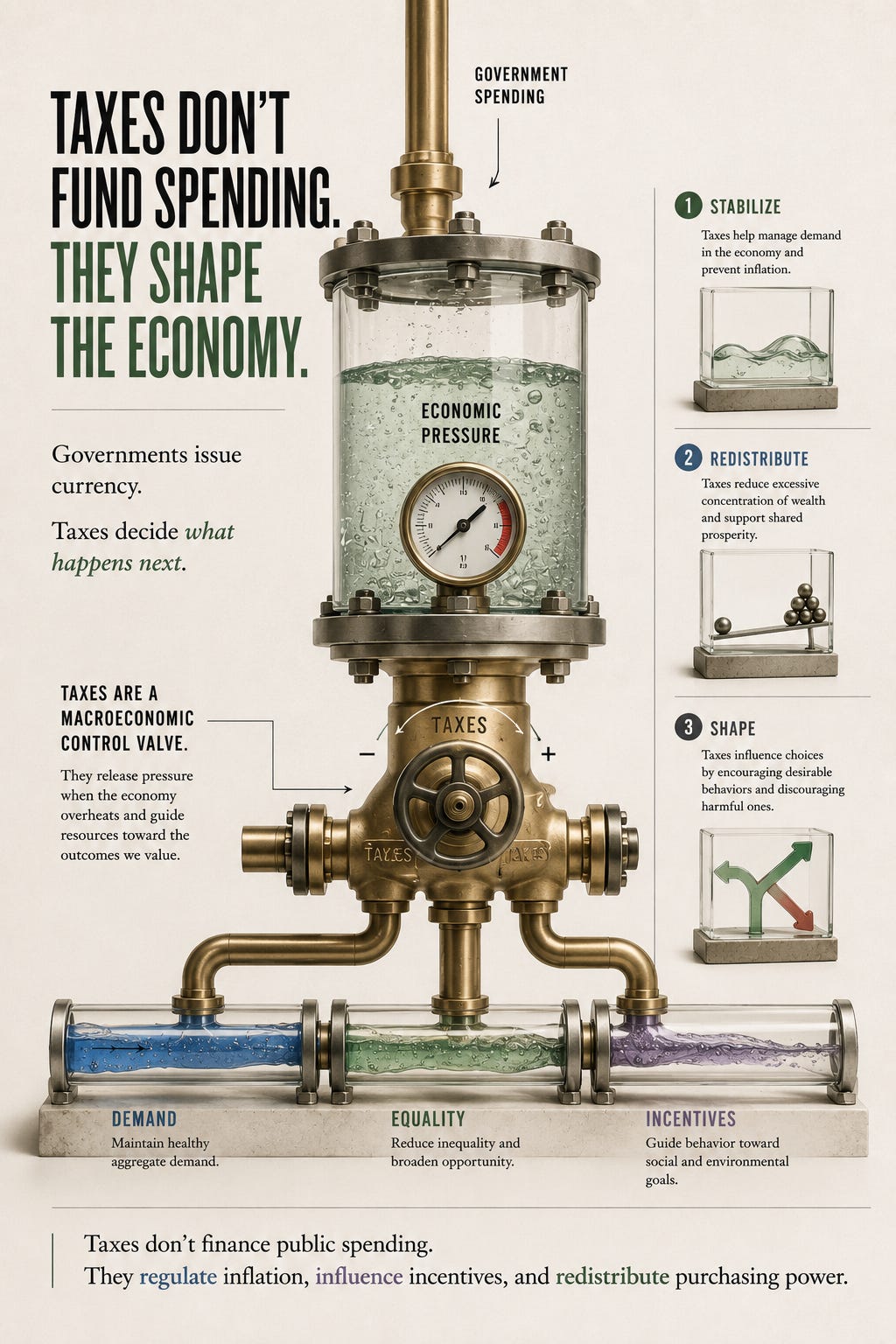
Chapter 6: Saying “Taxes Fund Spending” Doesn’t Help Who You Think It Does
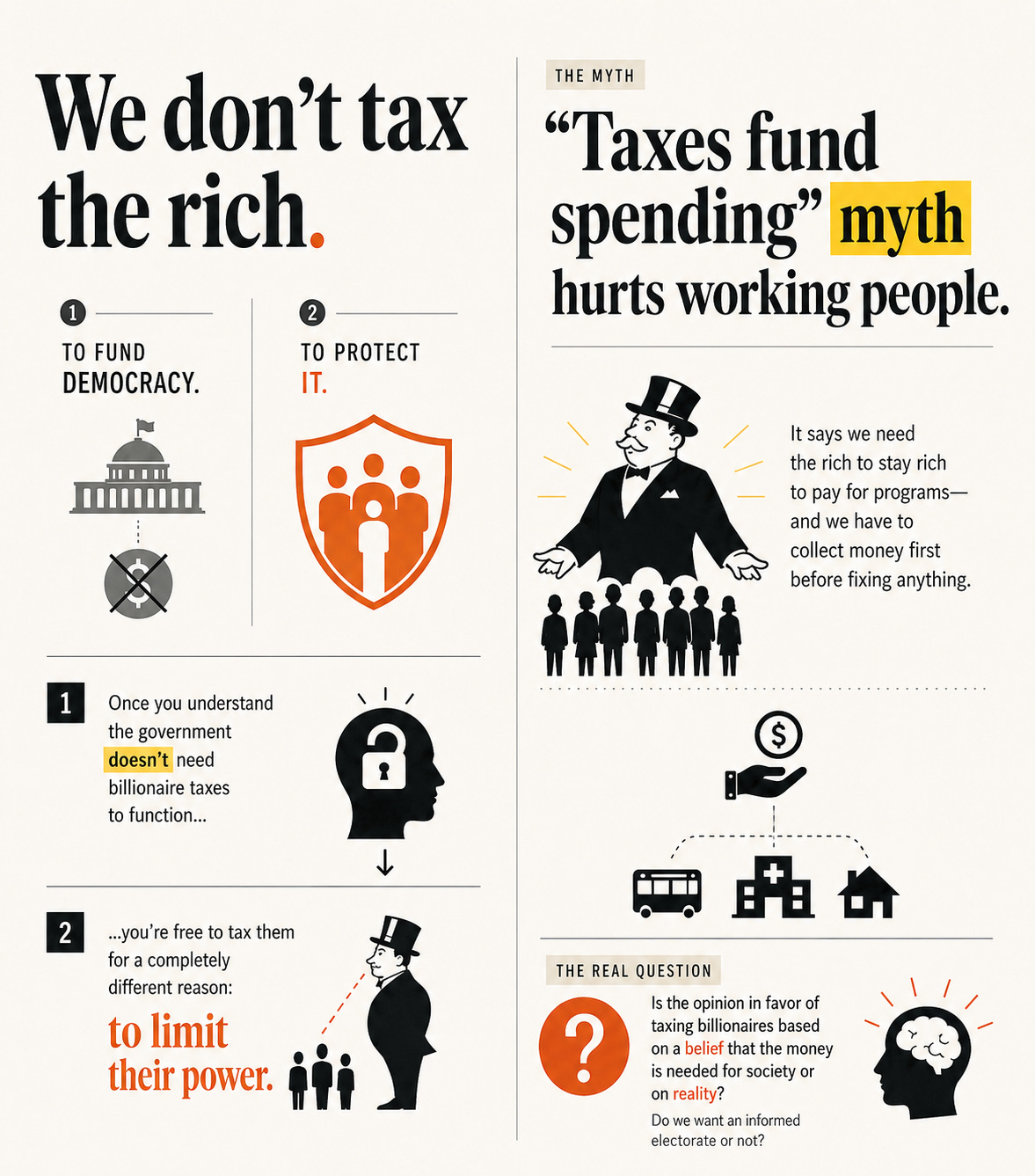
The “taxes fund spending” myth hurts working people.
It says we need the rich to stay rich to pay for programs—and we have to collect money first before fixing anything.
We’re told government is “out of money.”
But it literally creates the money.
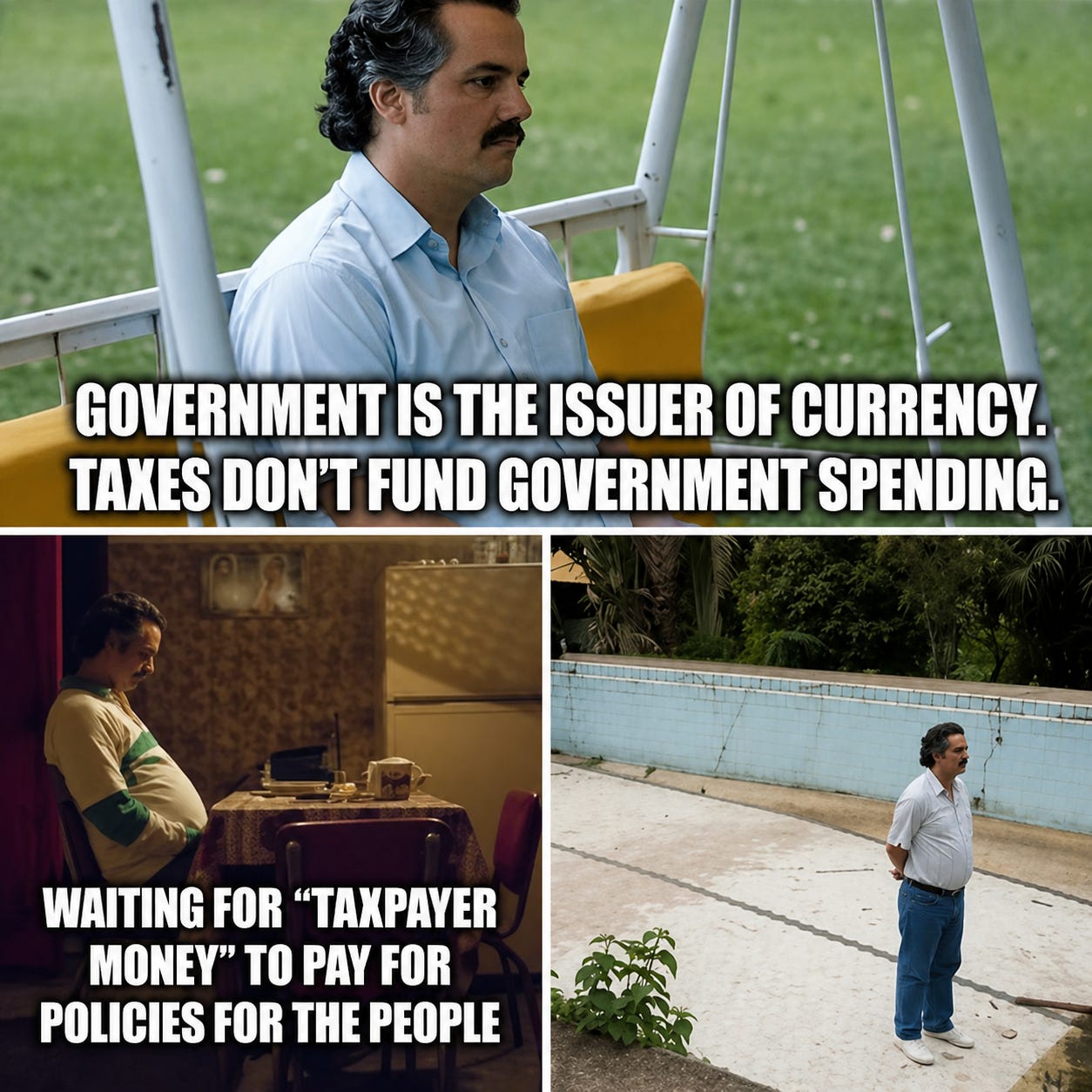
Rich people have known for a while: the government can just issue money. Look around. This is what they’ve done with that knowledge.
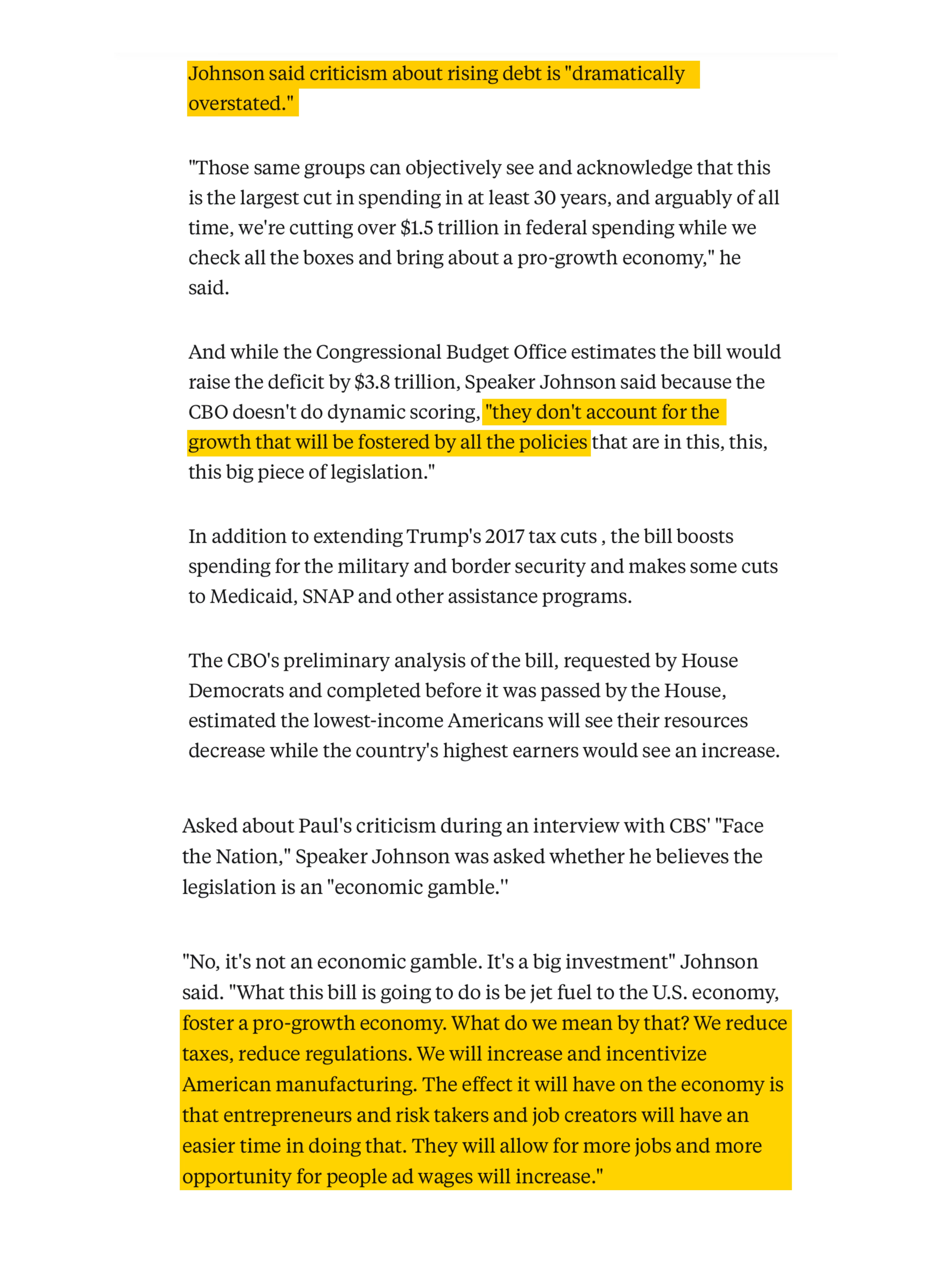
Now here’s the Trump administration saying it plainly. And what do they want to spend it on? Trickle-down. Cuts to the poor. Grow the pie for the rich, and trust — just trust — that it falls down to you.
This is what "trickles down".

Chapter 7: Automation Pays Dividends. Just Not to You.
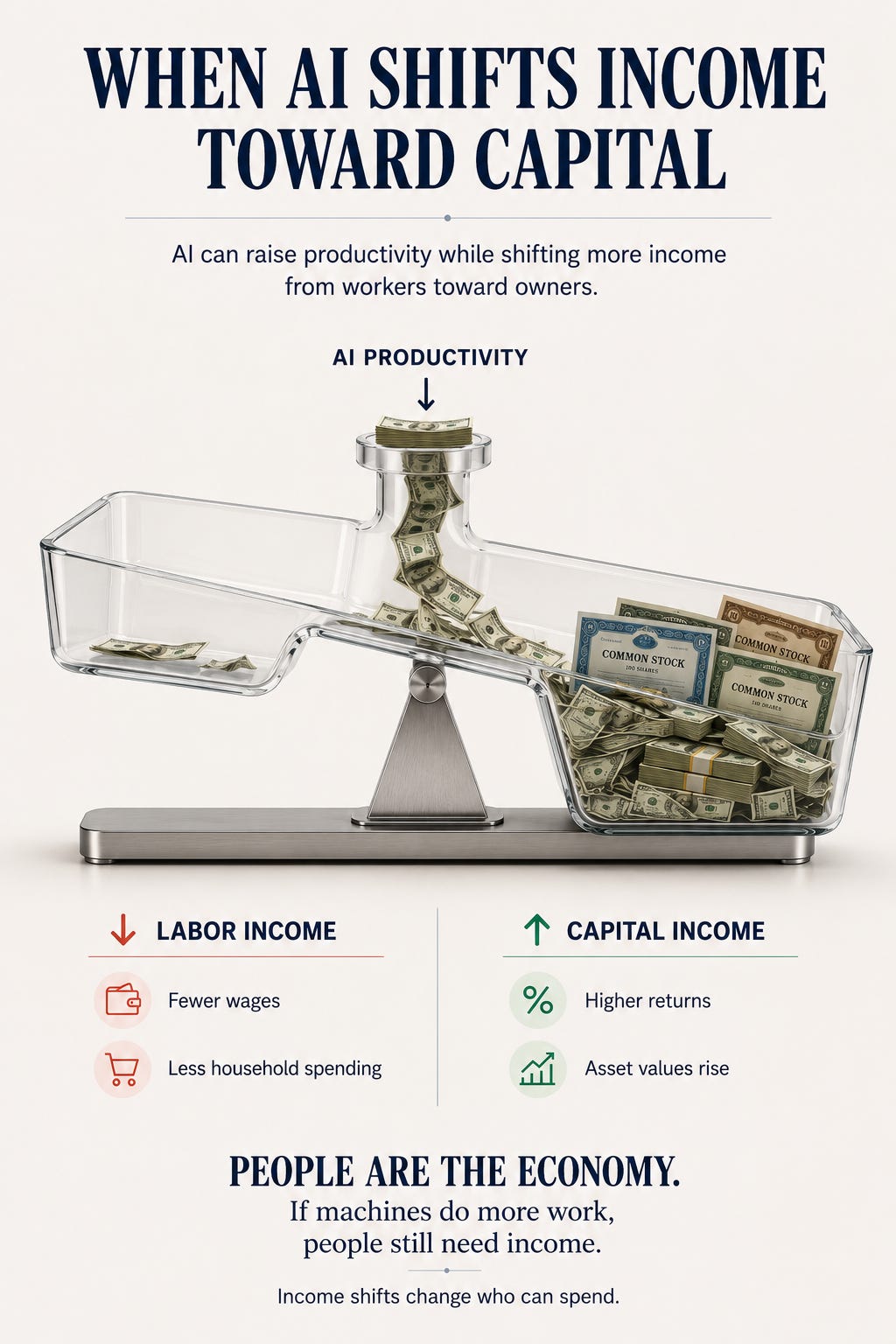
Picture a normal household.
Two parents.
Both working full time.
Childcare is expensive.
Groceries cost more every year.
There’s not much breathing room.
Now imagine one of those jobs disappears. Not because someone failed. Because the software got better. This isn’t science fiction anymore.
AI can:
• Write reports
• Draft contracts
• Design ads
• Diagnose medical images
• Manage logistics
• Code software
That’s not replacing factory work. That’s replacing office work. And office work is where much of the middle class lives. And our system still assumes income must come from jobs.
Here’s the Real Issue
Our economy runs on a simple loop:
People work →
People get paid →
People spend →
Businesses earn money →
Businesses hire people.
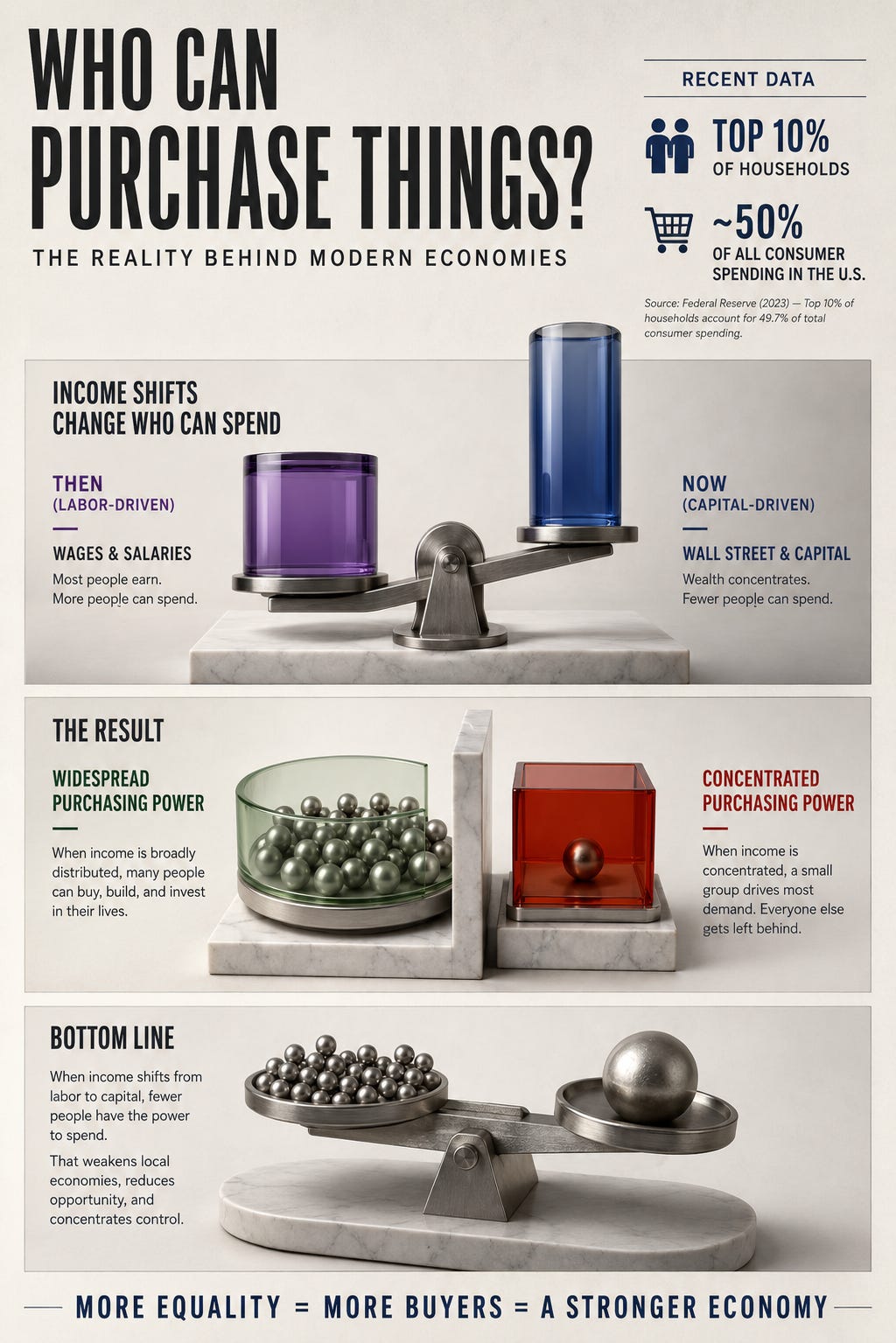
Nearly 70% of the U.S. economy is household consumption. Not government. Not corporations. Households.
If paychecks shrink, spending shrinks. If spending shrinks, businesses slow down. You can’t have mass production without mass customers. That’s the tension AI creates.
A Simple Example
Imagine a company with 10,000 employees. AI improves the system. Now 2,000 people can run it. The company becomes more profitable. But 8,000 people lose income. Multiply that across industries.
Machines produce goods. Machines don’t buy goods. If income stays tied only to jobs —and jobs shrink —the system starts to wobble. That’s why UBI keeps coming up. Not as charity. As stabilization.
“But Can We Afford It?”
This is where most people get stuck. It sounds expensive. But the federal government does not work like a household. Households have to earn money before spending it. The U.S. government issues the dollar.
Why Taxing AI Still Matters
When people hear about UBI, the first question is usually: “How do we pay for it?”
Again, the constraint isn’t dollars. It’s whether we’ve built enough. So taxing AI profits isn’t about “collecting the money first” in order to spend it. It’s about balance.
If a small number of AI firms earn enormous profits, they gain enormous purchasing power. They compete for:
Engineers
Land
Electricity
Construction materials
When very wealthy players compete for limited real resources, prices rise. Taxes help reduce that pressure. They cool excess demand at the top. They slow extreme wealth concentration.
In simple terms: UBI helps stabilize purchasing power at the bottom.
Taxes help prevent overheating at the top.
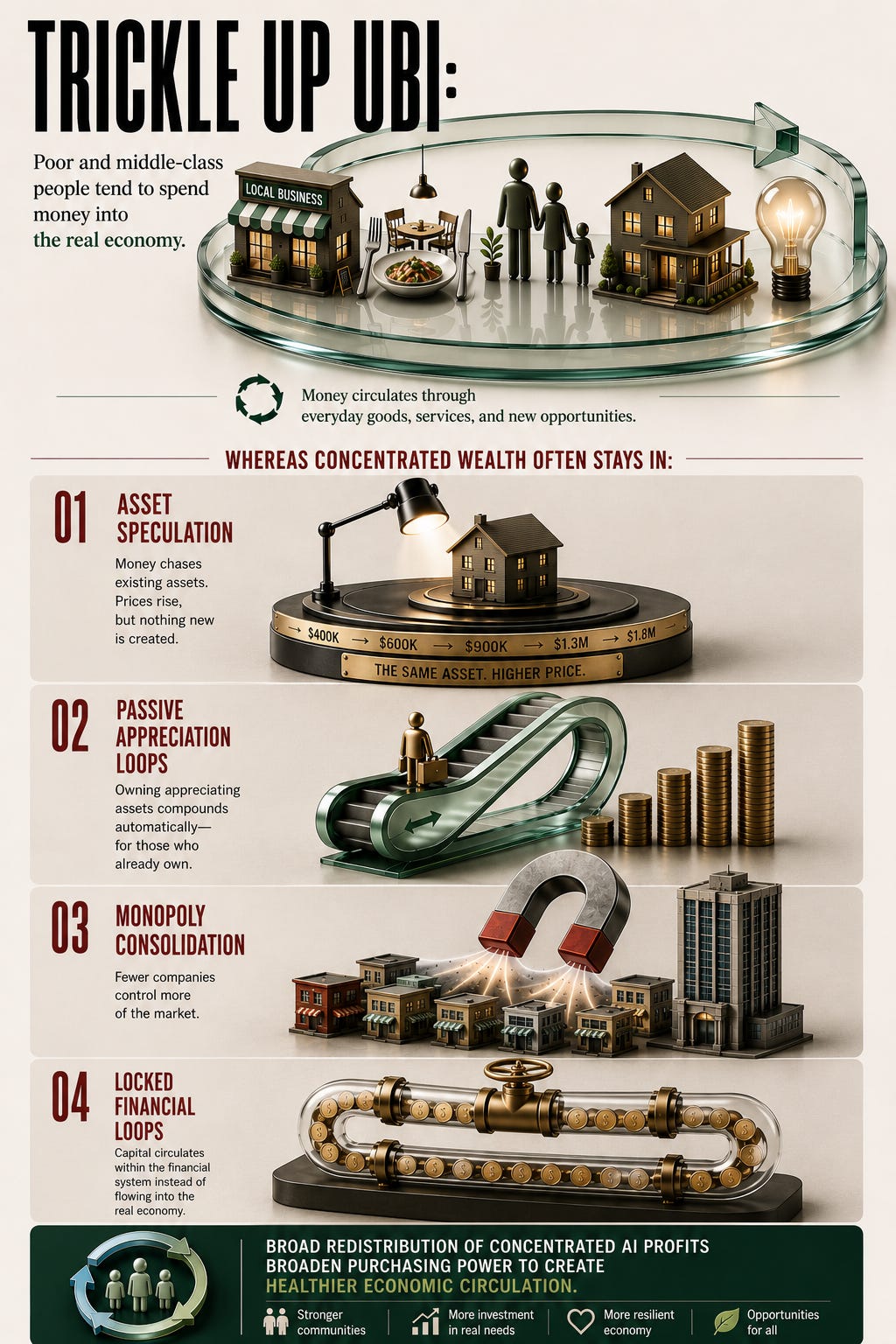
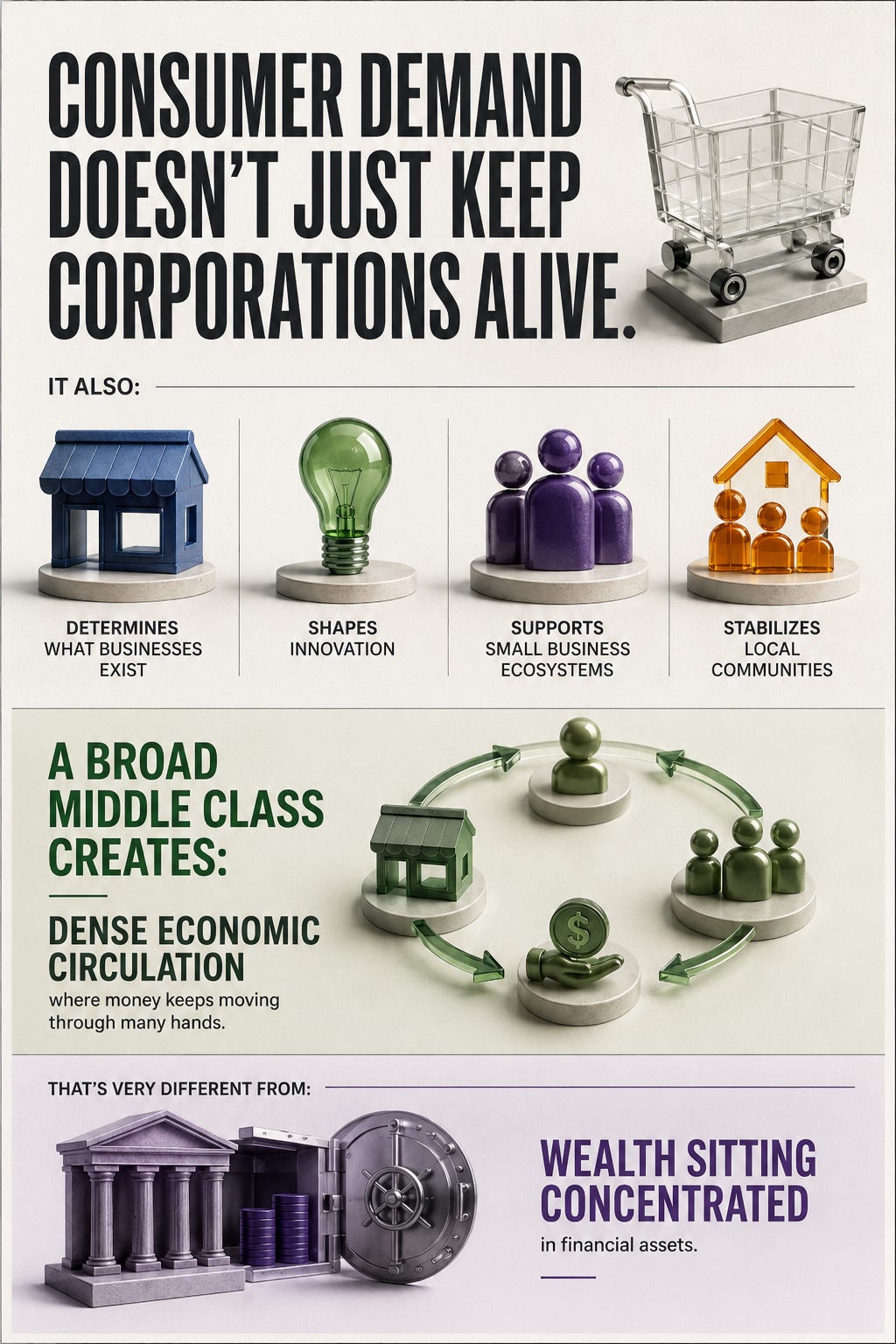
Both are tools for keeping the system stable. The real limit isn’t dollars. It’s real-world capacity.
What Actually Causes Inflation?
After the 2008 crisis, trillions of dollars were injected into the financial system. Inflation stayed low. Why? Because there were unemployed workers. Idle factories. Construction that could restart. There was room to produce more. When money entered the system, businesses made more stuff instead of raising prices.
During COVID, inflation rose. But that was because: Supply chains broke. Factories shut down. Energy prices jumped. Demand hit a supply wall. Money alone didn’t cause it. Shortages did.
Monopolies also took cover behind the inflation narrative to price gouge, which has redesigned the new norm for prices to this day.
The Real Limit Is Real Stuff
The true limits are:
Workers
Housing
Energy
Materials
Infrastructure
If too many groups compete for the same limited resources, prices rise. So the better question isn’t: “Can we afford UBI?” It’s: “Can we build enough to support it?”
Why Supply Matters
Take housing. If people can’t afford homes, builders stop building. Supply shrinks. Prices stay high. Low demand today can reduce supply tomorrow.
If UBI increases demand but we don’t build more homes, prices could rise.
But if UBI comes with:
More housing
More energy
More skilled workers
Stronger infrastructure
Supply can expand. Spending that increases supply today can prevent inflation tomorrow.
The Bigger Shift
Instead of asking, “Can we afford it?” We should ask: Are we building enough?
This is exactly where ideas like the American Scorecard become practical — tracking housing, energy, labor, and capacity so UBI lands in a full supply environment.
Example:
Homes built vs homes needed
Energy supply vs AI use and household demand
Renewable energy needed vs skilled workers available
Tuition inflation vs at cost tuition
Supply of student loan administrators vs supply of teachers
How Could UBI Be Designed Responsibly?
UBI can include automatic guardrails. For example, an independent body could adjust payments based on economic conditions. If inflation rises too much, payments slow temporarily. If the economy weakens, payments increase. This makes UBI an automatic stabilizer rather than a political gamble.
What Happens If We Do Nothing?
If AI replaces jobs and income stays tied to wages:
Wages get squeezed.
Spending slows.
Frustration rises.
People start looking for someone to blame.
That blame often falls on immigrants or other vulnerable groups — even when the real issue is structural change.
We’ve already seen emergency stimulus checks. That wasn’t generosity. It was stabilization. Without structural change, we get more:
Gig work.
Inequality.
Periodic crisis.
Temporary band-aids.
The Inevitable Question
This isn’t about laziness. It’s about structure. If machines can produce abundance
but people can’t afford it, the system contradicts itself.
When there’s monopolization over power and income supply, economic stability requires an income floor.
We have three paths:
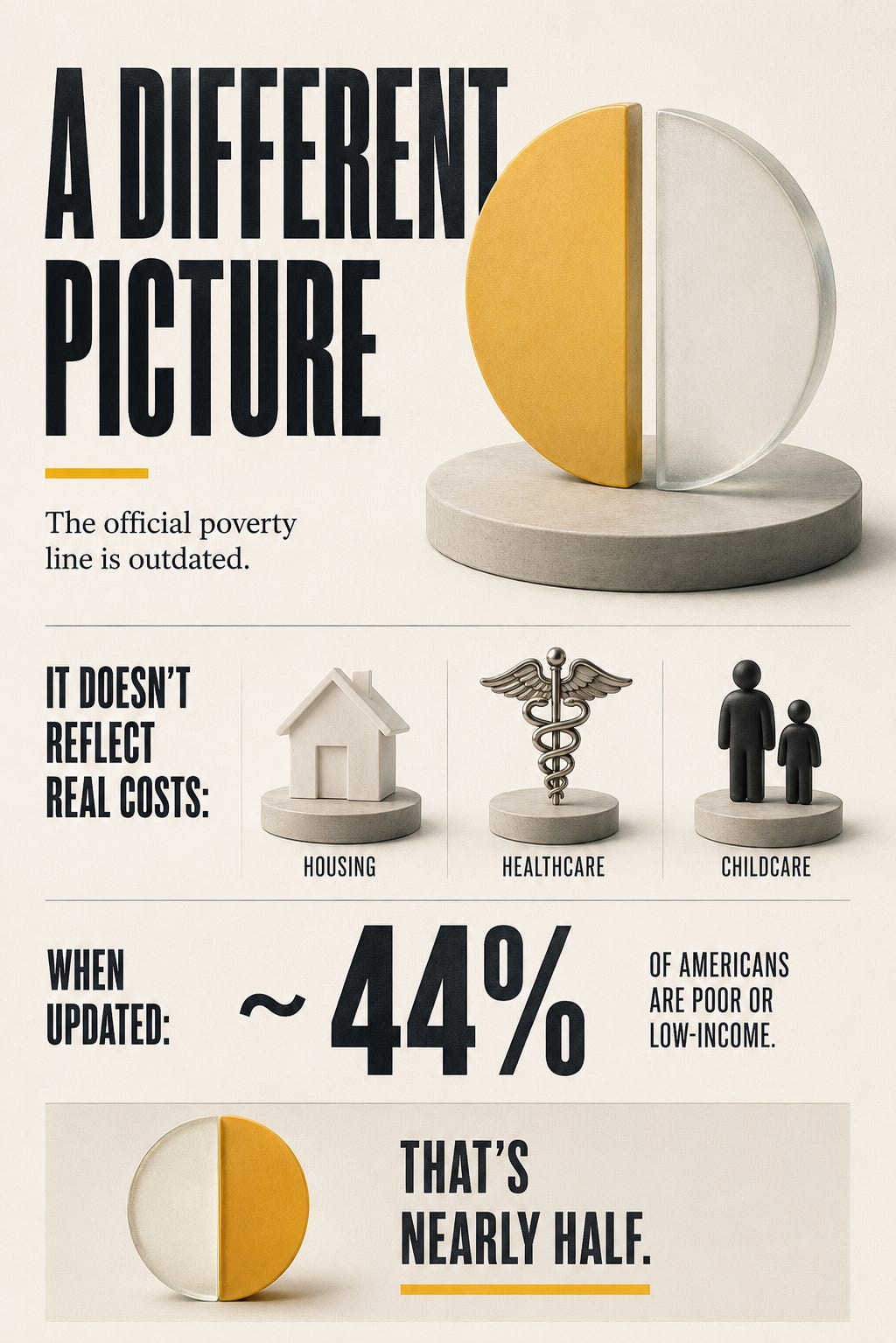
Let wealth concentrate and instability grow.
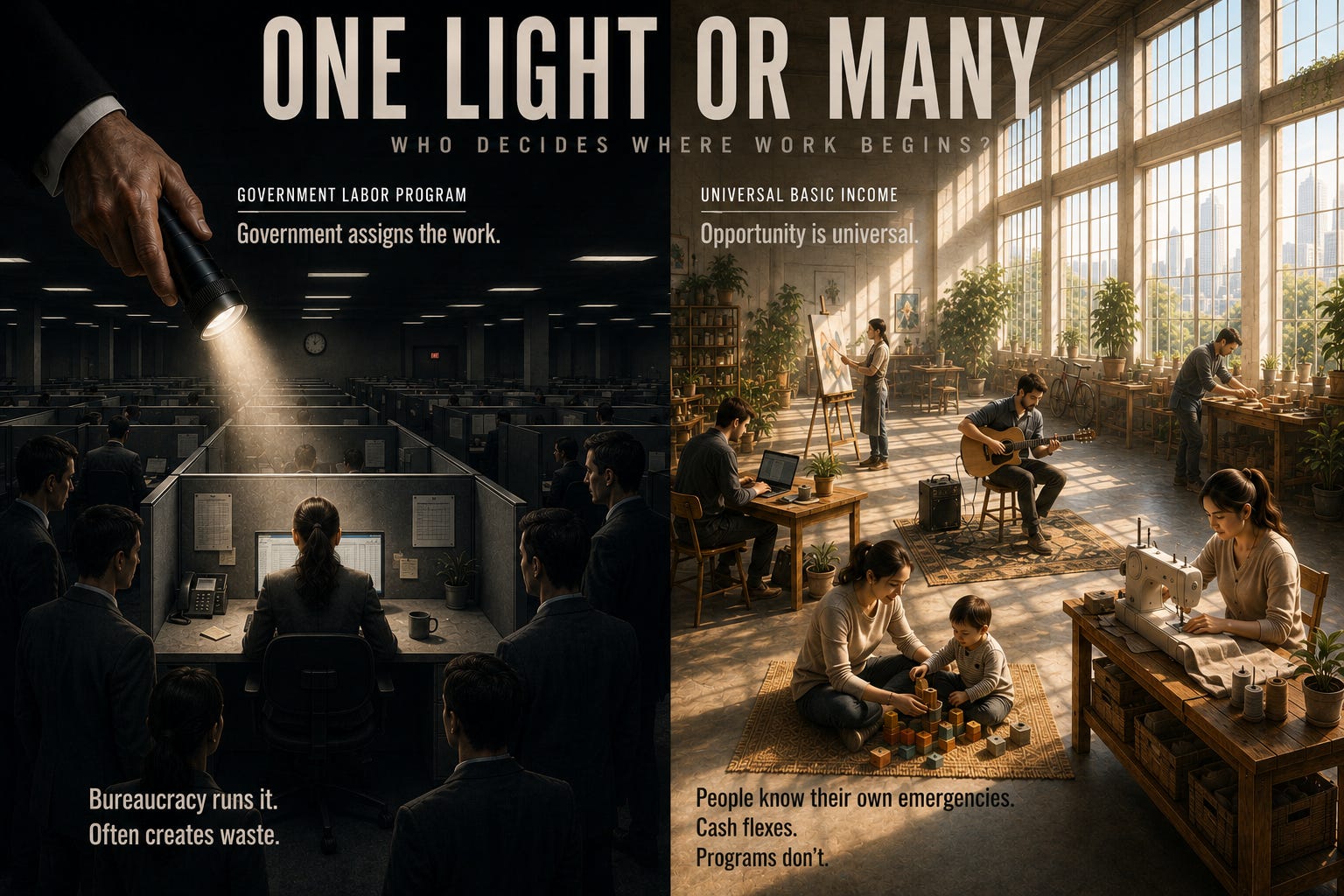
Force artificial employment.
Or share automation gains more broadly.
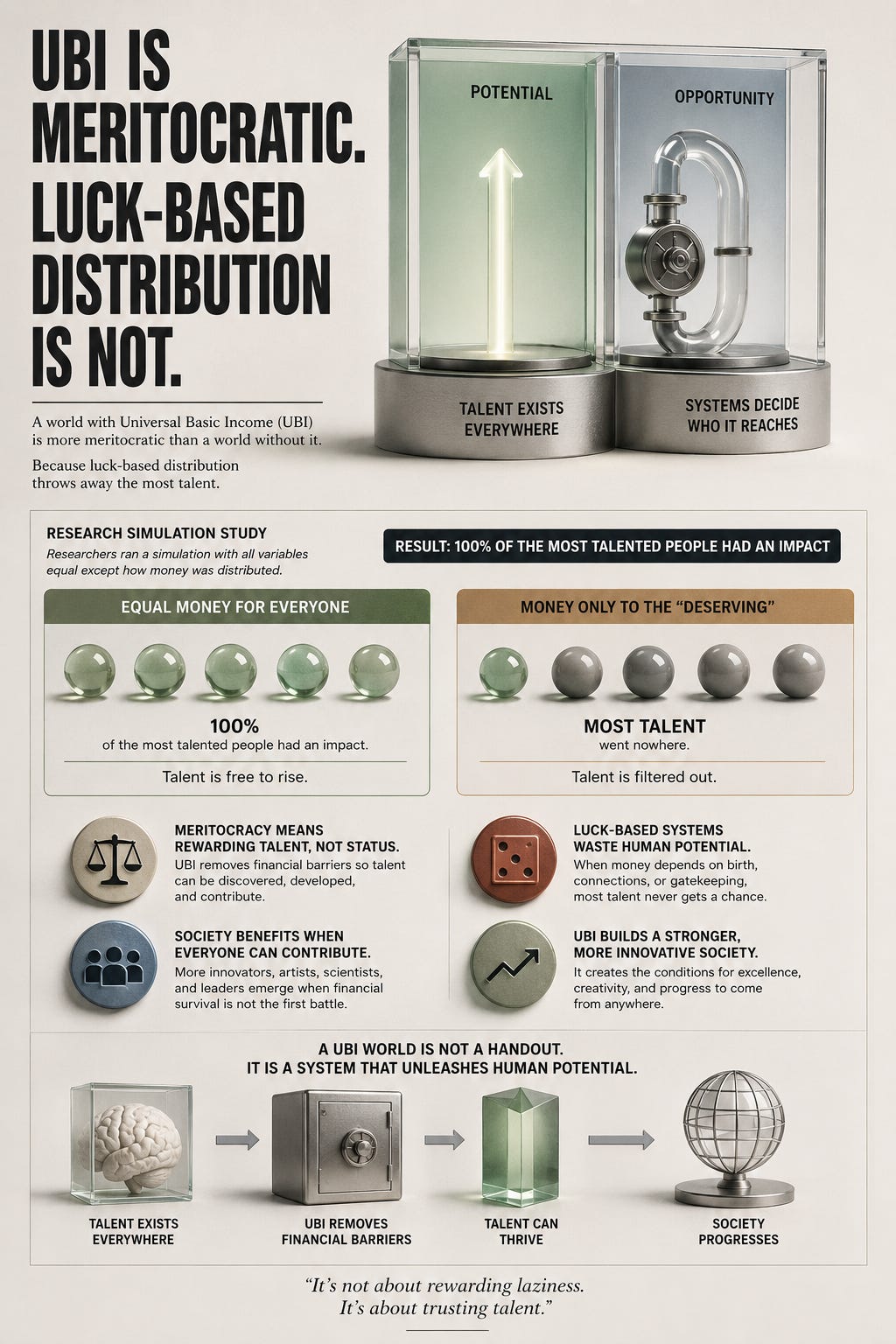
UBI is the cleanest version of the third path. The real limit isn’t money. The real limit is what we can actually create.
When the math changes, the system has to change. The only real question is: Do we redesign the system calmly — or wait for crisis to force it?
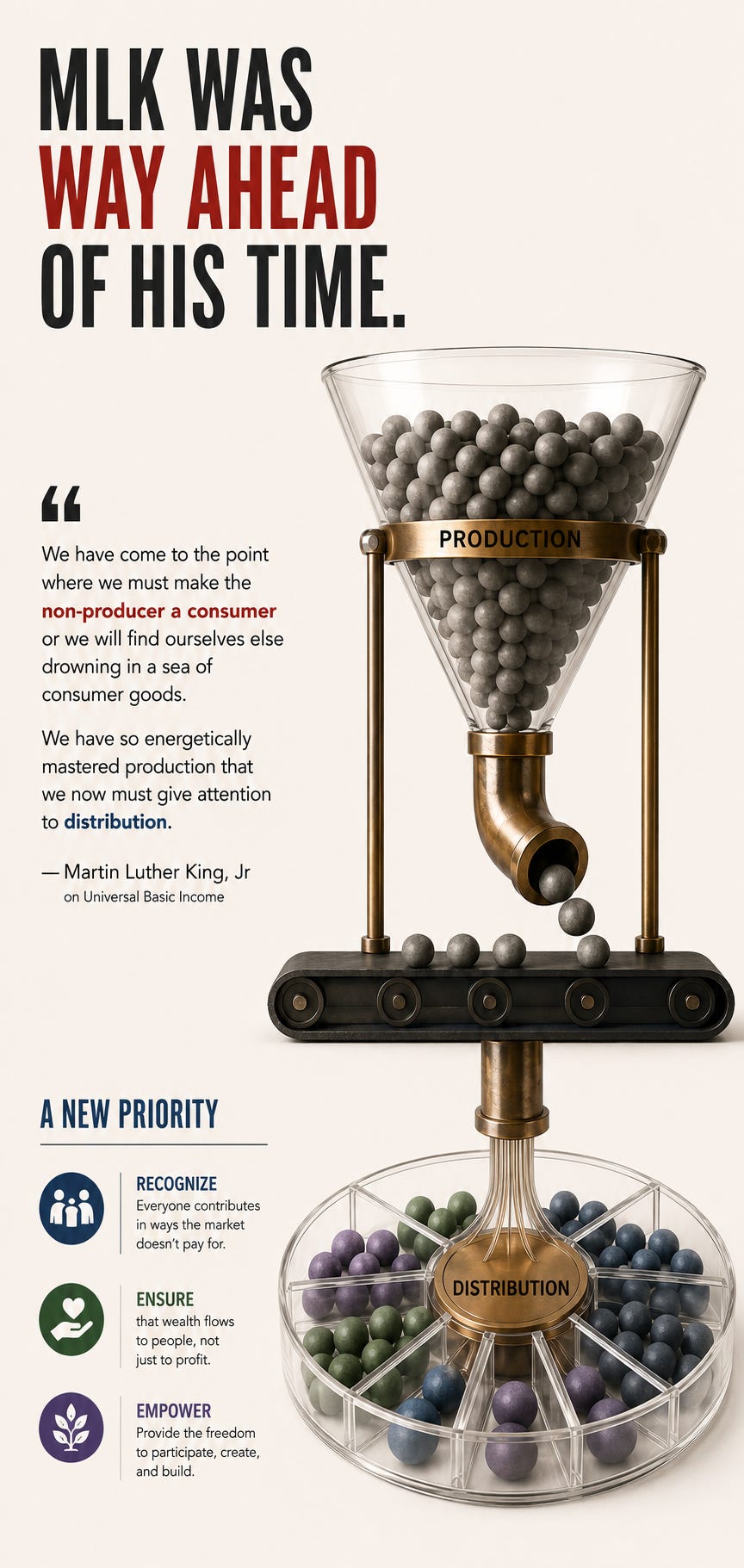
MLK Knew The Coalition That Could Actually Change Things

Chapter 1: The Economy Looks Great. So Why Does Everything Feel Broken?
What AI is already doing to labor
It doesn’t need to replace full jobs. It just needs to: reduce time per task, increase output per worker.
That leads to: fewer hires, layoffs / hiring freezes, remaining workers doing more.
That shift is already happening.
Where the money actually goes
Labor savings don’t vanish. They get redirected into: – AI infrastructure
– stock buybacks – competitor consolidation
So the loop is: cut labor → invest in AI → increase margins
The real endgame (this is the part people are missing)
AI is becoming the workflow layer — the place where work happens.
Stack:
– chips / compute → i.e. Nvidia
– cloud → i.e. Google, Amazon
– models (LLMs) → makes little money
– workflow / OS layer → the next Bill Gates
That last layer is the prize.
Why the OS layer = power
Once a company runs on it:
– their docs, code, decisions flow through it
– their internal processes are built around it
– their teams adapt to it
Switching isn’t “change software.” It’s: retraining people, rewriting workflows, migrating systems. So they don’t switch.
That creates:
– lock-in
– dependency
– long-term control
You don’t need to replace workers. You just need to become unavoidable.
How this concentrates wealth
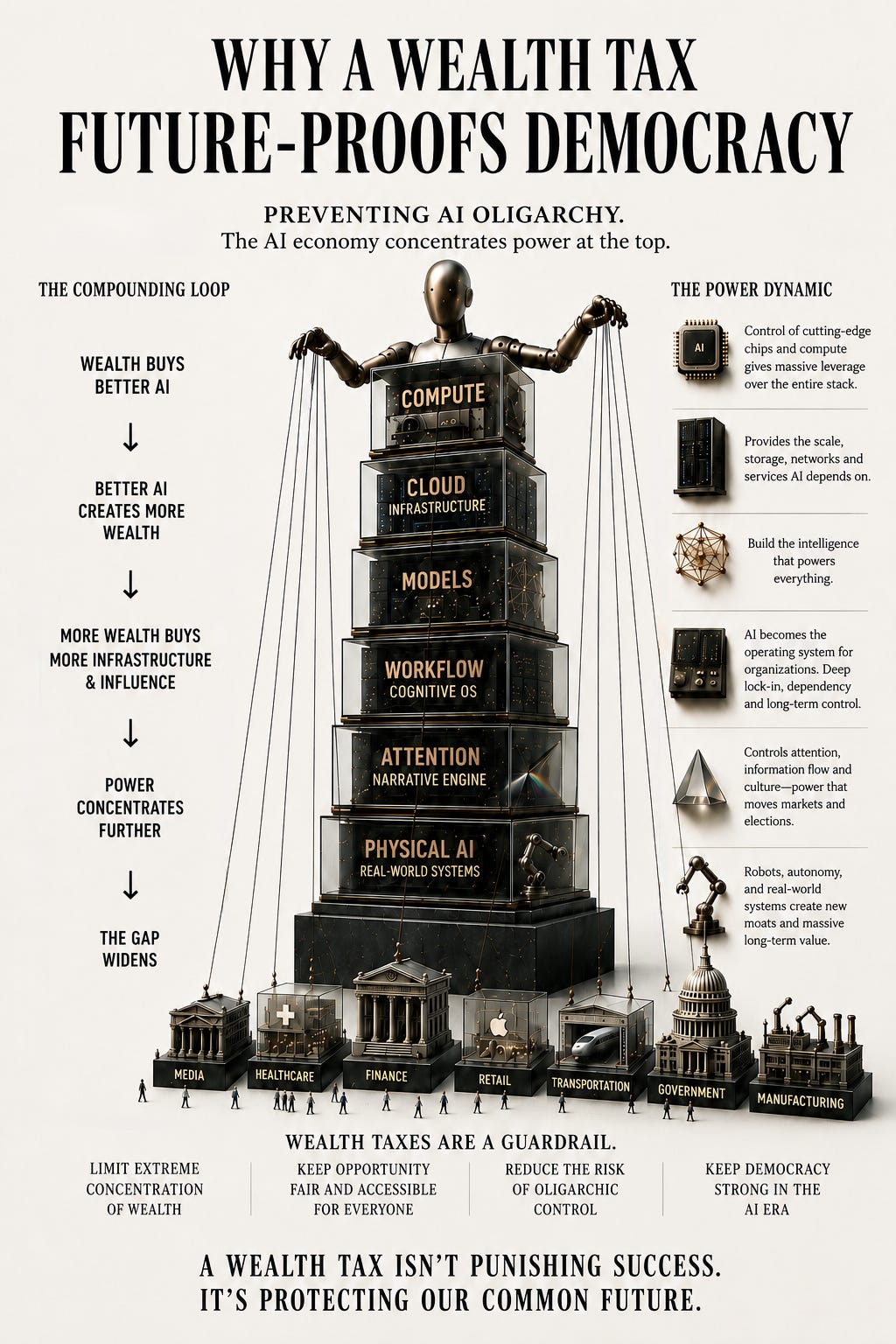
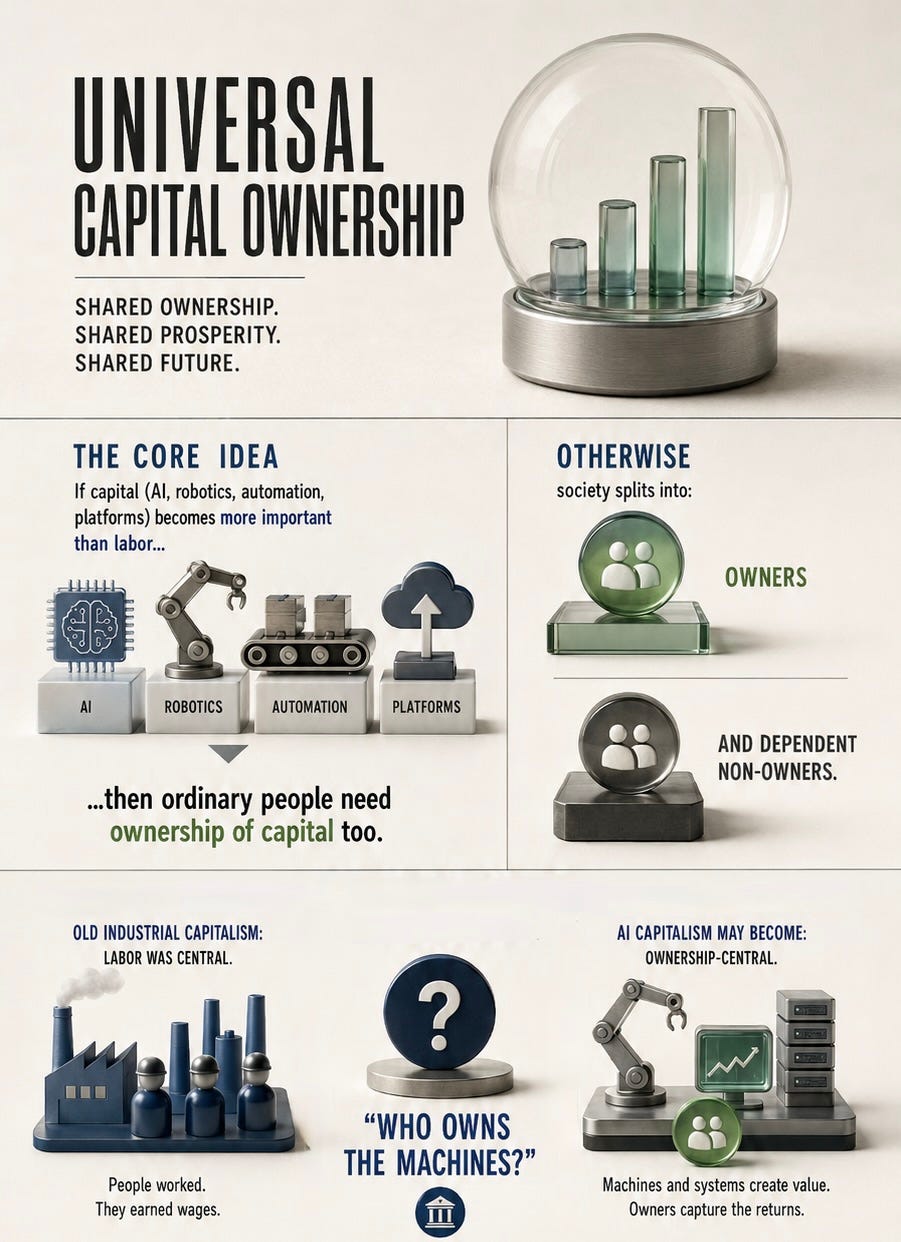
The gains flow to:
– infrastructure owners
– platform owners
– capital holders
Not labor. So even without mass unemployment, you still get: fewer workers needed
higher output per worker, more wealth concentrating upward.
Now connect this to the political reality
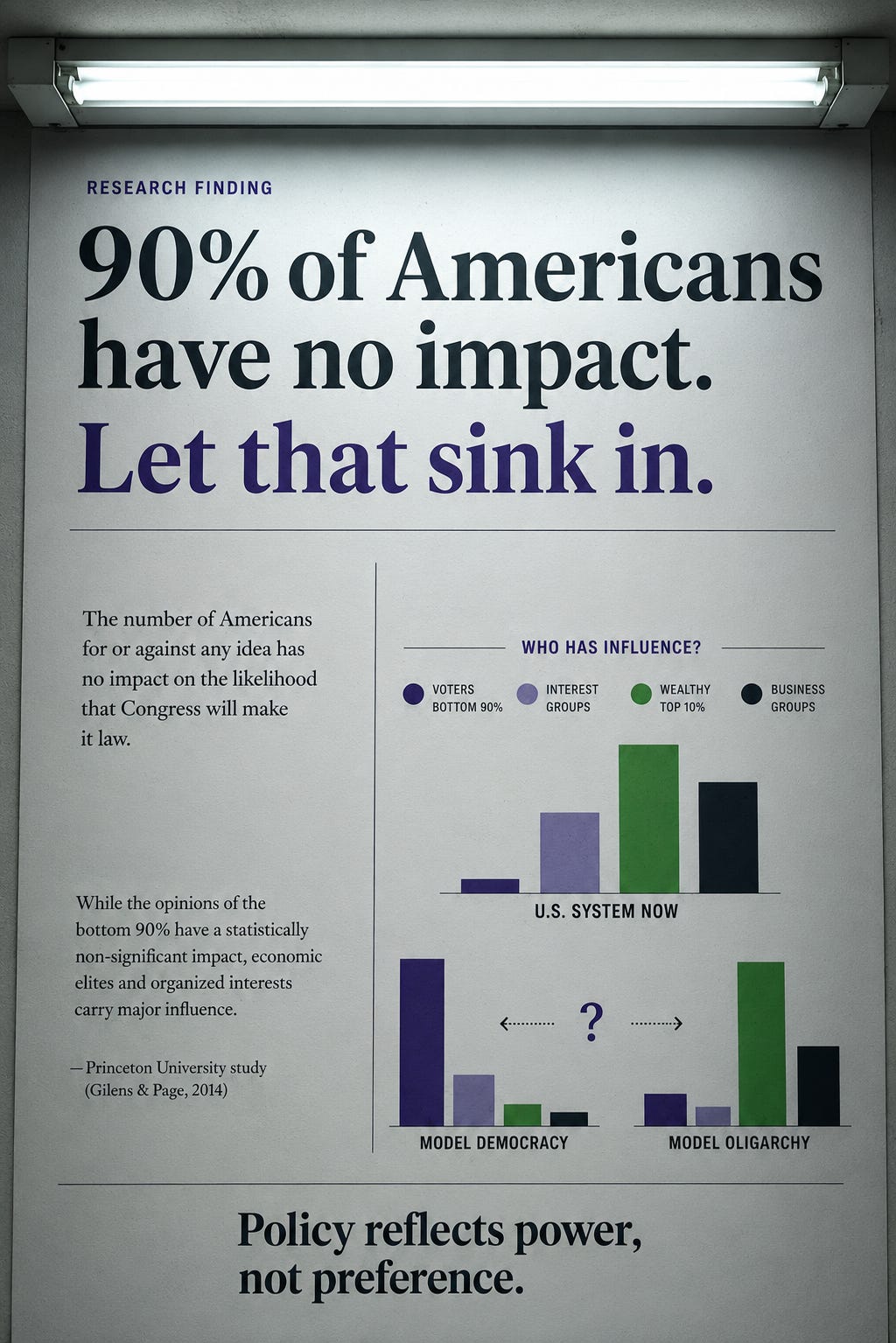
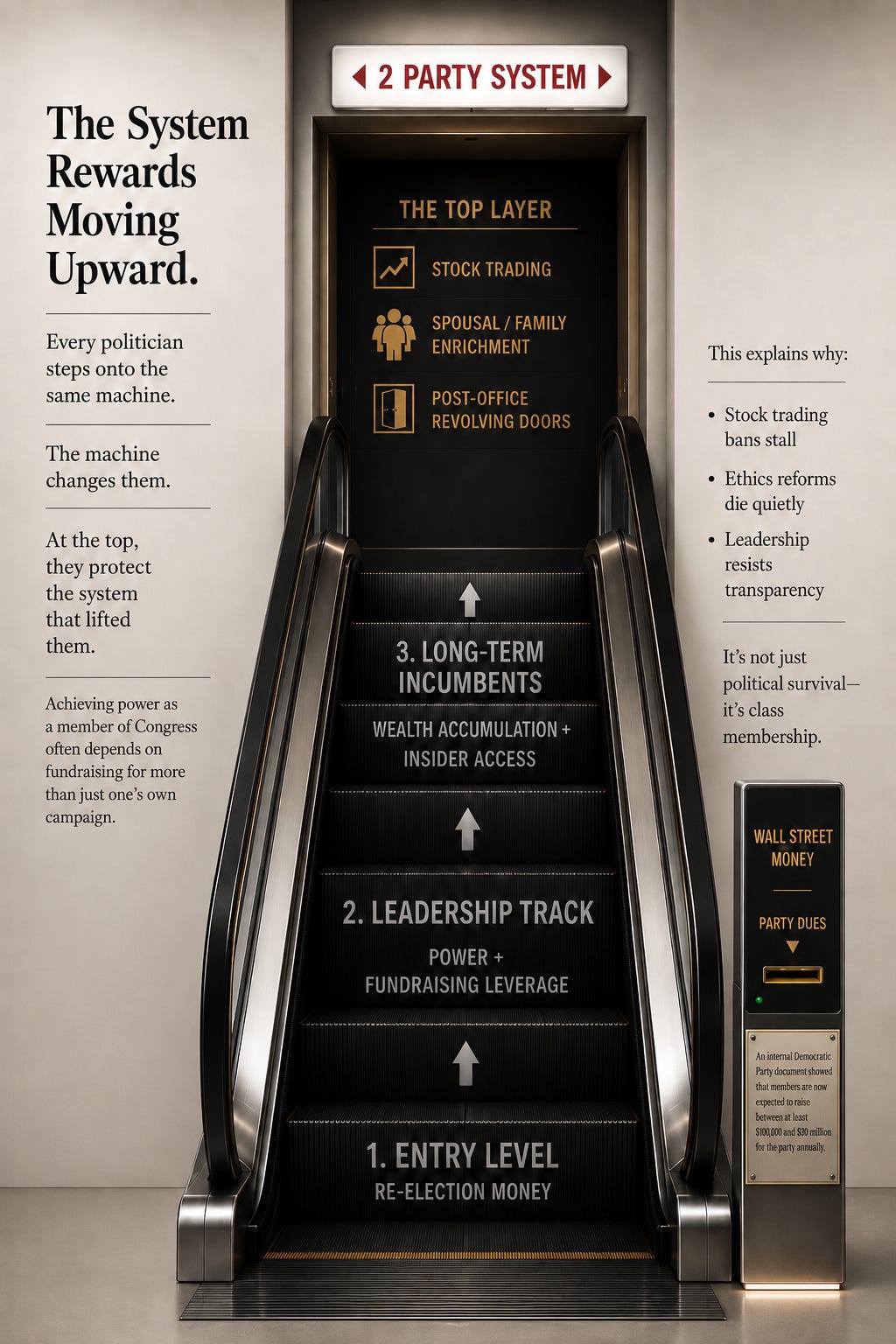
We already have strong evidence (Gilens & Page) that:
– average voters have little independent impact on policy
– economic elites and organized interests have far more
In other words: we’re already operating closer to an oligarchy than a responsive democracy.
Why that matters for AI
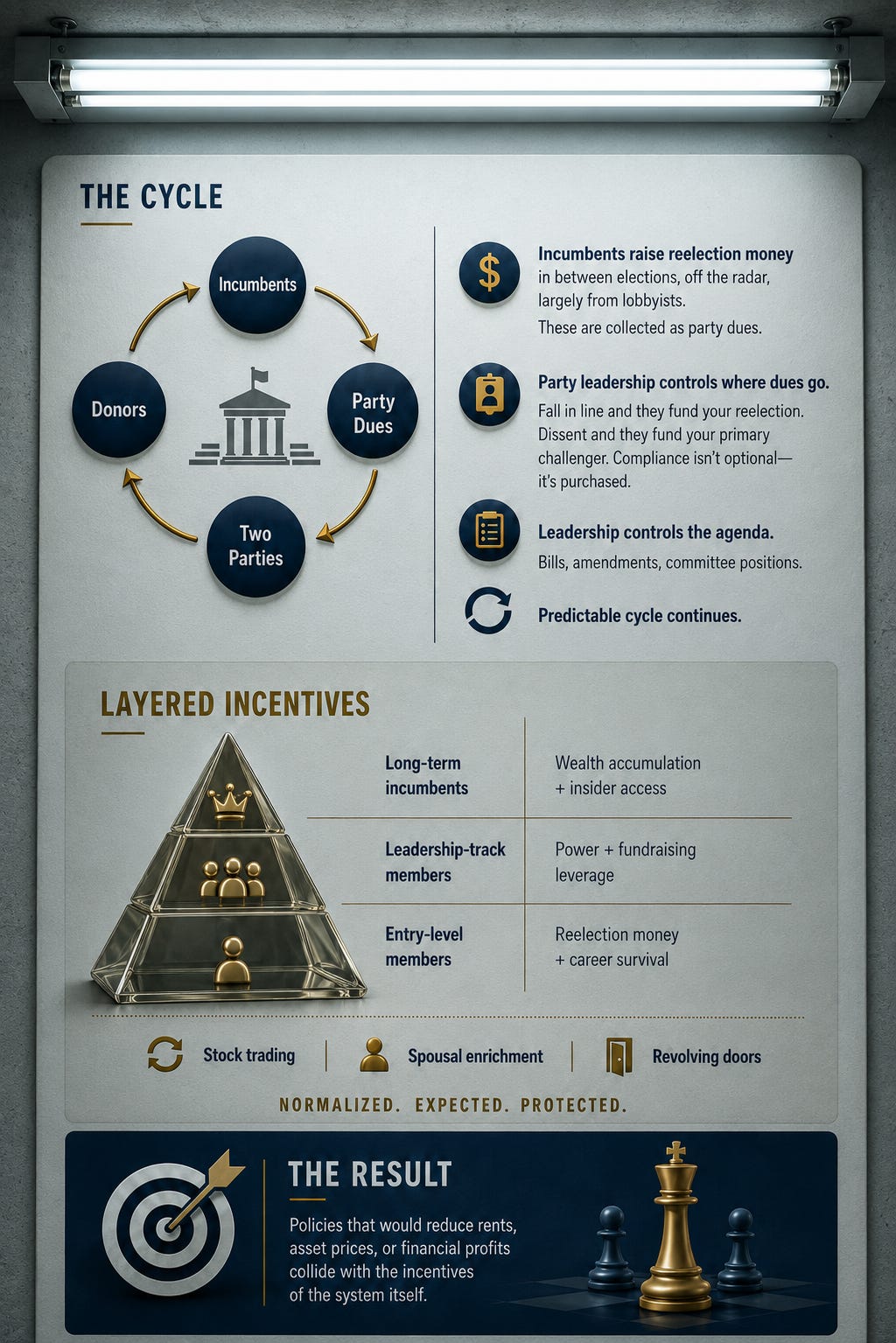
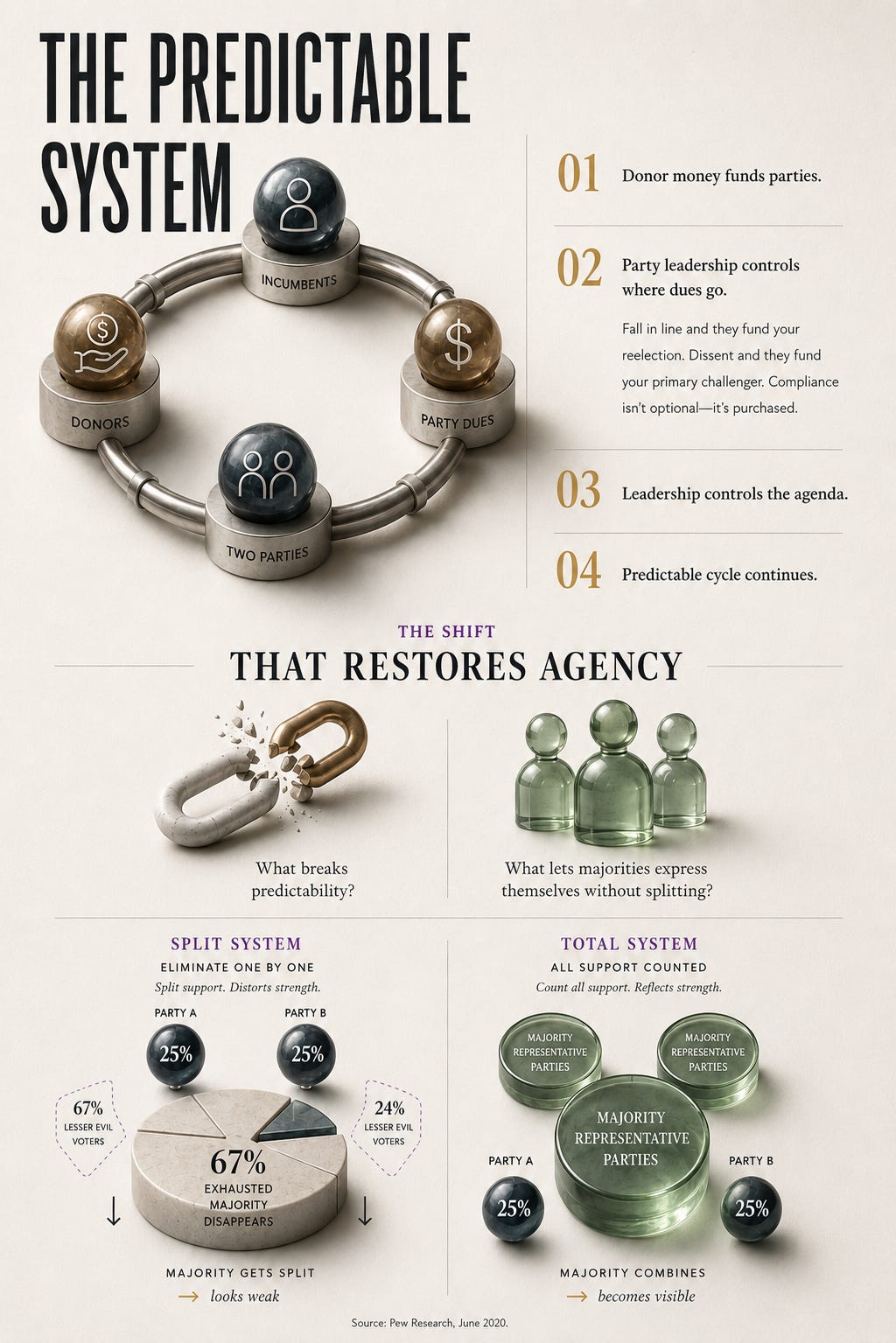
If wealth concentration accelerates inside a system where voters already have weak influence, then the public doesn’t have a clean mechanism to correct it. And our voting structure makes it worse:
– majority support gets split
– outcomes get decided by funding – entrenched power stays entrenched
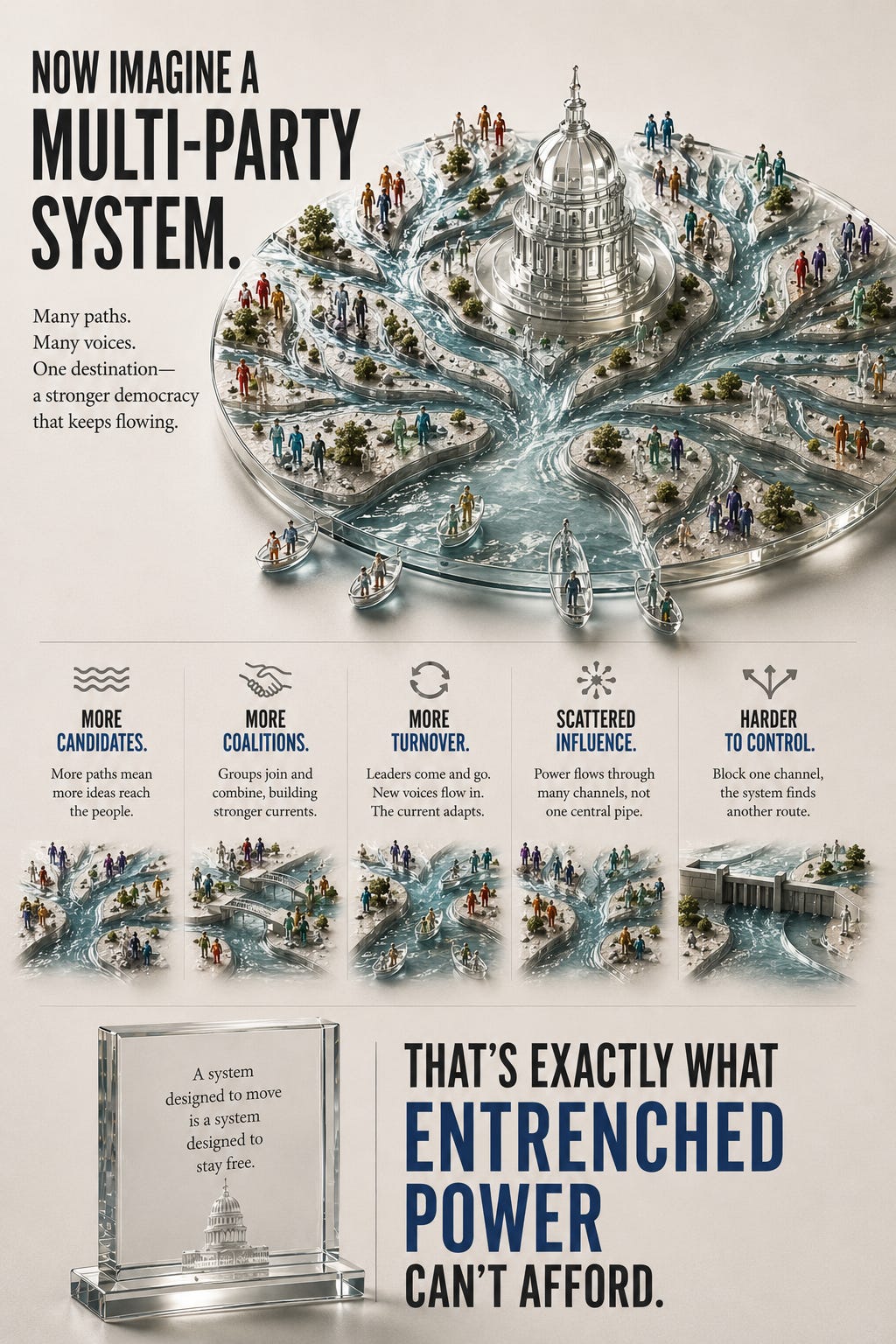
The system doesn’t need to beat a majority. It just needs it to split.



Timelines can be argued all day. But the core issue is unchanged: If productivity rises
and ownership stays concentrated, you get: more output, fewer workers needed, more concentration of wealth and power.
“AI isn’t that good yet” is not a stable statement.
Technology:
– improves
– scales
– breaks through unpredictably
You don’t need to predict the exact moment. Just the direction. This isn’t about whether AI replaces everyone next year. It’s about: who owns the layer that work runs through inside a system where the majority already struggles to translate preference into power.
Chapter 8: UBI vs. A Job Guarantee
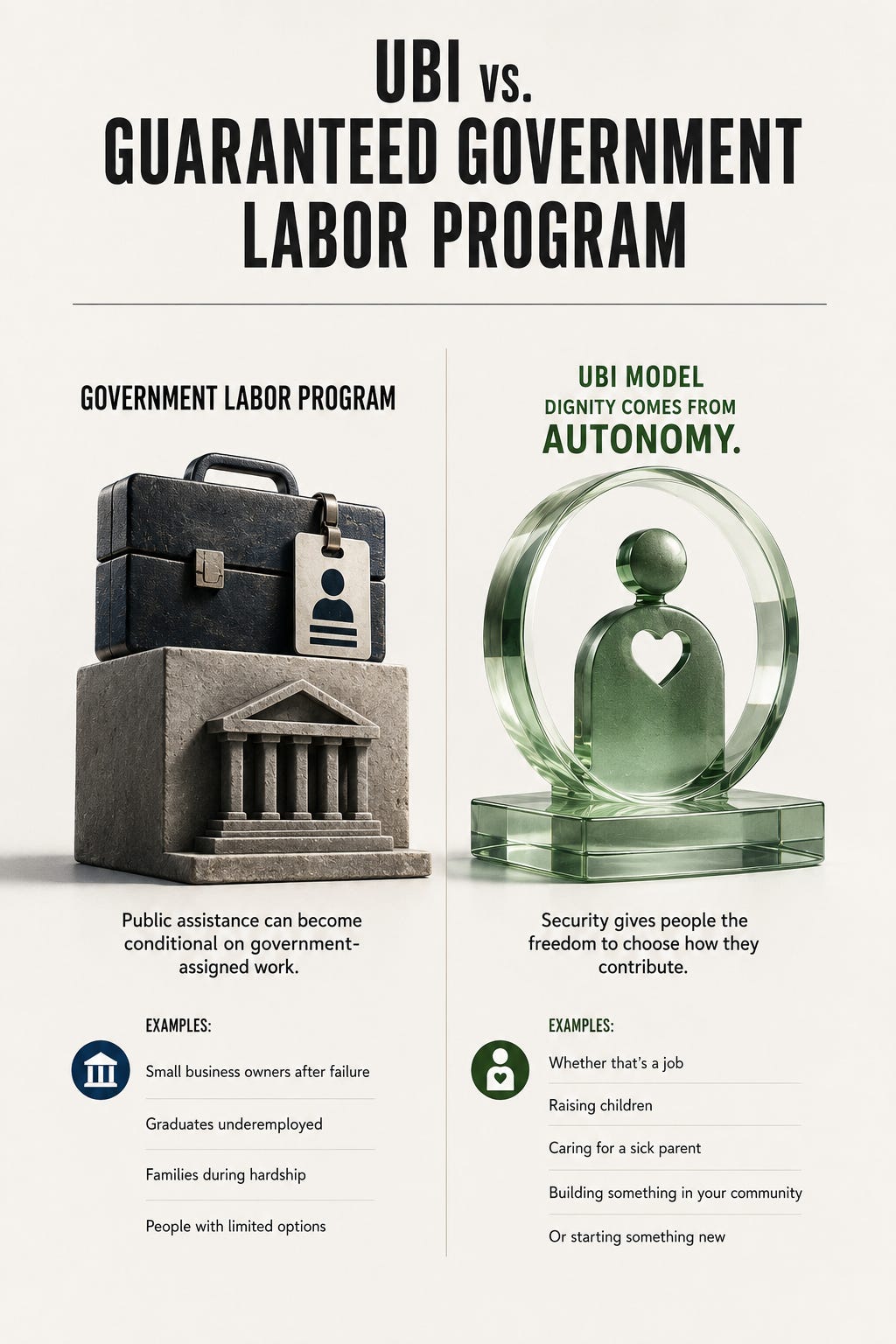
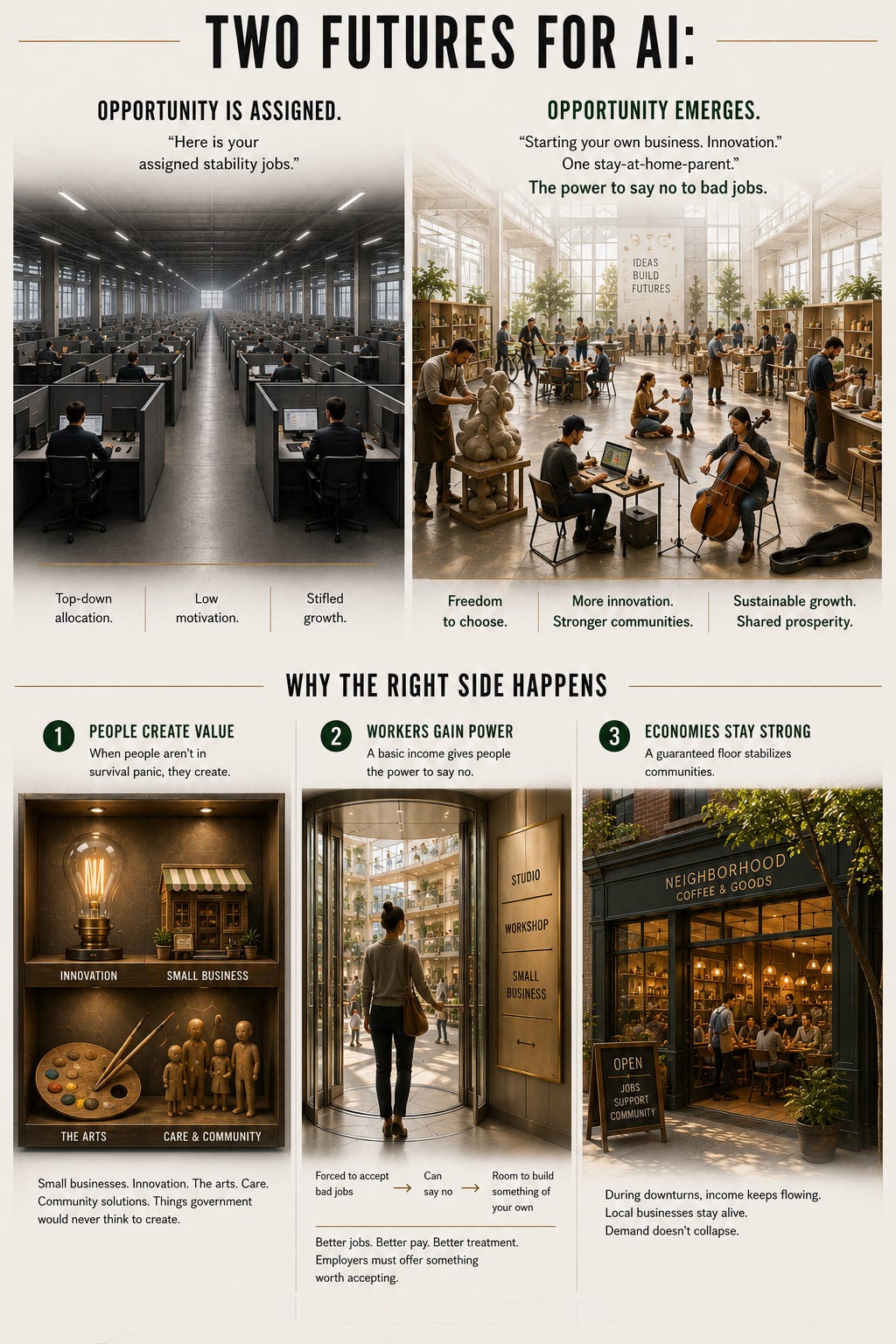
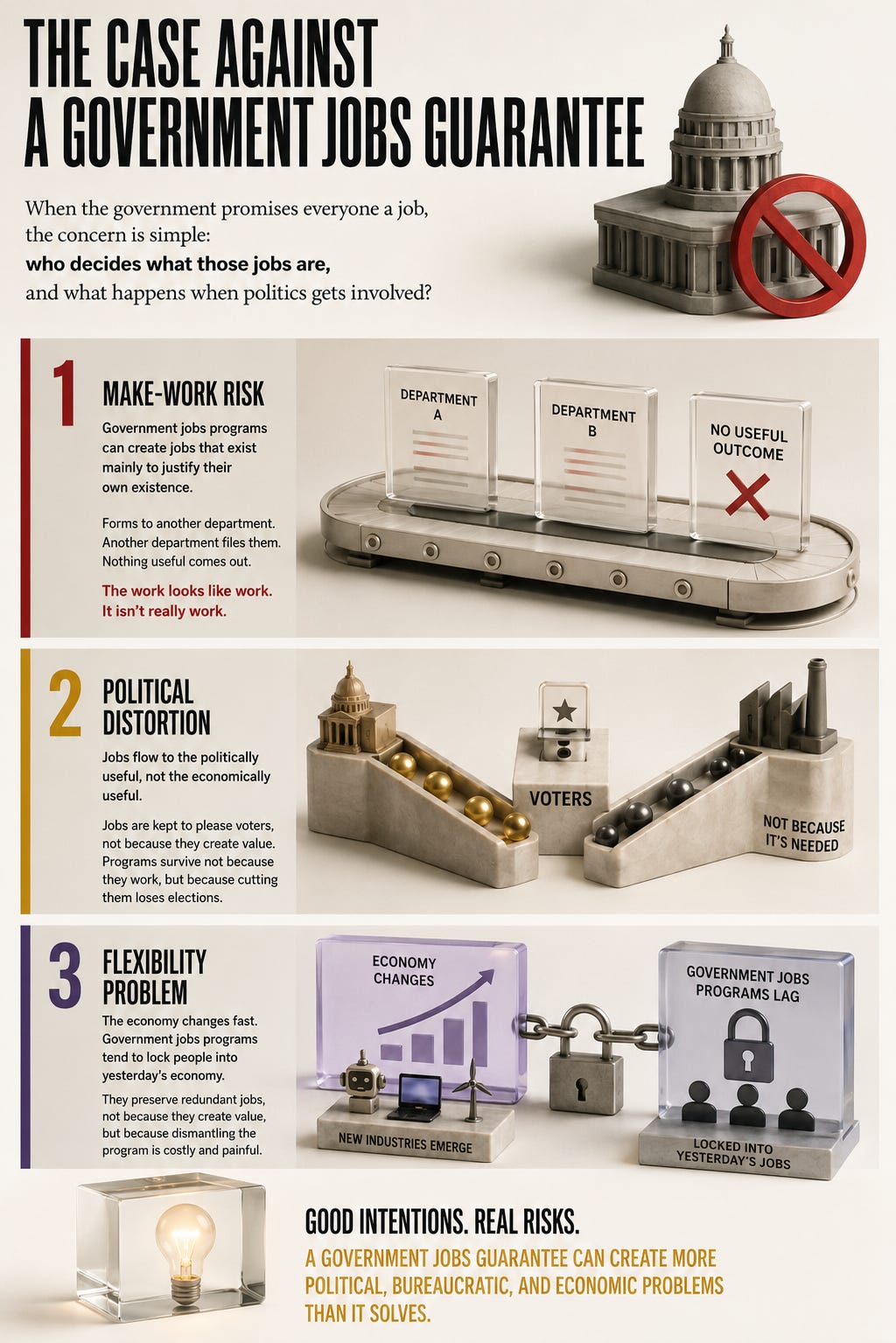
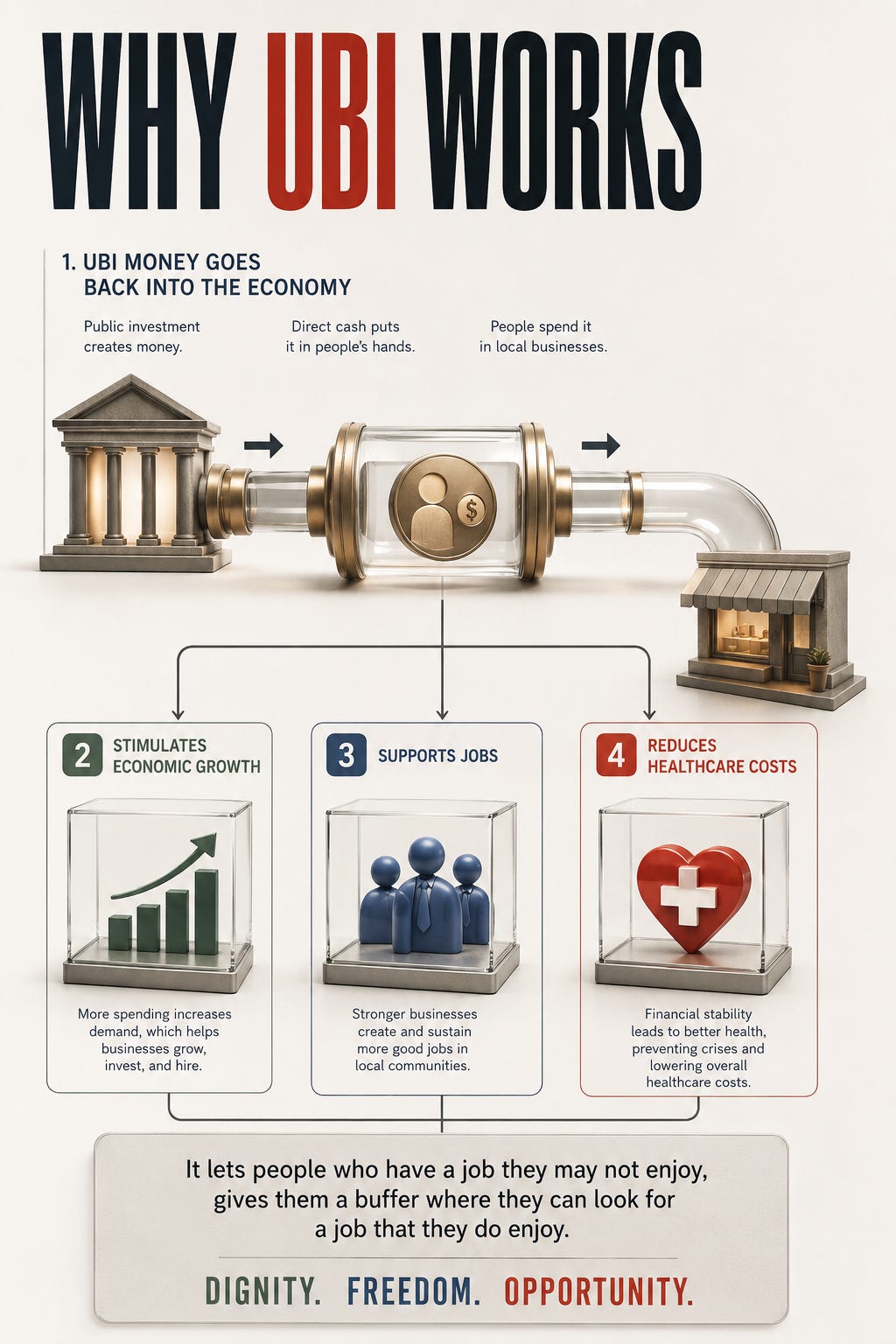

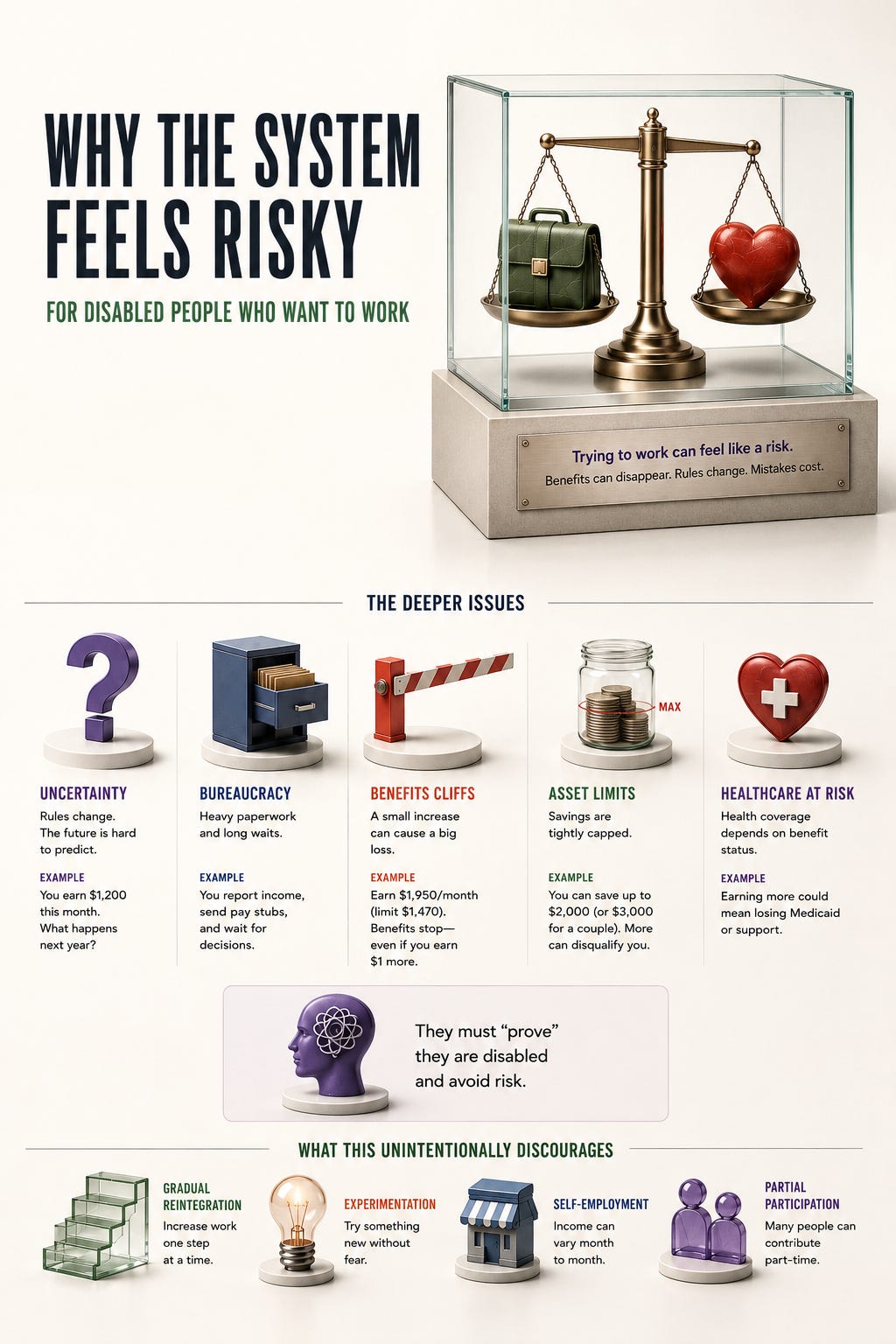
Some people prefer a Job Guarantee. The idea is simple:
If you want work, the government provides it. That keeps work at the center of the system.
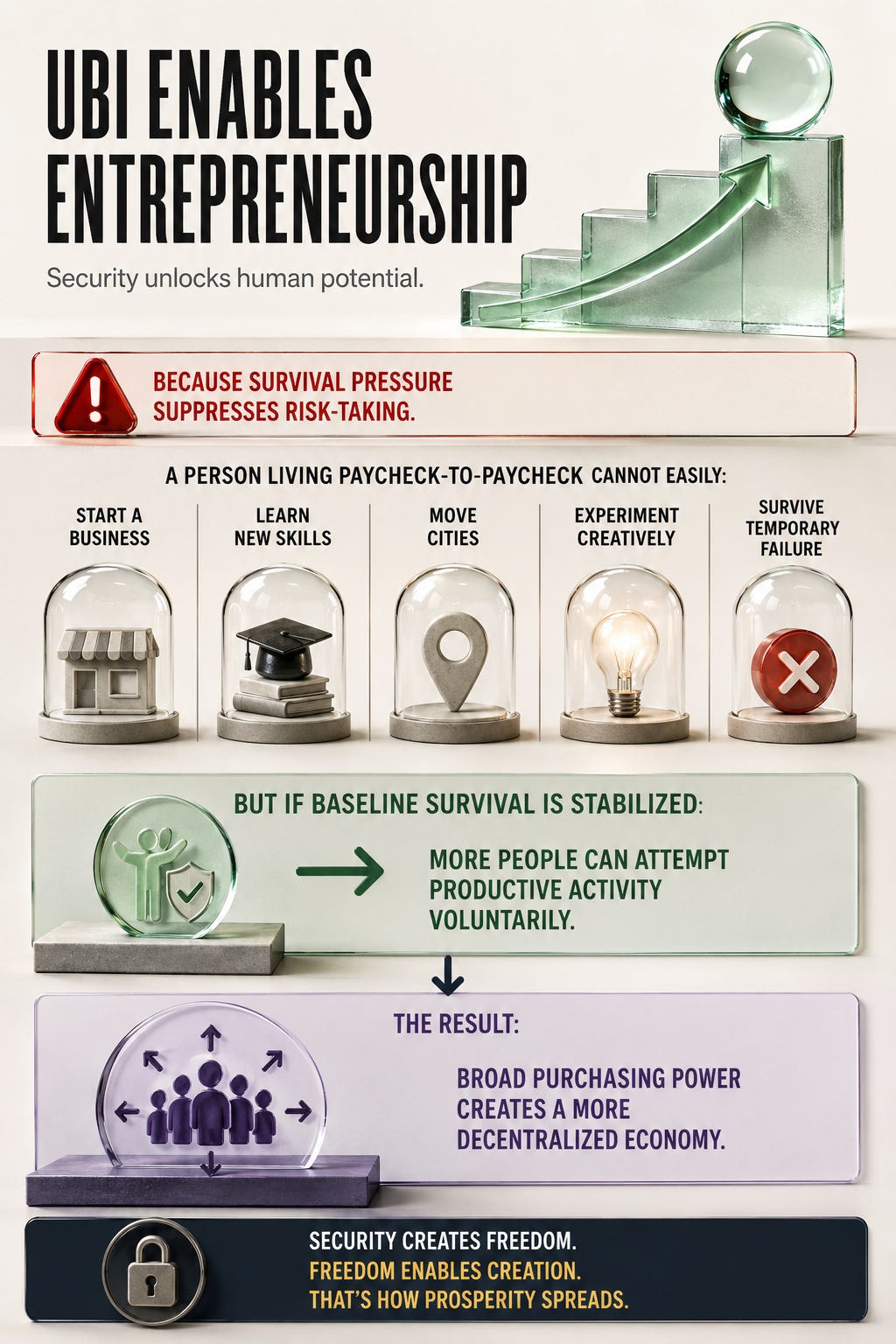
UBI does something different. UBI says:
Your survival doesn’t depend on having a job.
UBI = security first.
Job Guarantee = employment first.
Now bring it back to a real household. Picture two parents working full time.
Childcare is expensive.
Schedules are tight.
Stress is constant.
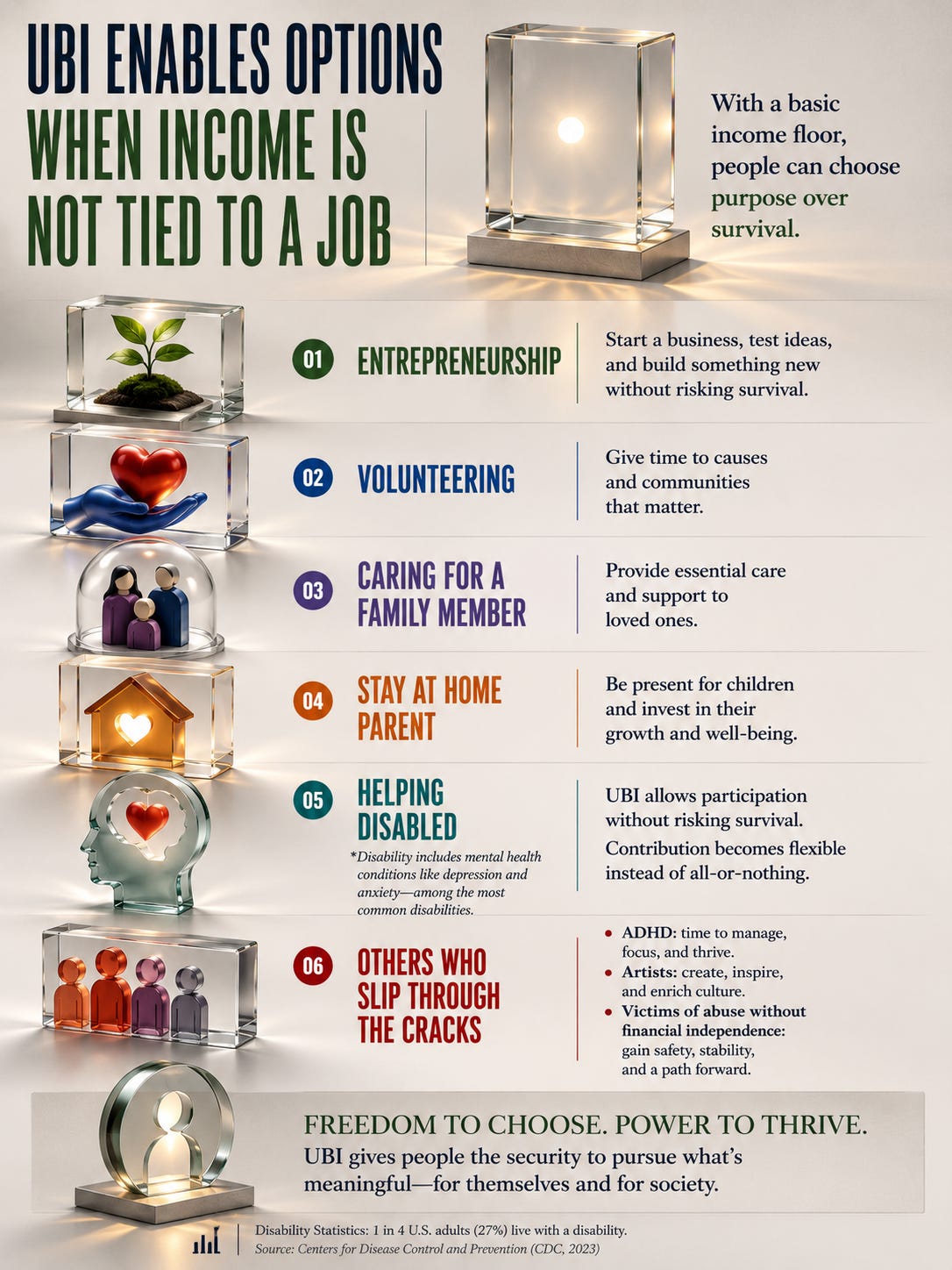
A modest UBI doesn’t mean no one works. It might mean:
One parent works part time.
Or stays home during early childhood.
Or has the flexibility to care for a sick parent.
Stable parental presence in early years is linked to:
Better emotional development.
Stronger school outcomes.
Lower household stress.
UBI creates breathing room. A Job Guarantee still ties income to clocked hours. And here’s the harder question:
If automation keeps reducing the need for workers, at what point does inventing jobs just to justify income start feeling misaligned with freedom?
There is real work that needs doing. But if machines produce enough,
at some point, creating work simply to justify income raises an uncomfortable question: are we preserving dignity — or just preserving structure?
UBI directly addresses that shift. It accepts that work may change —
and survival shouldn’t depend entirely on whether the labor market needs you this year.
Chapter 9: Money Has a Real Origin Story. Economists Just Aren't Allowed to Tell It.
Turns out the people who study human societies know more than the people who study spreadsheets.