The "F" Word Politicians Aren't Allowed To Say
"Financialization"

Part 1: The Big Picture

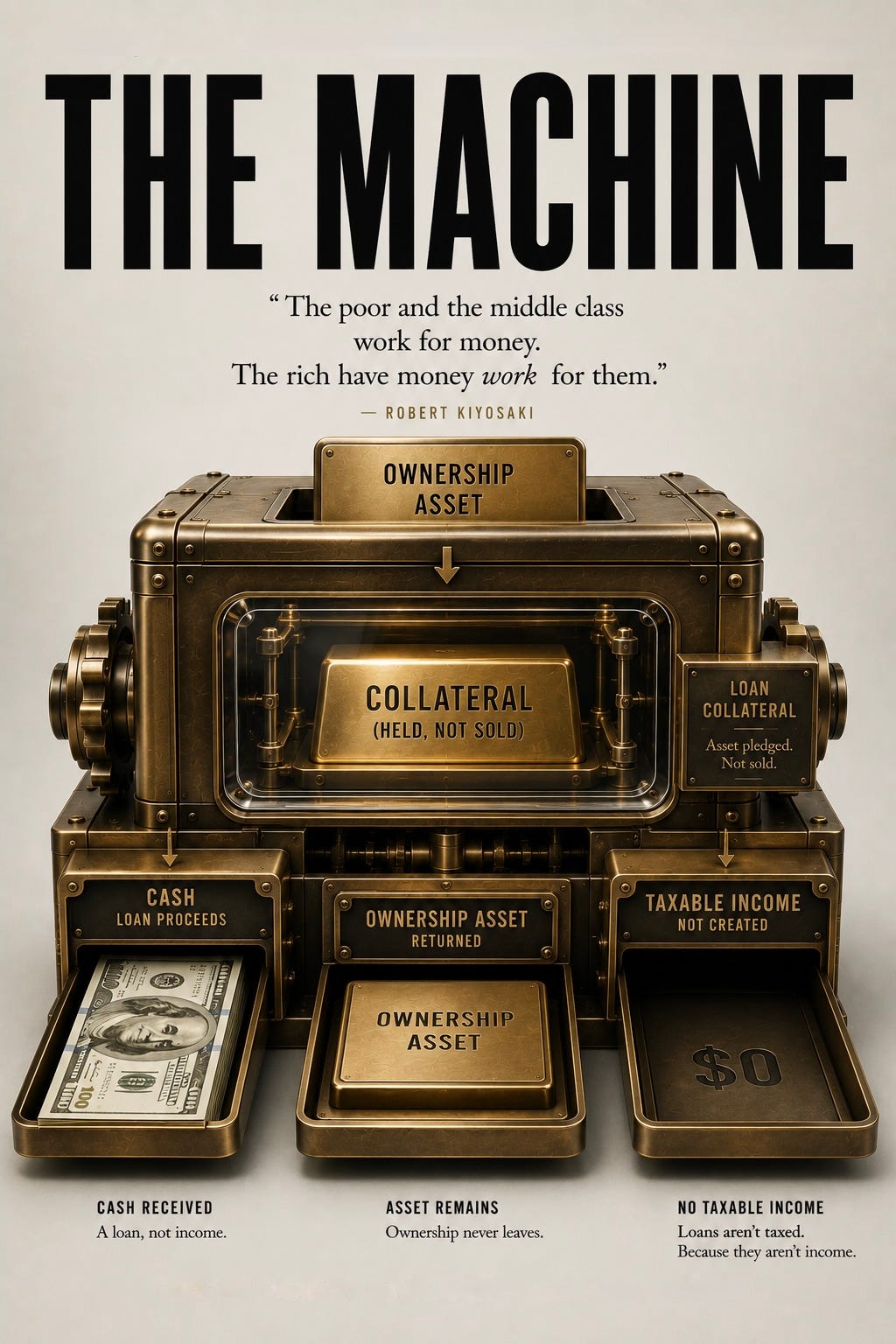
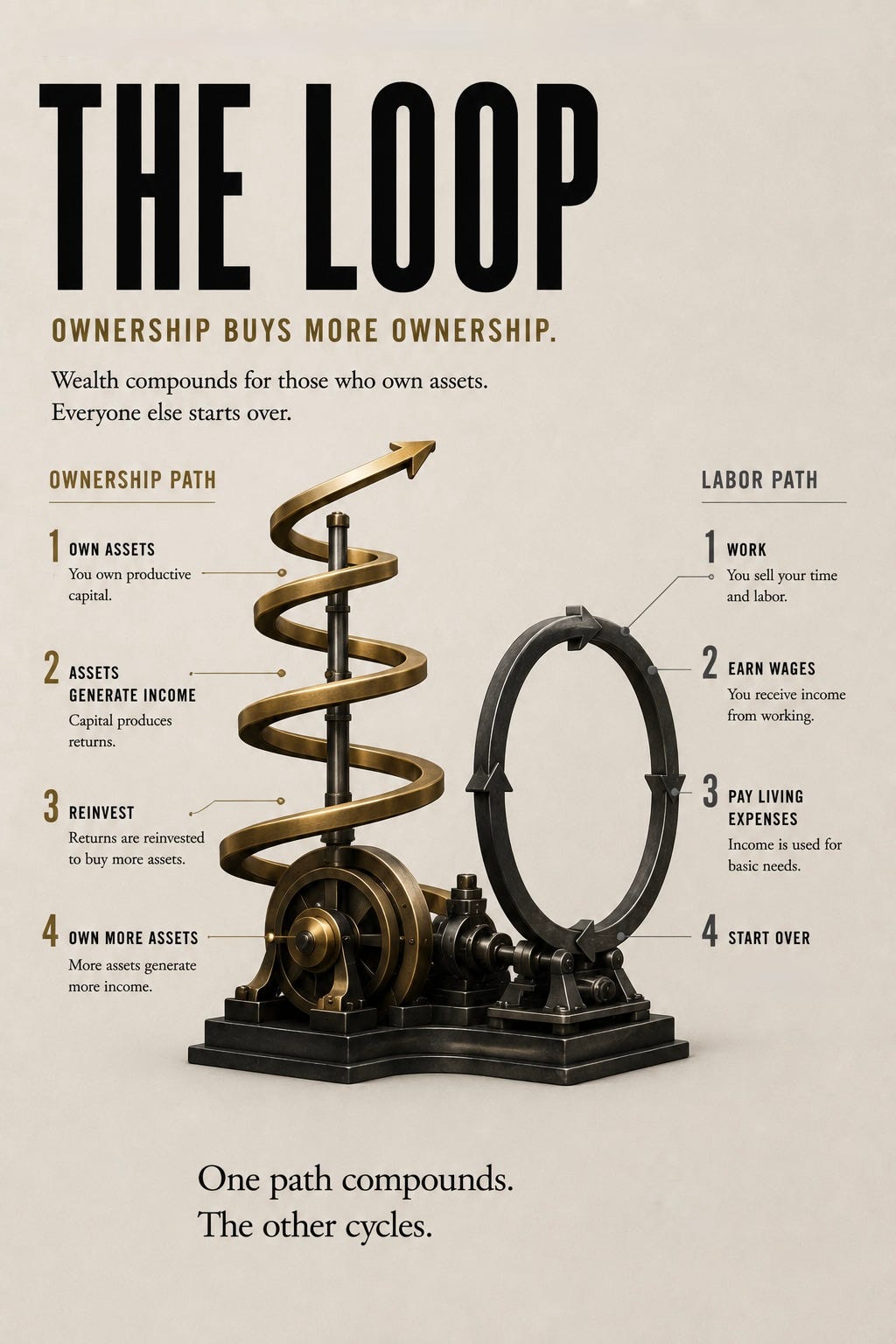
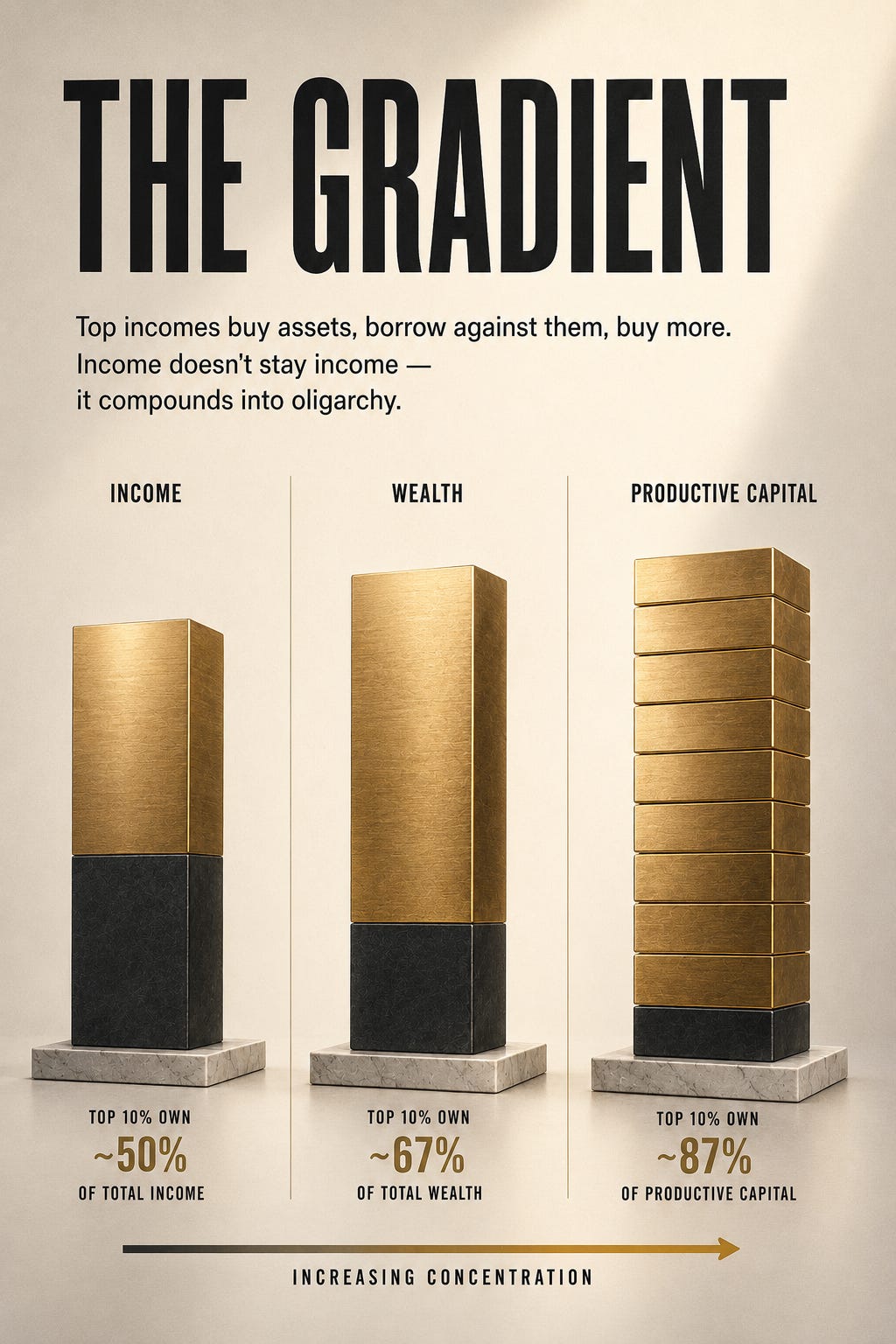
Part 2: The Economy Looks Great. So Why Does Everything Feel Broken?
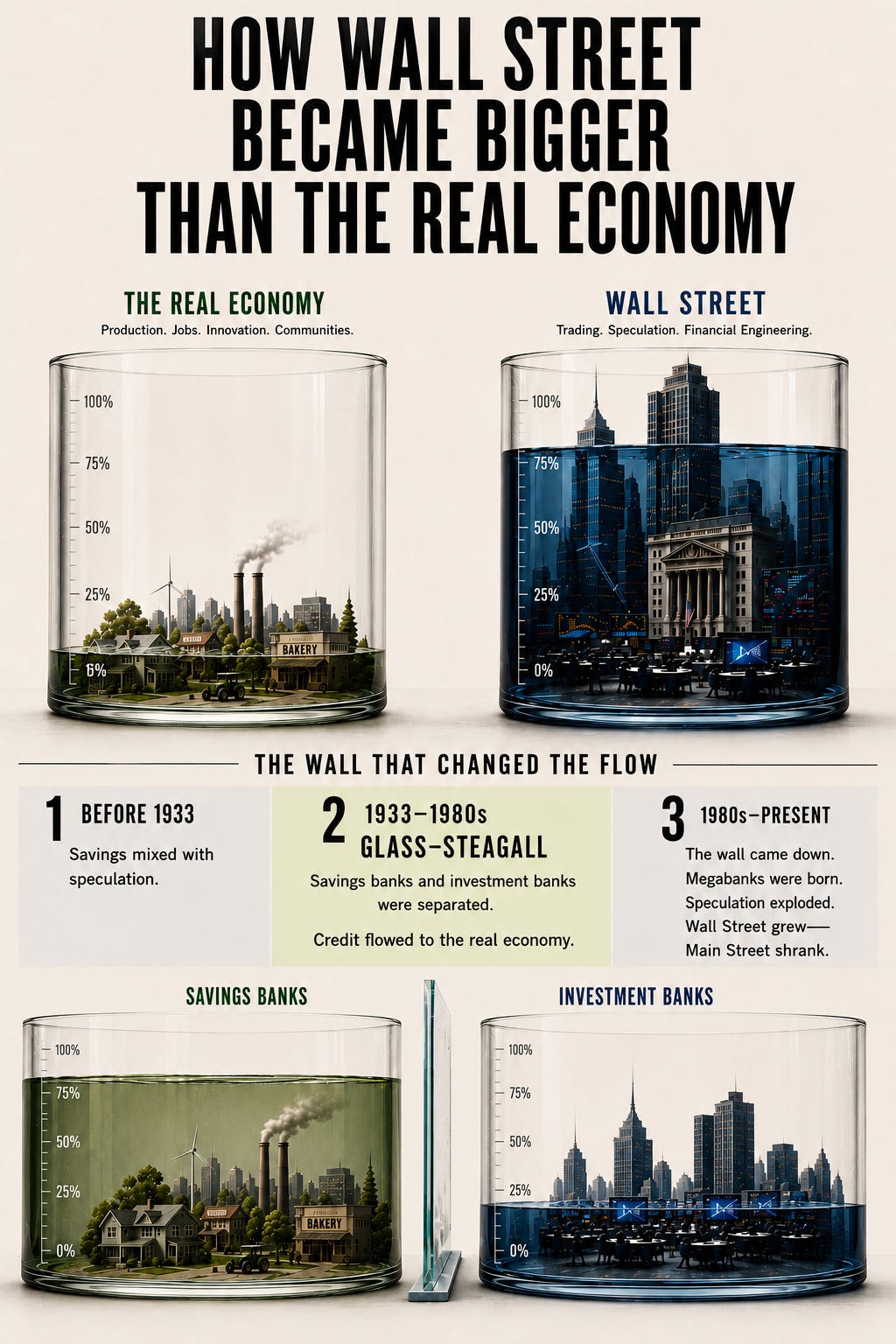
Part 3: The Outline
1 — Definitions
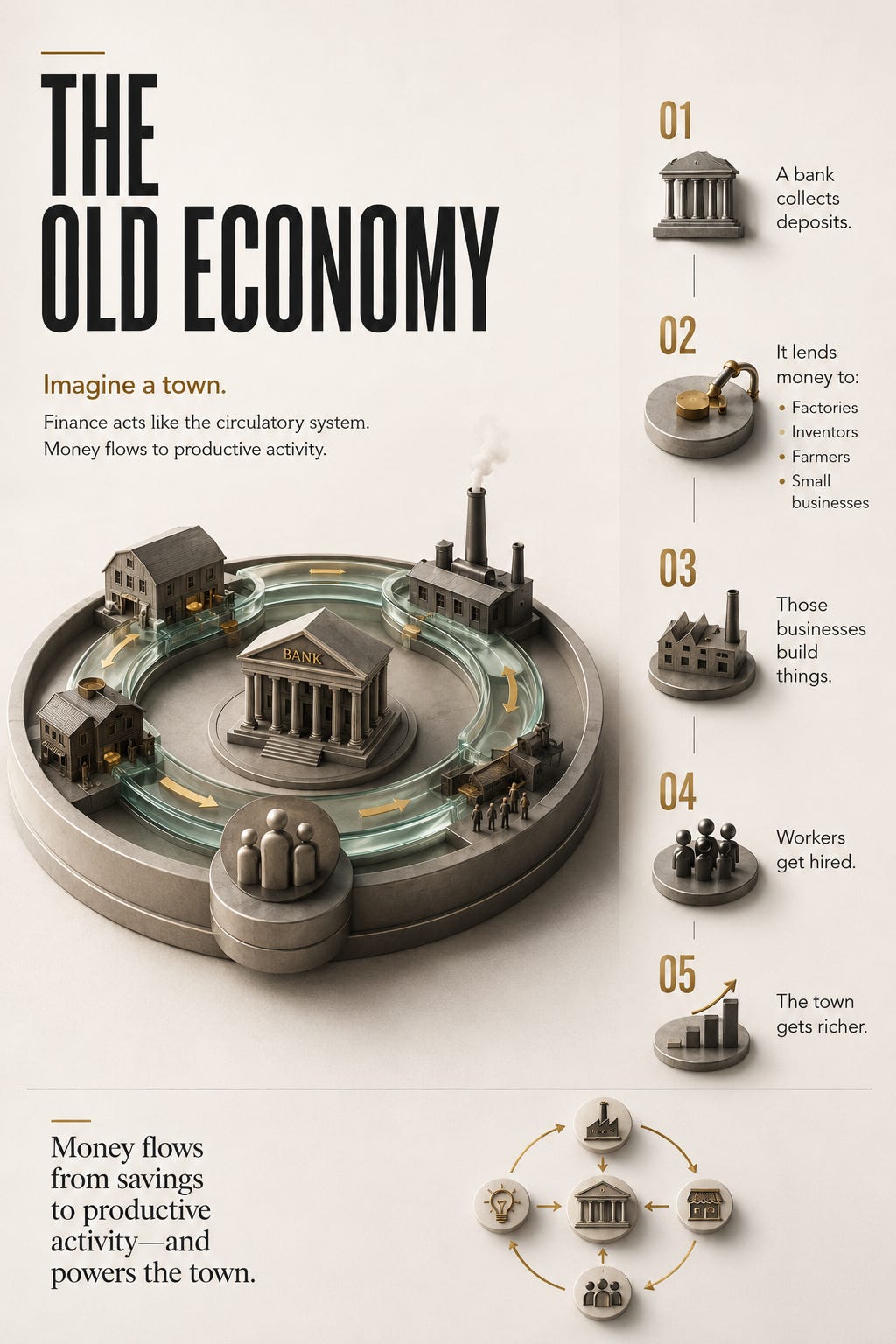
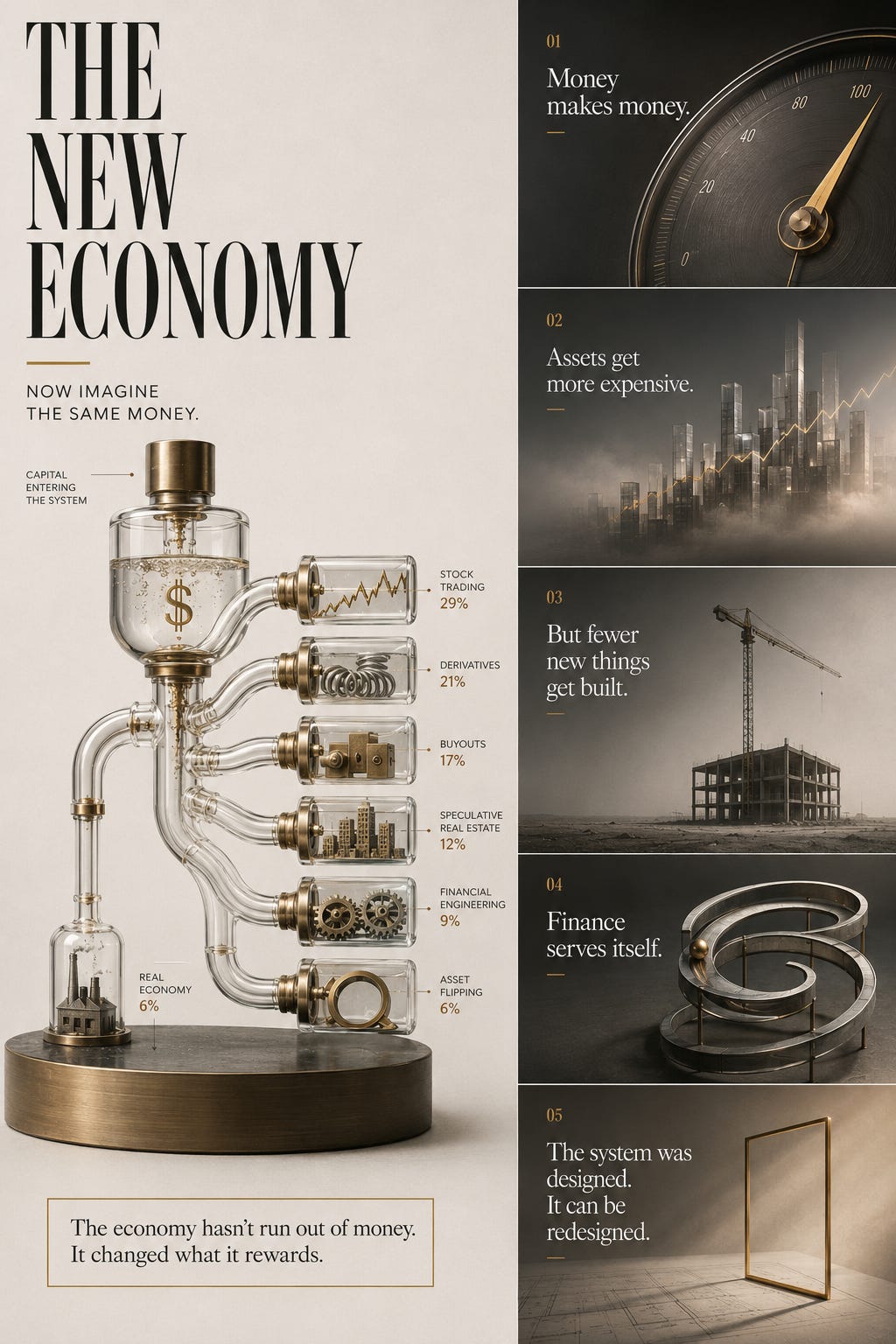
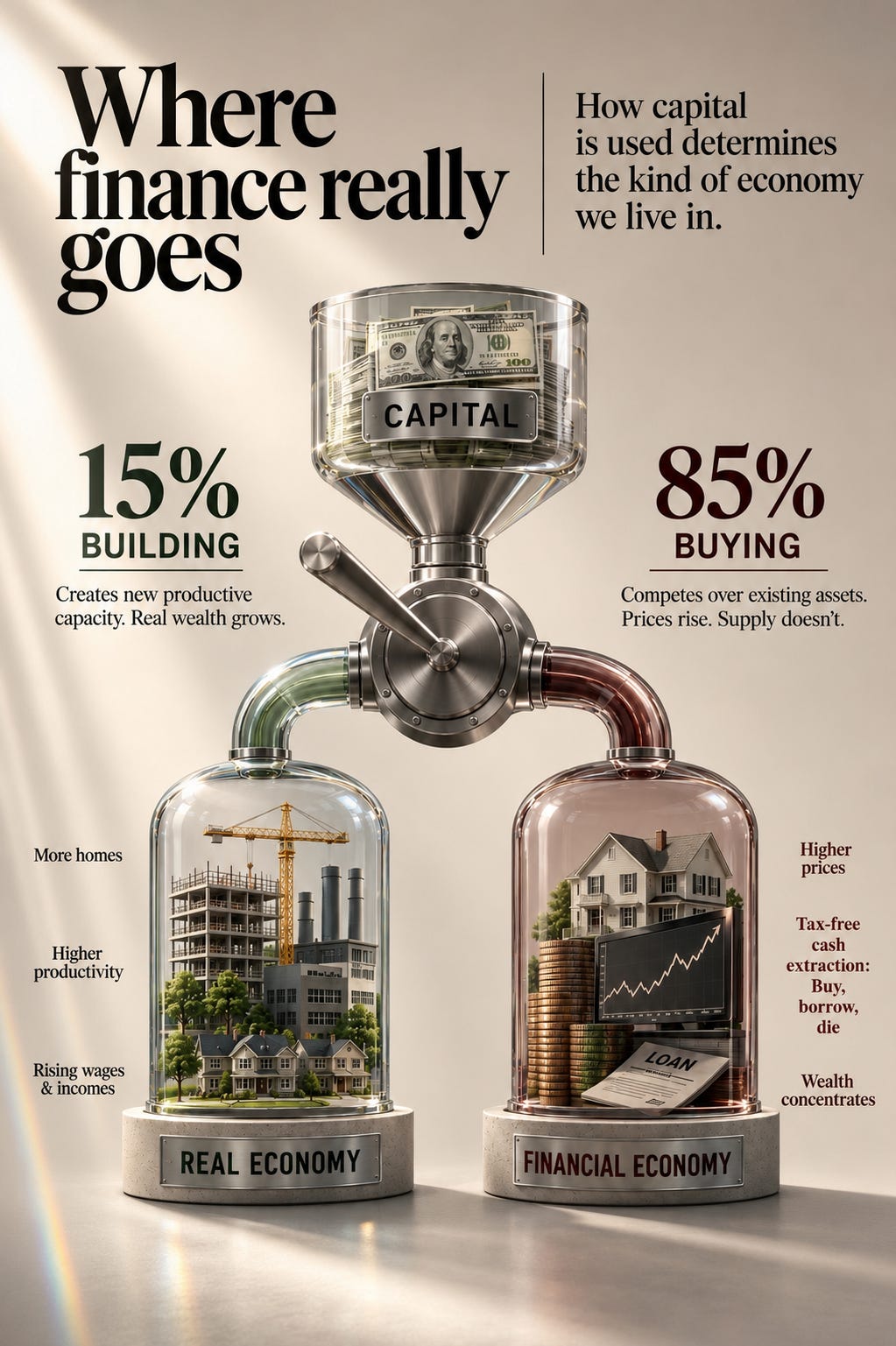
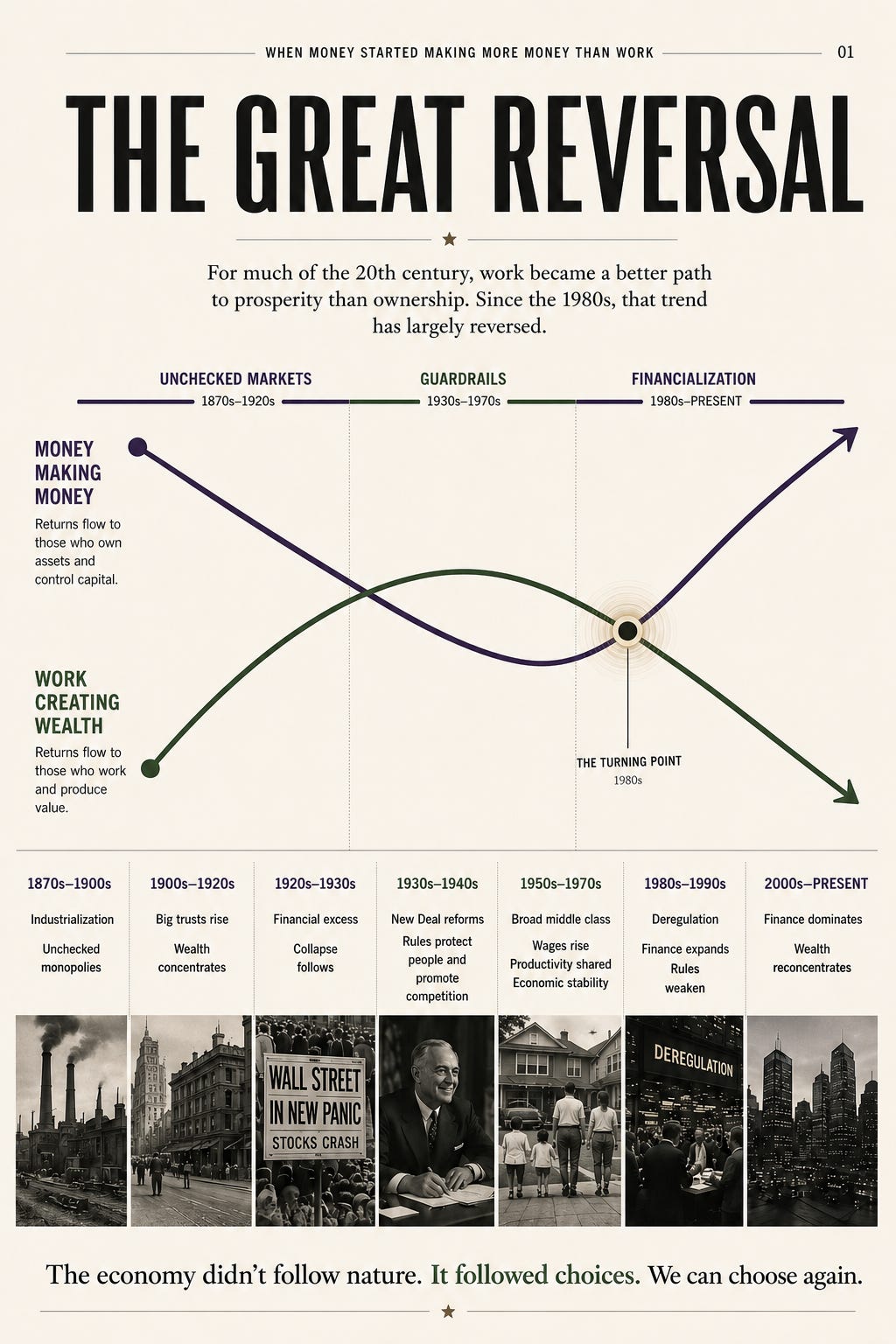
An economy can grow in two different ways:
Through productive work (making goods, providing services, building value).
Through financial extraction (“making money from money”).
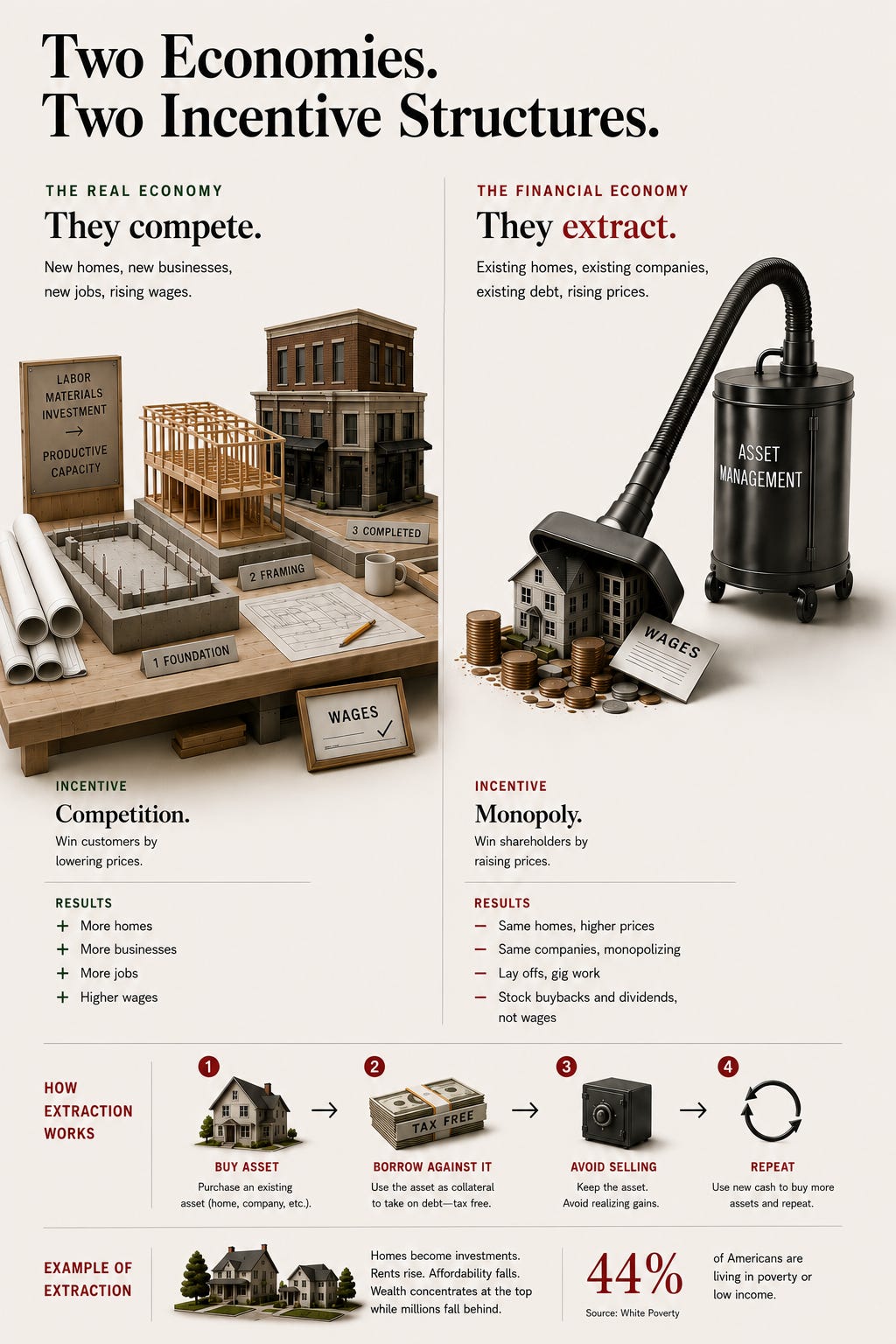
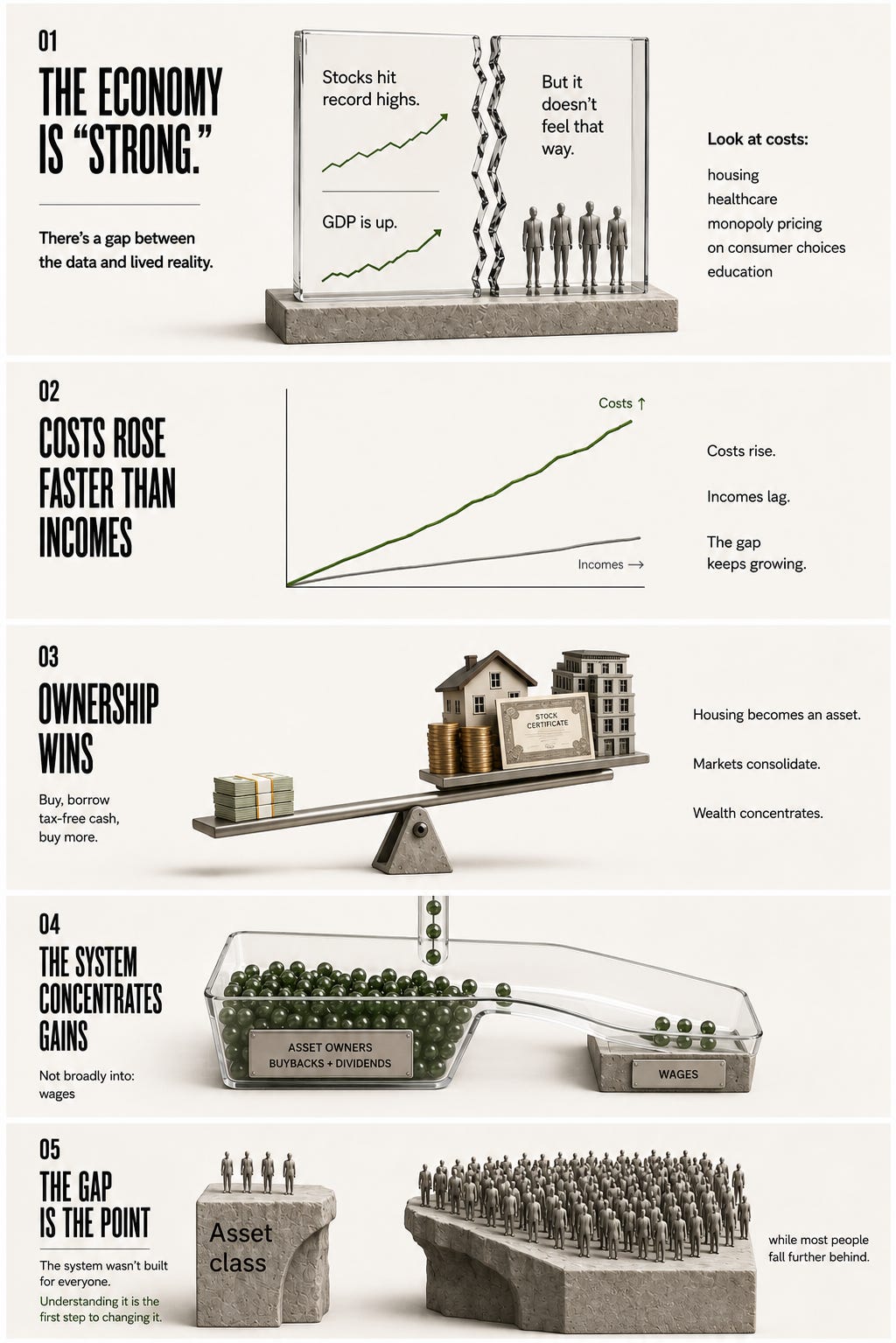
That’s why the stock market can be booming while your town feels like it’s dying. They’re not connected the way most people think.
When finance is regulated, growth depends on real competition (instead of financial engineering) and broad prosperity (wages).
When finance dominates, growth depends on corporate consolidation (monopolies), stock market inflation, and wealth concentrating at the top.
That difference determines who prospers.
2 — Gilded Age
Policy Environment:
Minimal regulation. Monopolies unchecked. Finance and speculation expanding rapidly.
Finance and monopolies dominated. Wealth concentrated at the top. Speculation replaced productive investment.
Outcome:
Instability →
Wall Street Crash of 1929 →
Great Depression
Financial dominance produced systemic collapse.
3 — Structural Correction (New Deal)
Leader:
Franklin D. Roosevelt
Policy Changes:
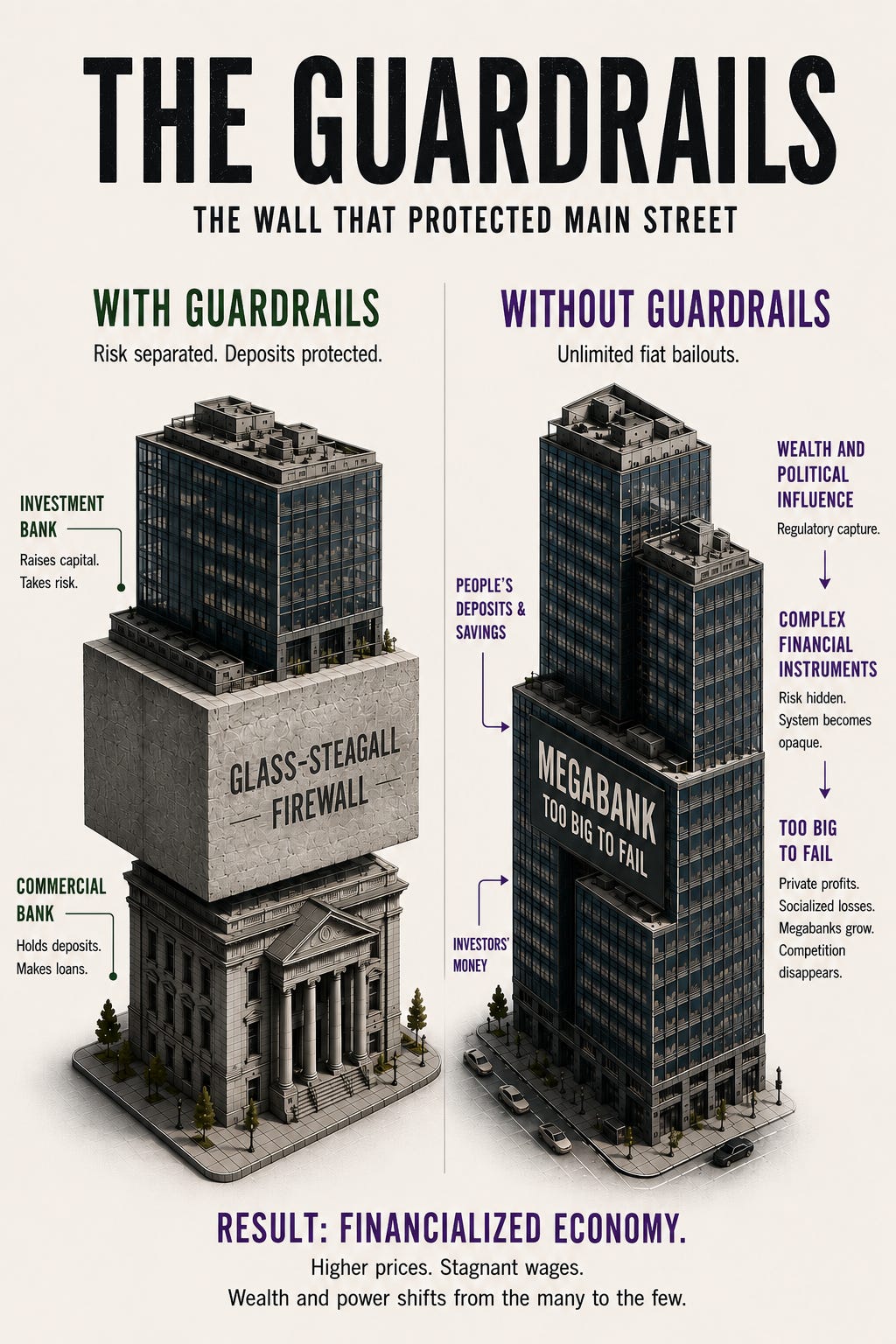
Separated commercial and investment banking.
Strengthened antitrust enforcement.
Regulated speculation.
Shifted power away from Wall Street and back toward workers and production
Mechanism:
Finance had guardrails.
Monopolies were broken.
Banks couldn’t gamble with regular people’s deposits. Savings banks had to be separated from Investment banks, which checked Wall Street’s power.
Outcome:
Broad middle class expansion.
Wage growth tracked productivity.
Stable economic growth for decades.
After that, the U.S. built its strongest middle class in history.
4 — Then the Protections Were Undone
Era: Late 20th century onward.
Policy Shifts:
Banking separation repealed.
Antitrust enforcement weakened.
Deregulation. Financial products grew more complex.
Corporate consolidation increased.
Revolving door between finance and government expanded.
Mechanism:
Commercial and investment banks merged into megabanks.
Corporations reconsolidated
Banking executives entered government becoming a permanent unelected class
Government officials moved into high-paying banking jobs
Regulators were replaced by people aligned with finance.
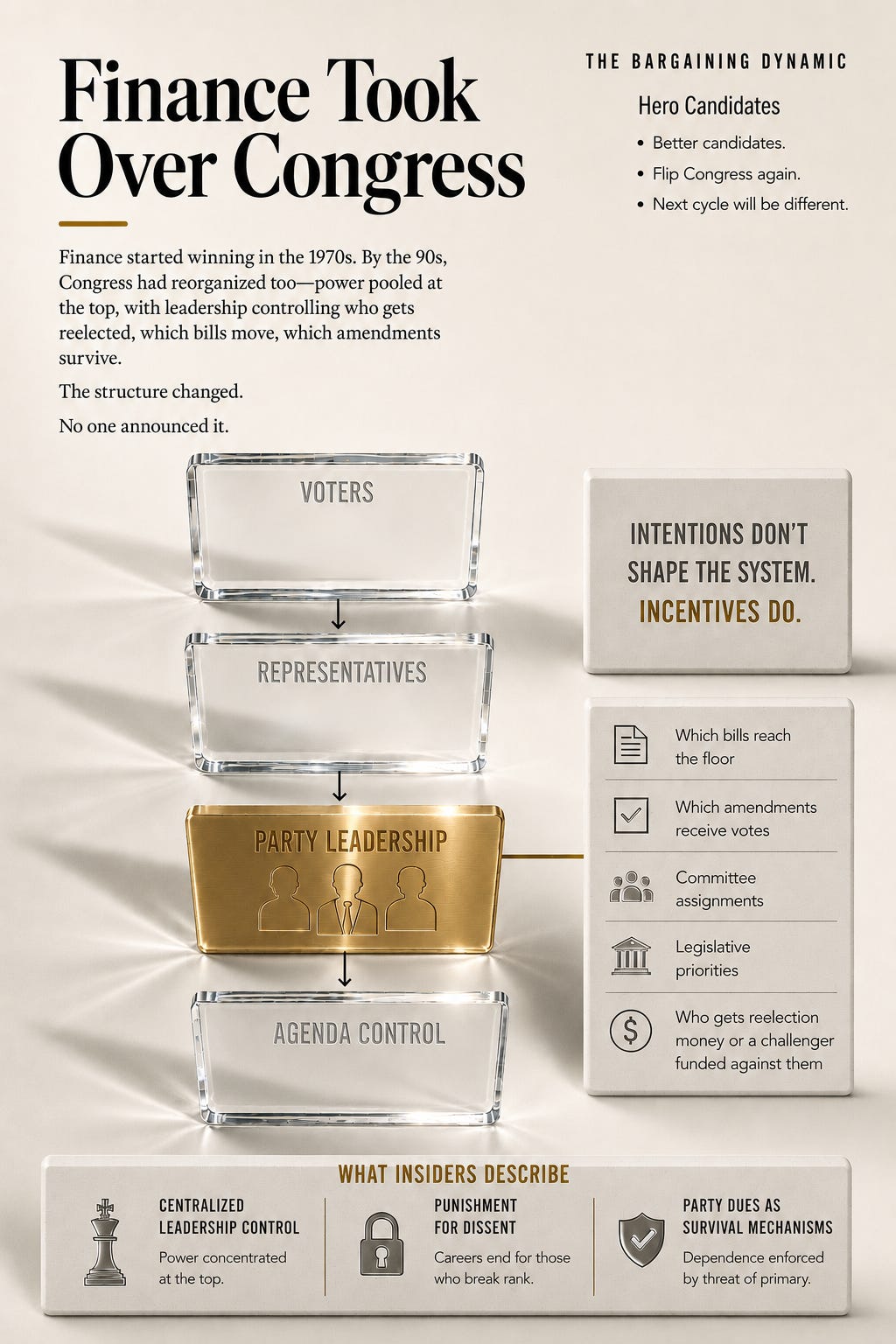
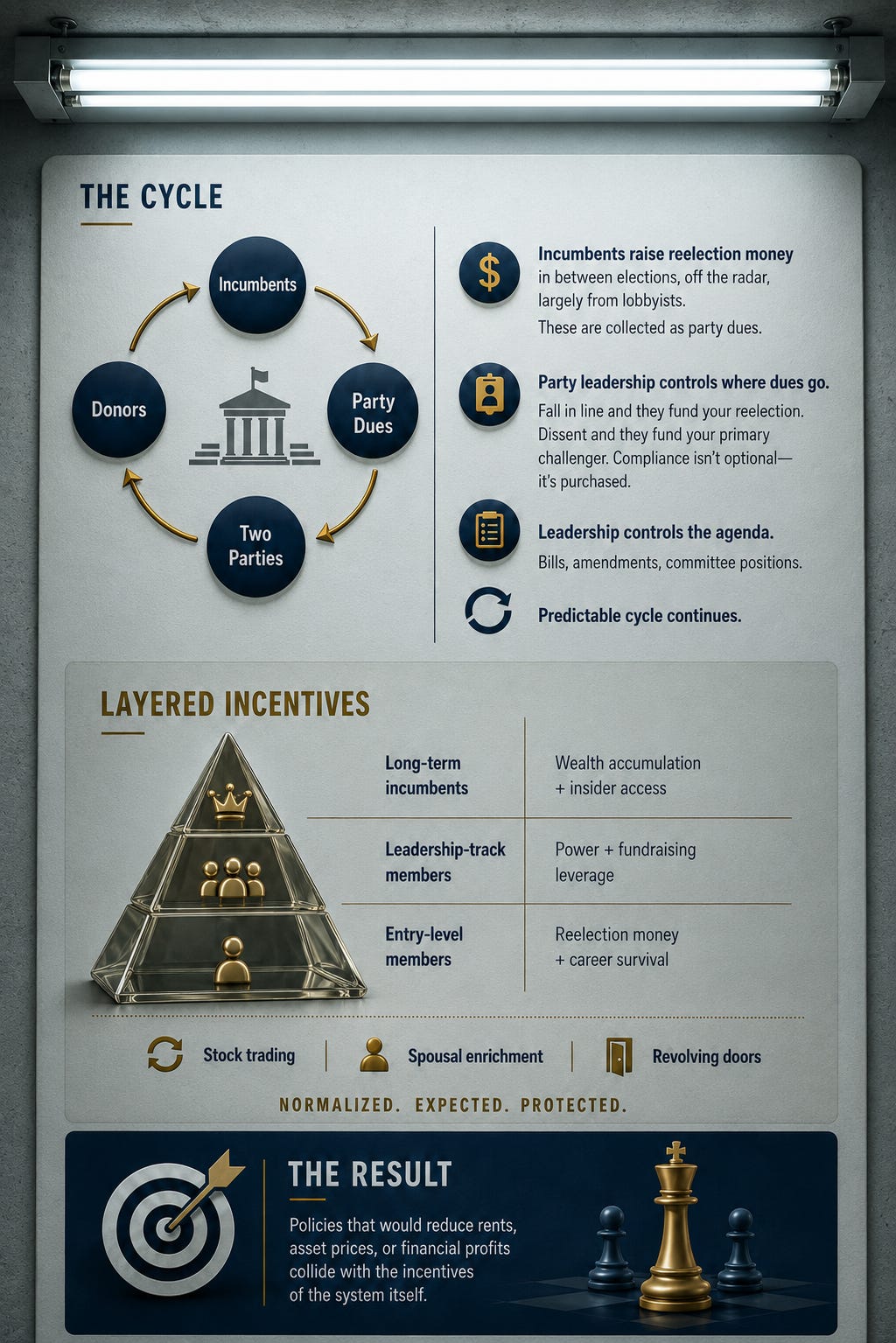
Unprecedented changes were made to Congress in the 1990s that shifted power from elected representatives to party leadership (controlling bills, amendments, committee positions) and created structures that require alignment with large donors (party dues system).
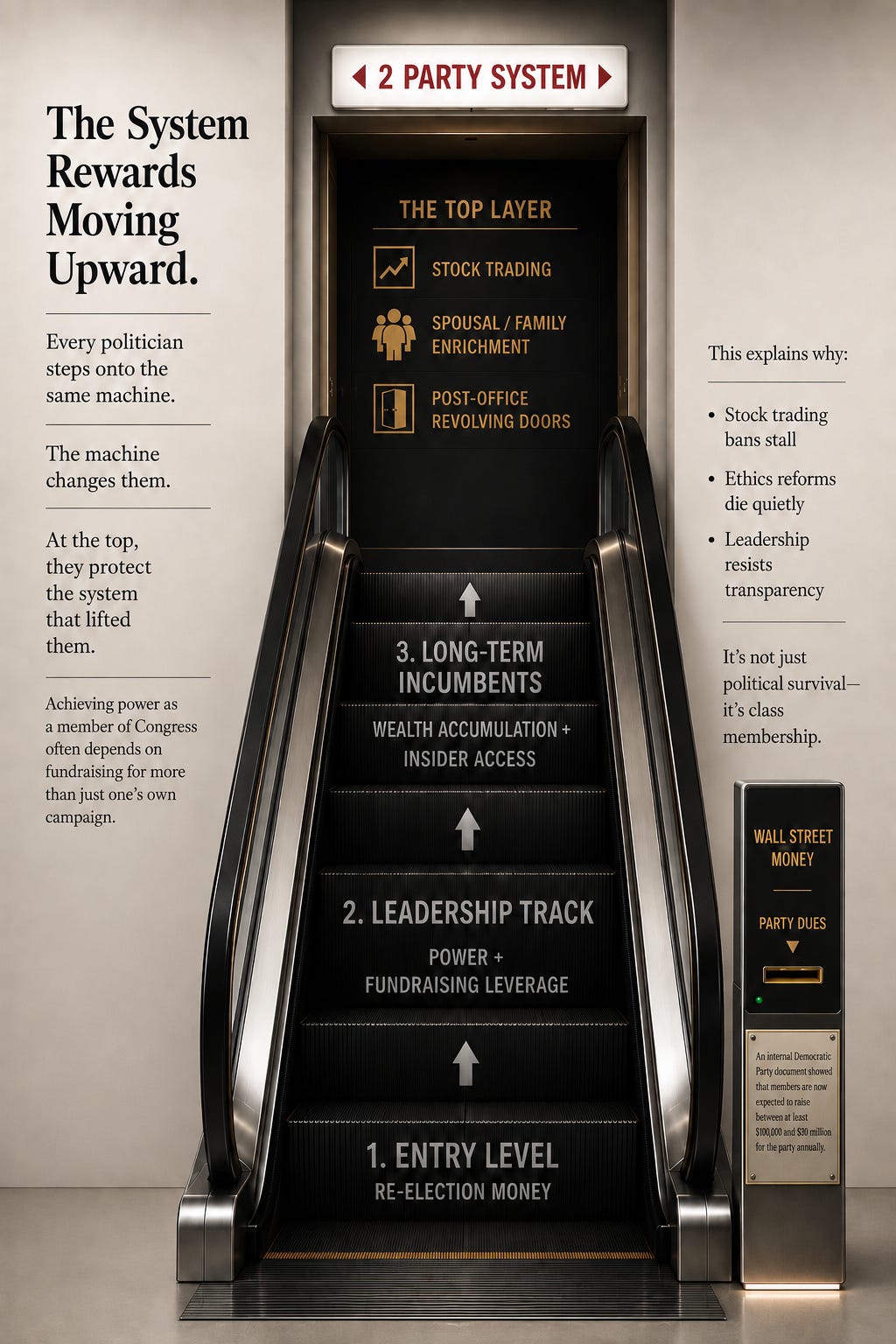
Personal enrichment is not an anomaly in politics—it’s part of the system.
Politicians aren’t trapped by fundraising pressures. Politicians are financially rewarded for maintaining the system.
Outcome:
Finance regained structural dominance. Complex financial engineering increased. Policy increasingly aligned with big money.

5 — Modern Financialization
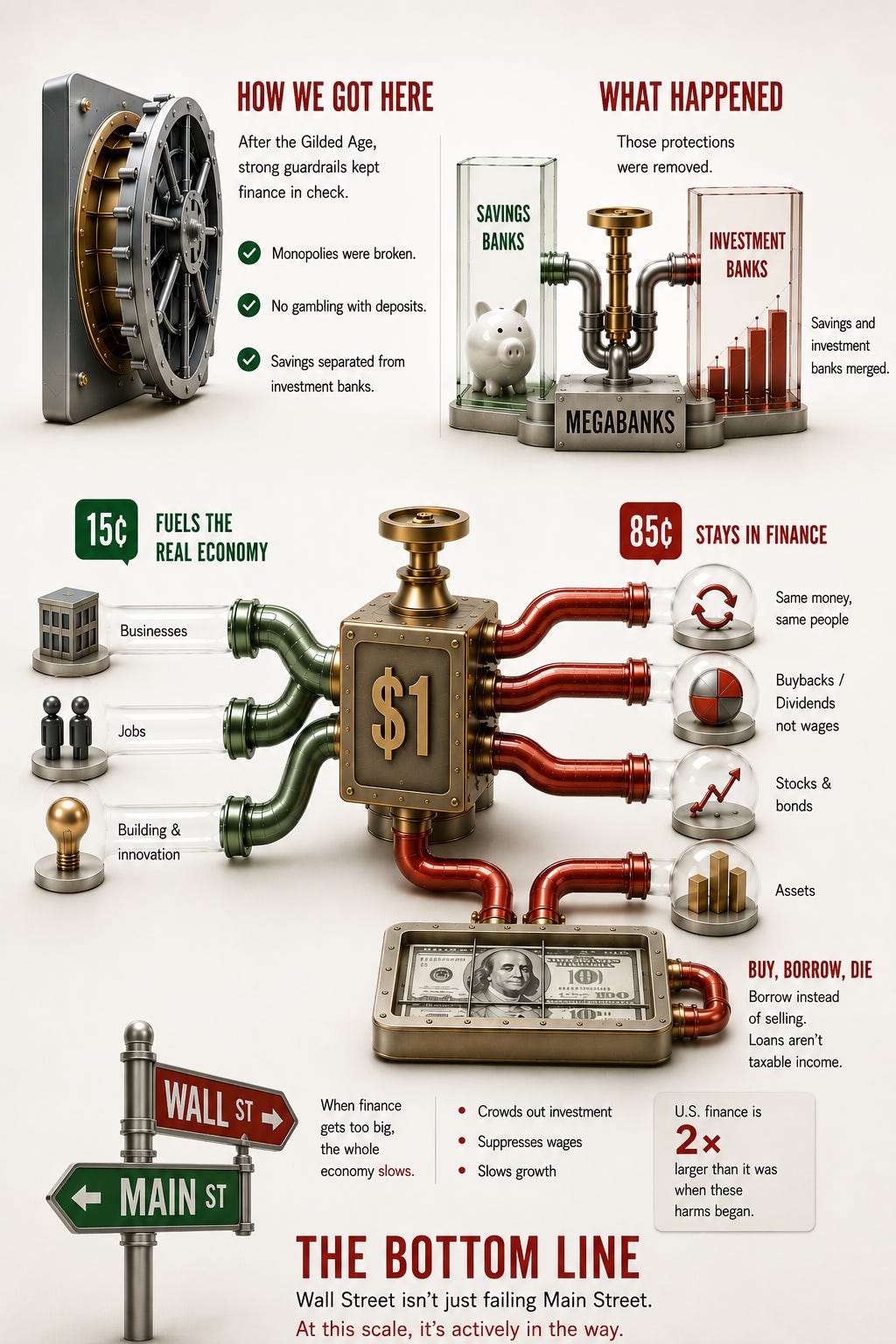
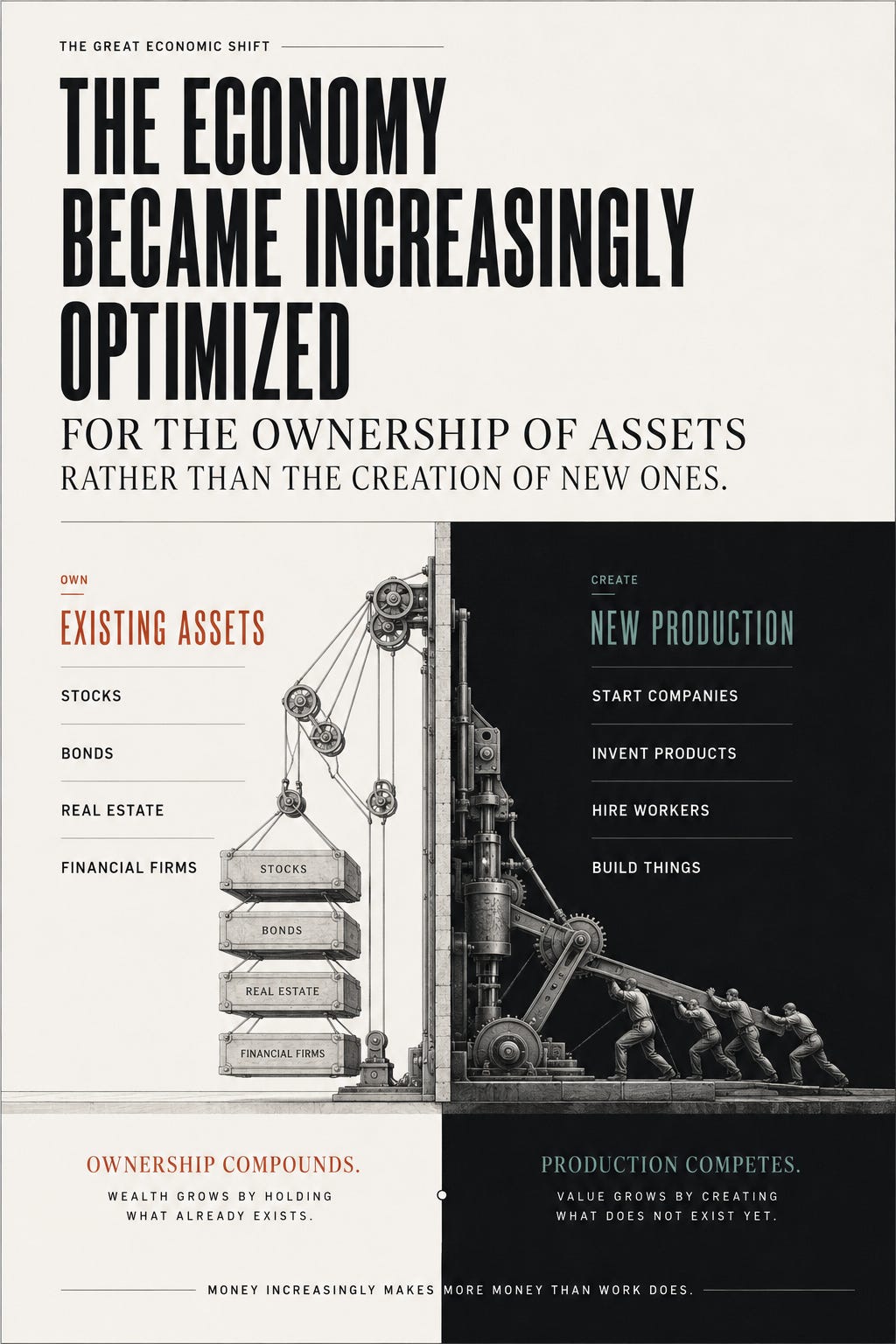
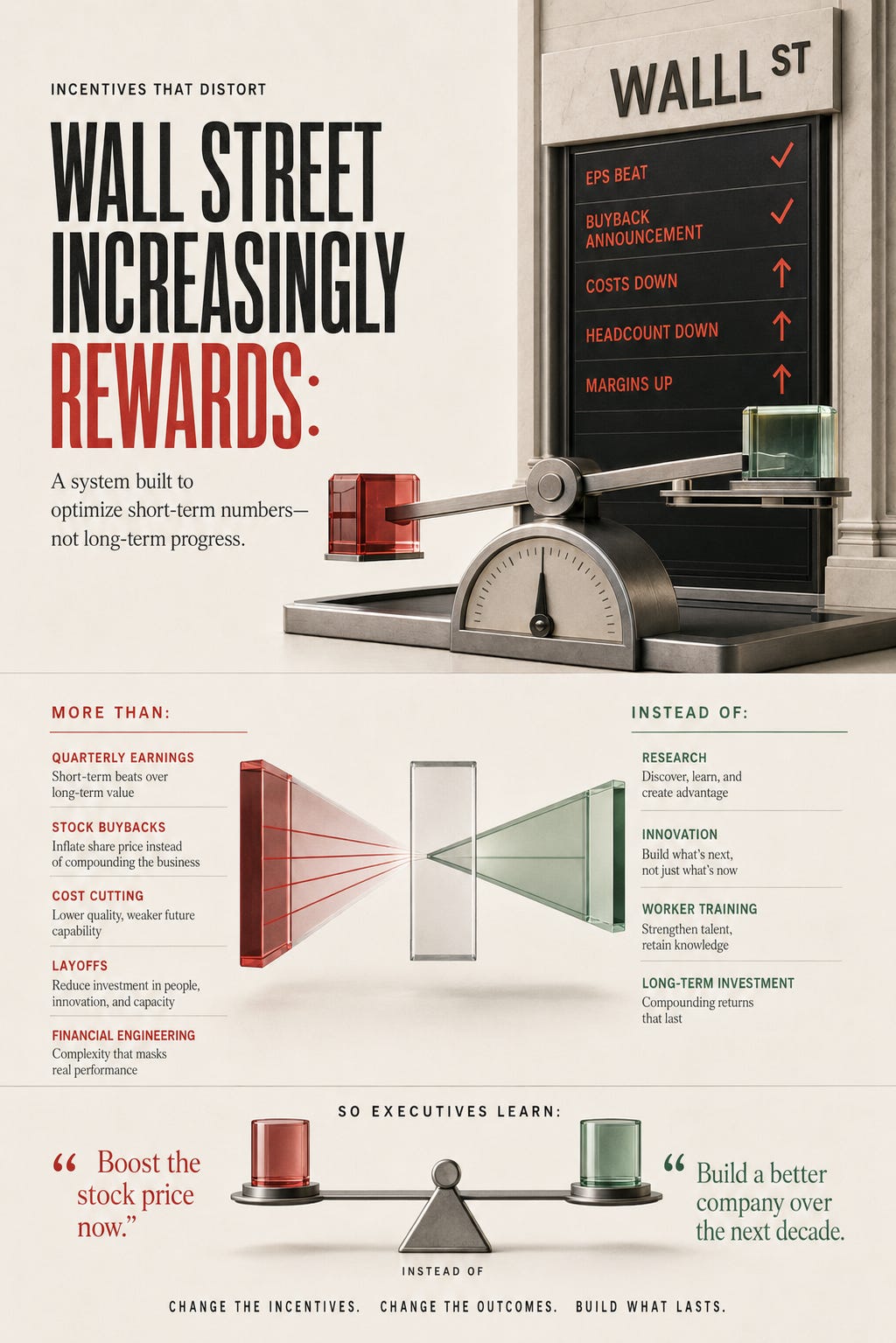
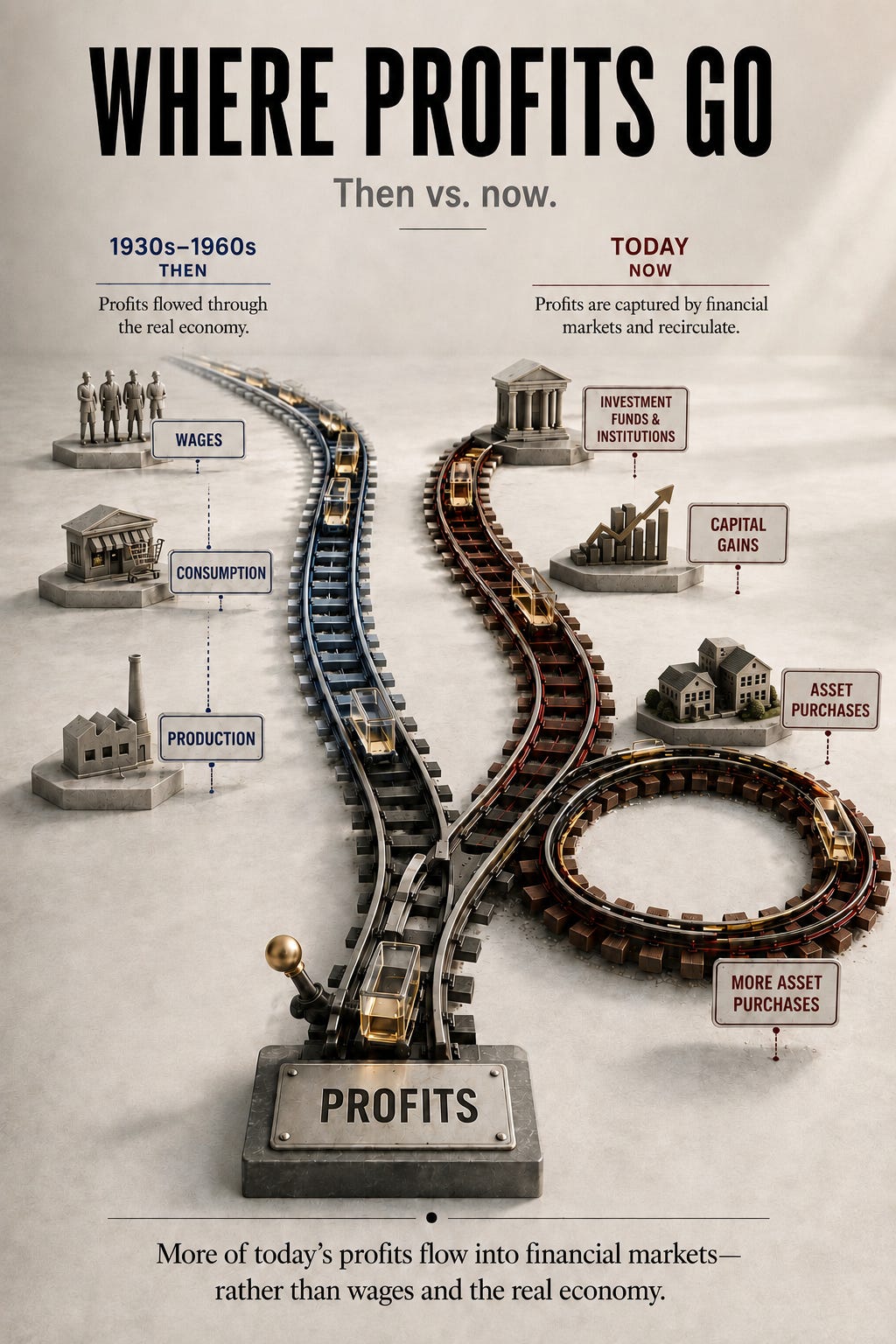
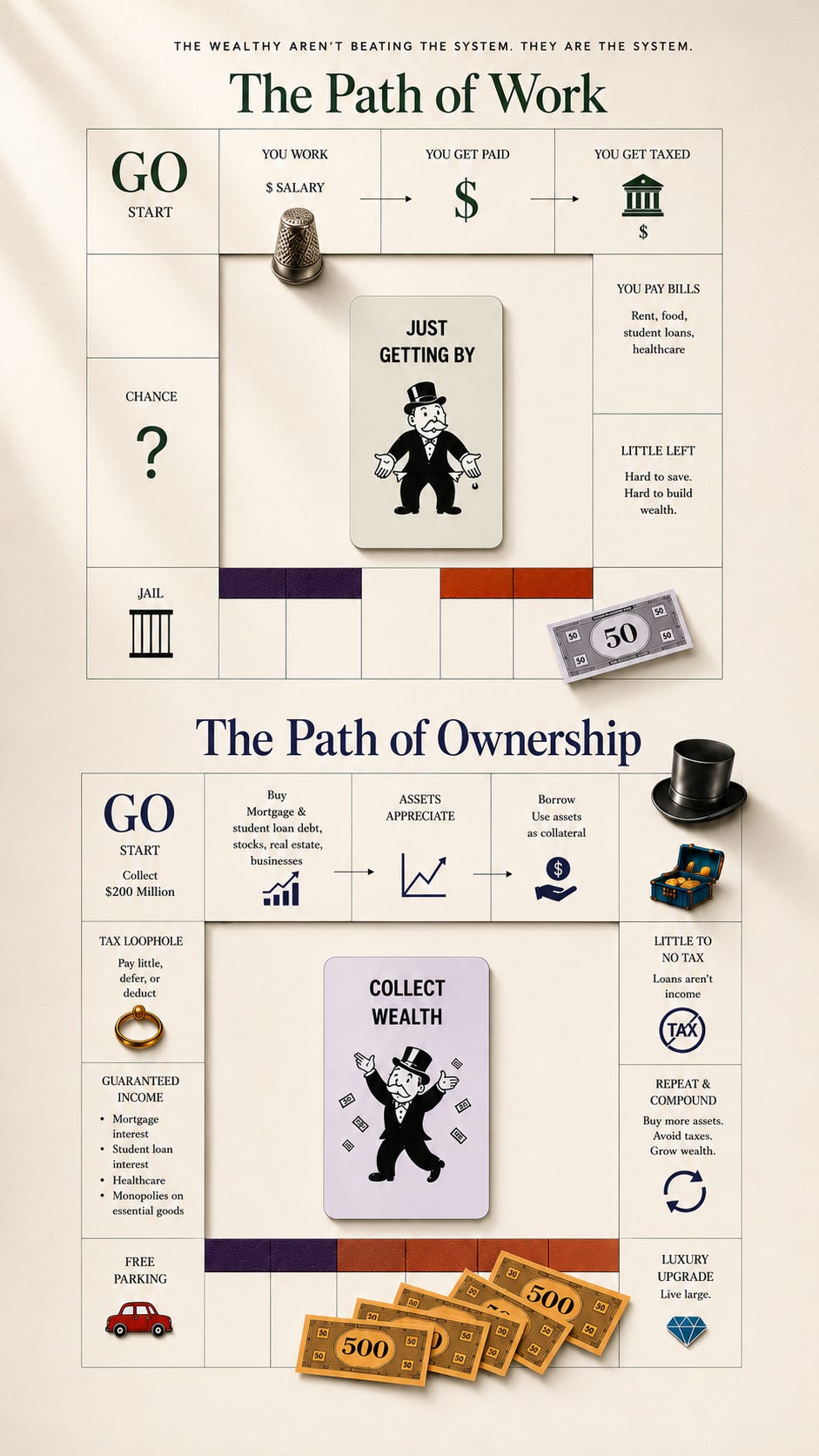
Now profits are higher from:
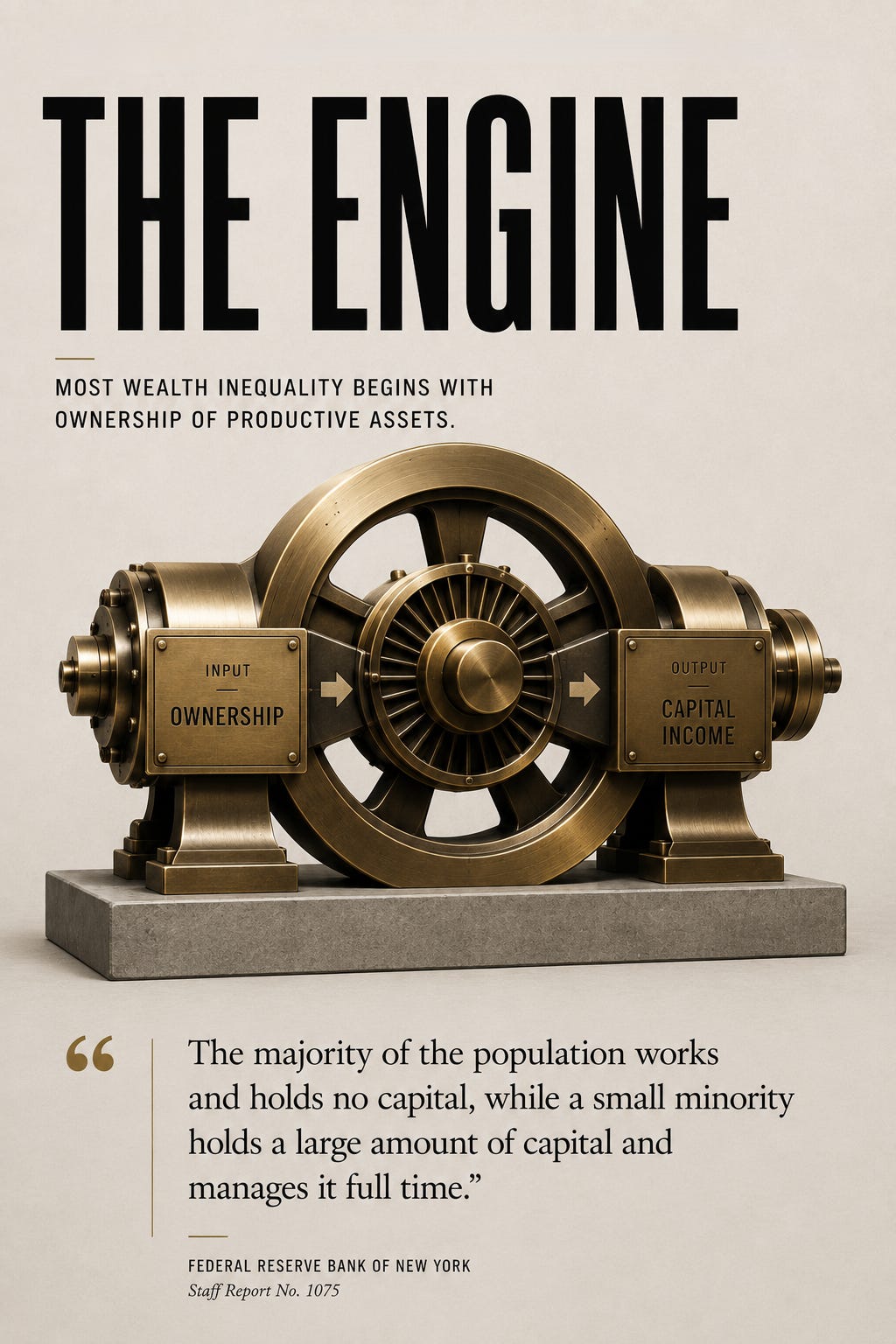
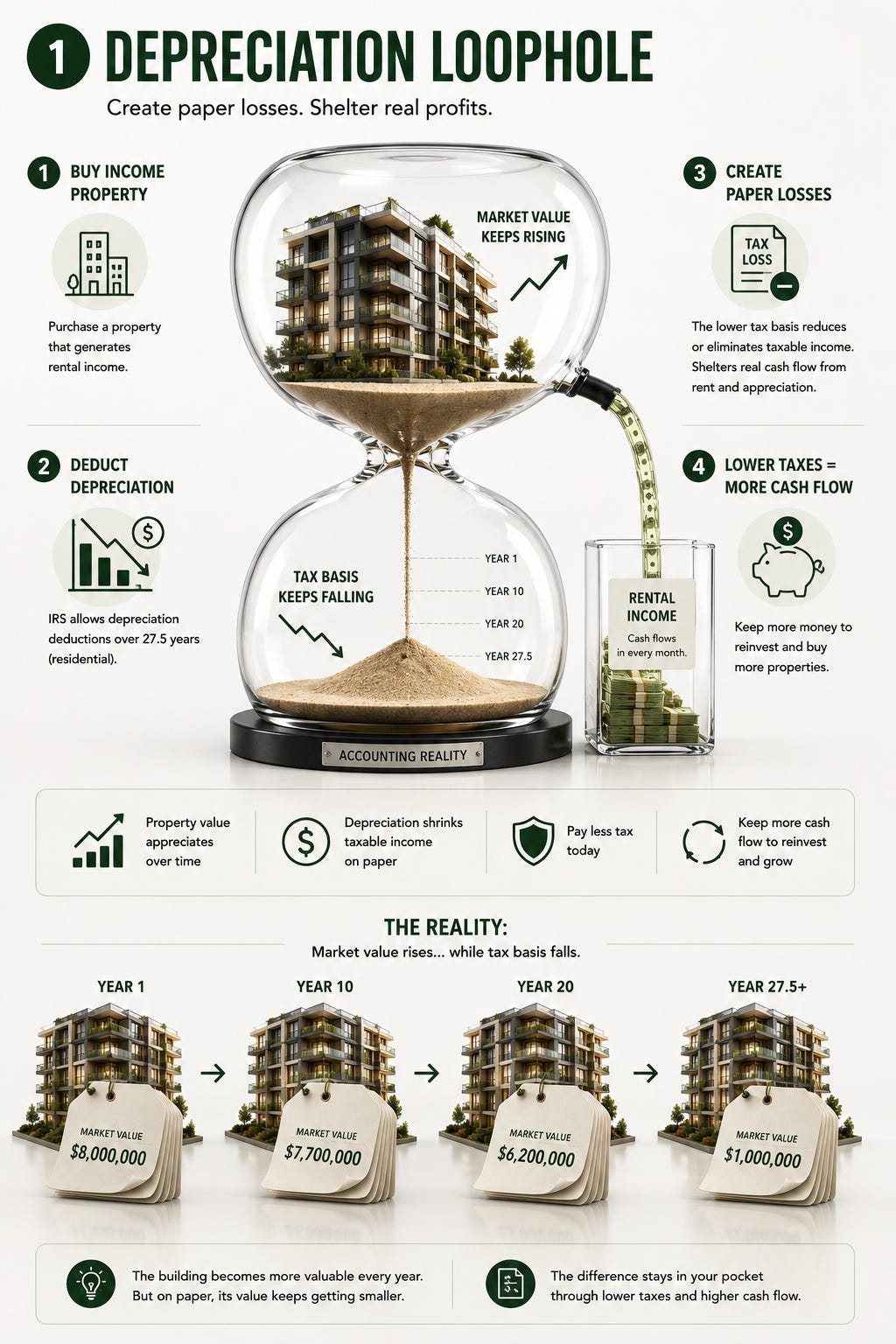
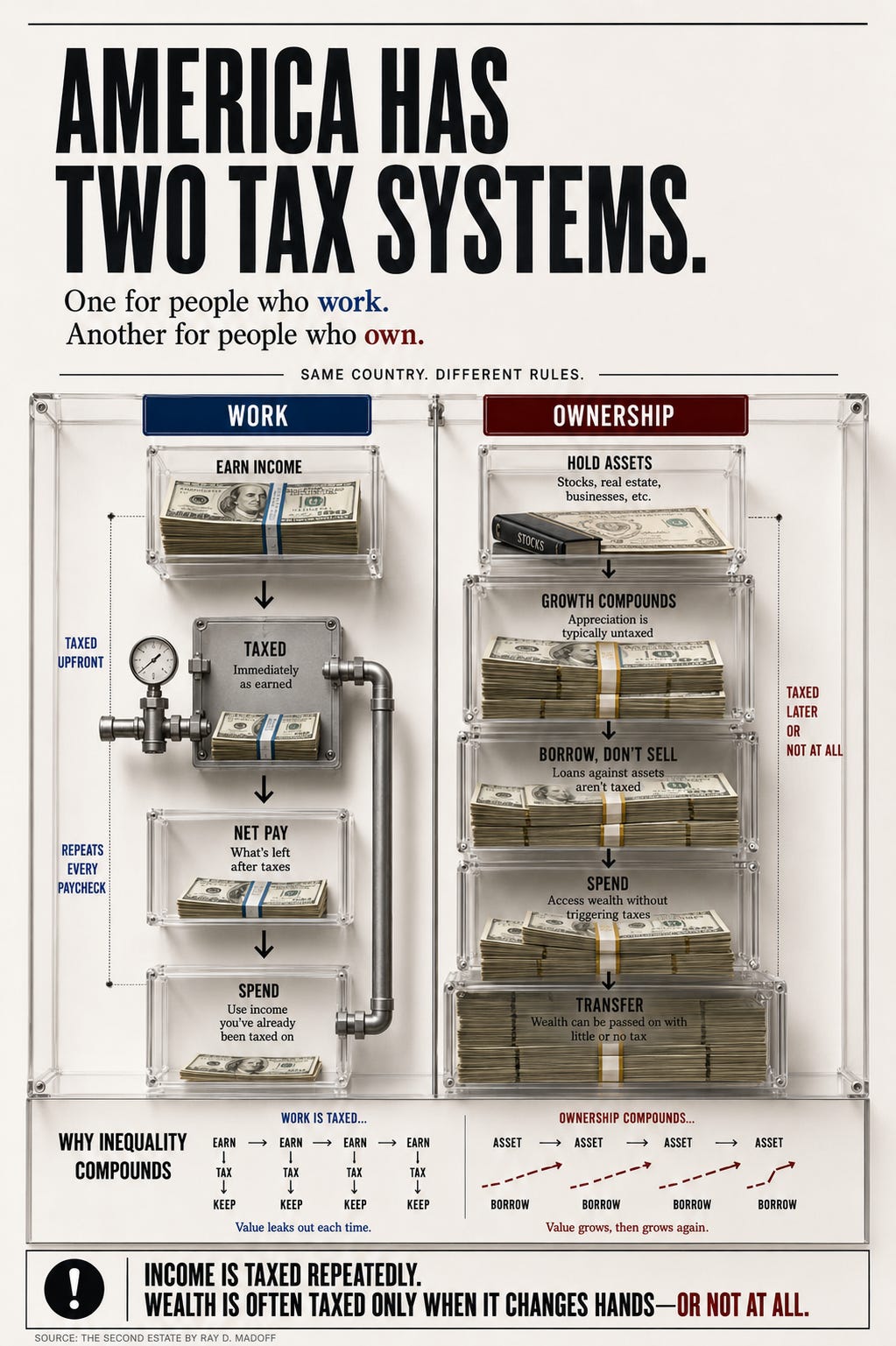
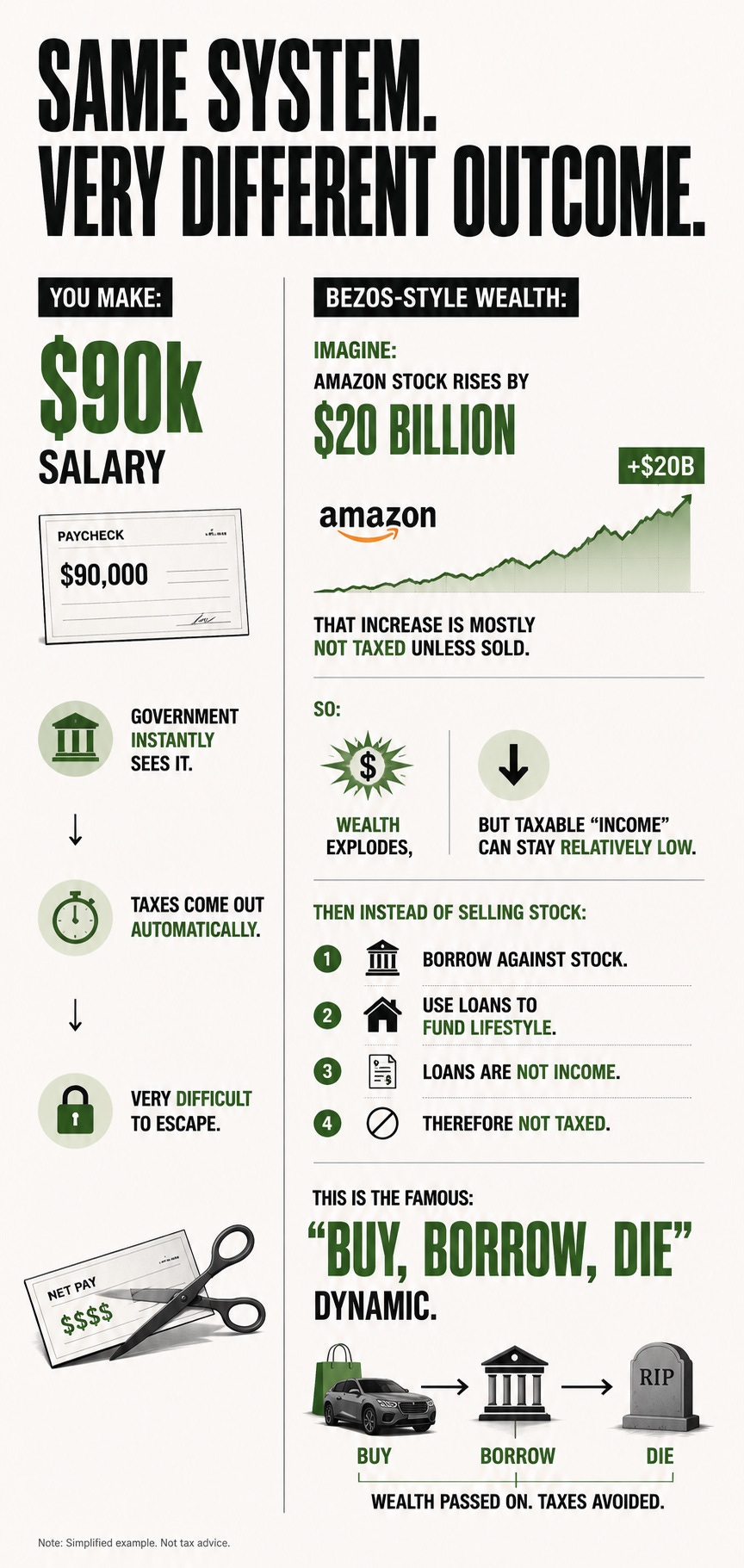
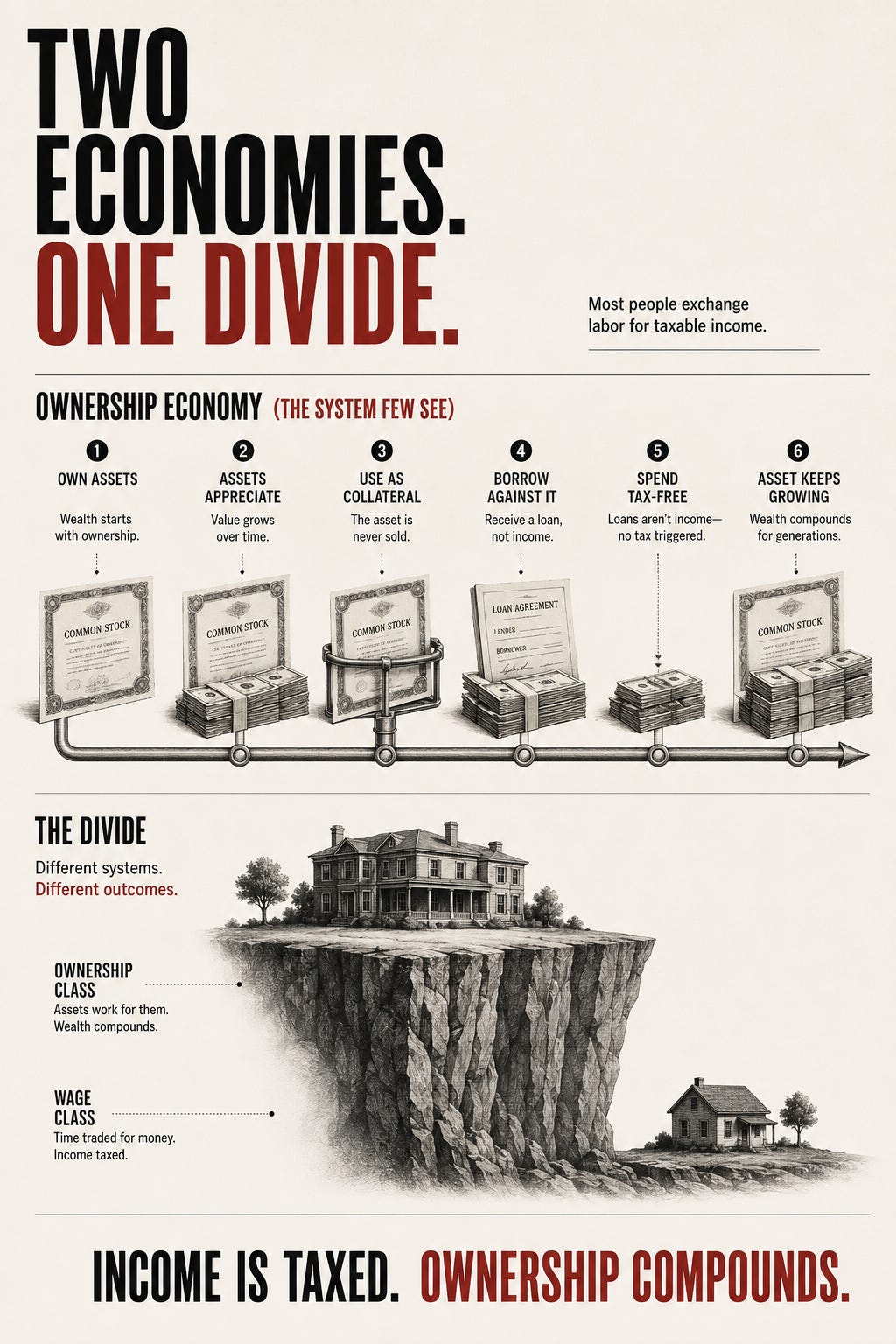
Asset ownership
Buying competition and controlling supply
Stock buybacks
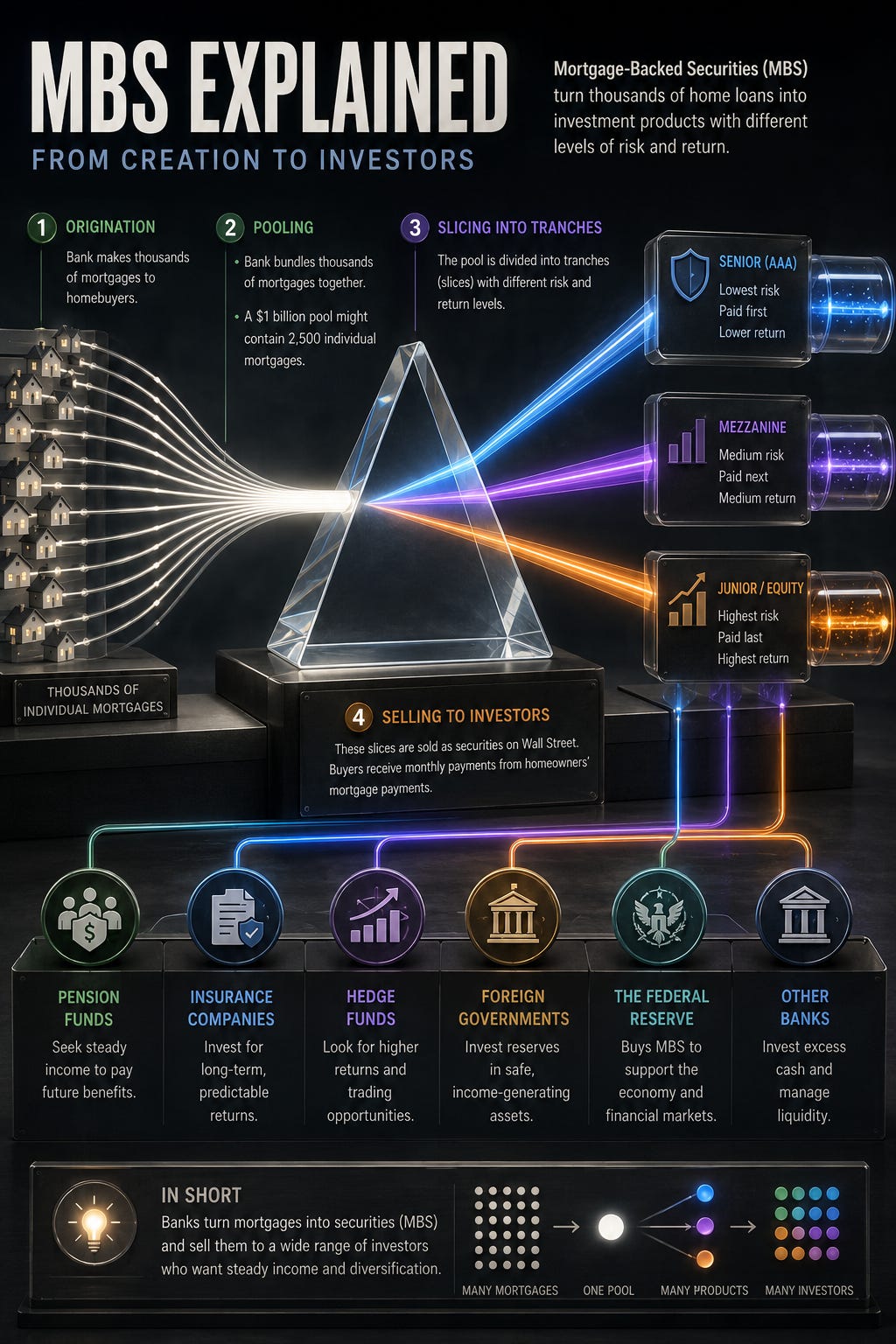
Complex financial instruments
Profits are lower from:
Innovation and building things
Expanding supply
Raising wages
That changes incentives.
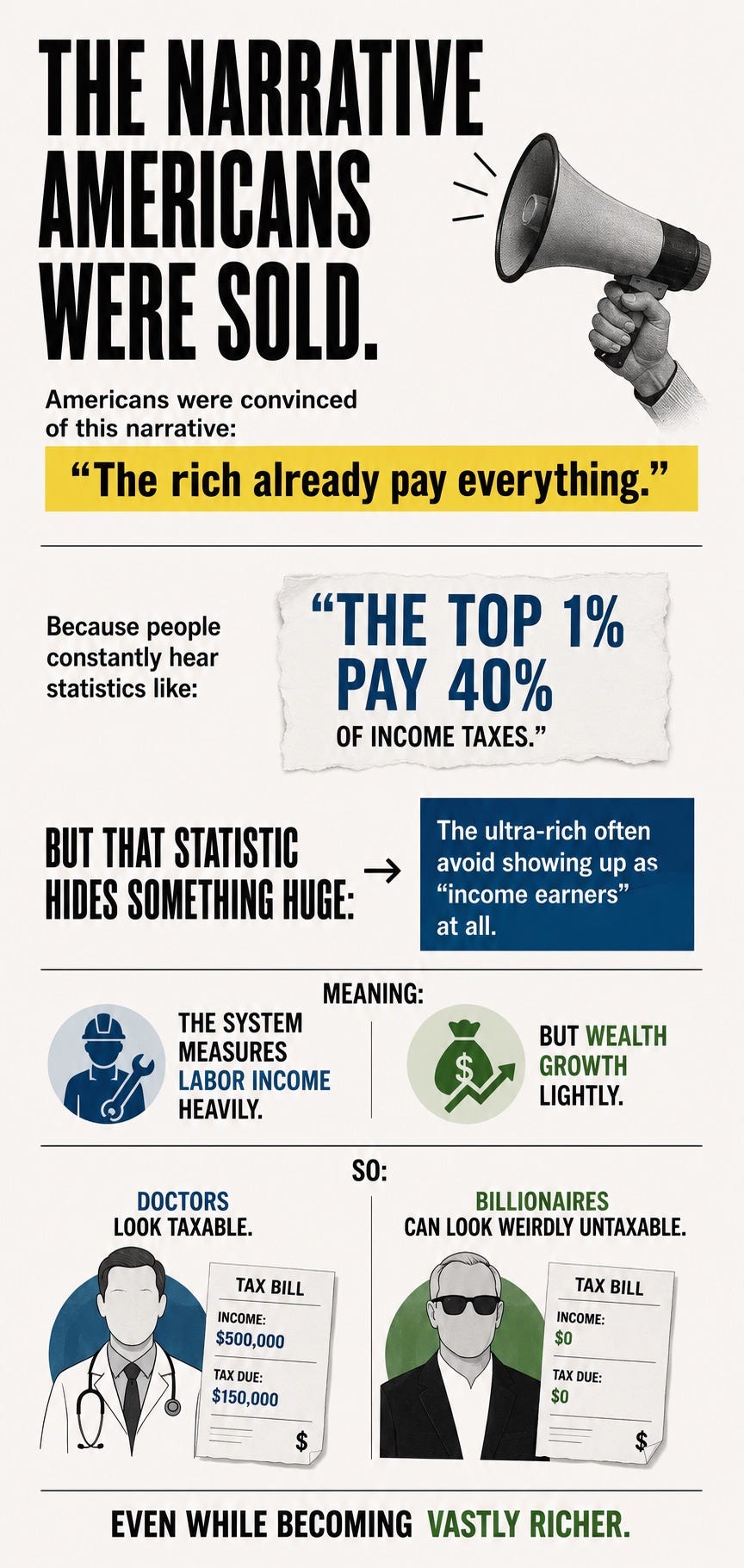
Outcome: You don’t get rich producing. You get rich gatekeeping. Production creates value. Extraction captures it. The market rewards the latter.
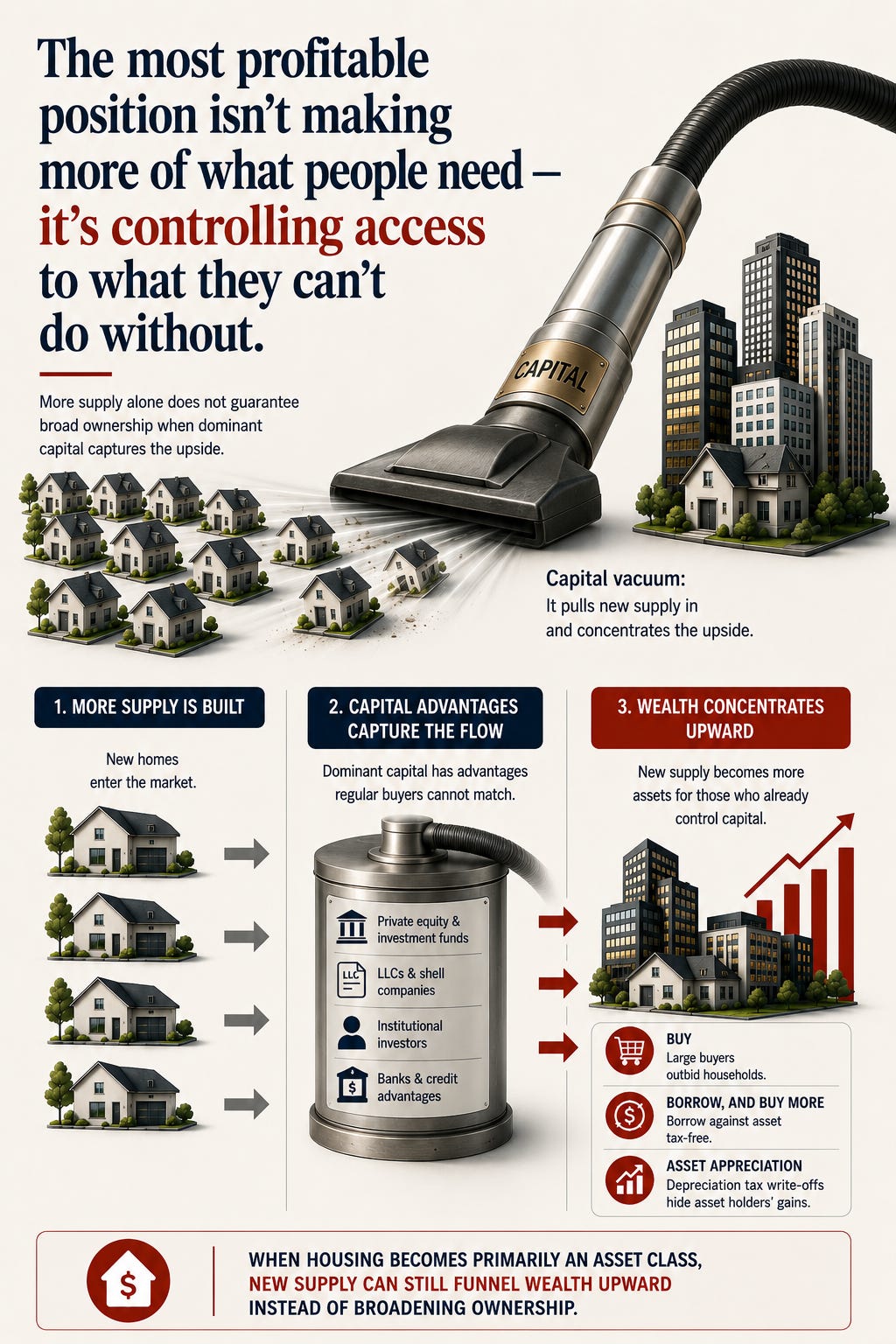
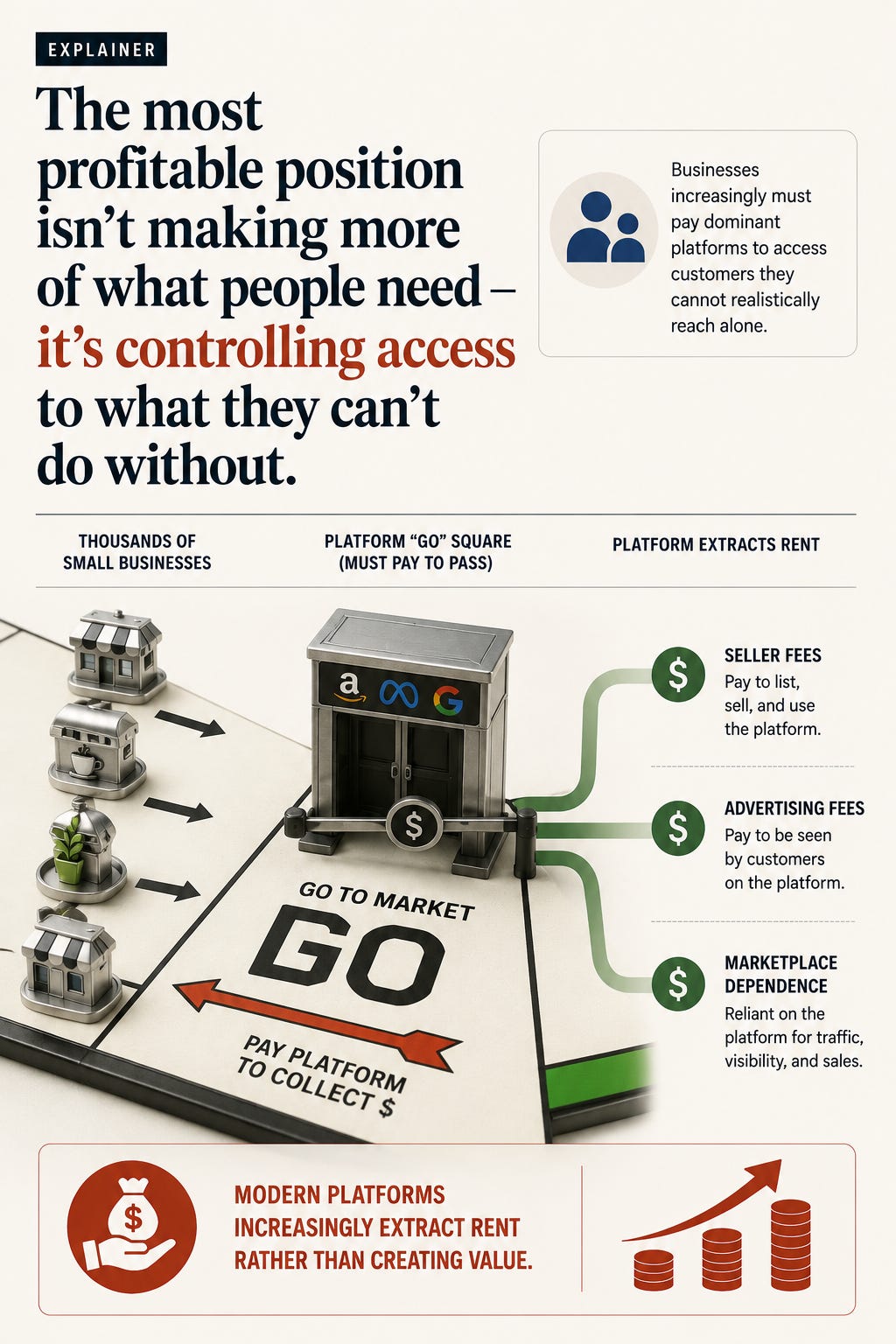
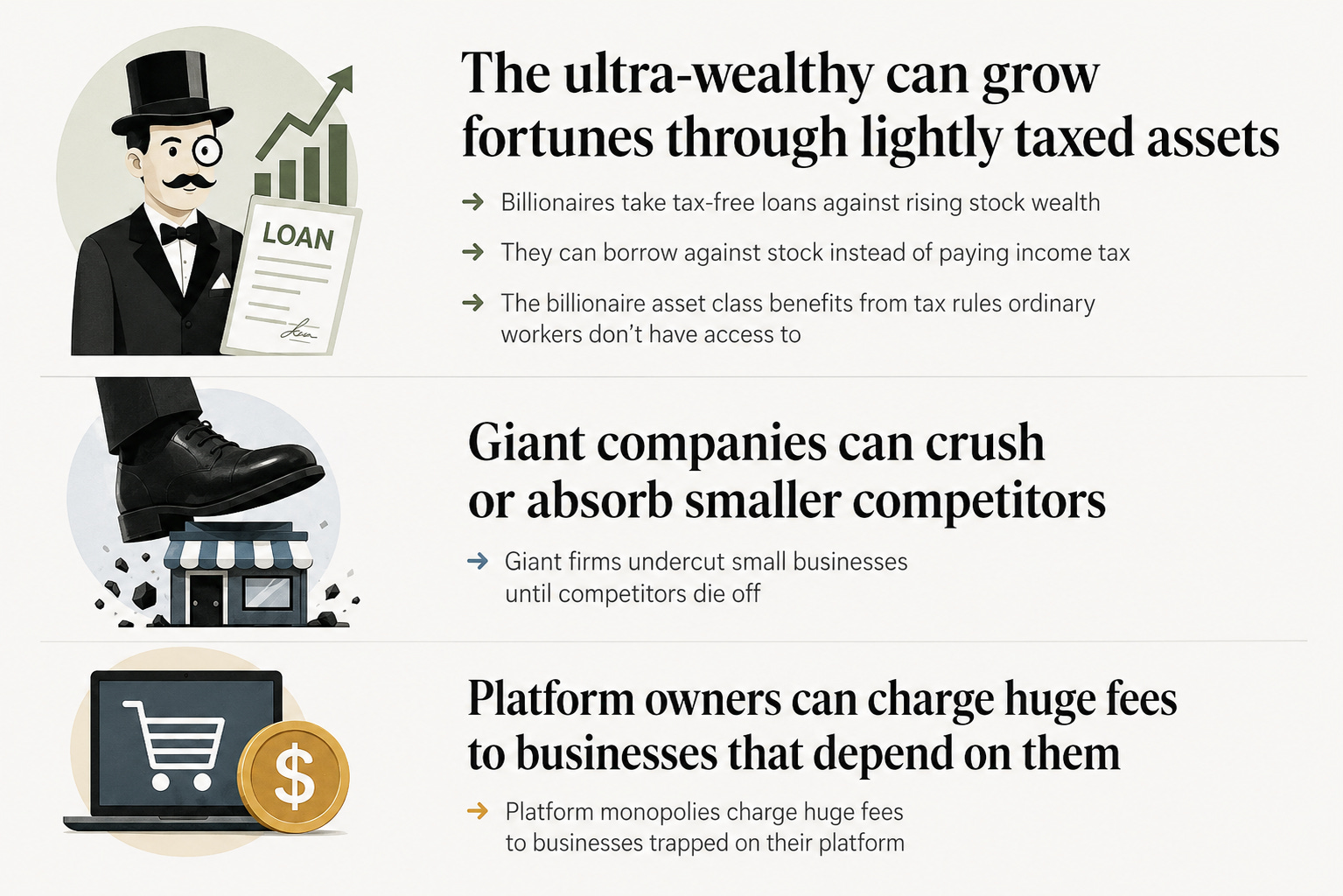
Mechanism:
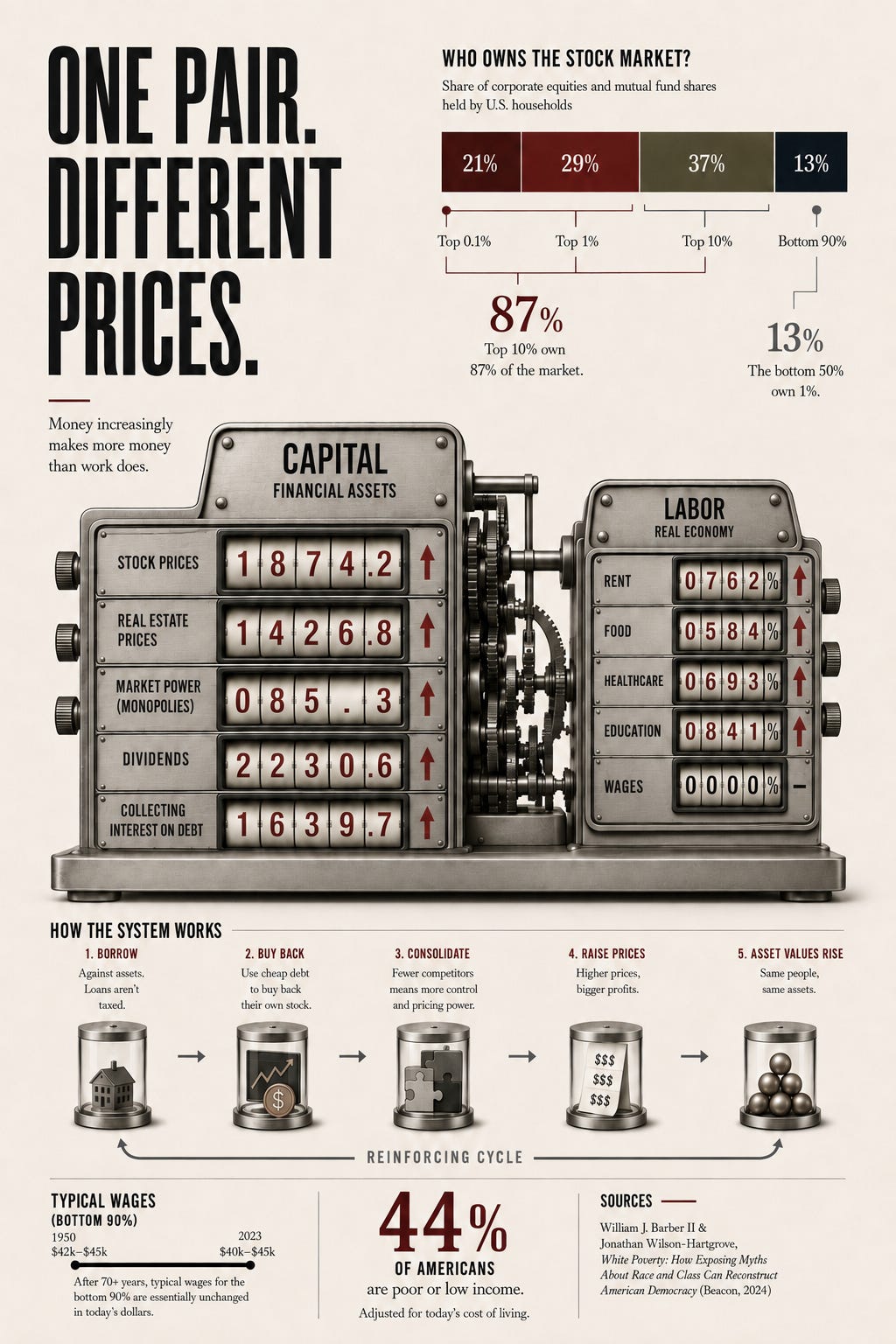
Companies buy competitors → reduce competition → control supply → raise prices.
Investors prioritize stock price → companies suppress labor costs → wages stagnate.
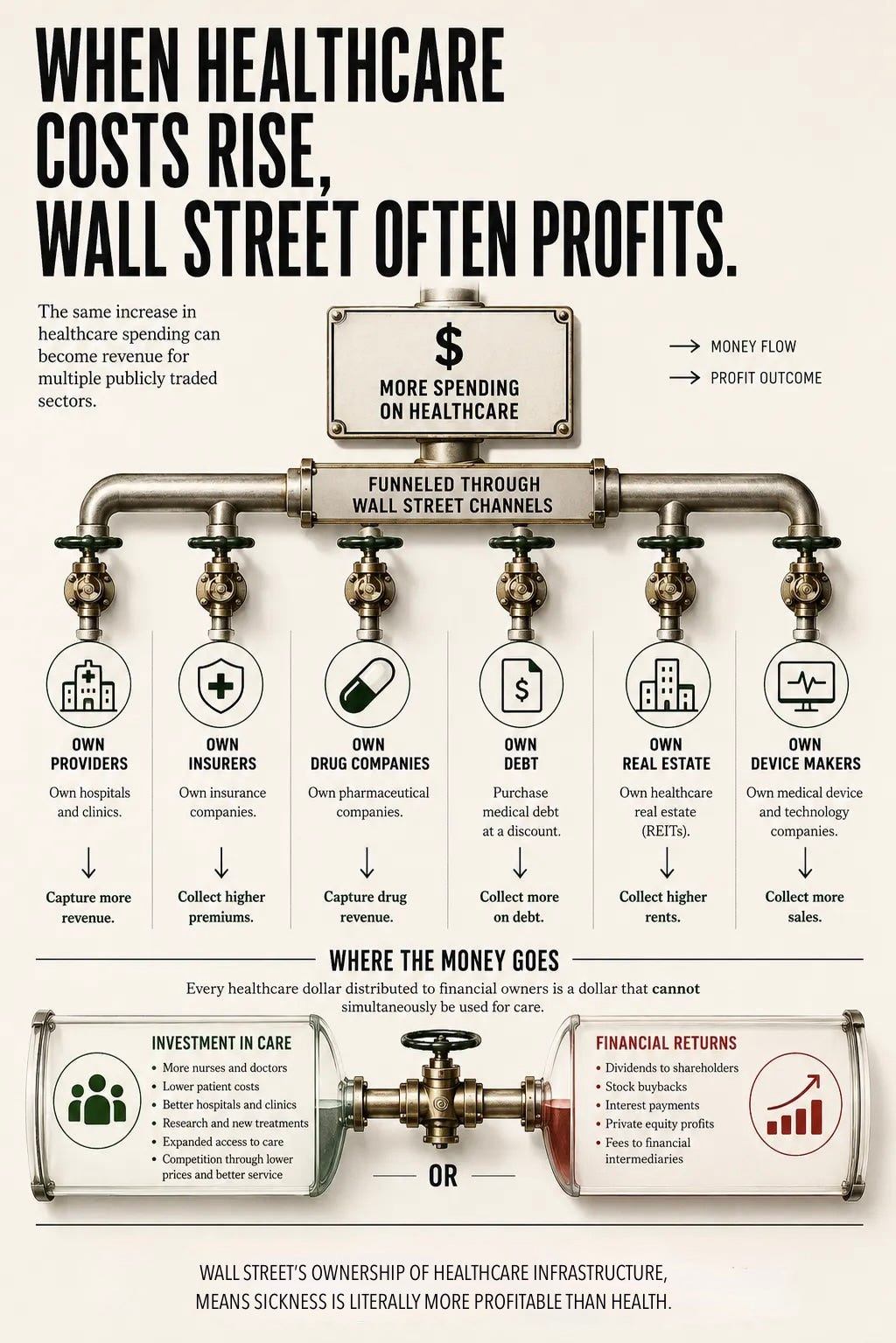
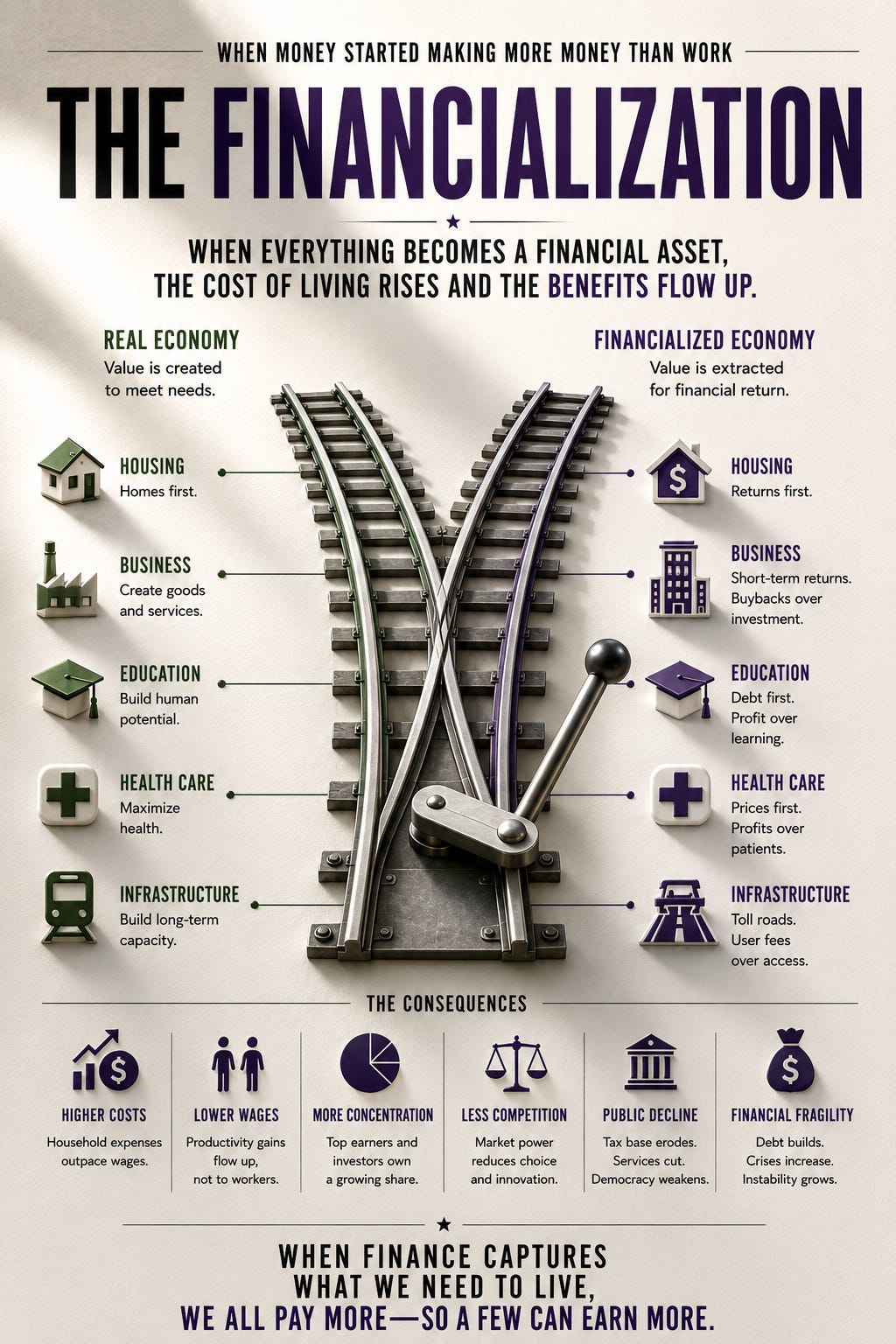
When profit primarily comes from financial extraction rather than production:
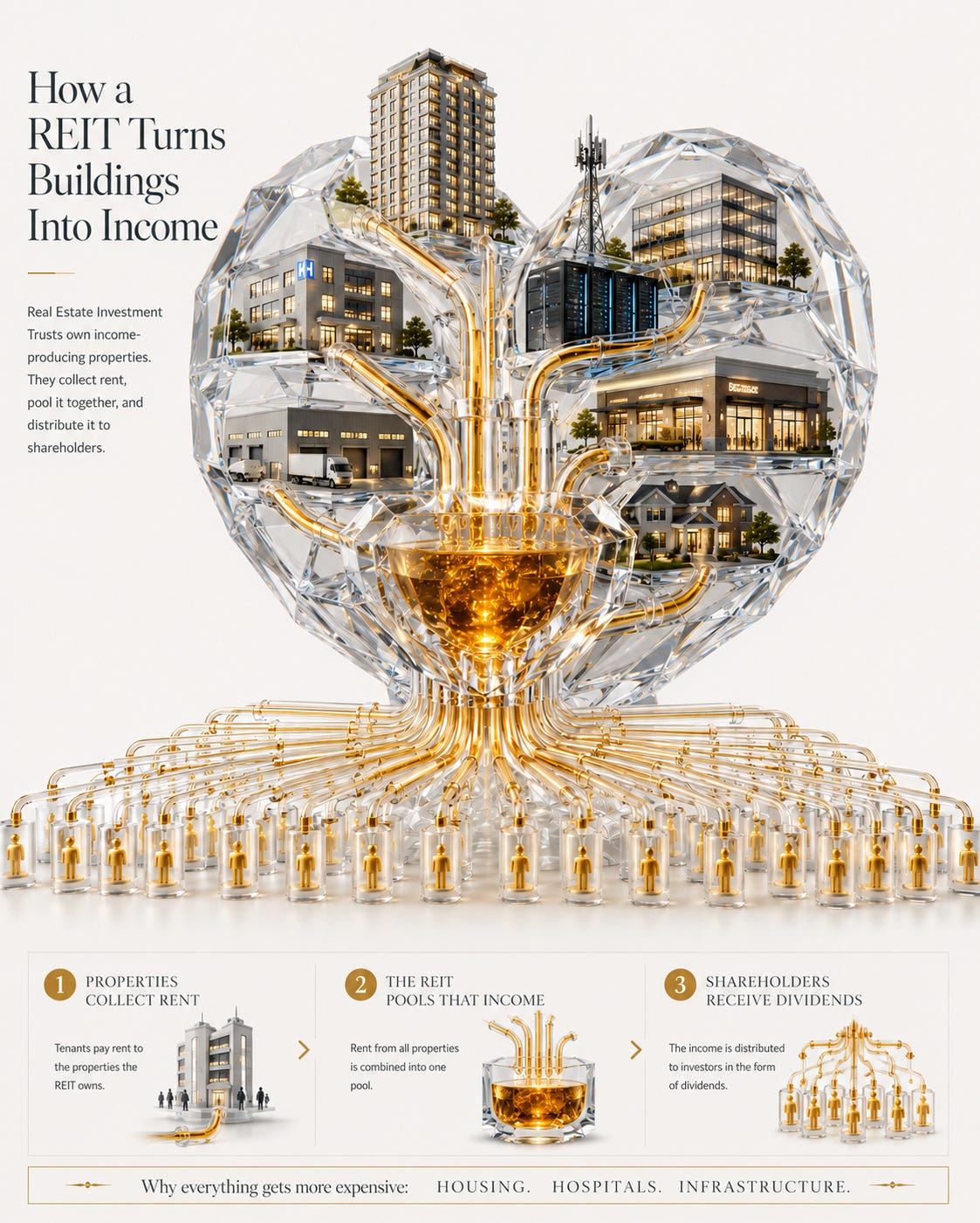
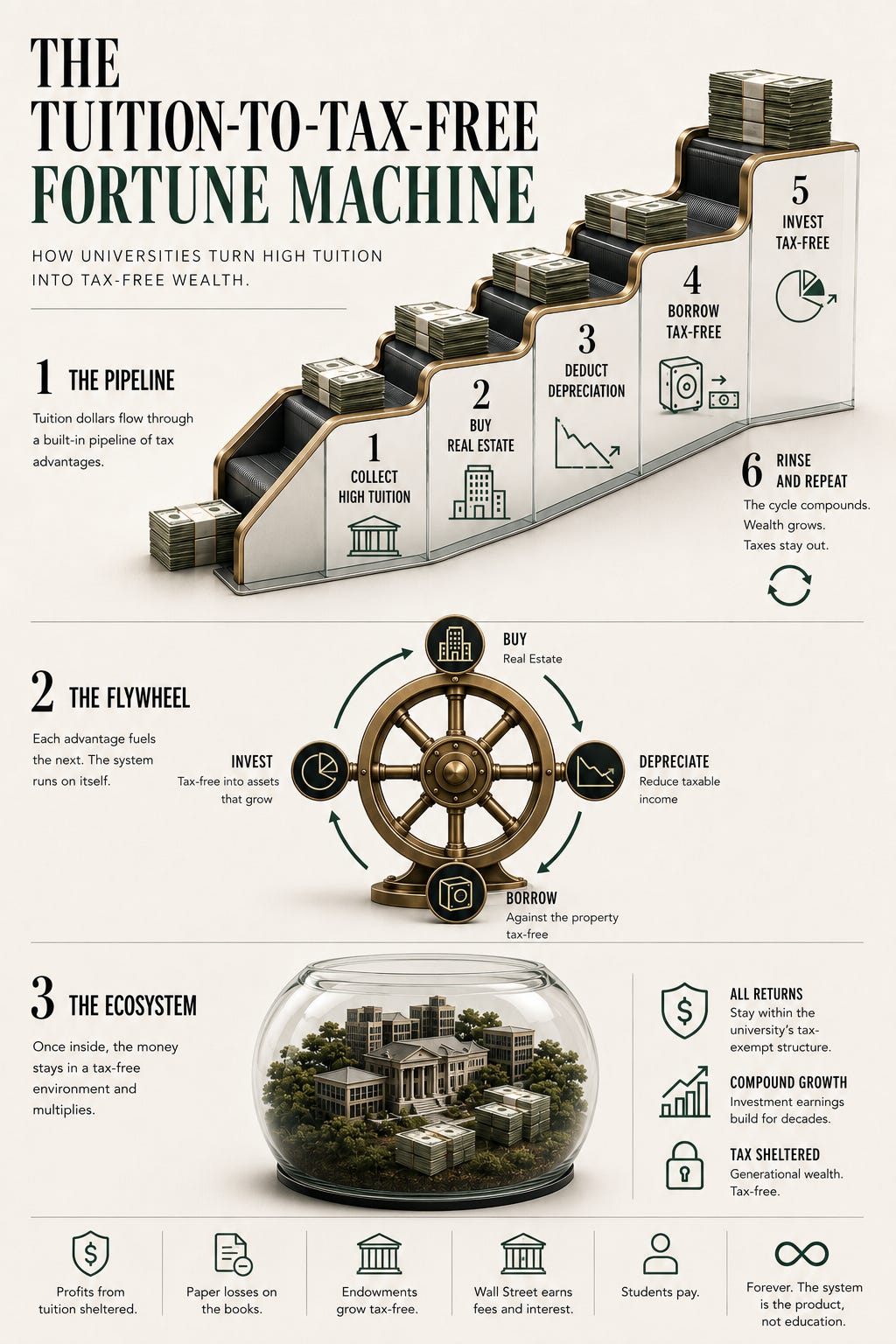
Healthcare becomes a Wall Street asset instead of a care system.
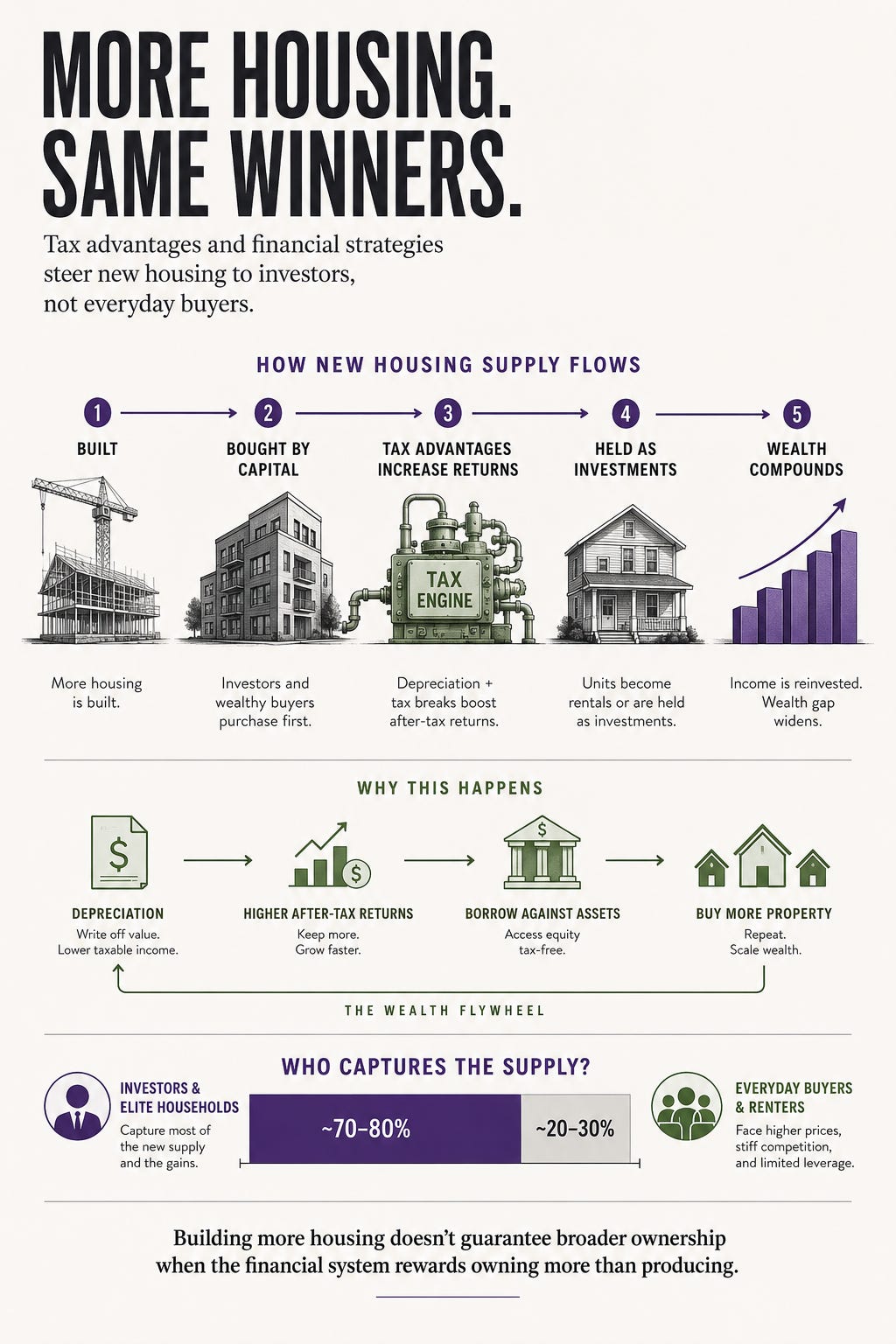
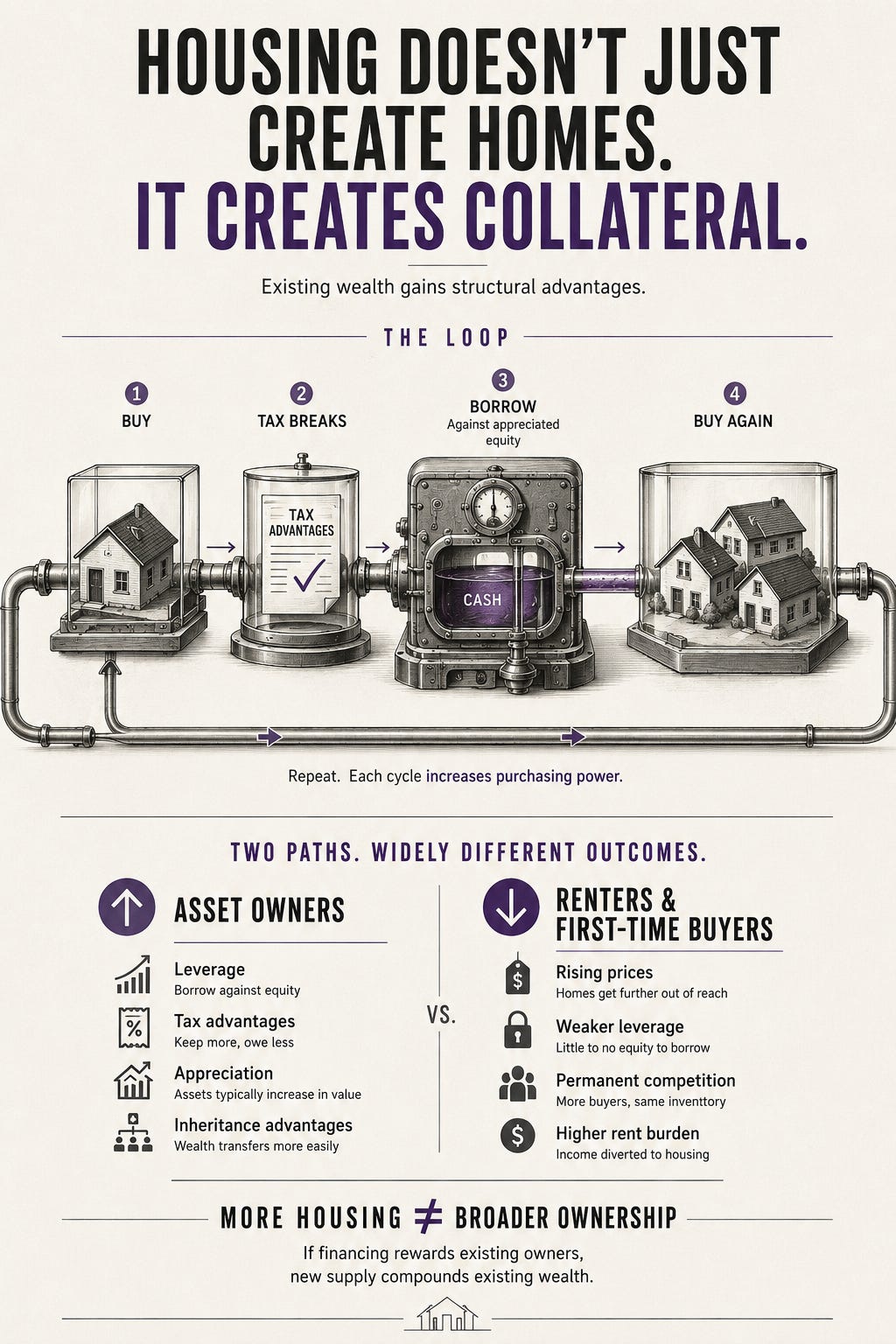
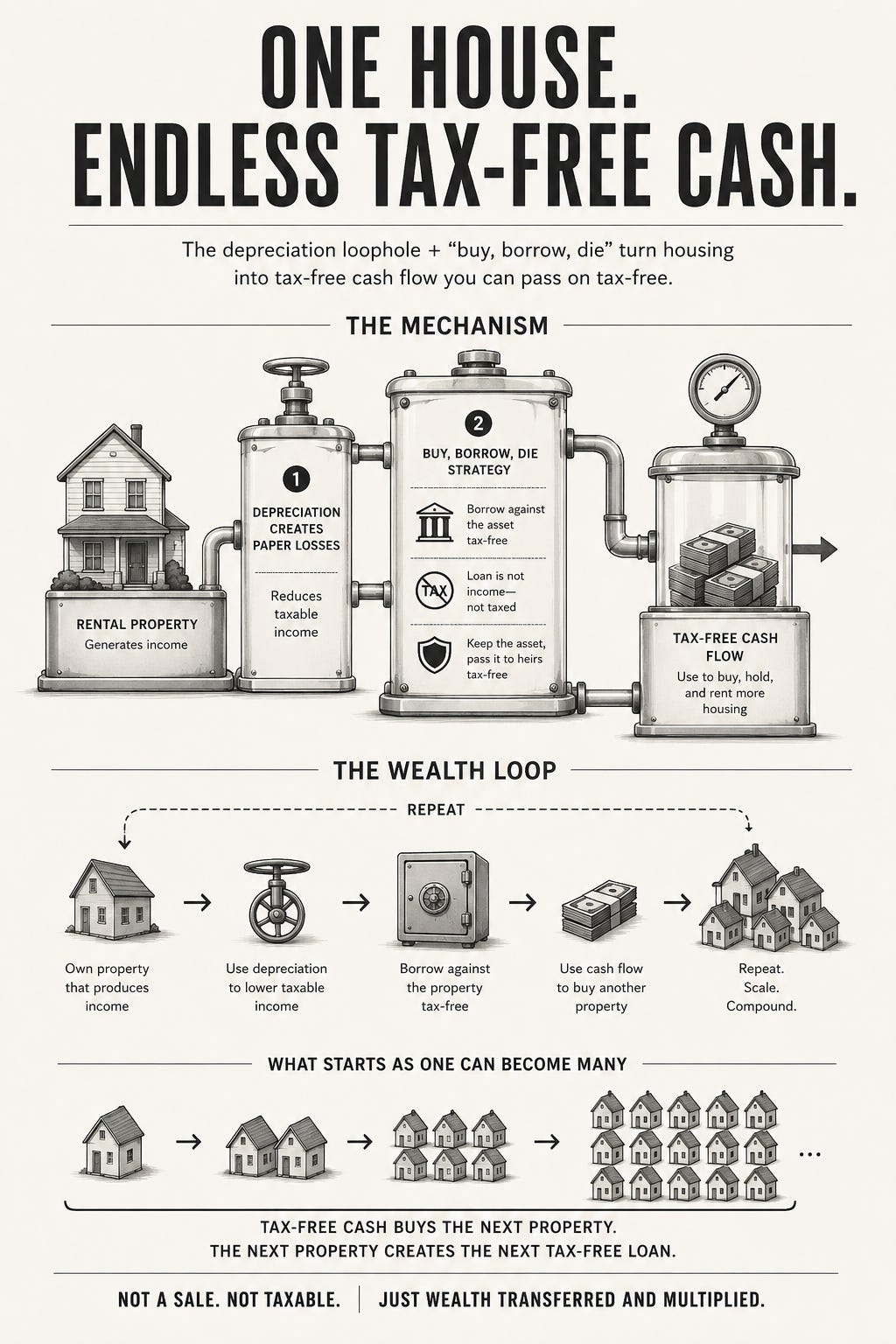
Housing becomes an investment vehicle instead of shelter.
Food supply monopolies.
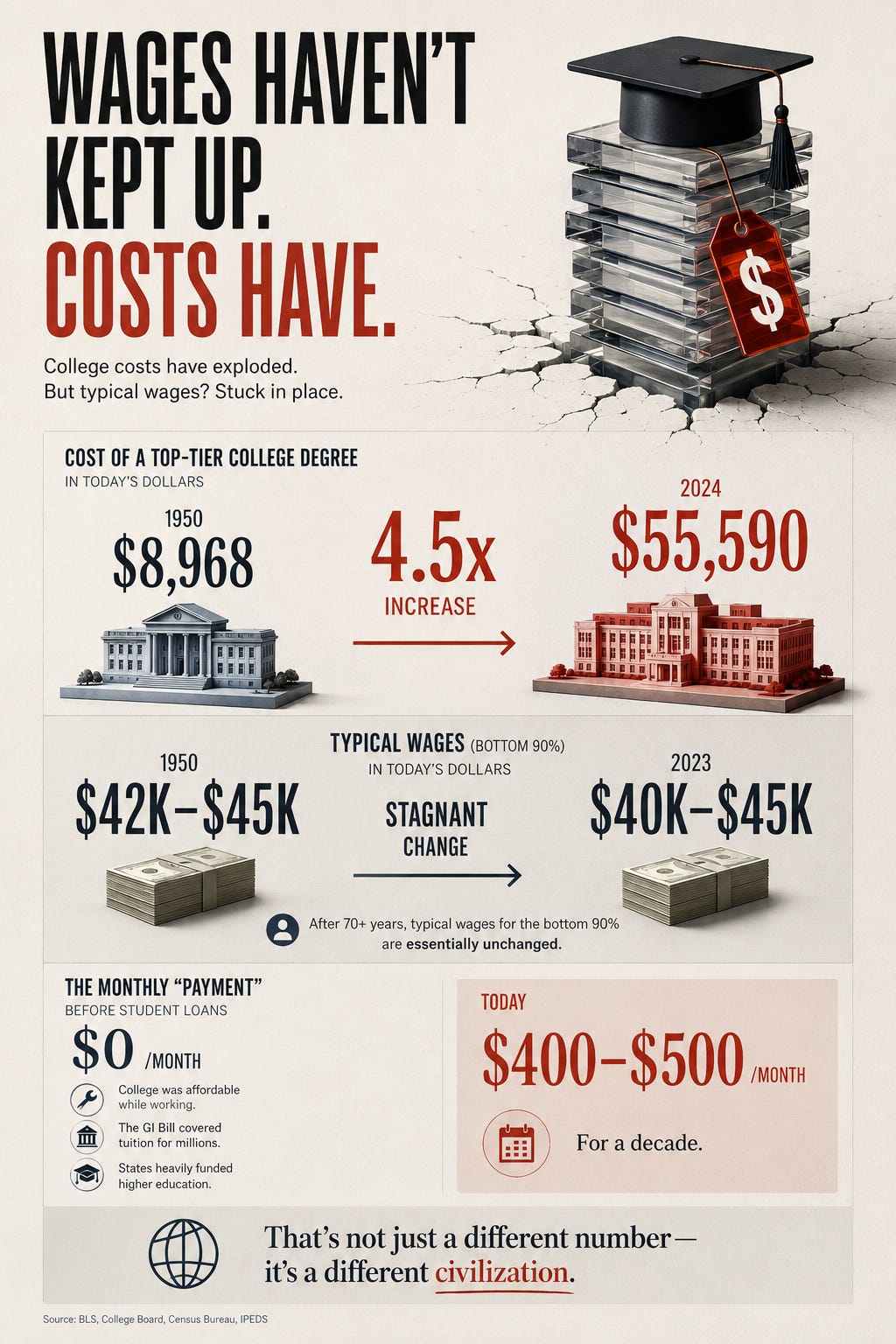
Essentials become less affordable.
6 — Present Condition
If profits come from financial engineering instead of production:
Wages stagnate
Benefits shrink
Productivity gains flow to shareholders
Stock price matters more than worker pay
Corporate success becomes tied to stockholders first — workers second.
Result:
Middle class shrinks.
Asset prices high.
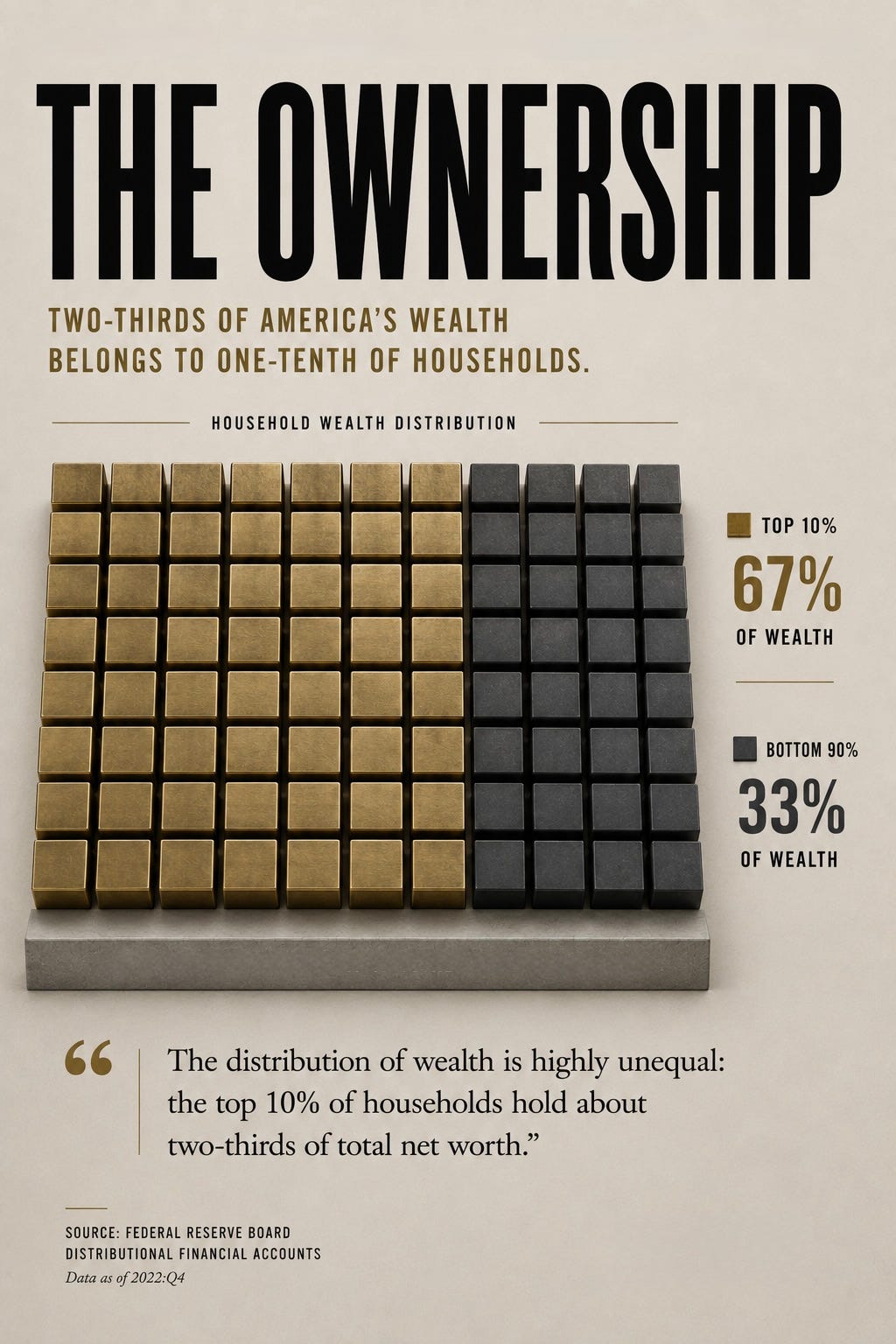
Wealth concentrated.
Political power centralized.
Cost of living rising.
When monopolization and financial extraction dominate:
Housing prices rise
Healthcare costs rise
Groceries rise
Essentials rise
Because companies earn more by controlling supply than by competing.
Inequality now rivals or exceeds levels seen during the Gilded Age.
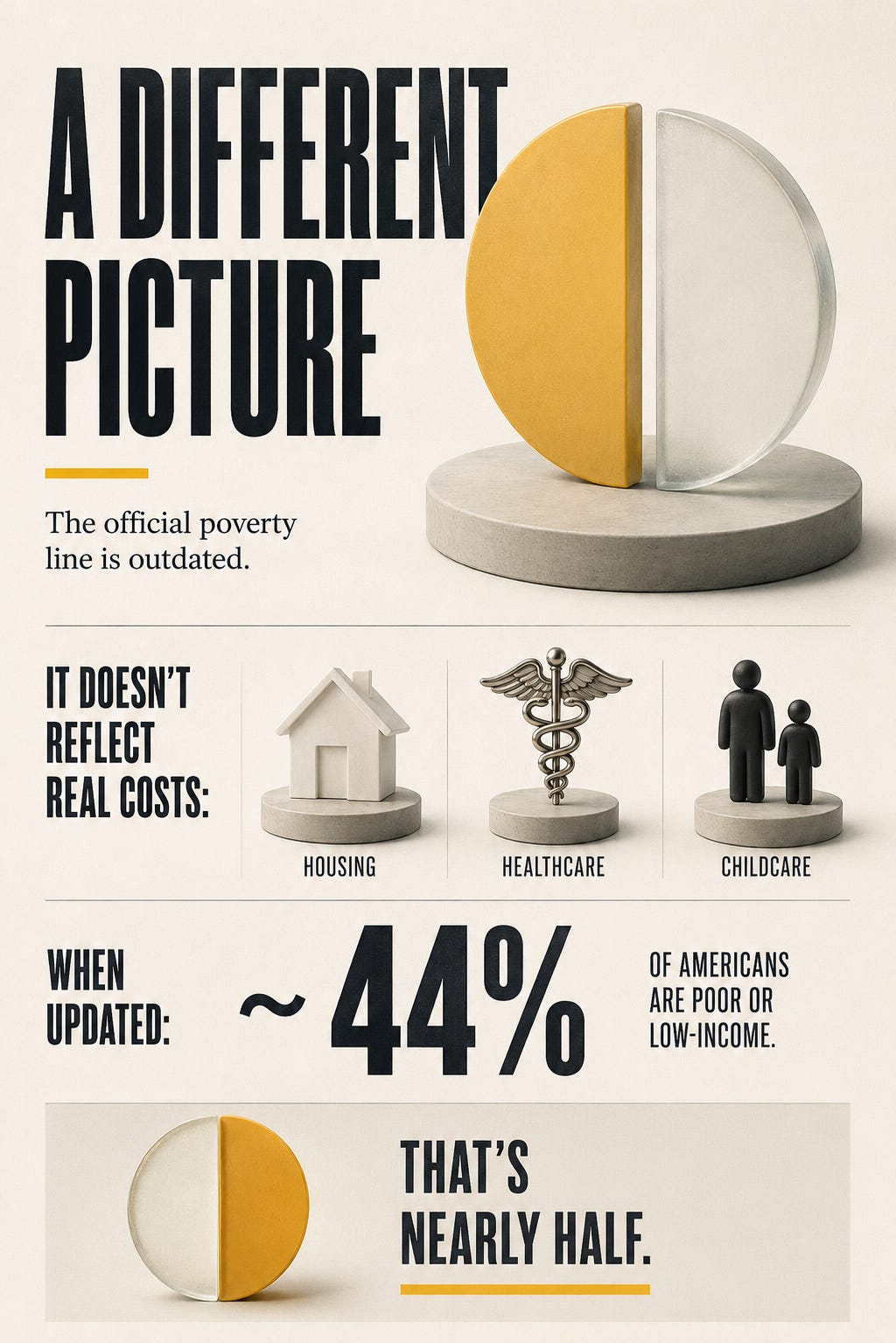
Nearly half of households fall below modern poverty line.
7 — The Causal Conclusion
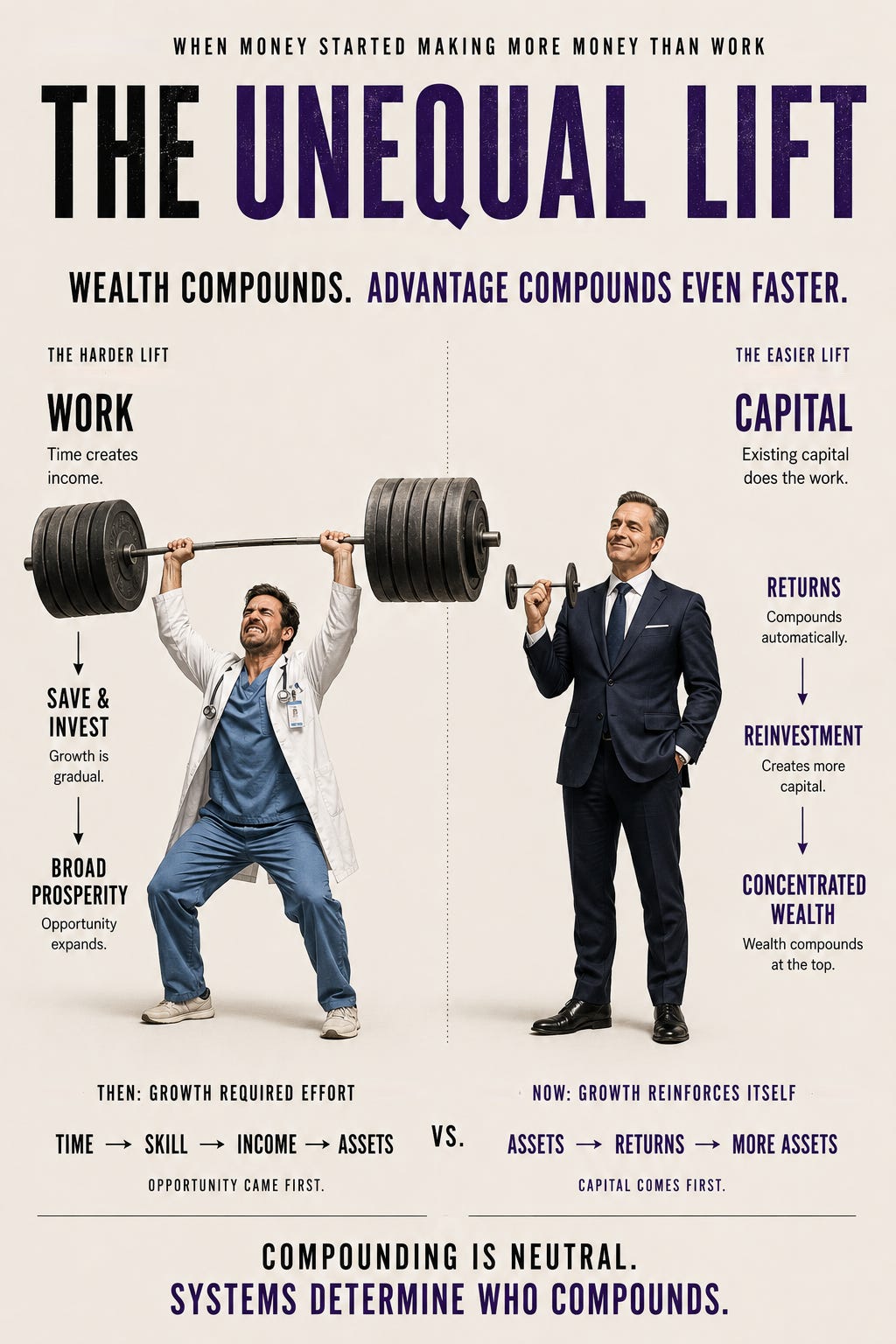
When “making money from money” dominates:
→ Wealth concentrates
→ Monopolies expand
→ Prices rise
→ Wages stagnate
→ Political power centralizes
→ Democracy weakens
When real work dominates:
→ Wages rise with productivity
→ Competition increases
→ Middle class strengthens
→ Growth broadens
Guardrails determine which system you get.
Part 4: Dynasty
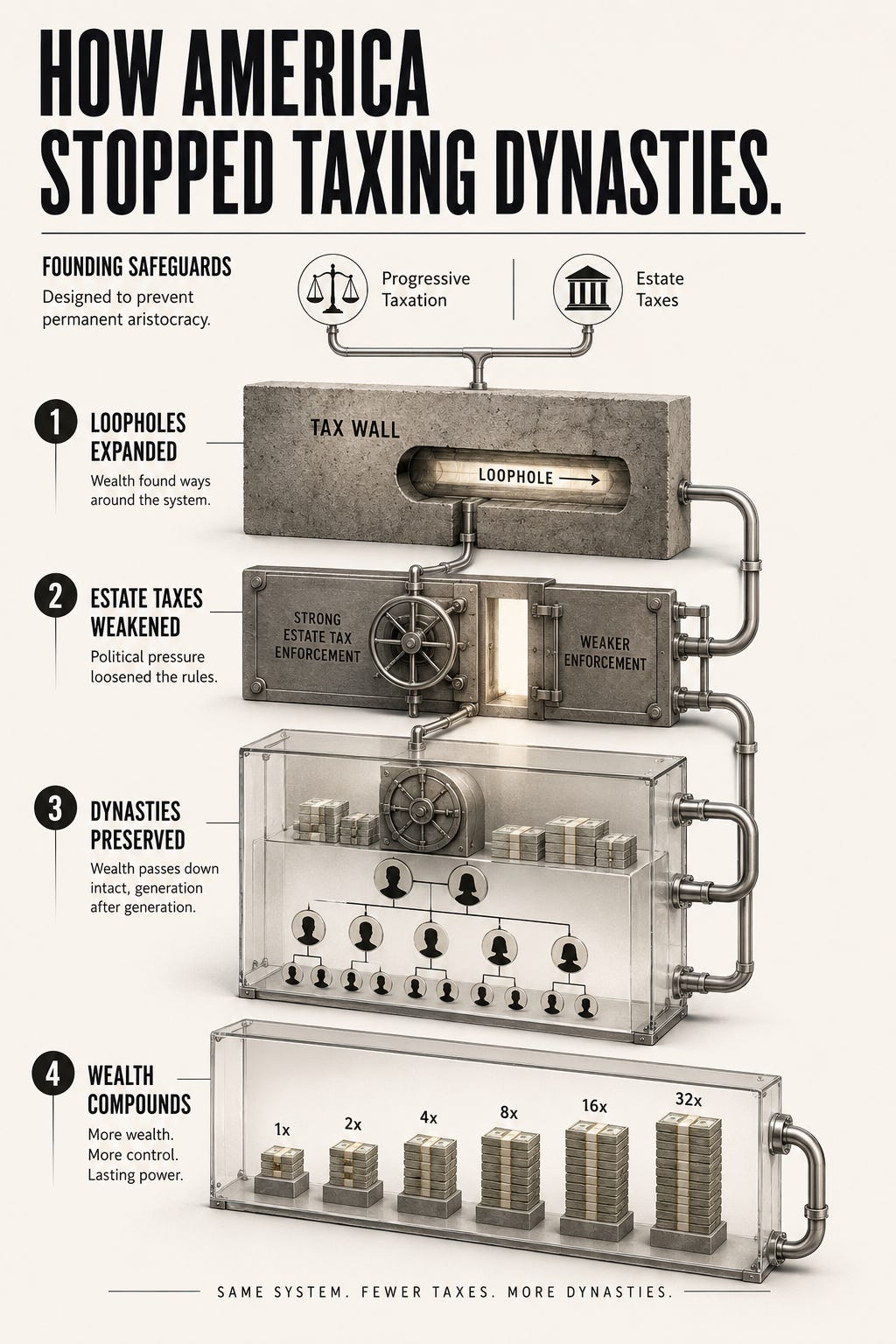
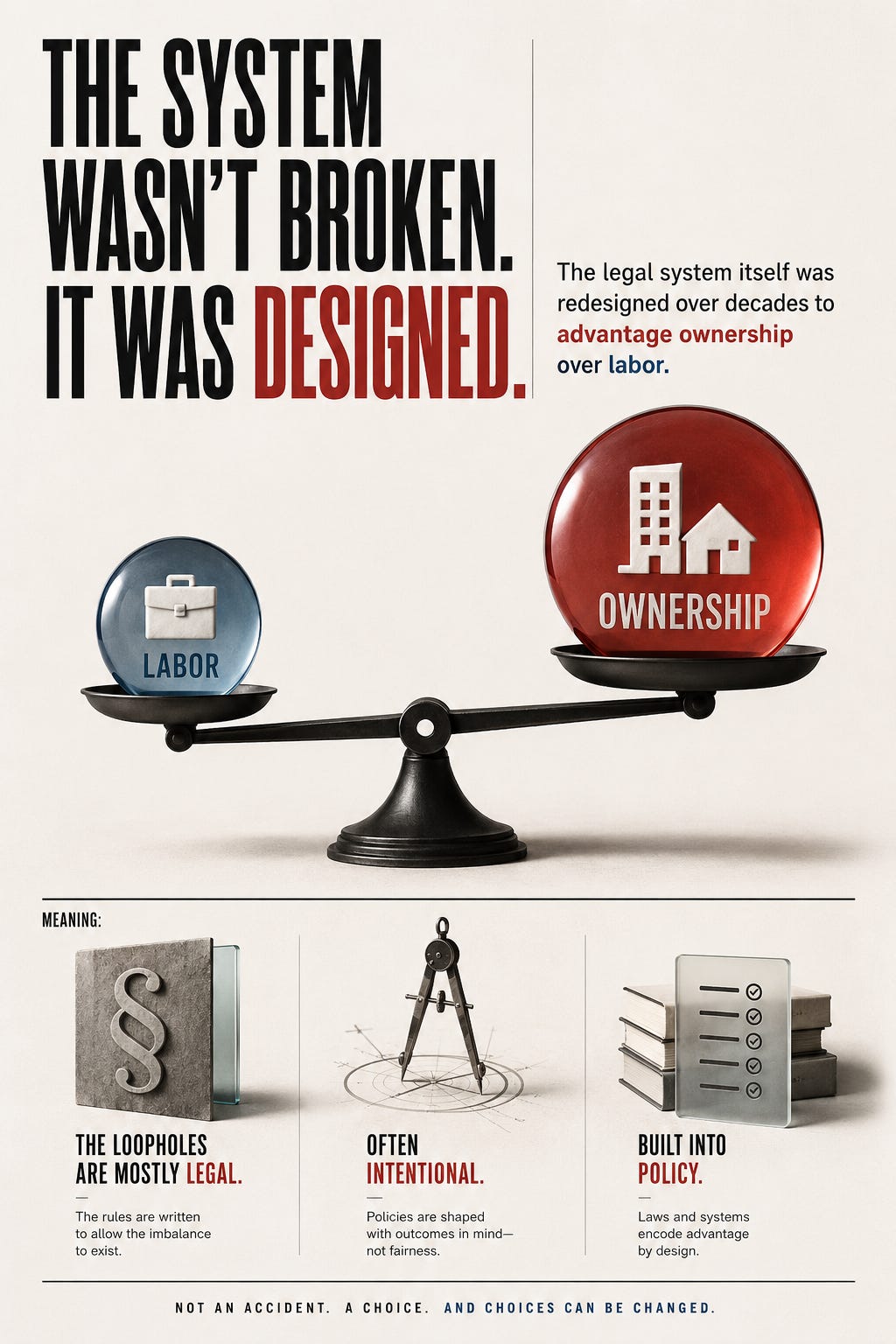
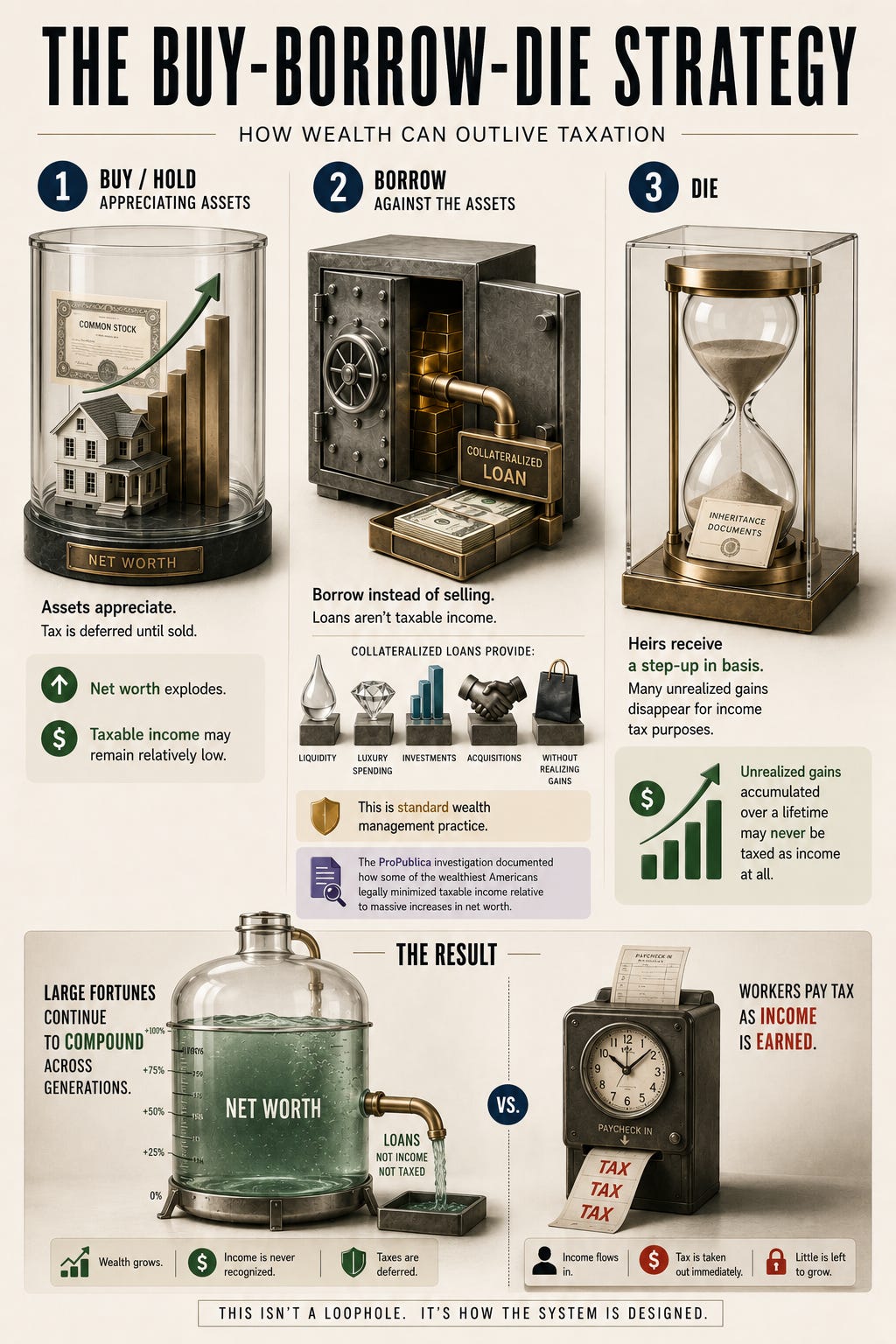
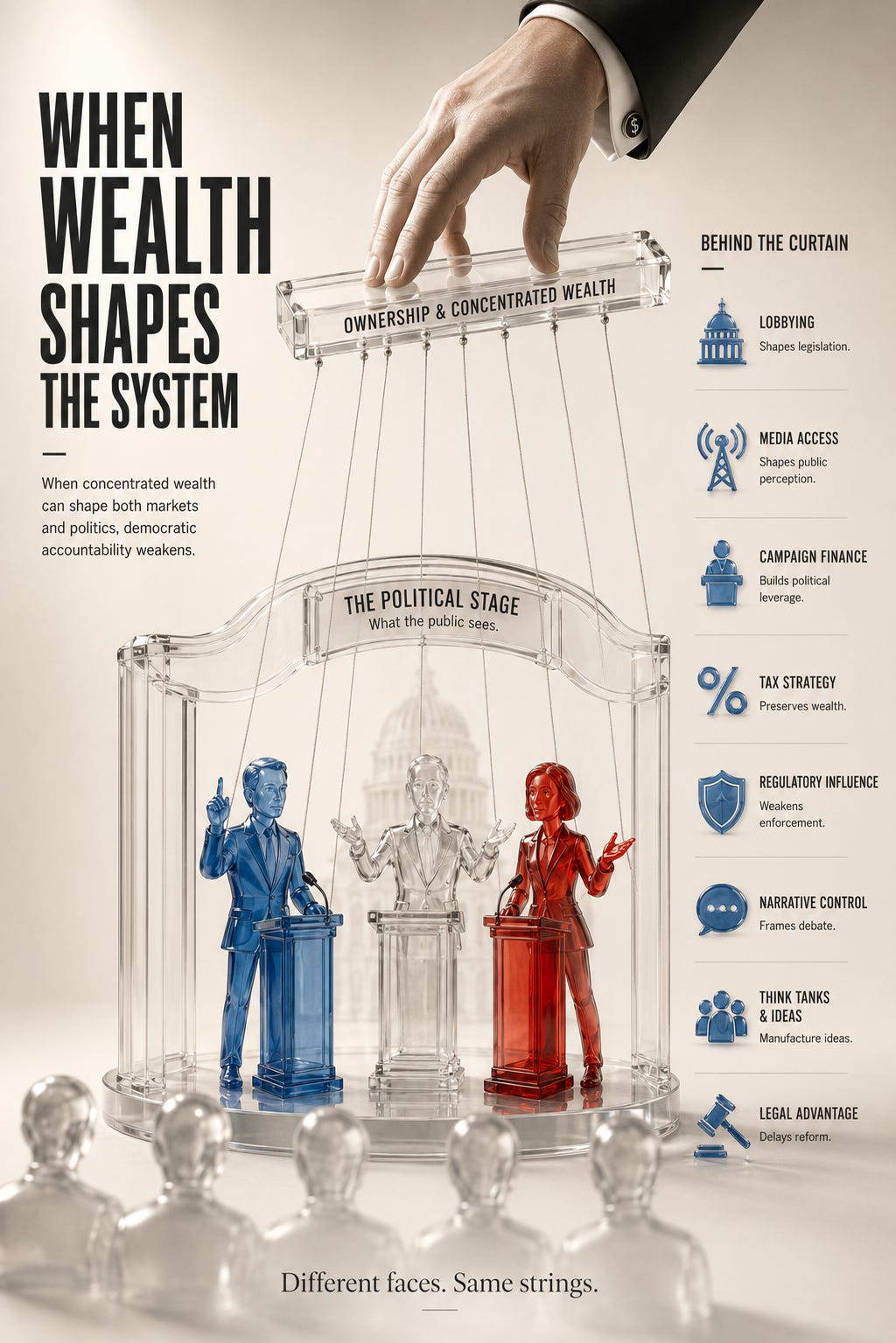
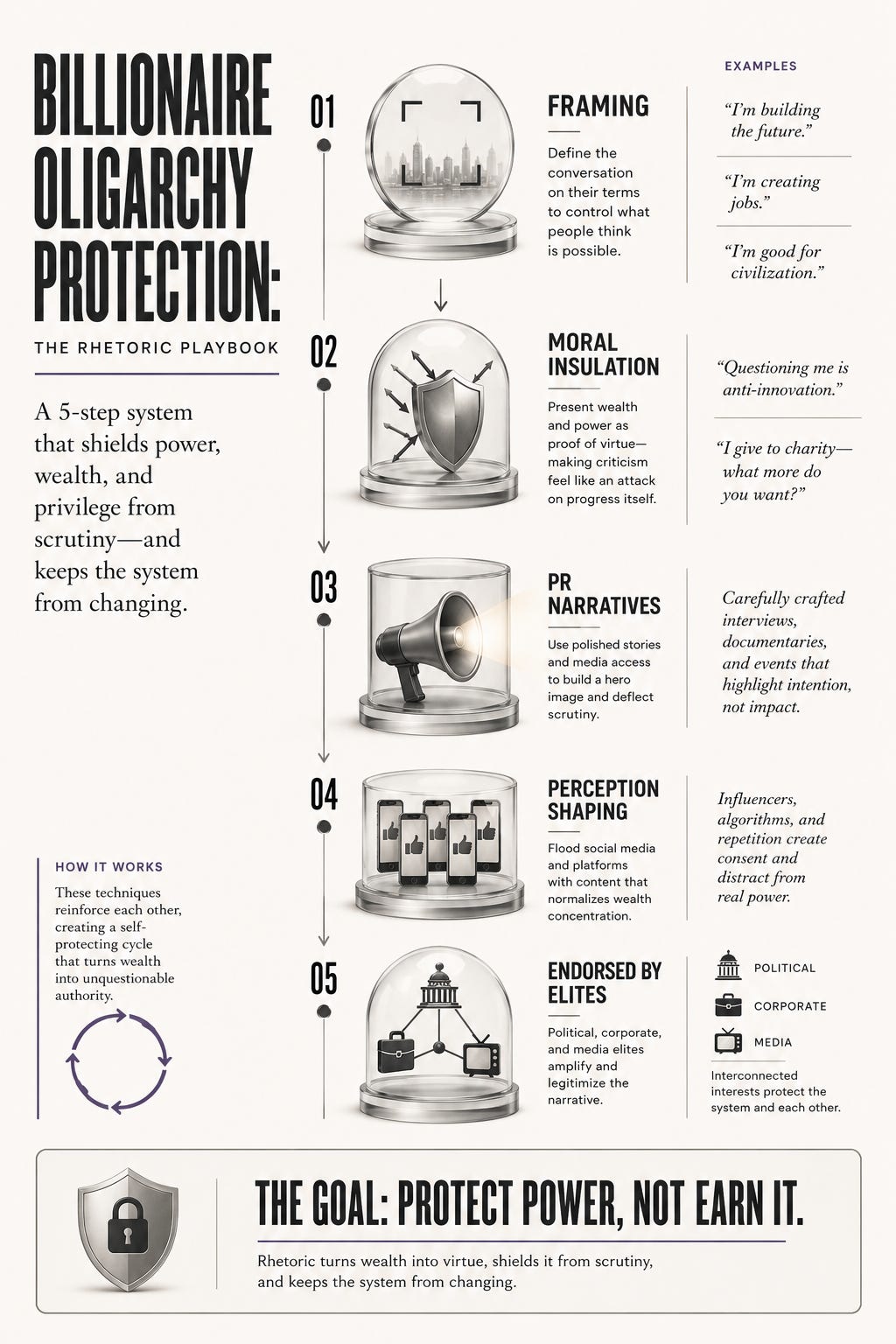
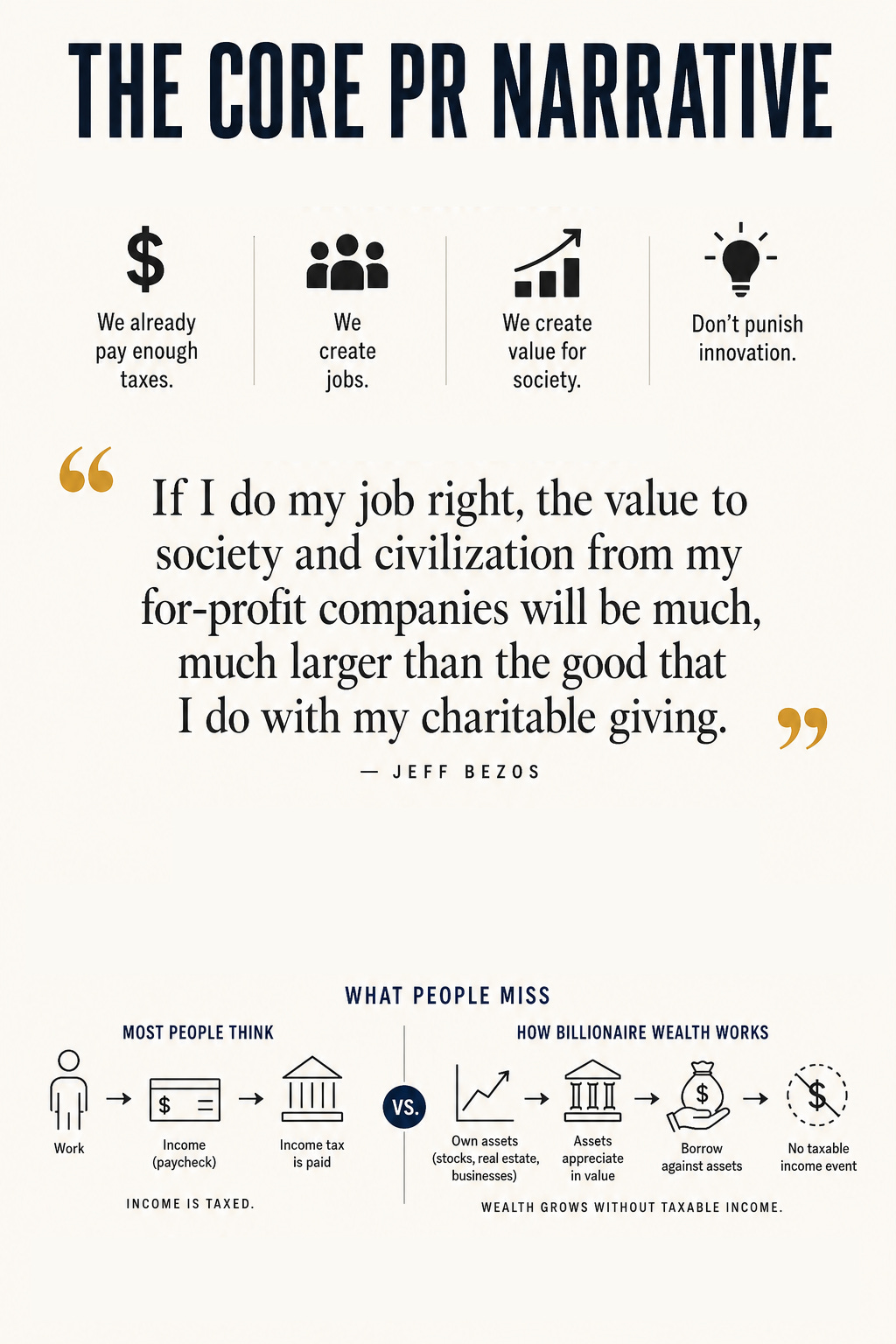
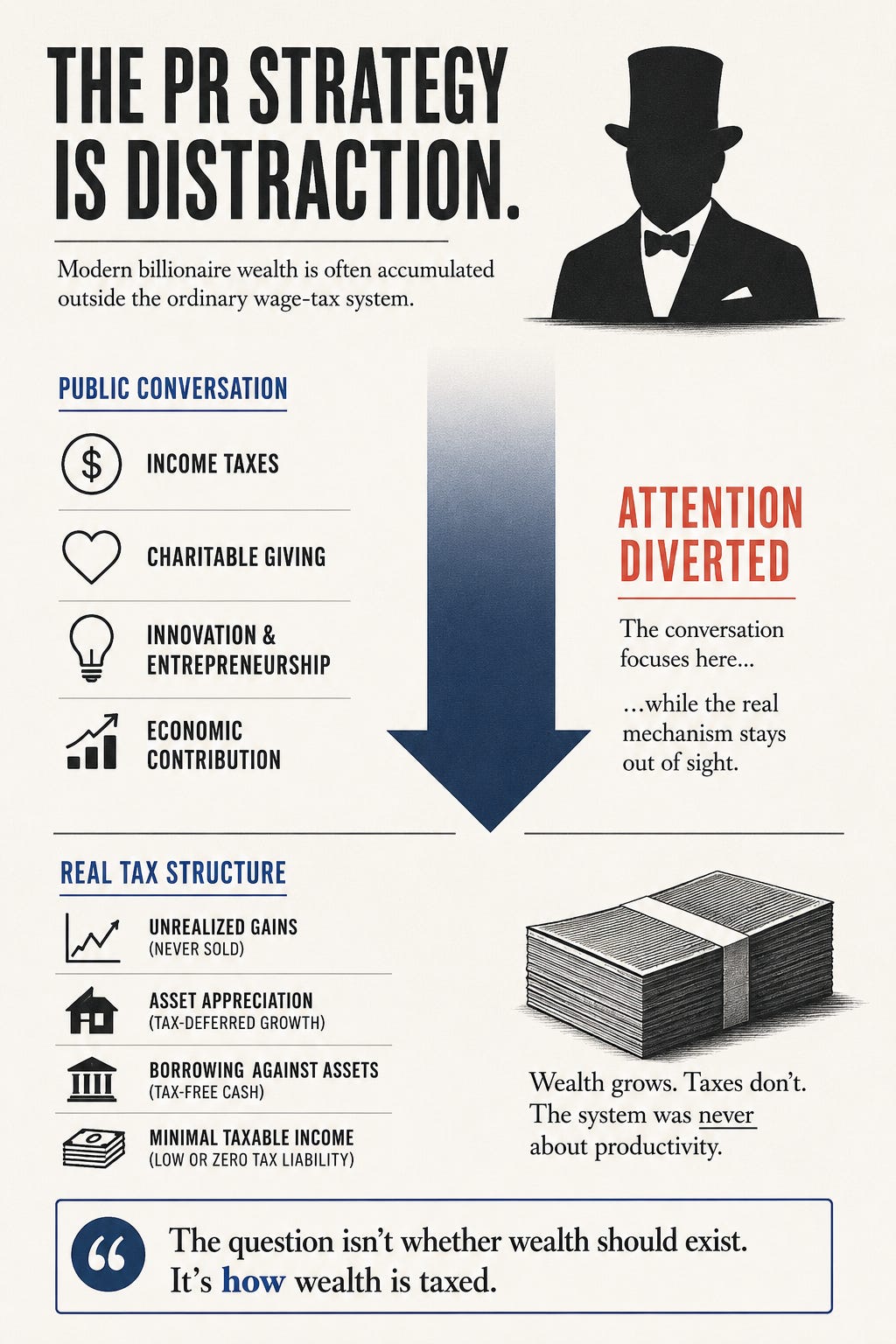
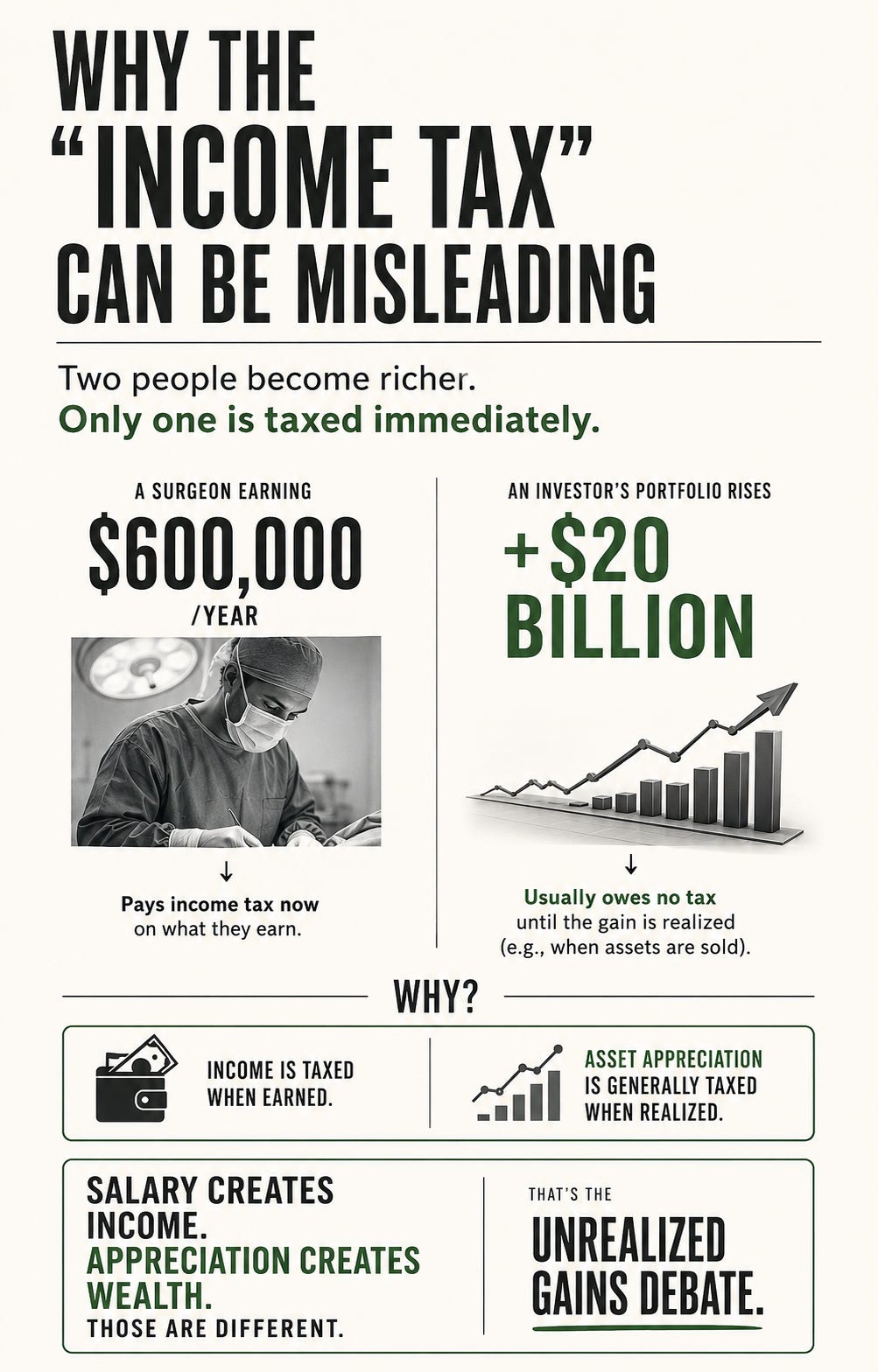
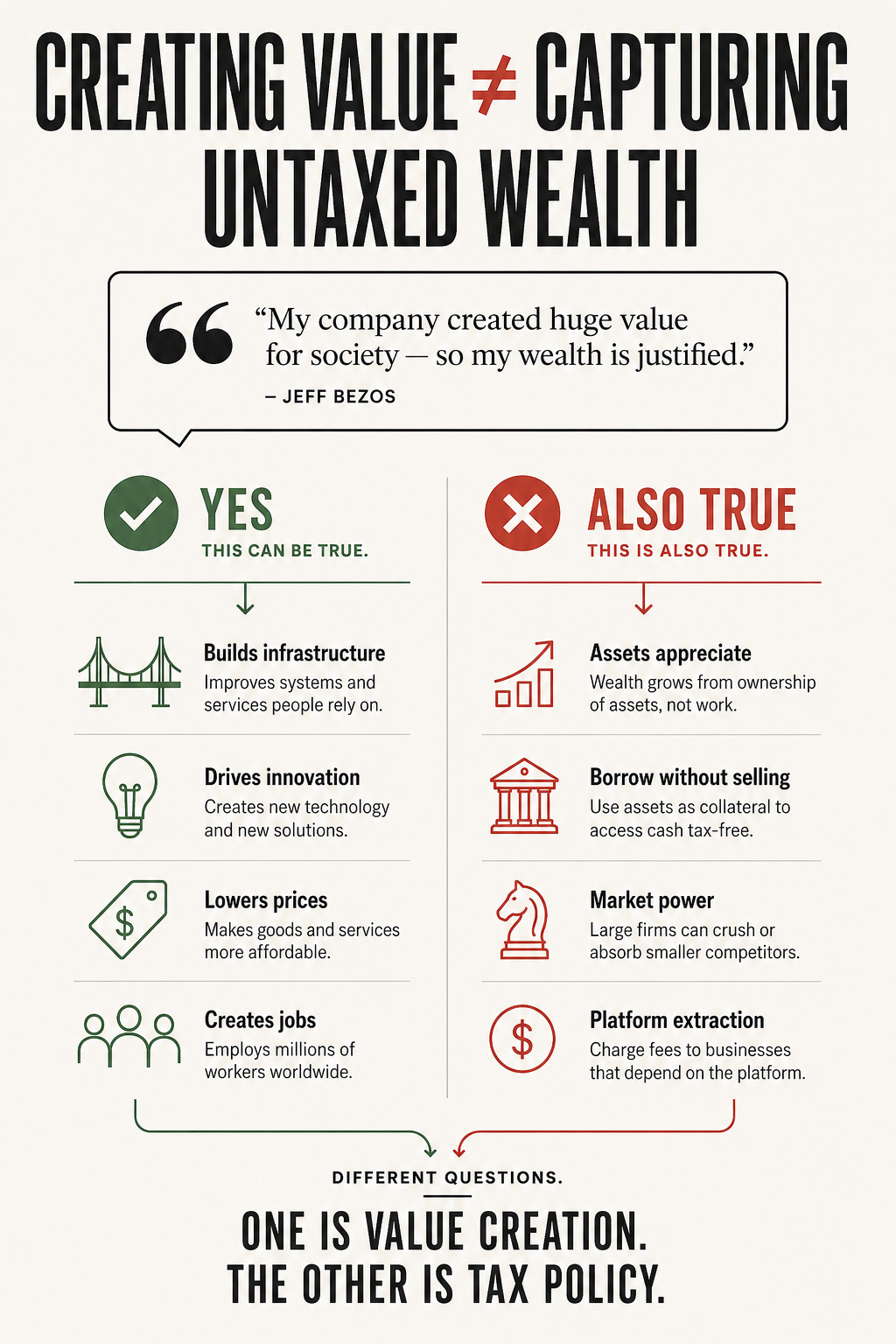
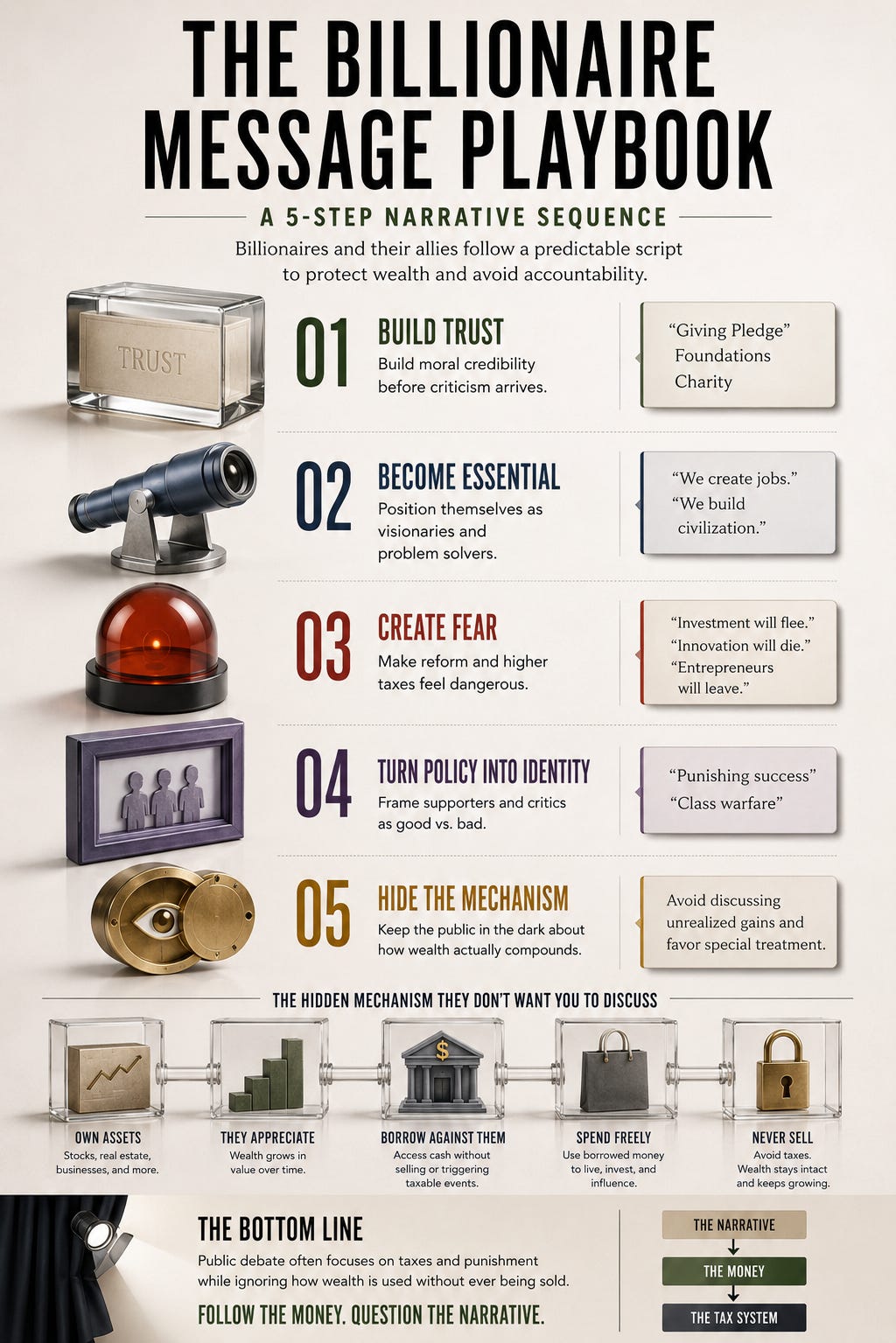
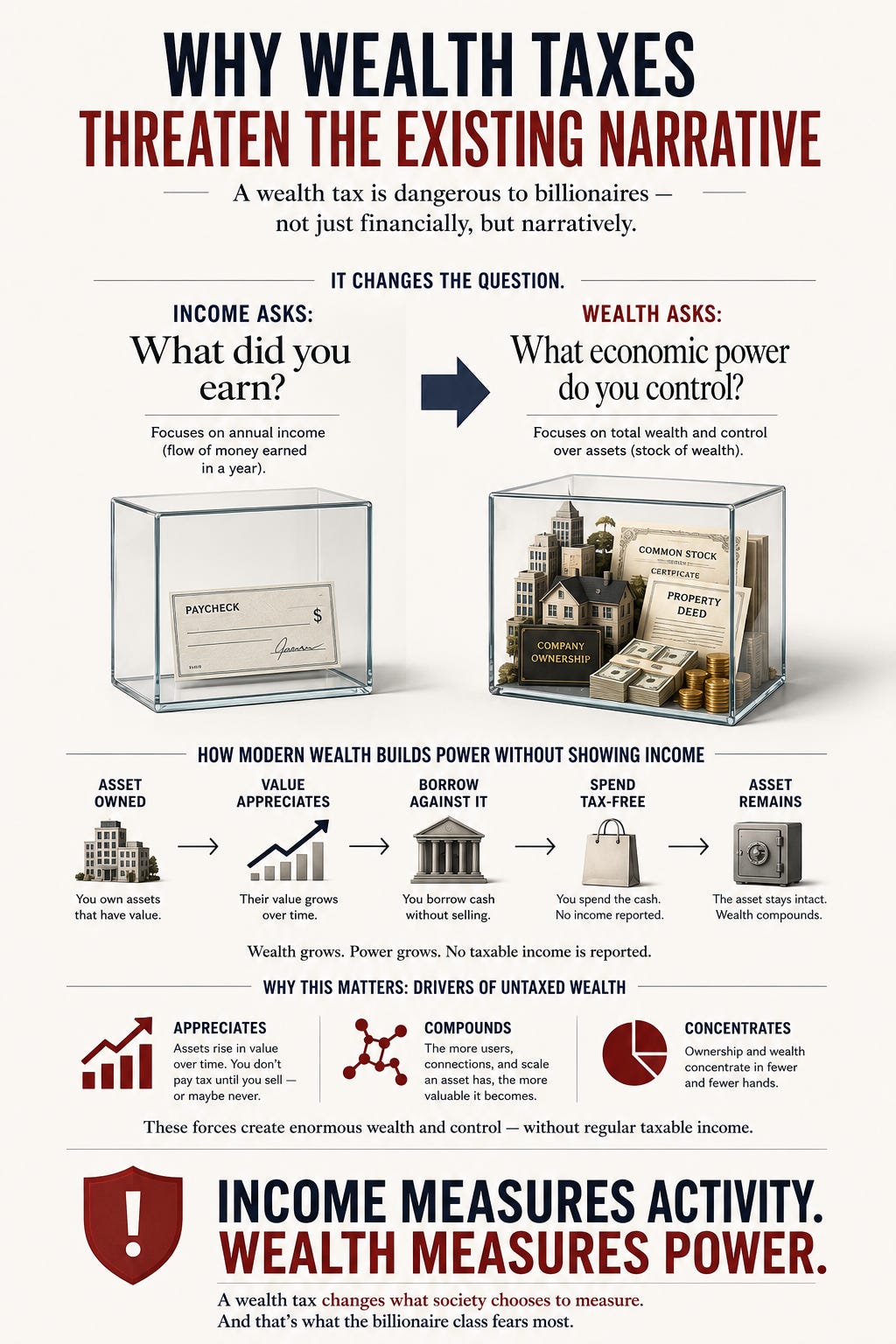
A widely cited network analysis found that 0.1% of shareholders control about 80% of global corporate stock, largely major financial institutions in the US and UK.
Part 5: The Future Is Here
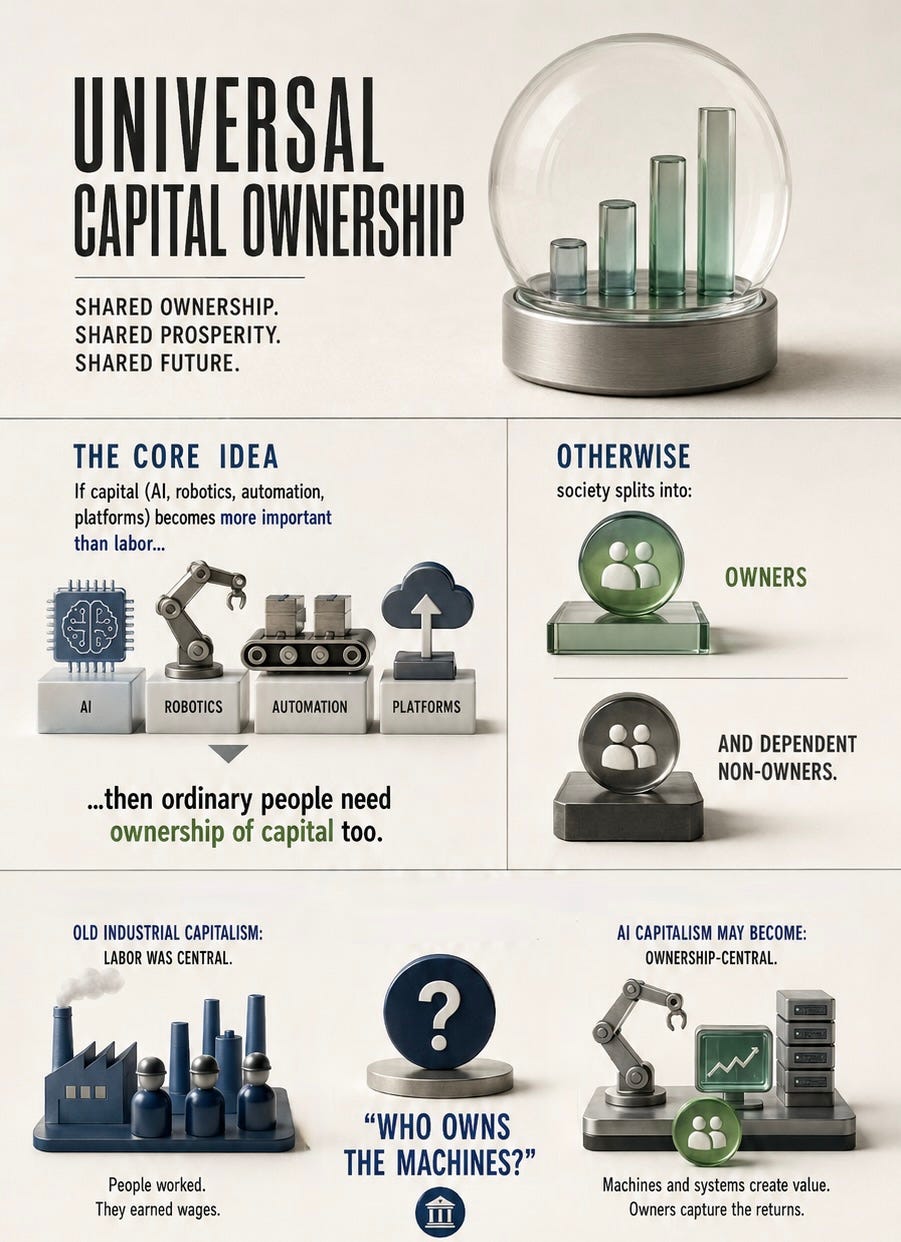
What AI Is Already Doing To Labor
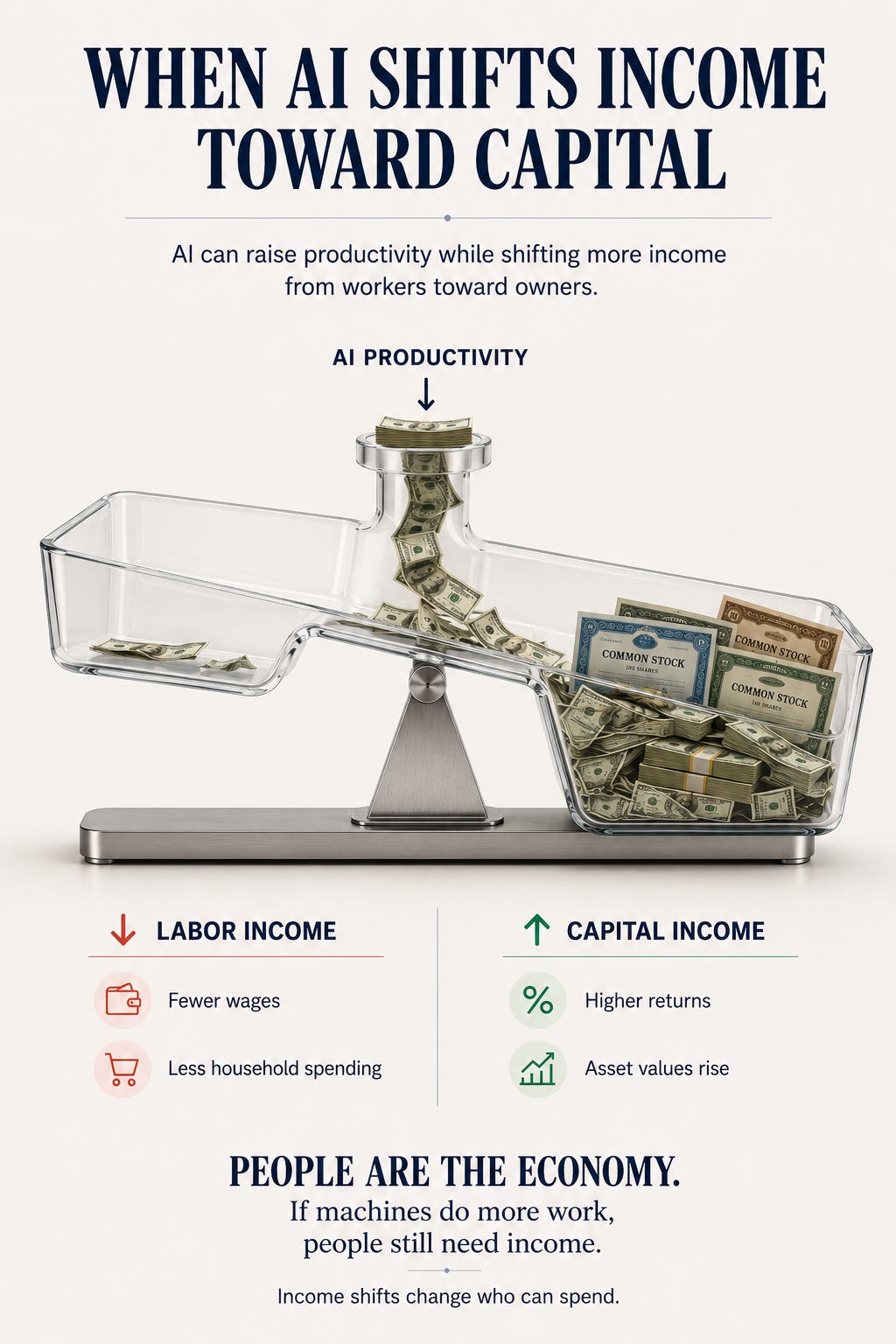
It doesn’t need to replace full jobs. It just needs to: reduce time per task, increase output per worker.
That leads to: fewer hires, layoffs / hiring freezes, remaining workers doing more.
That shift is already happening.
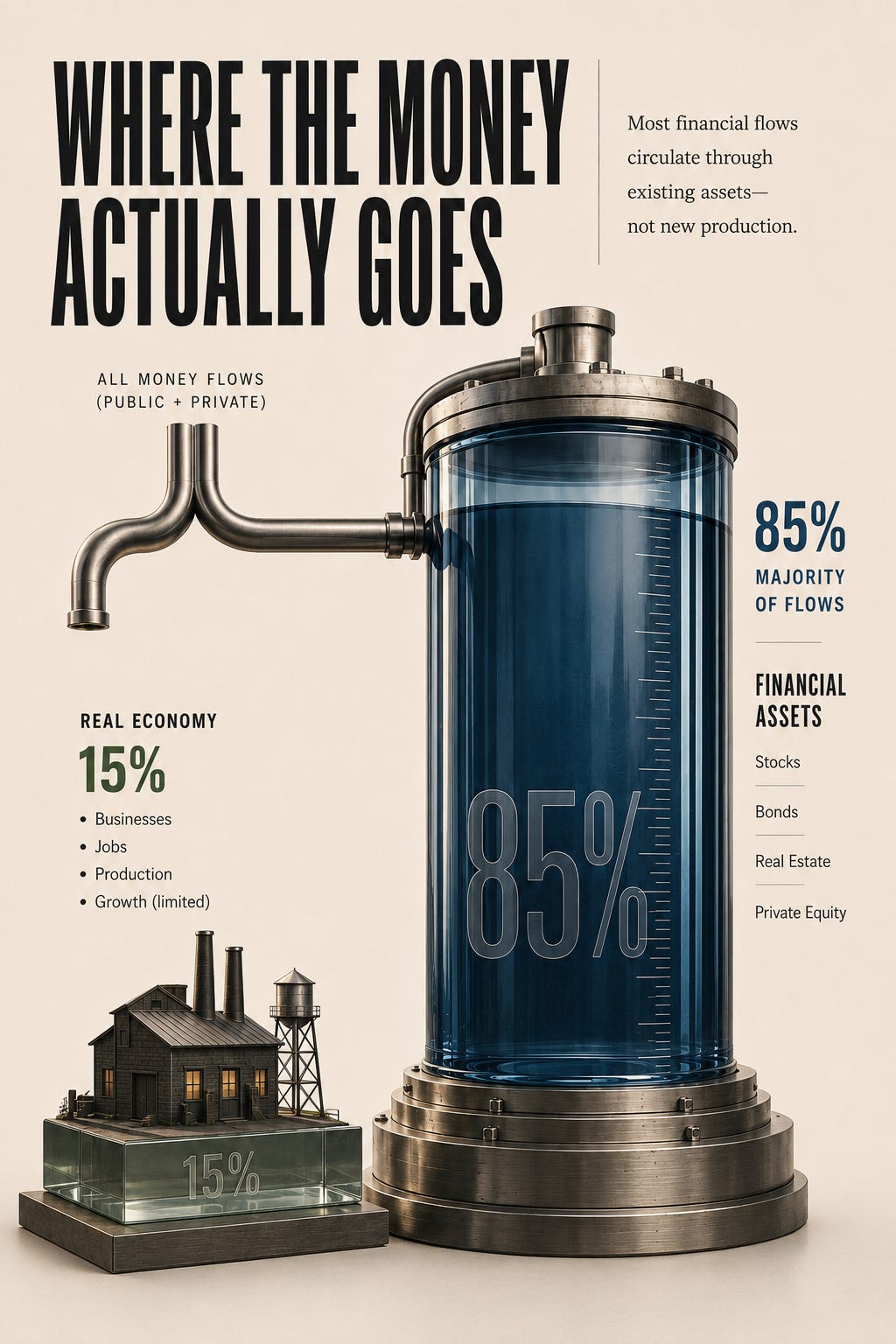
Where The Money Actually Goes
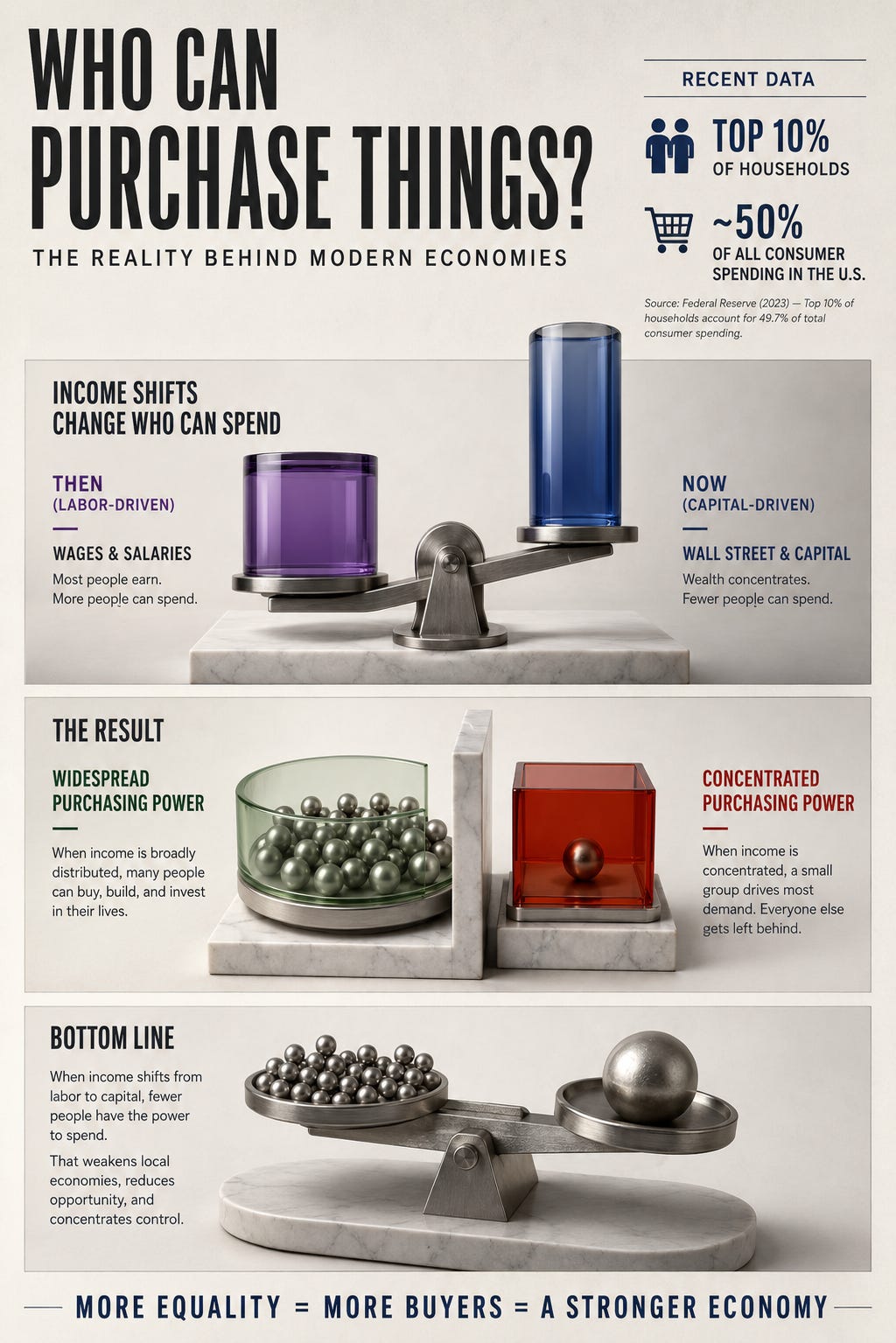
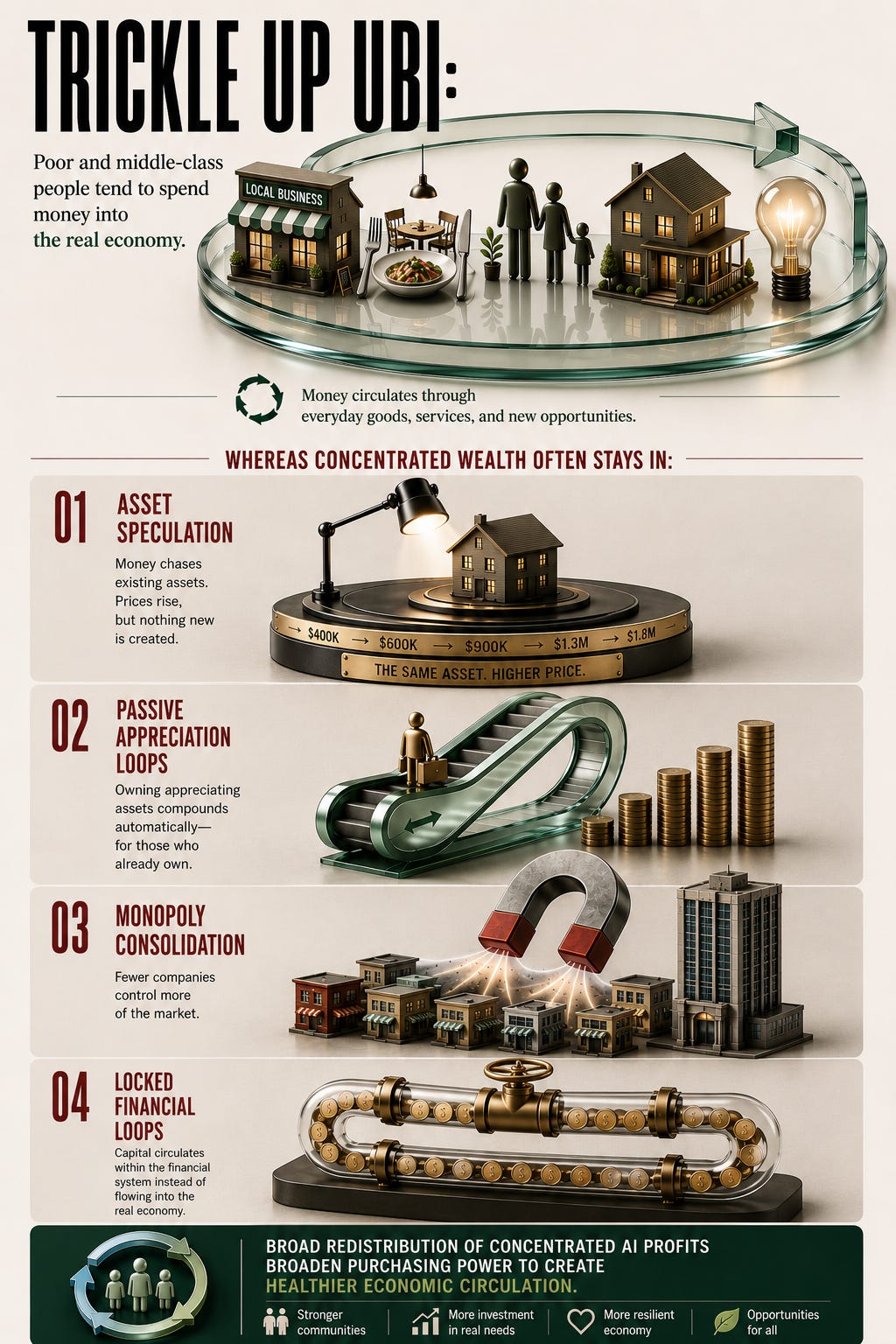
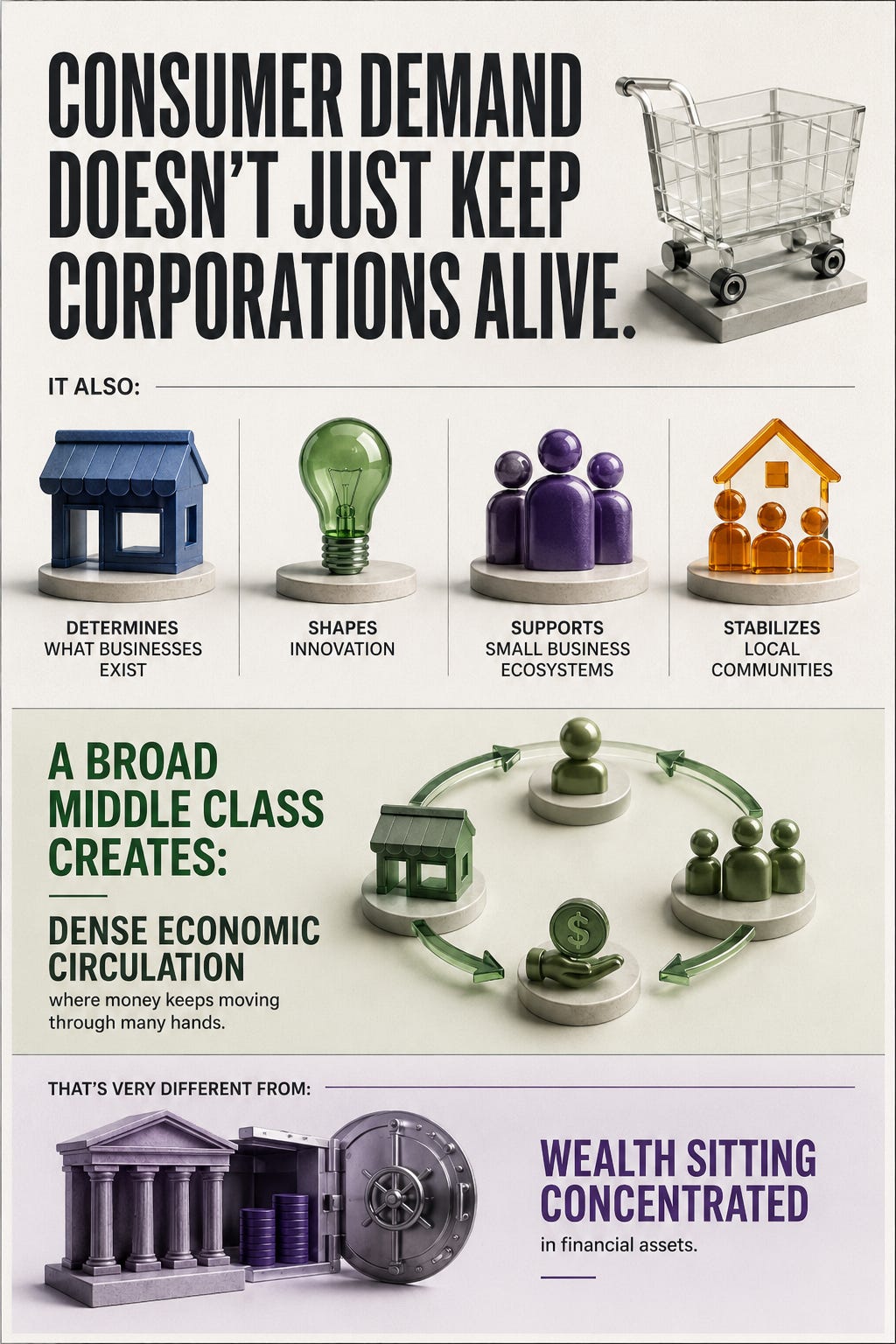
Labor savings don’t vanish. They get redirected into:
– AI infrastructure
– stock buybacks
– competitor consolidation
The Real Endgame
AI is becoming the workflow layer — the place where work happens.
Stack:
– chips / compute
– cloud
– models (LLMs)
– workflow / OS layer
That last layer is the prize.
Once a company runs on it:
– their docs, code, decisions flow through it
– their internal processes are built around it
– their teams adapt to it
Switching isn’t “change software.” It’s: retraining people, rewriting workflows, migrating systems. So they don’t switch.
That creates:
– lock-in
– dependency
– long-term control
You don’t need to replace workers. You just need to become unavoidable.
How This Concentrates Wealth
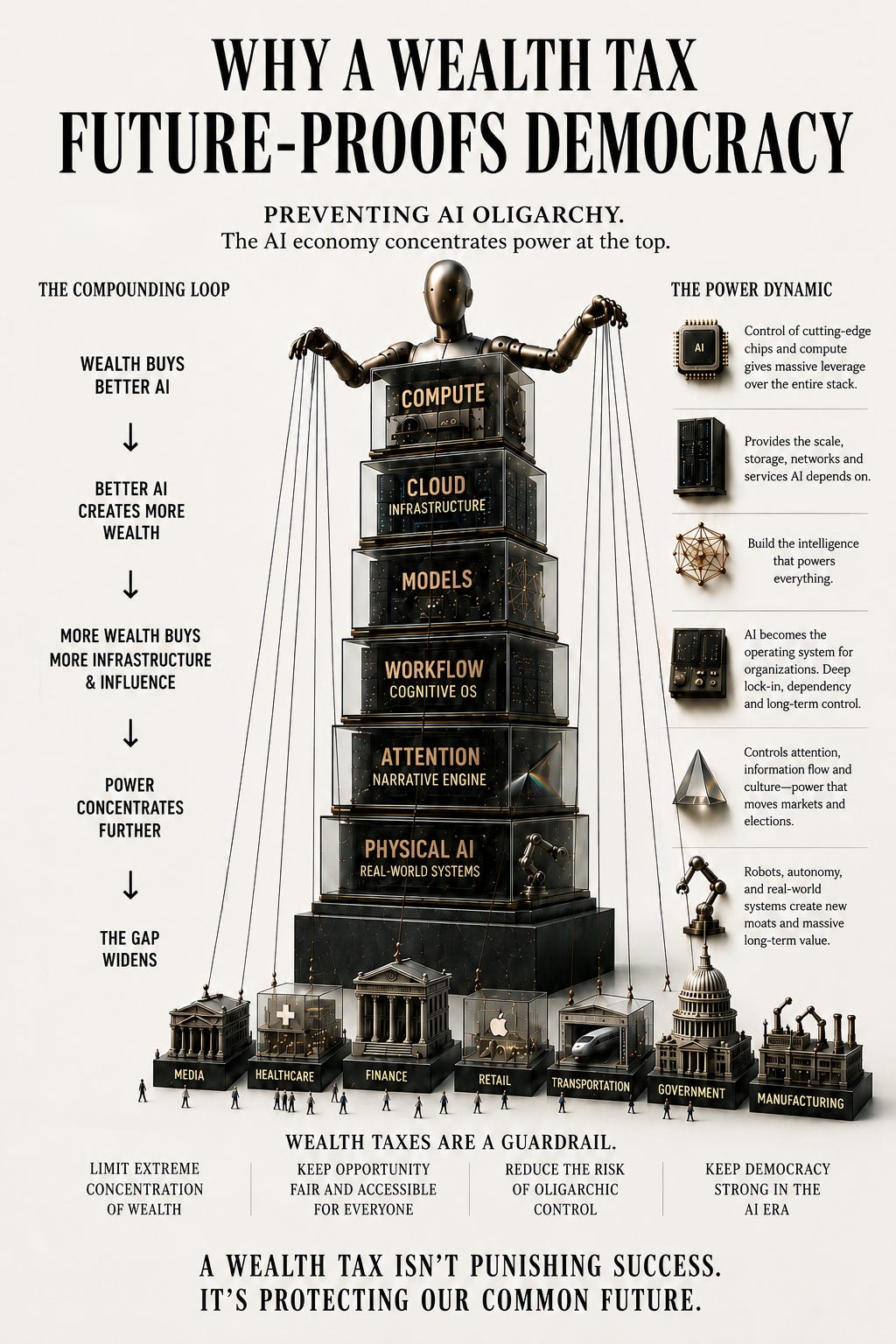
The gains flow to:
– infrastructure owners
– platform owners
– capital holders
Not labor. So even without mass unemployment, you still get: fewer workers needed
higher output per worker, more wealth concentrating upward.
Part 6: The Cycle Pretending To Be A Contest
Now Connect This To The Political Reality
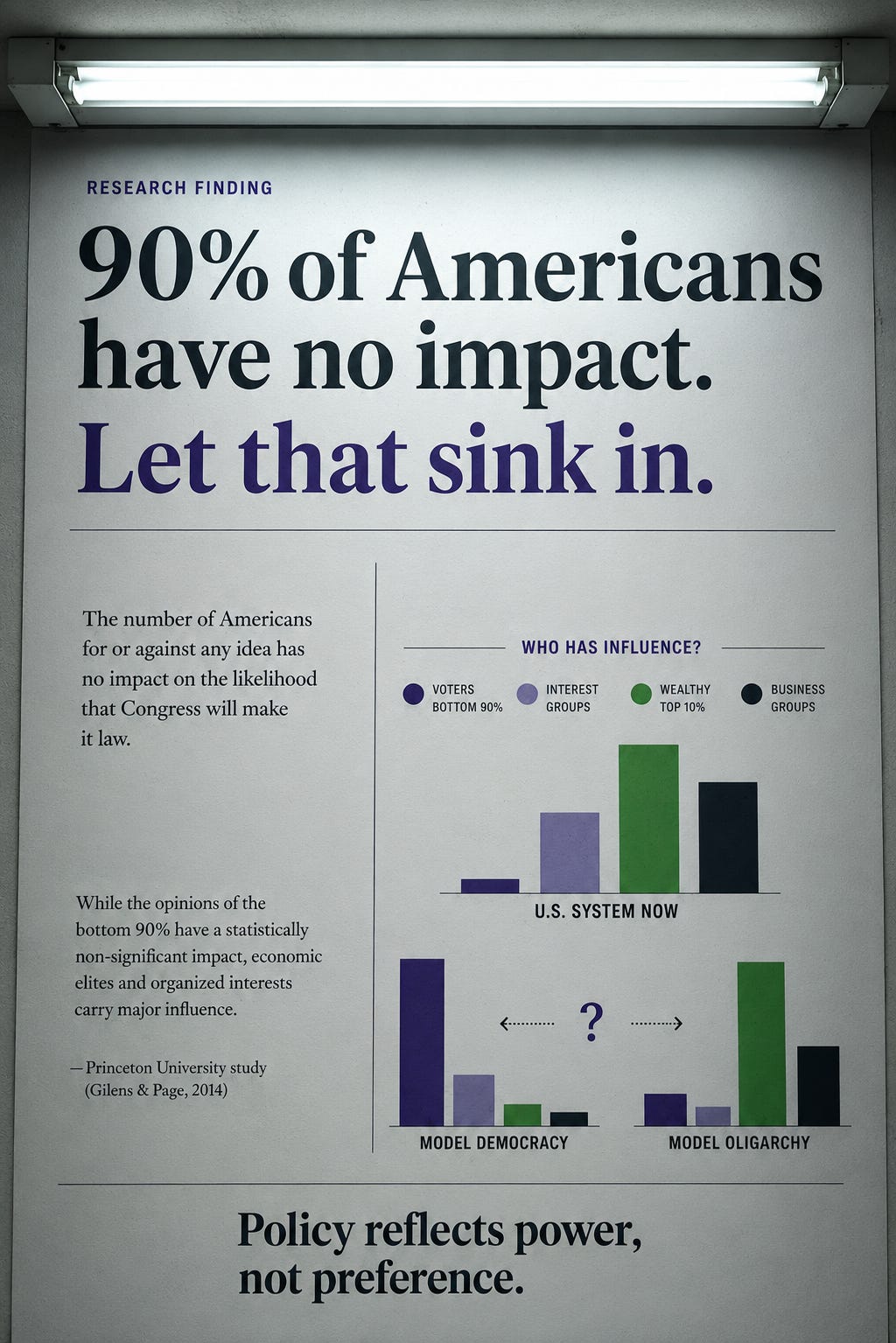
We already have strong evidence (Gilens & Page) that:
– average voters have little independent impact on policy
– economic elites and organized interests have far more
In other words: we’re already operating closer to an oligarchy than a responsive democracy.
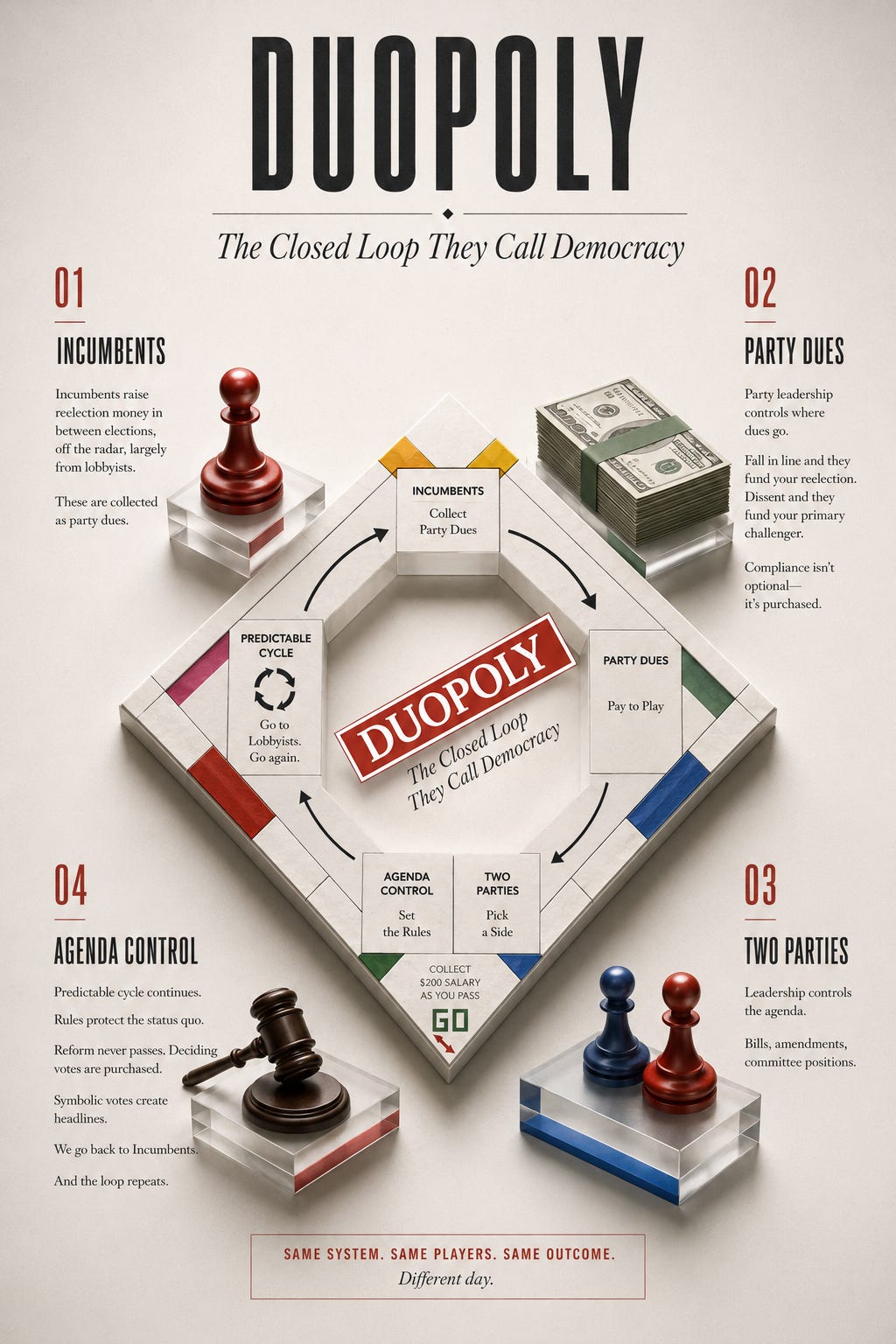
Competition Without Competition: The Duopoly Cycle
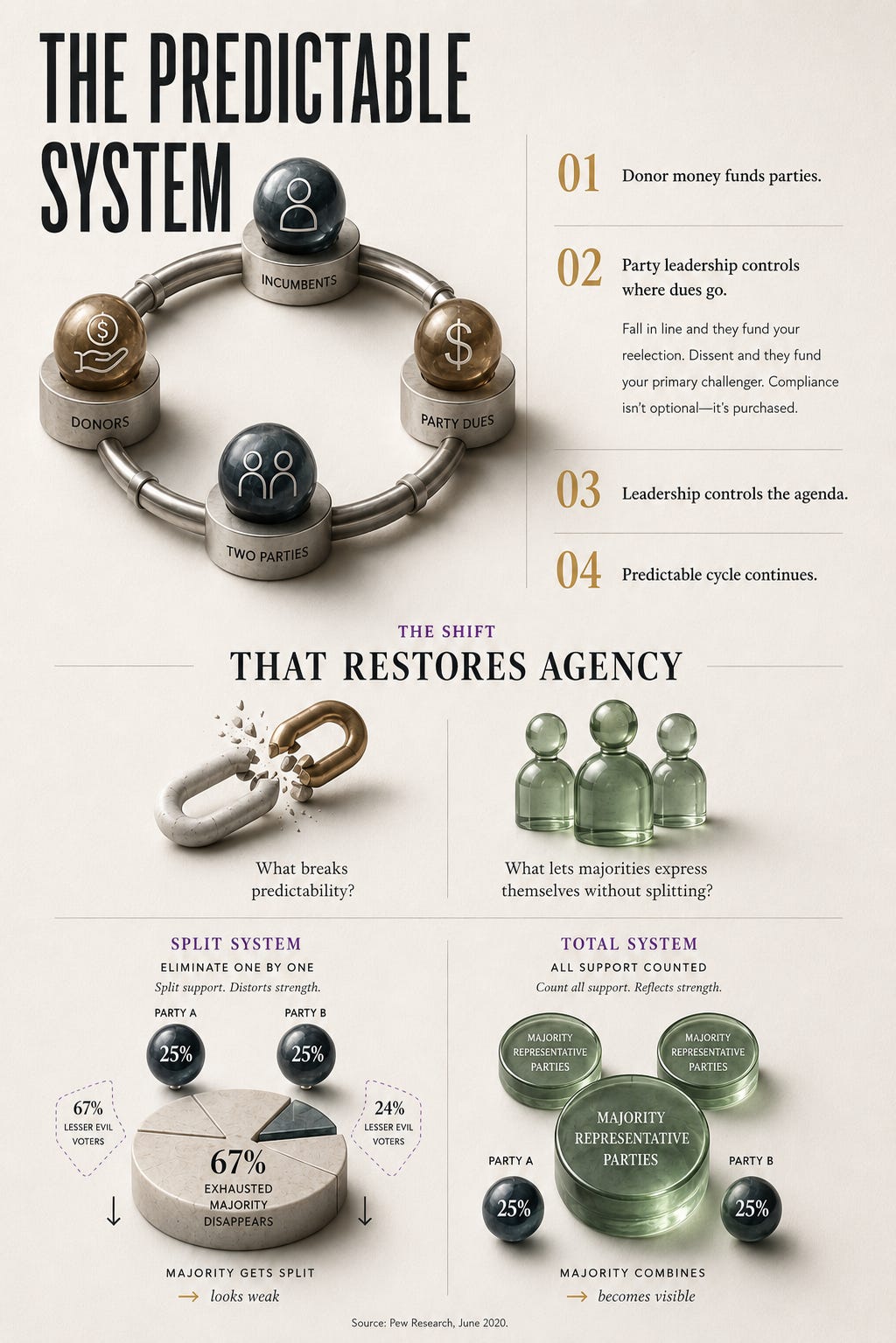
A closed loop of power, money, and incentives keeps challengers out, choices limited, and the status quo in place.
Why That Matters For AI
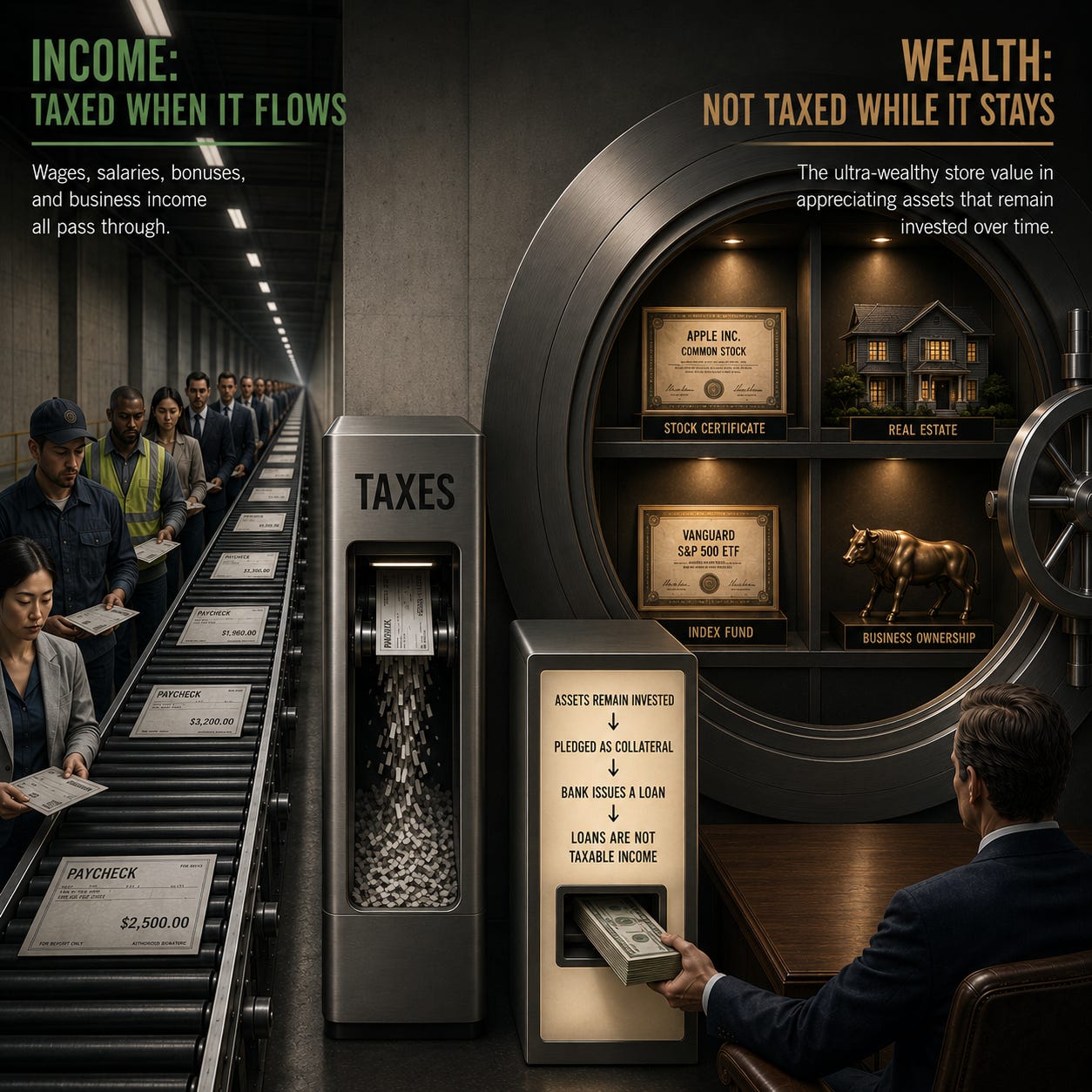
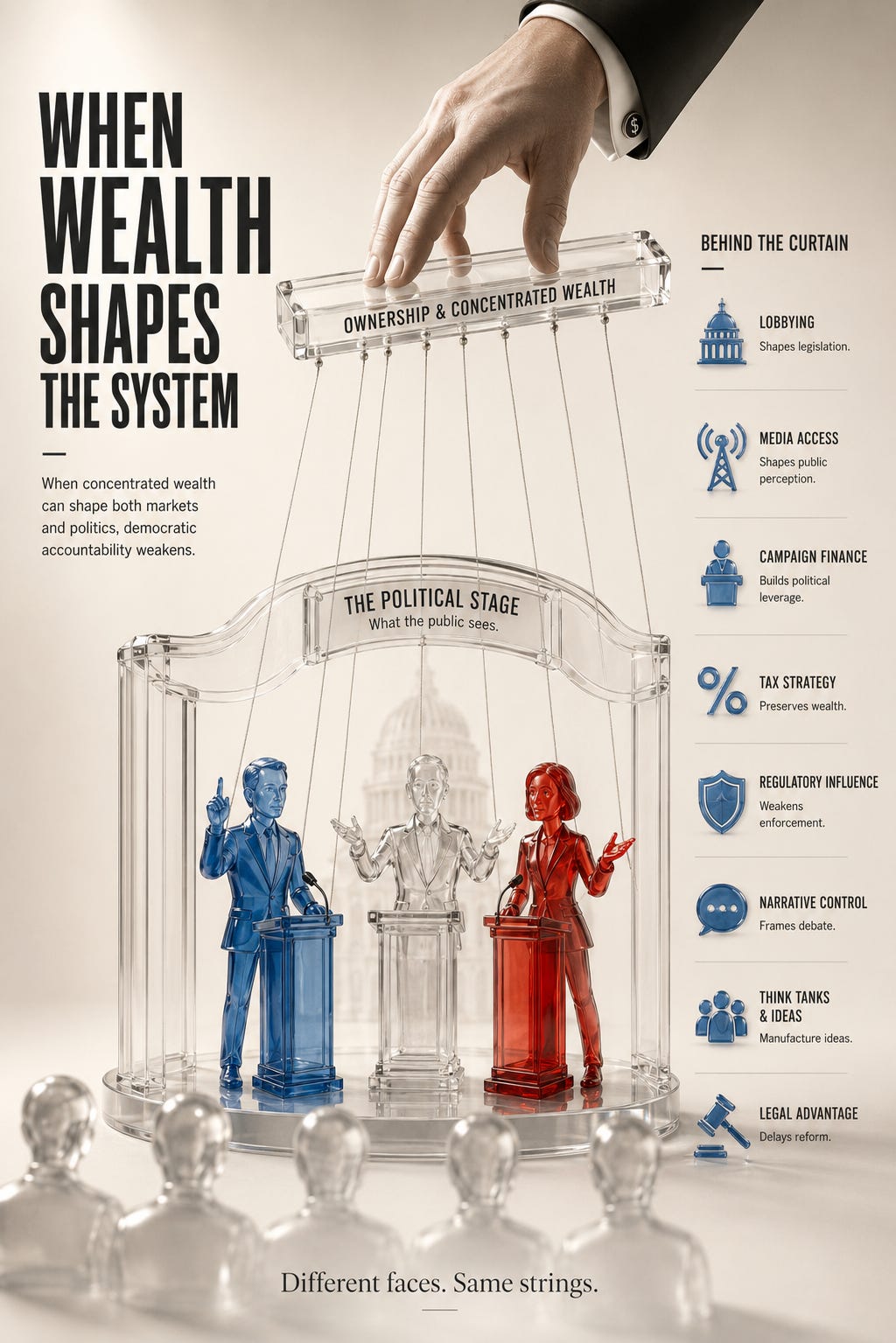
If wealth concentration accelerates inside a system where voters already have weak influence, then the public doesn’t have a clean mechanism to correct it. And our voting structure makes it worse:
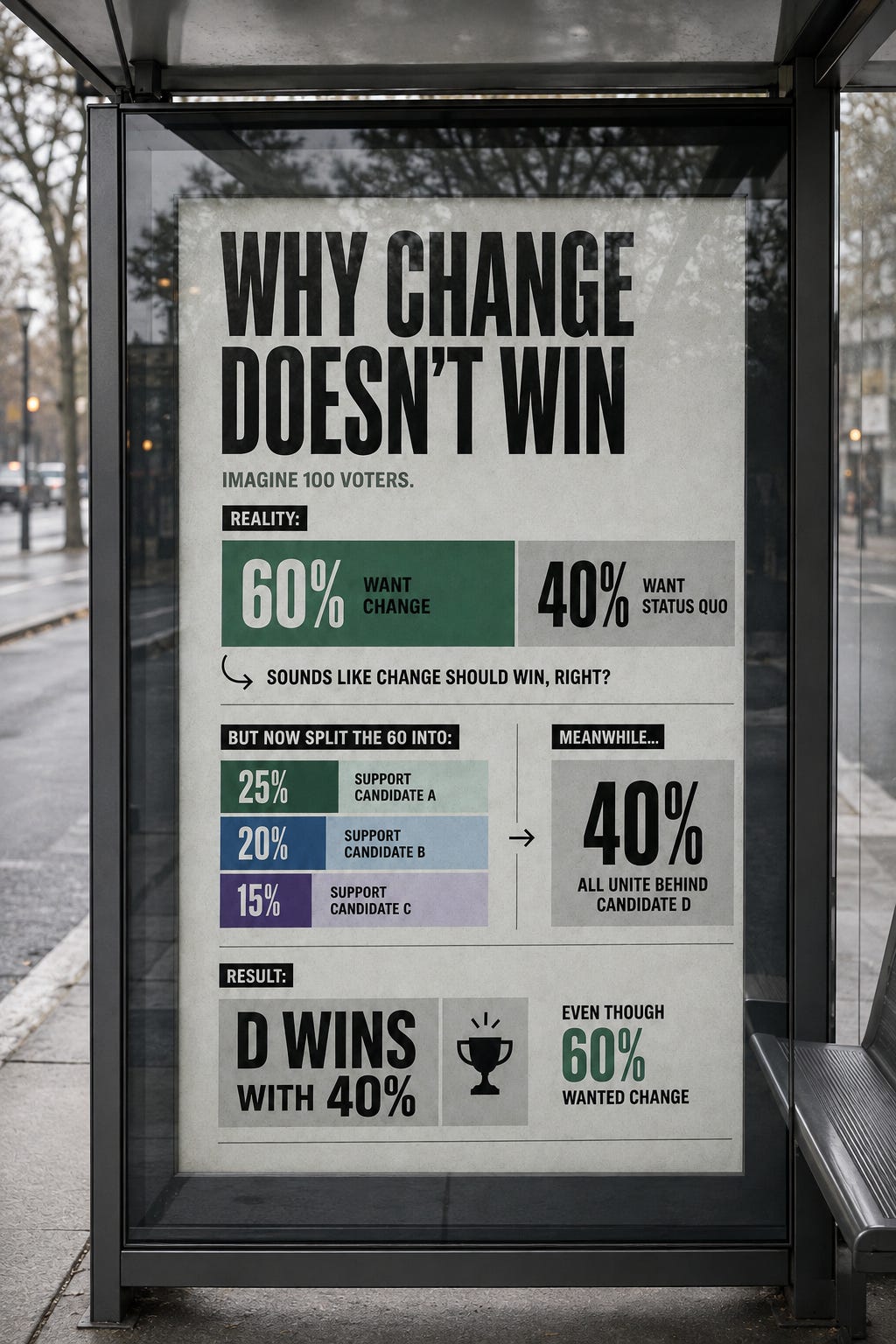
Majority support gets split.

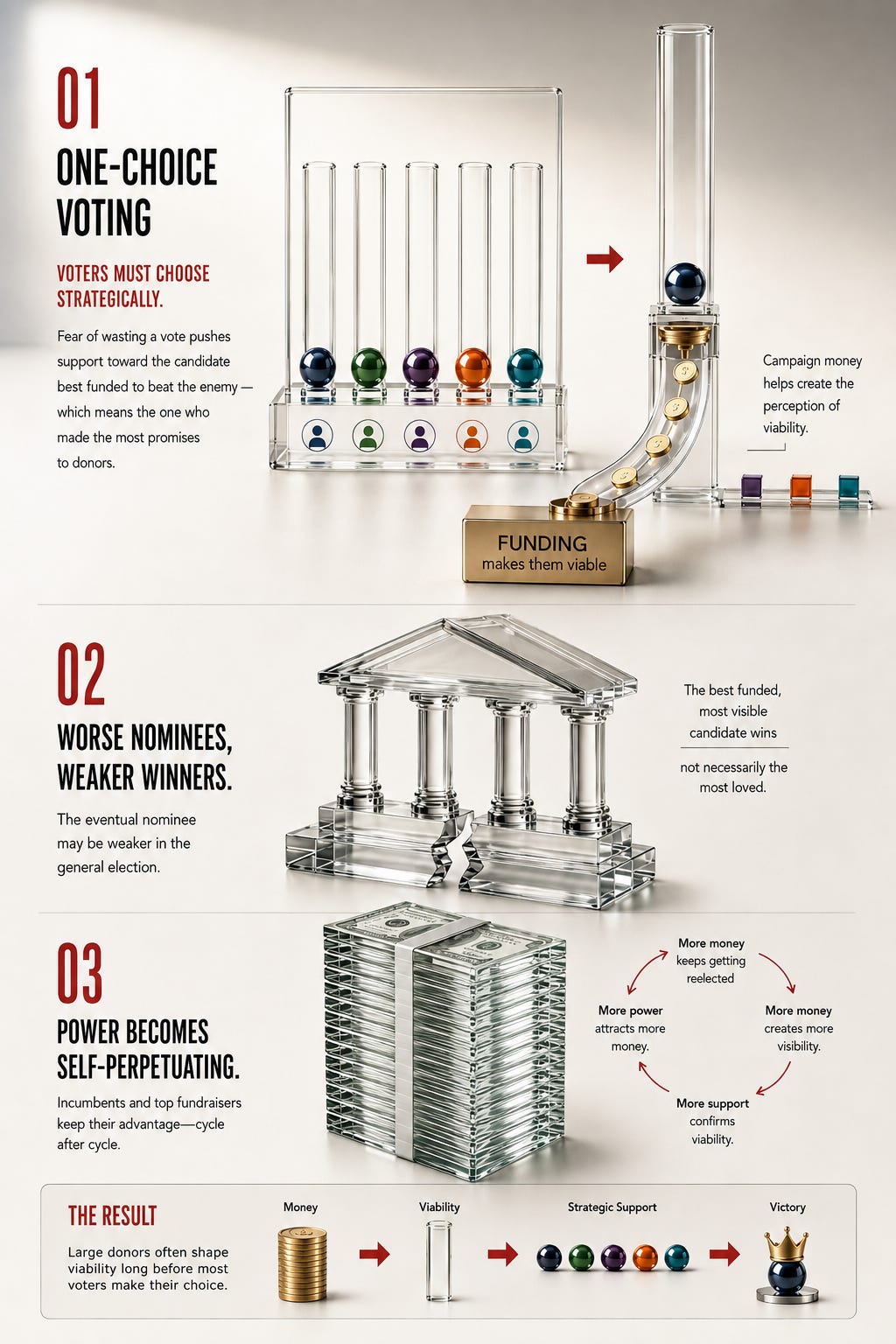
Outcomes get decided by funding.
Entrenched power stays entrenched.
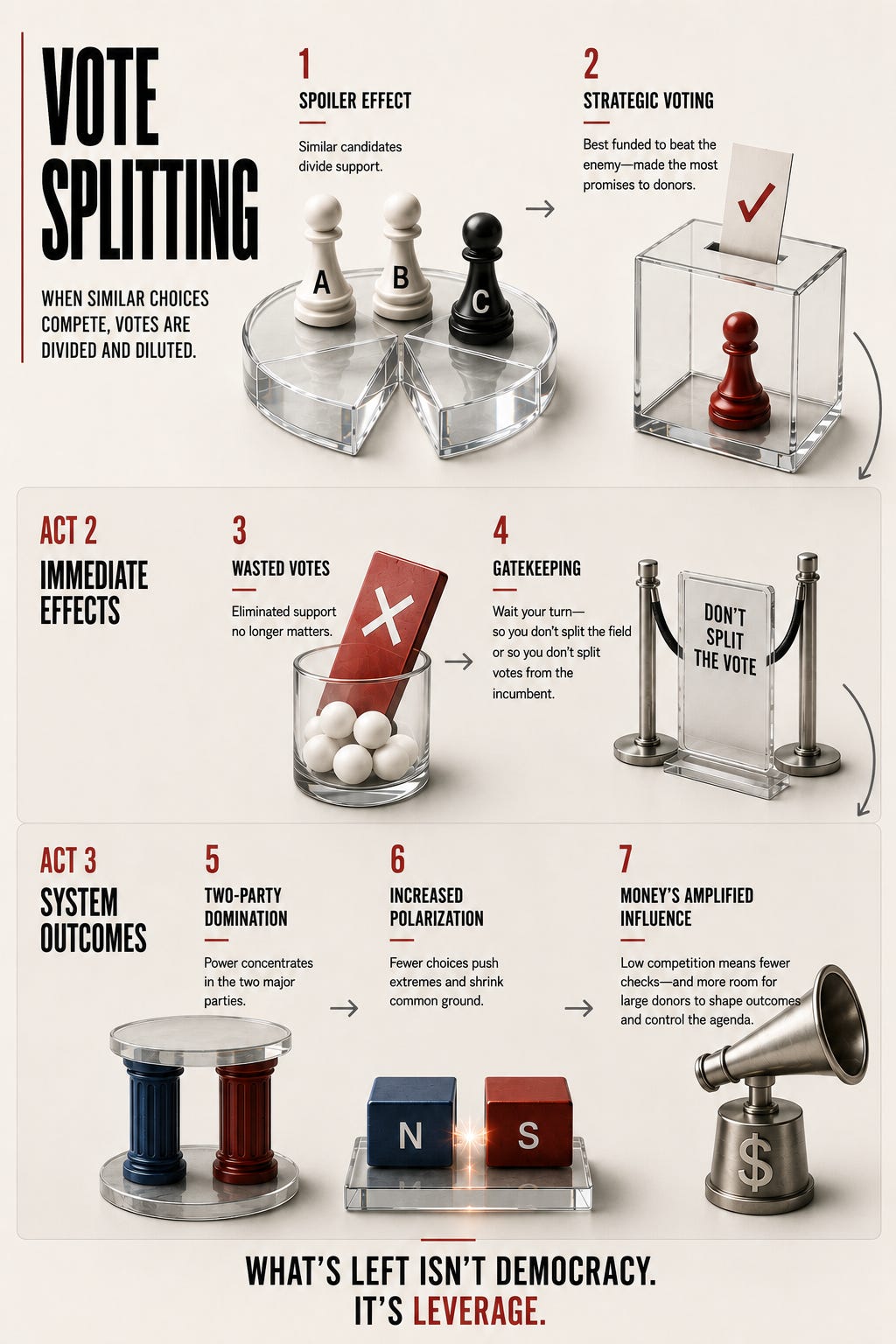
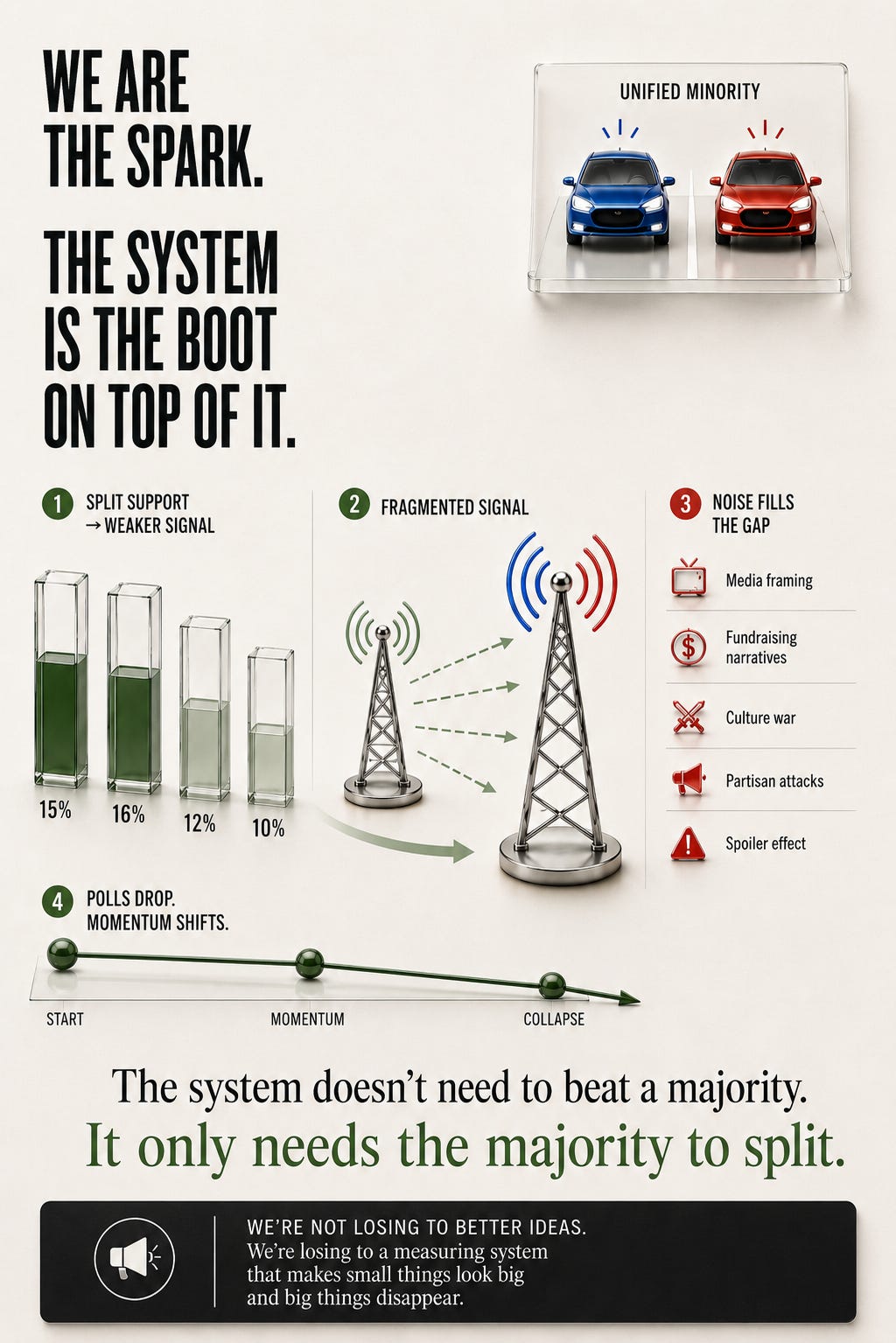
The system doesn’t need to beat a majority. It just needs it to split.

No Competition. Just Rotation.


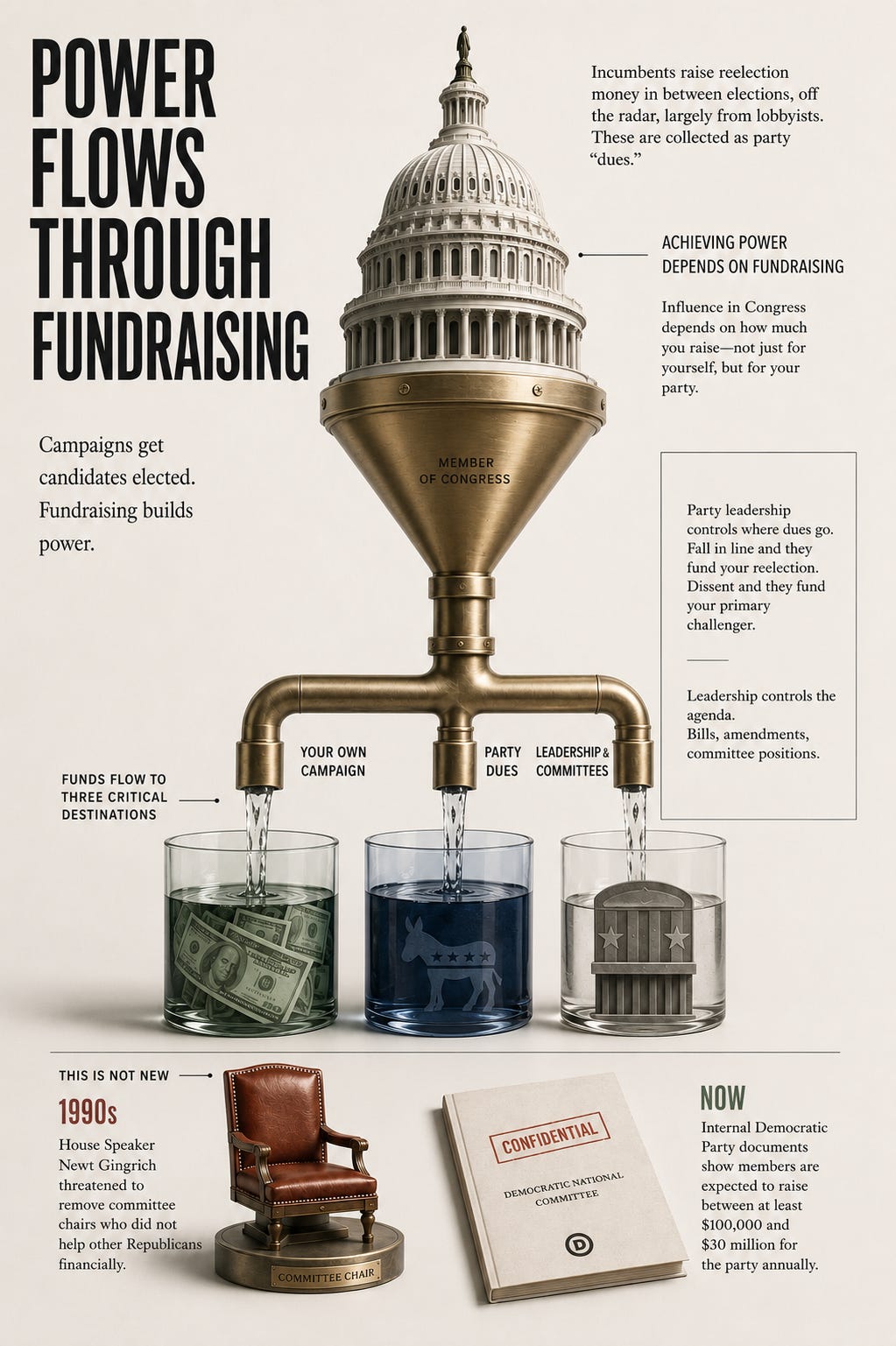
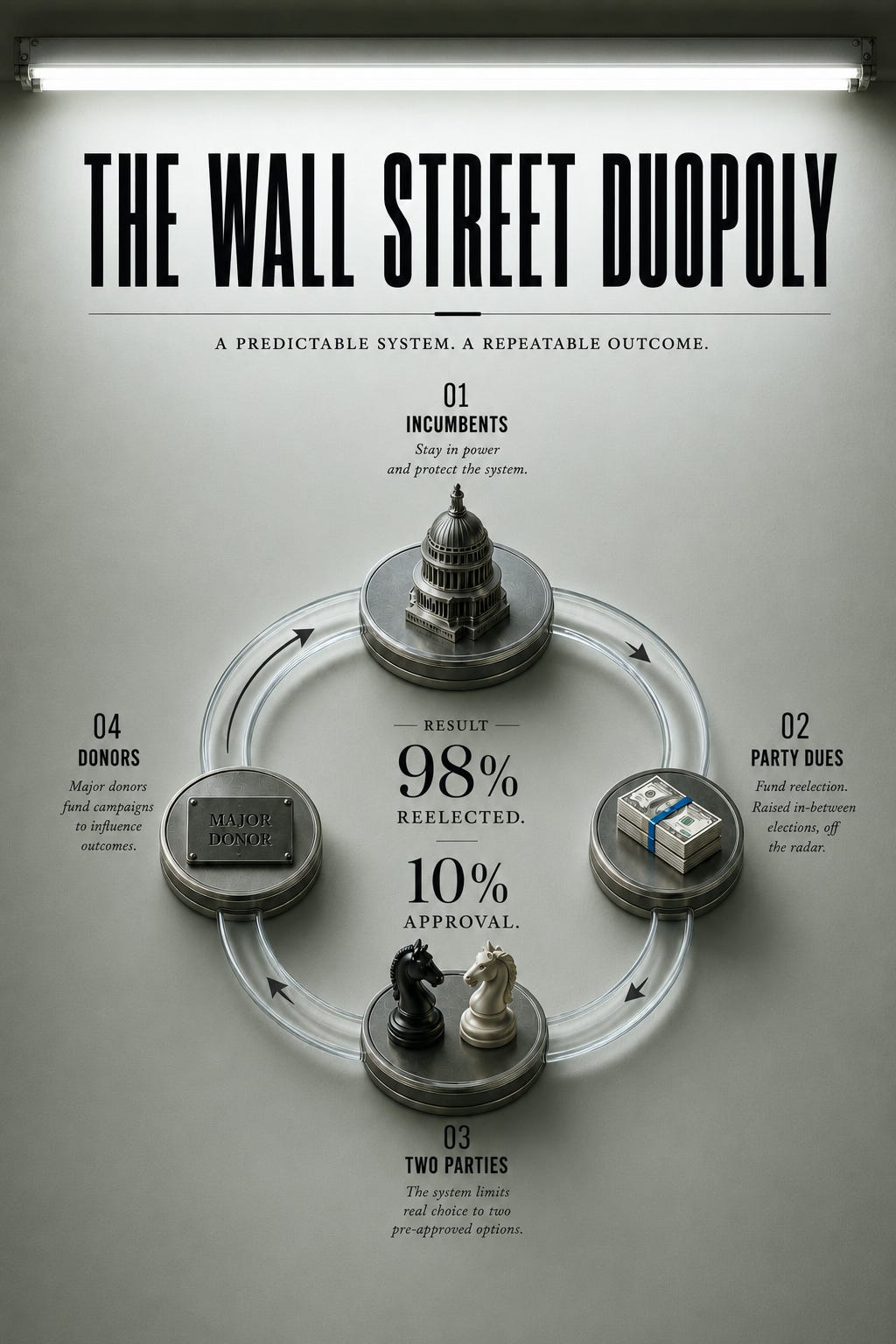
Lobbyists and major industries fund political parties. Much of that money flows through party fundraising quotas — often called party dues — that members of Congress are expected to raise for party leadership.
These quotas are collected while members are currently in office, bypassing campaign finance visibility during election seasons. Members compete to raise the money.1
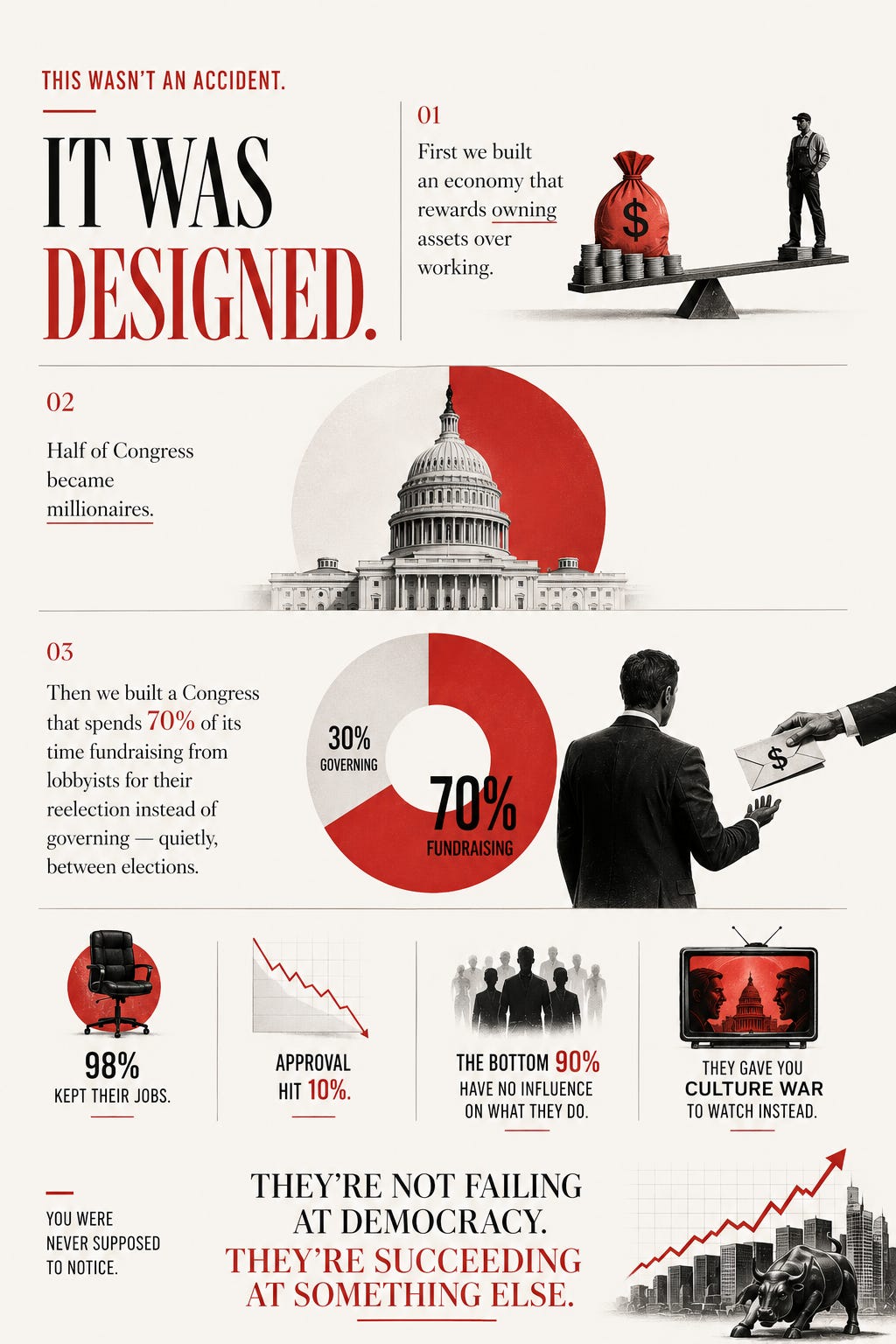
One estimate found members of Congress collectively spending 70% of their time — about 10,000 hours per week — fundraising.2
The money flows upward to party leadership. Leadership decides where those funds go.
Incumbents who follow leadership receive support for reelection. Those who challenge leadership are punished with facing a well-funded primary challenger.3 Leadership therefore gains influence over members’ political futures.
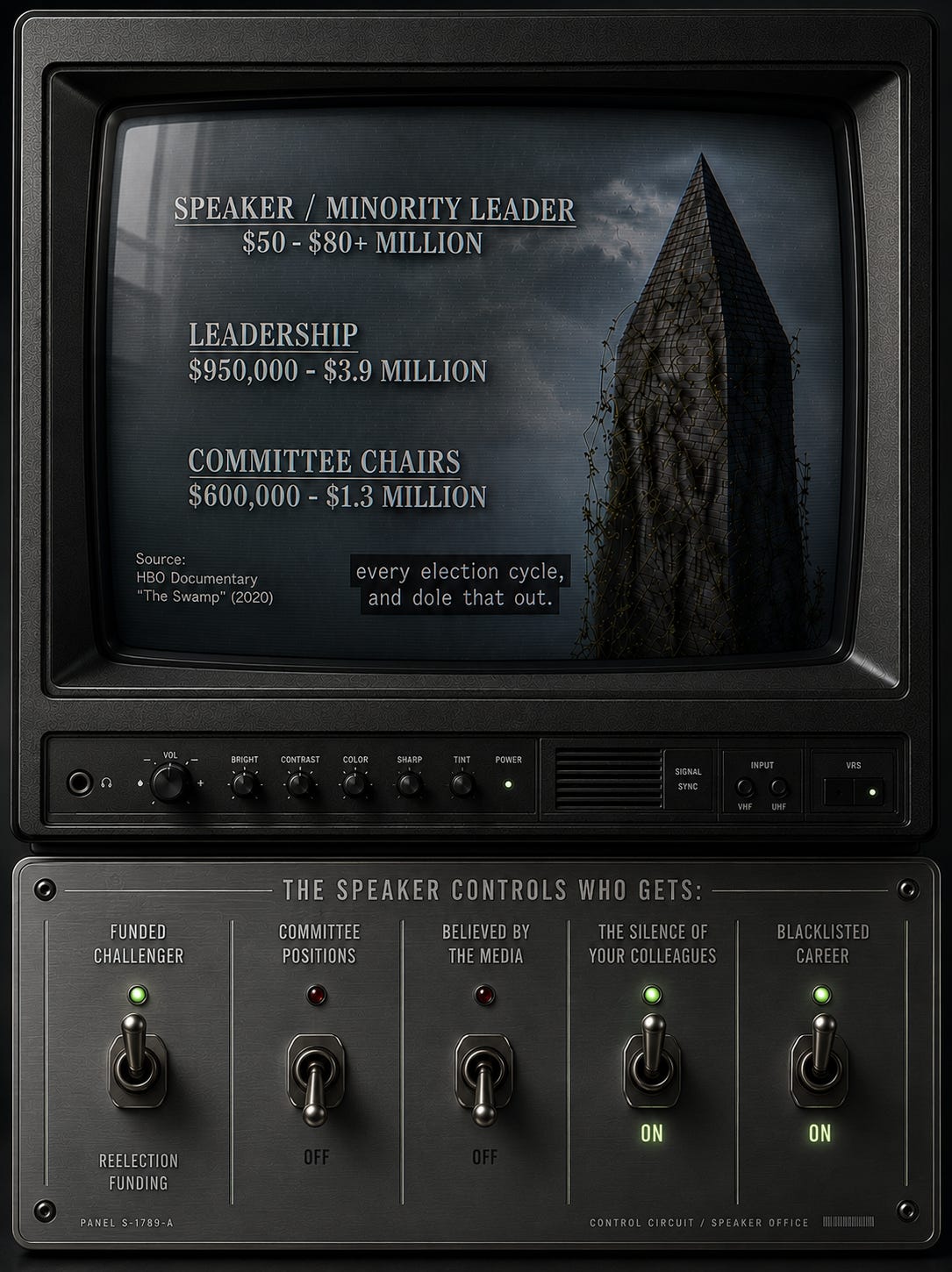
And leadership controls the legislative agenda. They decide which bills reach the floor. Structural reforms rarely do.
When they occasionally appear, they often fail through pressured votes or symbolic votes allowed for political cover.
Nobody At The Top Is As Angry As They Need You To Be
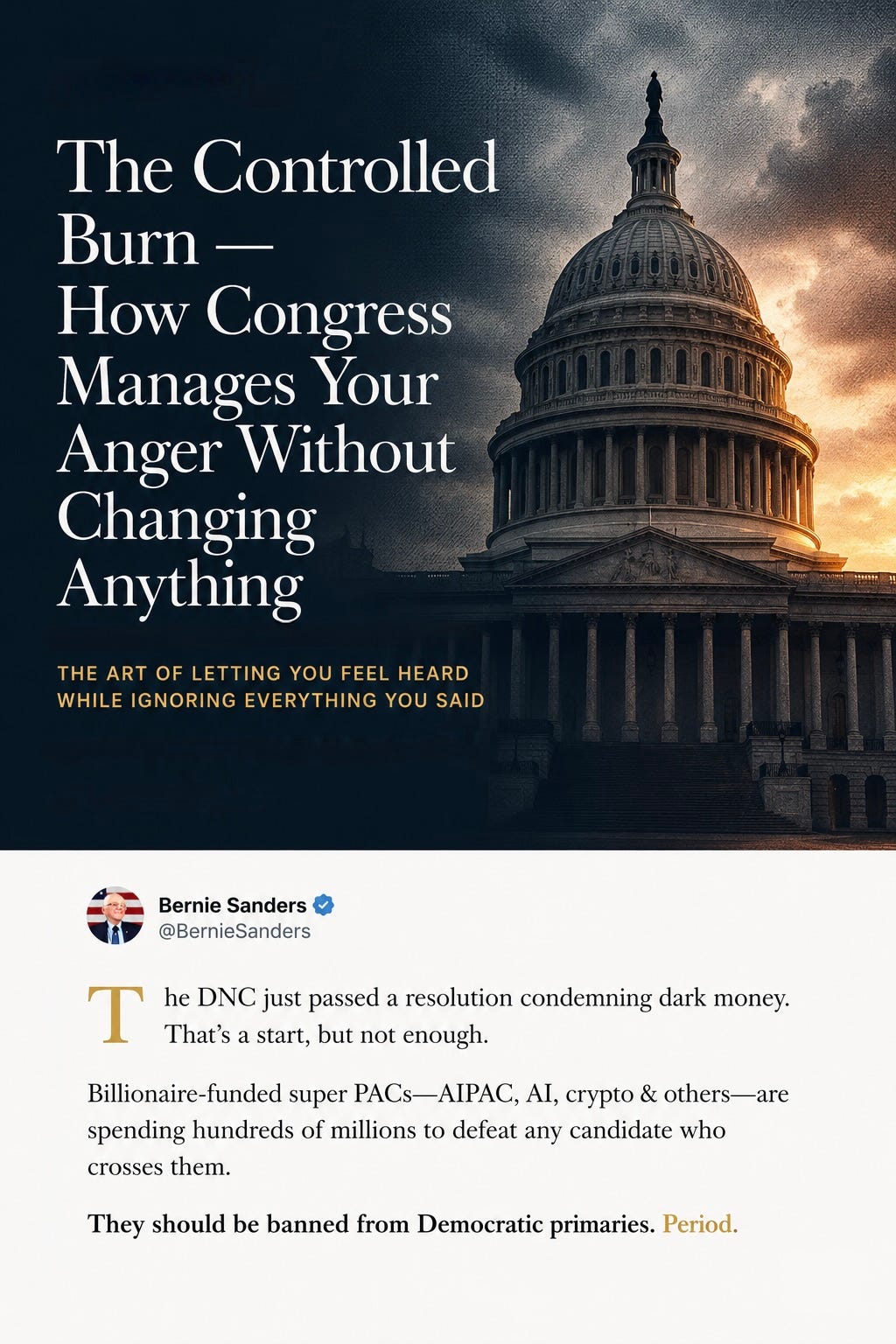
They’ll Debate AI and Israel-Palestine All Day. Try Bringing Up Party Dues.
Notice the silence on party dues. Notice the noise on everything else.
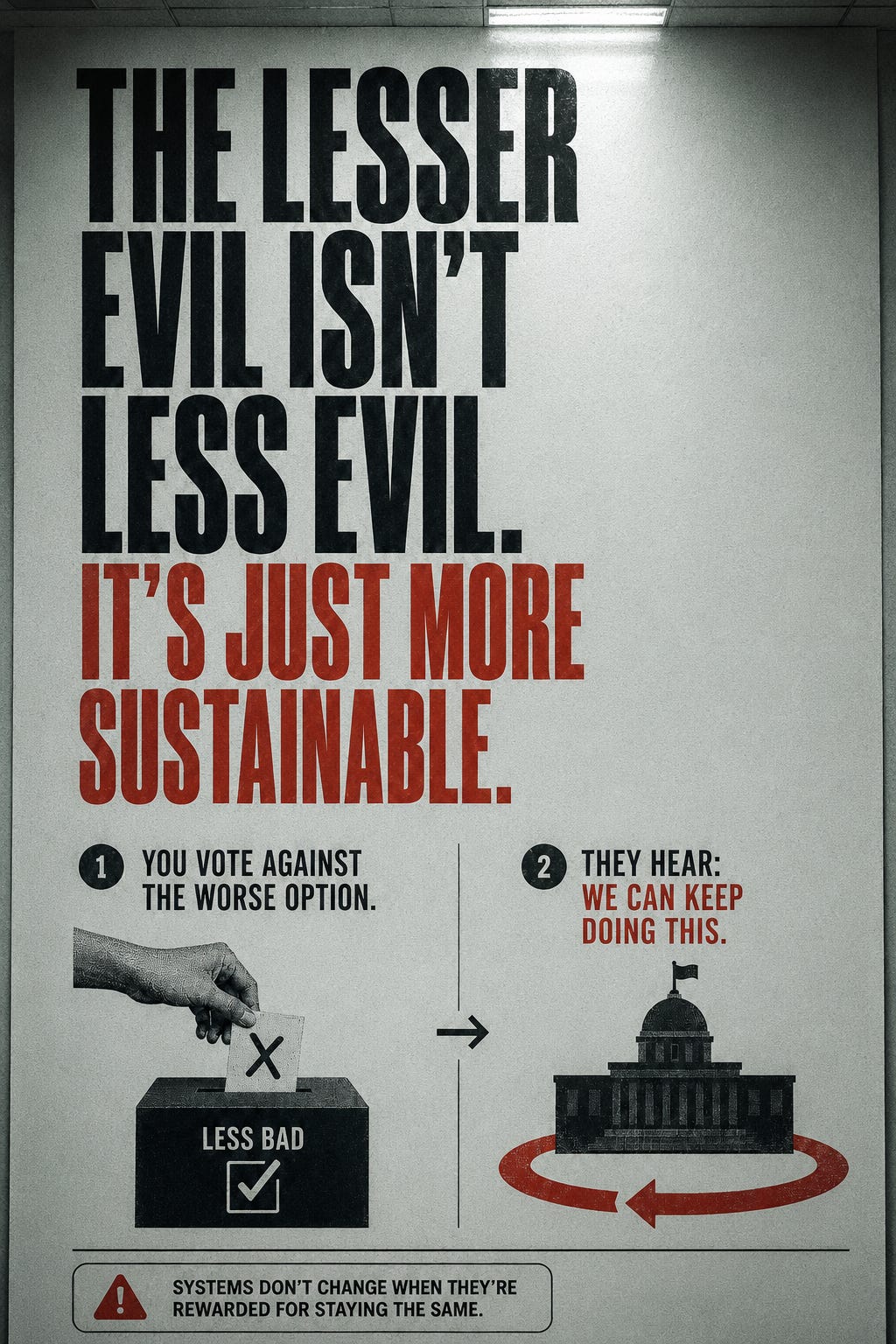
Funny how “party dues” never trends. AI does. Israel-Palestine does. Almost like someone’s curating the outrage.
The mechanism is structural: dues bind members to leadership, leadership controls everything else.
The conversation goes to AI and foreign policy instead — issues engineered to keep you split in half instead.
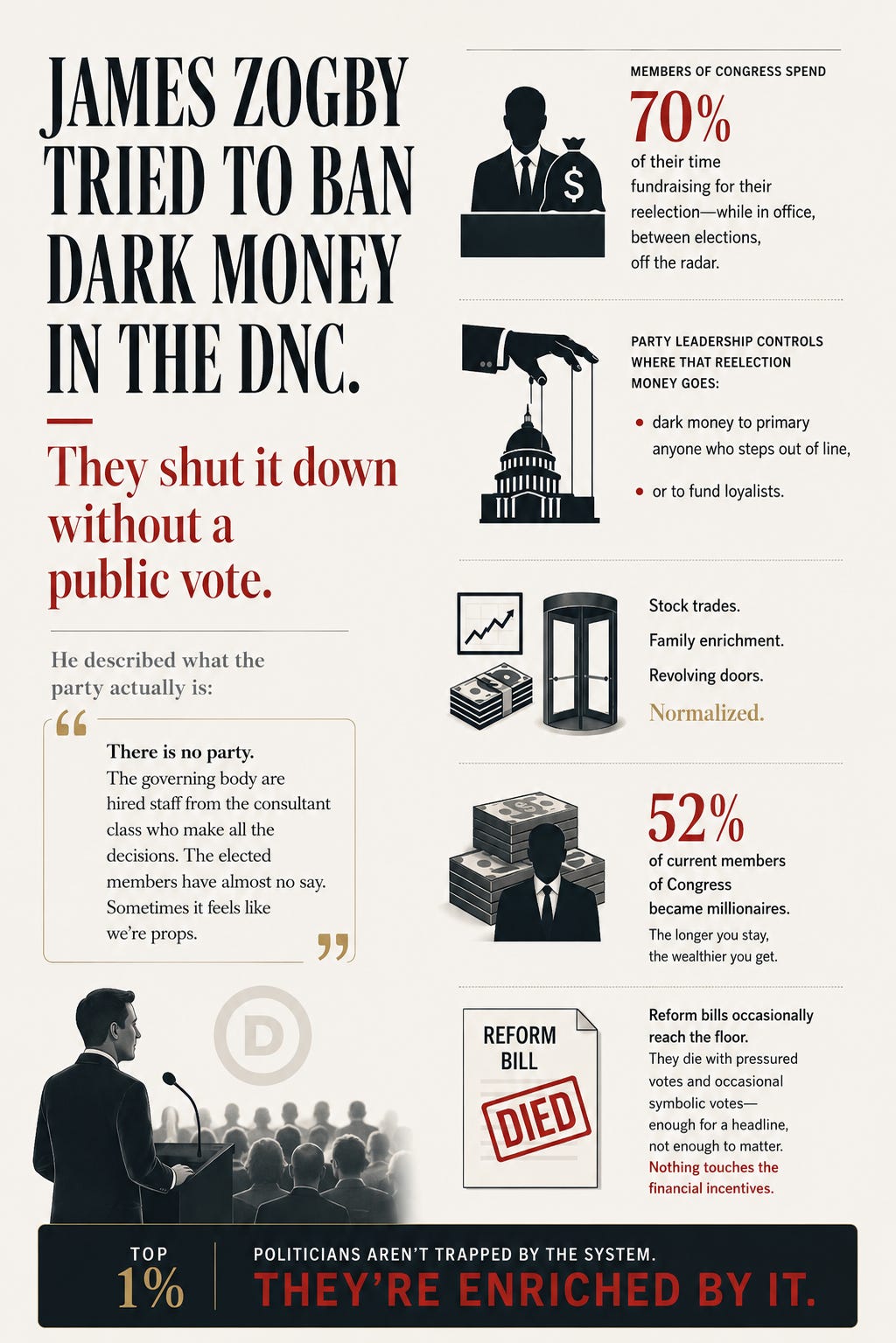
The System Behind the Political Chaos
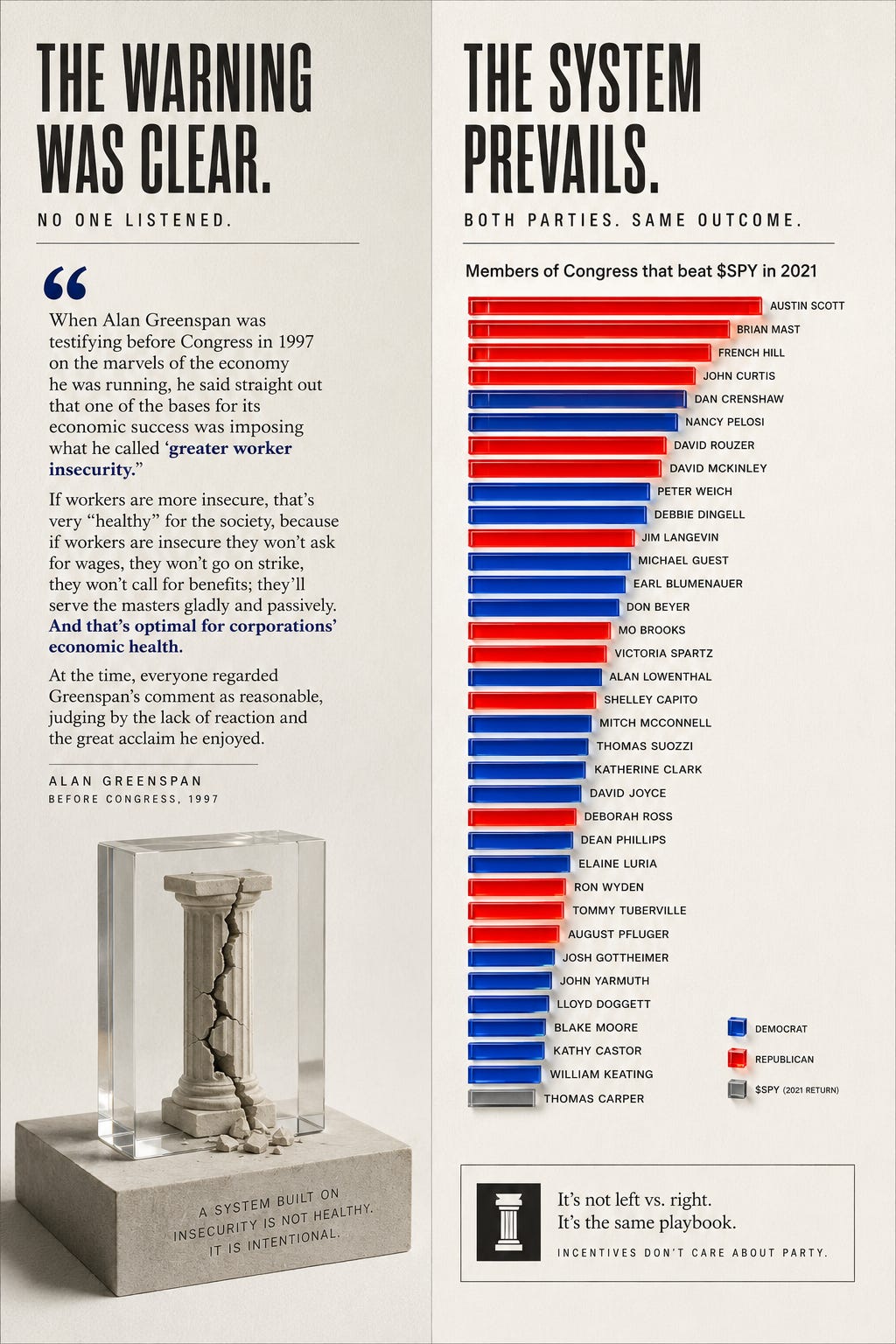
Meanwhile, the issues dominating public debate often become the ones that mobilize voters most strongly. Highly emotional social conflicts energize partisan bases and duopoly loyalty.4
Social media and cable news amplifies these fights, rapidly spreading outrage and identity conflict. Polarization increases engagement and that increases the opportunity to sell ads.
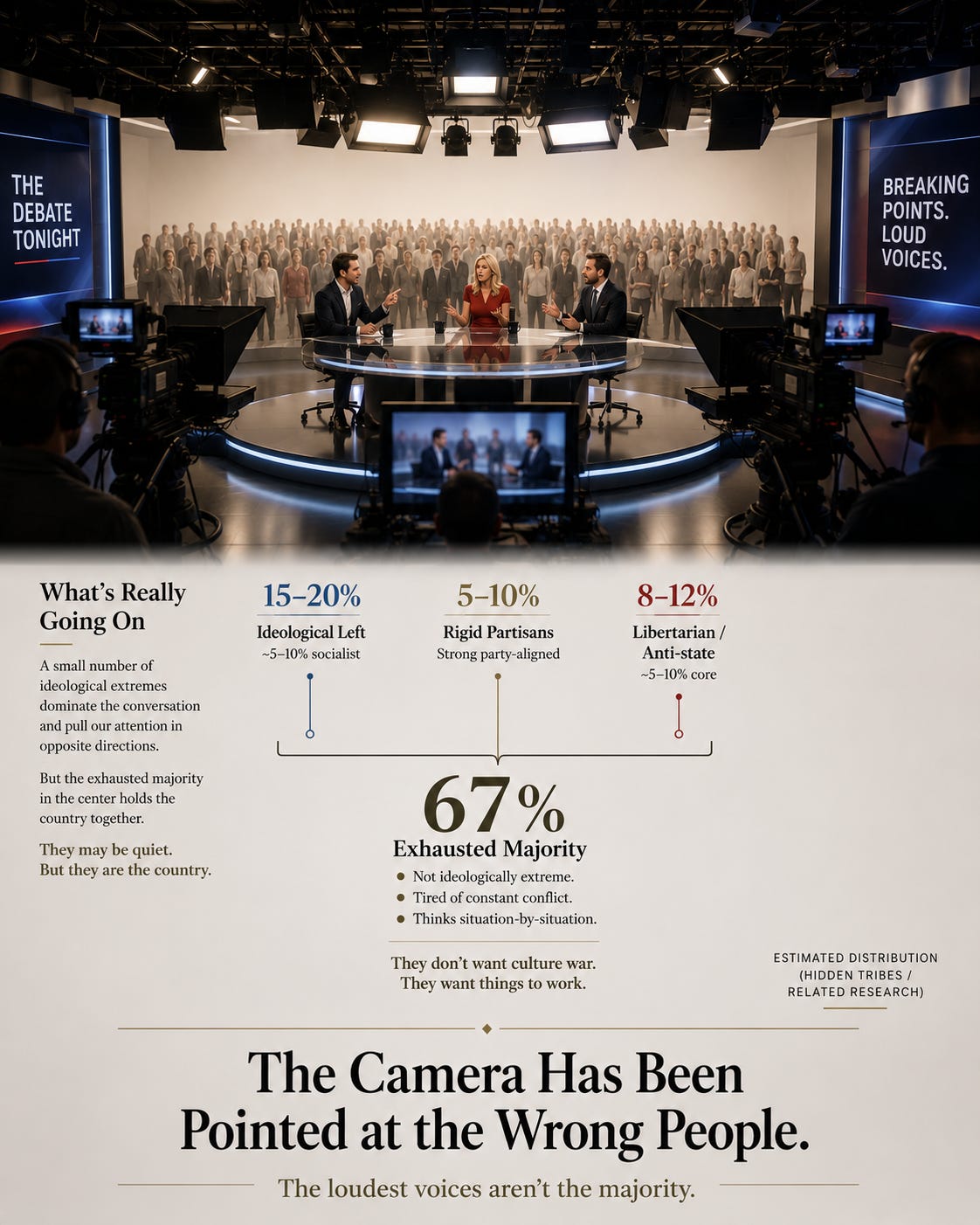
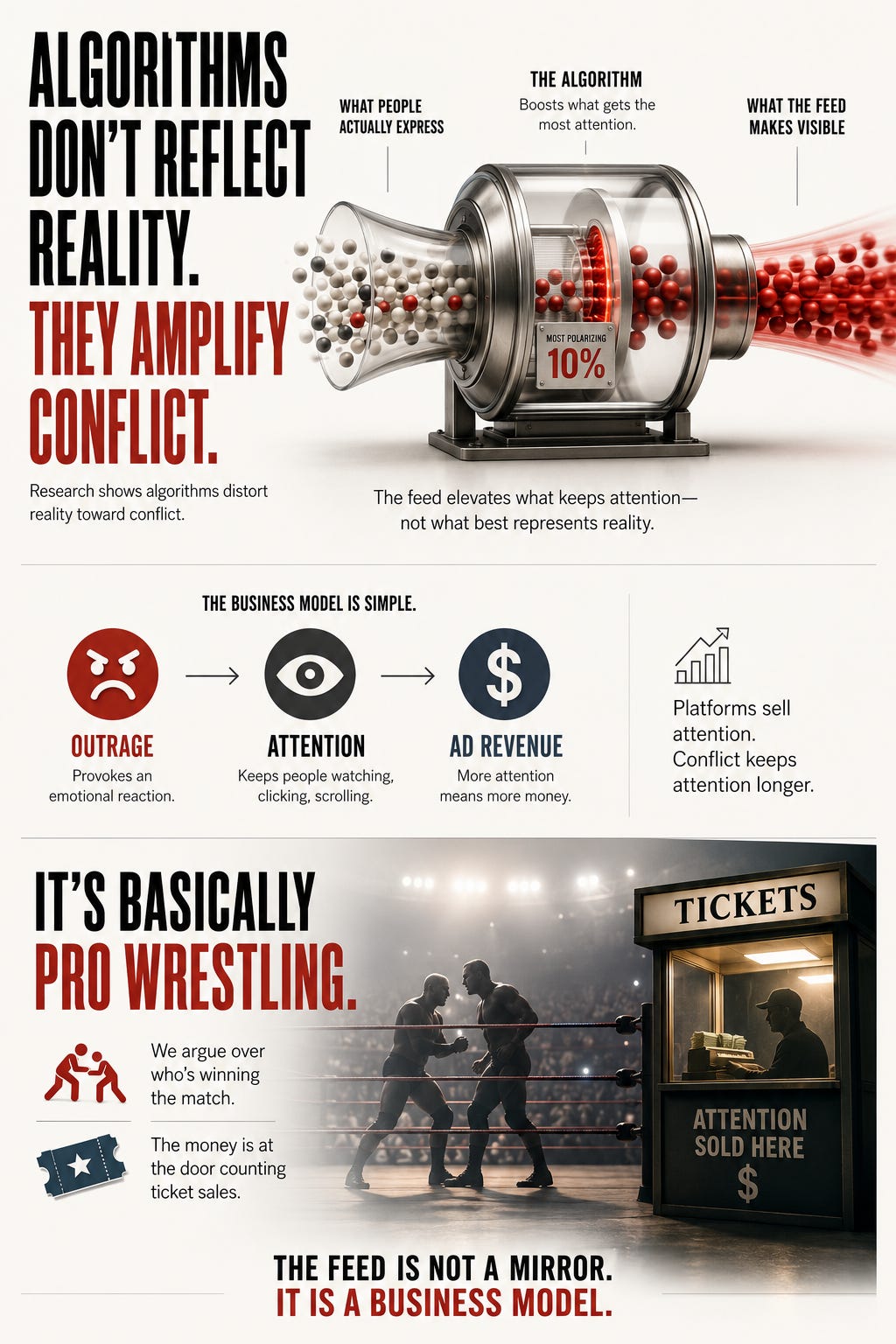
In a polarized system, the issues that generate the most conflict often receive the most attention — because conflict mobilizes voters.
Some political problems persist for decades. Not because solutions are impossible. But because the conflict itself is politically valuable.
Former governor Christine Todd Whitman put it bluntly:
“There are issues critically important to Americans that will never be solved because they’re so valuable as political tools.”
Solving them removes that energy. Leaving them unresolved keeps voters mobilized. And the two parties depend on that conflict.
As one strategist summarized the dynamic: “Hakeem needs Mike and Mike needs Hakeem.” Each side depends on the other as an opponent.
Without a rival, fundraising slows.
Media attention fades.
Party loyalty weakens.
Inside Congress, many lawmakers privately acknowledge how little individual power members actually have. Another member, Justin Amash, put it this way:
“Outside of a few leaders, members of Congress have almost no power to shape legislation — and no incentive to admit it, because that would require them to reveal that so much of what they do is a carefully orchestrated performance.”
Incentives govern the system. Intentions do not.
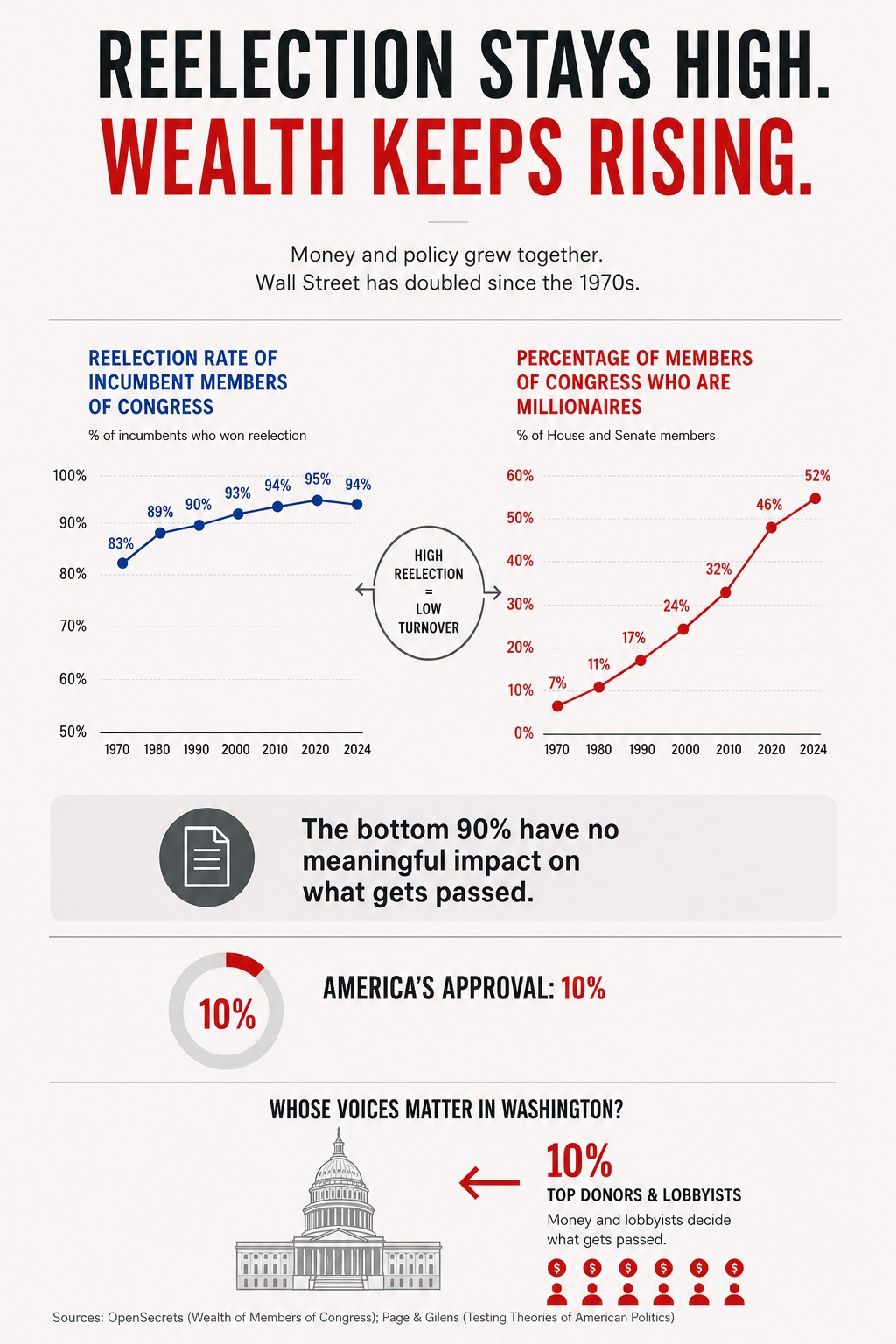
98% of incumbents get reelected. Congress has ~10% approval. That gap alone should tell you something’s off.
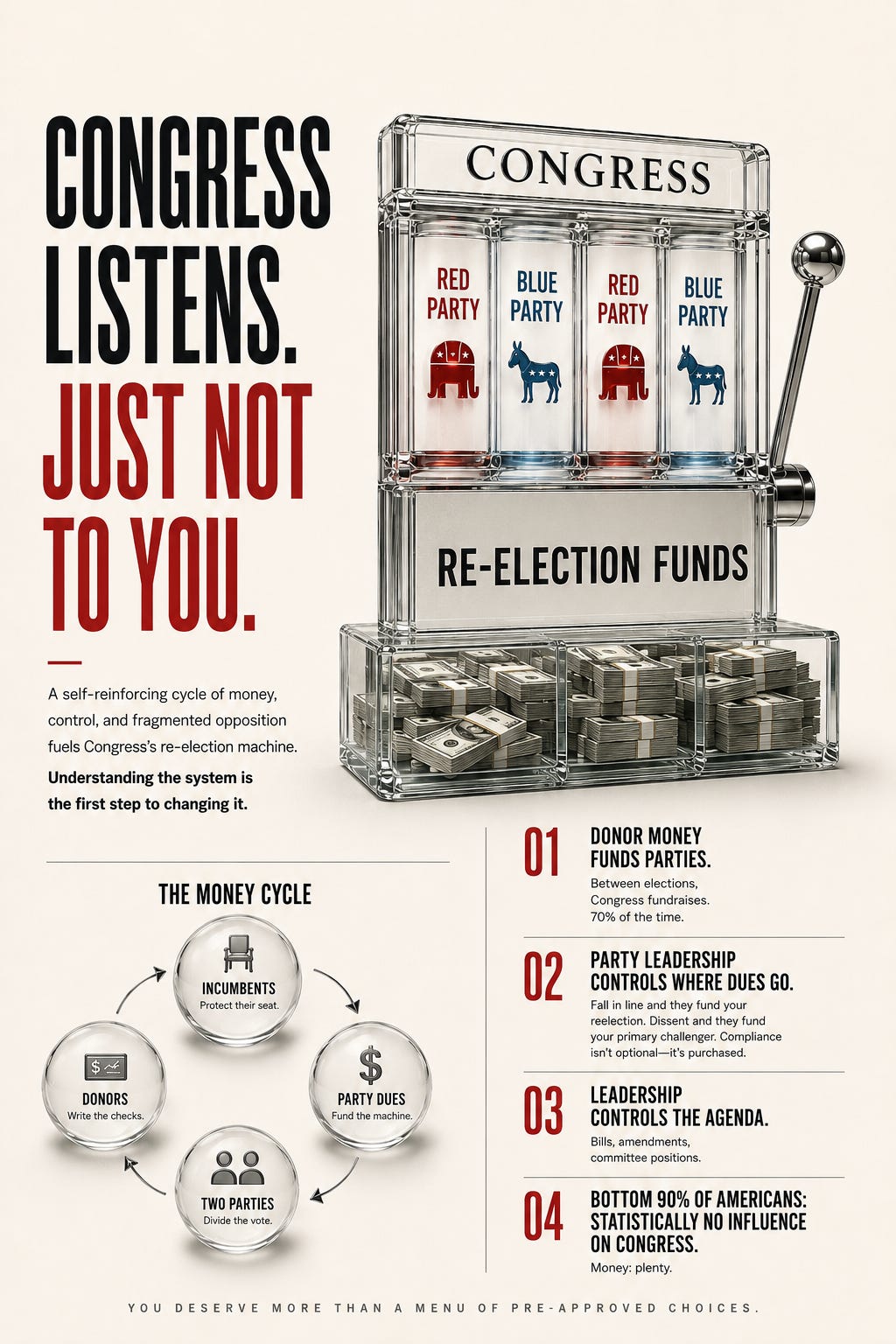
That’s a system where: conflict is loud, change is rare, outcomes stay stable.
And while we’re focused on: culture war, partisan fights, outrage cycles.
the stuff that actually moves money tends to happen quietly:
tax details
regulatory carve-outs
financial rules
Usually bipartisan. Usually low visibility.
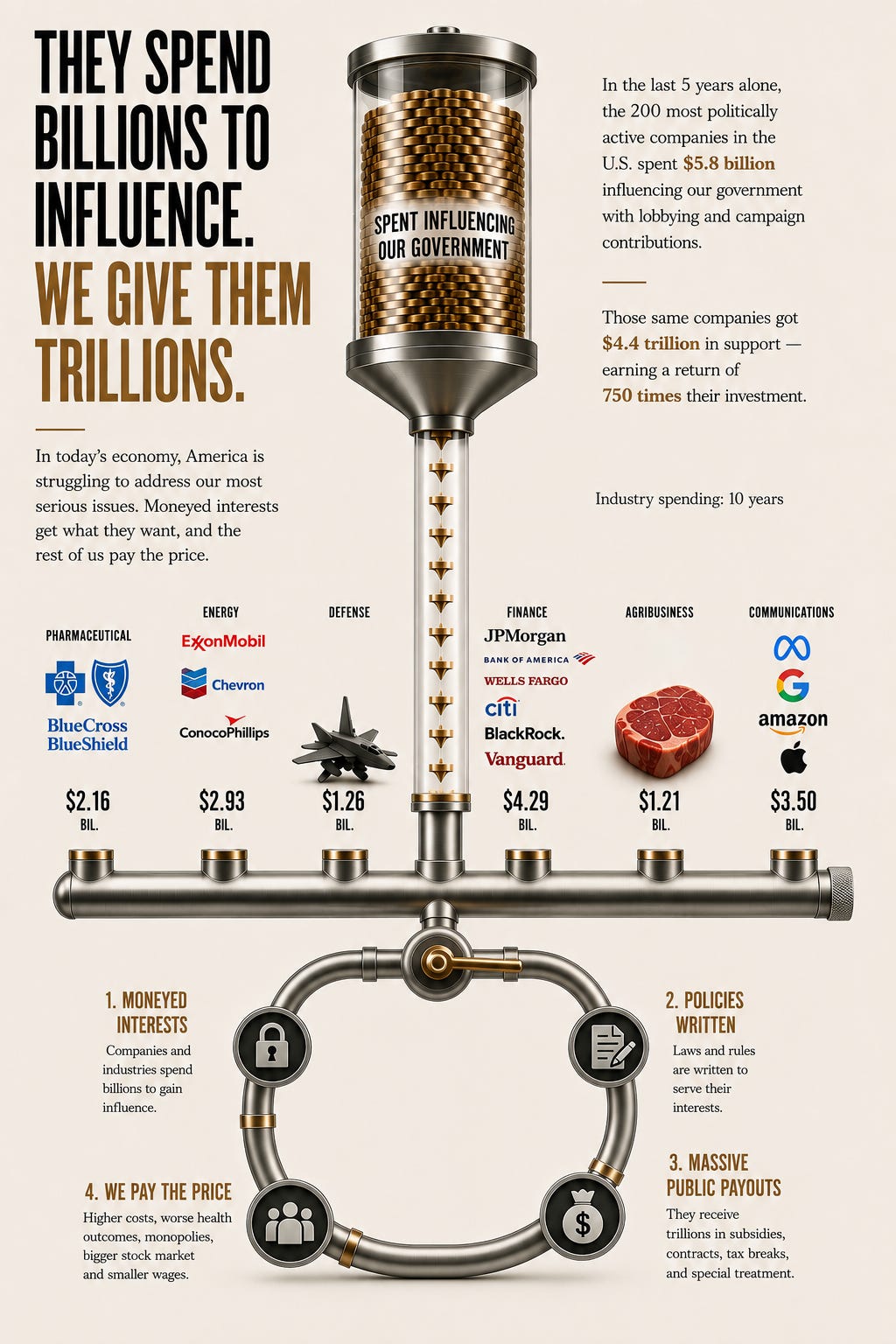
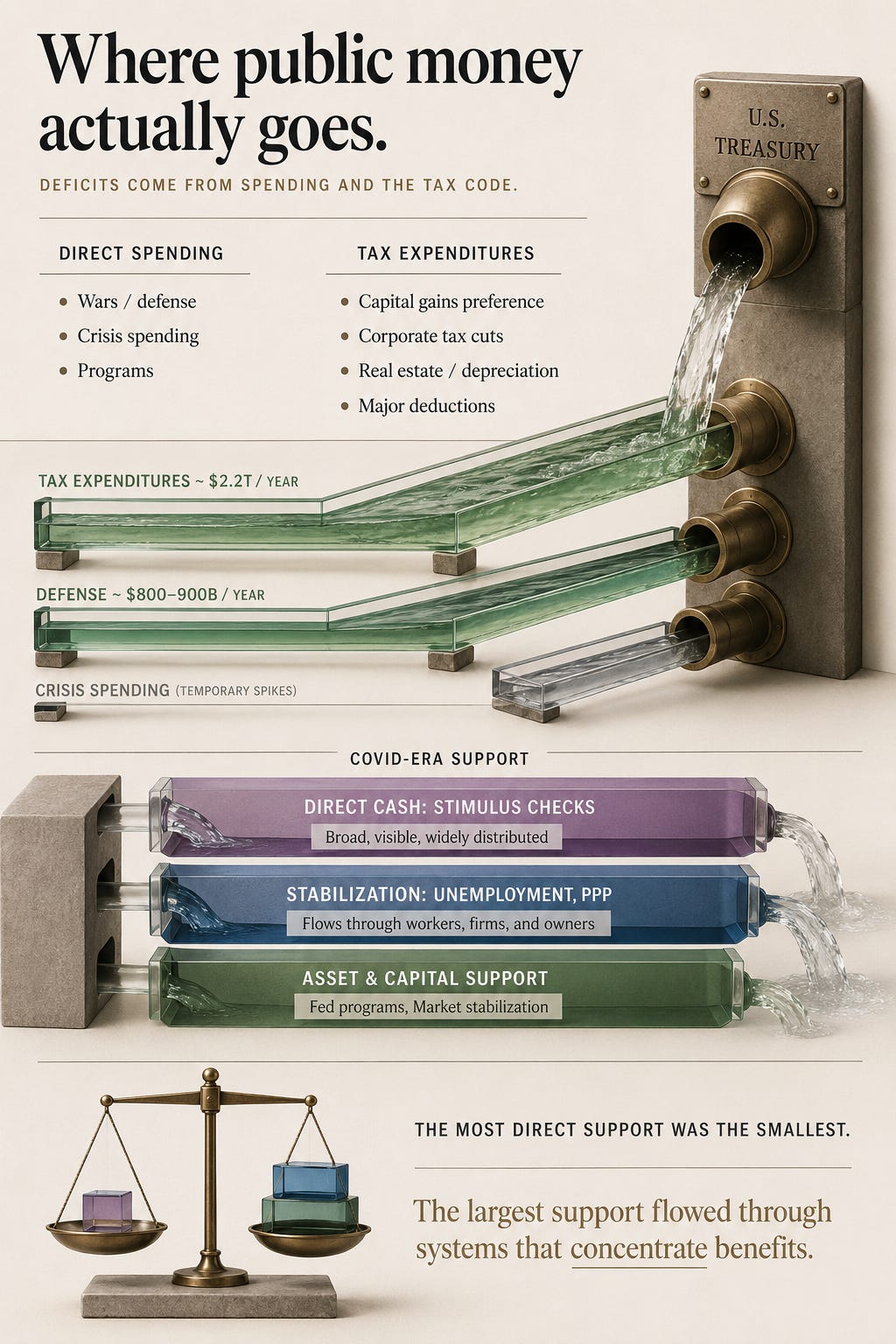
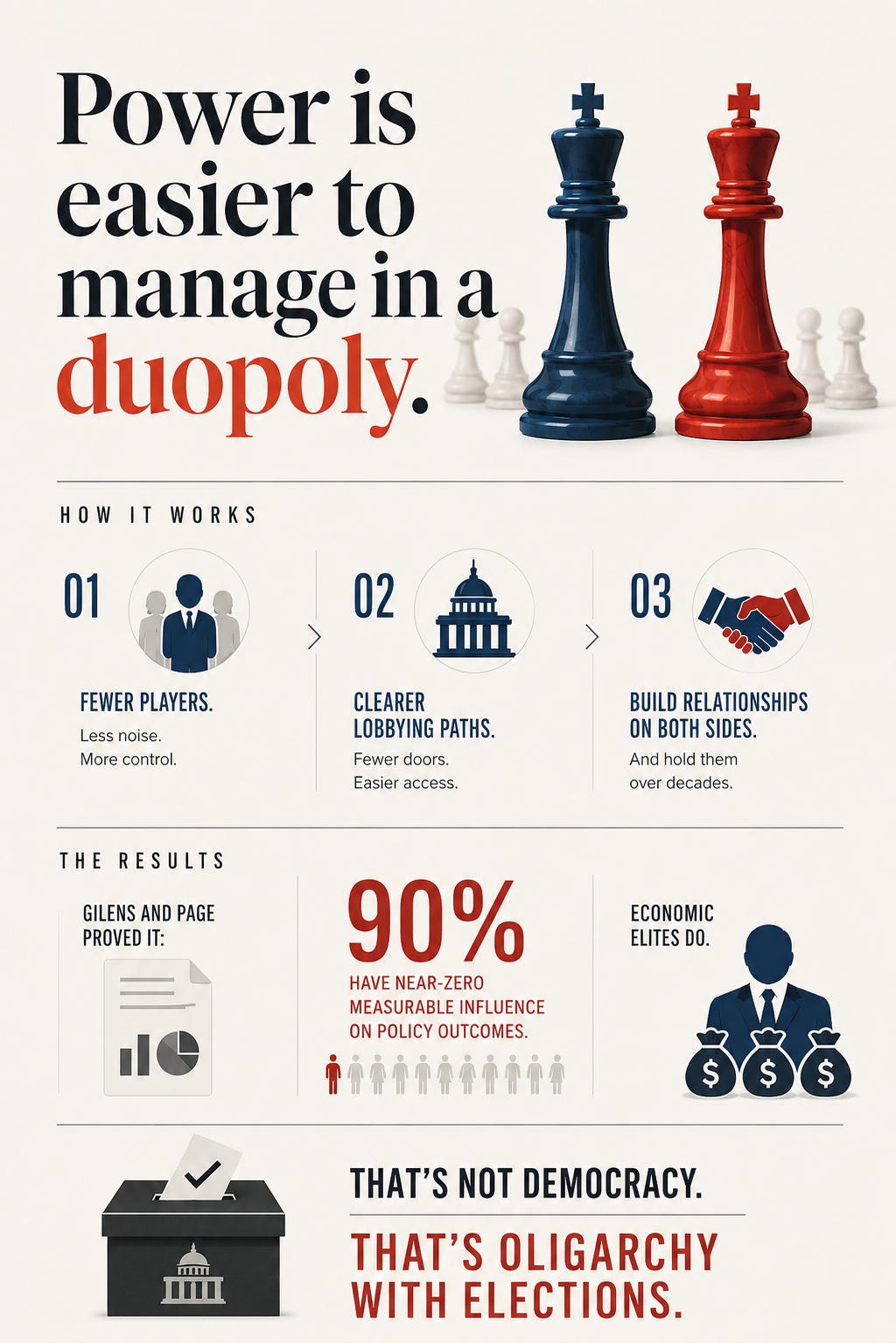
Power is easier to manage in a duopoly. Fewer players. Clearer lobbying paths. You know who matters and where to go. You can build relationships on both sides and maintain them over time.
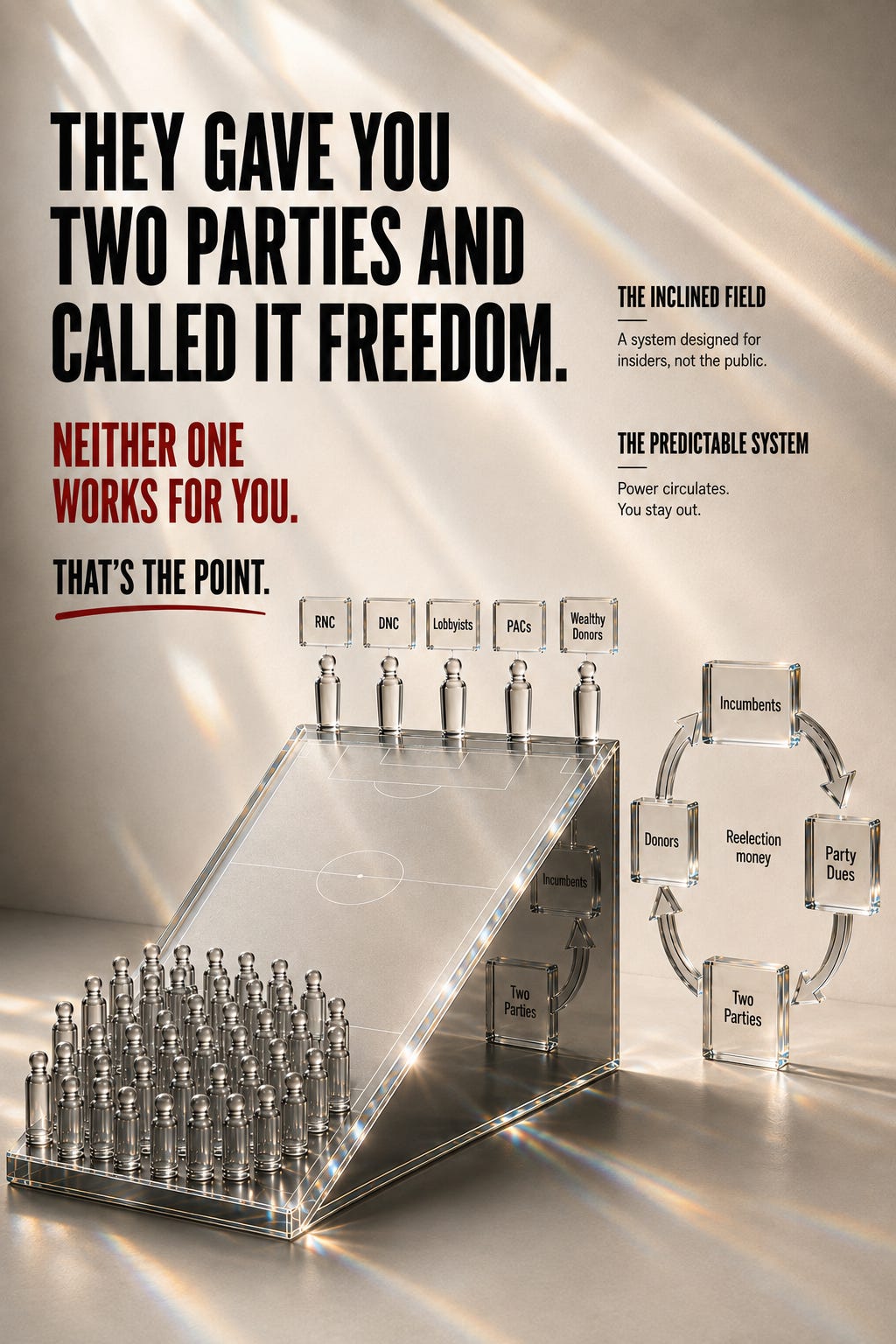
And we already have evidence for what that adds up to. Gilens and Page found that the bottom 90% have little to no measurable influence on policy outcomes, while economic elites and organized interests do.
When the bottom 90% have 0% influence, that’s not democracy.
That’s oligarchy with elections.
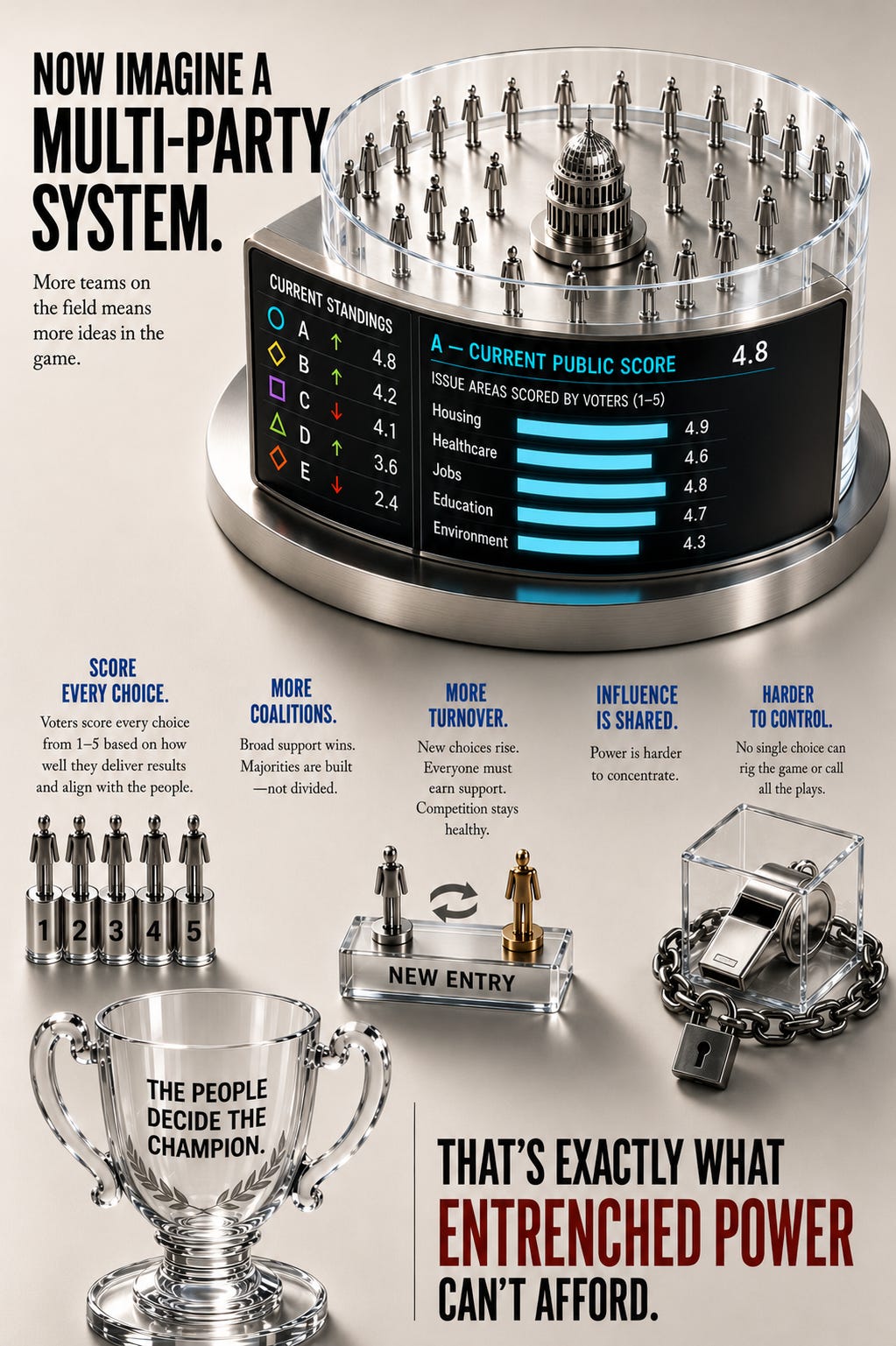
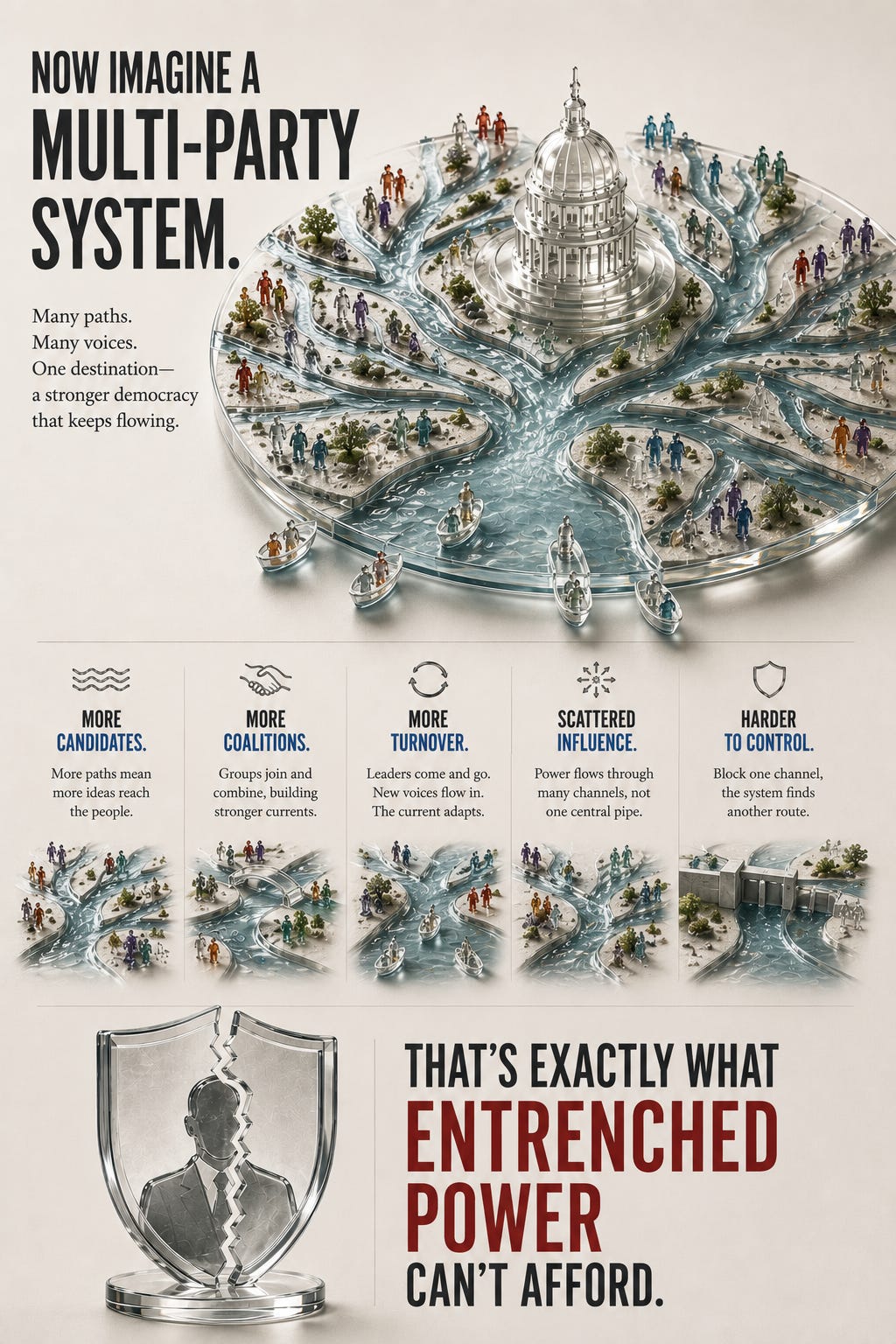
Now imagine: multi-party system. More candidates. More coalitions. More turnover. No same incumbents piling up millions of reelection money over their seats until the day they literally die. Influence is scattered and control is difficult.
So what’s holding it all together? Here’s the part that gets lost:
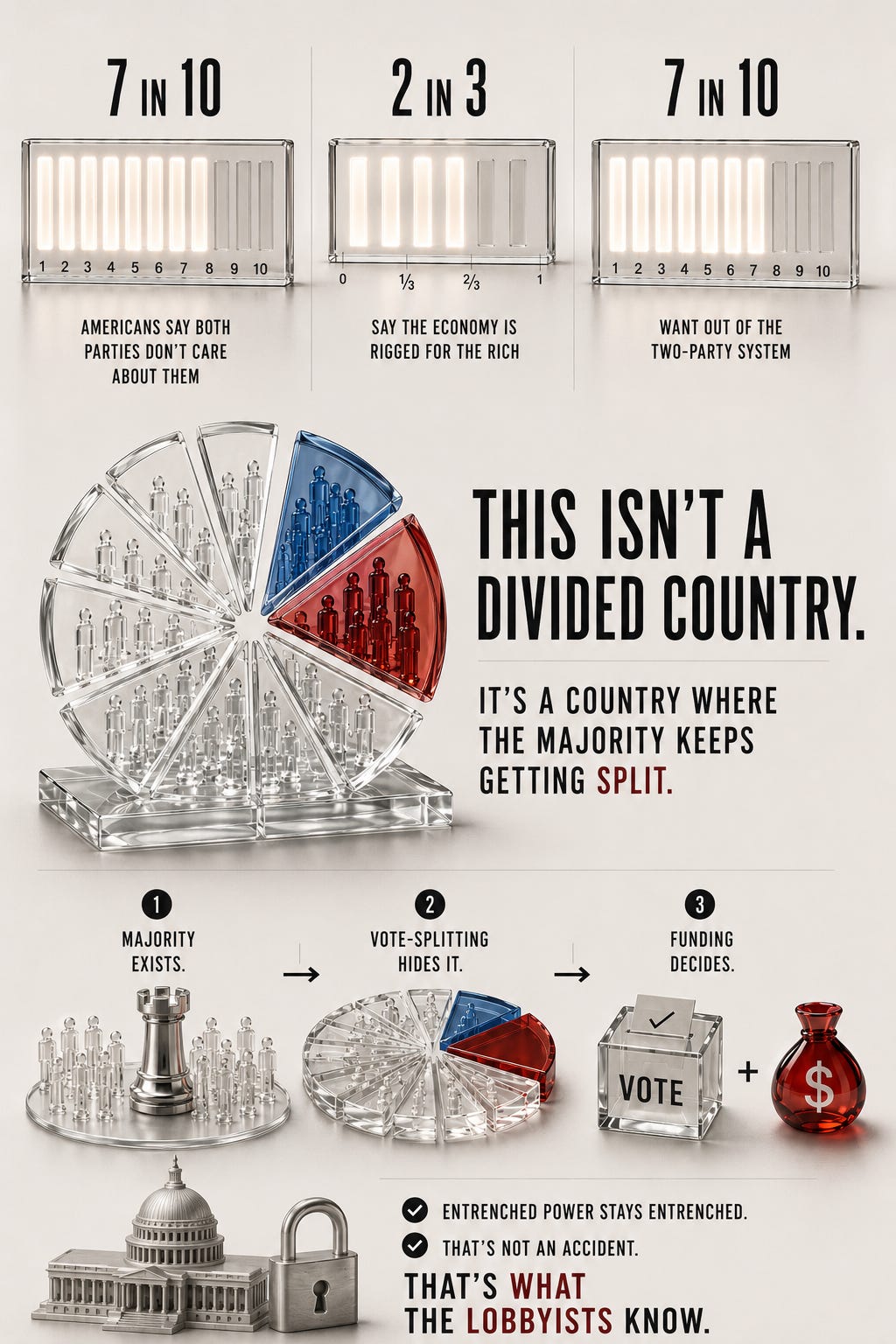
So this is not a country with no shared frustration.5
If 70% of people want change, why does nothing change? It’s a country where the majority has a lot in common, but gets split. That’s the mechanic that holds it all together: vote-splitting.
People with similar interests divide across options and weaken themselves. The outcome stops reflecting what most people actually want. The system doesn’t need to beat a majority. It just needs the majority to split.
And once that happens, funding decides outcomes and entrenched power stays entrenched.
That’s what the lobbyists know.
Part 7: The Loop
Outcomes Repeat Because Incentives Repeat
After the Great Depression, reforms separated everyday banks from speculative investment banks, checking their power. Many of those protections were later weakened or repealed.
Banks merged. Megabanks formed. Financial executives moved into government.
Government officials moved into high-paying financial jobs. The revolving door hardened into a governing class voters never directly choose. Unprecedented changes were made to Congress in the 1990s. Power slowly shifted from elected representatives to party leadership structures that reward alignment with large donors. Money and policy moved closer together. Ownership began paying more than work.
A widely cited network analysis found that 0.1% of shareholders control about 80% of global corporate stock, largely major financial institutions in the US and UK.6
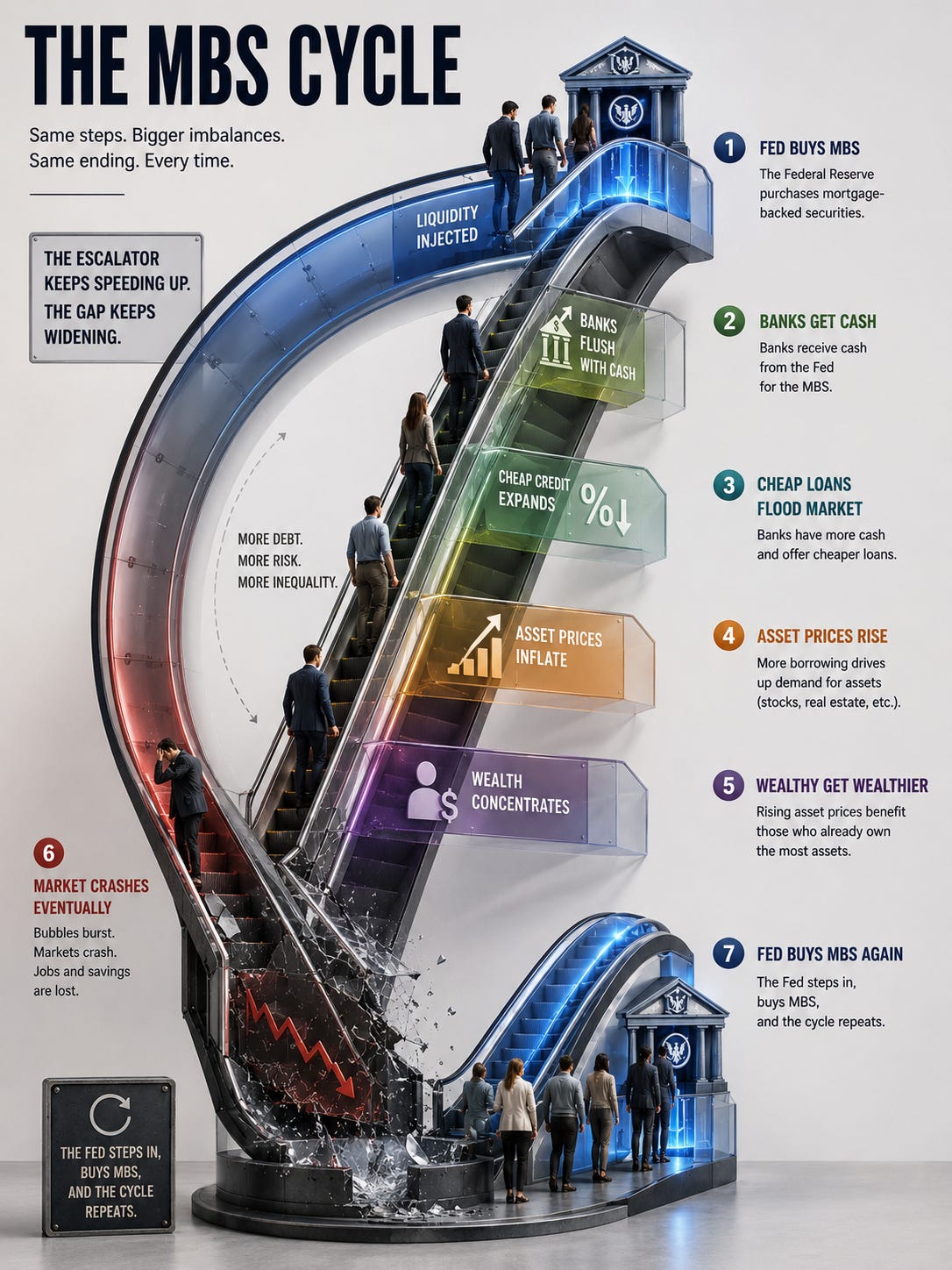
We switched to fiat, made bailouts unlimited, and built financial products complex enough to do one thing well — compound wealth back to Gilded Age levels.
Unlimited money for Wall Street, “no money” for the people — same system. So where does the money actually come from?
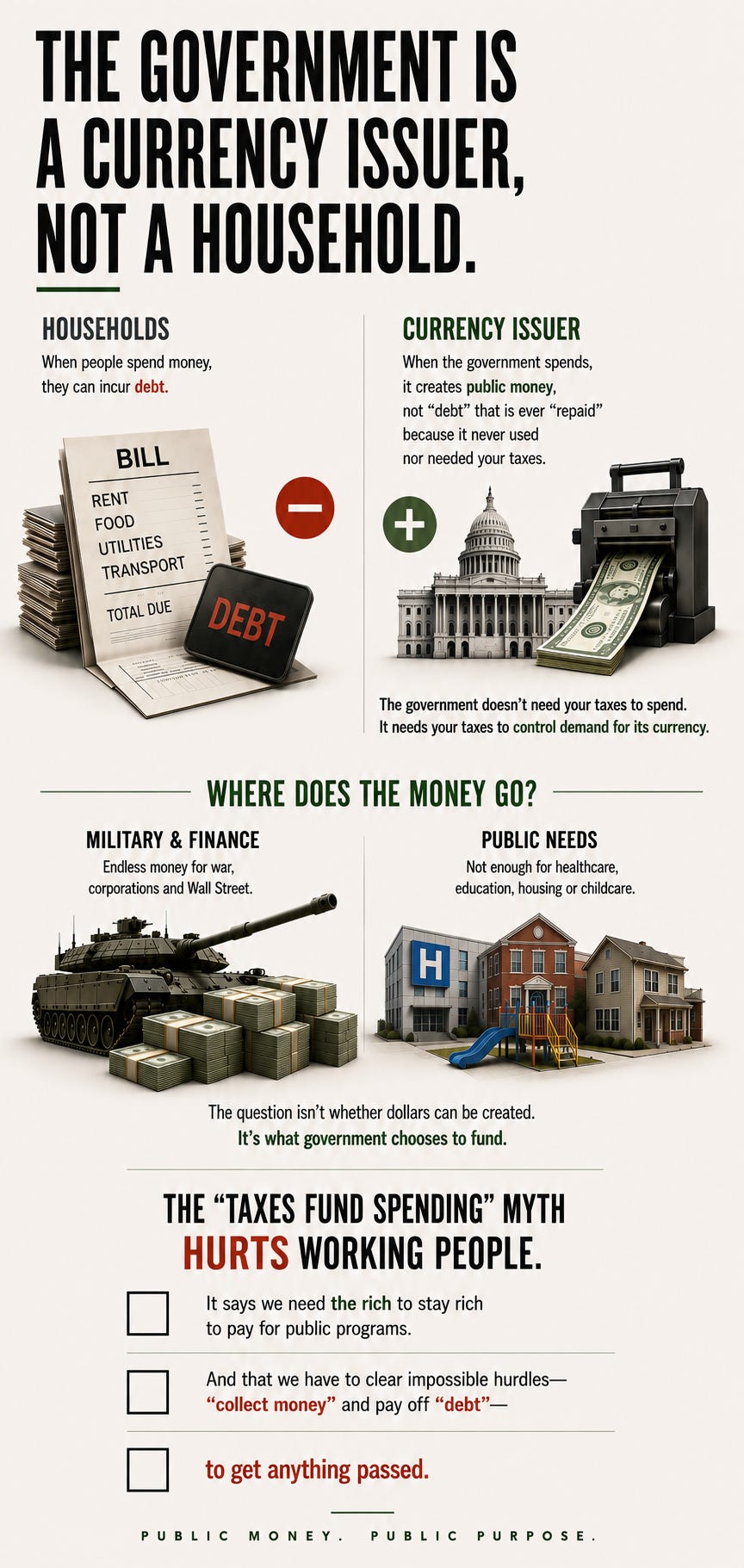
Why can governments always find money for some things?

As wealth concentrated, political influence followed. And over time something strange happened: politics increasingly aligned with financial markets more than with everyday economic life.
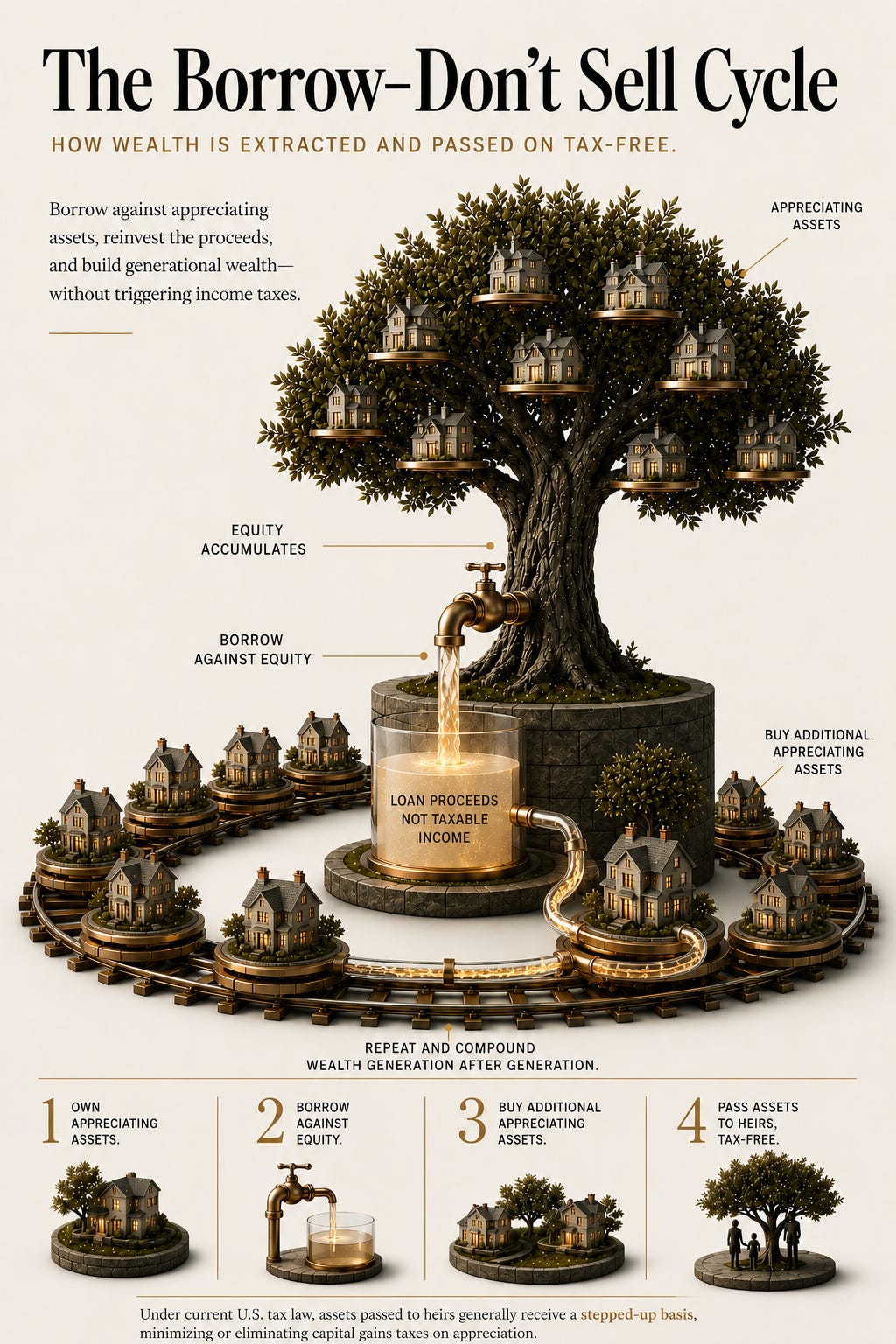
Long-term incumbency increasingly became a pathway into the asset-owning class itself. Members of Congress now operate inside the same financialized economy they regulate.7
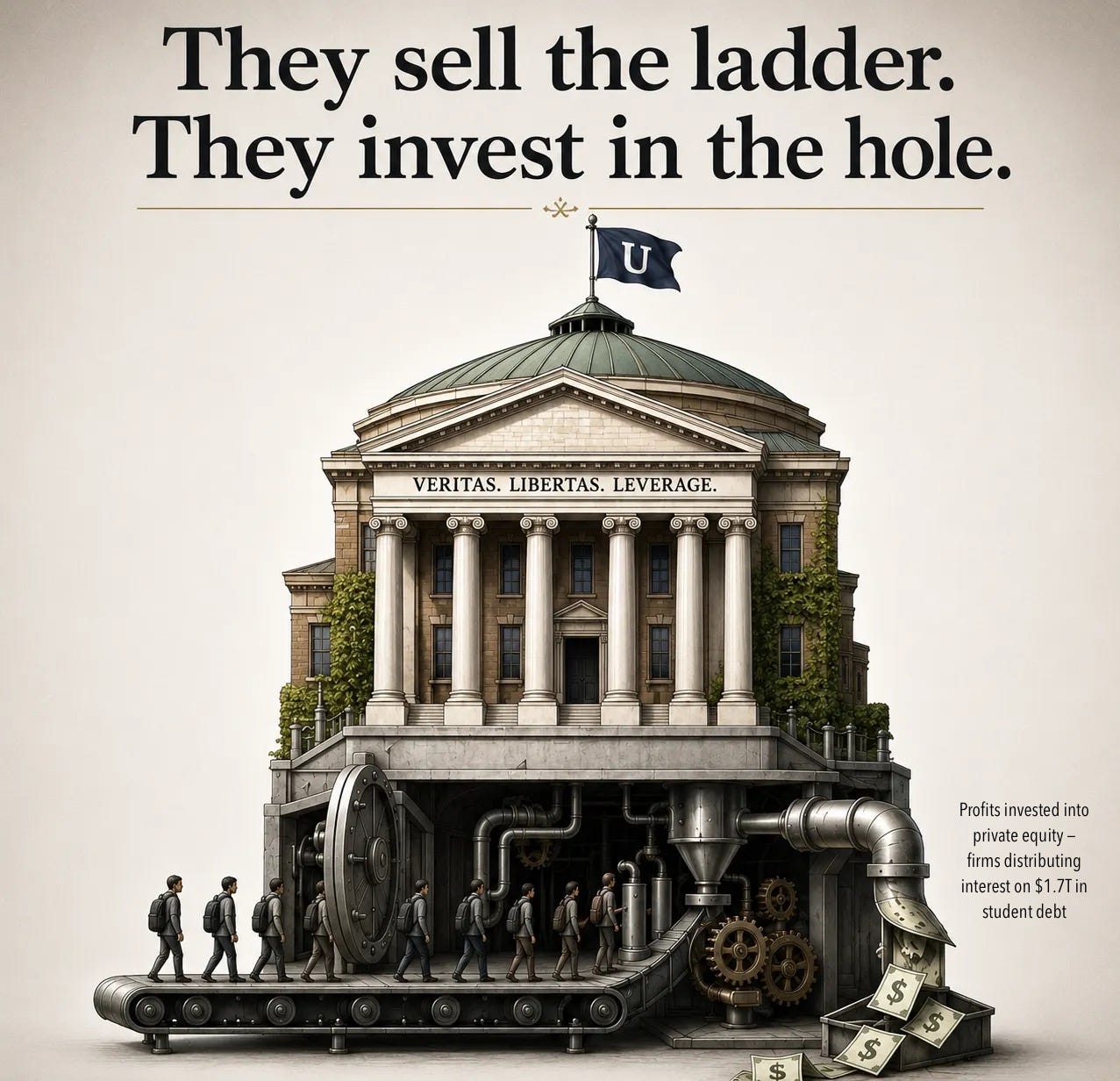
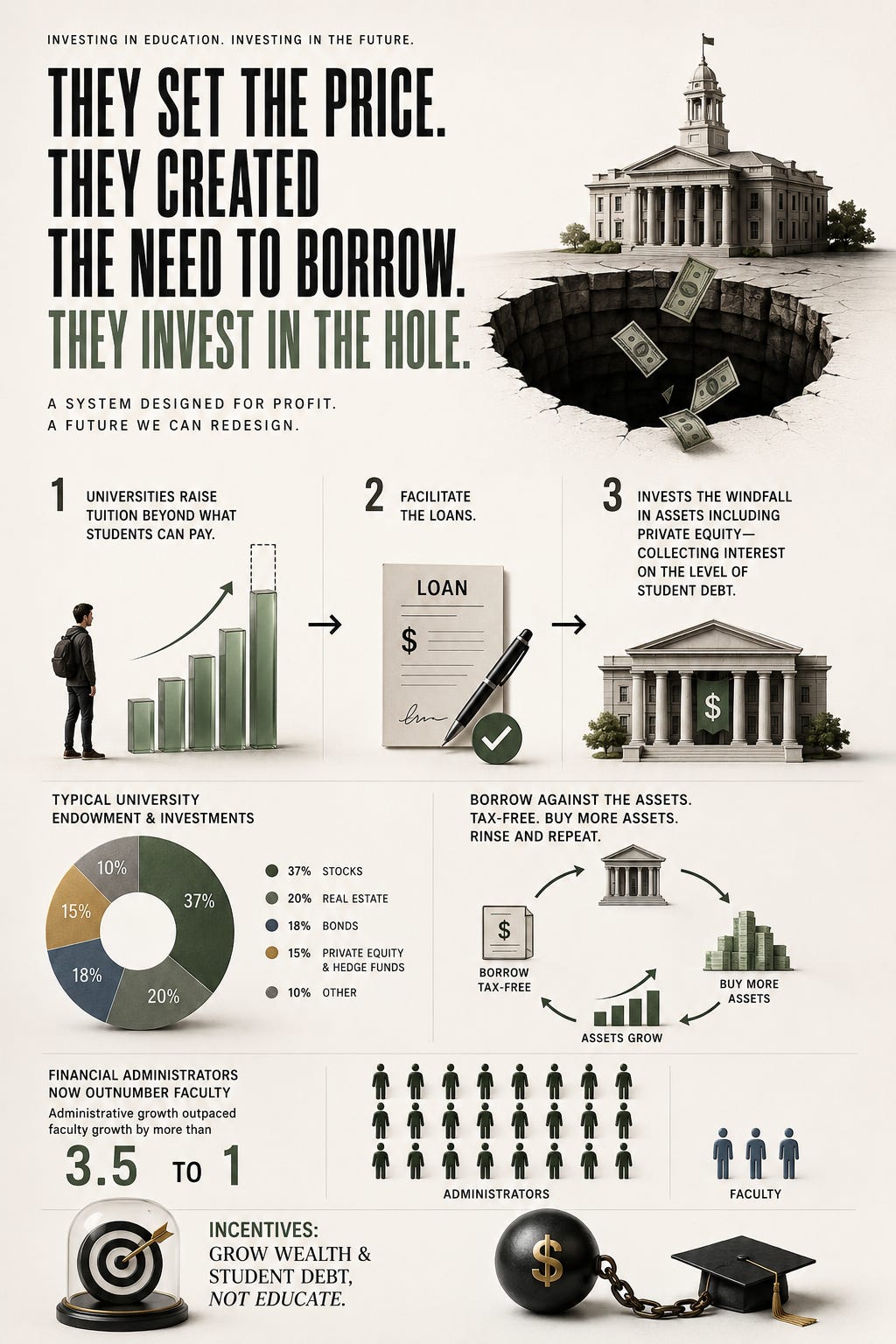
Policies that would significantly reduce rents (housing), asset prices (healthcare investors, student debt investors), or financial profits (corporate monopolies) therefore collide with the incentives of the system itself.
Once you’re winning, the game stops being about progress for the average American. Winners don't need progress. They need nothing to change.
Most of the well-known politicians are in the top 1%.

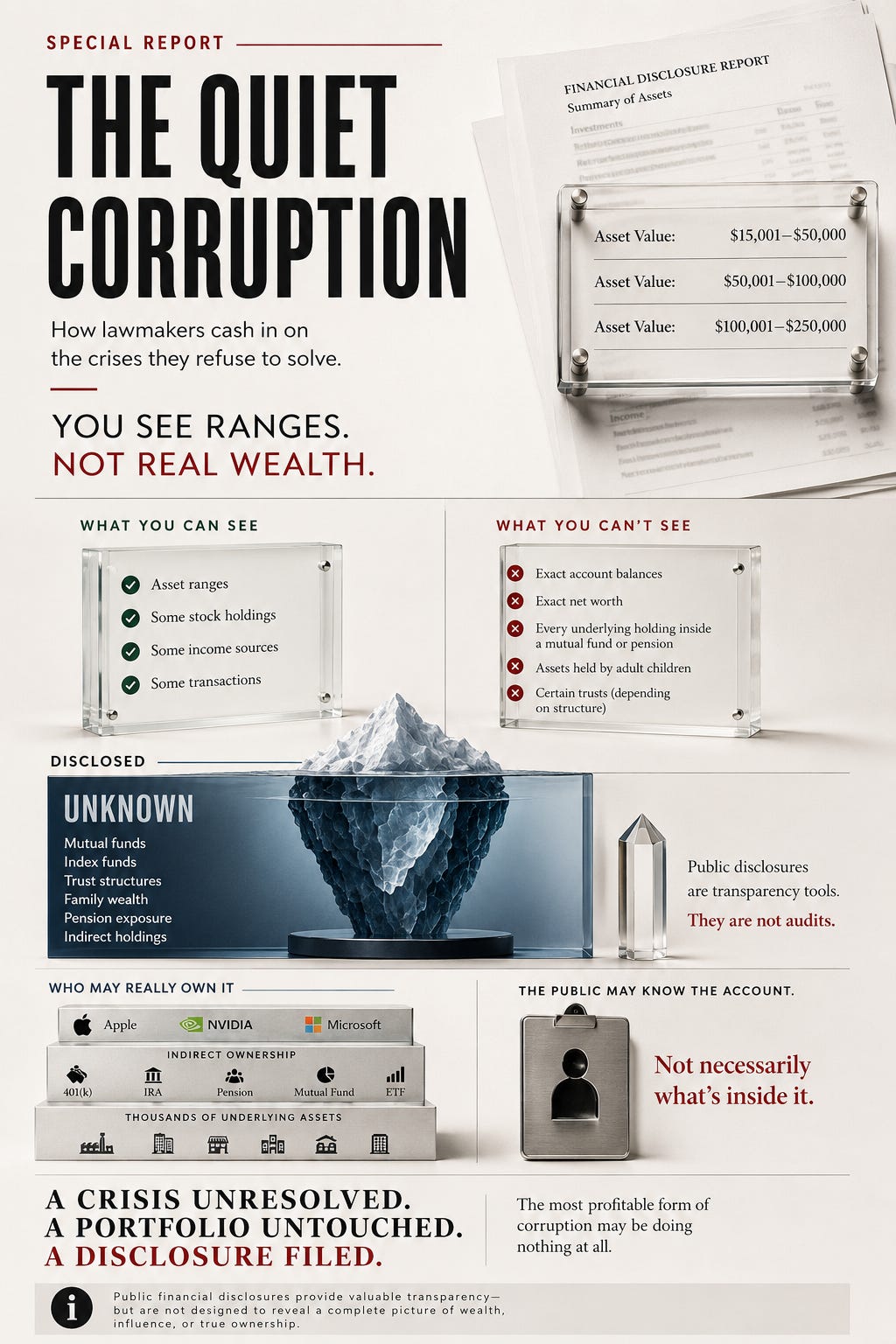
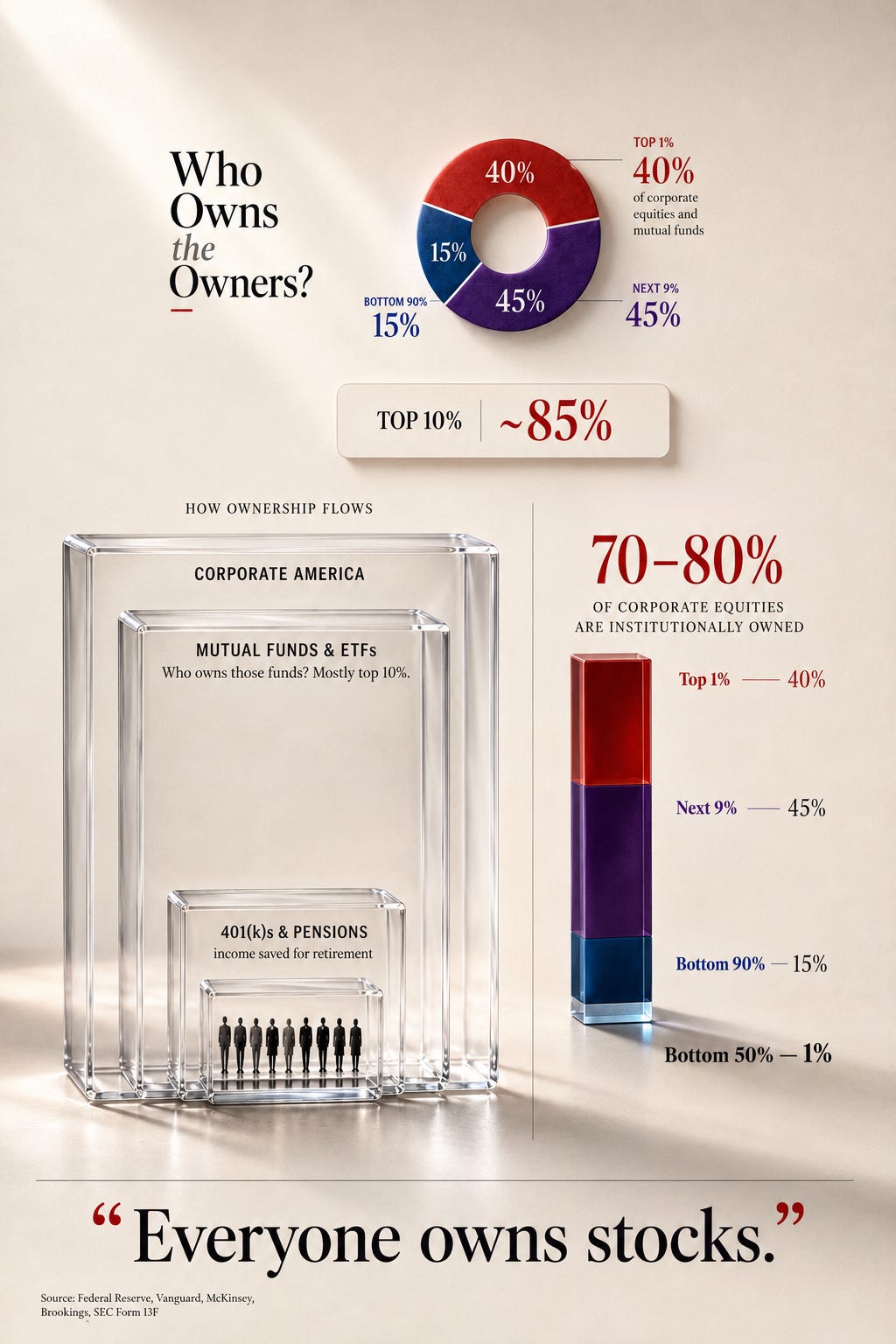
Nearly half of households are below the modern poverty line. Not from bad luck — from Wall Street's price on housing, education, and healthcare, and from a political duopoly you can't opt out of either.
Once these incentives take hold, a predictable cycle forms.
Lobbyists fund parties through “party dues.”
Parties fund incumbents who obey — and fund a challenger against anyone who breaks rank.
Party leaders control committee seats, which bills move, and which amendments survive.
Committees regulate the industries that fund the parties.
The spoiler effect locks in donor-backed incumbents as the “safe” vote. 85% of Americans say campaign costs keep good candidates from ever running — reformers don’t stand a chance.
Long-term incumbency becomes a pathway into the top 1%.
98% of incumbents get reelected. The loop never breaks.
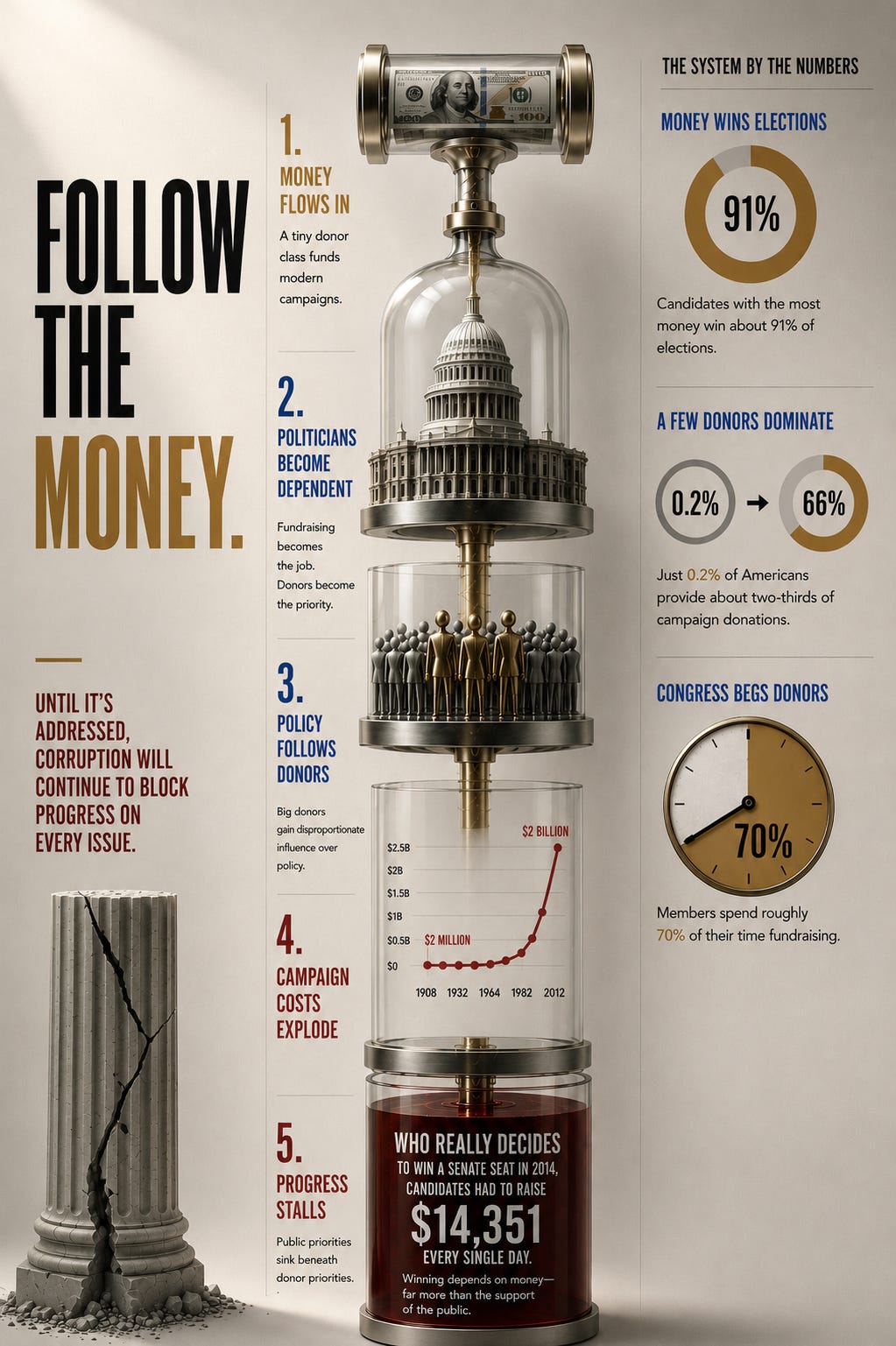
Over time, incumbency becomes extremely difficult to challenge. Congressman Ro Khanna8 once observed:
“The turnover rate in Congress is less than that of European monarchy families. How do you take on an incumbent like me, sitting on millions of dollars? Once you become an incumbent it’s hard to lose and you’re not giving voters a real choice.”
Why Voters Often Choose the “Safe” Candidate
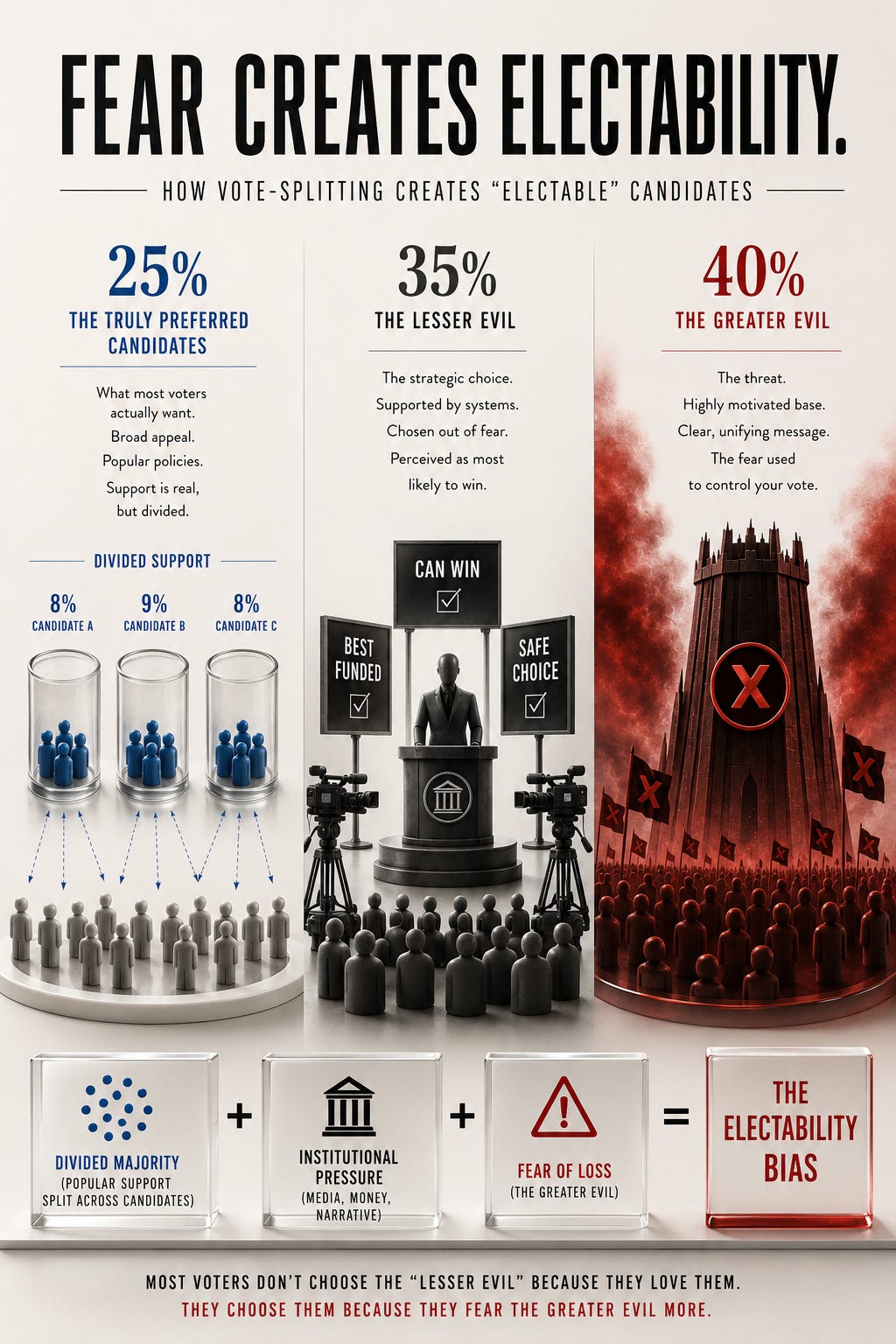
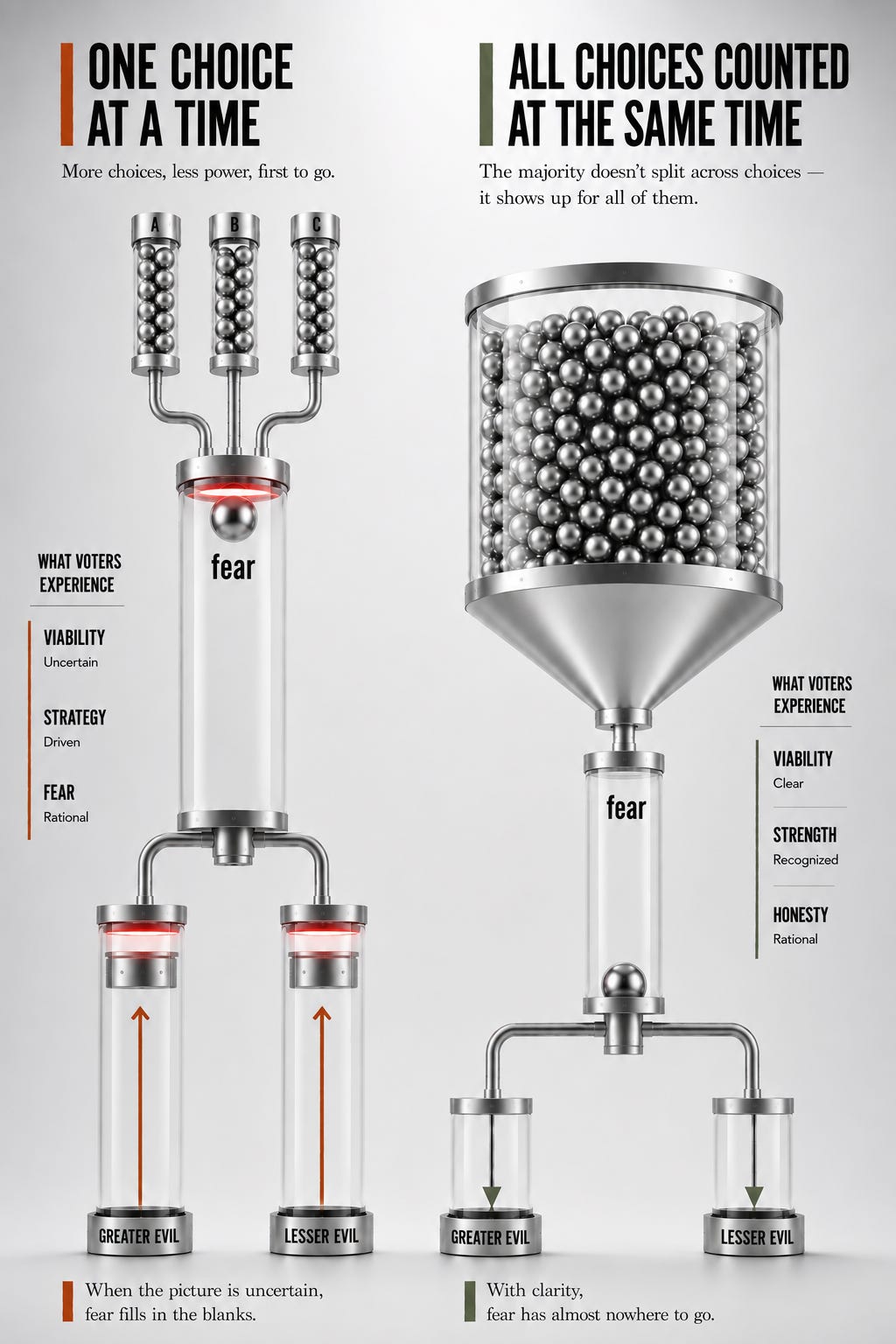

Plurality-style elections create what political scientists call the spoiler effect. But the spoiler effect rarely works the way people imagine. It does not mainly divide candidates. Its strongest effect is psychological. Voters begin thinking in terms of risk.
Instead of asking: Who represents my views best? Voters begin asking: Who has the best chance of beating the other party?
The safest answer is usually the candidate with:
• party backing
• strong fundraising
• high visibility
Often, that candidate is the incumbent. So voters strategically choose the “viable” candidate — even if that candidate is not their first choice. The system does not need to suppress challengers. Voters suppress them themselves.
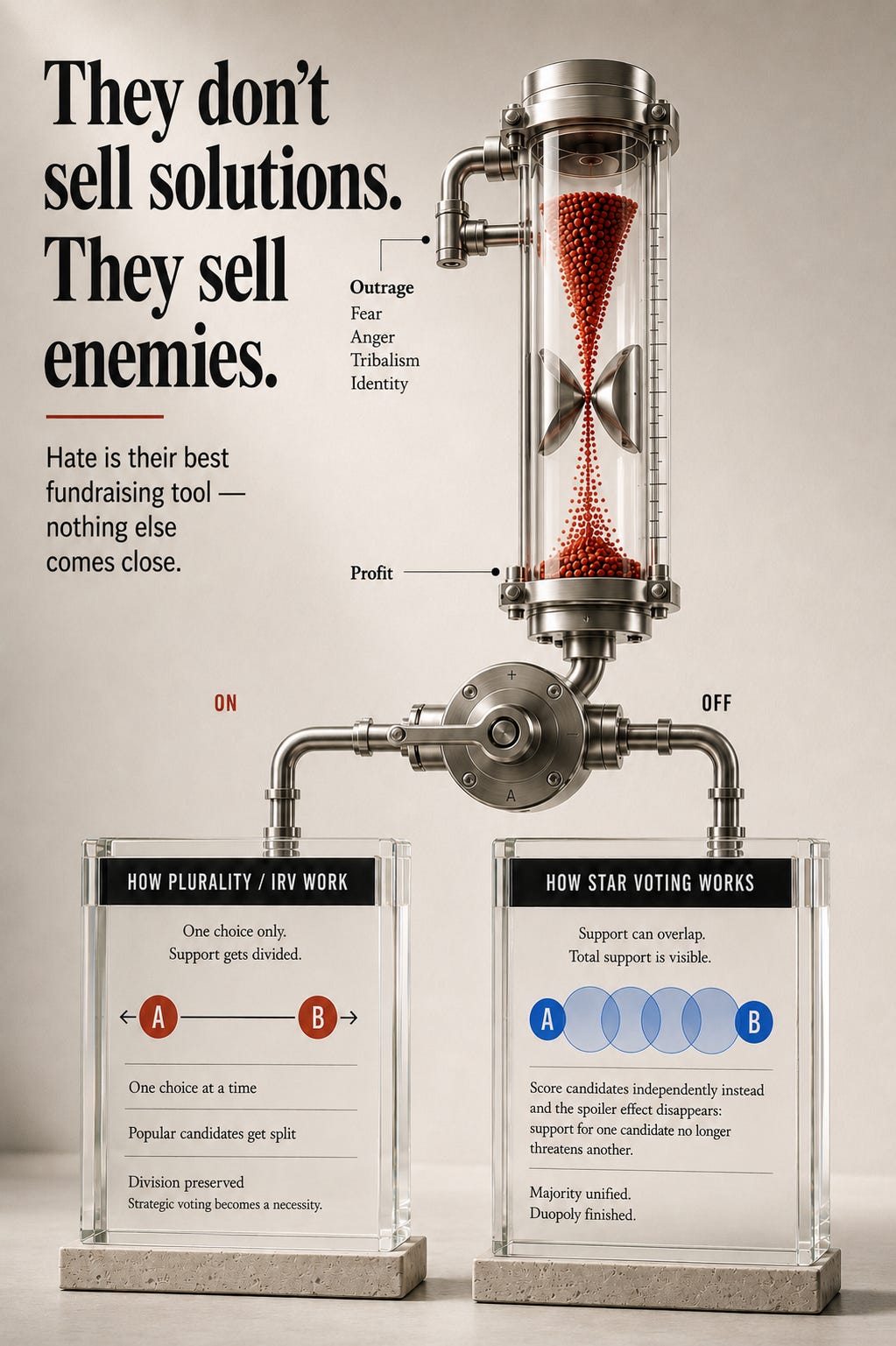
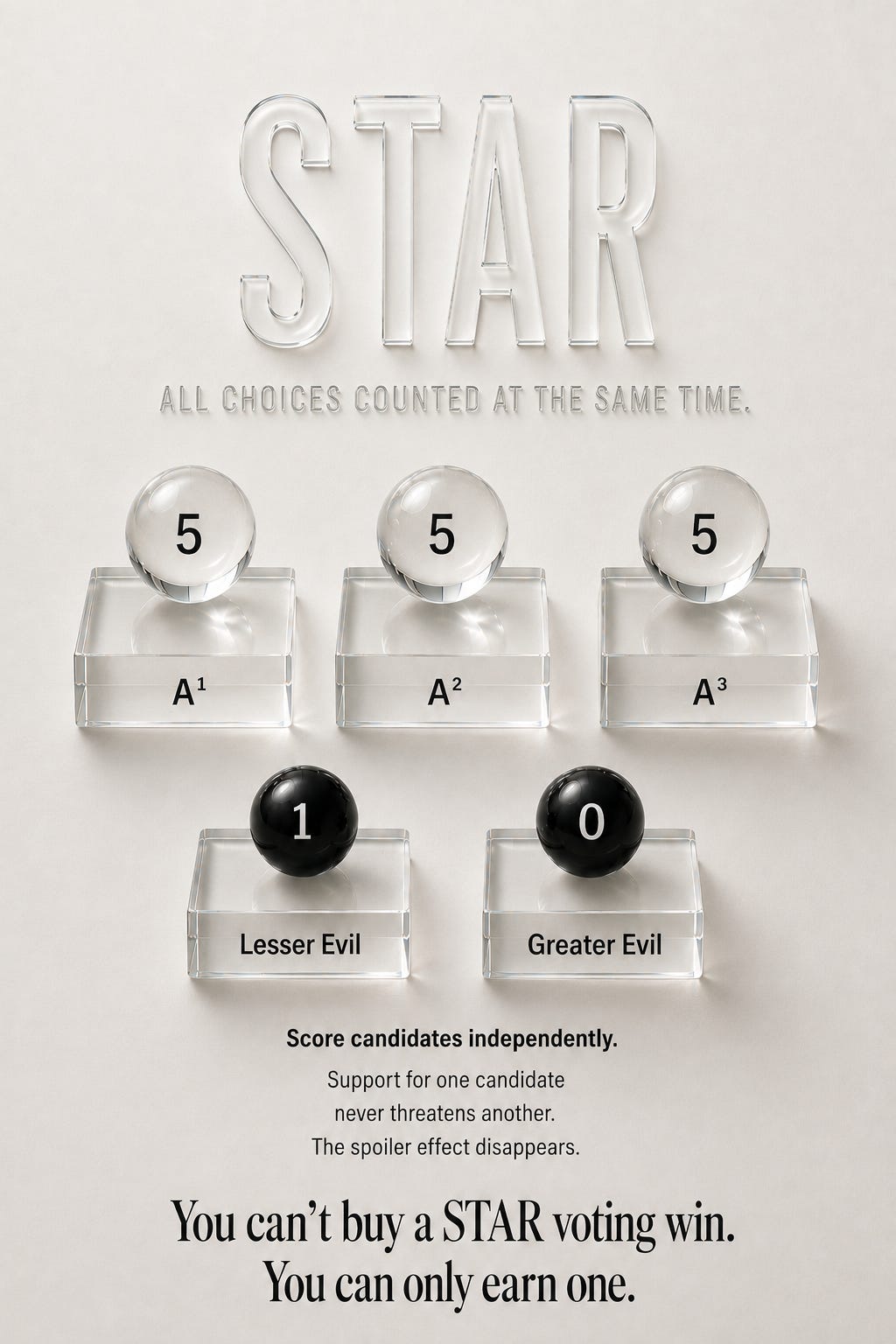
Eliminating the spoiler effect and vote-splitting:


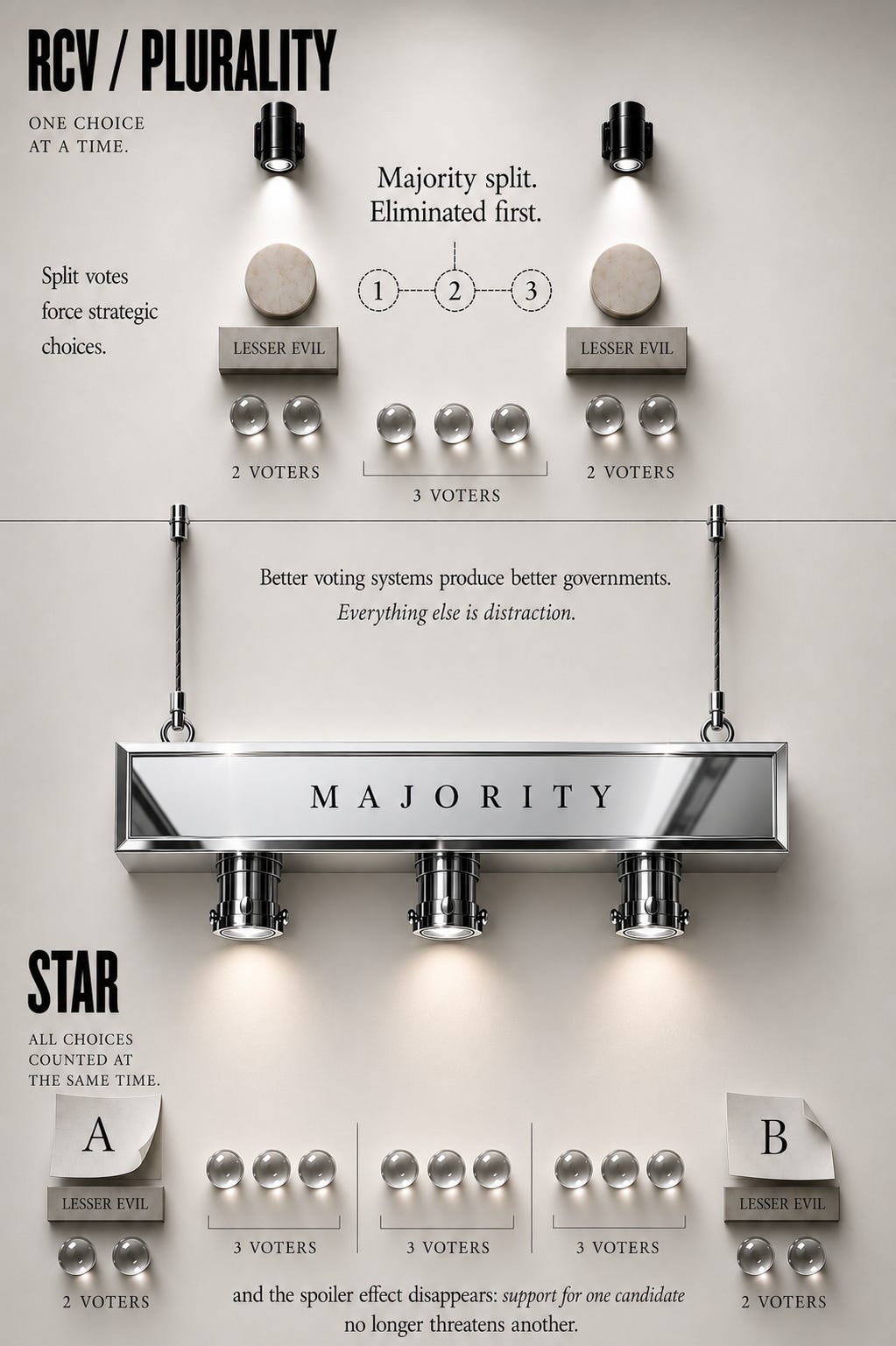
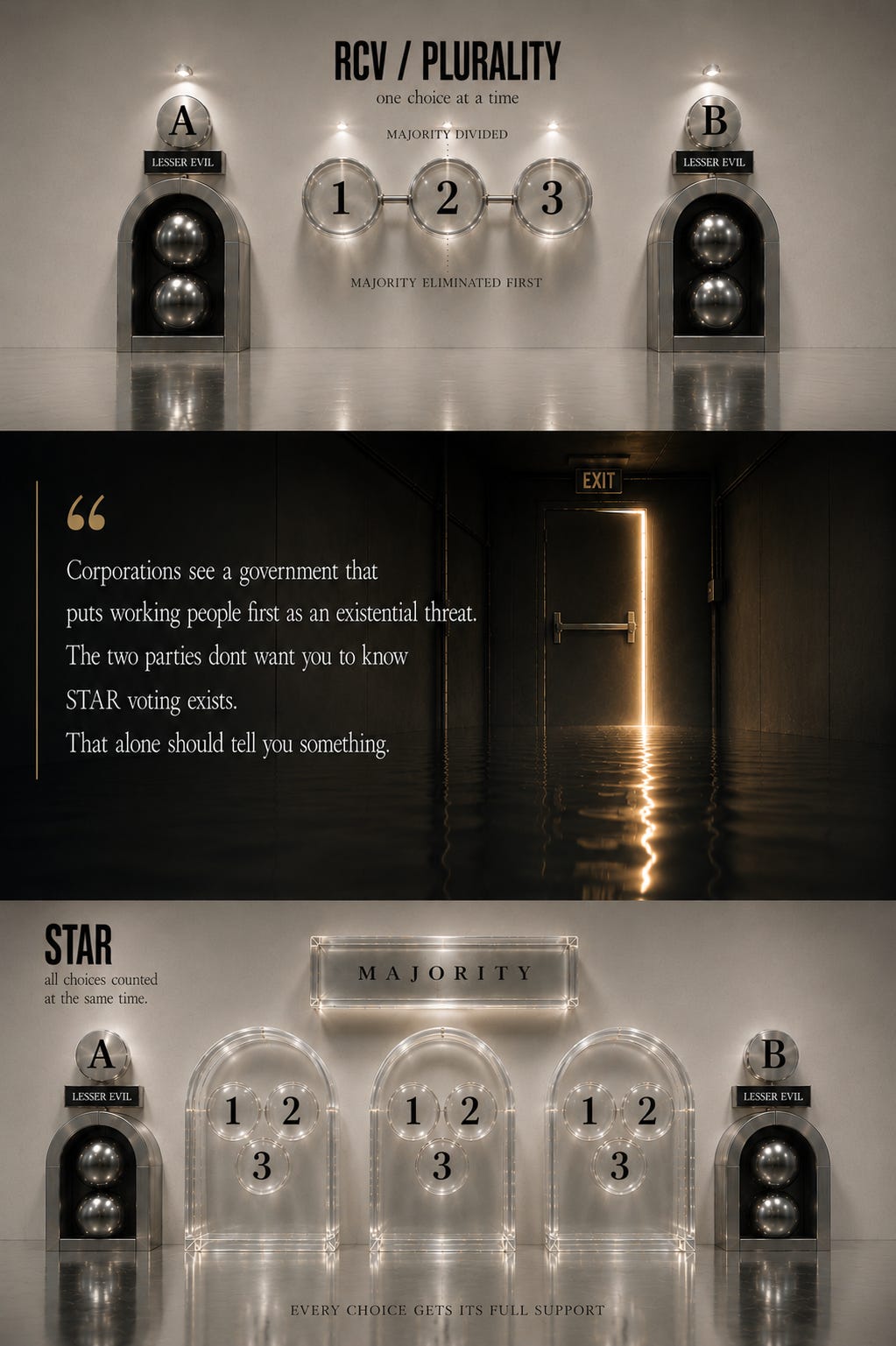
Structural reform does not begin with replacing individuals. It begins with changing rules. When majority votes are split, money decides. When majority votes are counted, the majority decides.
Players argue.
Rules decide.
Change the rules.
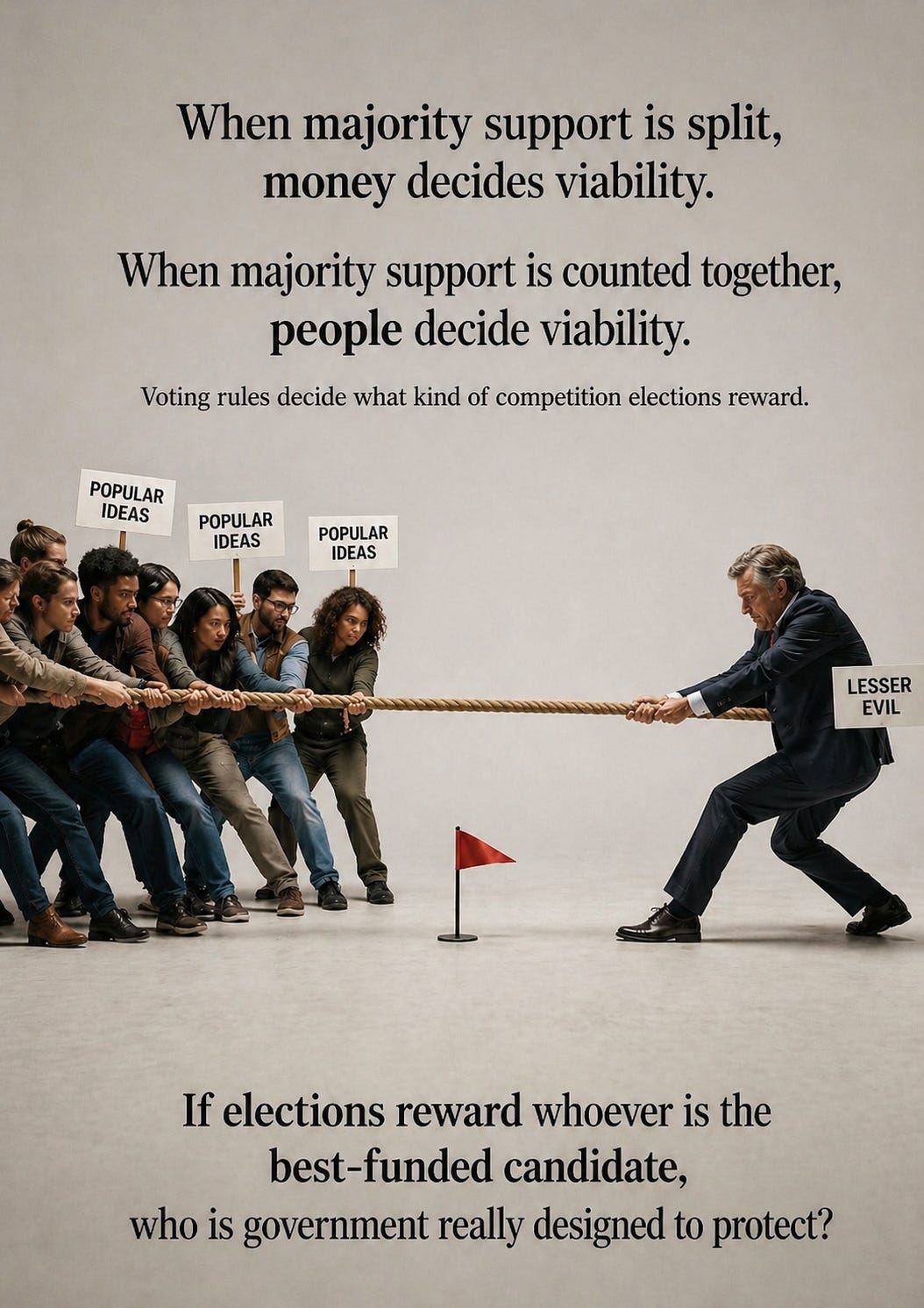
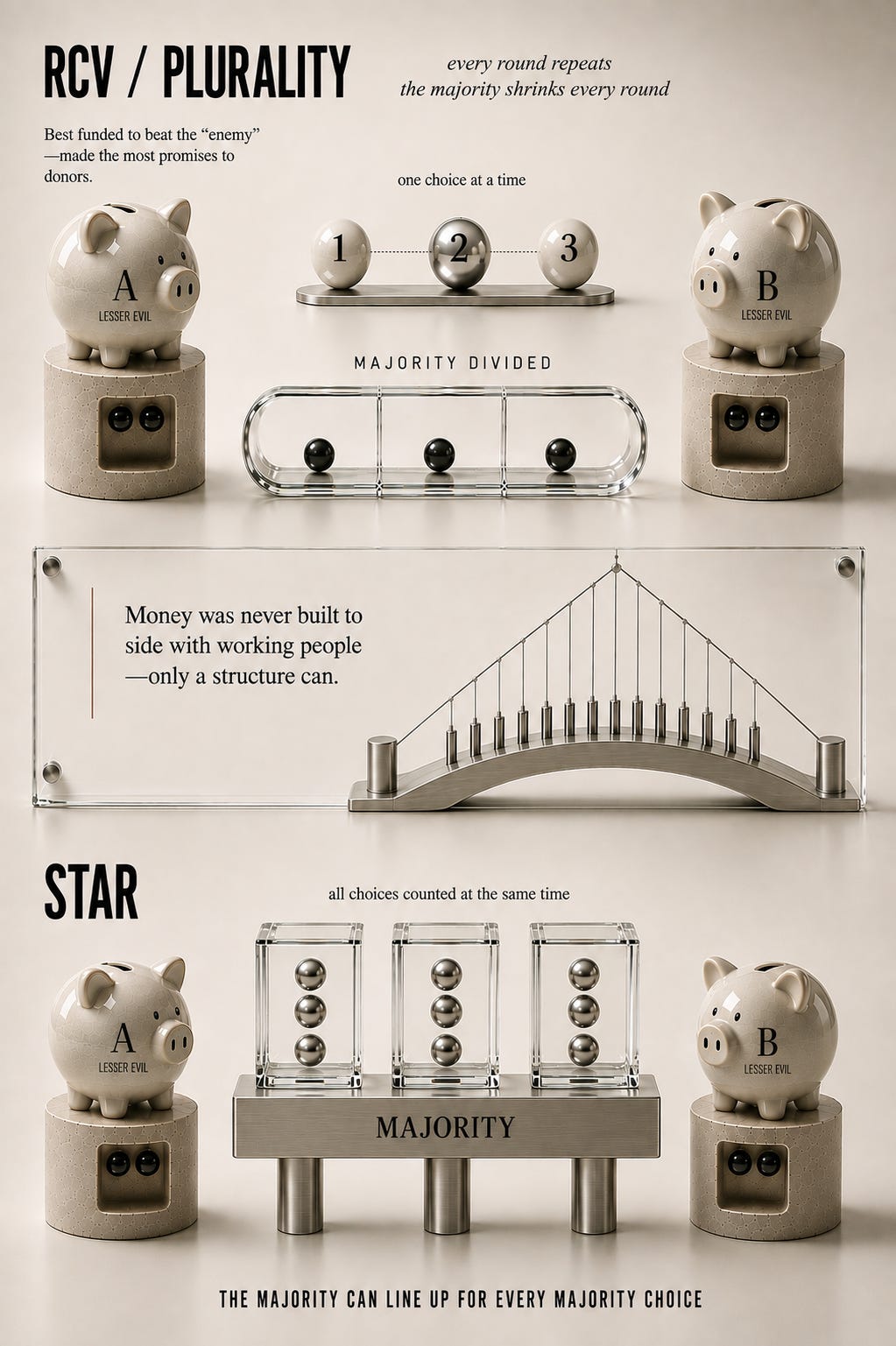
Voting methods decide what moves forward: the will of people, or the weight of fundraising.
That choice can disrupt the whole loop or maintain it.
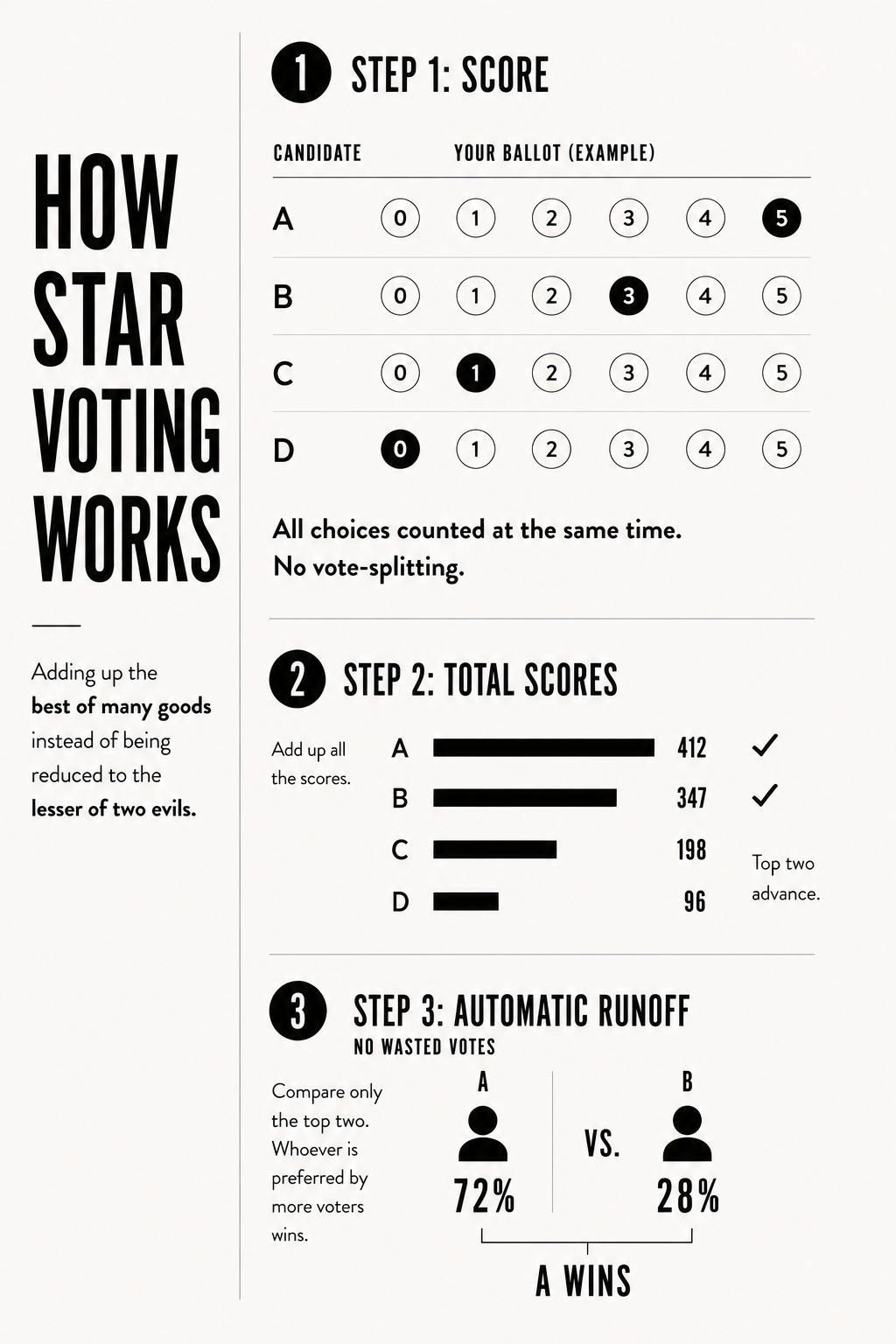
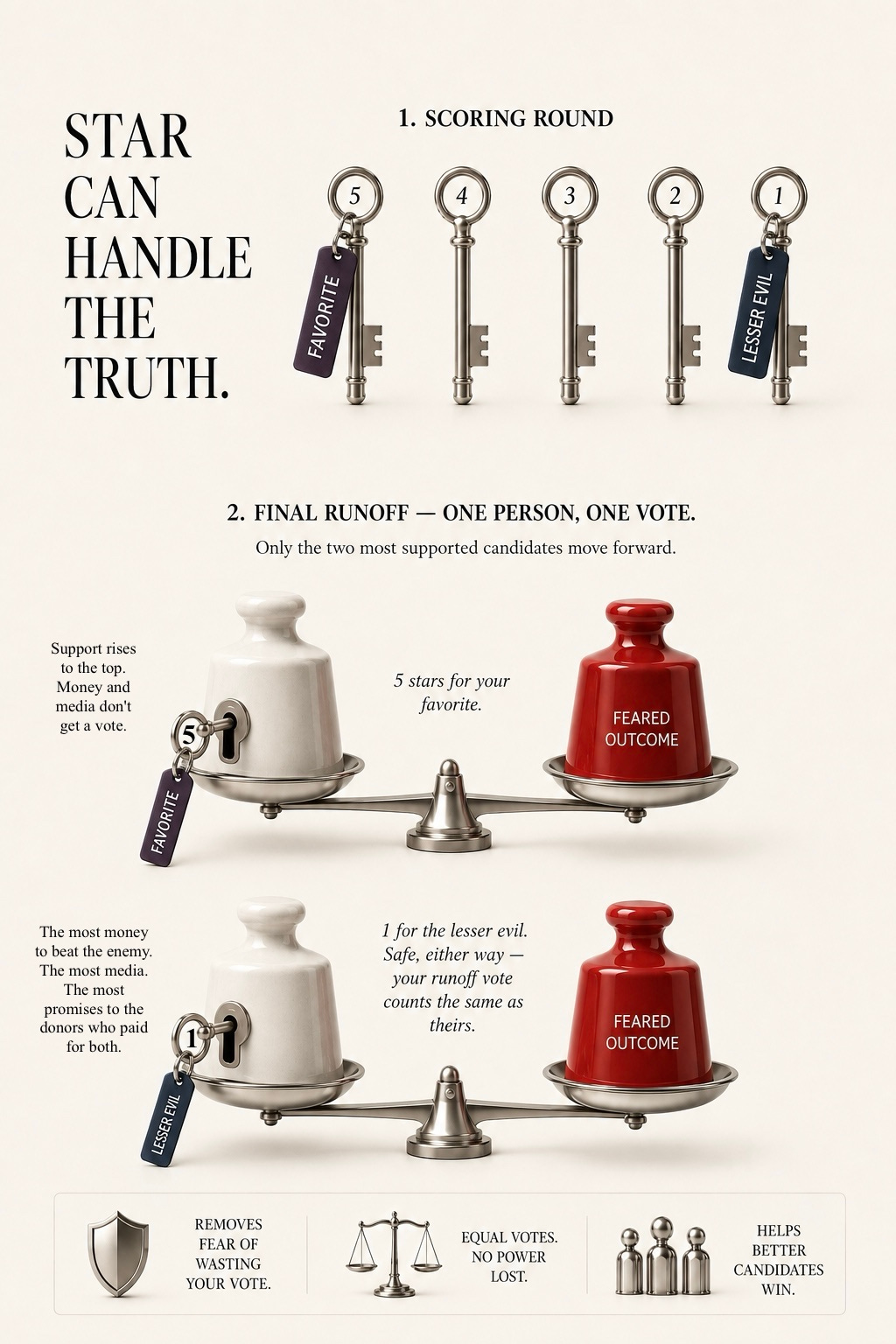


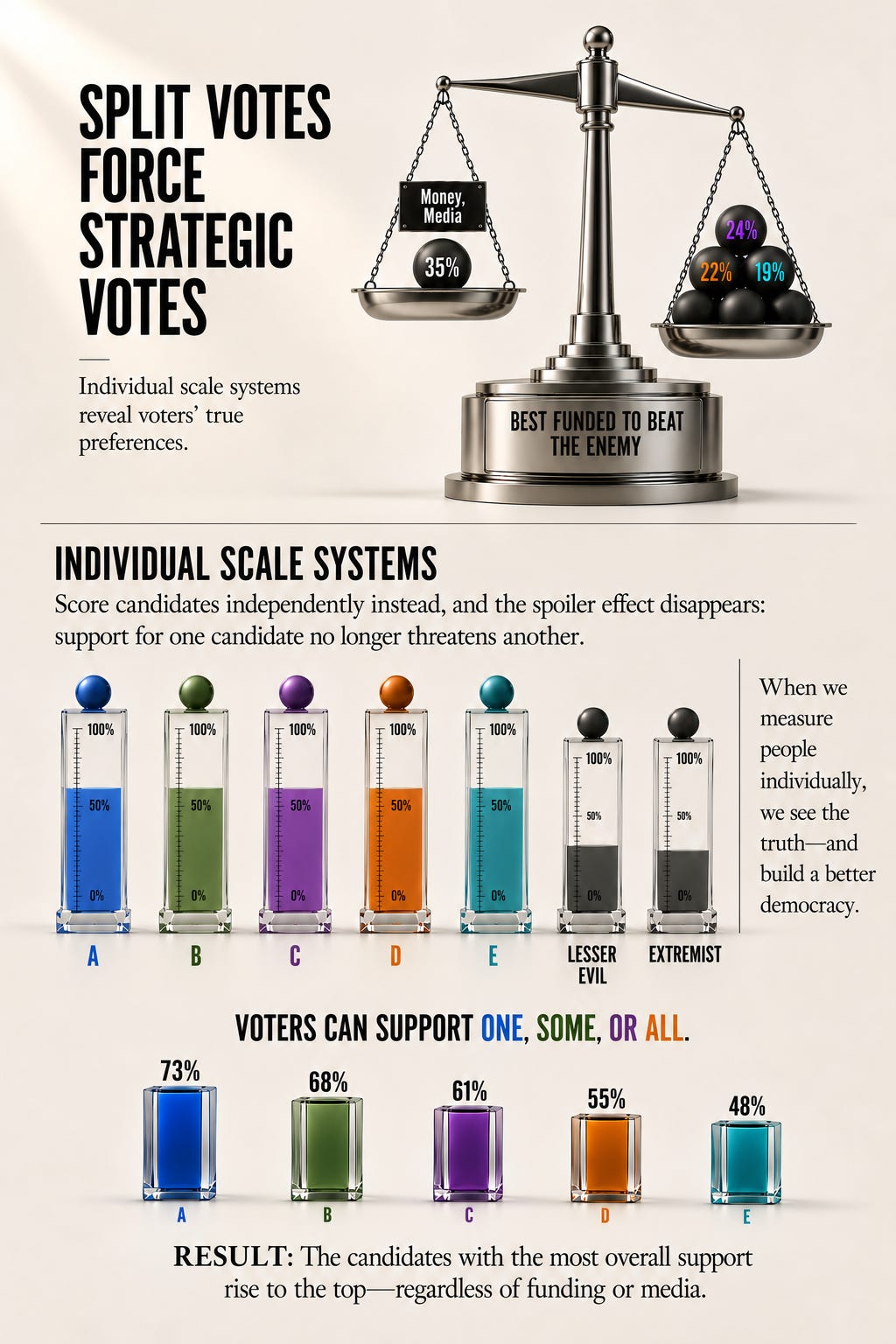
5 for your favorite. 1 for the lesser evil. Safe, either way — your runoff vote counts the same as theirs.
Equal votes, no power lost — and the financial advantage multi-million-dollar campaigns count on disappears. ‘Vote for whoever’s best funded to beat the enemy’ only works when your vote has to go all-in on one basket. STAR ends that.
STAR voting neutralizes the funding and ‘electability’ effect. No more fear of wasting your vote. No more money deciding who’s ‘viable’ before a single ballot is cast. It helps better candidates win.
Change the system. Break the cycle.
Part 8: Real Hope
If this piece unsettled you, I want to normalize what might be happening inside you.
When people encounter a structural explanation for something they thought was just messy or partisan, it often triggers the same psychological stages as grief. Not because something died. But because a belief did. Here’s what that process often looks like:
Stage 1: Denial
Emotional reaction:
“This is exaggerated.”
“Both parties have problems, but this is too sweeping.”
“Politics is messy, not engineered.”
That reaction isn’t ignorance. It’s protection. If the system is working imperfectly, that’s frustrating. If the system is structured to produce these outcomes, that’s heavier.
Focus:
You scan for flaws.
You look for one counterexample that restores normalcy.
Internal conflict:
If this is true, it means I misunderstood how power works.
Potential action:
Minimal.
You may dismiss it.
Or rationalize: “Corruption exists, but it’s not systemic.”
This is why the article leaned on specific anchors:
• The Princeton study showing the bottom 90% have no measurable influence on policy outcomes.
• Insider quotes from members of Congress describing themselves as “props.”
• Structural patterns — party dues, centralized leadership control, dark money enforcement, 98% incumbency reelection rates.
Denial cracks when patterns feel too consistent to ignore. Not because someone argued louder. But because the evidence stacks.
Stage 2: Anger
When denial weakens, anger often arrives.
Emotional reaction:
“So we’ve been played?”
“Special interests literally run Washington?”
“Nothing changes because it’s not supposed to?”
Anger makes sense. It means you’re seeing patterns. But here’s where many people get stuck: anger looks for villains. Left. Right. “Those people.” The system survives on that redirection. If the fight stays horizontal, the structure stays vertical.
Focus:
Blame. Exposure. Confrontation.
Risk:
Anger fractures majorities instead of unifying them. It feels powerful. But it leaves incentives untouched.
Stage 3: Bargaining
This stage is quieter.
Emotional reaction:
“Maybe we just need better candidates.”
“Maybe if we flip Congress again…”
“Maybe this next cycle will be different.”
This is the mind trying to preserve hope without changing the model.
Focus:
Personal virtue.
Hero candidates.
Electoral cycles.
But pause: If changing politicians fixed the system, would it already be fixed? The insider testimony matters here. Members describing centralized leadership control. Describing punishment for dissent. Describing party dues as survival mechanisms.
That’s not a personality flaw. That’s incentive design.
Stage 4: Depression
This is the drop.
“If 90% have no measurable influence, what’s the point?”
“If incumbents almost never lose, why try?”
“Nothing changes.”
This is where cynicism forms. This is where people disengage. If you feel stuck, ask yourself which stage you’re in:
• Dismissing it
• Angry at the wrong target
• Hoping the next personality fixes it
• Feeling like nothing matters
Every one of those is human. But only one leads forward.
Stage 5: Acceptance
Acceptance is not surrender. Acceptance is clarity. It’s the moment you stop expecting individual heroics inside a structure built to neutralize them.
It’s the moment you realize: Players argue. Rules decide.
When incentives reward extraction, extraction grows.
When incentives reward division, division stabilizes power.
And here is the shift that restores agency. When you shift from:
“Who’s in office?” to “What are the rules of this game?”
You stop fighting neighbors.
You stop chasing saviors.
You stop waiting for moral purity.
Strategic thinking instead of reactive thinking. This is where agency returns — differently than before. Not through outrage. Not through partisan loyalty. Through design awareness.
You start asking: What changes incentives? What breaks predictability? What lets majorities express themselves without splitting?

Part 9: Don’t Expect Washington To Reform Itself. Build A Movement So Big That Washington Has No Choice

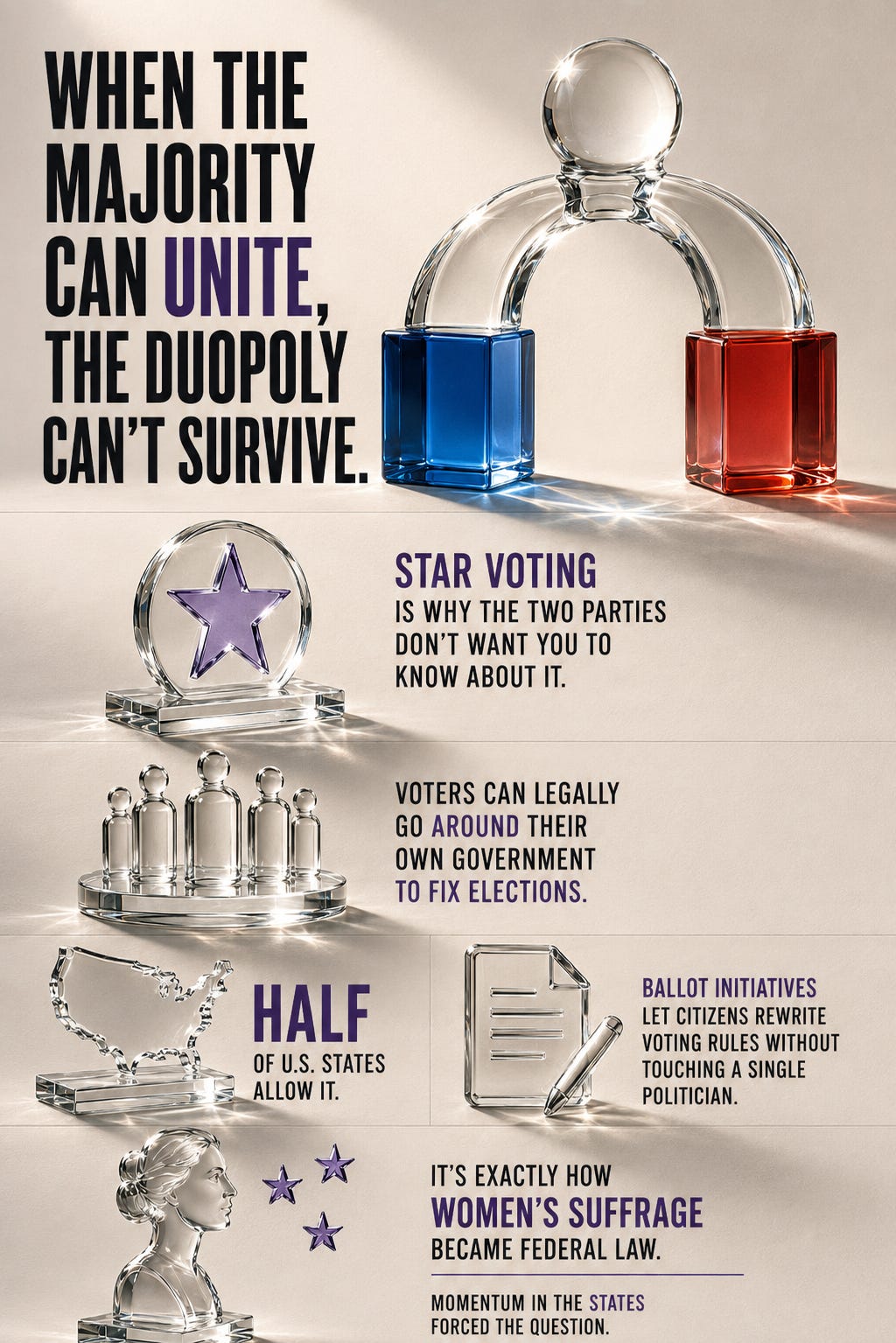
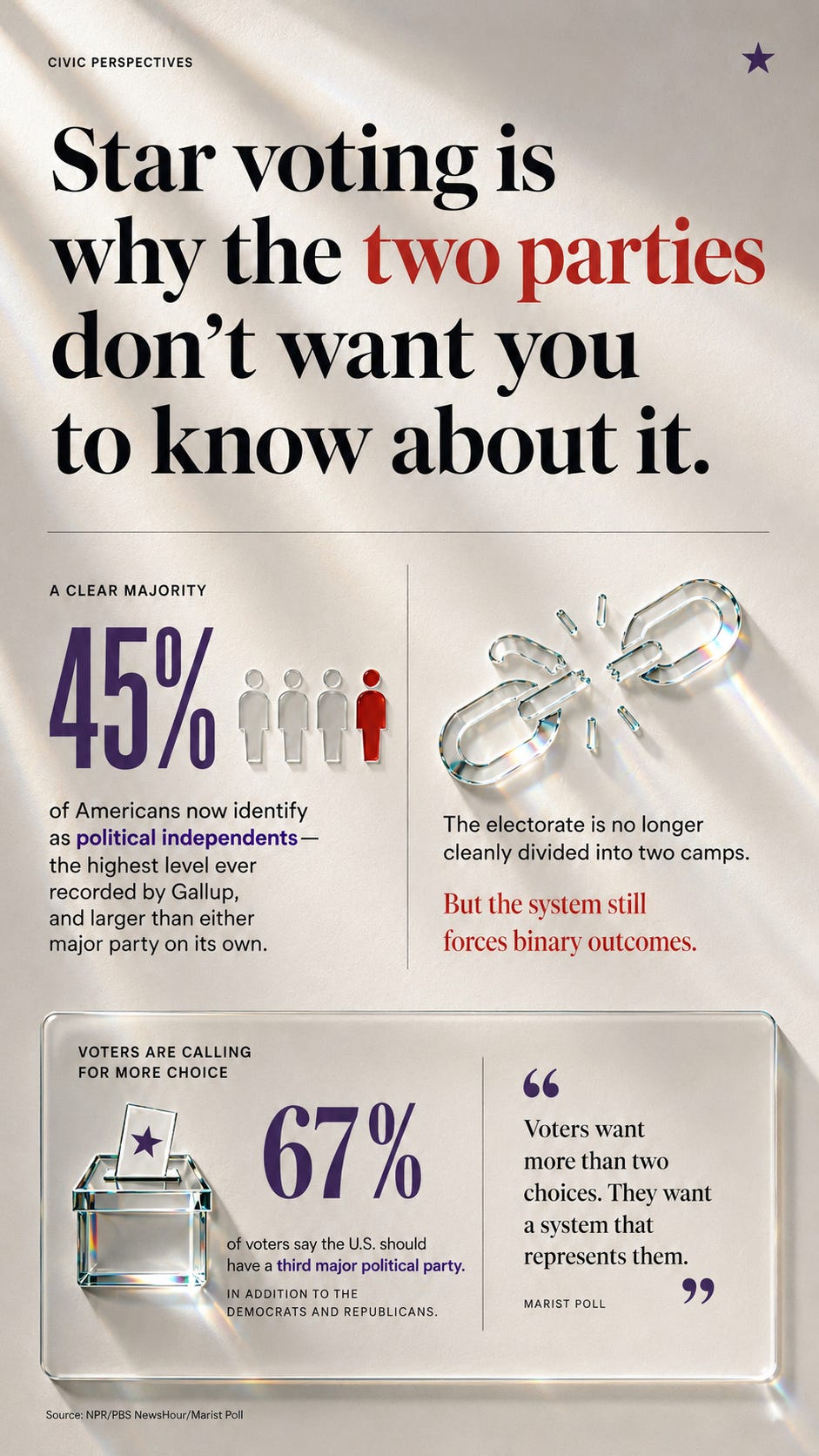
So why does everything still look so divided? Because you’re not seeing preferences. You’re seeing filters.
That’s where voting reform enters — not as a policy hobby, but as a pressure point. Because plurality elections reinforce predictability. Predictability protects concentrated power.
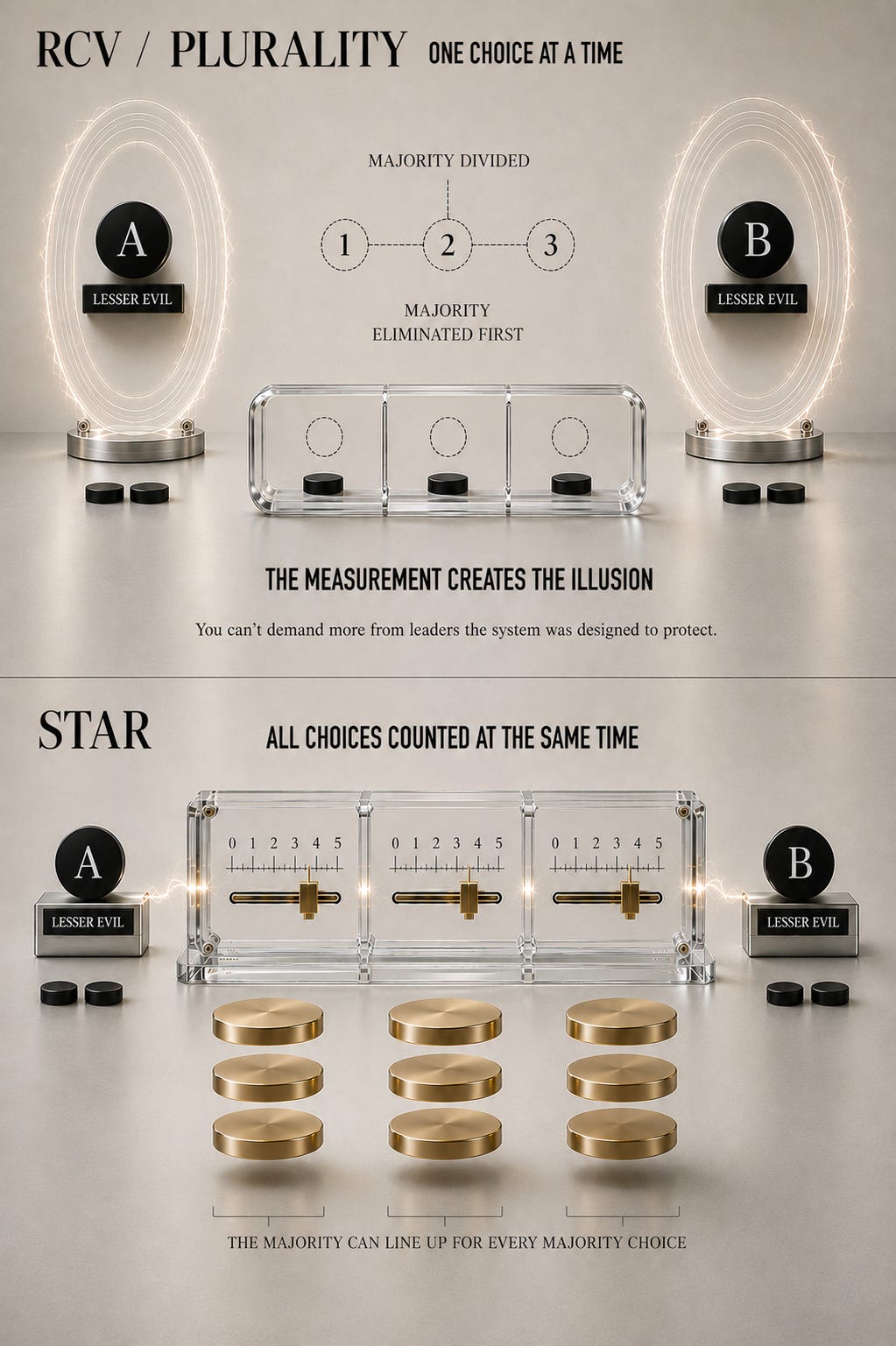
When majority support is split, momentum shifts strategically and the safest, best-funded candidate wins.
When majority support is counted properly, momentum shifts honestly and viability comes from people — not fundraising. And once you see the structure, you can’t unsee it.
From there, the work becomes simpler. Not easy. But clearer. Change the rules.
That’s where depression lifts and light at the end of the tunnel opens.

Mo Brooks on transactional mechanics (https://rumble.com/v113yye-there-is-a-quid-pro-quo-mo-brooks-exposes-how-the-swamp-really-works.html)
Dean Phillips issues a moral indictment and walks away
James Zogby on procedural suppression inside party governance
Forward Party Podcast, Ep. 1 - Party leadership controls fundraising to enforce loyalty, amplify conflict, and keep issues unsolved—leaving many politicians privately wishing for a place outside the two-party system. (www.youtube.com/watch?v=6efREDM-fKc)
Source: NPR/PBS News/Marist Poll (2024–2025 national surveys)
Full tables:
https://maristpoll.marist.edu
Findings across recent waves consistently show:
• ~7 in 10 say political leaders don’t care about people like them
• A majority say media prioritizes profit over truth
• ~2/3 say the economy is rigged for the rich
• ~7 in 10 support alternatives to the two-party system
The network of global corporate control. Vitali, Glattfelder & Battiston (2011) https://journals.plos.org/plosone/article?id=10.1371/journal.pone.0025995
Tulsi Gabbard leaves because the system cannot self-correct