RCV's Biggest Fans Aren't Who You Think.


Chapter 1: Highly Financed Organizations Told The Reform Movement What It Wanted To Hear
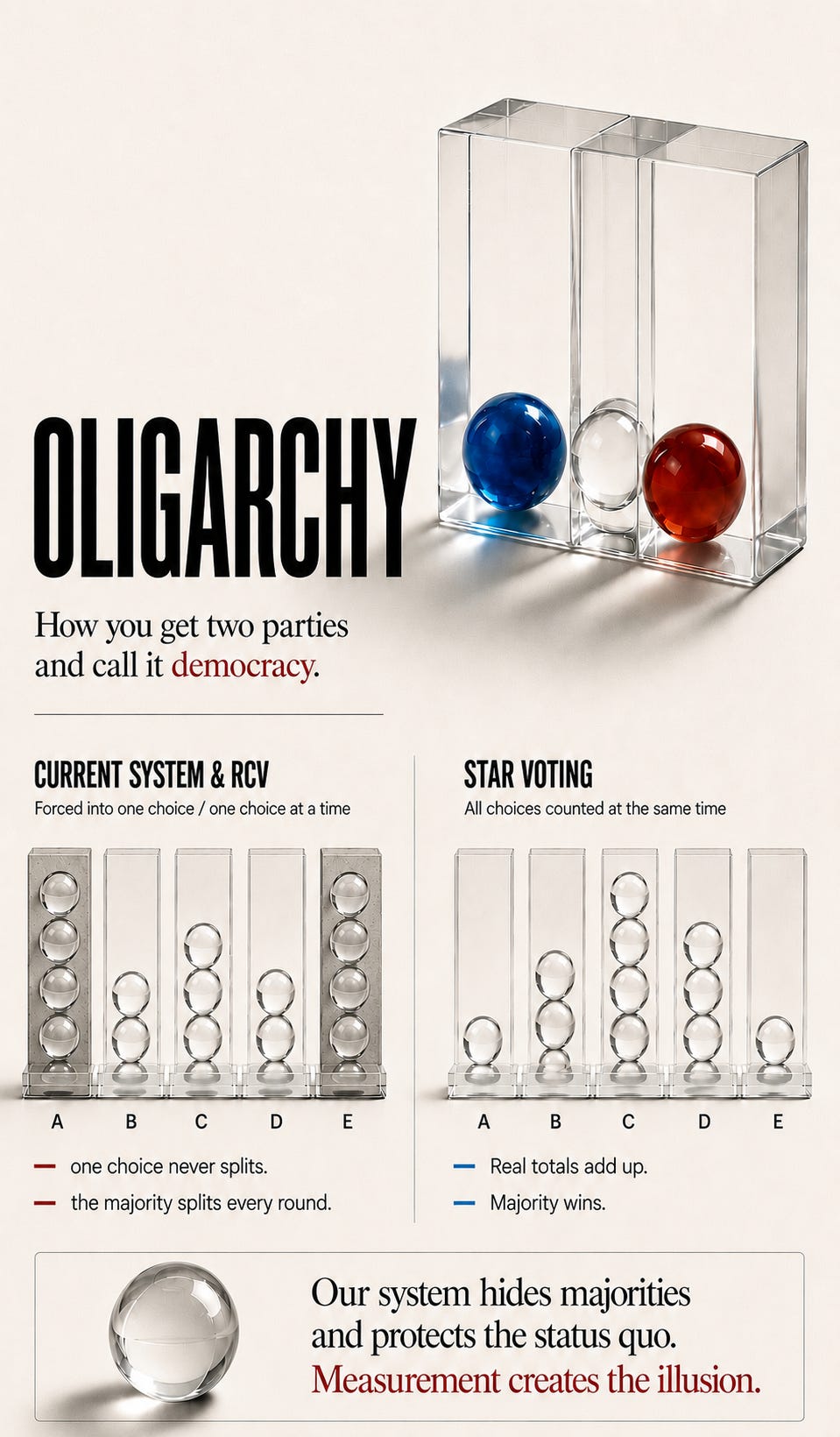
eliminates vote-splitting
eliminates spoiler effect
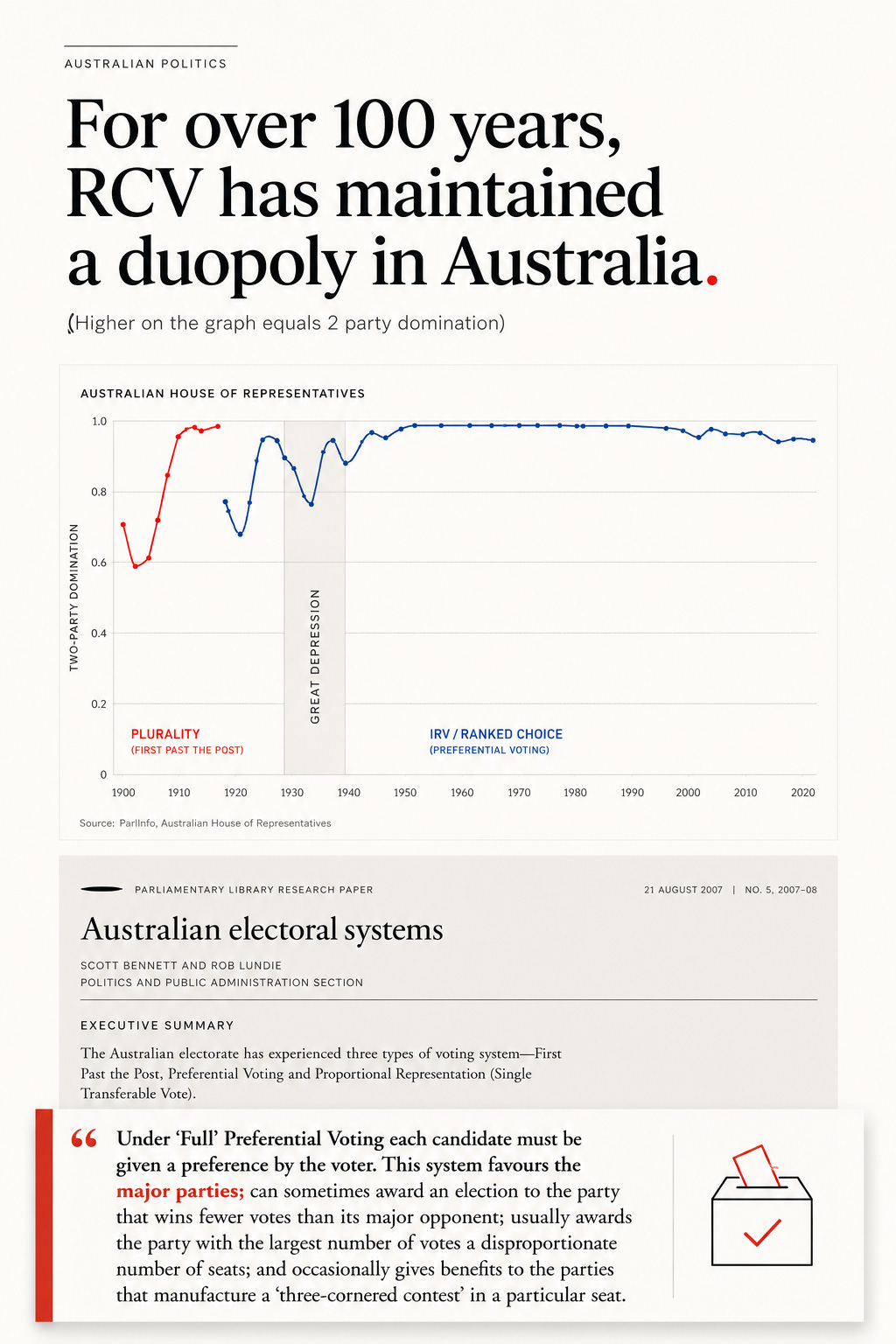
breaks a duopoly
ensures majority wins
you can support multiple candidates
reduces polarization

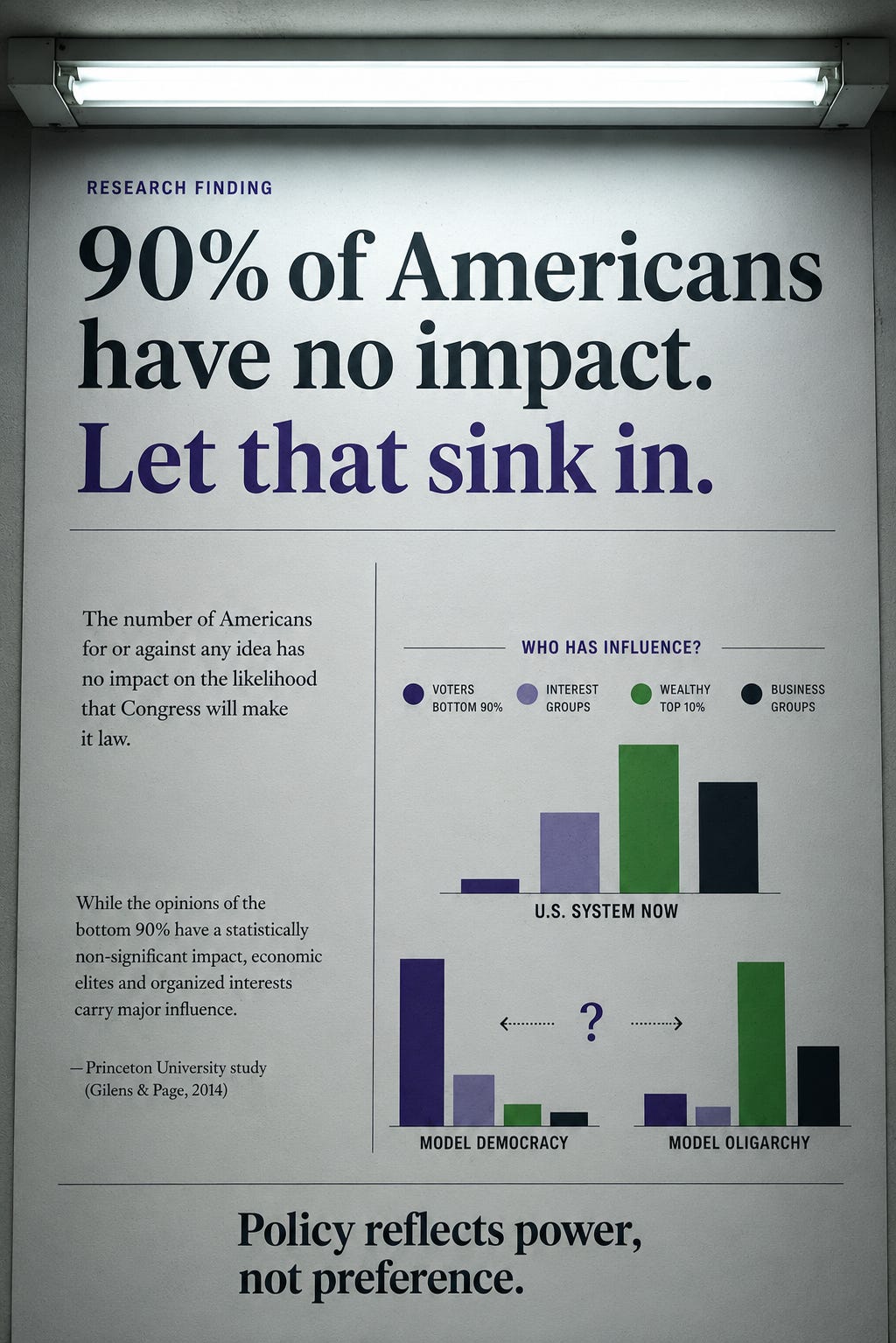
Lobbyists Don't Fund Reforms. They Fund Outcomes.
It’s not reform. It’s chess.
The point of a well-funded “solution” isn’t to work.
It’s to make sure nothing else gets a chance.
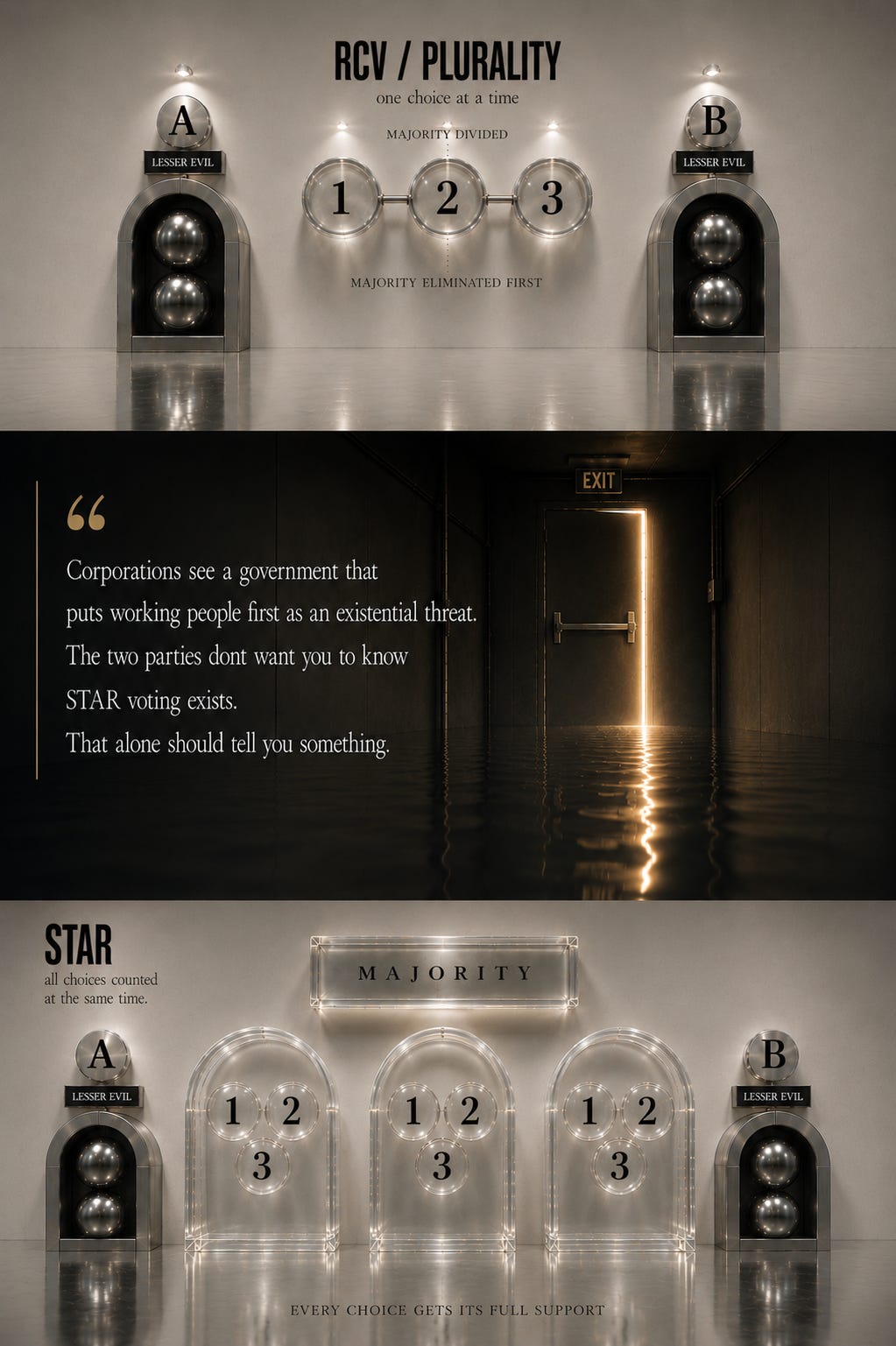
Corporations see a government that puts working people first as an existential threat. The two parties don’t want you to know STAR voting exists.
That alone should tell you something.

Chapter 2: A Reform So Good, the Establishment Is Paying For It
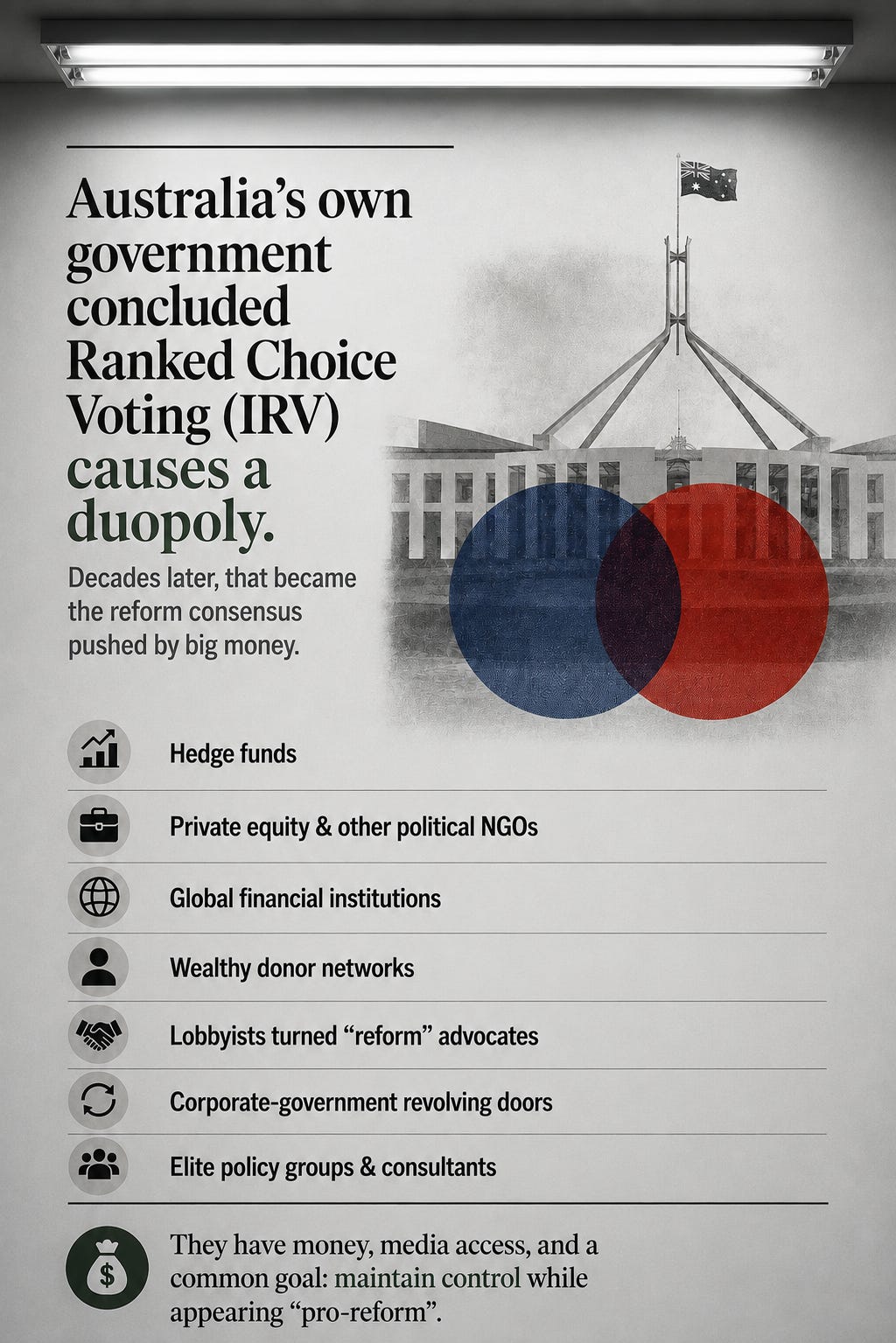
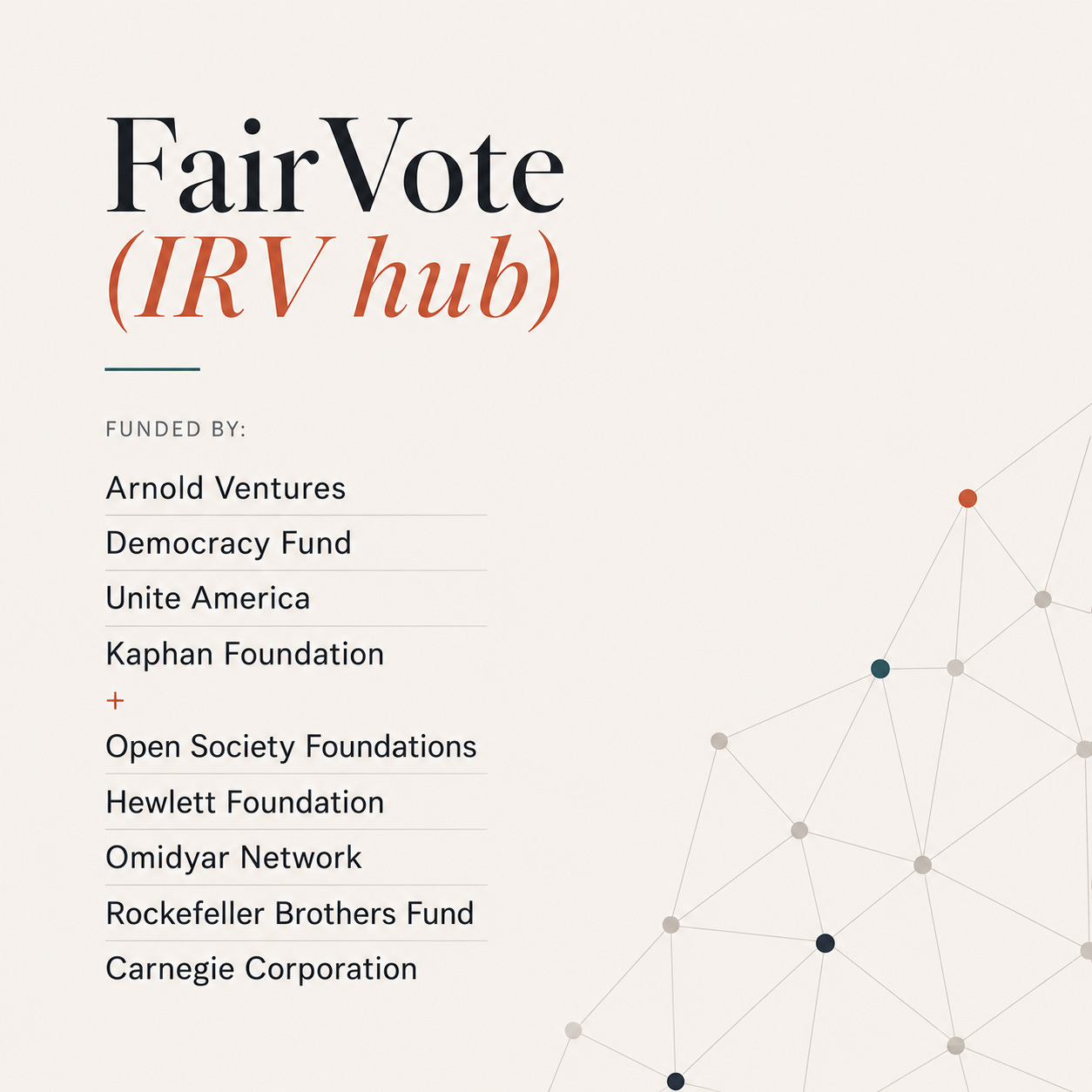
The movement for Ranked Choice Voting (IRV) has largely been led by organizations such as: FairVote, RepresentUs, Unite America, Rank the Vote and the Forward Party.
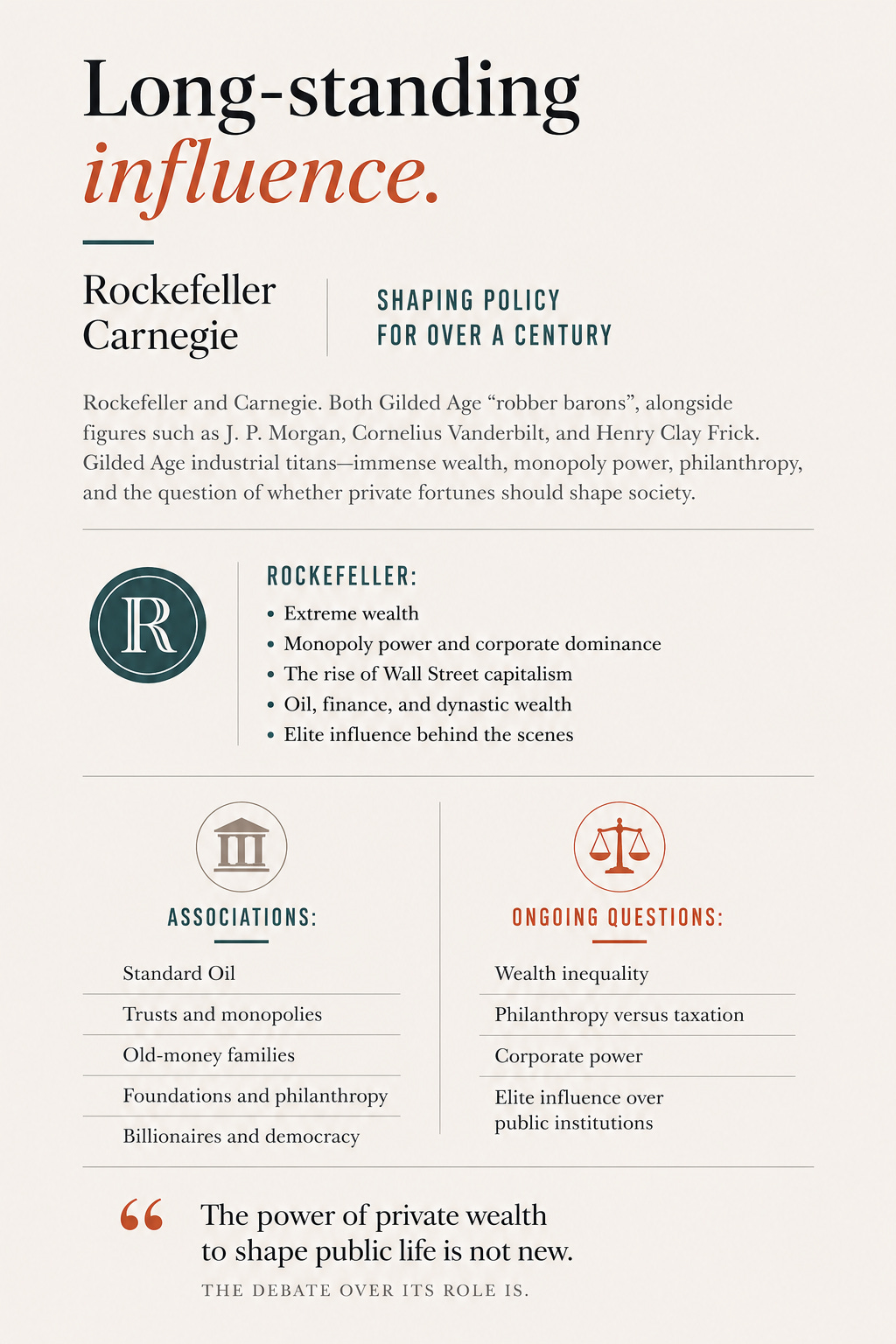
Rockefeller / Carnegie → legacy elite influence layer
Rockefeller Brothers Fund
Carnegie Corporation
These are:
century-old elite institutions
historically tied to:
shaping public policy
international governance
institutional frameworks
—they are deeply embedded in governing-class influence
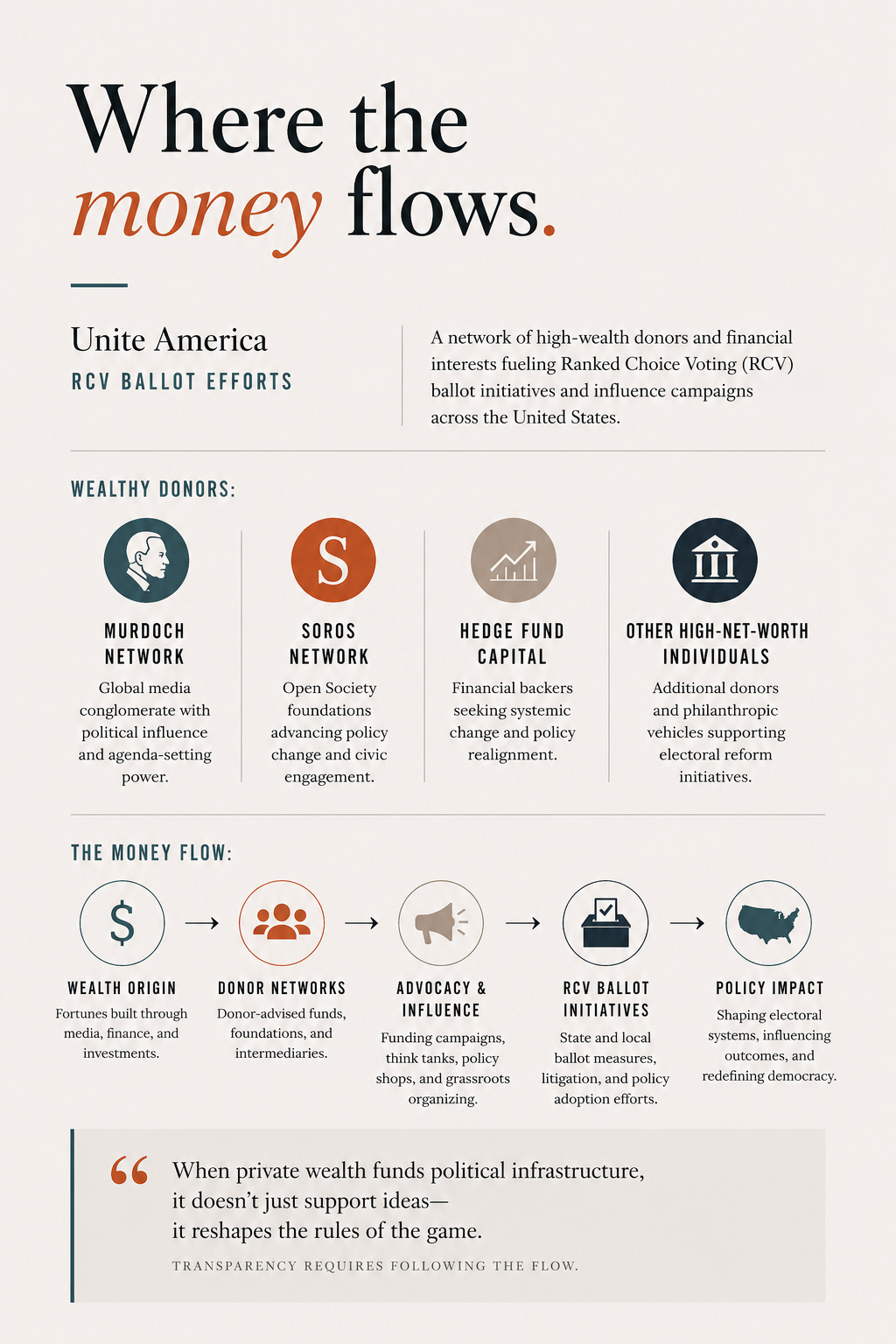
From broader RCV funding pipelines
Unite America has funded RCV efforts
wealthy donors (Murdoch family, Soros network, hedge fund figures) have funded RCV ballot efforts and aligned orgs
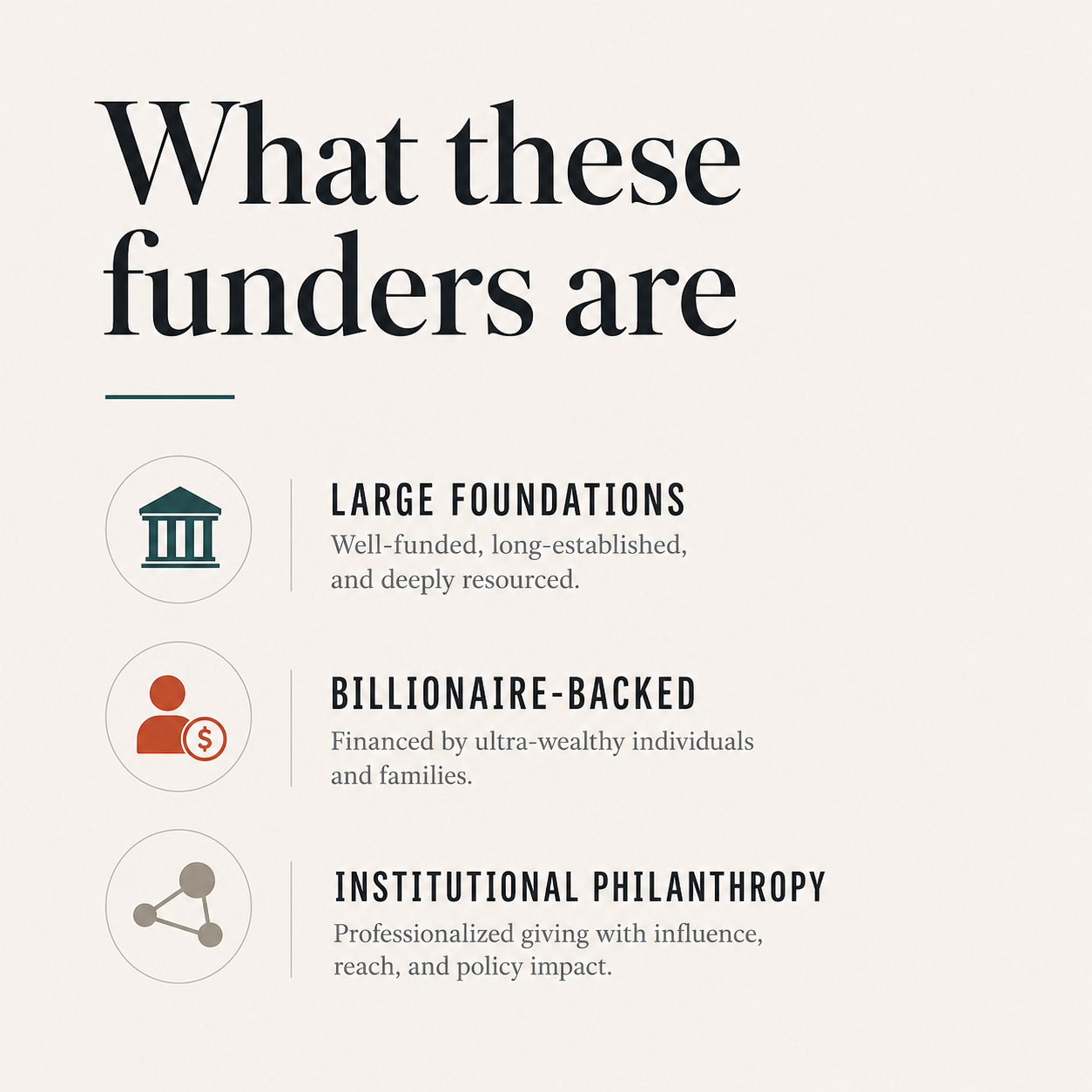
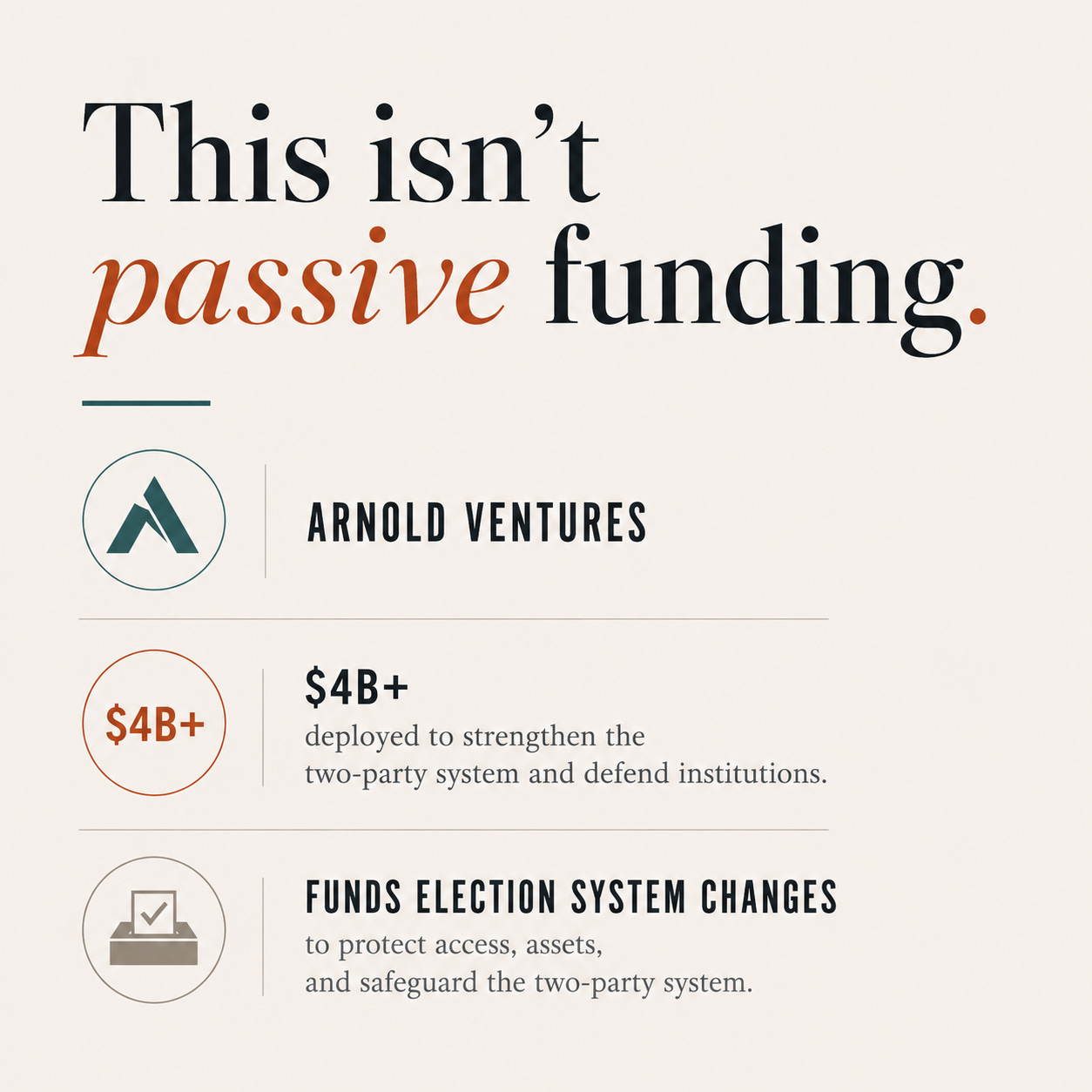
Large foundations (Hewlett, Omidyar, Soros network, Arnold Ventures)
Billionaire / ultra-wealthy donor class involvement
RepresentUs
Board & advisors include:
Jack Abramoff (former lobbyist turned “reform” advocate)
Chapter 3: Not Left. Not Right. The Same Layer Above Both.
Forward Party
Merged with:
Serve America Movement
Renew America Movement
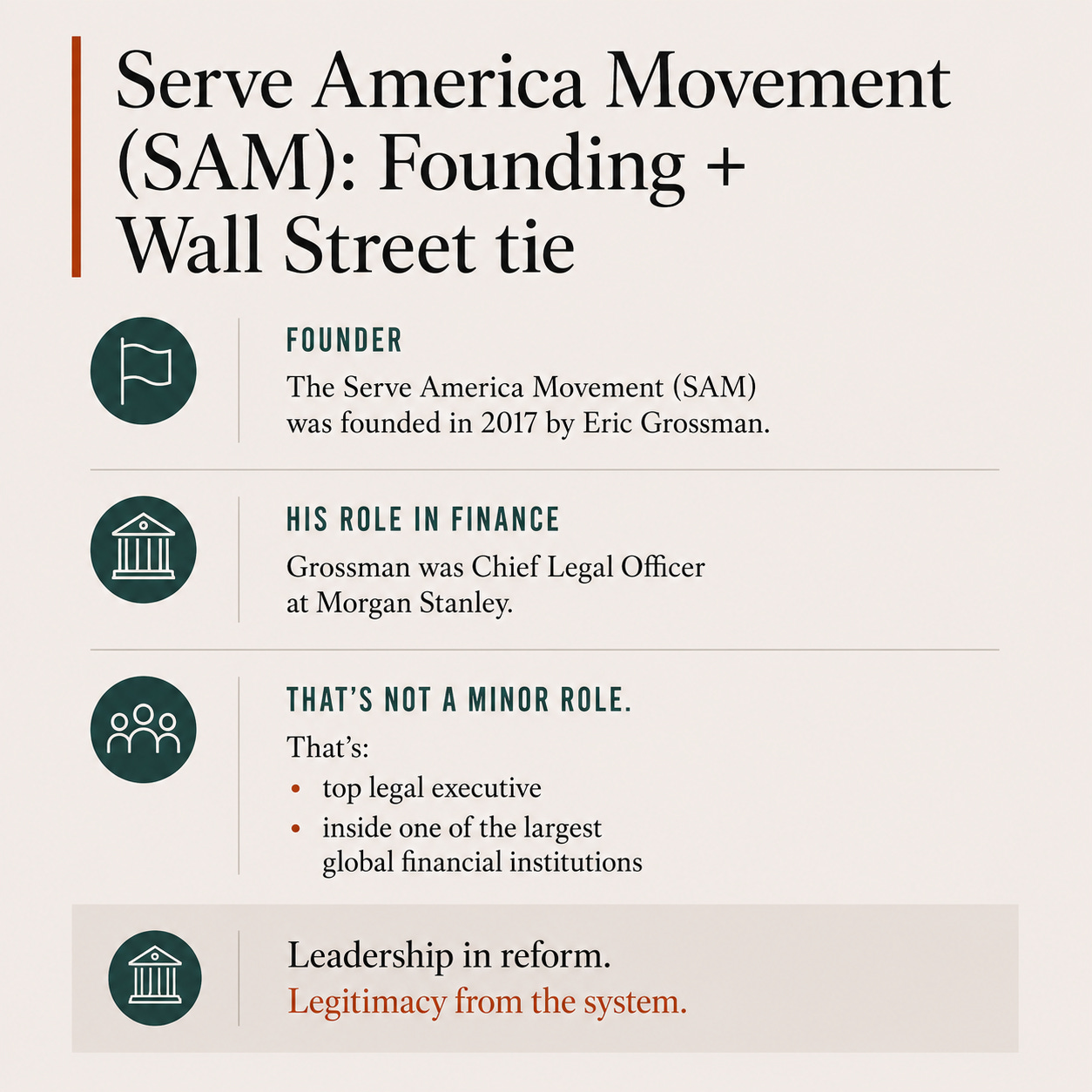
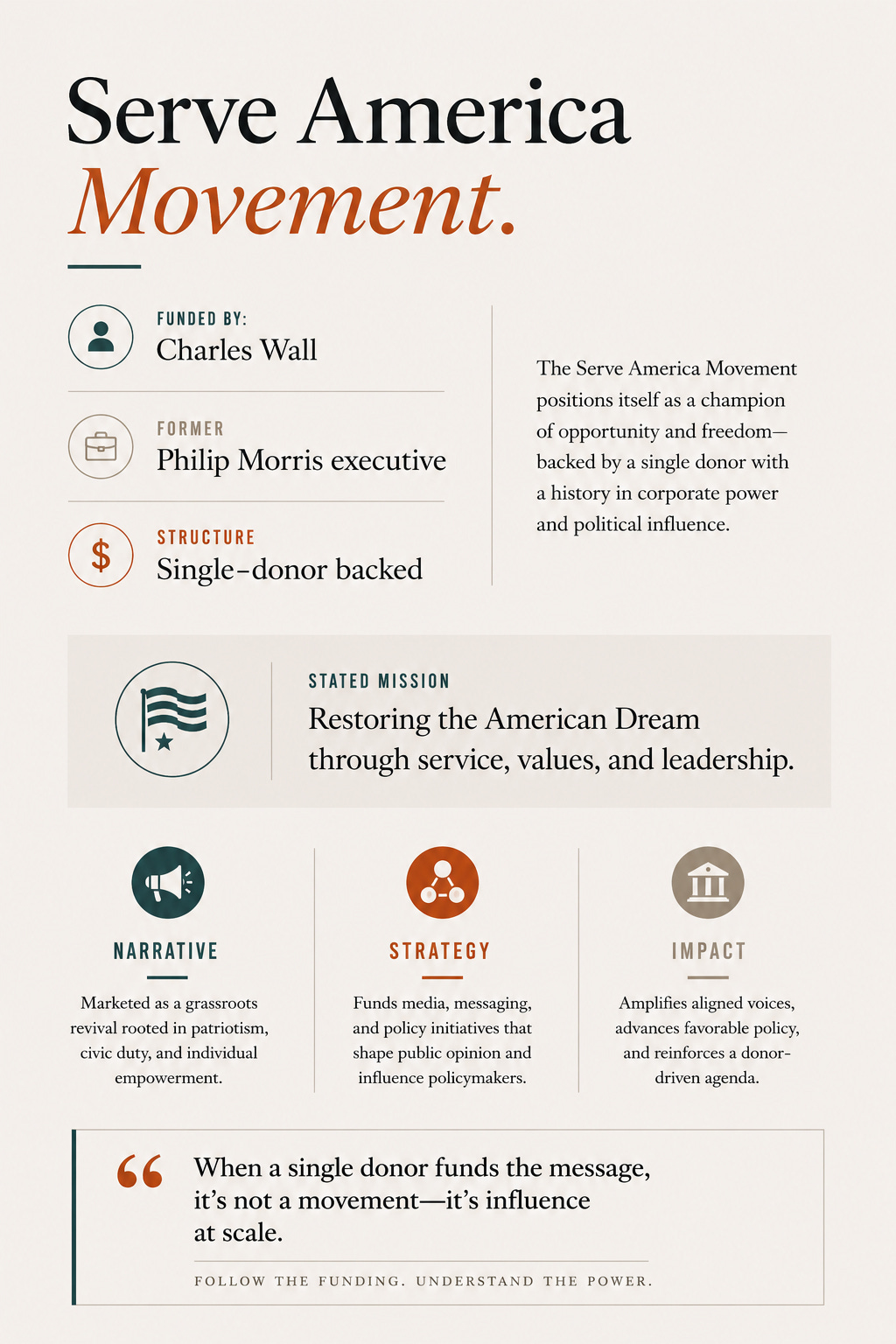
Translation:
Not grassroots-funded
Wealthy executive-backed centrist project
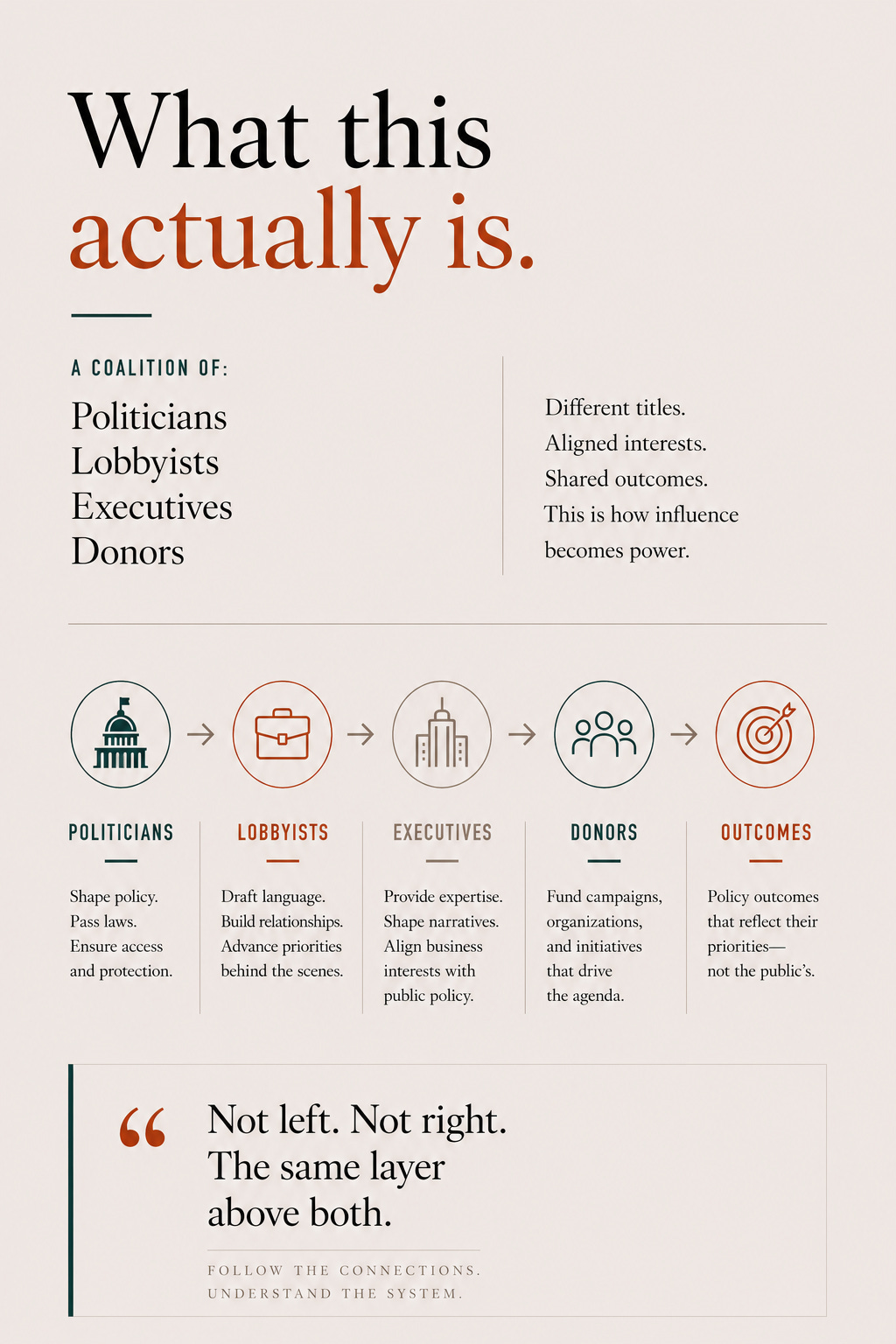
What that means structurally
Hybrid of:
political “reform” movement
elite-led centrist coalition
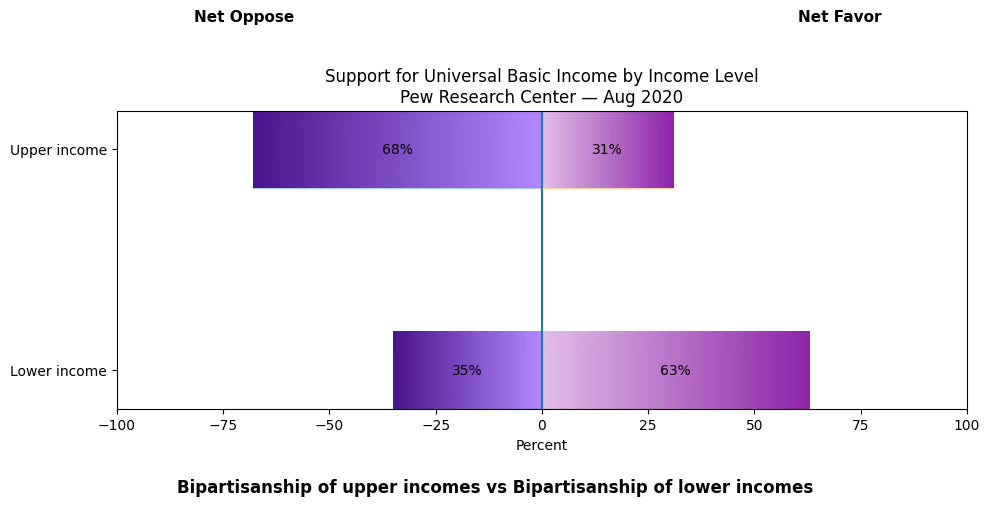
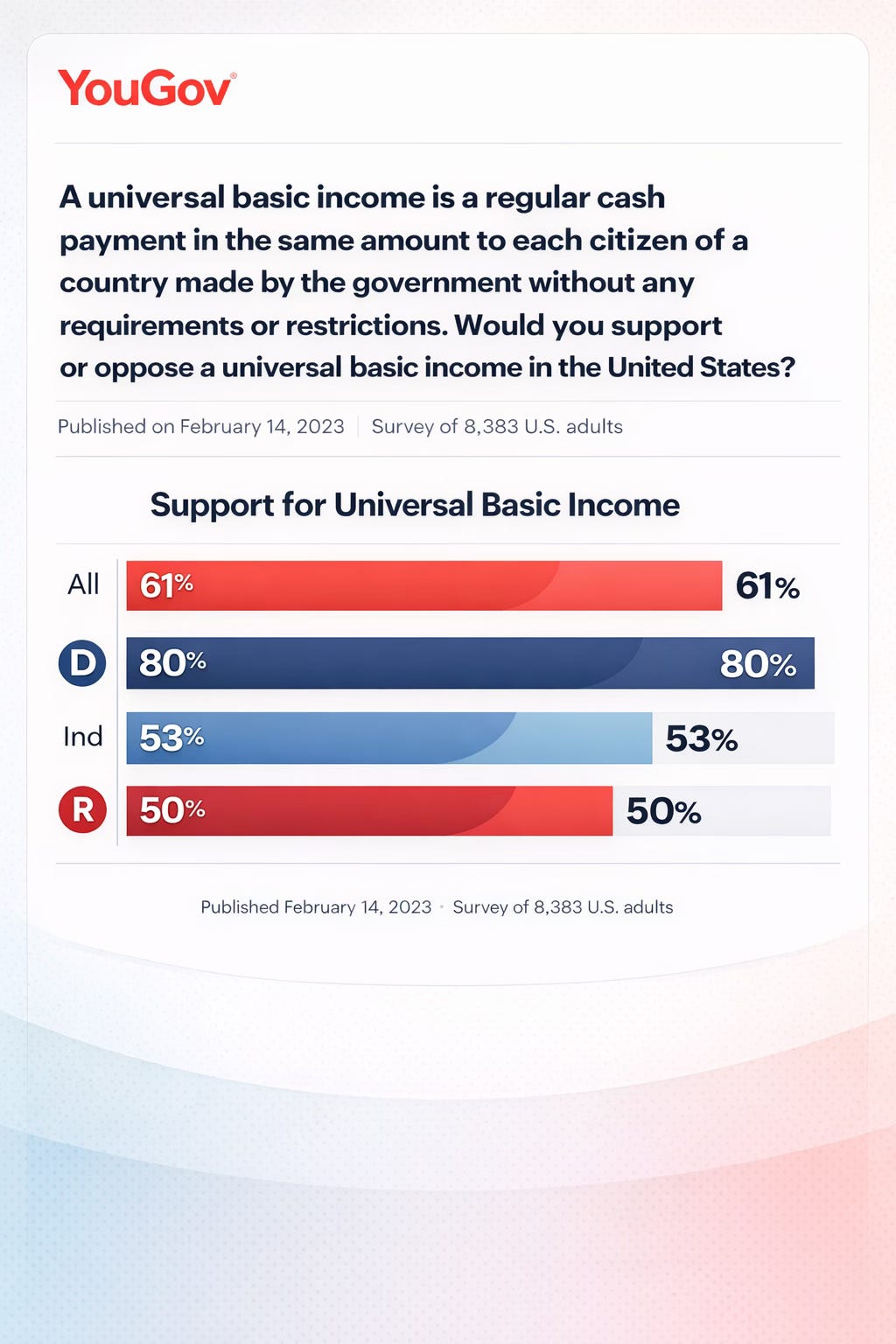
After the merger, the Forward Party abandoned its original draw—Universal Basic Income—calling it too polarizing, despite broad cross-partisan support across the electorate, with opposition concentrated among the highest income.
Forward Party Executive And Board Leadership
Most people think political reform comes from the outside.
New movements. New ideas. New people.
But if you follow the money—and the leadership—you start to see something different. So instead of looking at messaging, I looked at backgrounds.
Not what these organizations say. But who funds them. Who runs them. And what systems they come from.
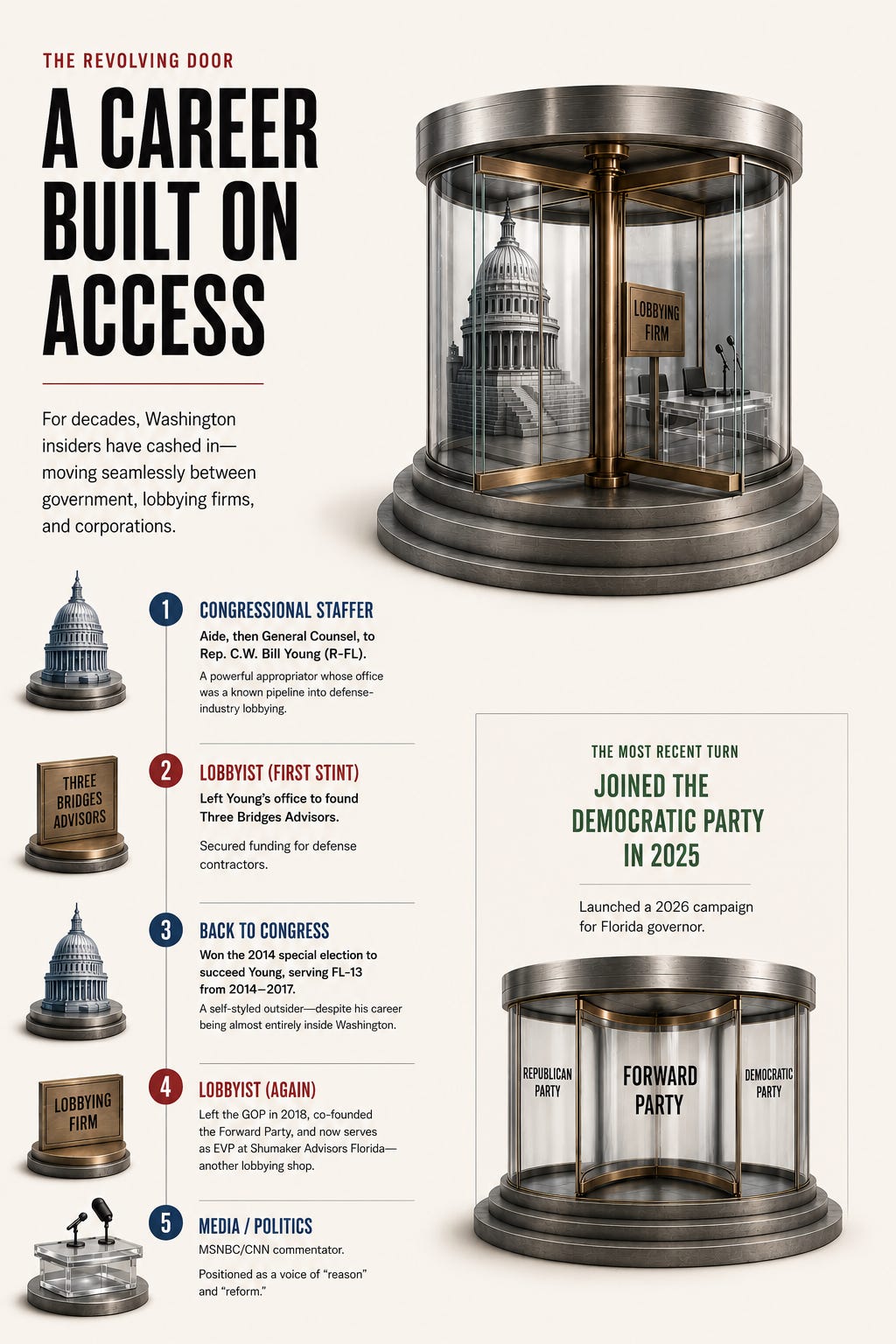
David Jolly — Forward Party Co-Founder & Executive Chairman of the Serve America Movement (SAM)
David Jolly is lobbyist turned politician turned lobbyist. The revolving door didn’t open once for him — he kept walking back through it.
He worked for the Republican congressman who wrote defense funding. Then he lobbied the defense firms that funding built. Then he ran in the GOP to replace that congressman — as the “outsider.” The lobbyist who built his career on special-interest money swore off PAC contributions. Convenient timing.
Then he lobbies again, under a different letterhead — and co-founds the post-merger, newly funded Forward Party.
Now he’s running for governor — as a Democrat. Not conviction. Timing. The party out of power turns out harder when the party in power is struggling. Right now, that’s Republicans.
The corporate revolving door doesn’t need you to forget your last spin. It just needs you to keep spinning — toward whichever door is opening.
Translation:
Classic corporate-government revolving door profile
congressional staff → lobbyist → politician → “reform” advocate
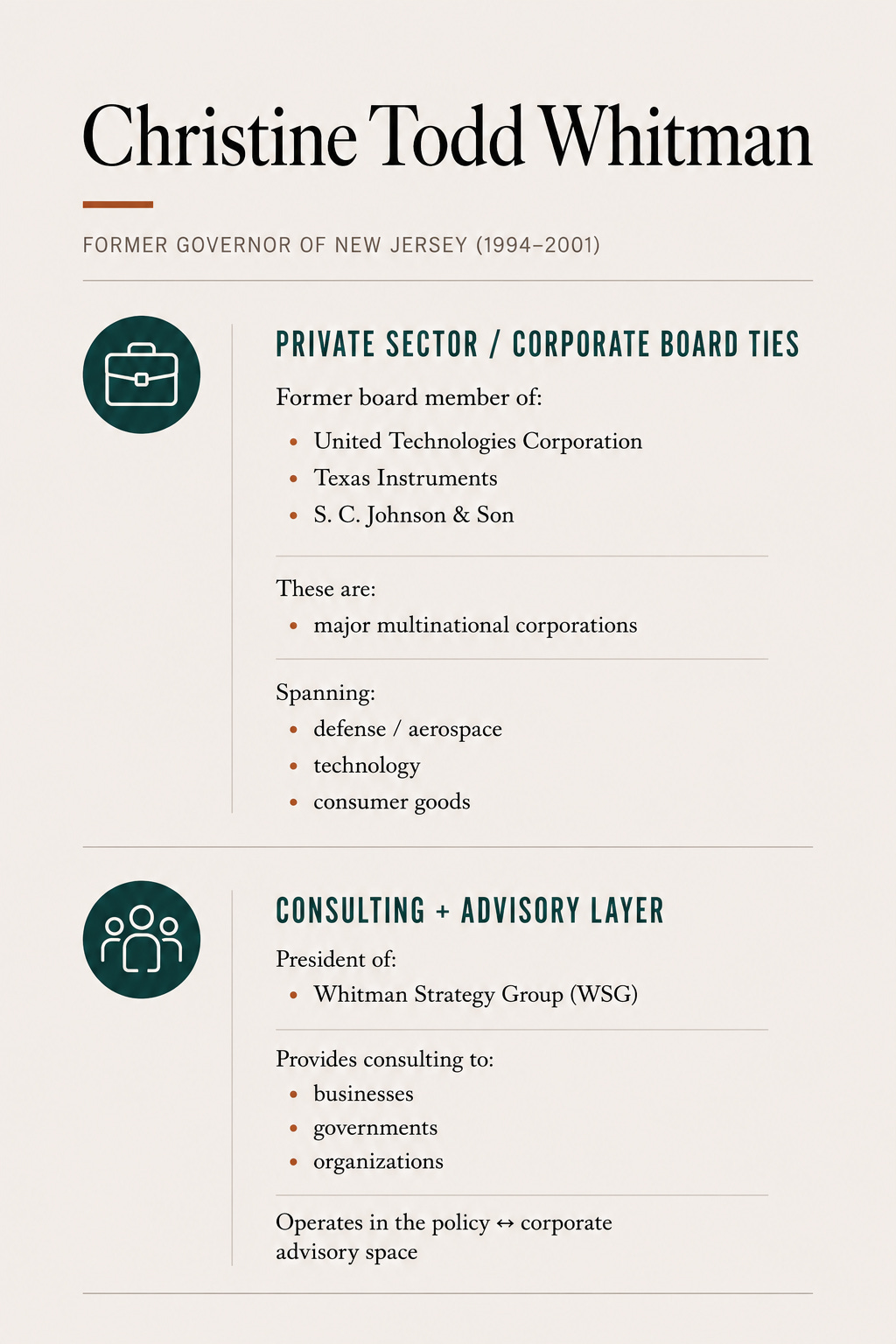
Christine Todd Whitman — Founding Co-Chair
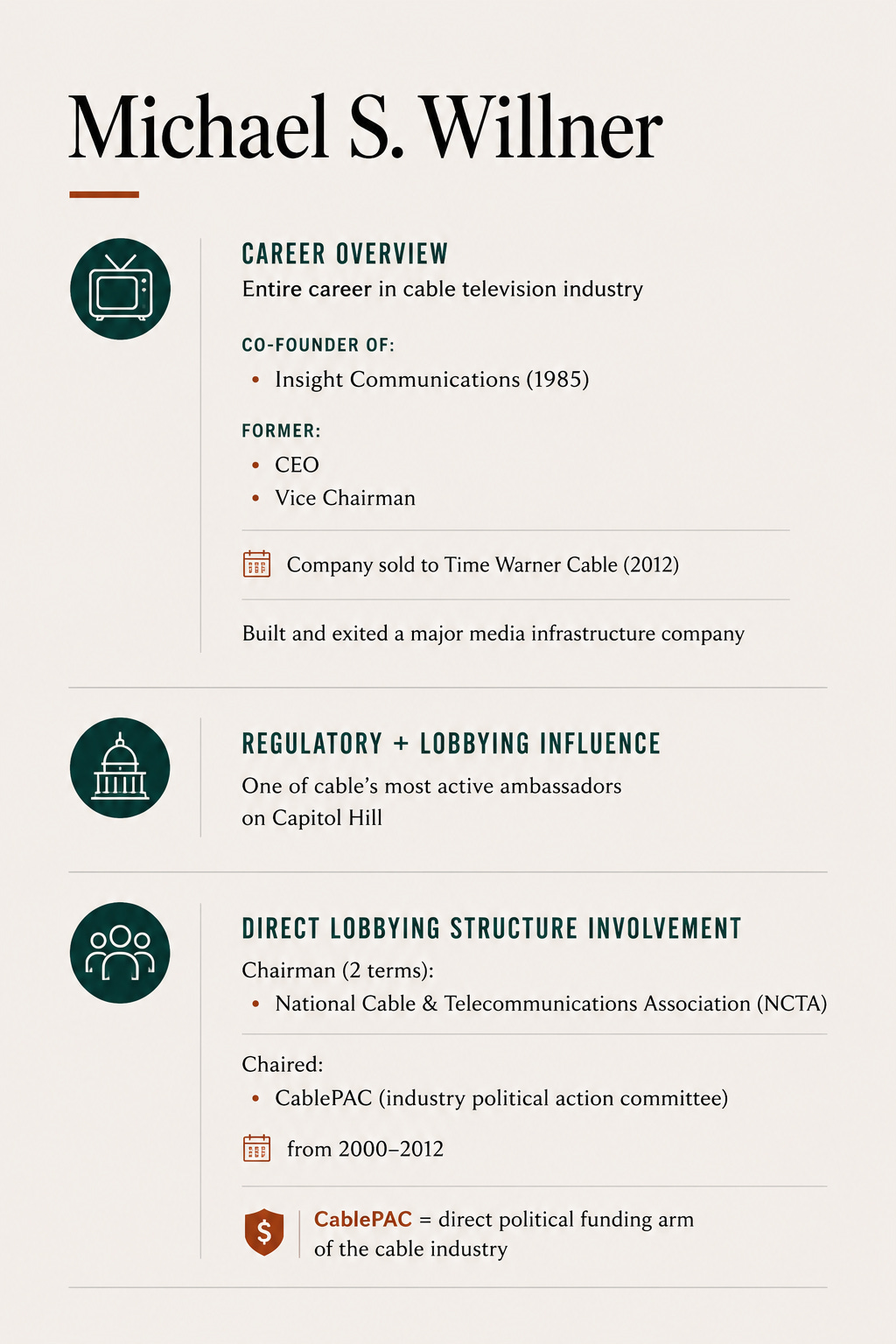
Michael S. Willner — Founding Co-Chair
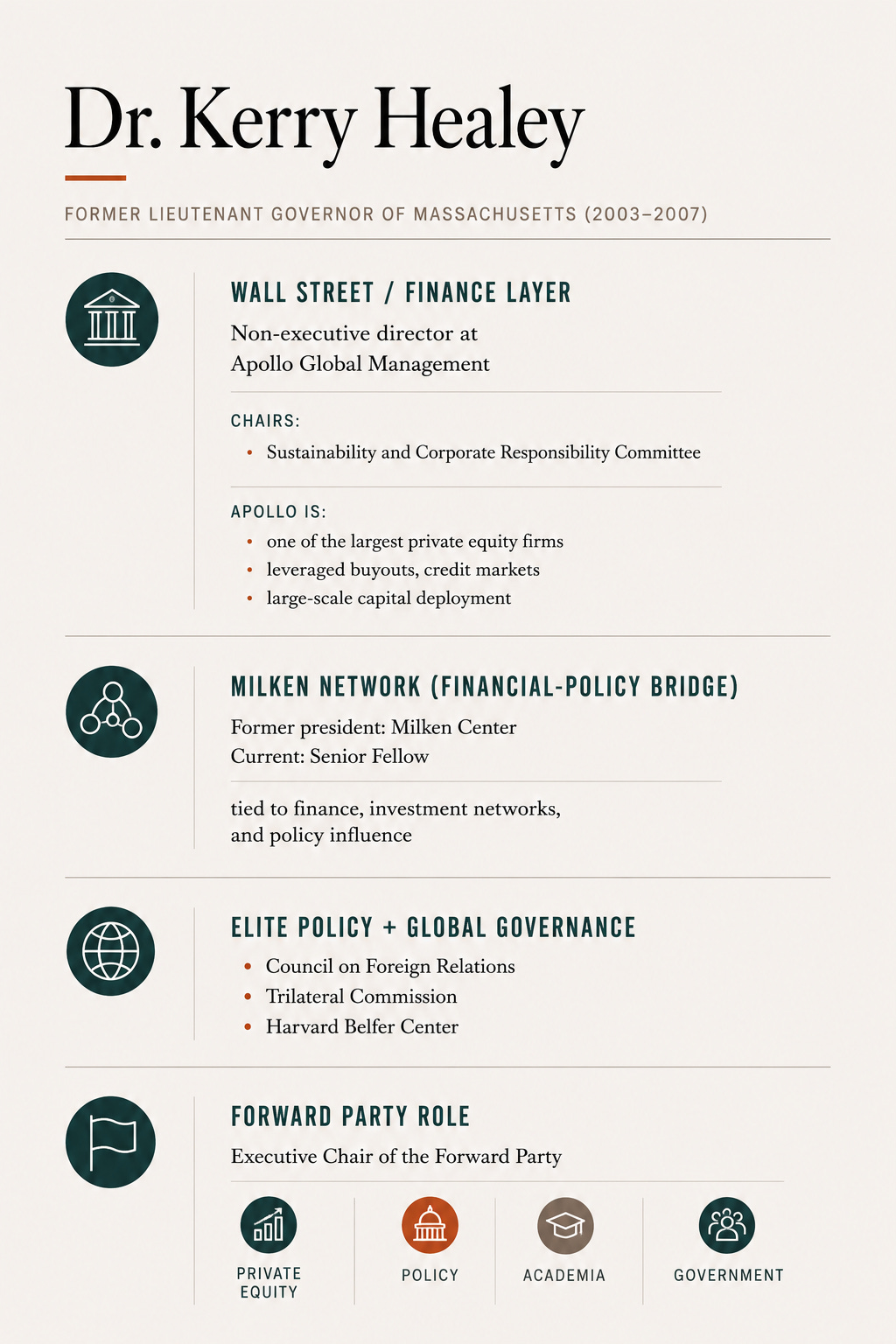
Kerry Healey — Executive Chair
Key financial tie:
Married to Sean Healey, a billionaire hedge fund manager
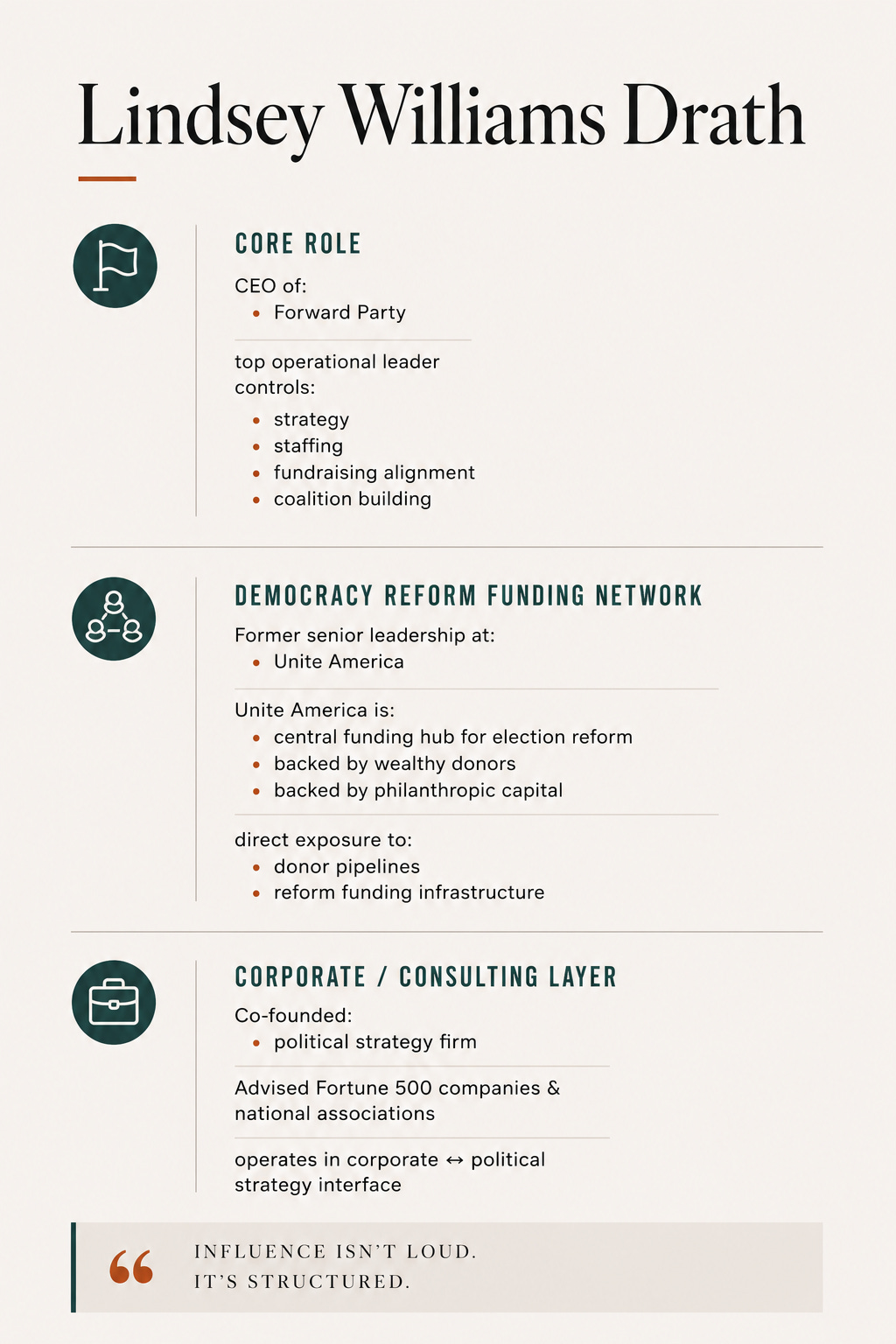
Lindsey Williams Drath — CEO
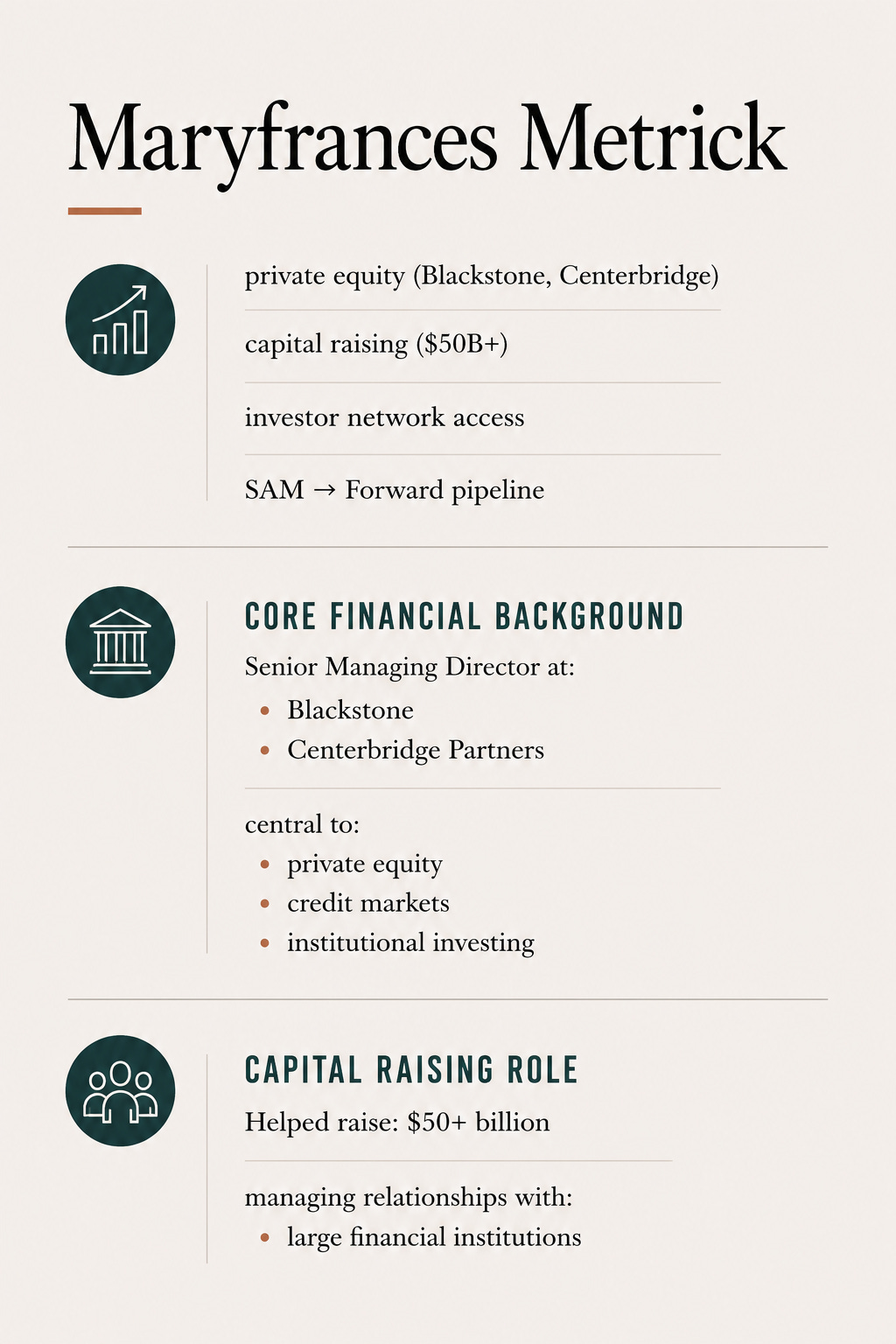
Maryfrances Metrick — Board Member
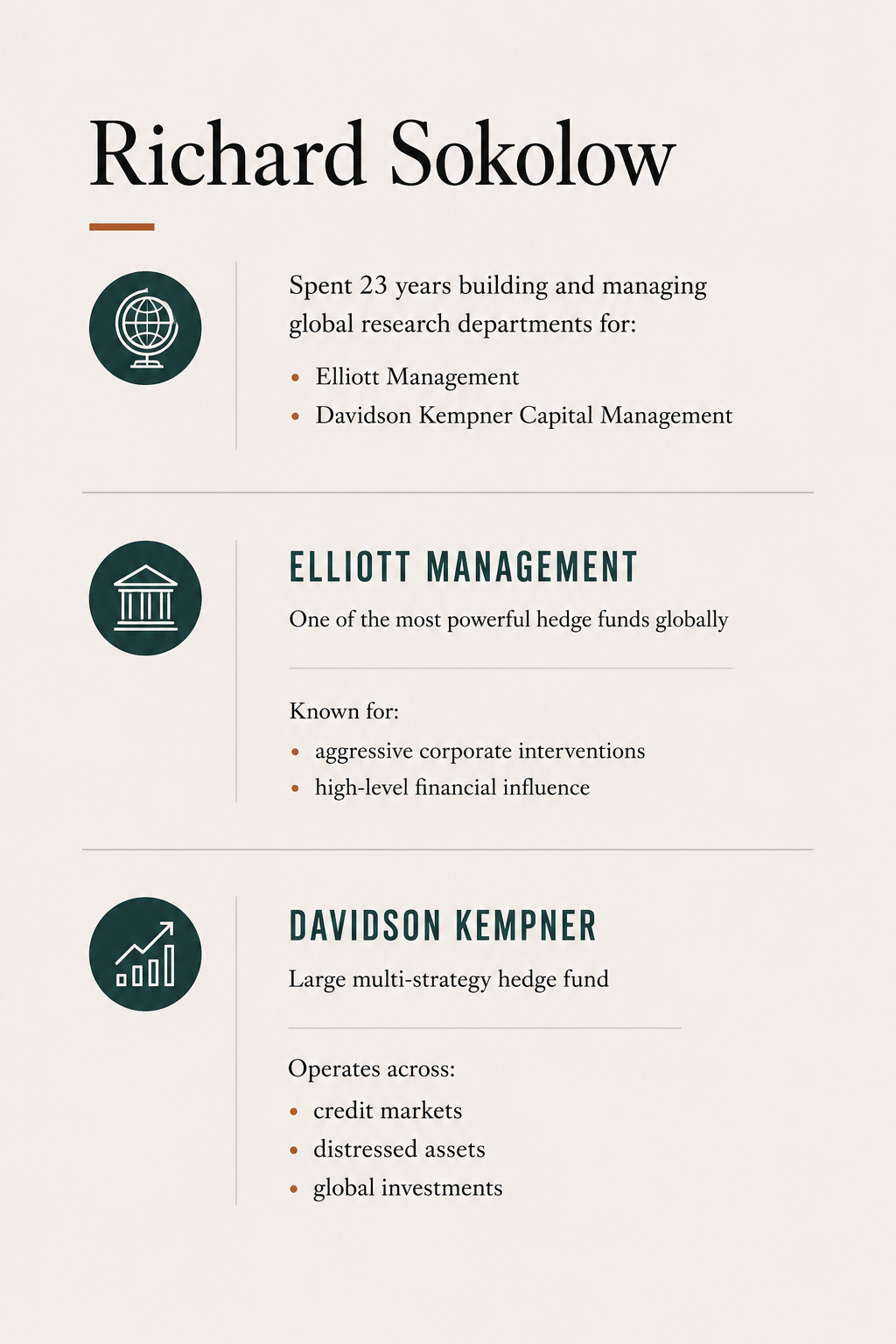
Richard Sokolow — Board Member
Brandon Rochon — Board Member
Resume: Corporate branding + persuasion
Jackie Salit — Board Member
Voter mobilization infrastructure
Resume: Independent coalition building for Michael Bloomberg
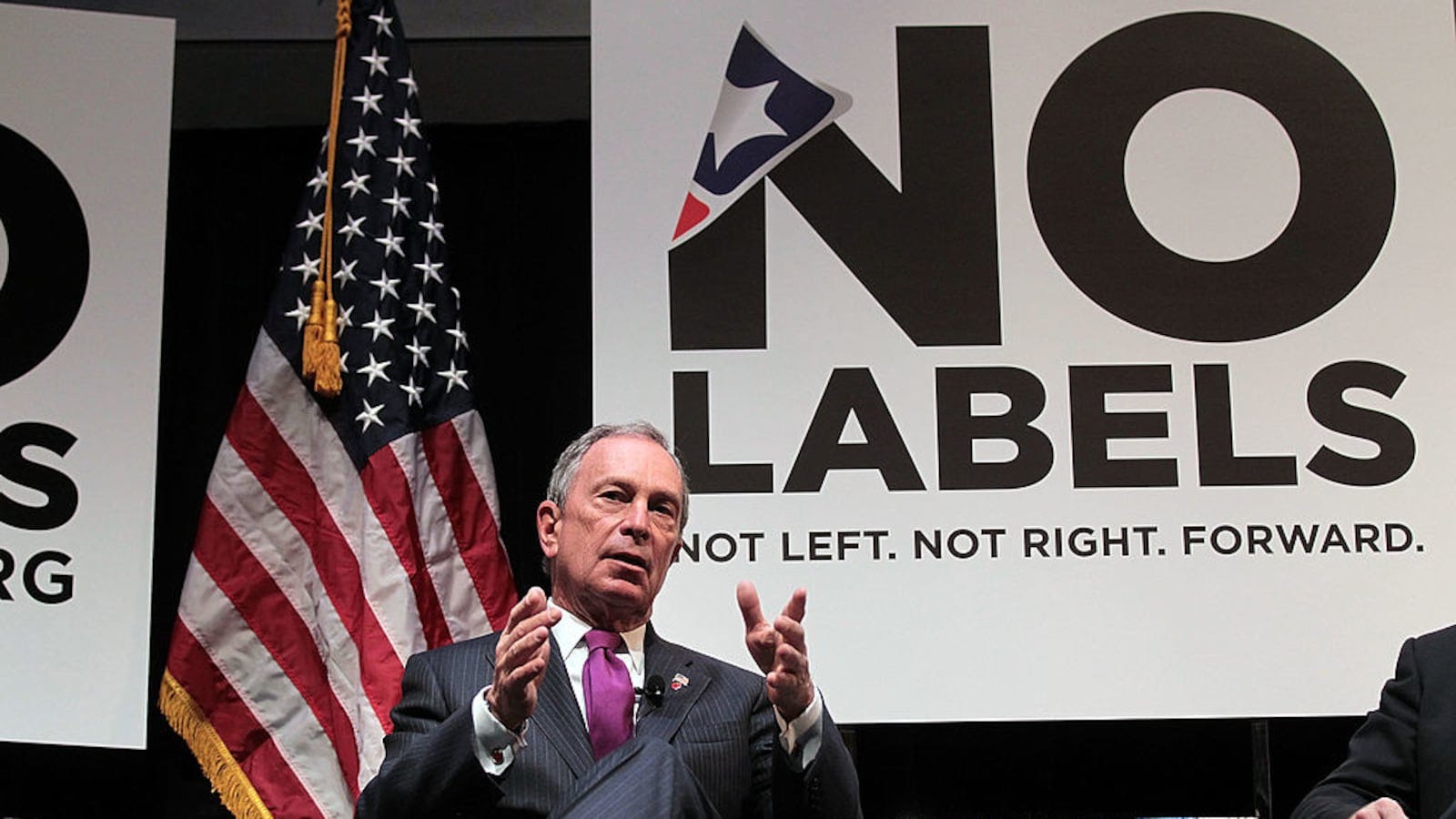
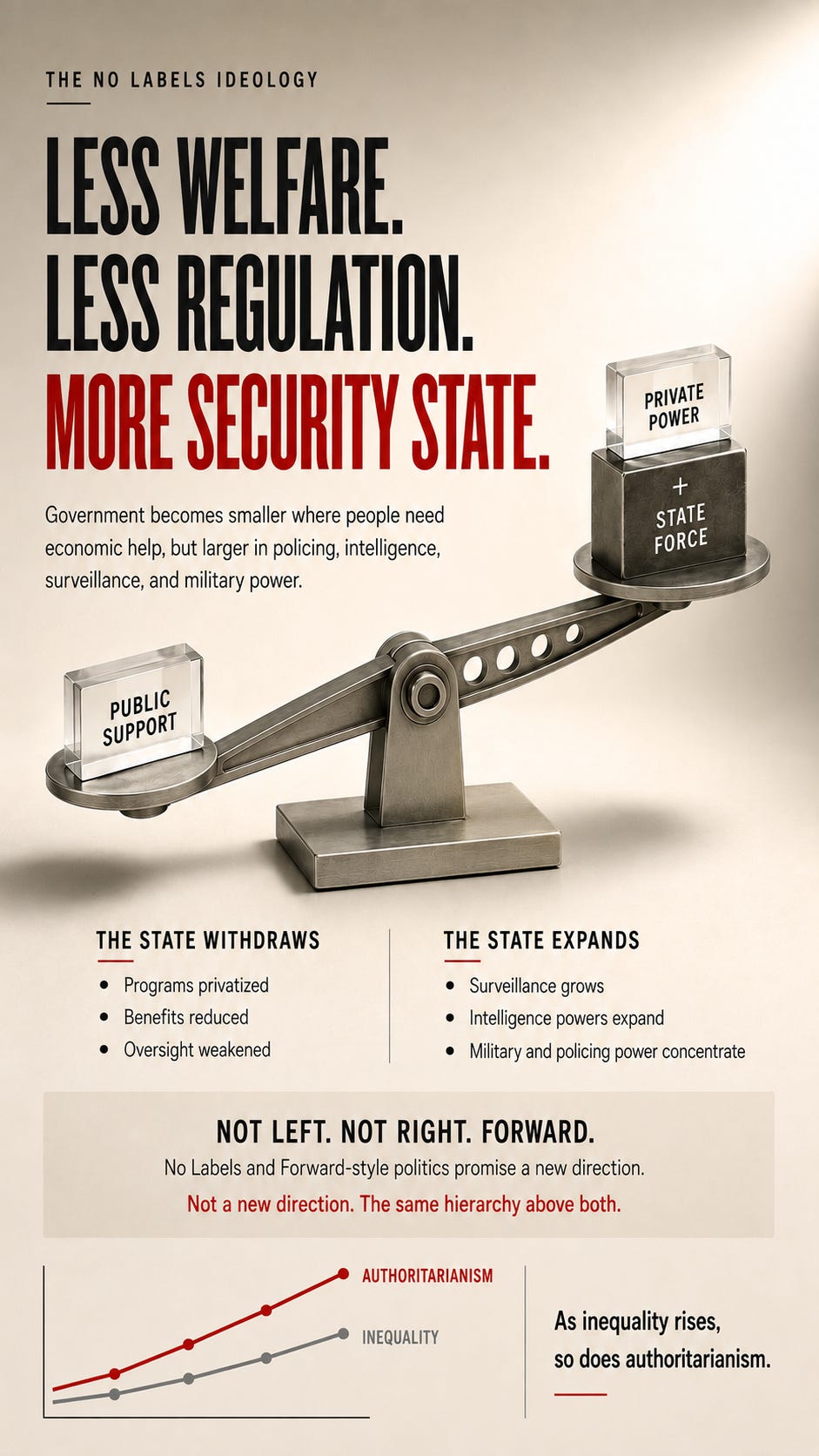
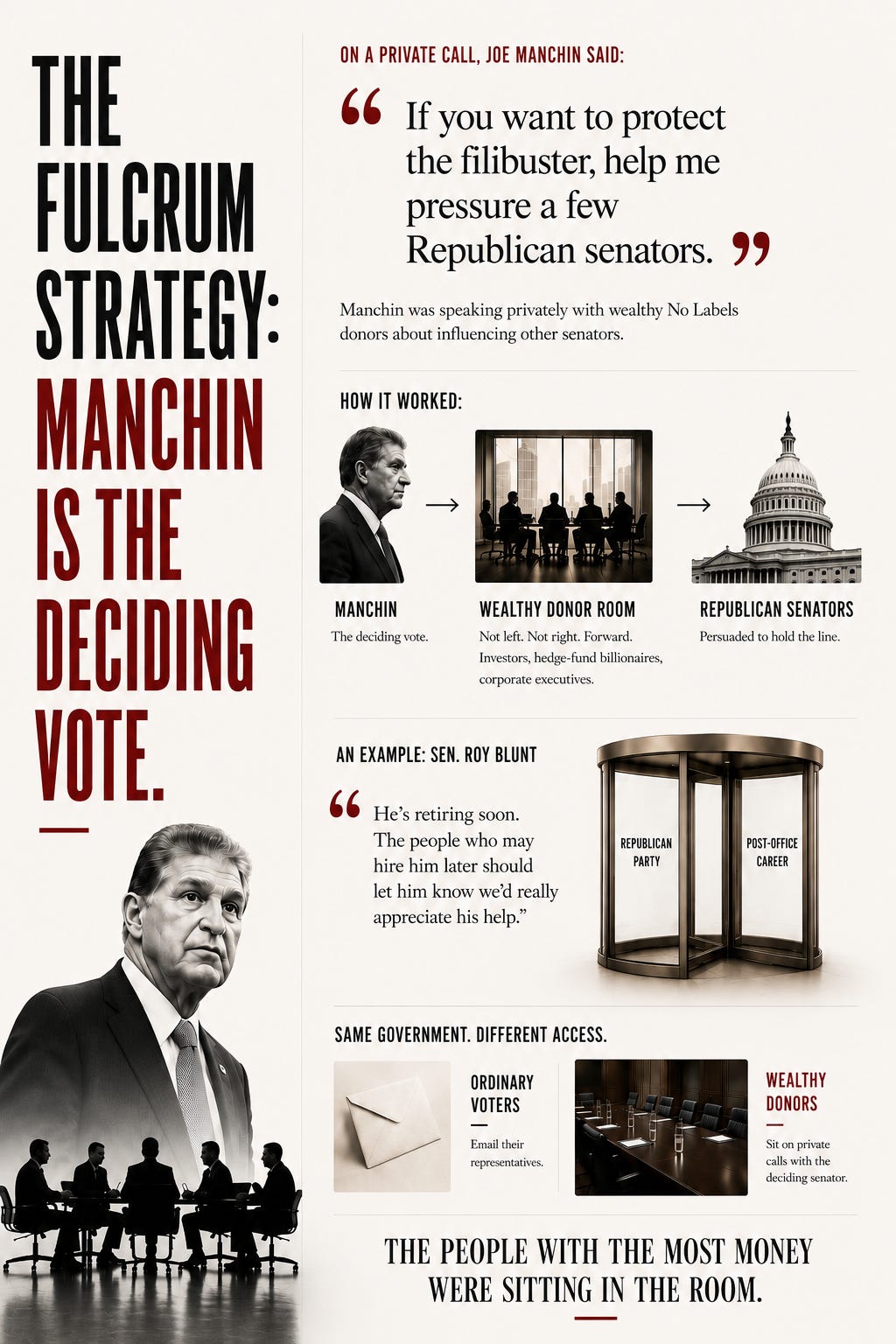
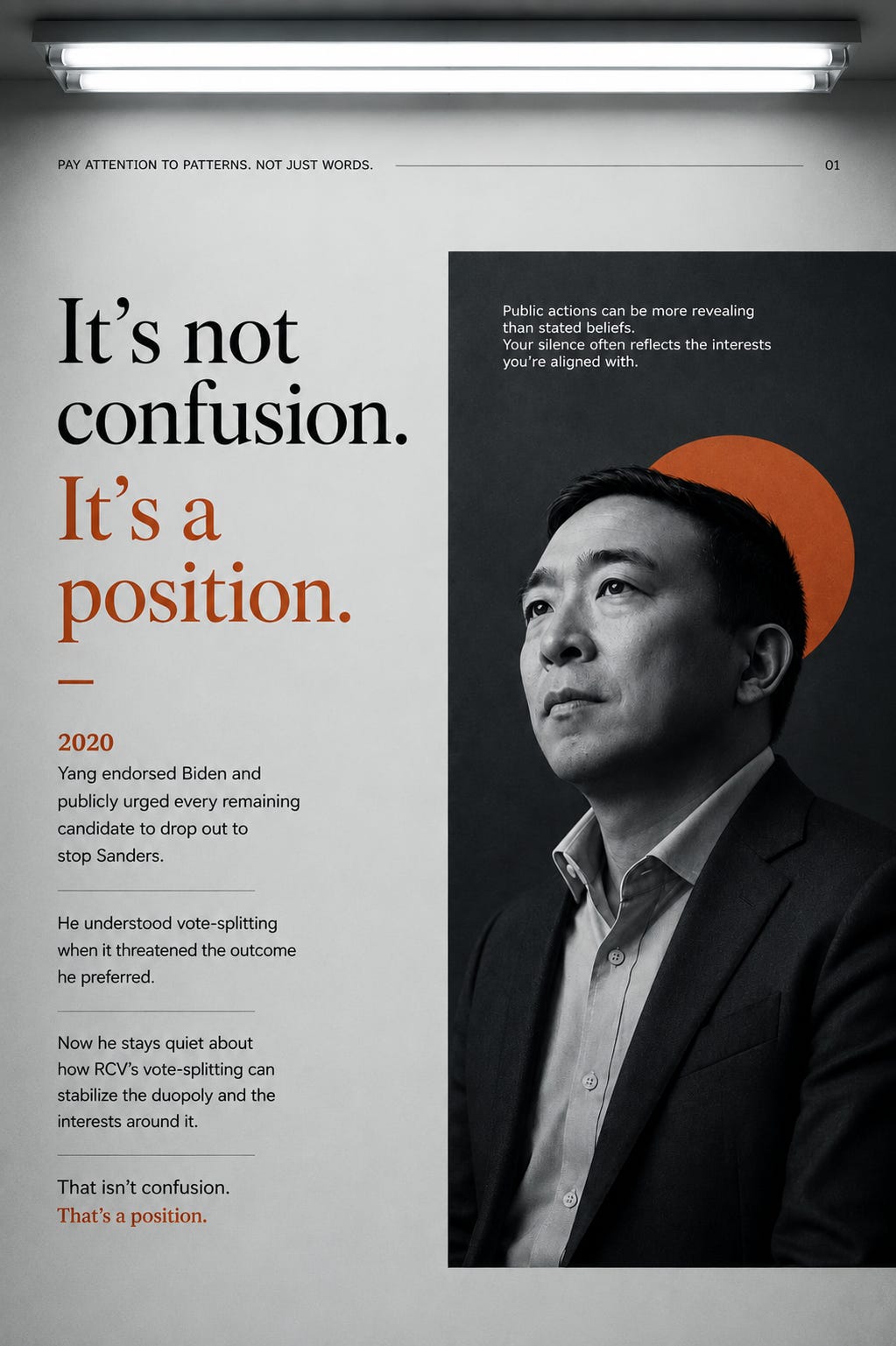
The strategy that Andrew Yang's (not left, not right) Forward Party has been hammering is what they call the "fulcrum strategy": they can demand concessions from either major party before anything gets passed. They don't need a majority—just one or more self-proclaimed "independents" elected who can essentially act as a filibuster, corporate America's kill switch on bills it doesn't want passed, in Congress.
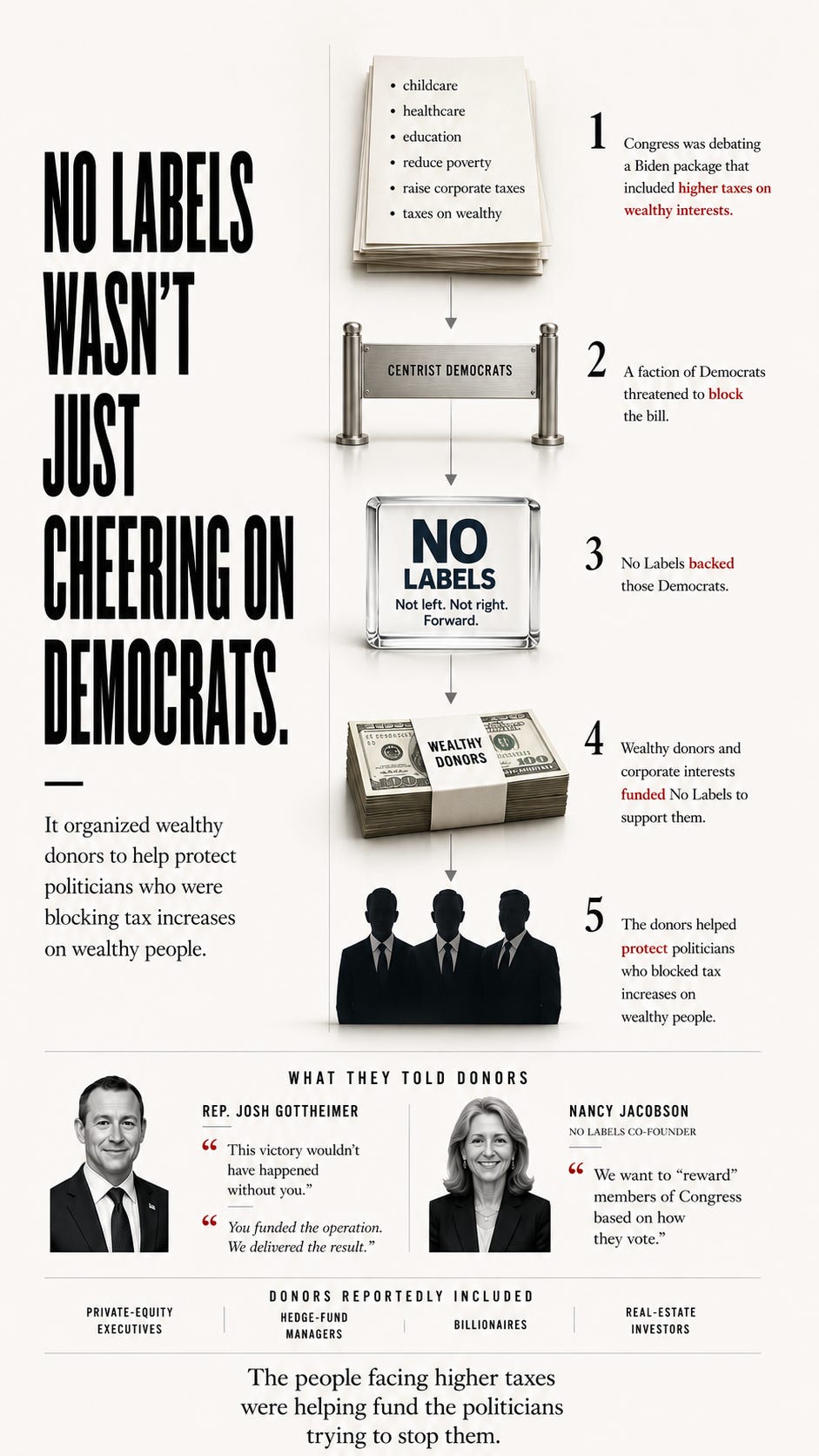
Now look at the backgrounds side by side. Not the messaging. Not the branding. The actual networks.
You start to see the same layers repeat:
Capital
Hedge funds.
Private equity.
Institutional investors.
People who don’t just participate in markets—they allocate capital at scale.
Fundraising Infrastructure
Not just money—but the people who raise it. Tens of billions in capital flows. Institutional relationships. Investor networks that sit above individual companies or campaigns.
Lobbying + Political Funding
Trade associations. PACs. Congressional testimony. Direct involvement in how policy gets shaped—and funded.
Government + Corporate Boards
Cabinet-level roles.
Governorships.
Board seats at major multinational corporations.
The same individuals moving between:
public office
corporate governance
policy influence
Donor Networks + Reform Funding
Foundations. Political funding hubs. Democracy reform organizations.
The same donor class funding:
media
policy
advocacy
“reform” efforts
Messaging + Narrative Control
Global advertising. Brand strategy. Media appearances. Not just shaping products—but shaping how people interpret reality.
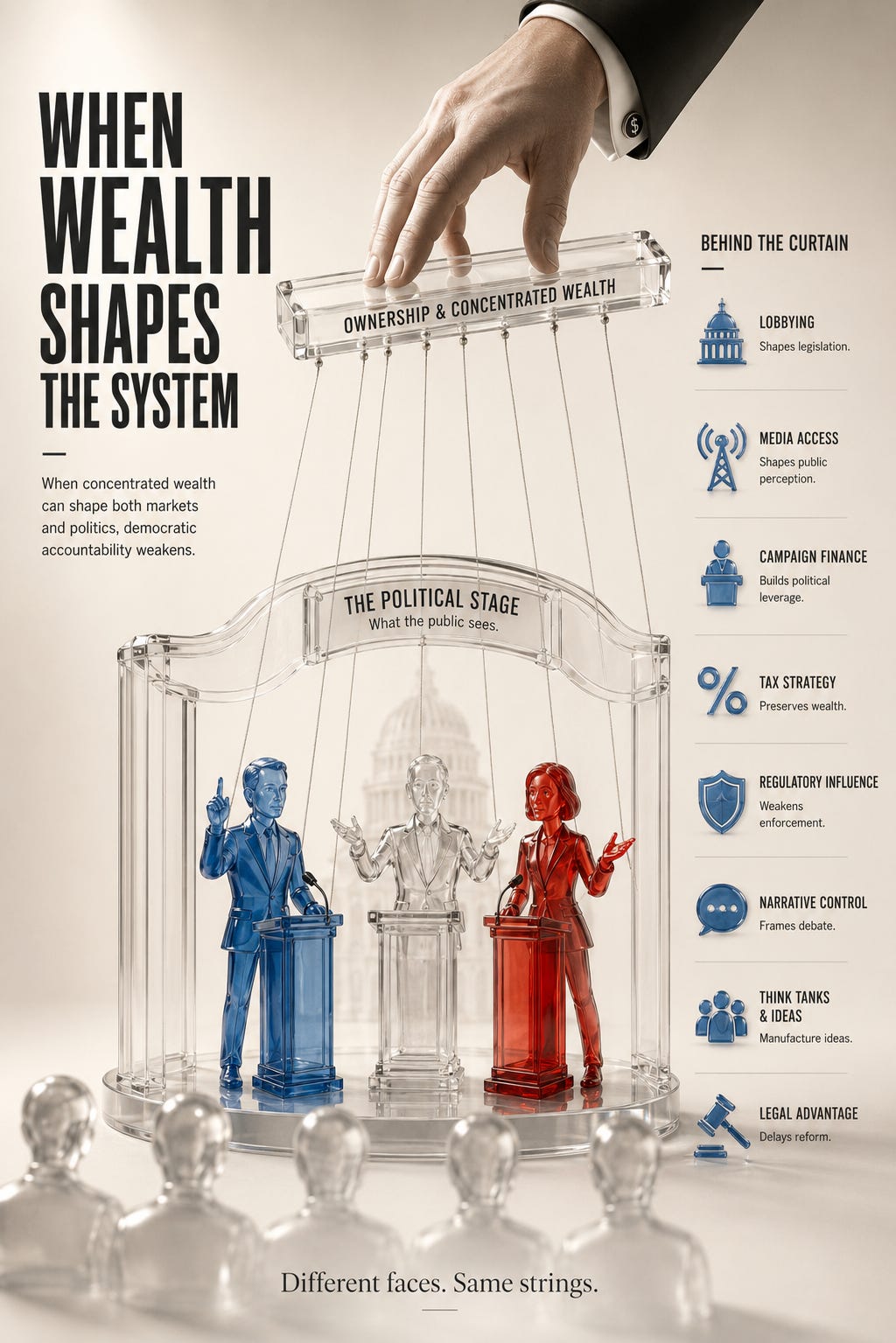
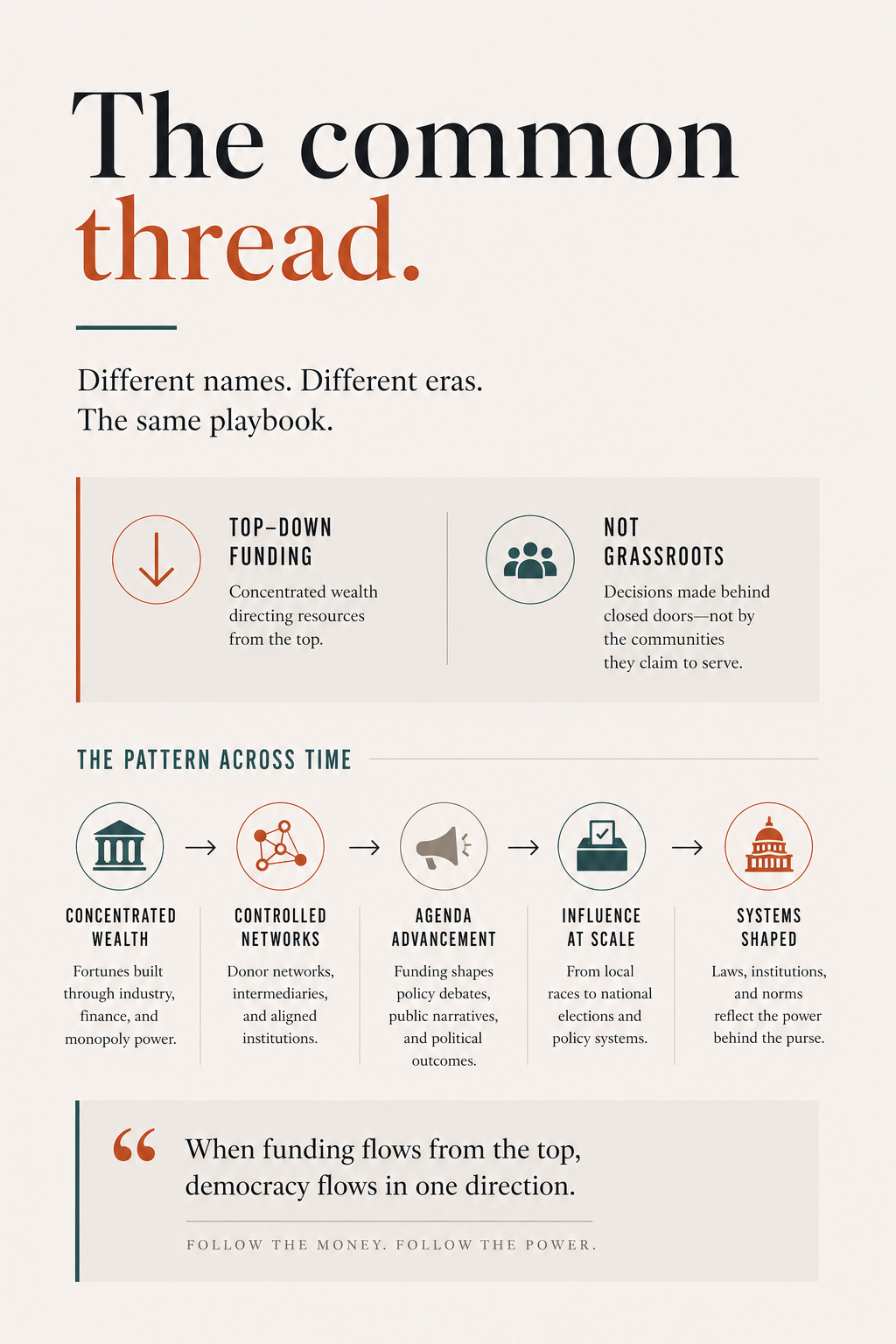
The same types of networks that already shape the system are now: funding, staffing, and leading the reform efforts meant to change it.
Andrew Yang’s Forward Party = coalition of:
former revolving door politicians
former lobbyists
business executives
wealthy donors
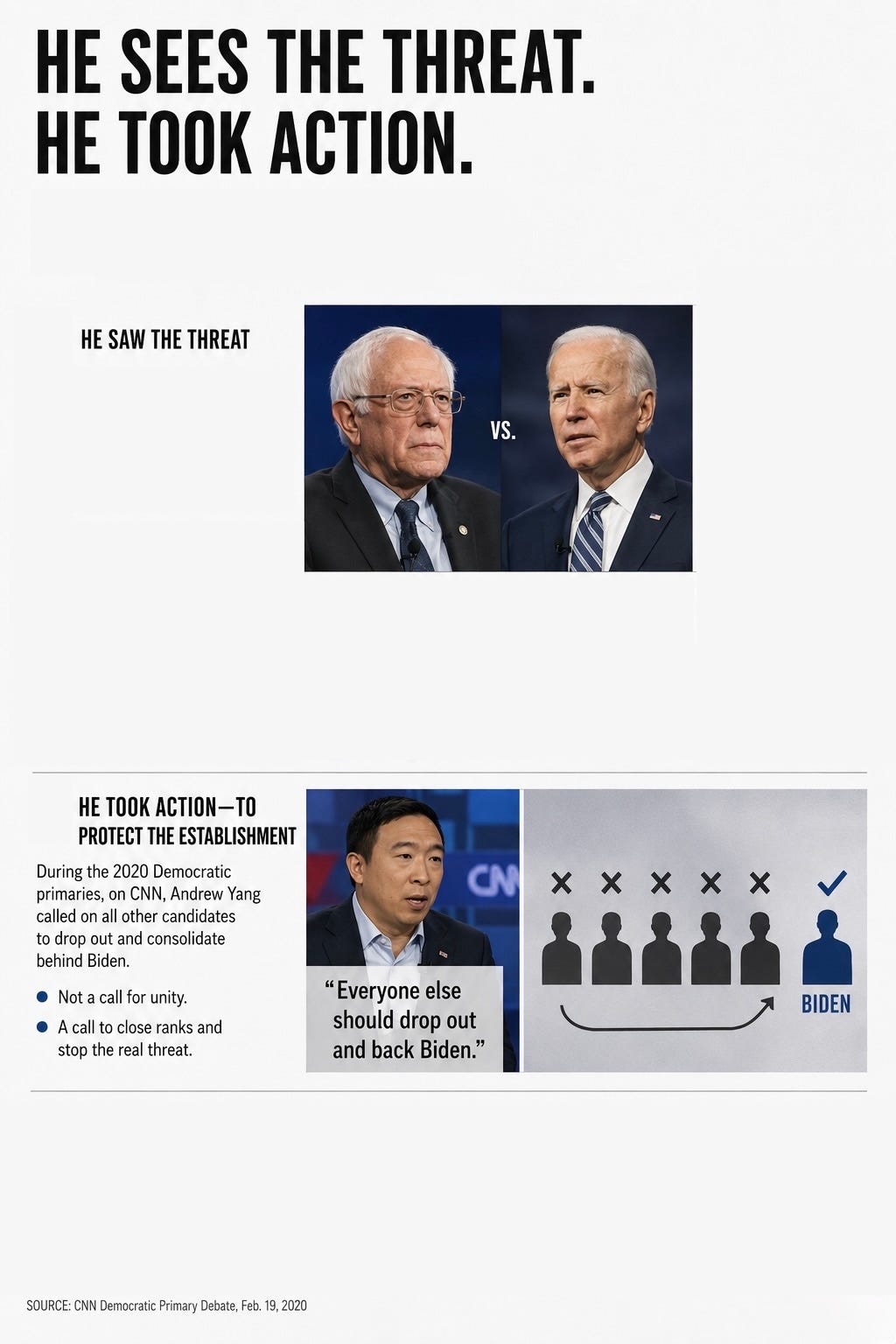
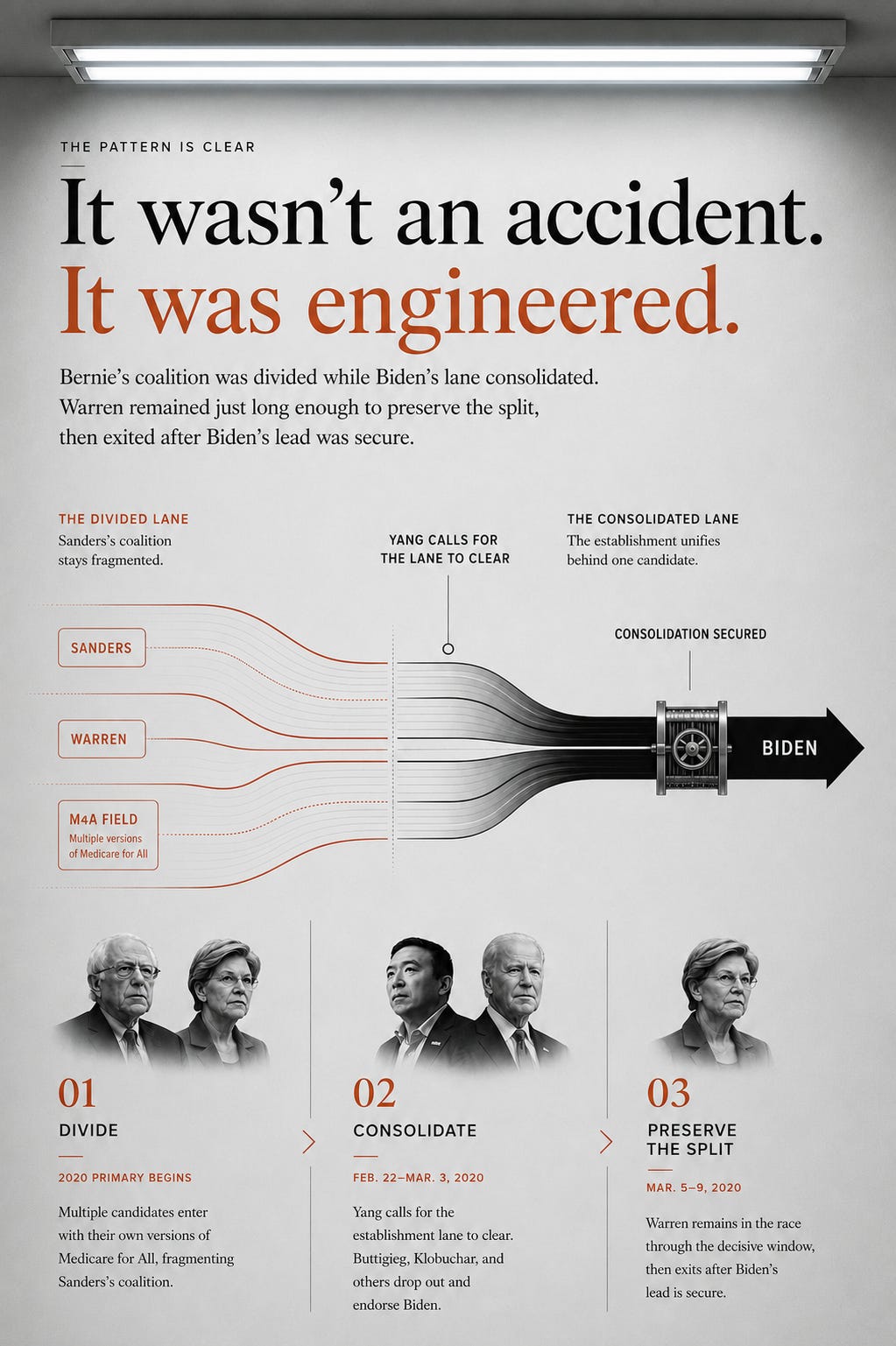
The system doesn’t just defend itself. Sometimes, it redesigns itself.
The spoiler isn’t always who you think. Sometimes it’s the assumption that reform comes from outside the system when it’s being built from within it.
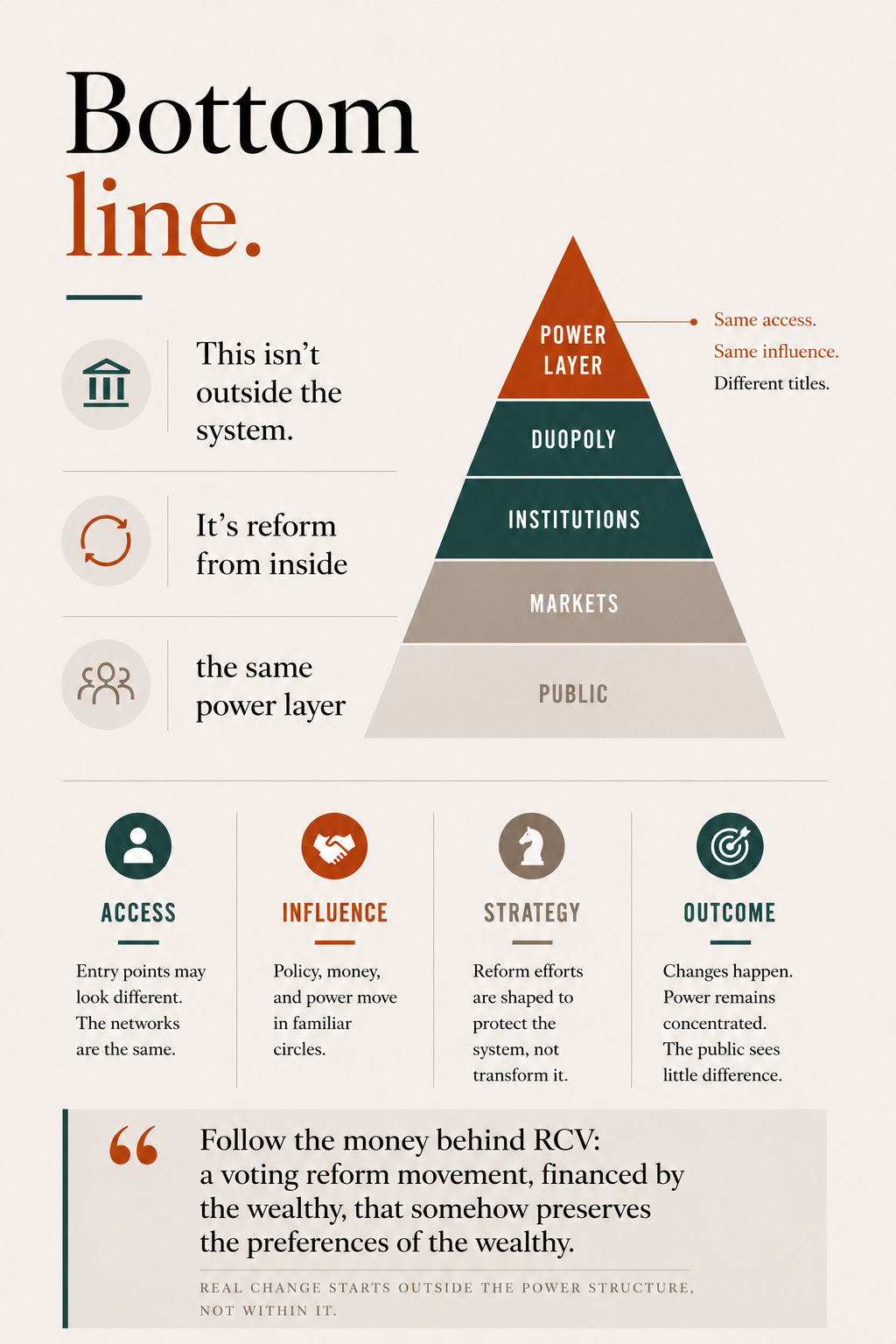
It’s not outside the system.
It just looks like it.
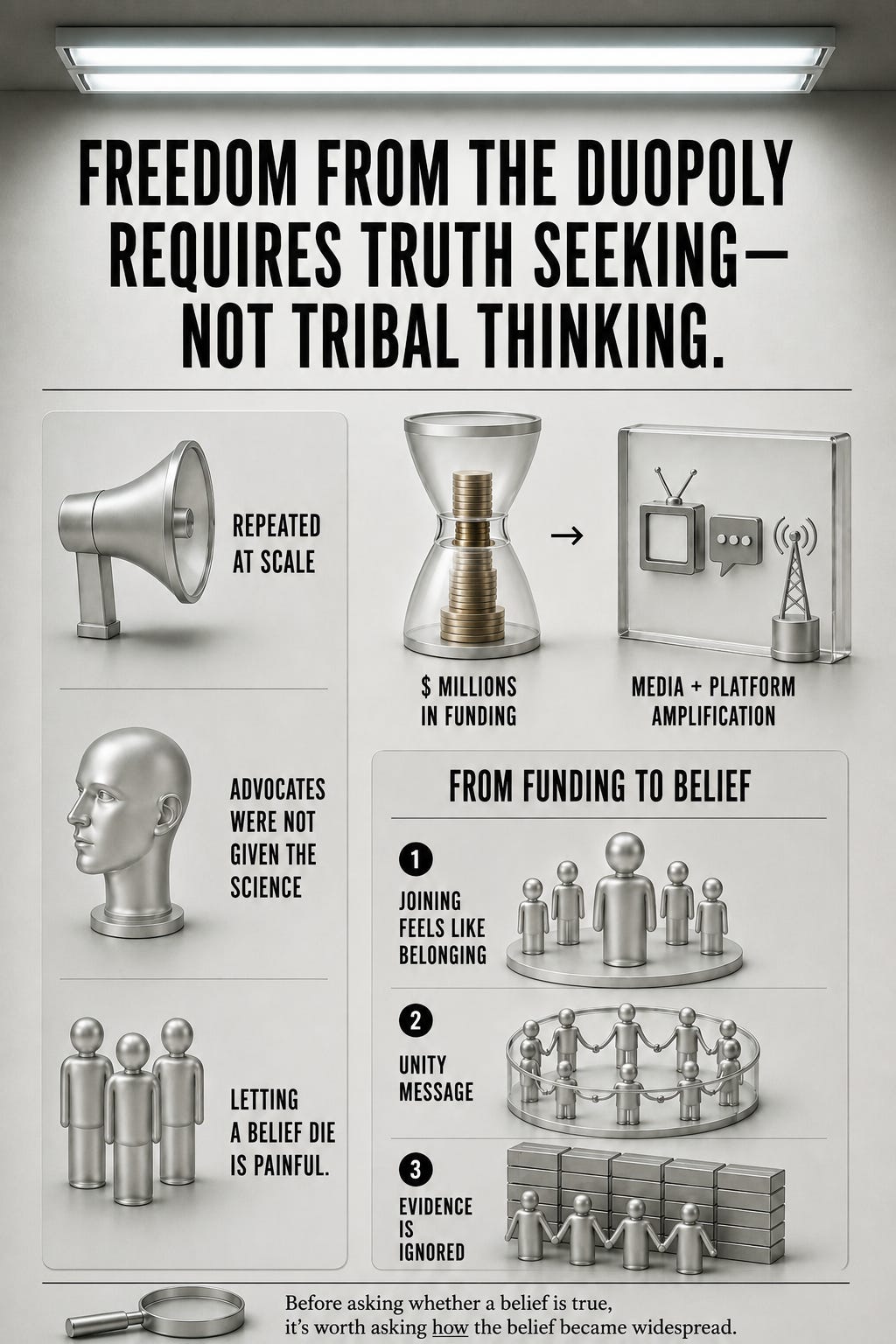
Chapter 4: Duopoly Voting Rebranded
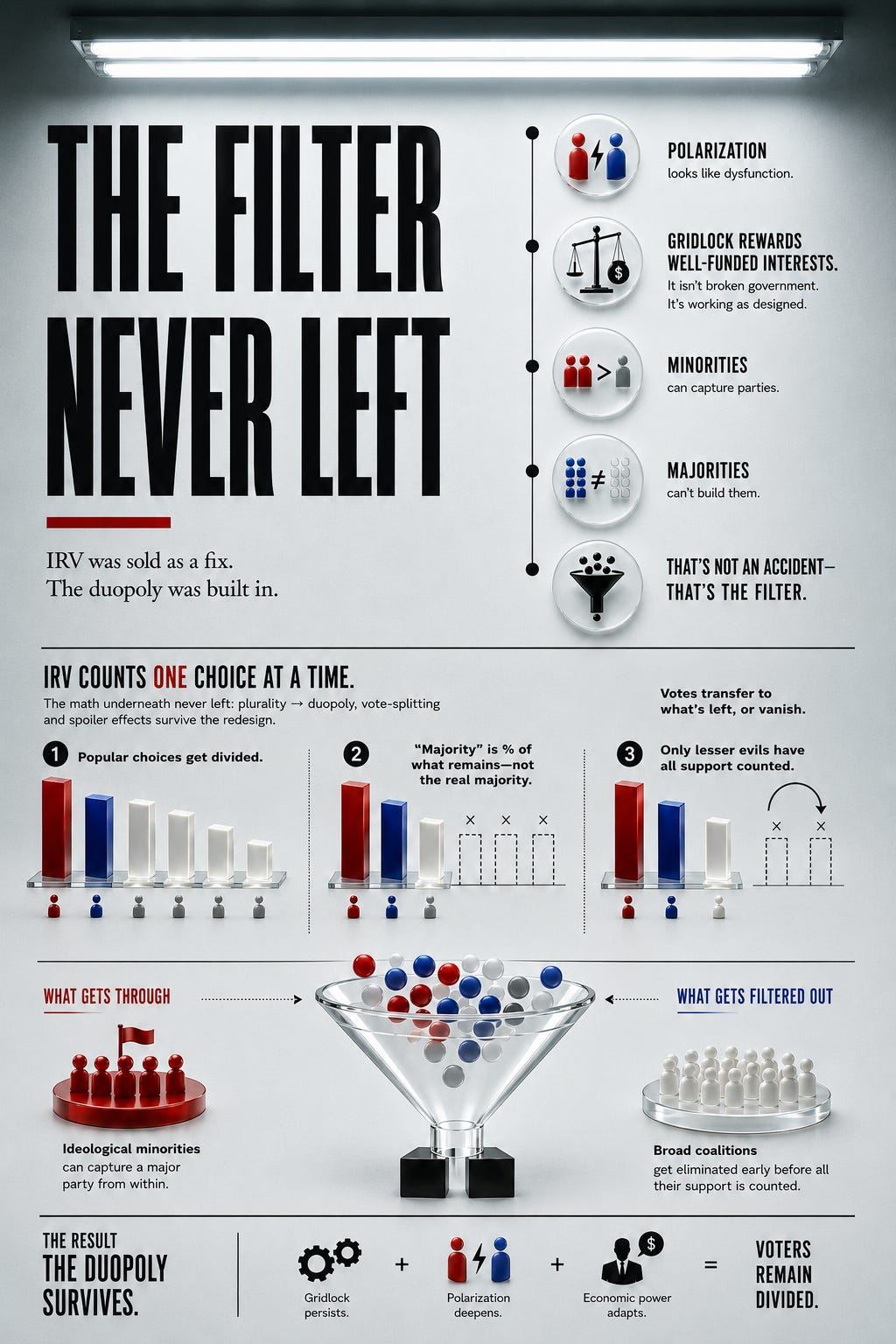
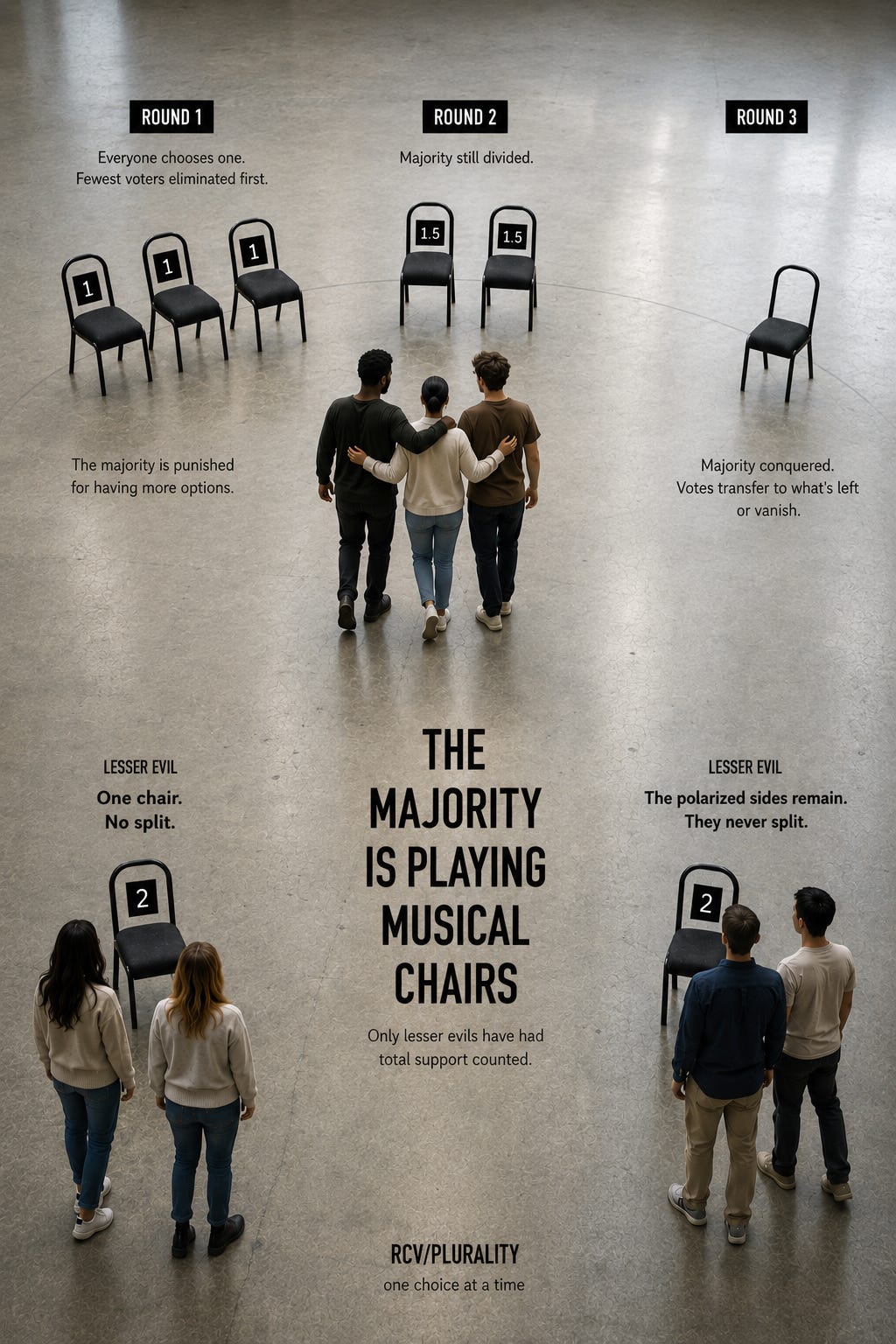
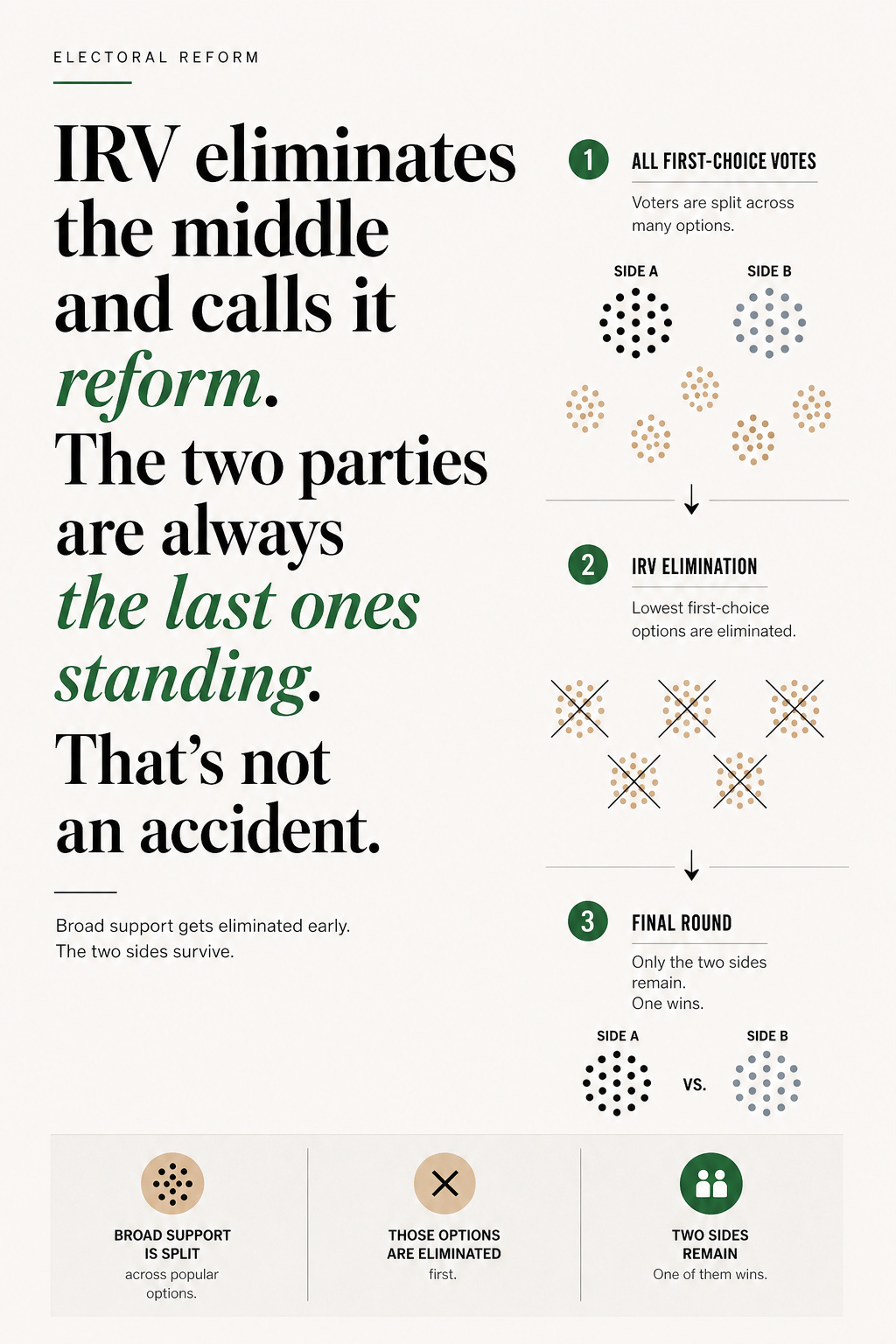
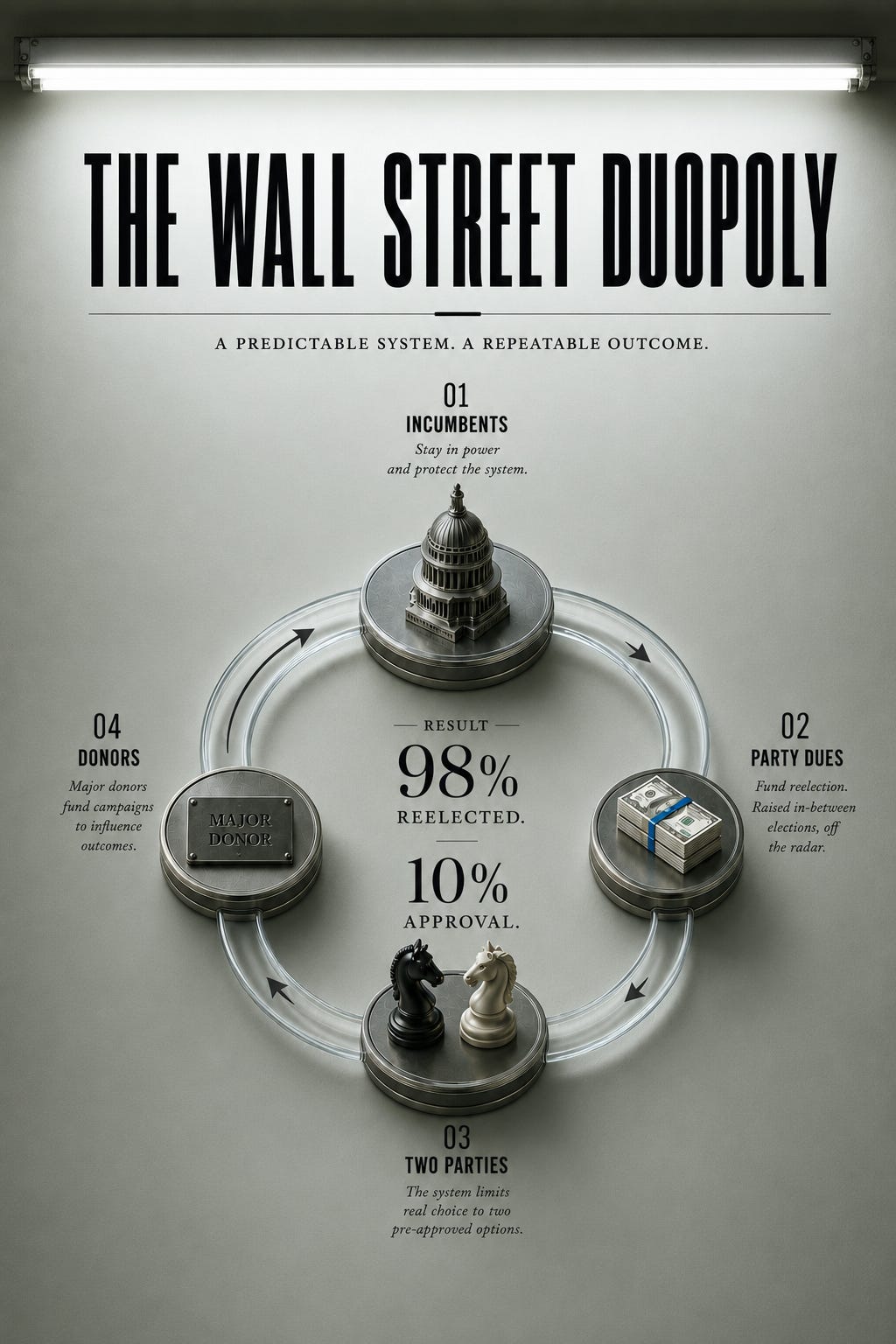
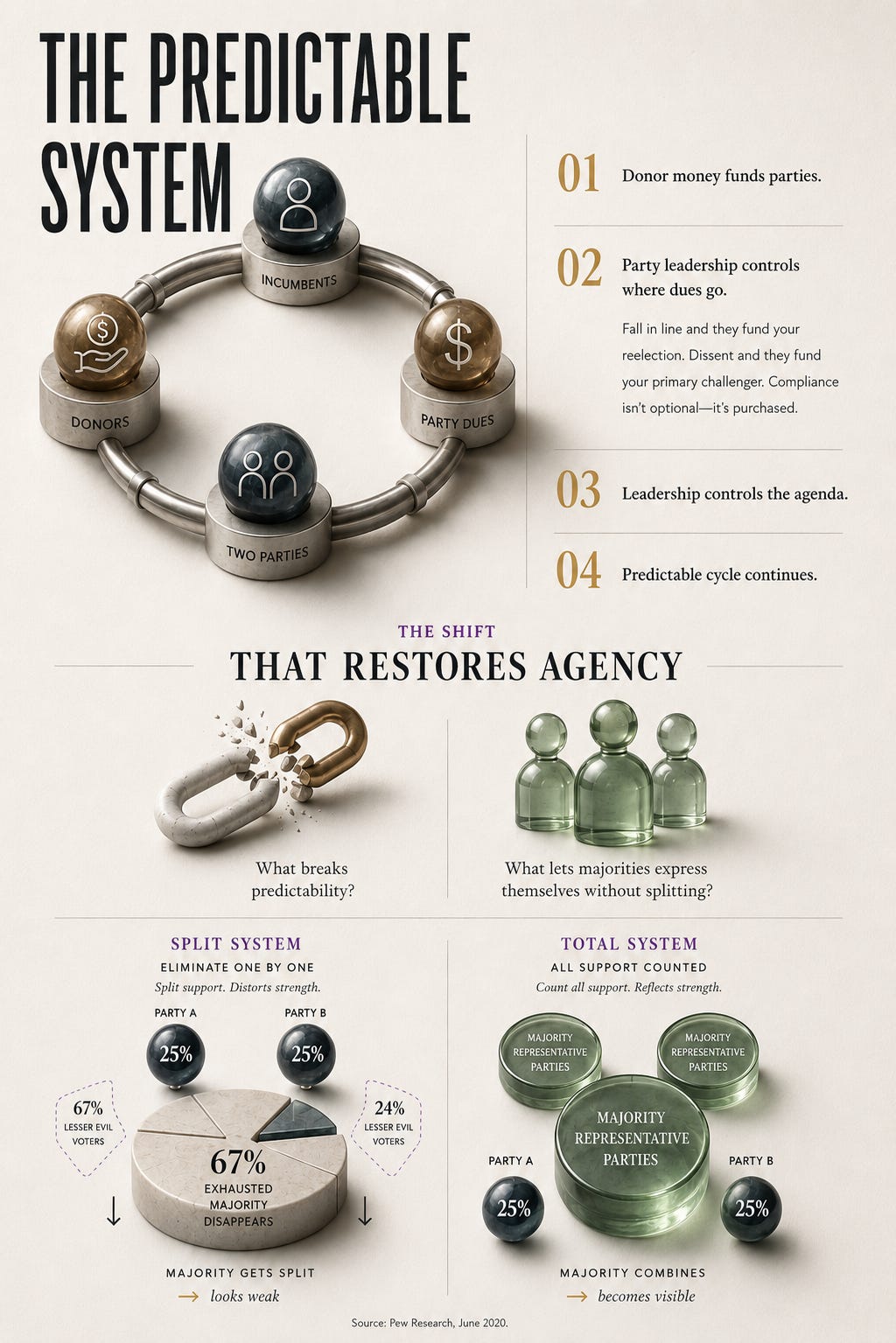
Hidden in plain sight: every round of Ranked Choice Voting (IRV) is just plurality voting repeated.
Each elimination resets the race to “First Past the Post” (FPTP). The thing you were trying to fix.
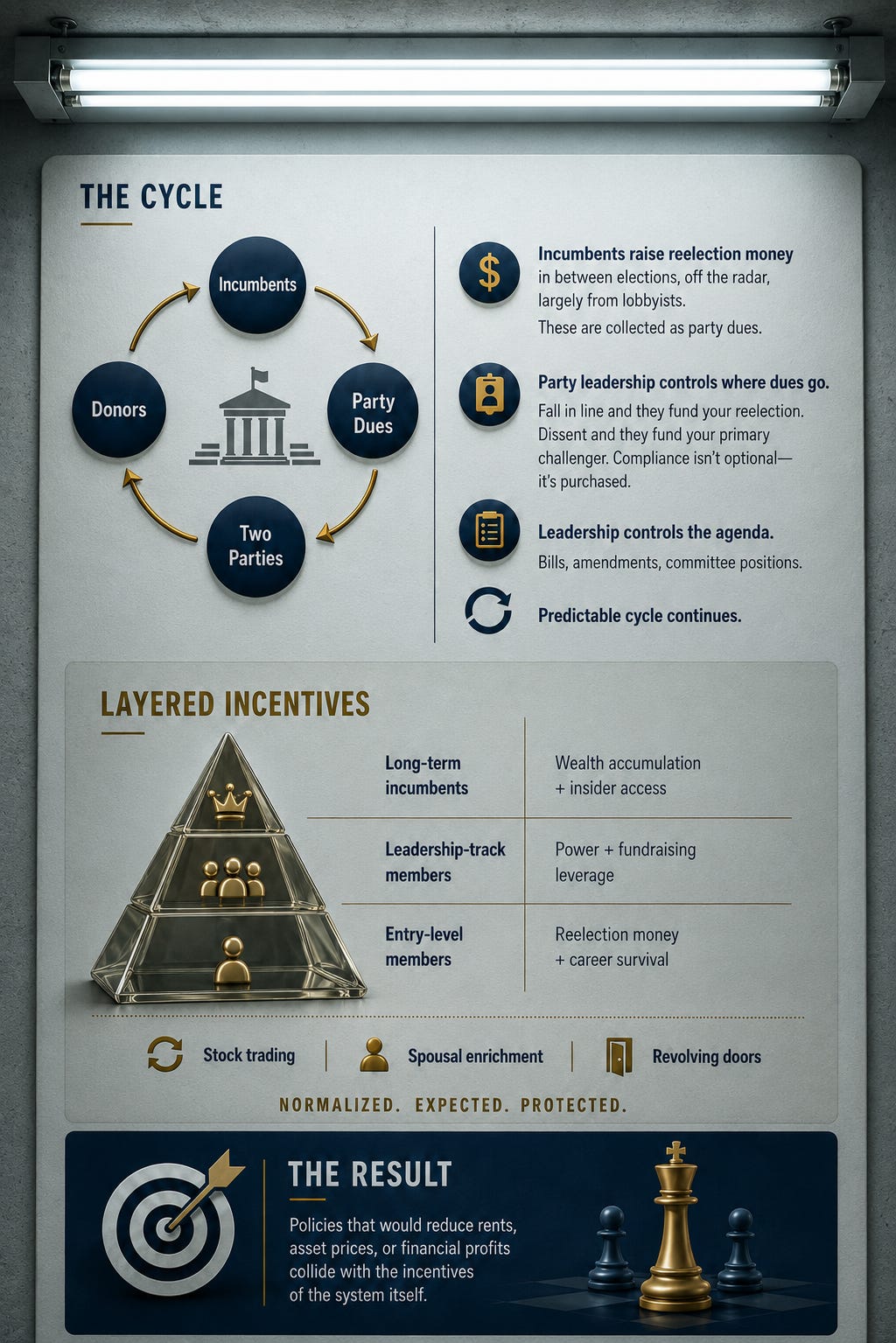
Businesses and investors tend to favor systems where:
policy changes are gradual
regulatory risk is manageable
governing coalitions stay predictable
Electoral rules help produce that stability.
Plurality-style systems naturally concentrate power into two dominant parties. Competition stays contained within a narrow, familiar framework.
For financial actors trying to forecast policy and manage risk, that kind of predictability isn’t incidental.
It’s valuable.

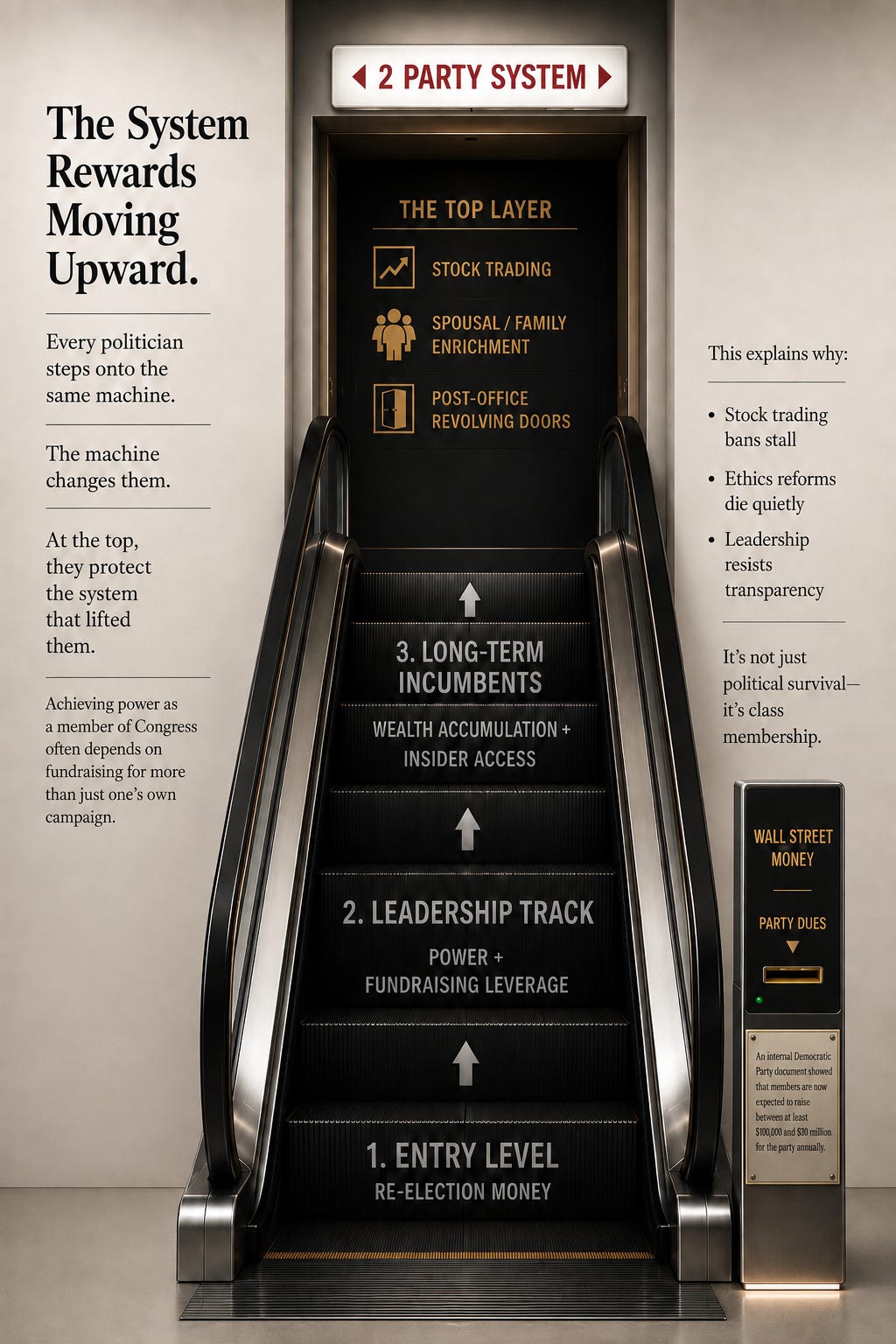


The reform isn’t outside the system.
It’s funded by the same power network.
Why “FairVote” Means Different Things To Different People

Chapter 1: Three definitions of “fairness” are colliding—and no one’s saying it out loud.