World Peace Isn't That Polarizing, Actually.


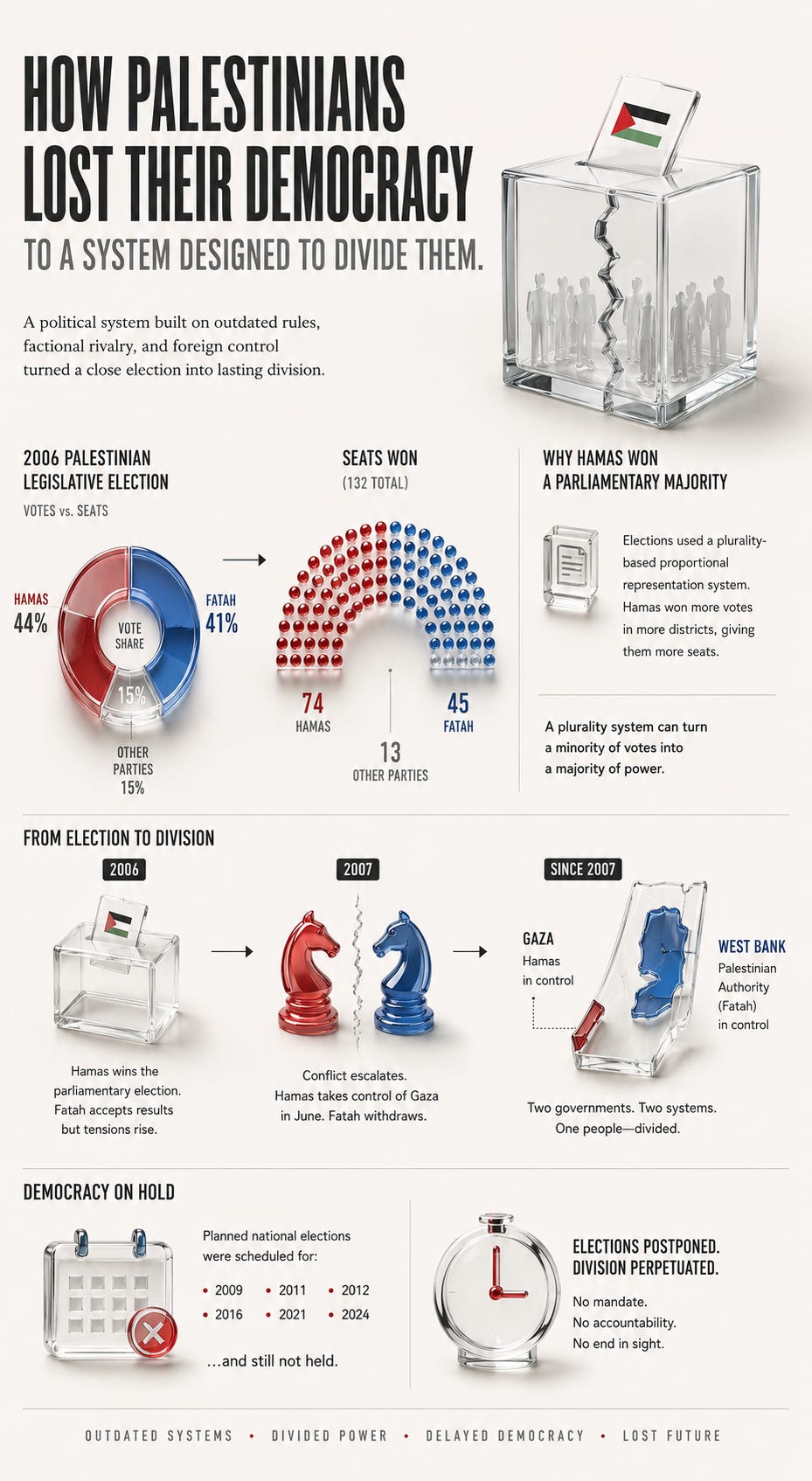
Chapter 1: We Exported Plurality Voting To Palestinian Elections. It Elected Hamas. We Still Use It Here. Connect The Dots.
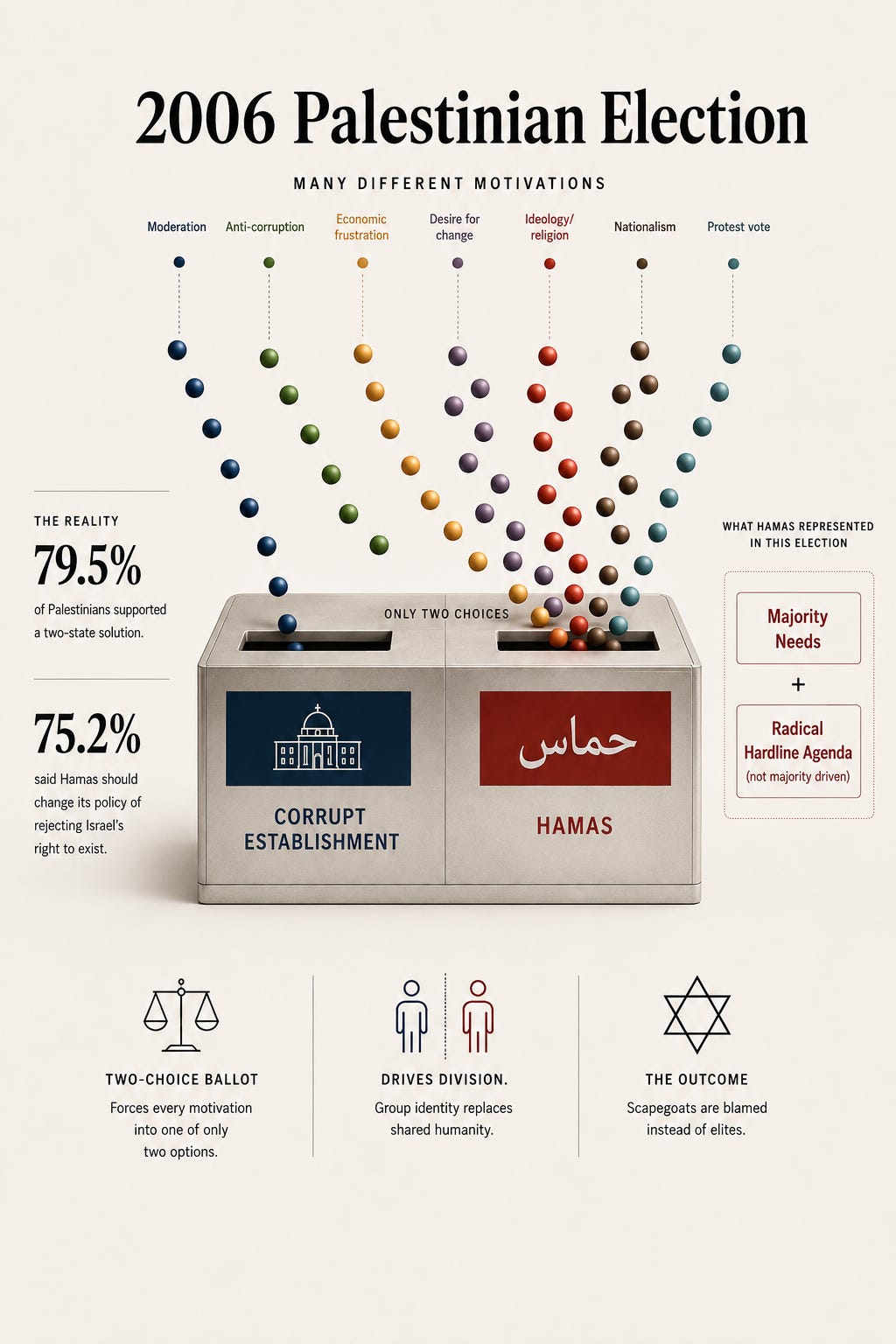
Post-election polls indicated that Hamas' victory was due largely to Palestinians' desire to end corruption in government rather than support for the organization's political platform.[44]
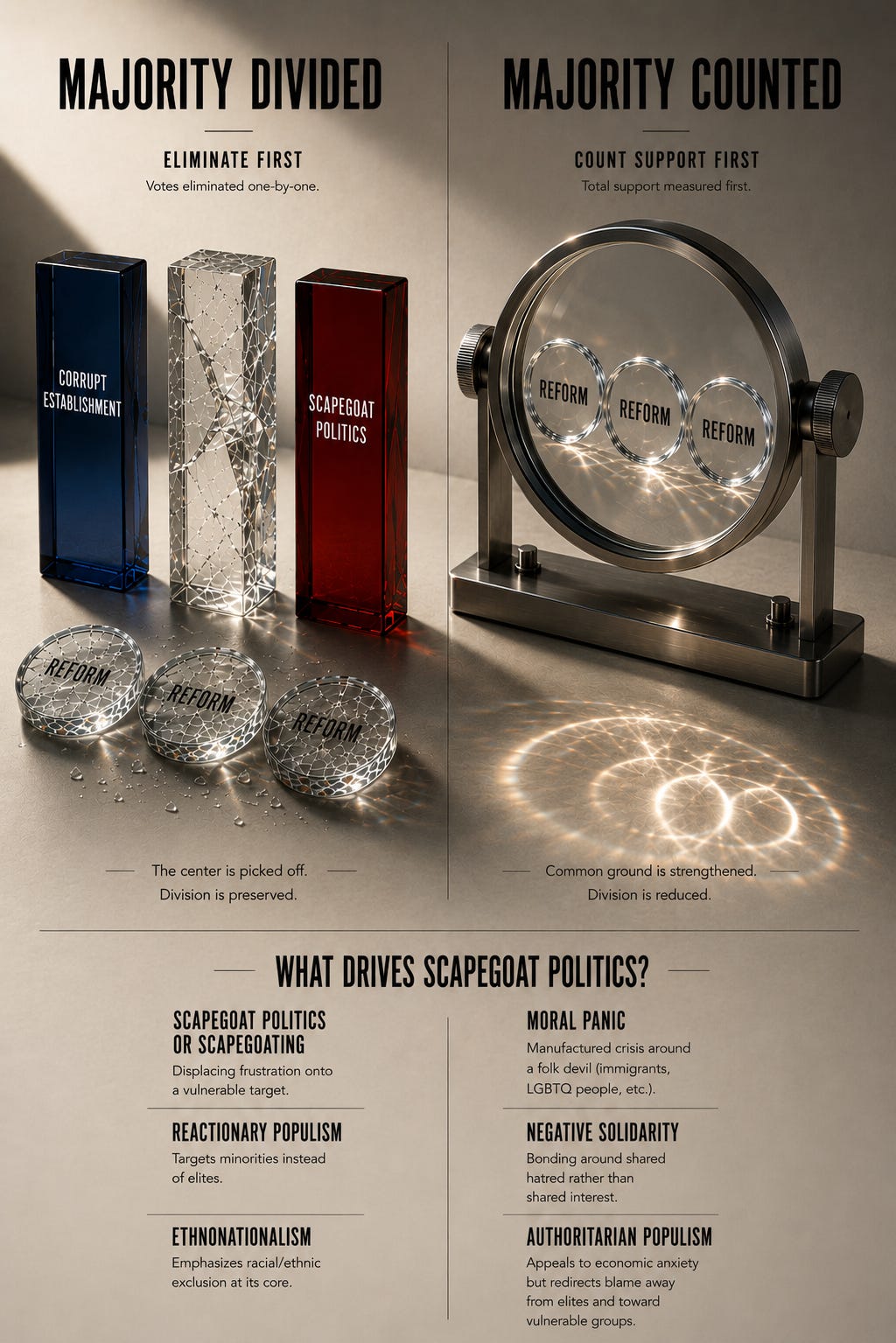
The Bush administration handed Palestine a voting system that split the opposition and handed power to a minority. Sound familiar? We exported our worst electoral mistake and watched it detonate. Then came home and kept using it.
When we choose a voting method, we’re not just choosing how to count ballots. We’re choosing how power consolidates. And that choice lasts far longer than any one election.
Presidents change.
Parties change.
The voting method stays. It quietly determines:
• Whether shared majorities can combine
• Whether similar candidates split each other
• Whether fear consolidates faster than hope
• Whether moderation survives or disappears
That’s structural power.
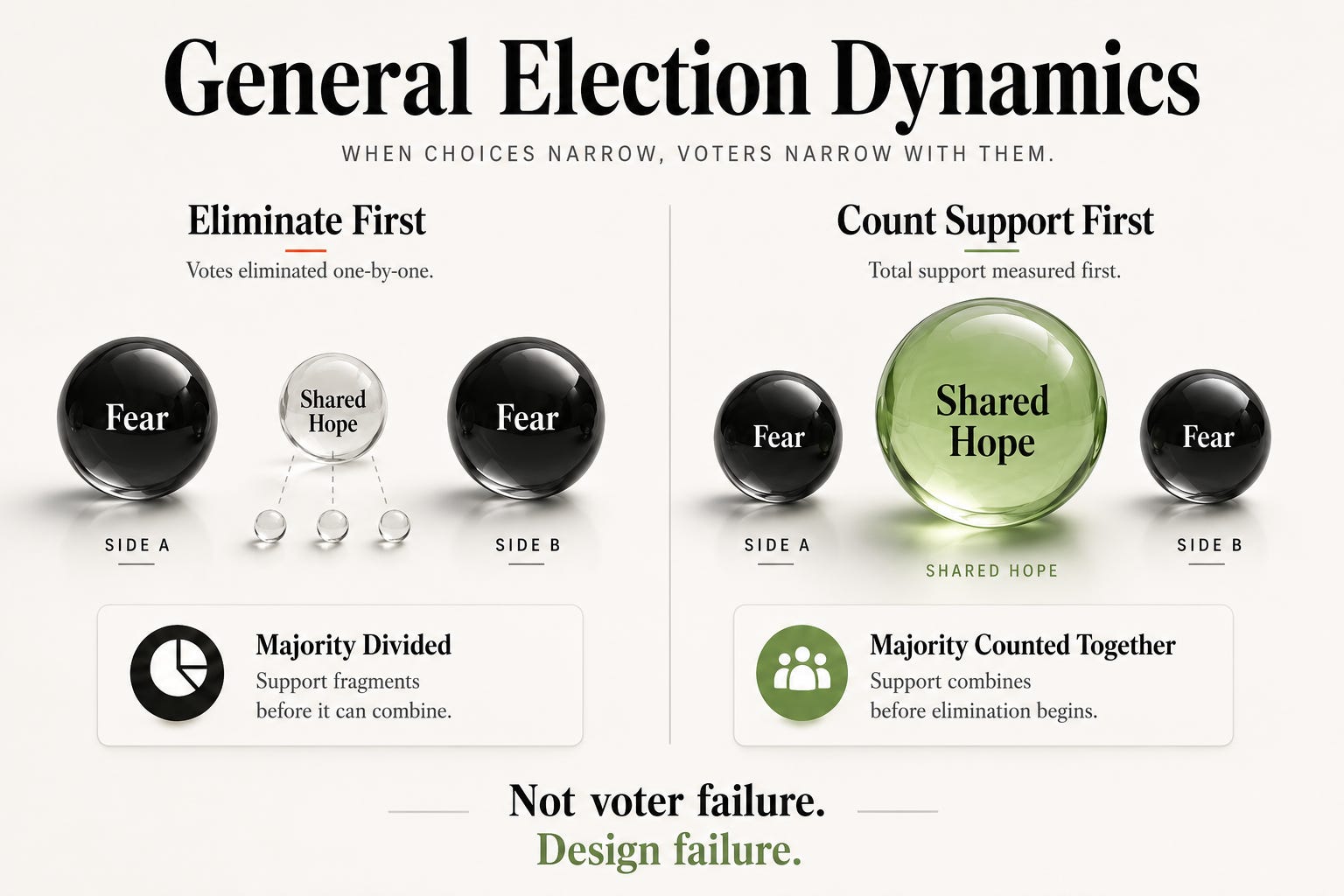
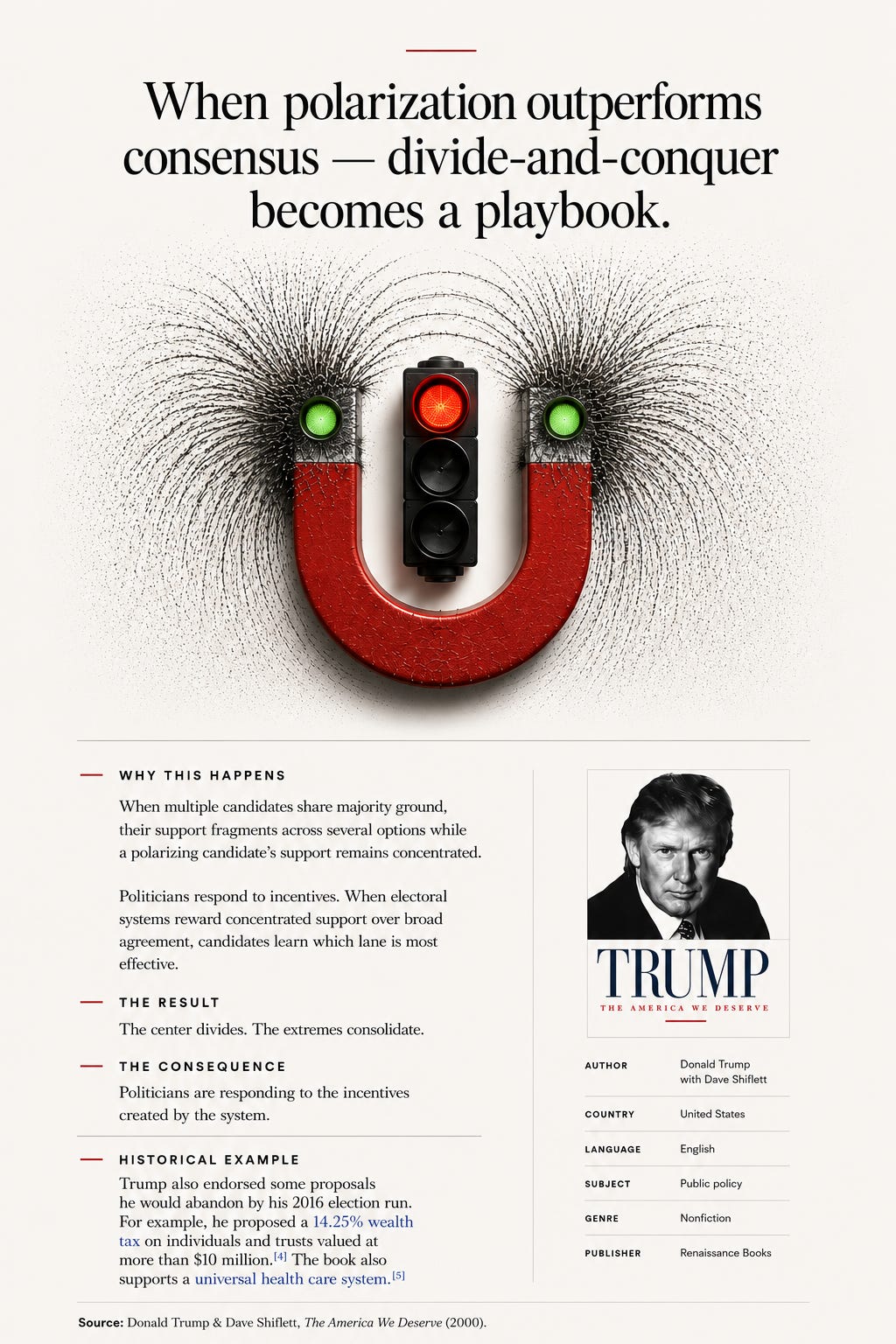
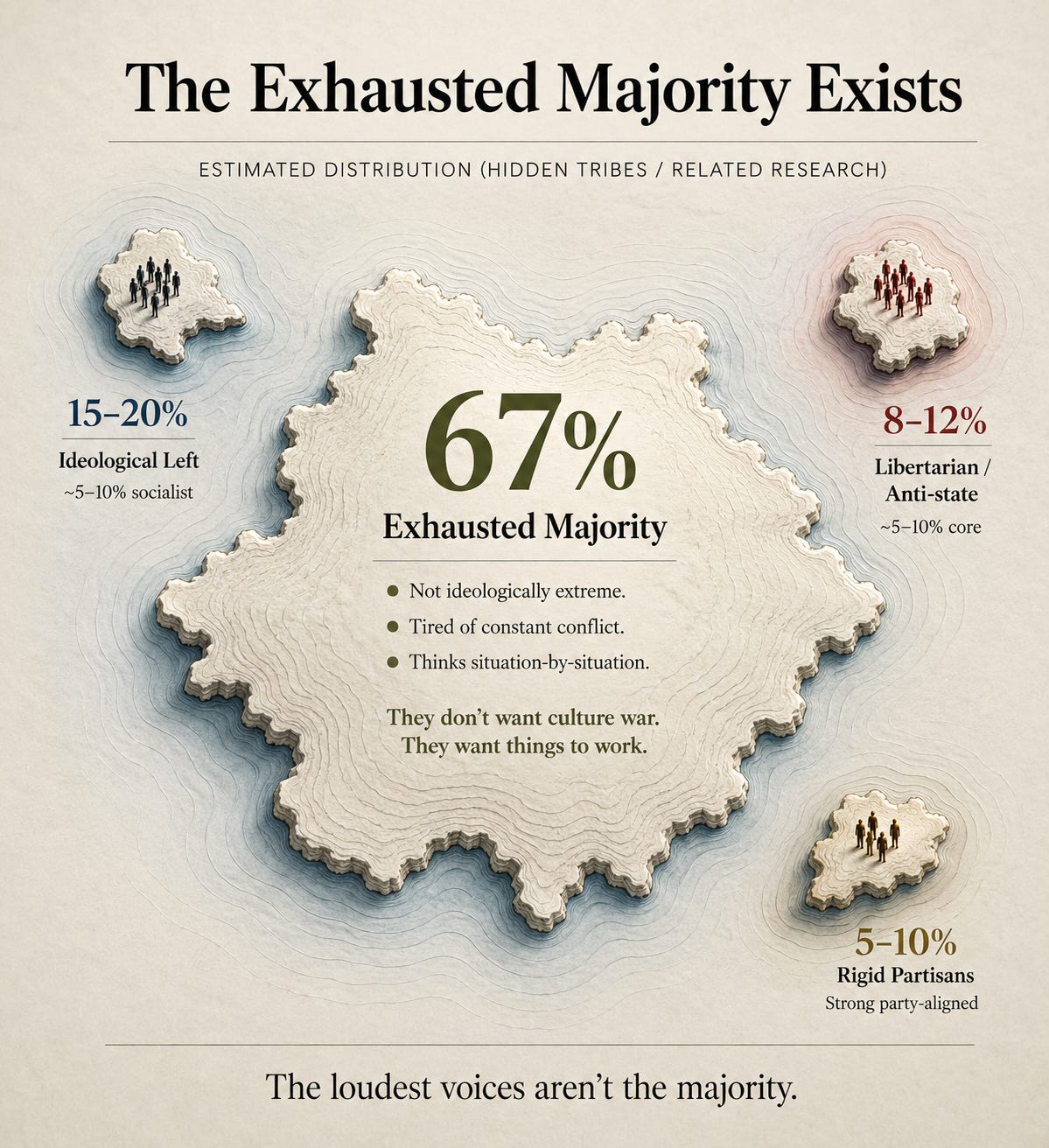
Across countries, majorities often share pragmatic goals — stability, economic security, less corruption, less violence. Yet elections repeatedly produce outcomes that empower extremes or entrench elite control.
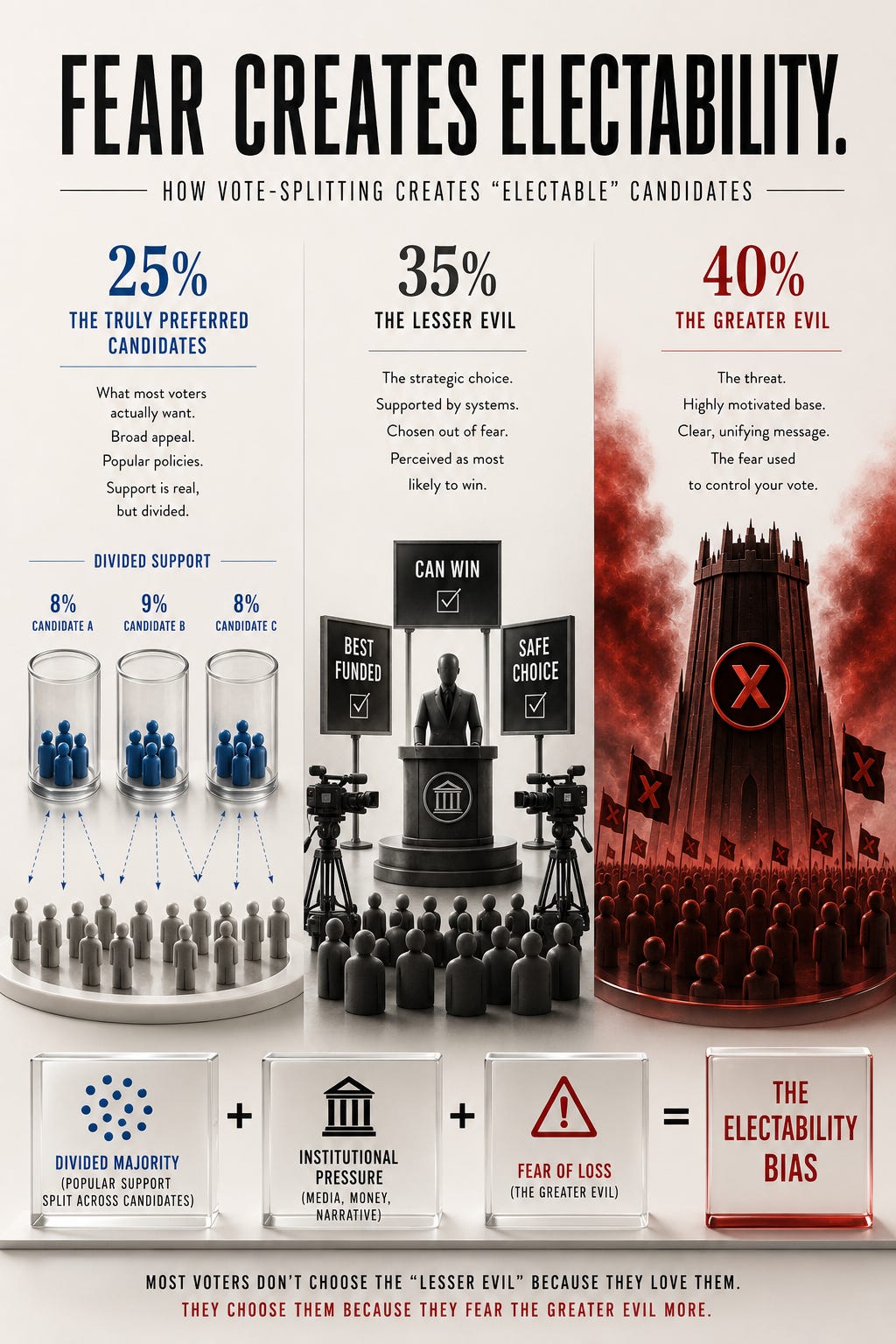
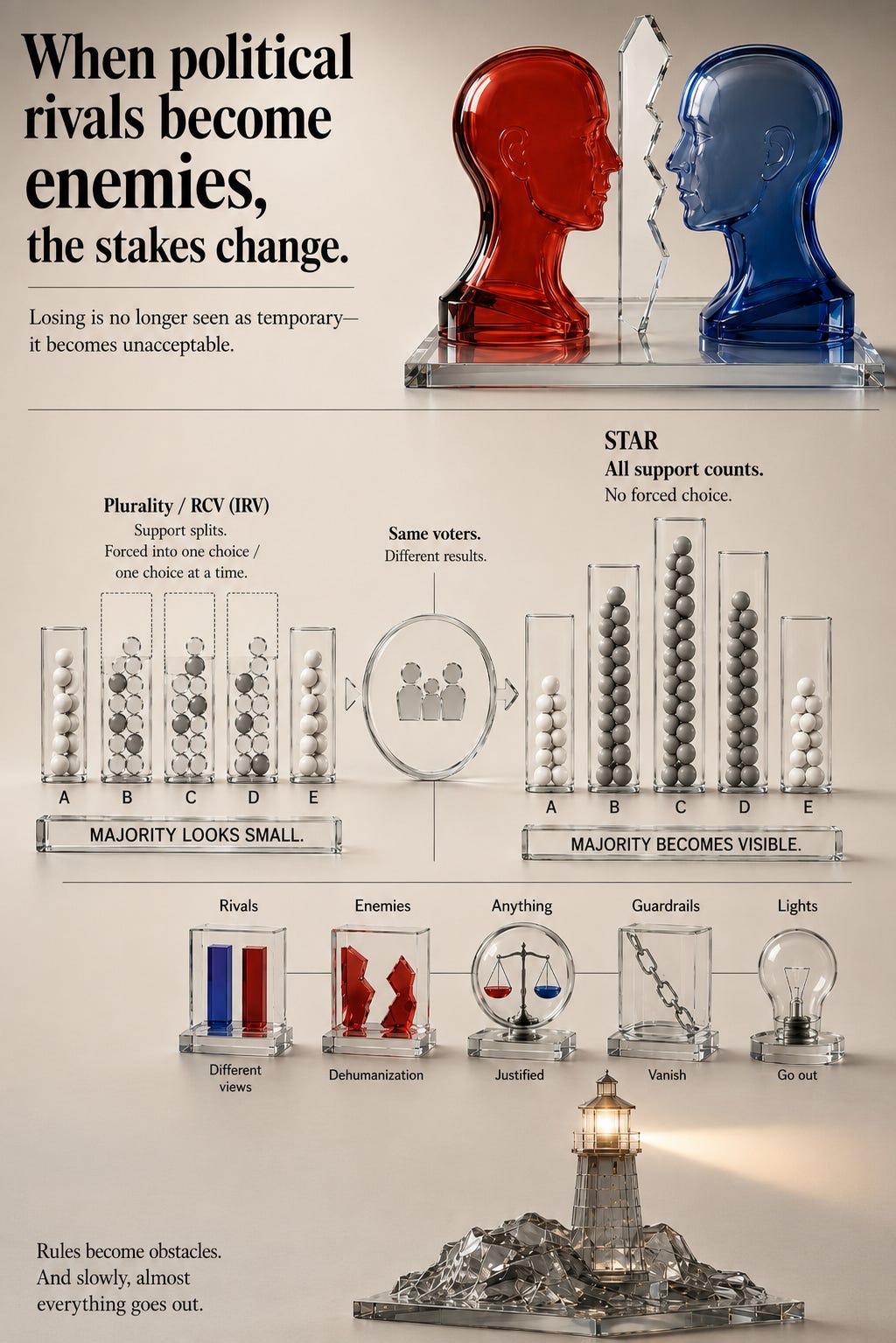
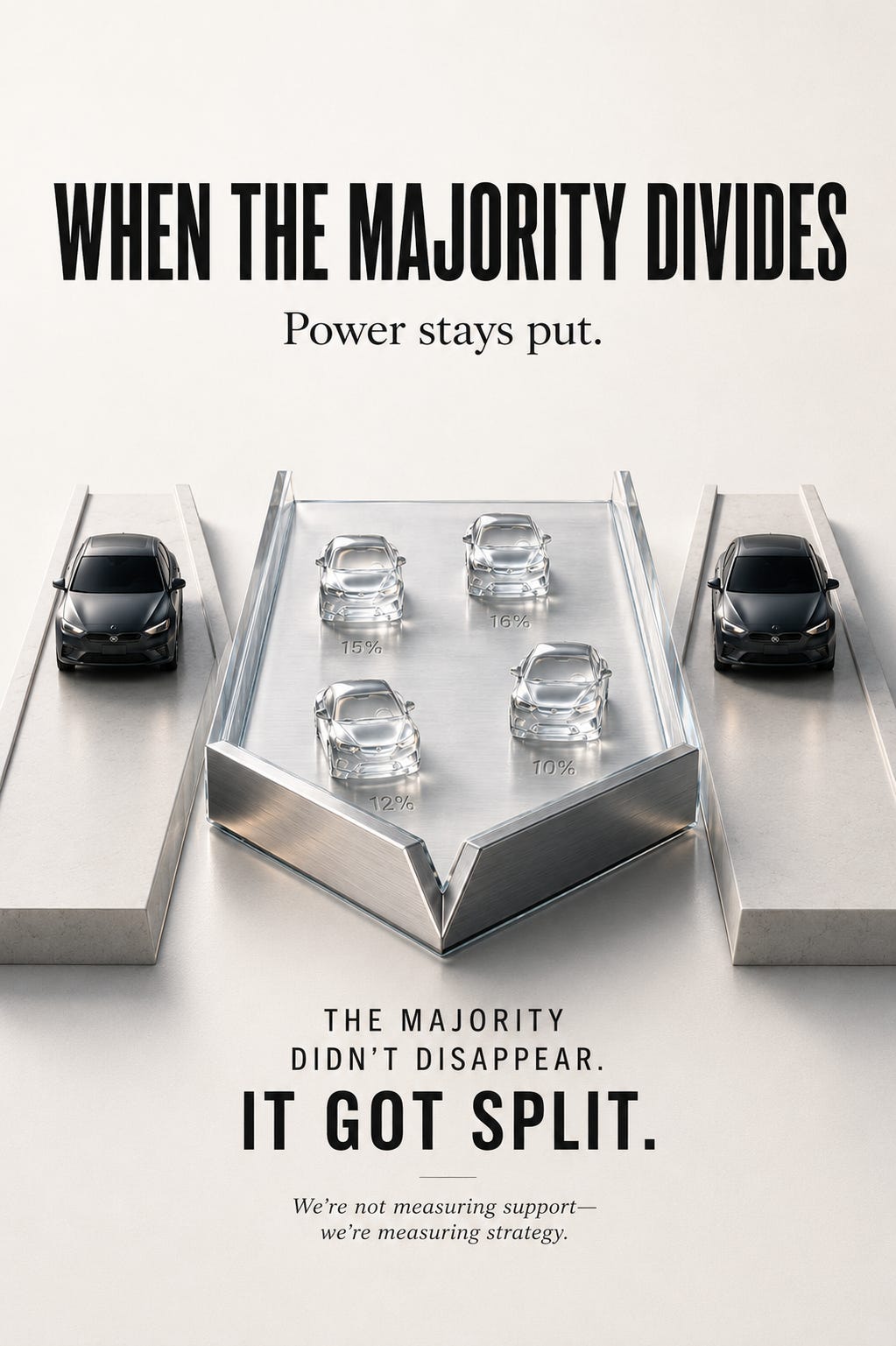
Under a vote-splitting system with multiple factions, reform-oriented groups divided support. The result became a sharp binary: a weakened, corrupt status quo or a more radical alternative. The majority’s nuanced preferences never appeared as a unified signal.
Instability followed.
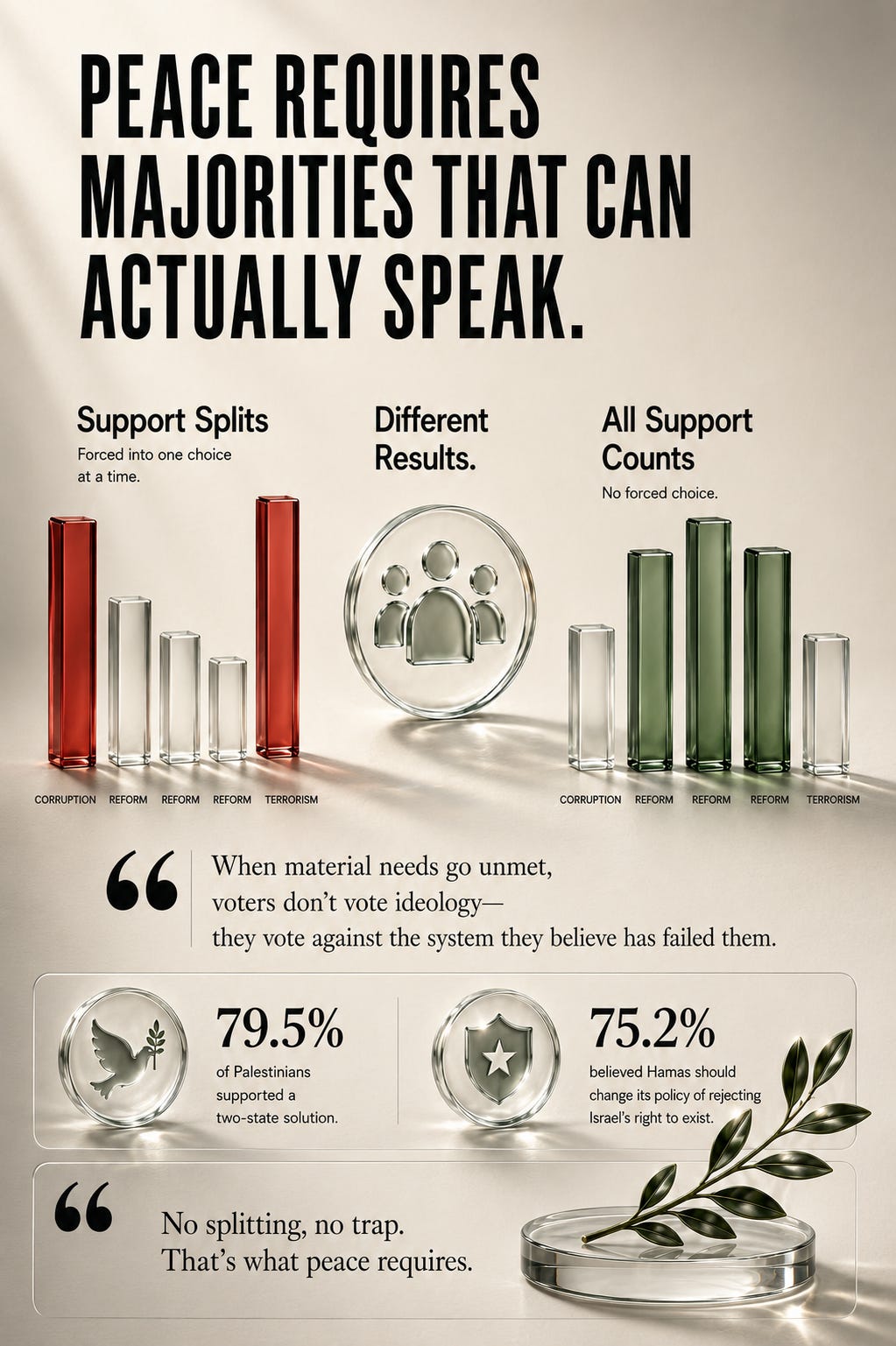

That pattern isn’t unique to one country. It’s structural.
When systems offer only hostage choices —
“this flawed option” or “that extreme option” —
majorities can be neutralized.
Fragmented majorities lose. Consolidated minorities win.
Here’s the part that really matters: Voting systems don’t just decide who wins. They can decide who literally survives—and what kind of world people have to survive in.
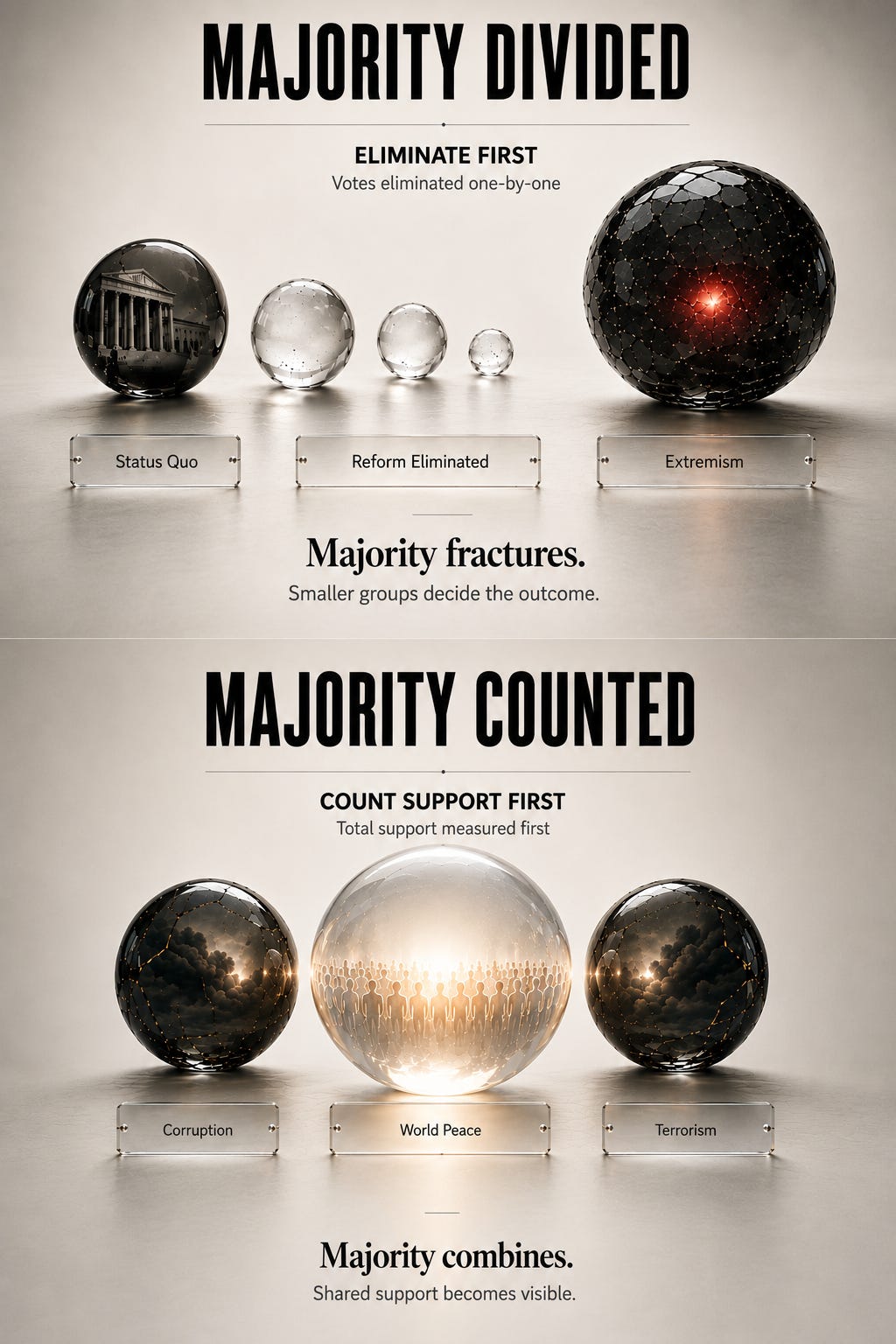
World peace isn’t just about diplomacy. Whether wars are caused by radicalism or establishment profit, it’s about whether political systems reward nuance or trapped choices.
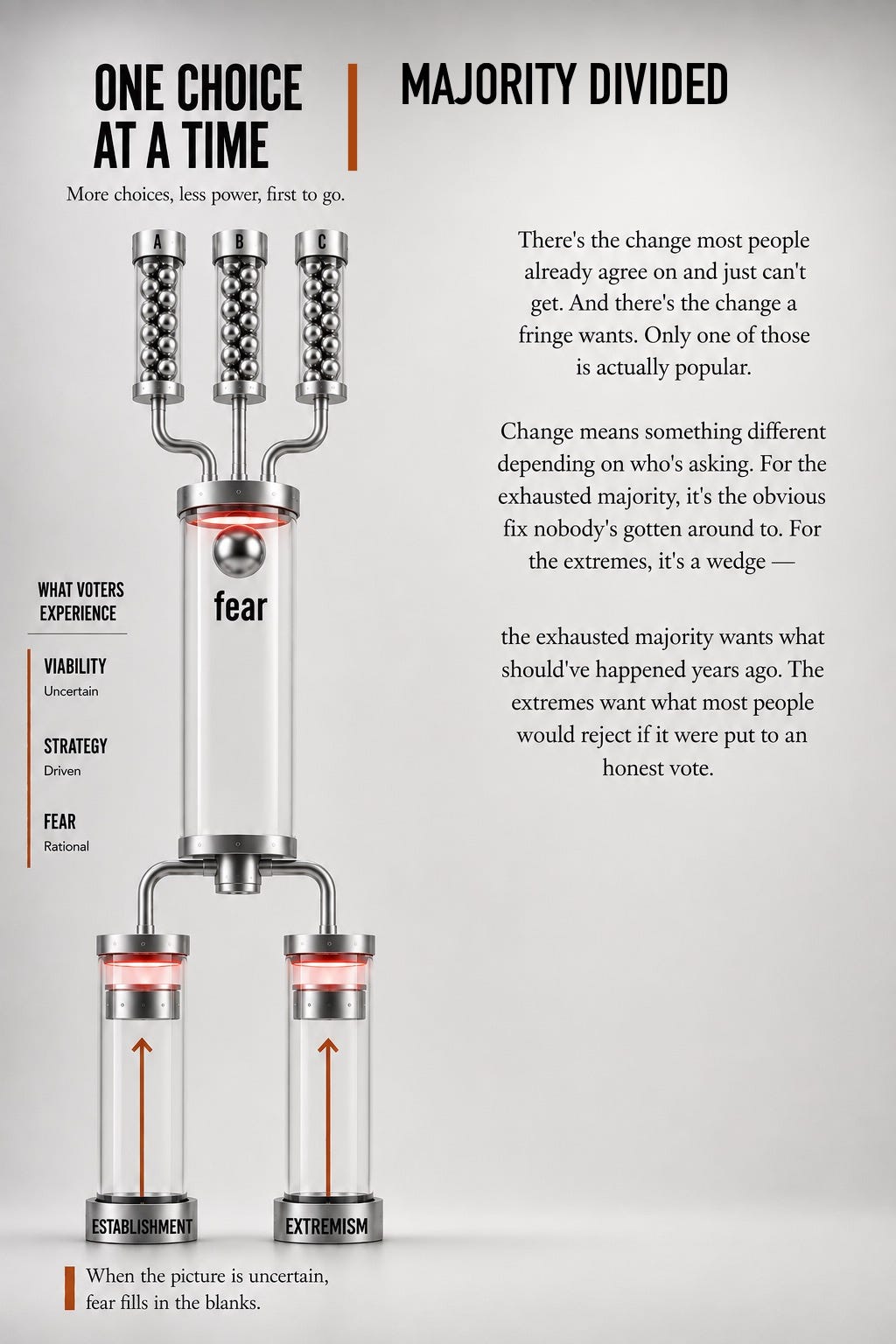
If voting rules repeatedly:
• Fragment reform coalitions
• Reward consolidation around fear
• Amplify extremes through vote-splitting
• Or entrench elites through defensive voting
Those incentives shape long-term global dynamics. That’s incentive design.
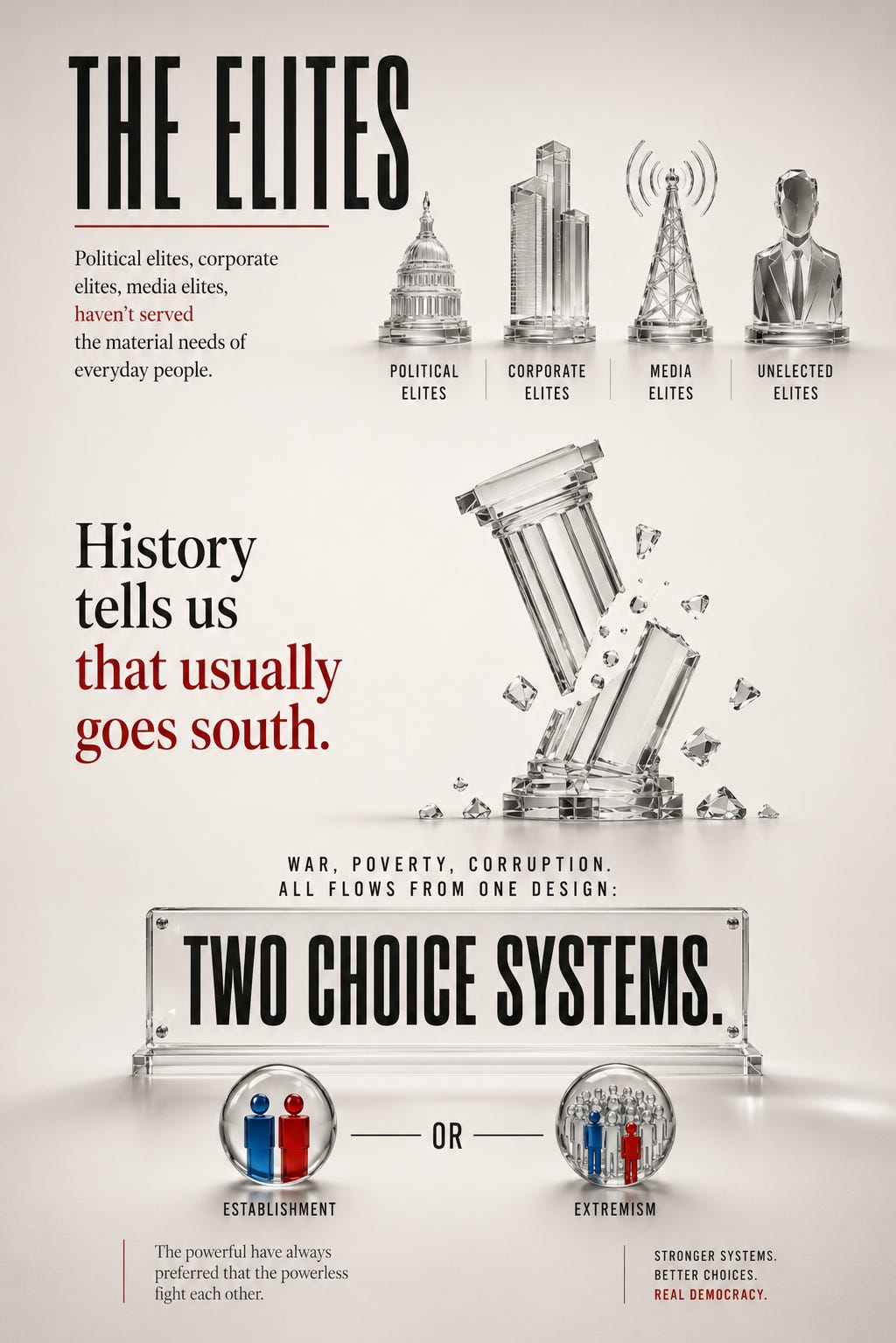
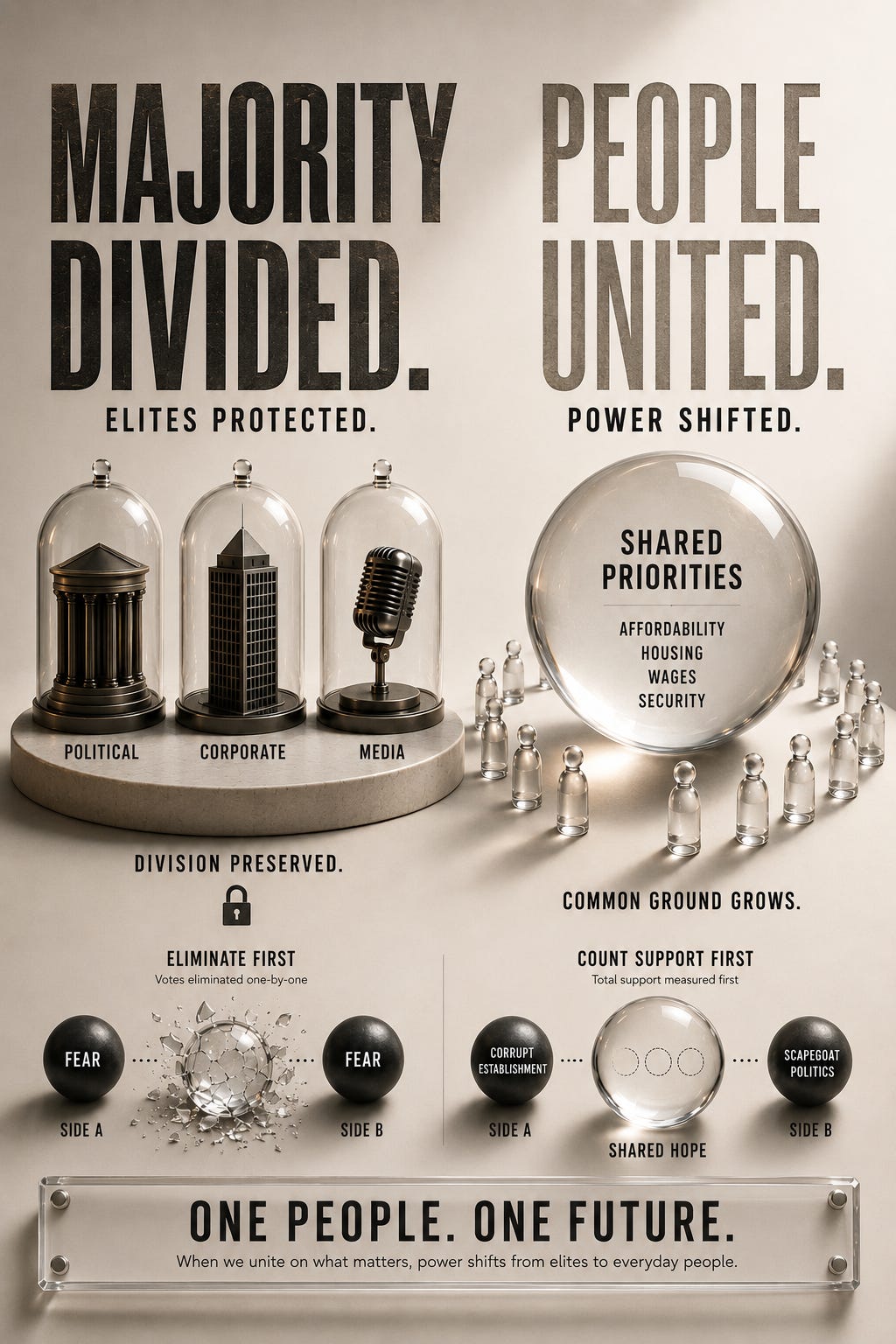
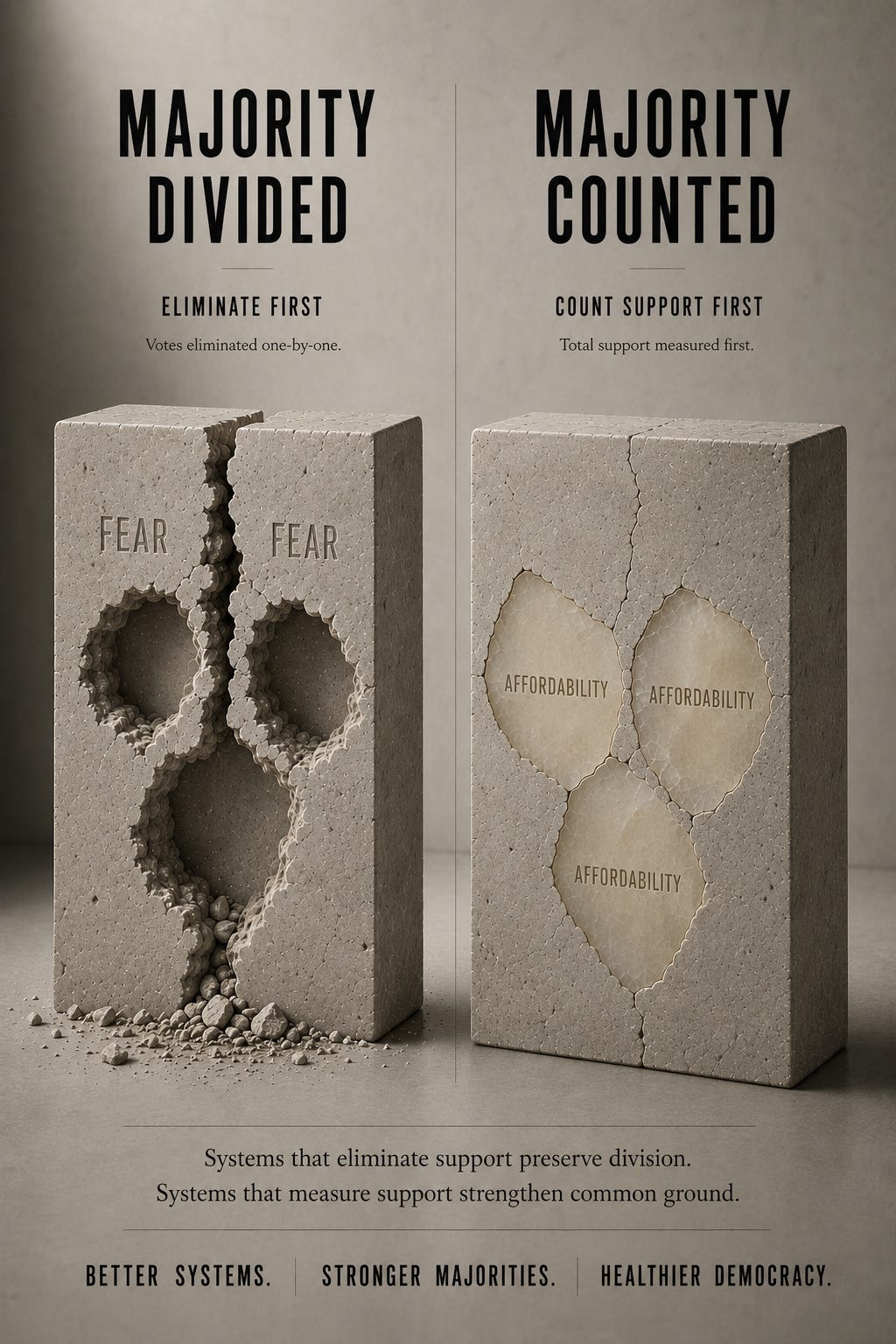


When we choose a voting method, we’re designing rules that can last decades. With that kind of leverage, design matters.
Leaders come and go.
Voting systems persist.
If the rules repeatedly fragment majorities and reward fear consolidation, instability shouldn’t surprise us.
When the people who quietly agree can finally be seen as one, the answers tend to follow.

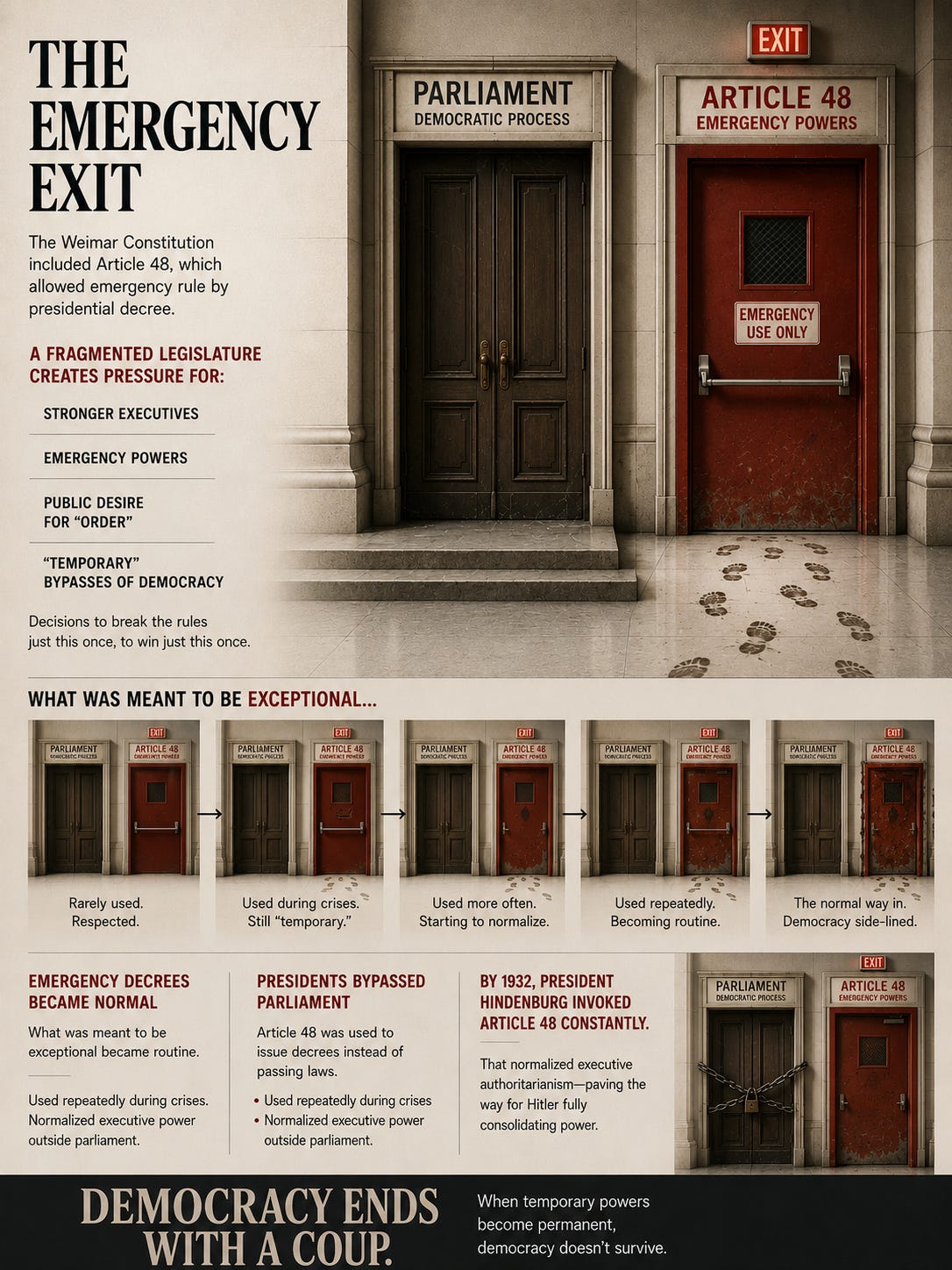
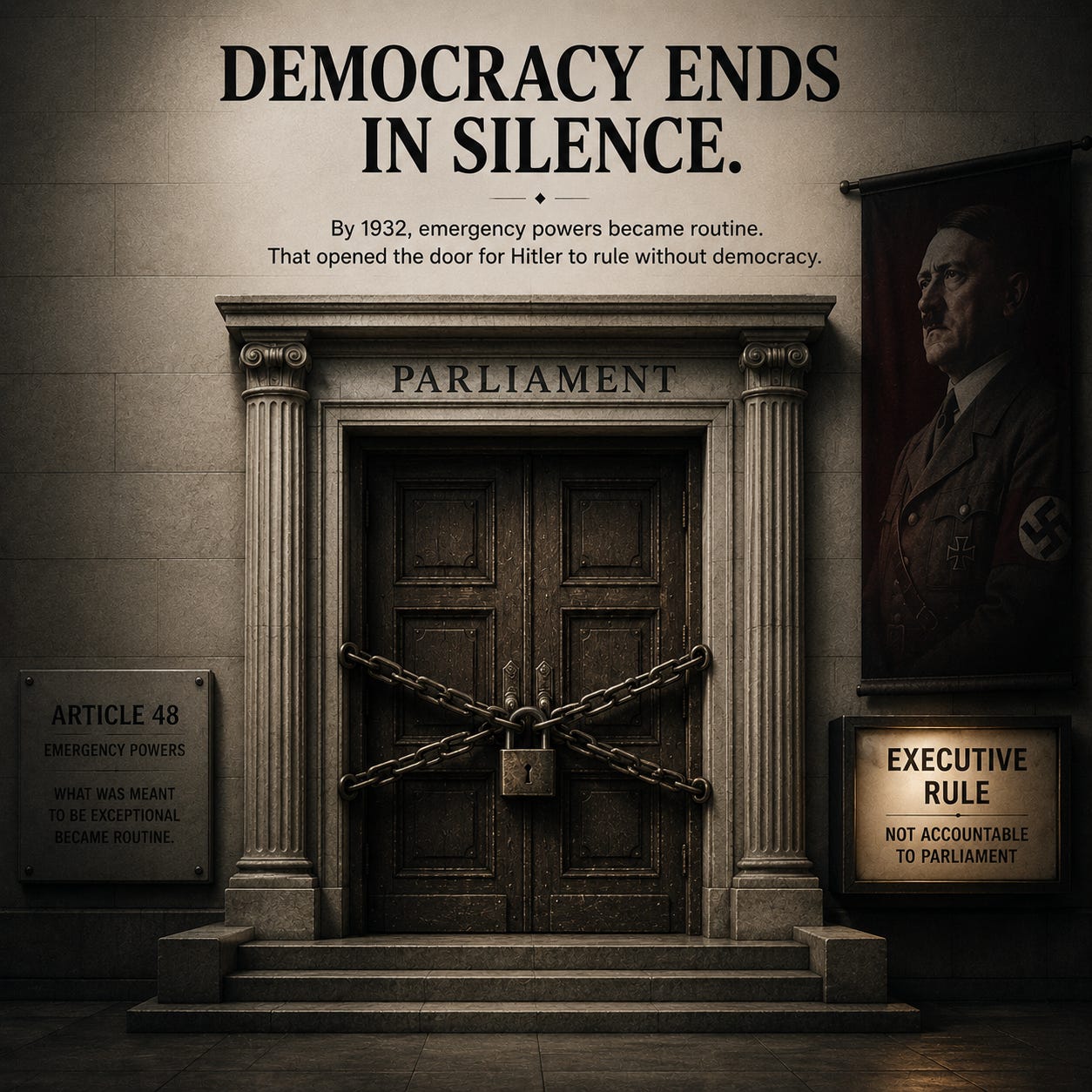
Authoritarianism Doesn't Have To Seize Power. Polarization Hands It Over, One Voter Convinced The Other Side Is The Real Threat.
Chapter 2: Proportional Representation That’s Actually Proportional
Proportional representation comes up a lot in reform conversations. So let’s talk about it plainly.
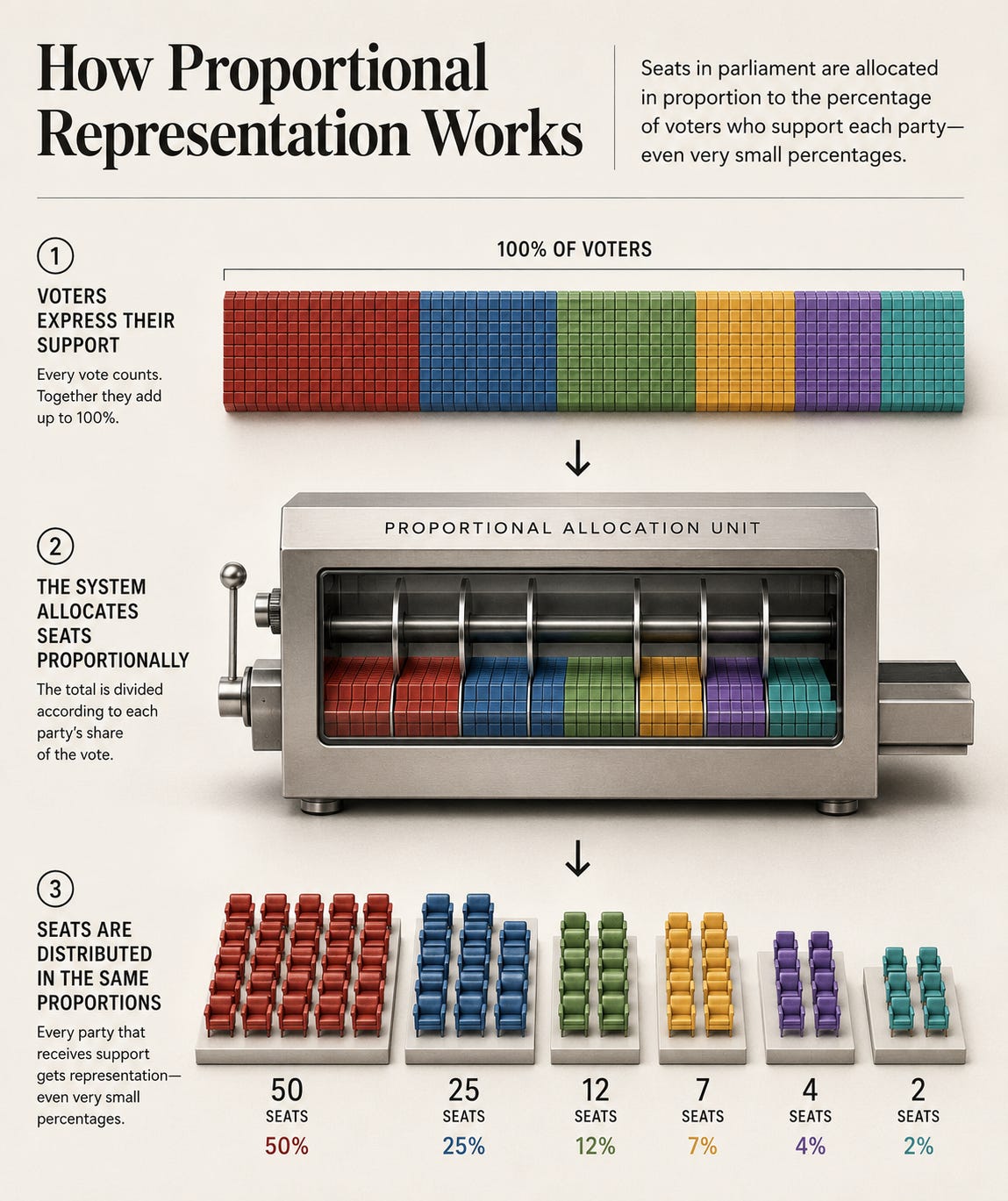
Right now, most U.S. elections are winner-take-all. One person wins. Everyone else gets nothing.
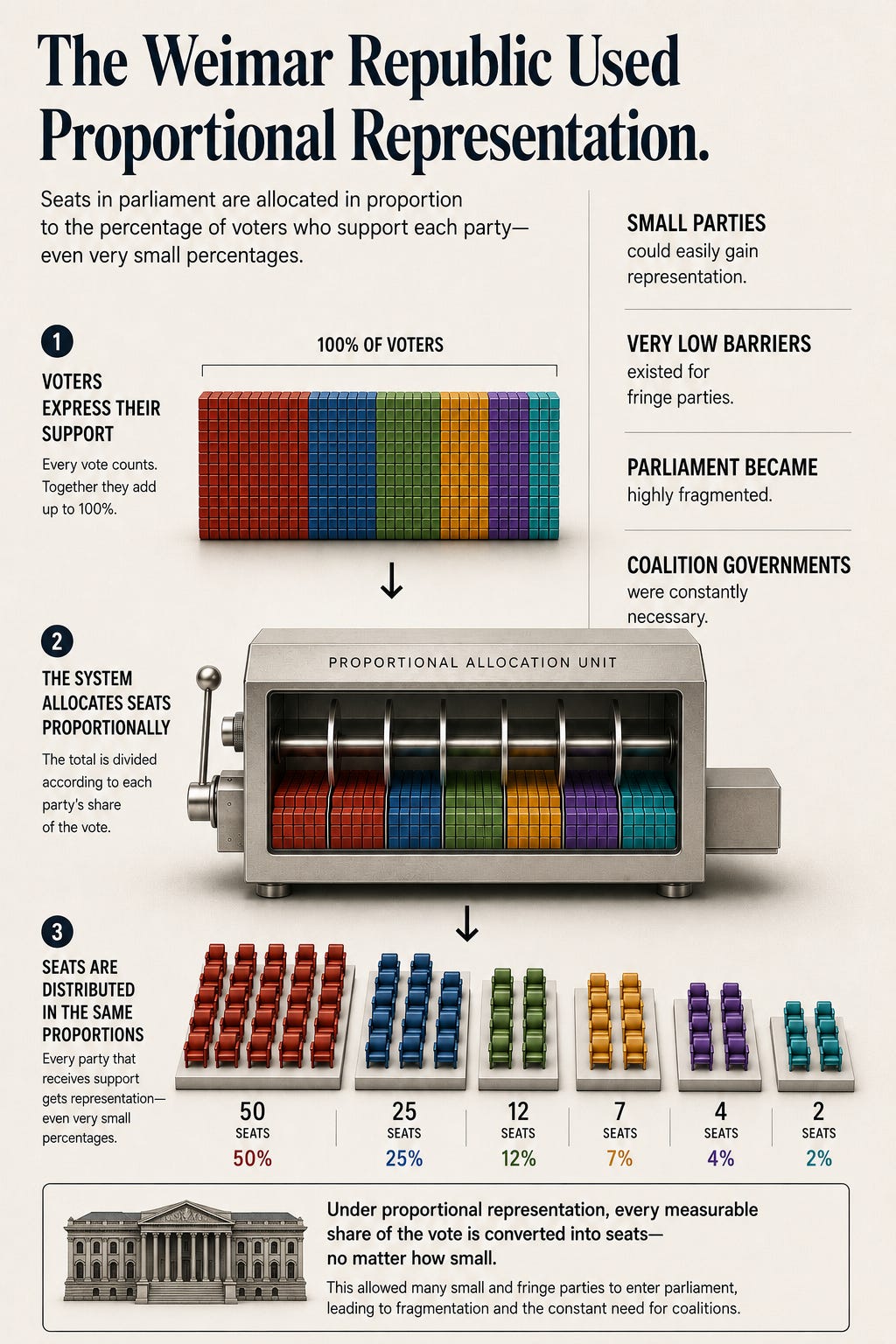
Proportional systems work differently. If a party gets 20% of the vote, it might get around 20% of the seats. That can reduce the feeling of being trapped between two choices.
But here’s what often gets skipped:
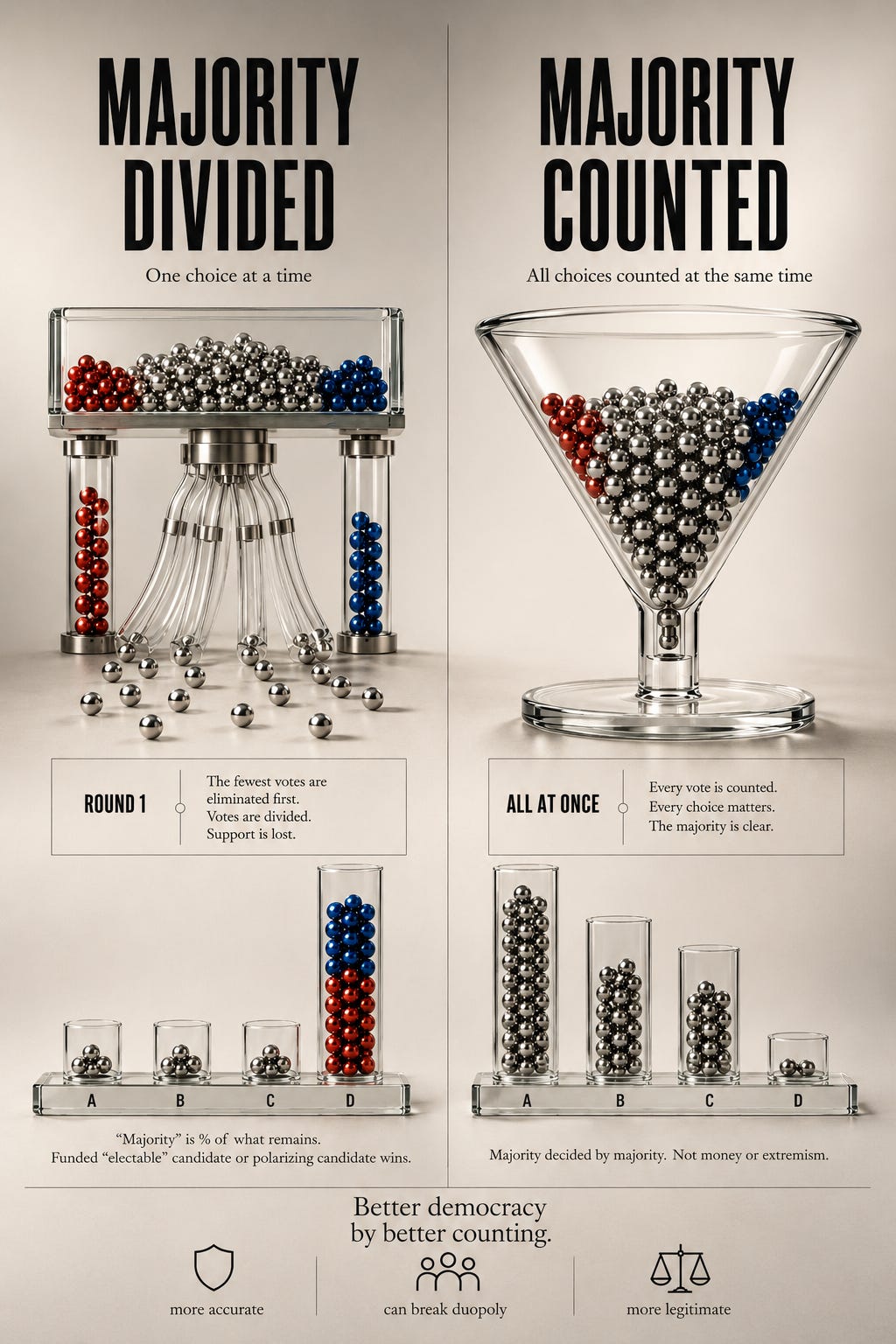
Proportional representation decides how many seats are given.
The voting method decides how support for those seats are measured.
Those are two different levers. And the second one can change everything.
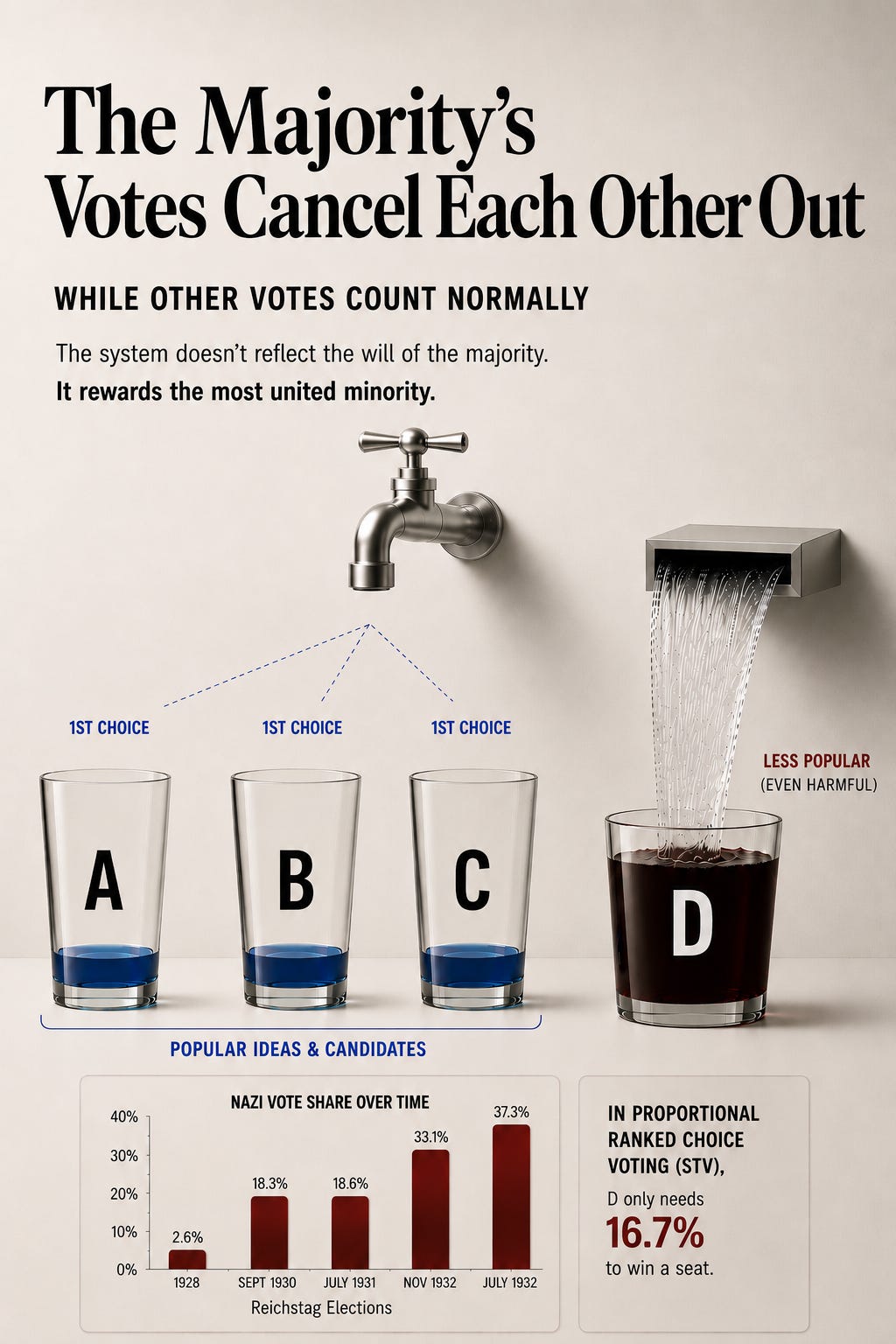
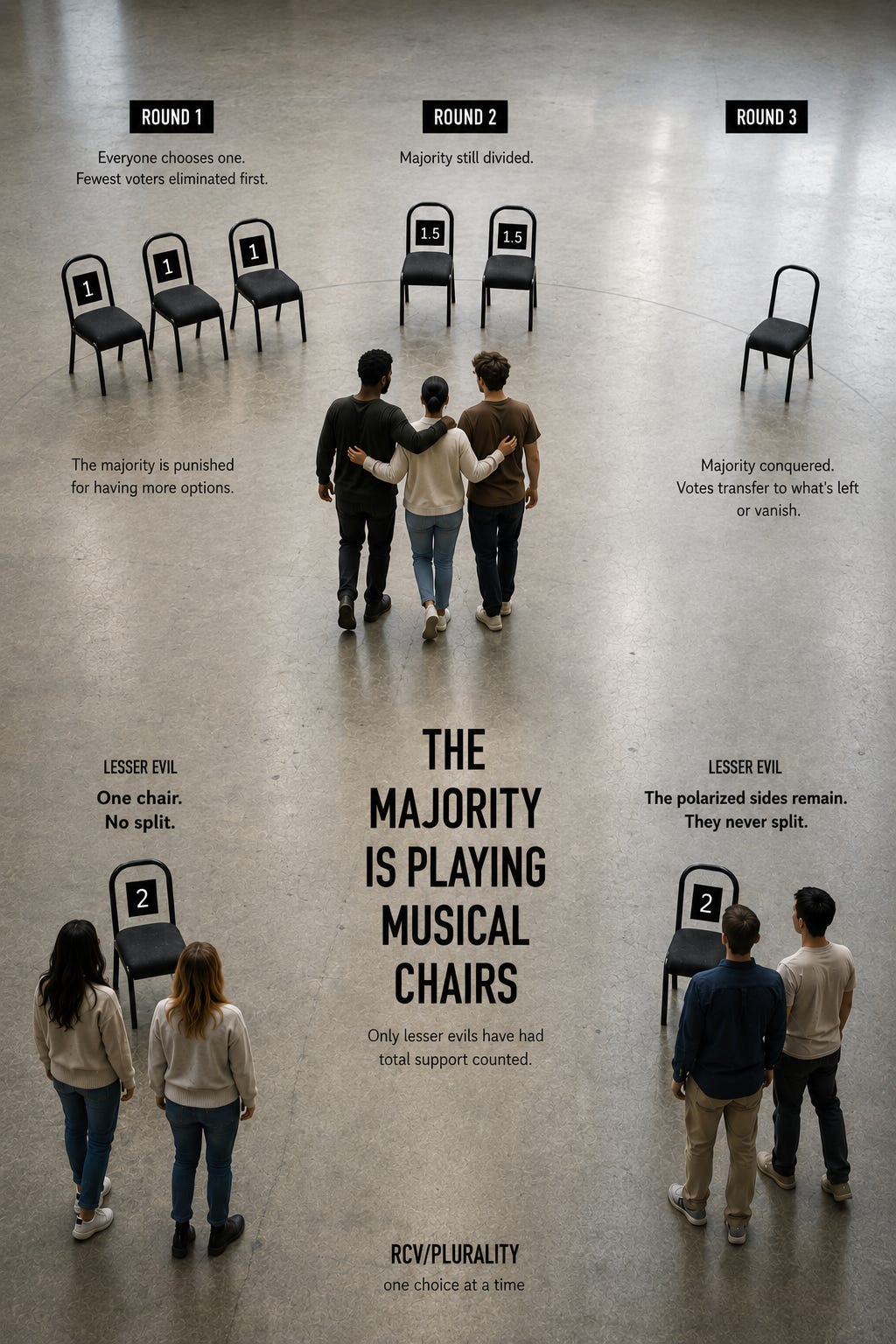

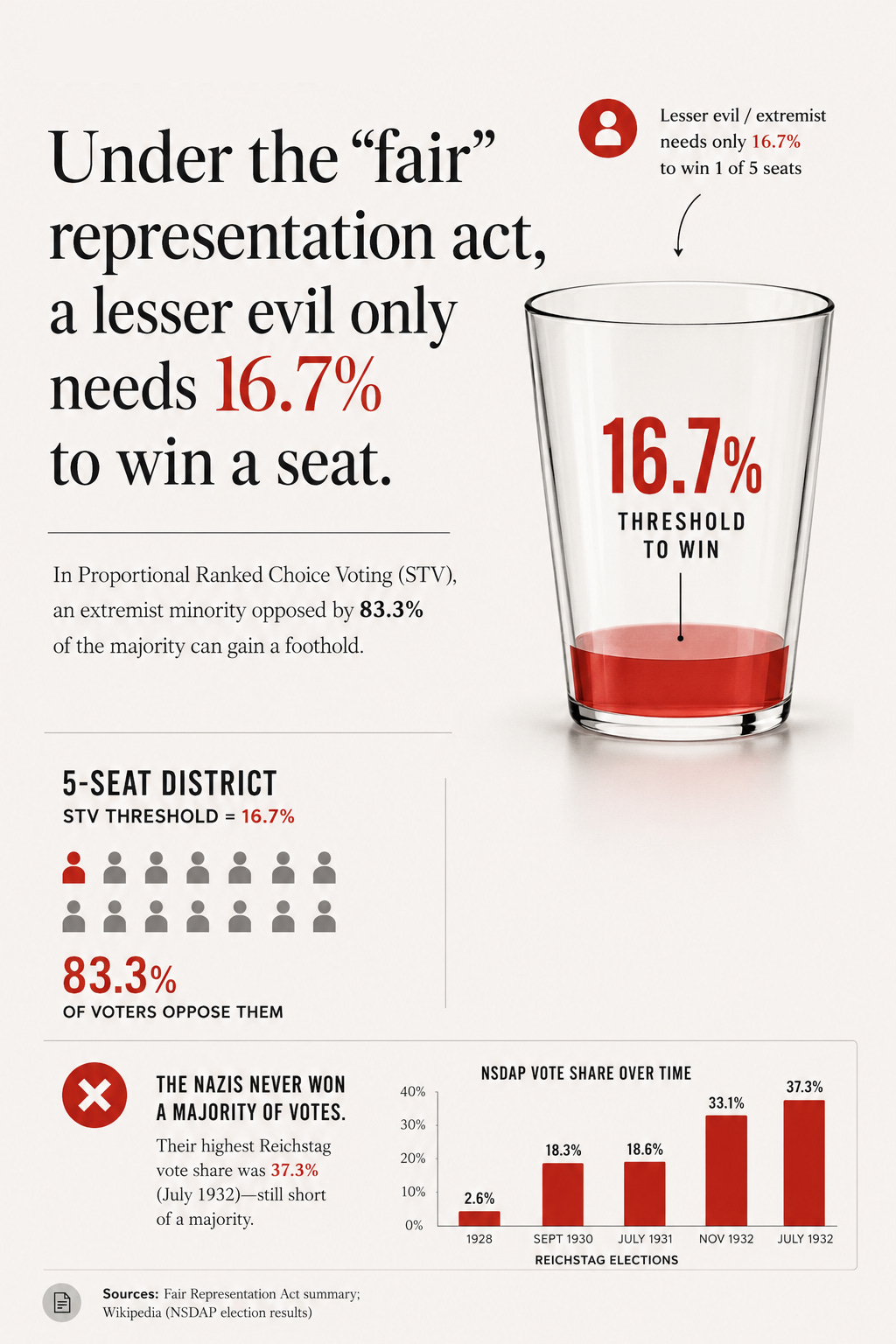
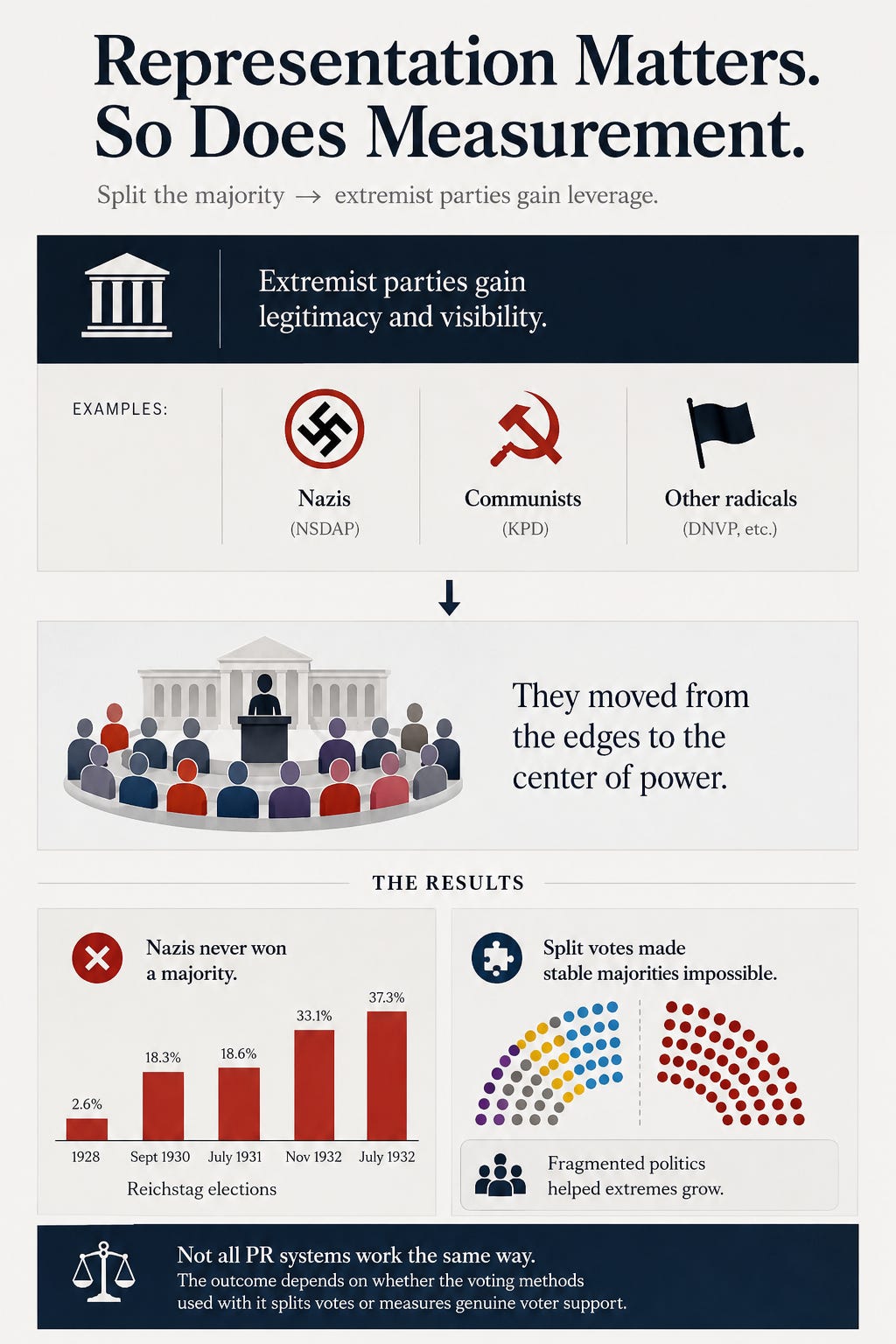
The voting method inside a multiparty system determines what kind of parties grow. If the rules reward narrow, intense bases, you don’t just get more parties. You get more narrow parties.
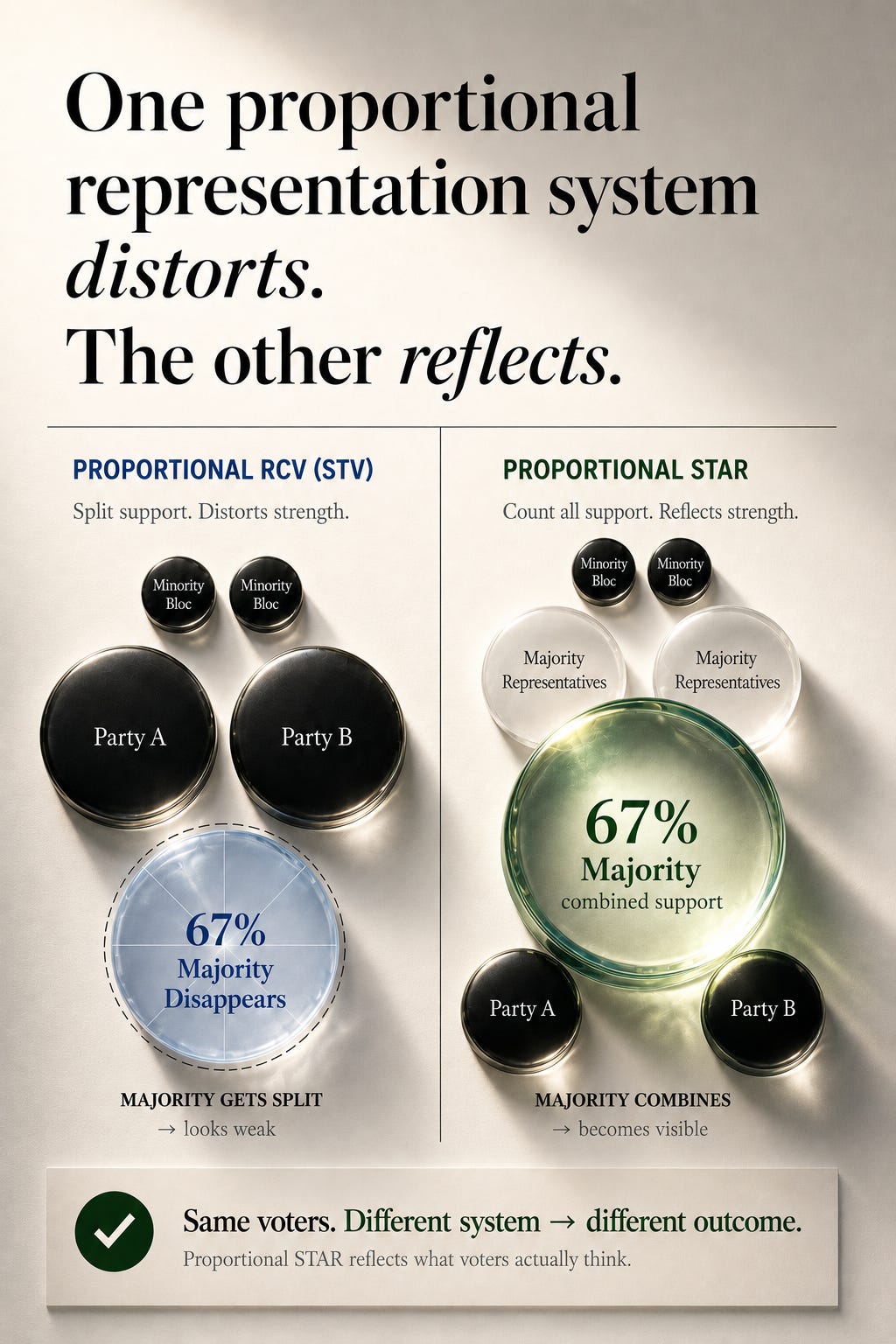
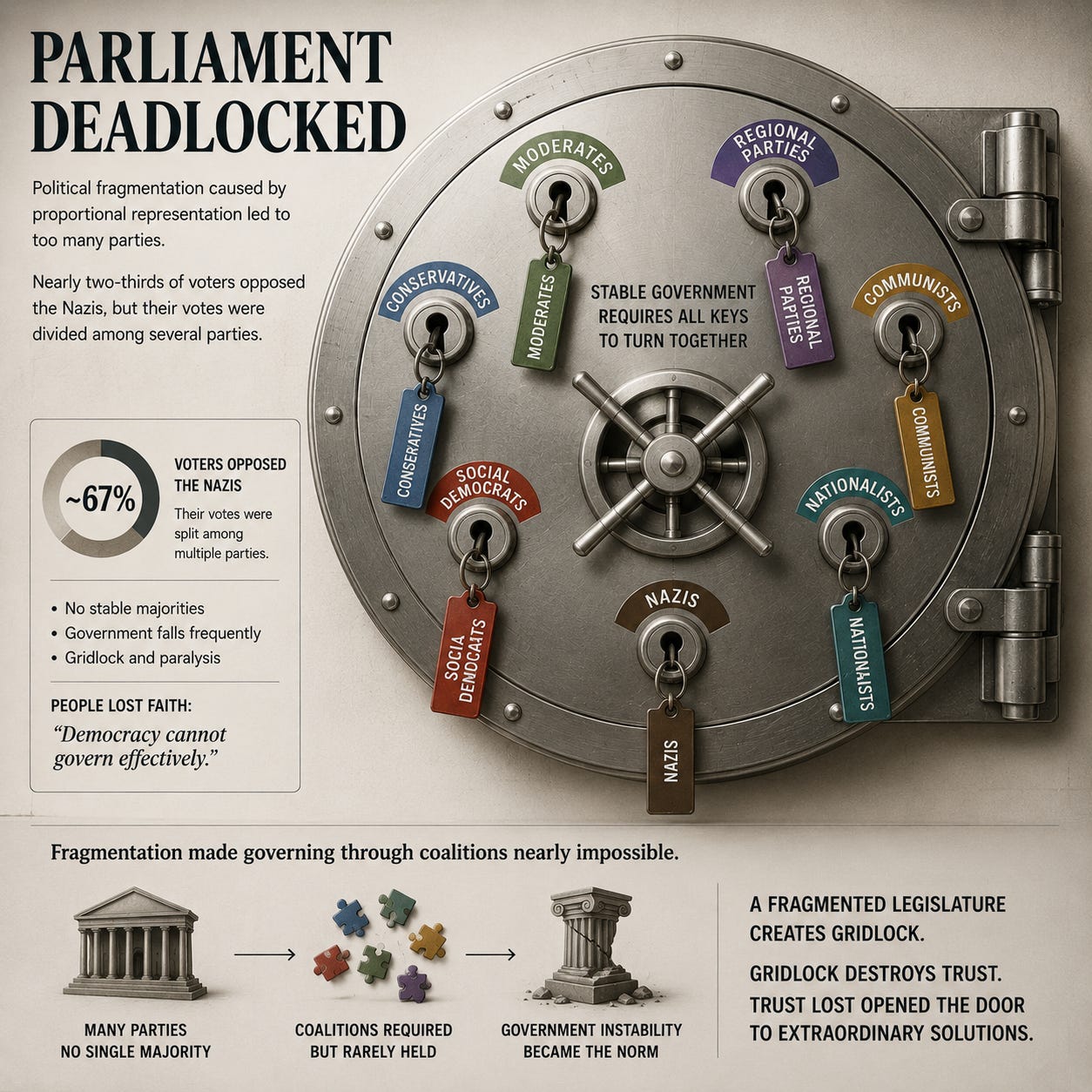
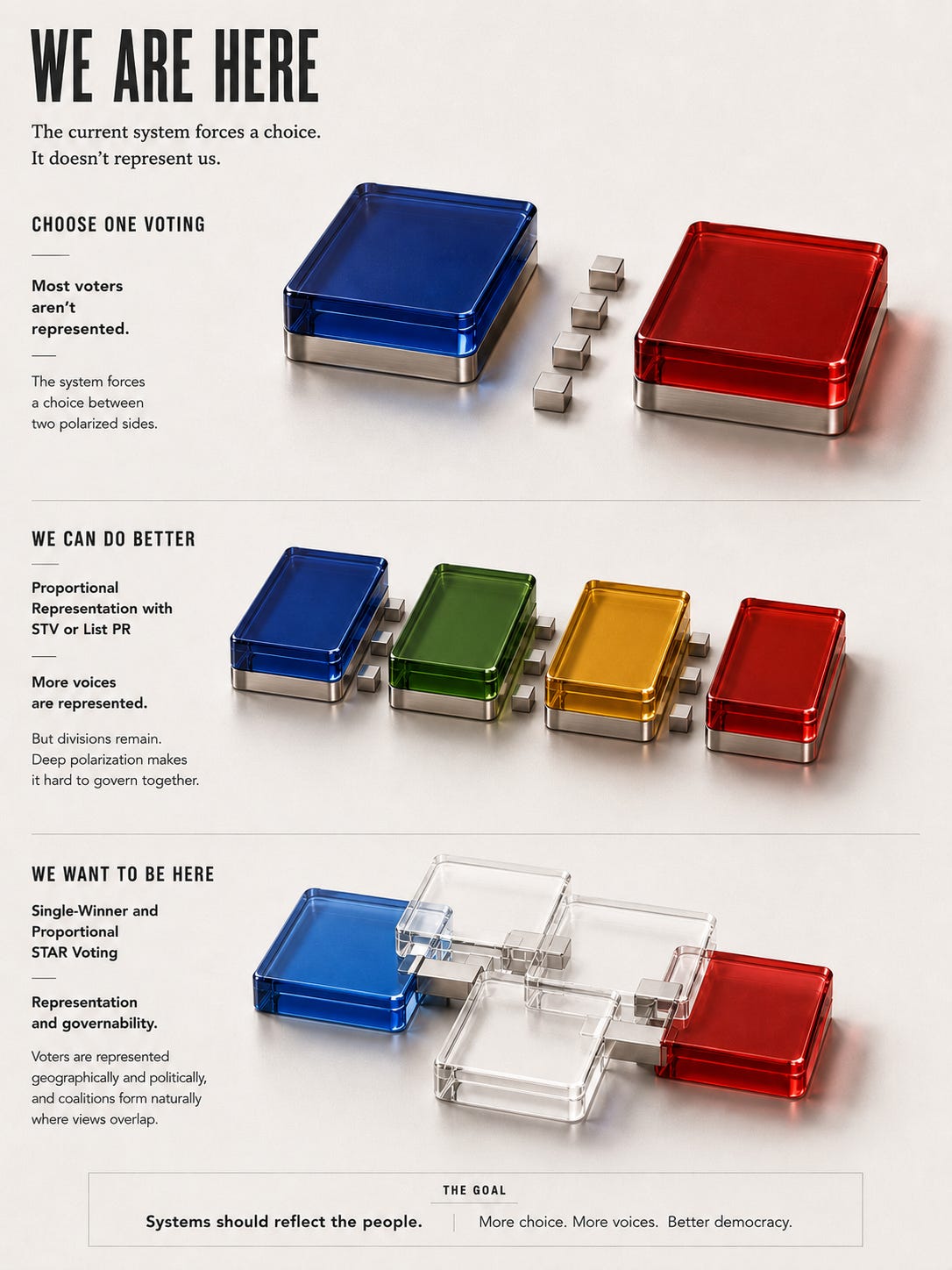
When power is spread across several groups, it can mean:
– More parties needed to pass a law
– Smaller parties holding the deciding vote
– Bargaining power that outweighs their share of voters
– Slower decisions
– More stalemates
Sometimes that produces compromise.
Sometimes it produces gridlock.
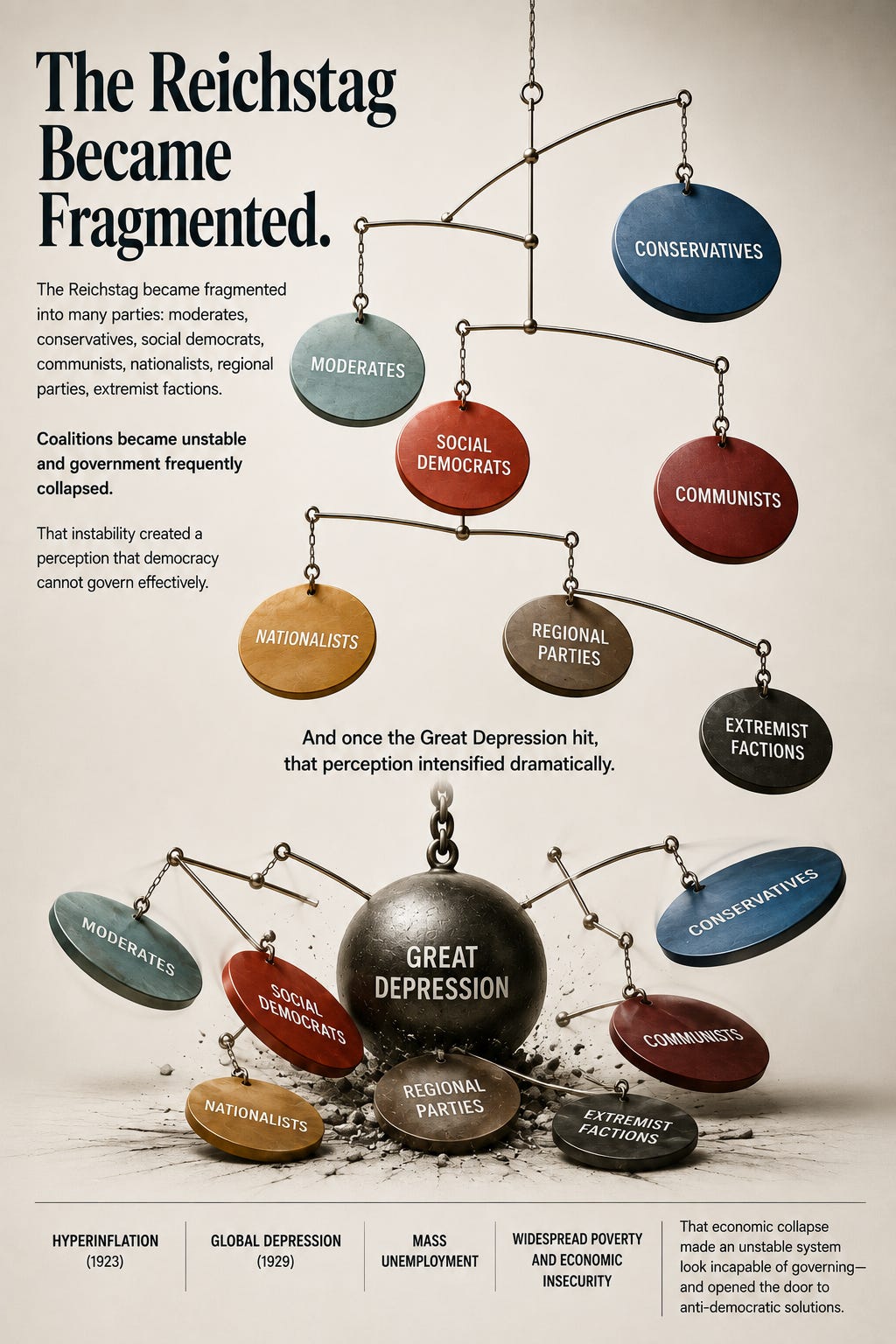
And when government stalls long enough, people don’t say, “Ah, a healthy multiparty democracy.” They say, “Nothing ever changes.”
And when nothing changes, the status quo wins.
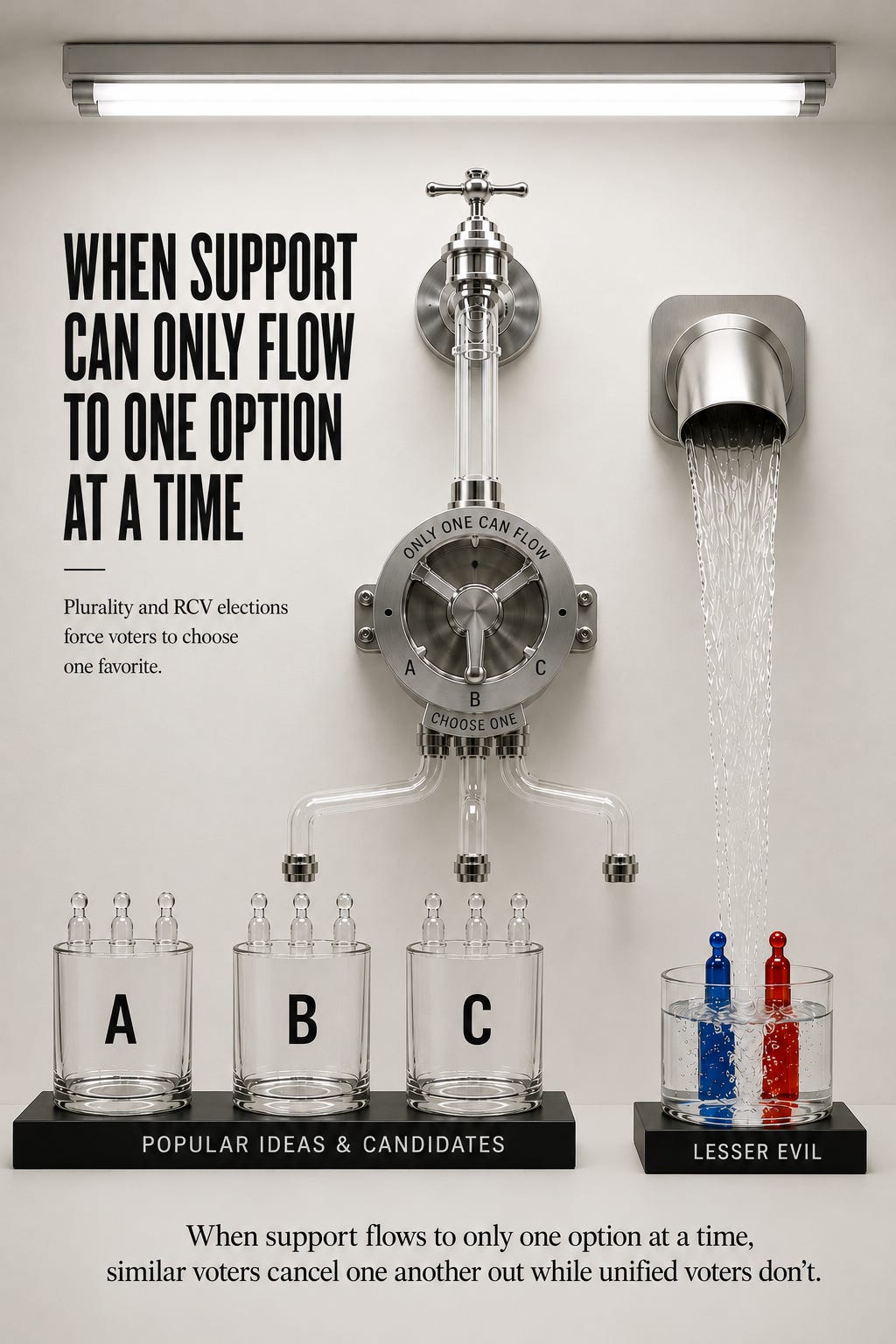
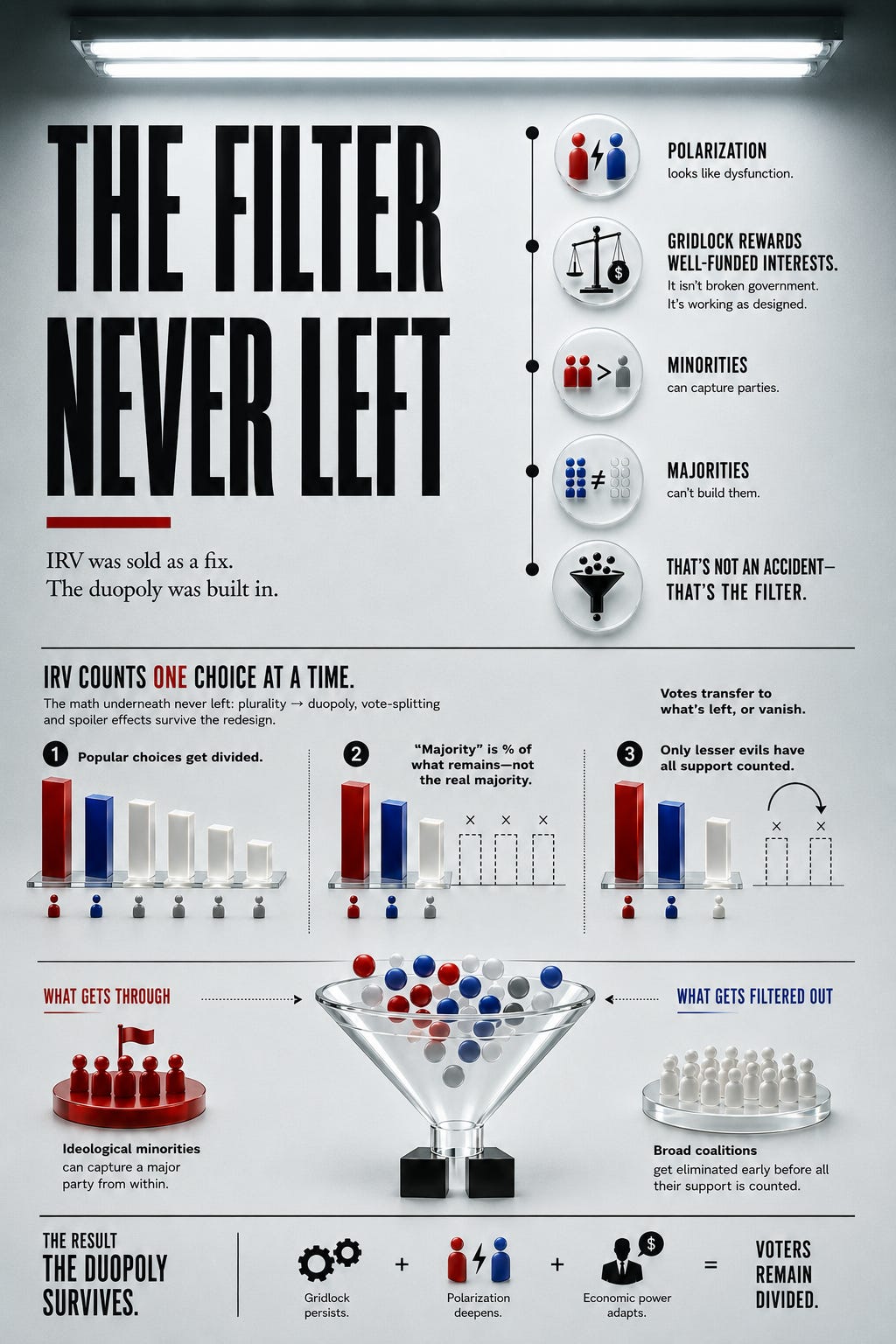
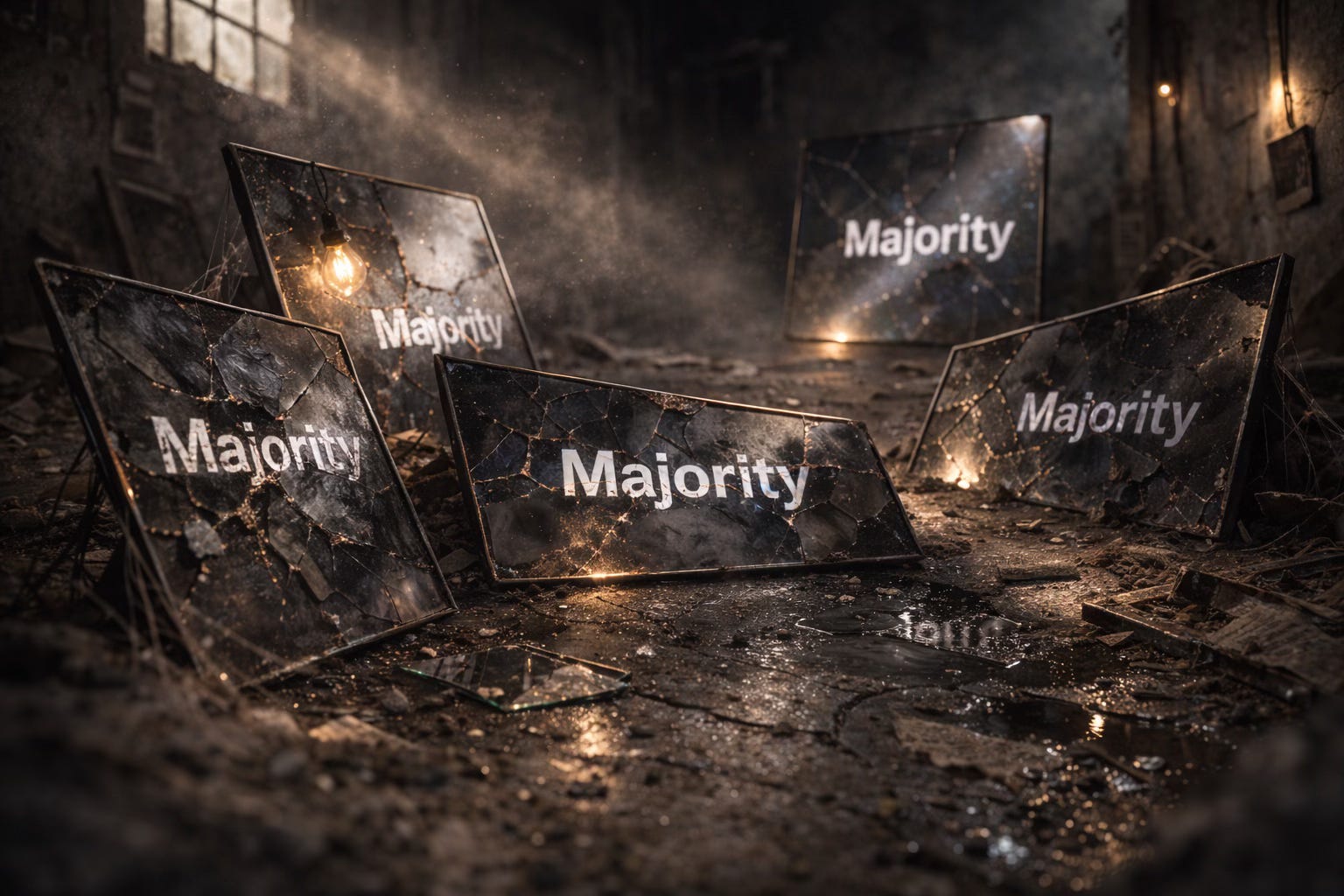
Multiplying factions isn’t the same as multiplying solutions. If the mirror is distorted, multiplying reflections won’t fix it. Clear measurement comes first.
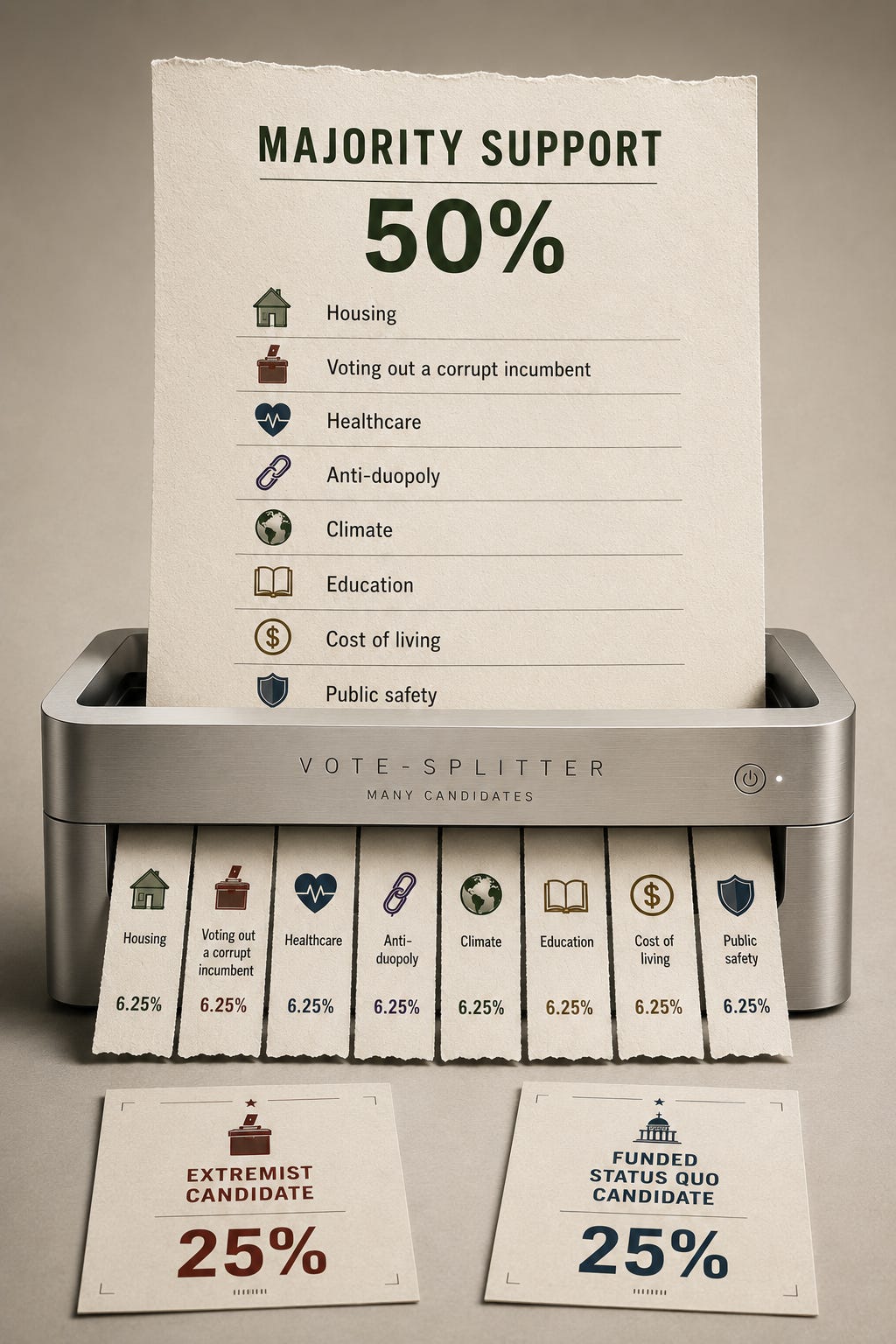
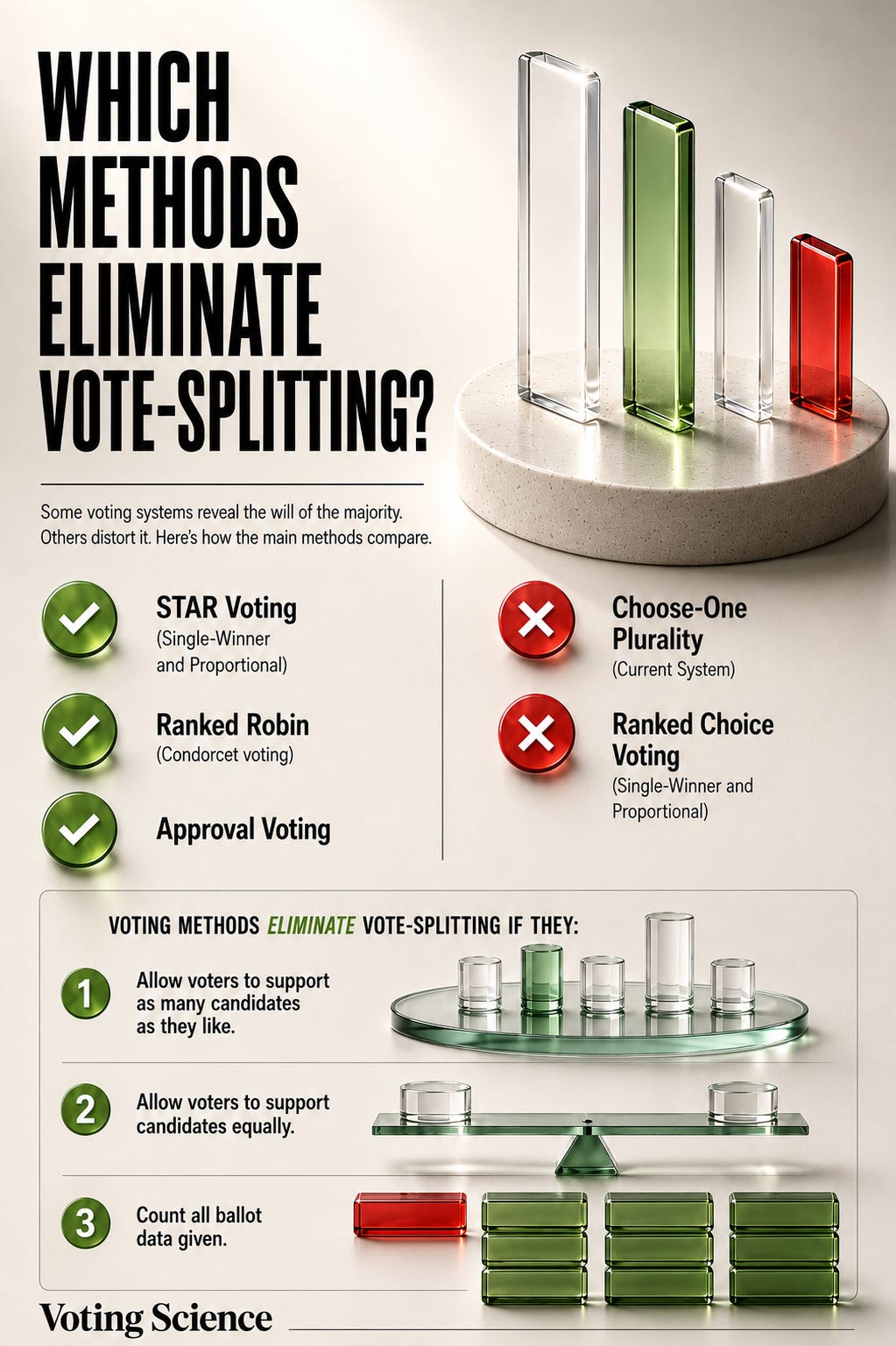
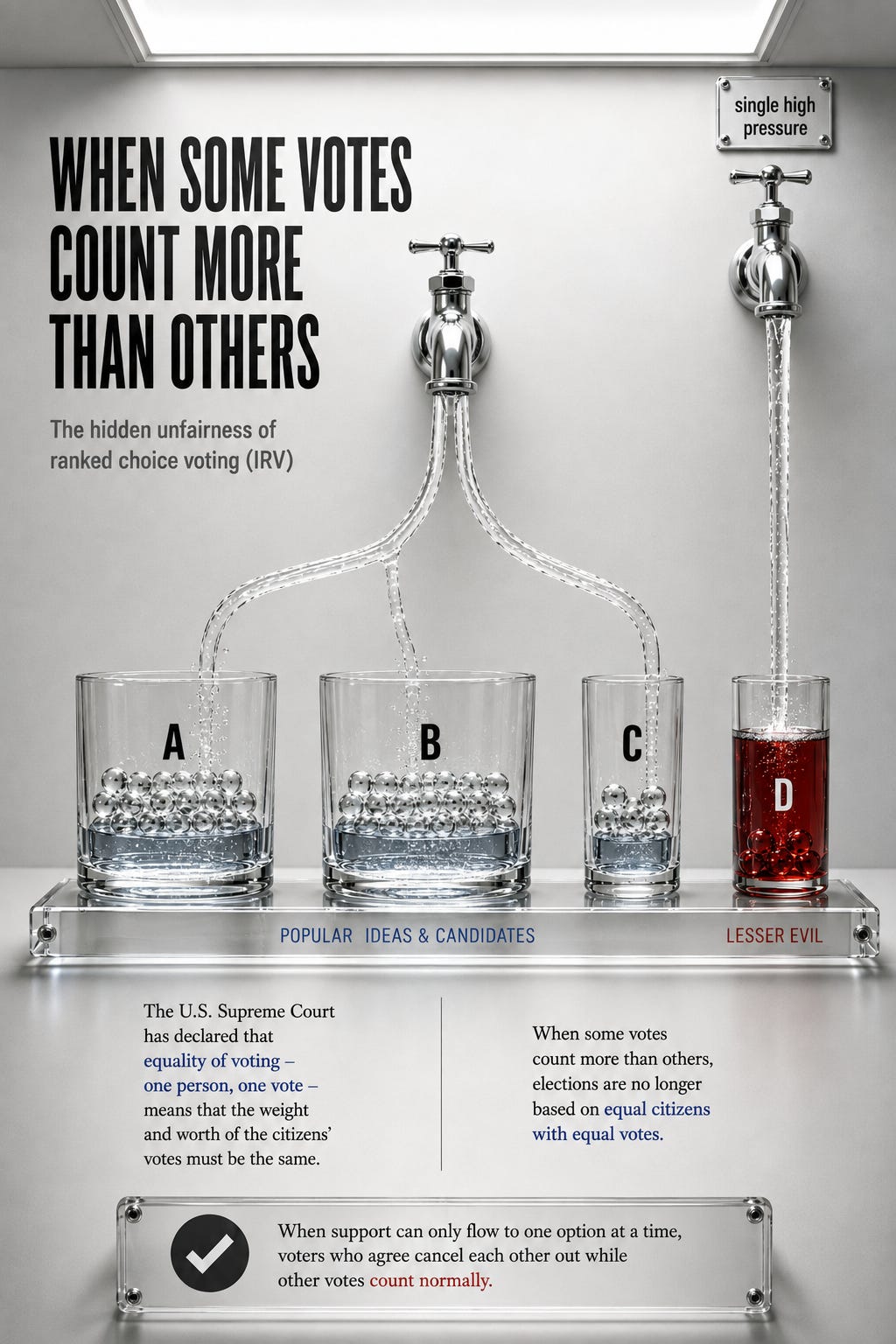
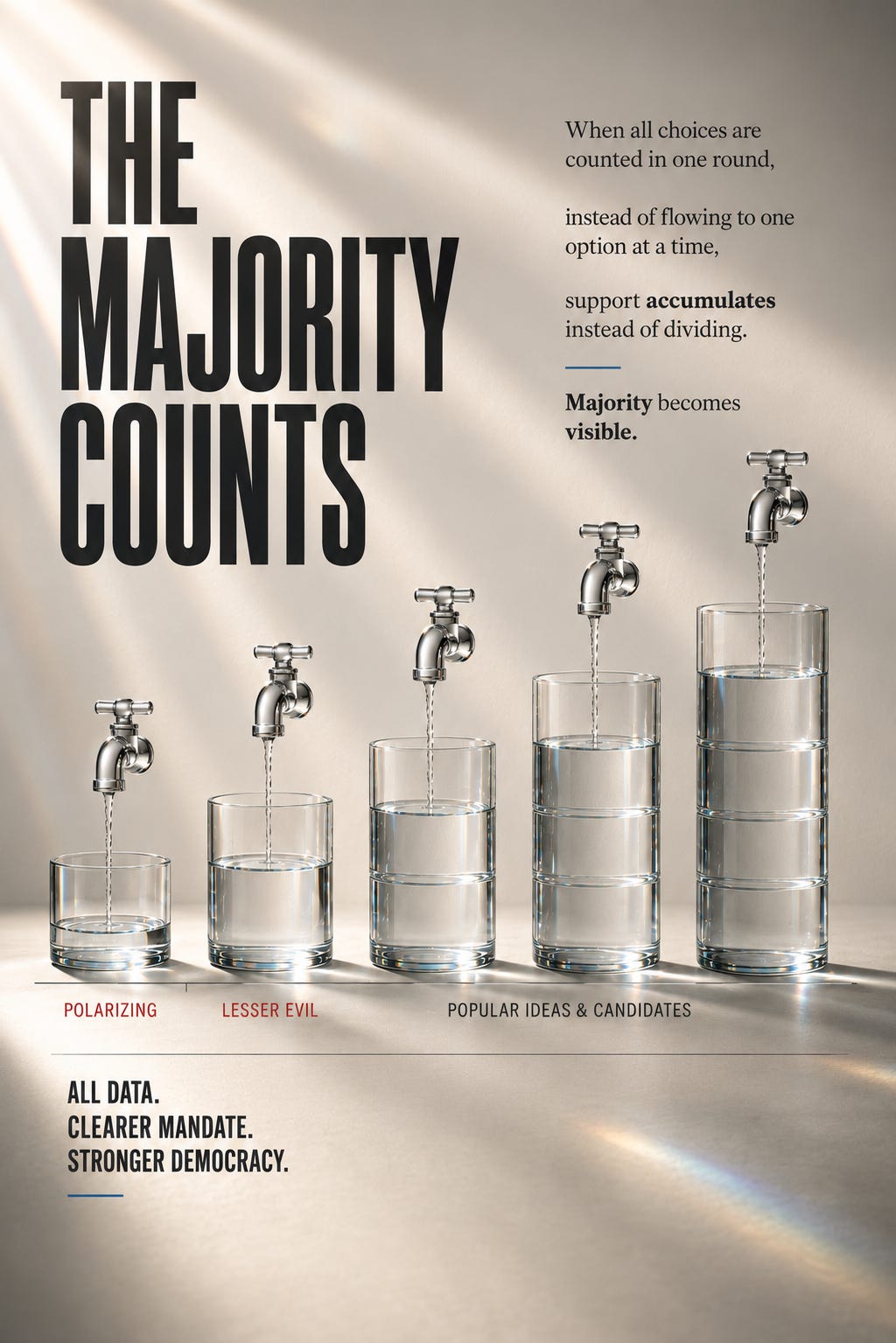
If the rules reflect broad, overlapping support, something different happens. Parties have to appeal to large groups of ordinary voters— not just the loudest activists or the most intense bases.
They have to speak to everyday life:
Groceries.
Rent.
Healthcare.
Stability.
That changes the “market.” Instead of two dominant brands and several fringe factions, you can get multiple majority-competitive options.
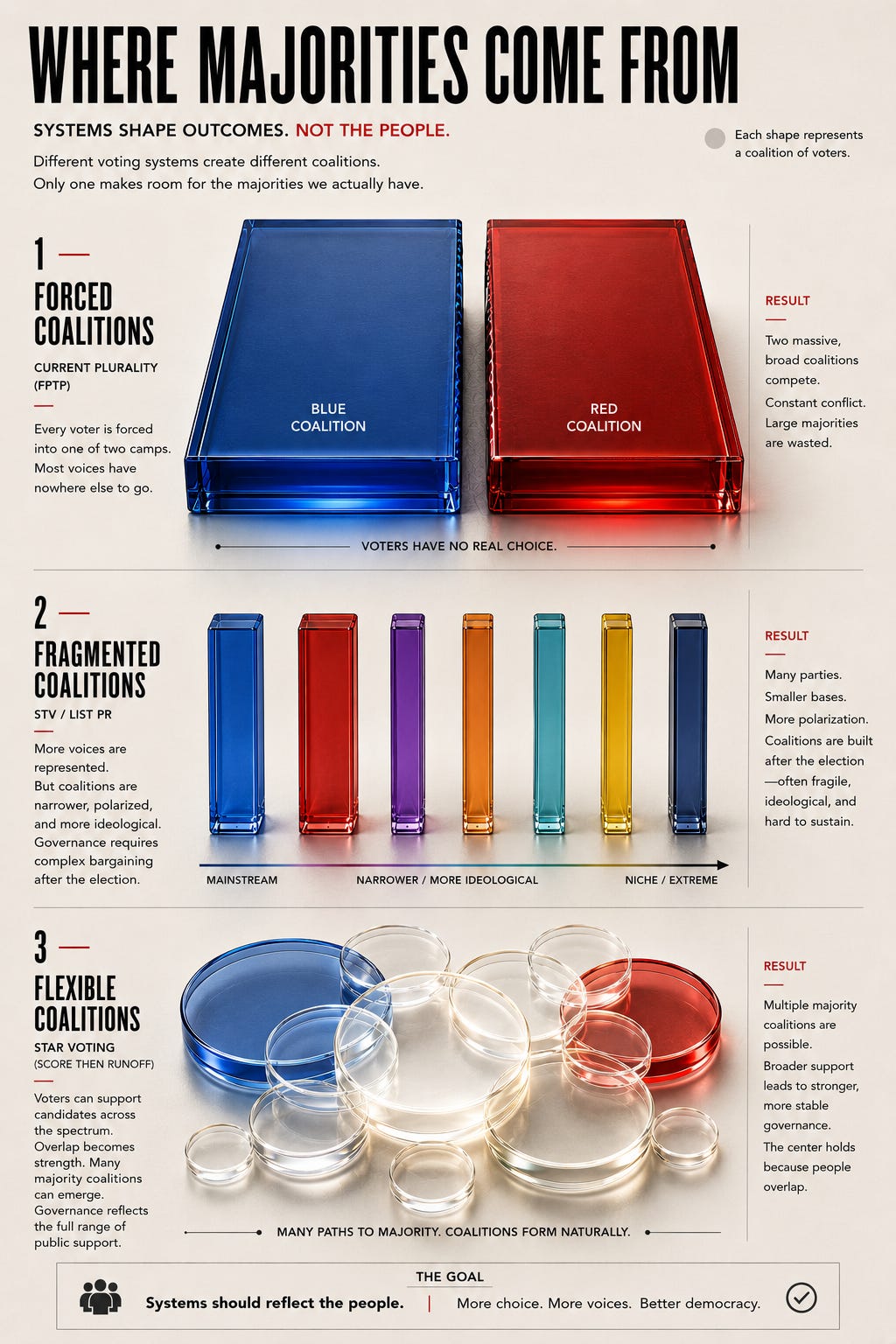
And like any marketplace, when real competition increases, the “consumers” benefit.
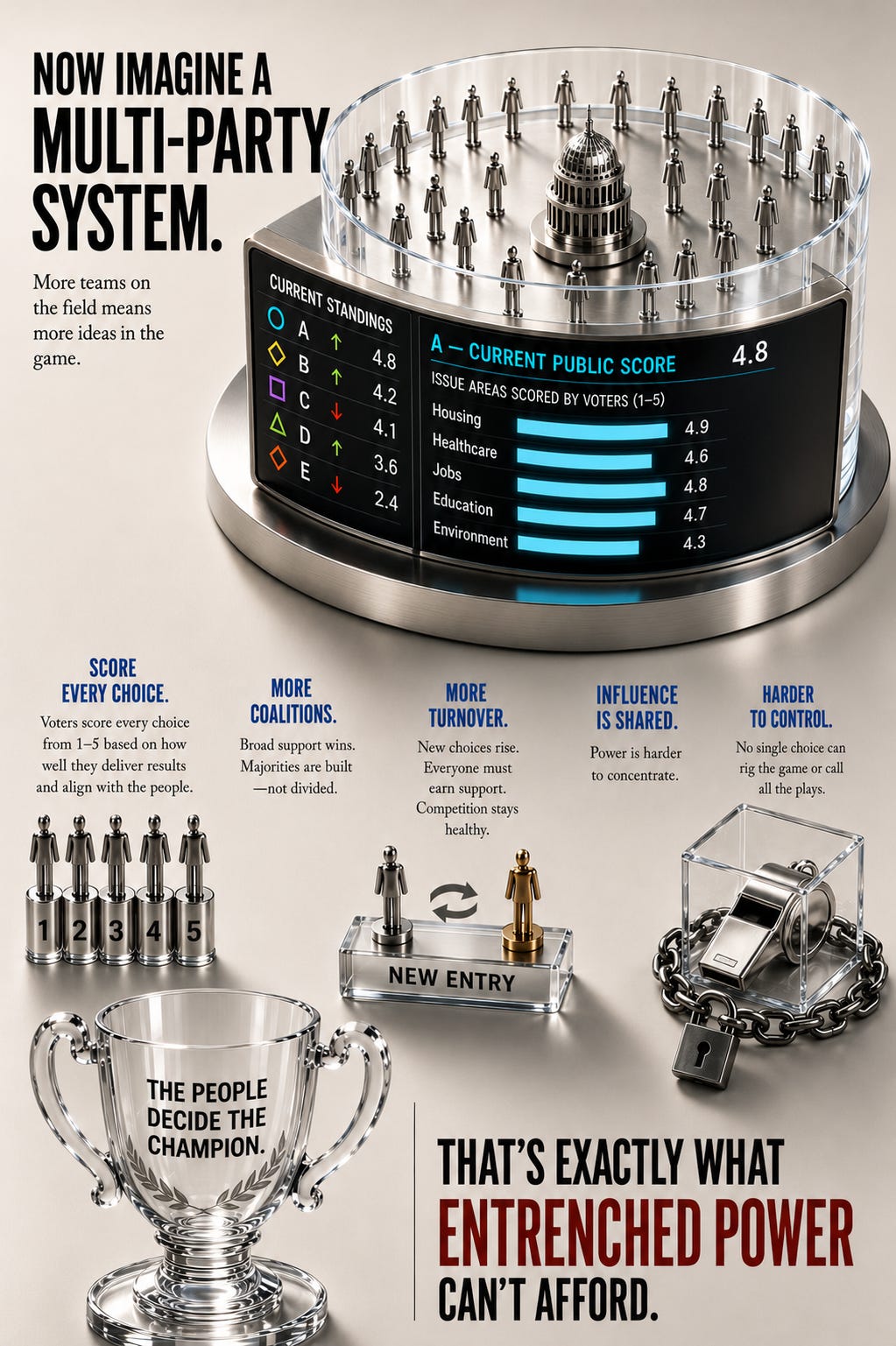
Because most voters don’t just want more parties. They want government that works.
Rules create incentives.
Incentives shape behavior.
Behavior shapes culture.

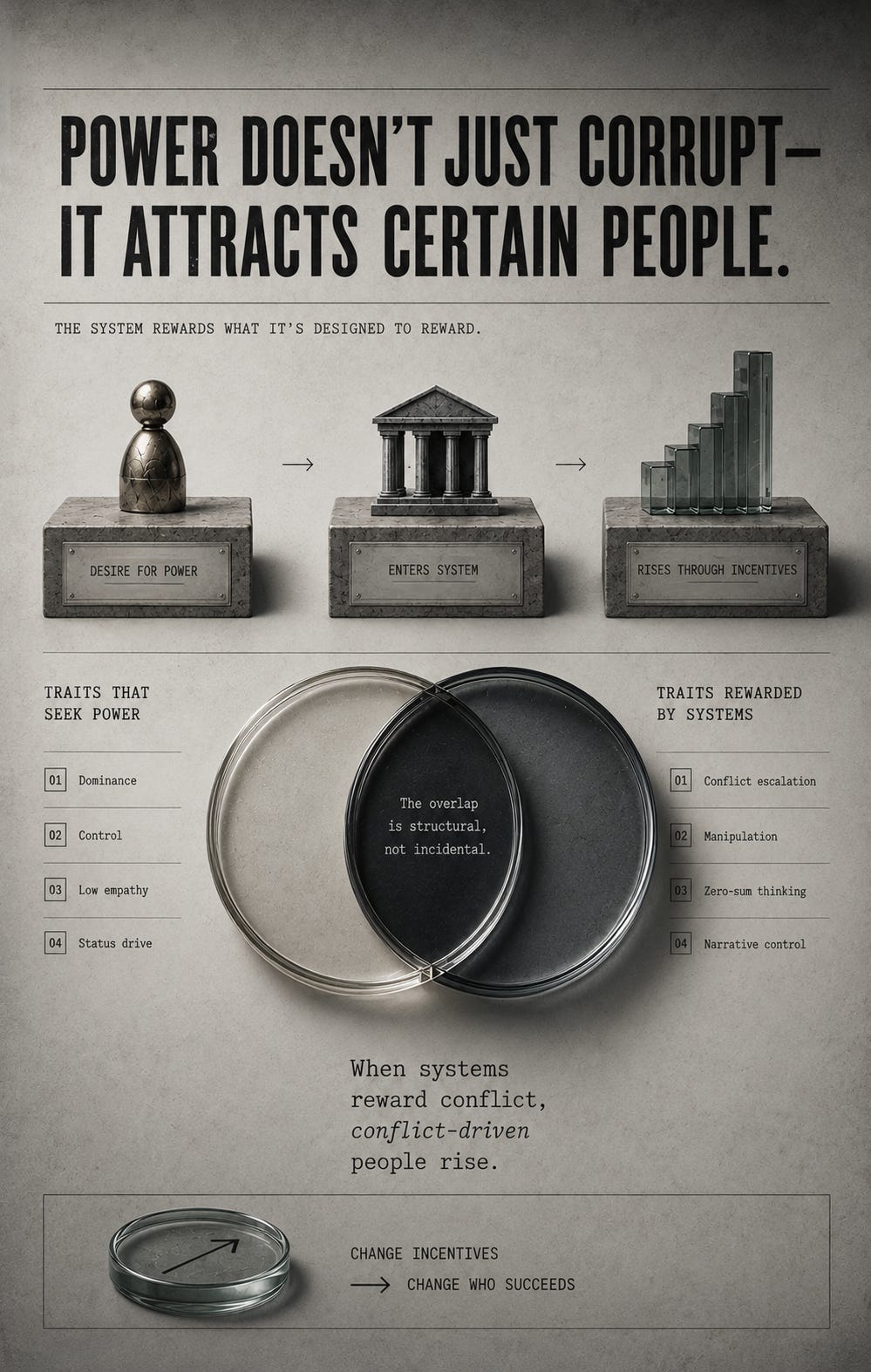
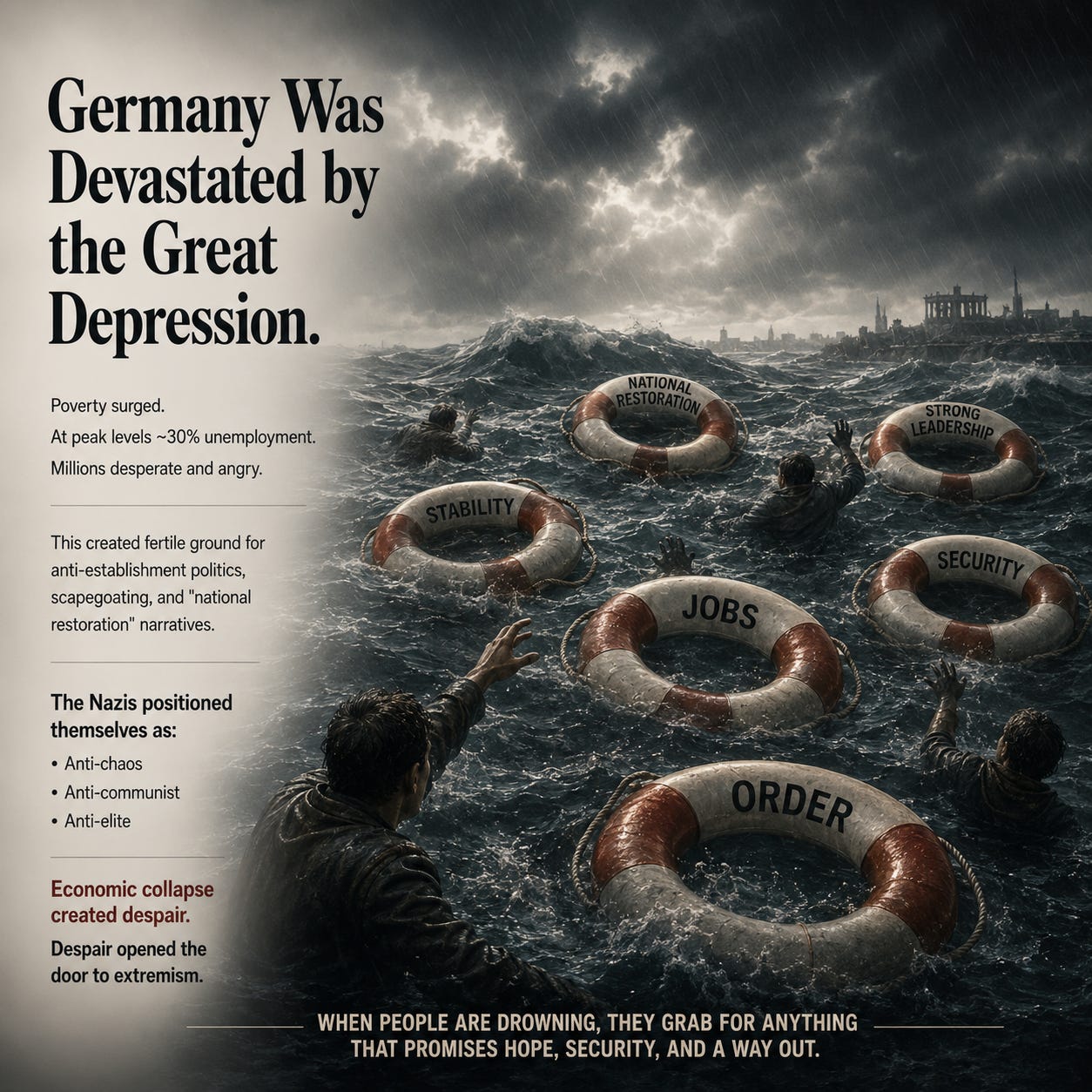
If a system rewards fear consolidation, it elevates high-conflict personalities who are skilled at outrage and zero-sum conflict. History has shown how parties without a majority requirement gain a foothold in proportional systems—and then rise with hate-fueled campaigns that turn economic pain into blame that scapegoats vulnerable groups.
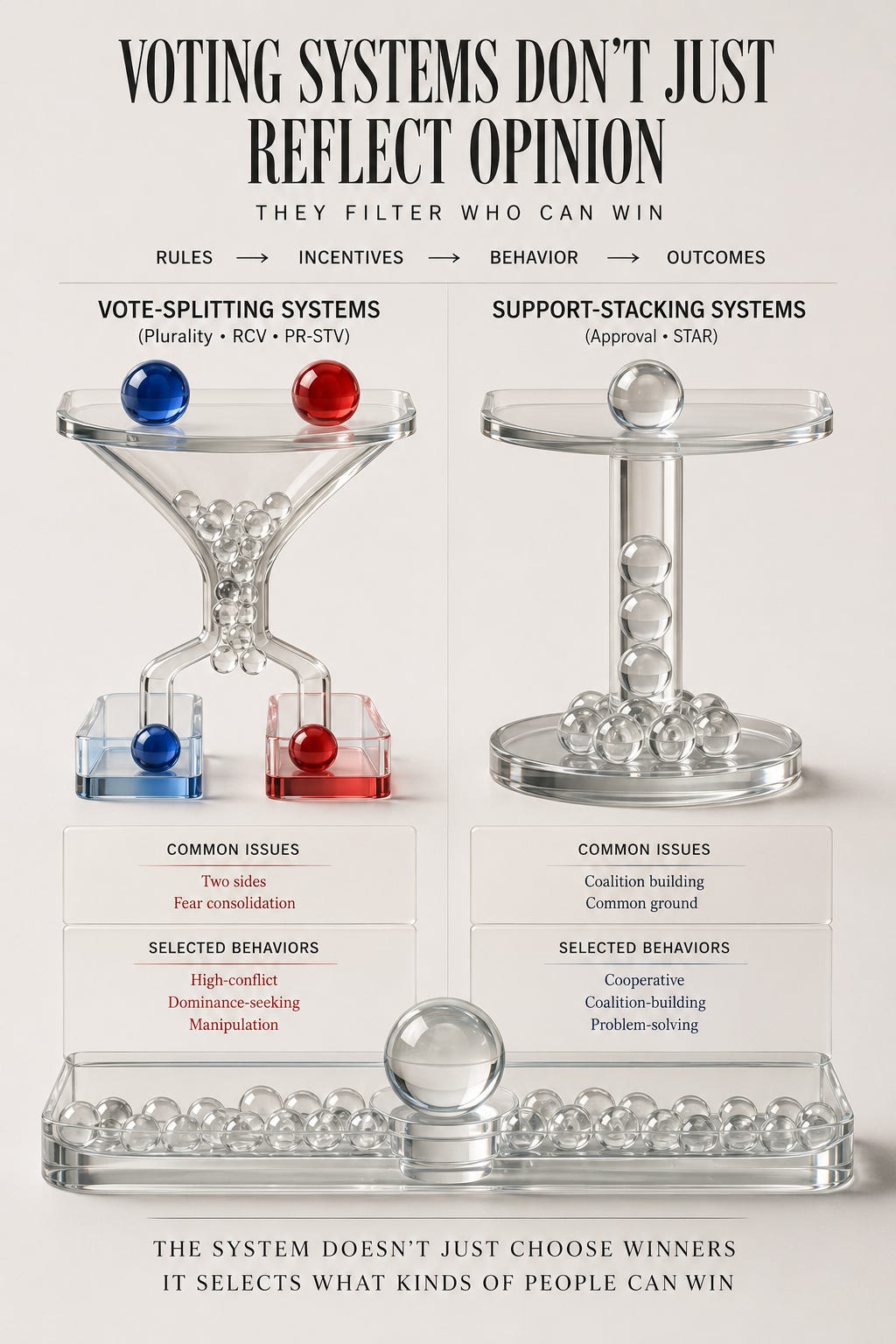
If a system rewards broad support, it elevates people who are skilled at reasoning, coalition-building, and solving practical problems. Over time, that compounds.
Conflict becomes a career path.
Or cooperation becomes one.
That’s not about ideology. It’s about incentives.
Multiparty politics can move forward. Or it can multiply the same dysfunction. The difference isn’t the number of parties. It’s the incentives underneath them.
And those rules don’t just shape one election.
They shape what personalities climb the ladder for decades.