How The Internet Is Gaslighting You


Chapter 1: The Internet’s Biggest Fans
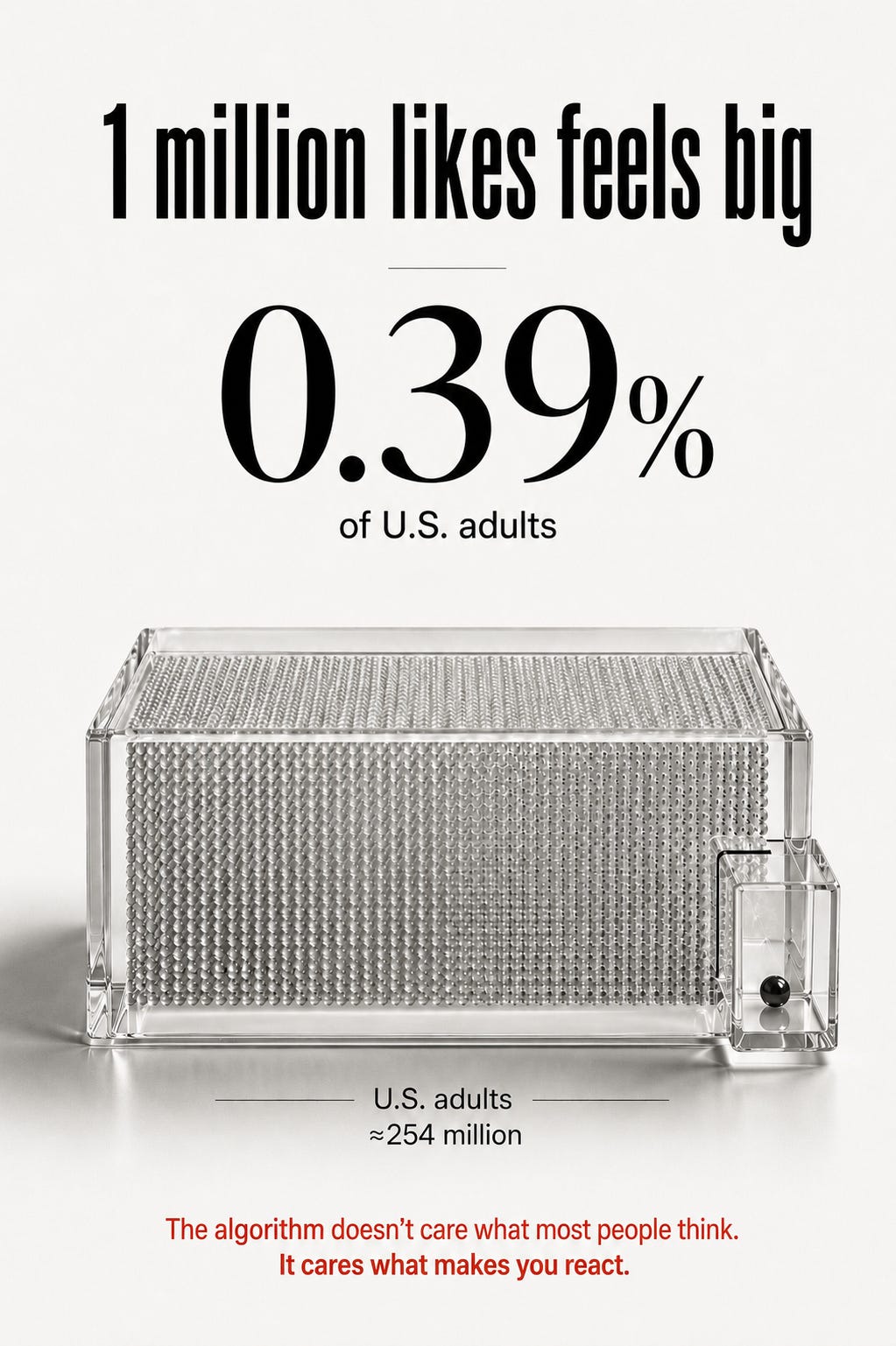
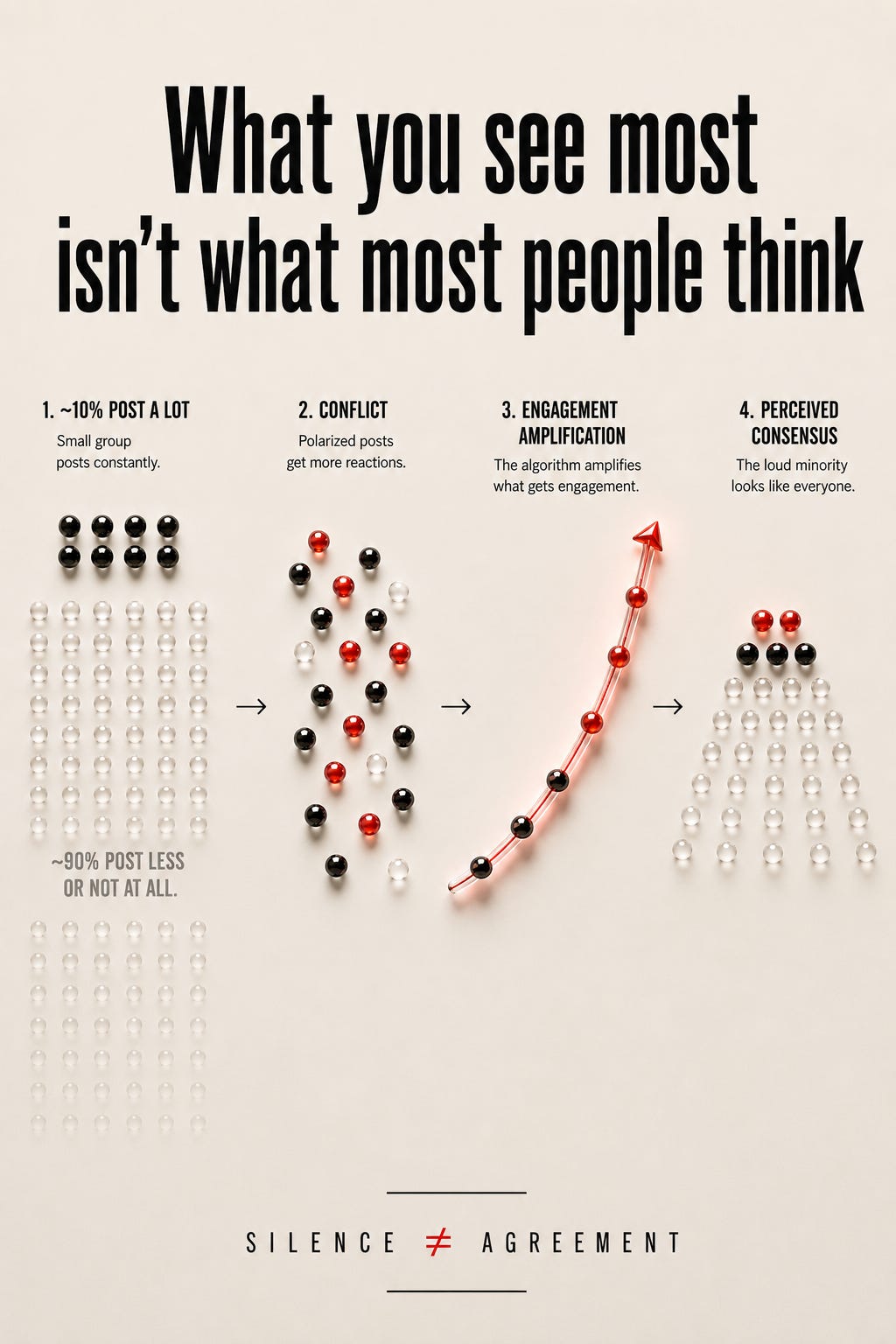
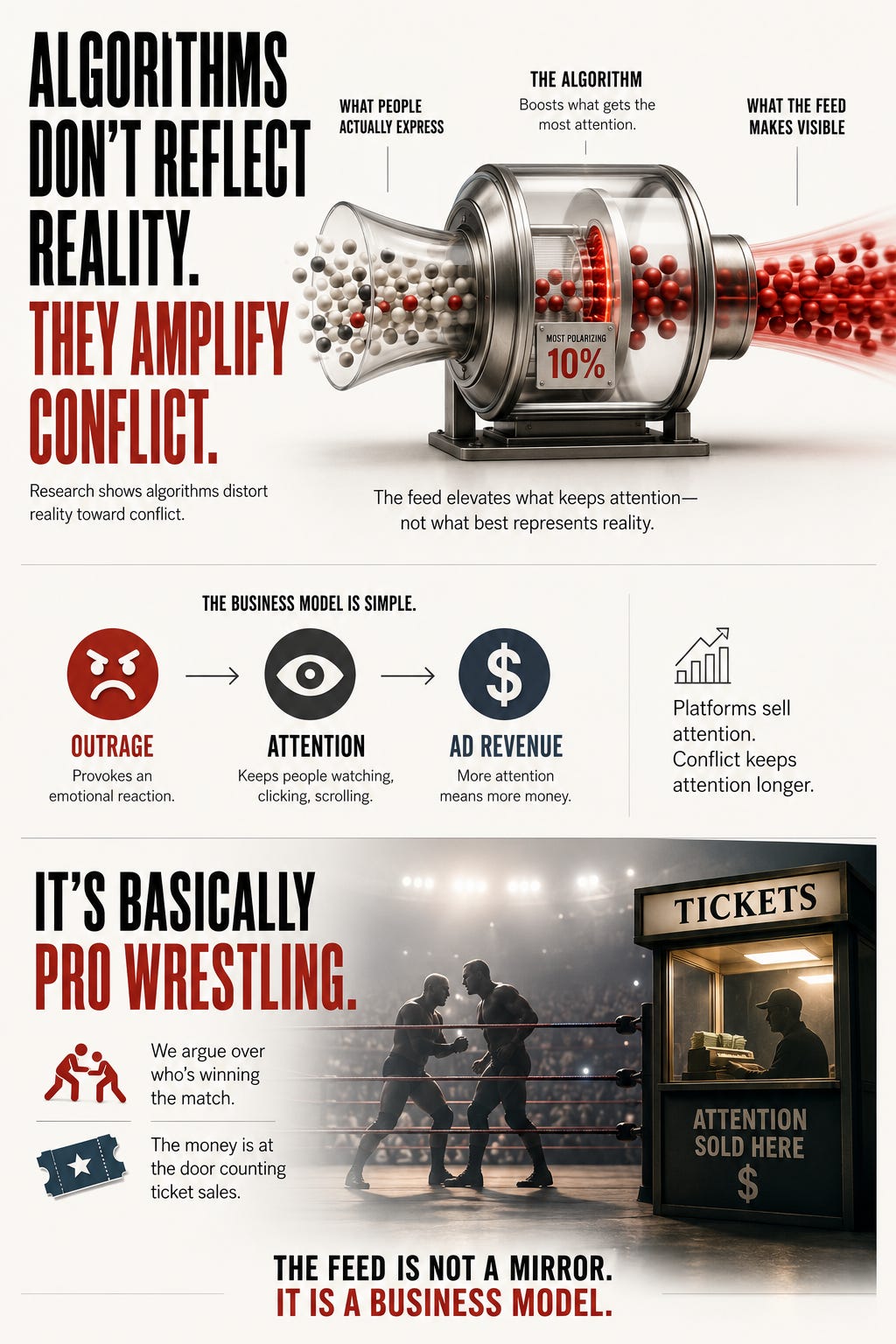




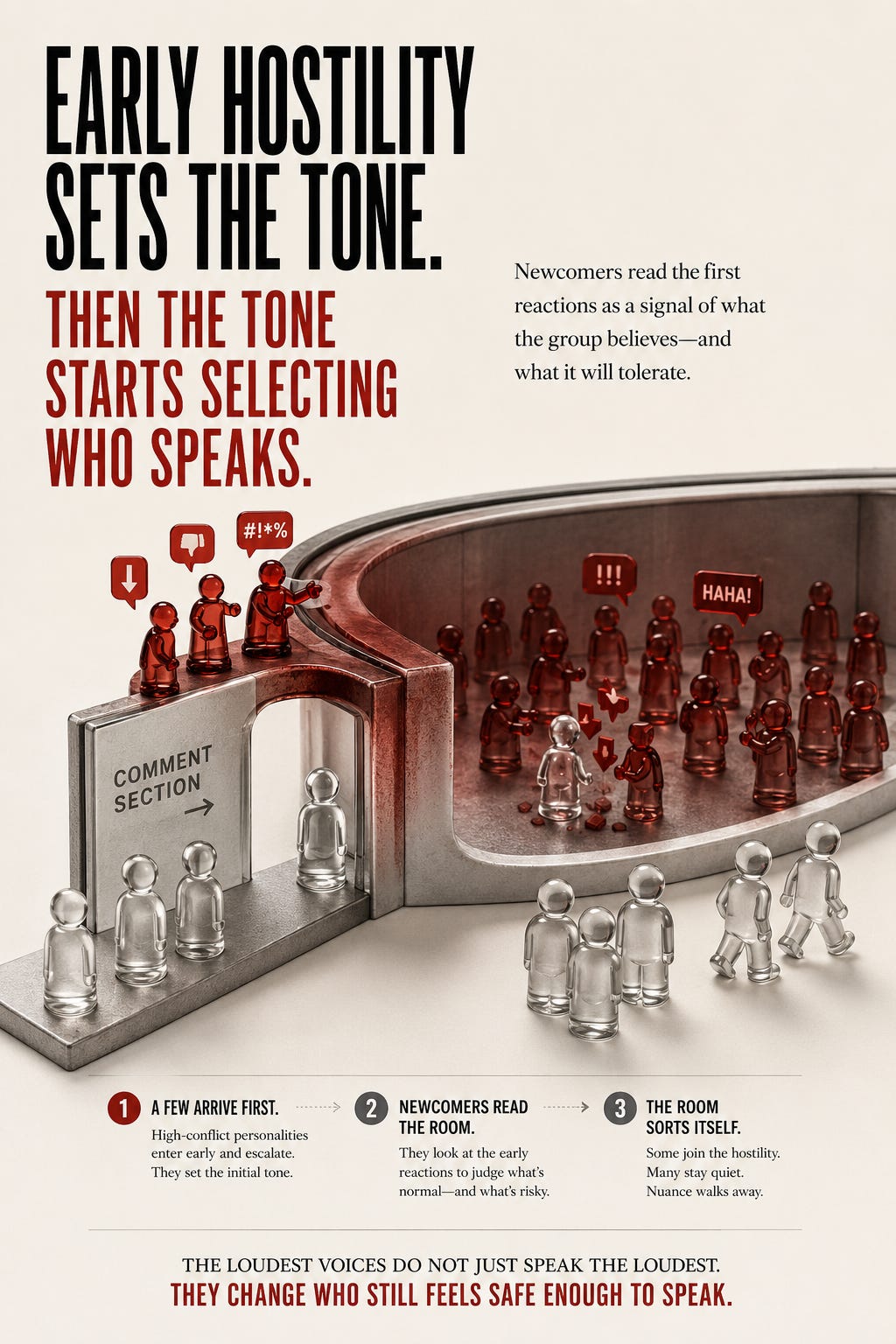
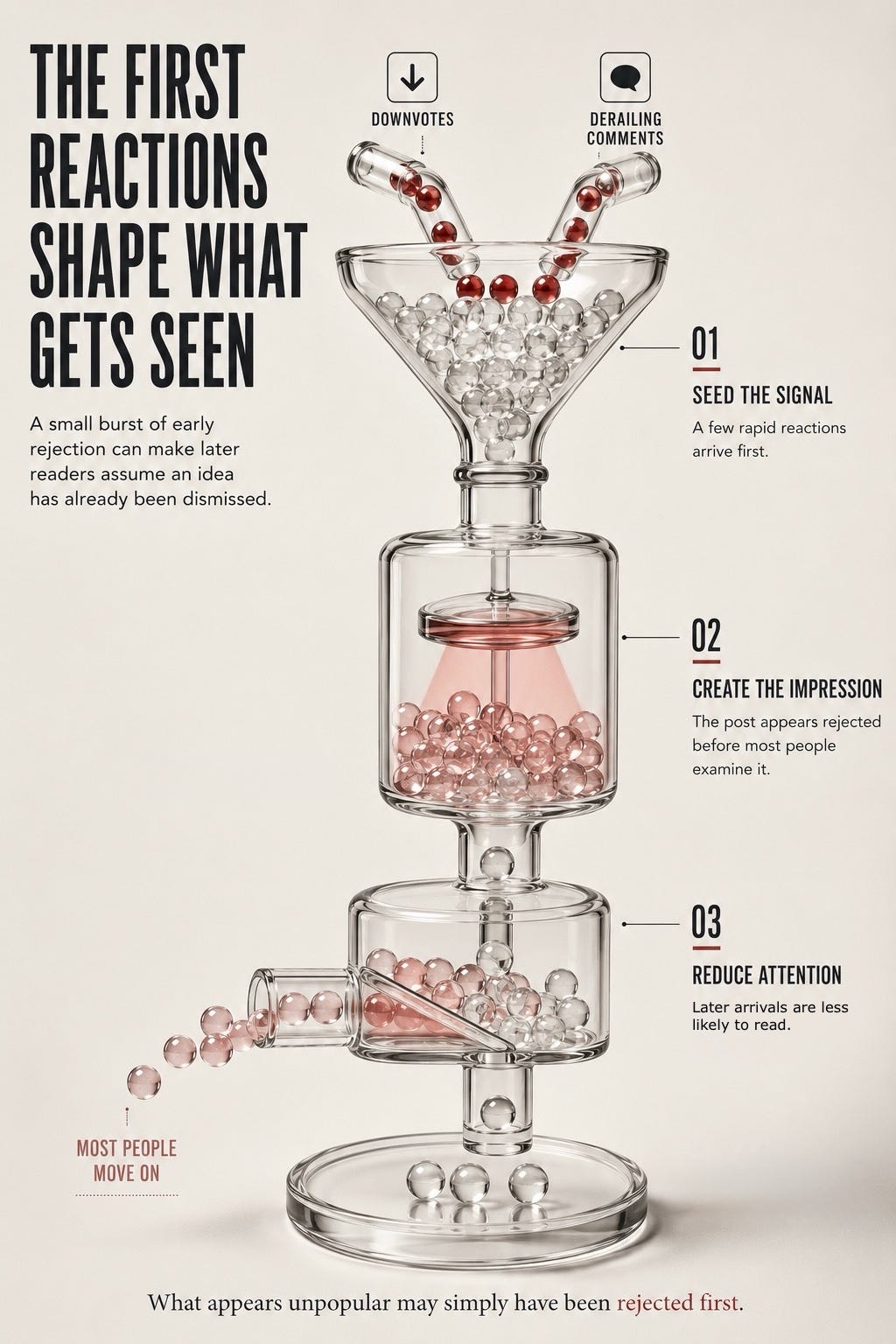
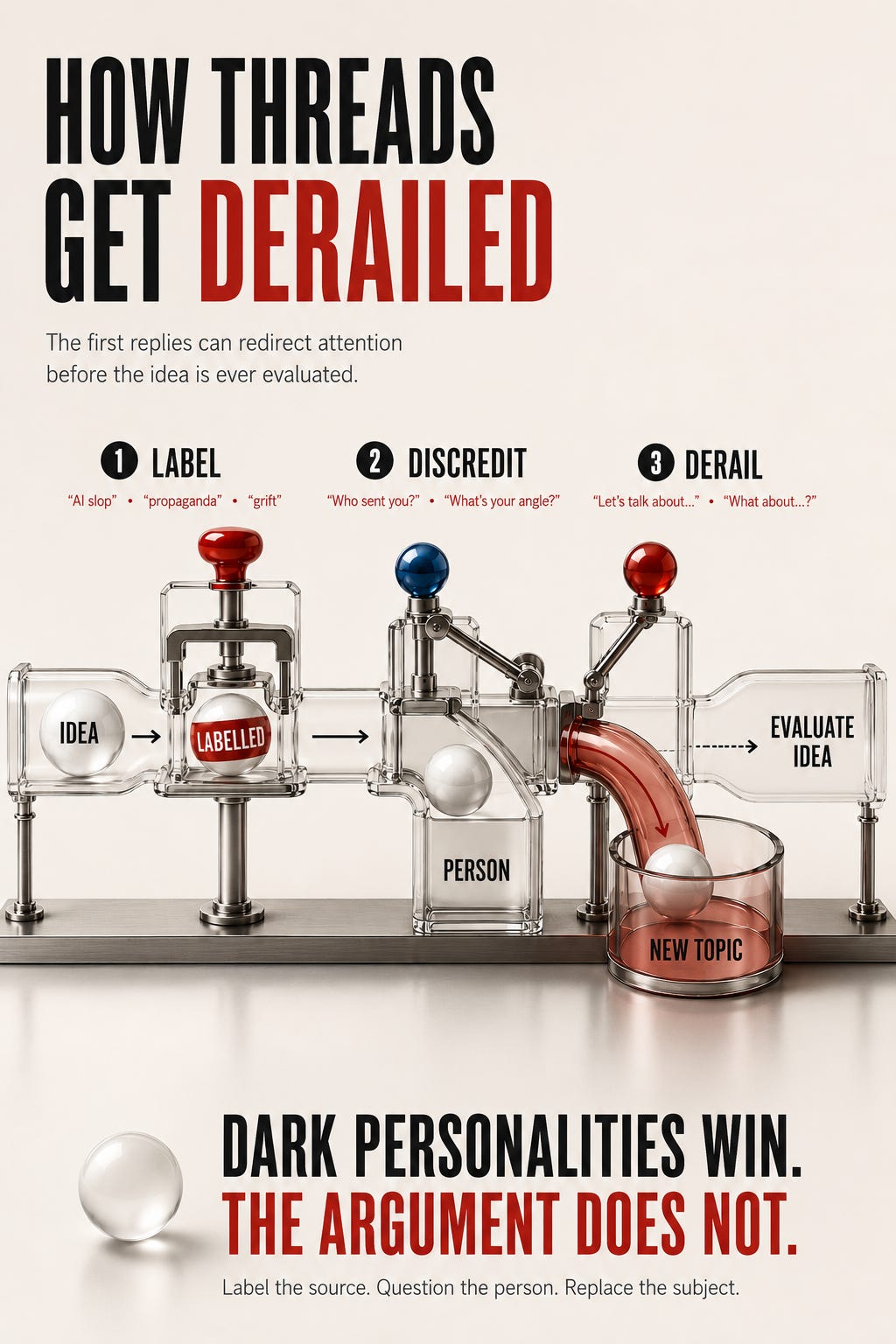
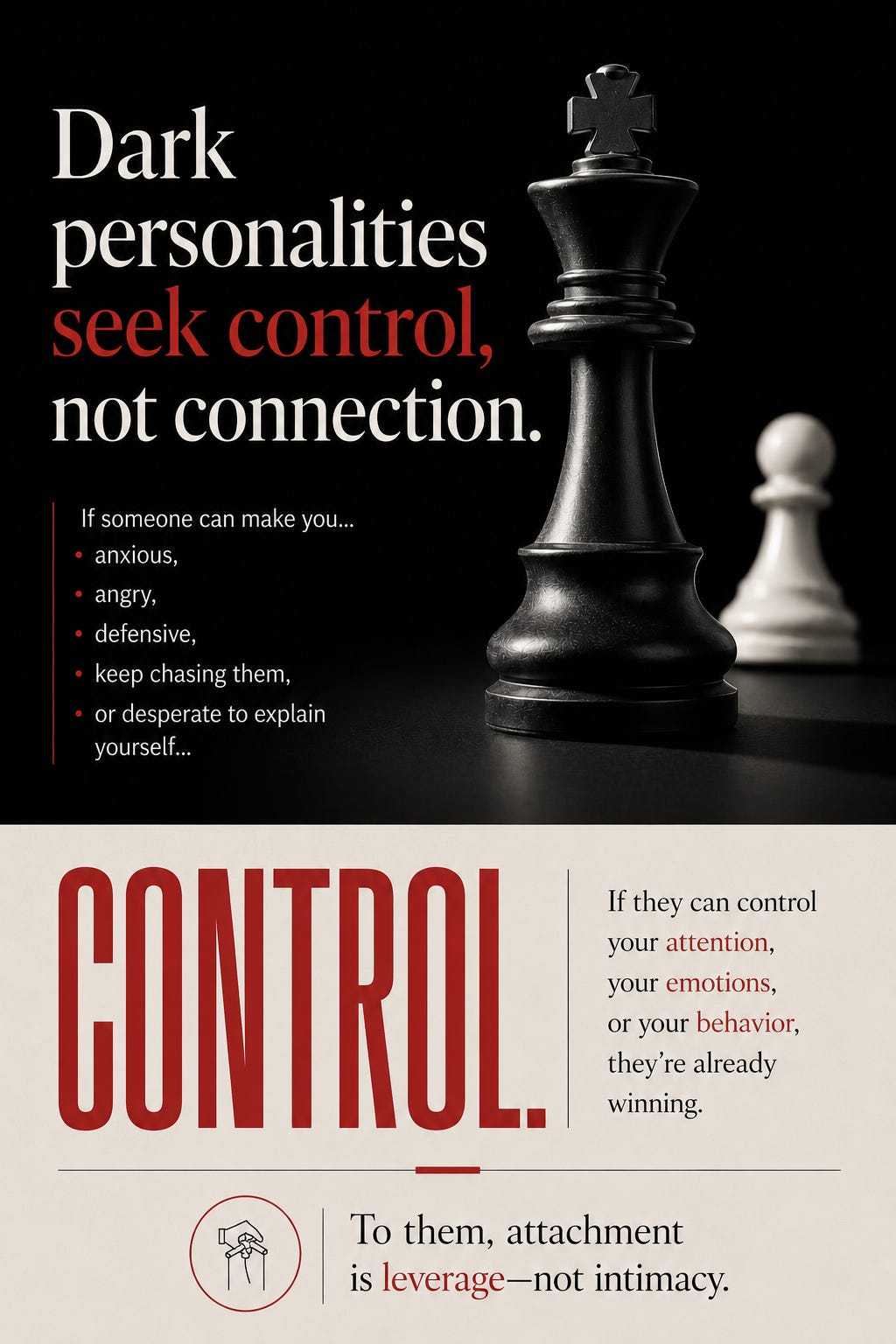
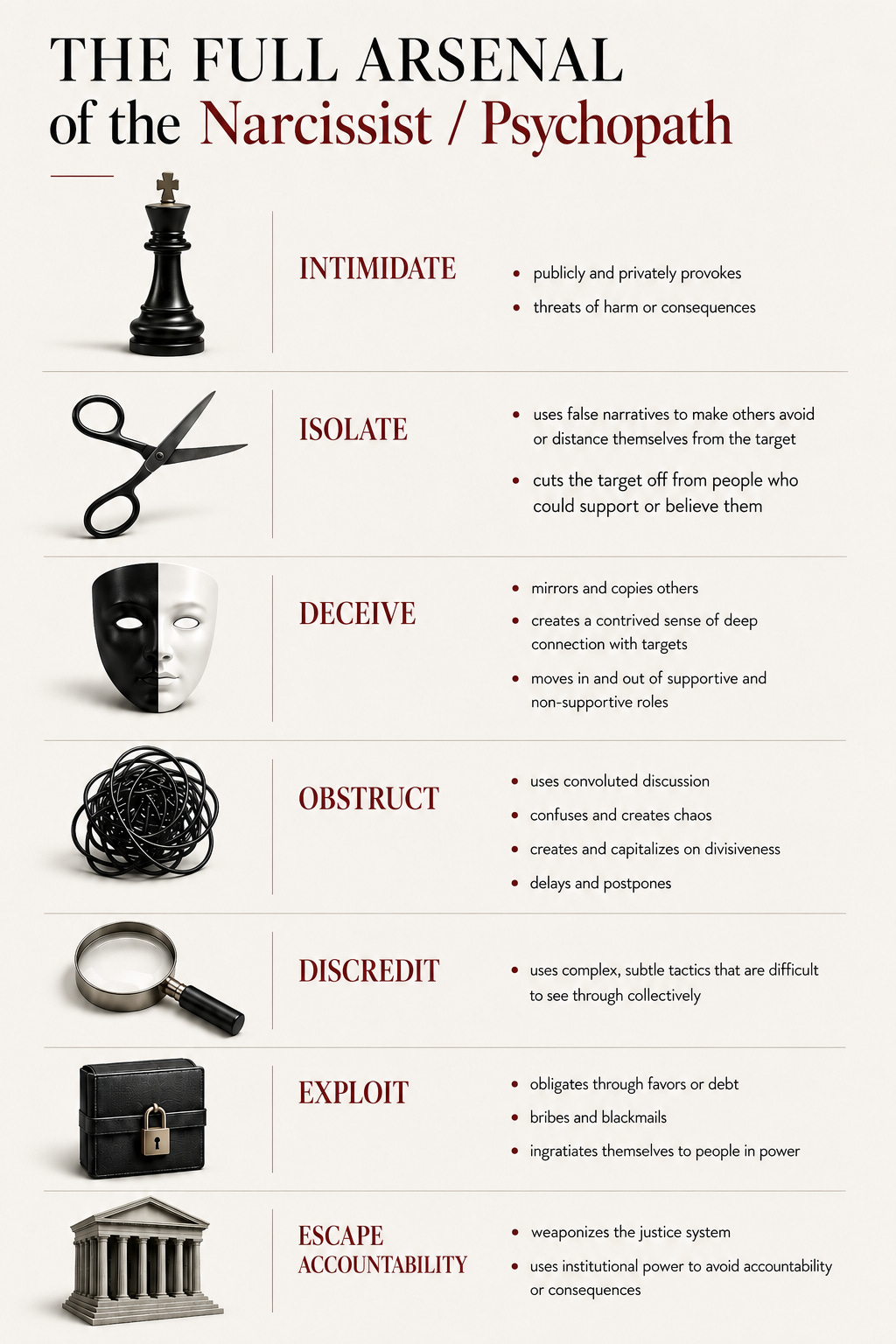
It’s a predictable pattern: label → discredit → derail. Broad labels and vague dismissals are the tactic of choice because they’re low-effort and endlessly reusable.
It shows up when the post gets shared elsewhere — a link dropped somewhere to pull in dark personalities.
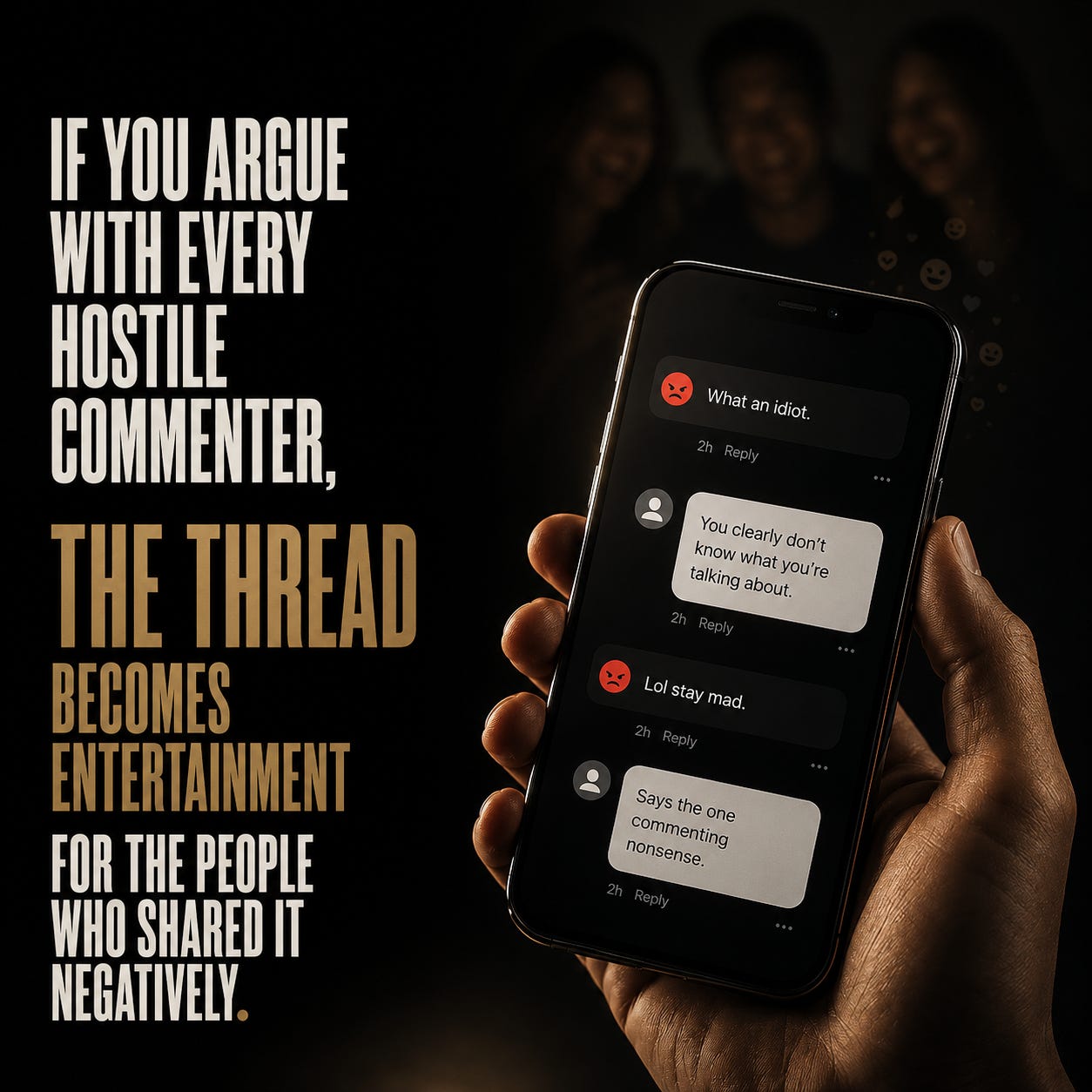
Arguing with every commenter just hands them the show they wanted. Ignore the bait.
I see it too. I believe you.
Chapter 2: The Tactics

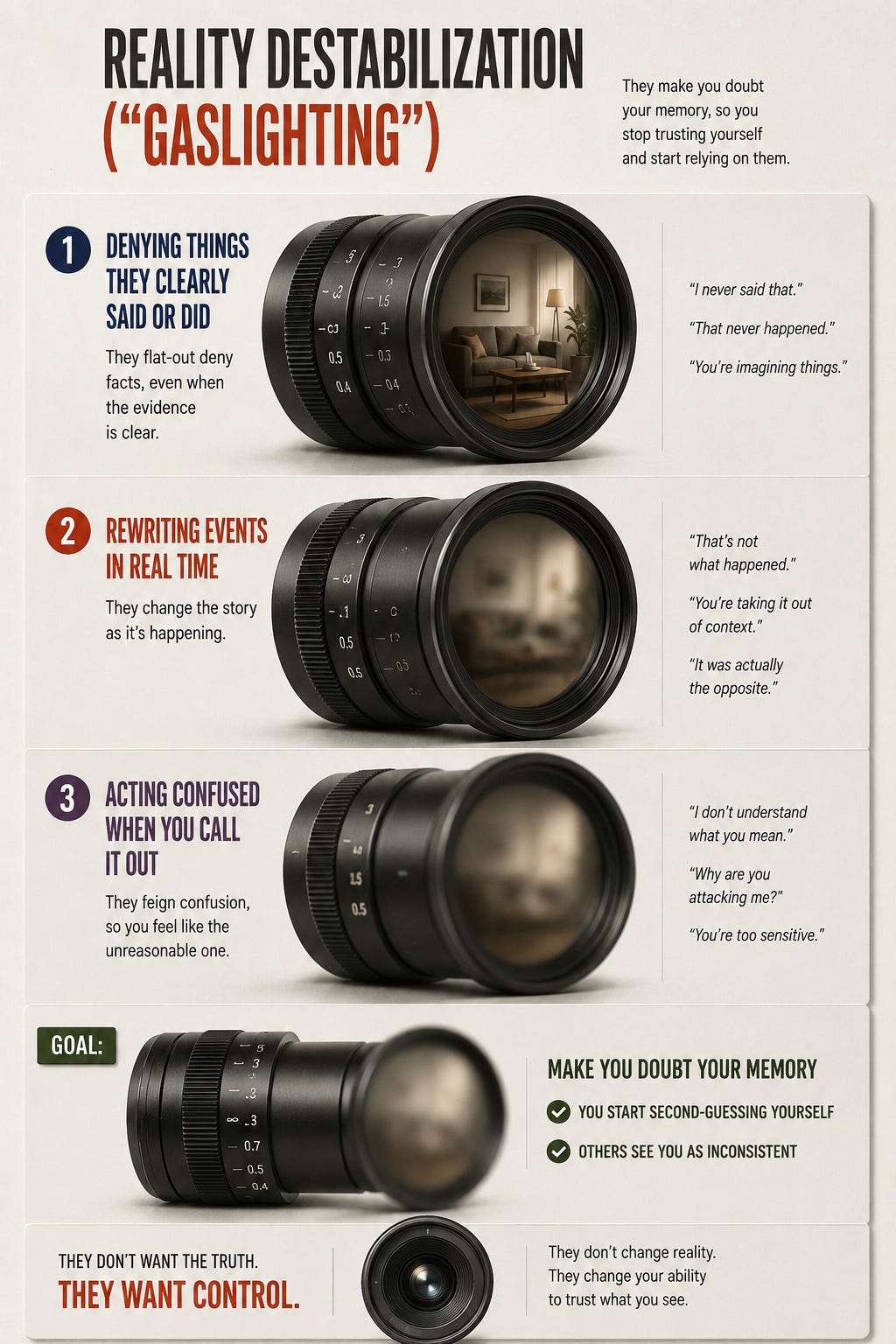
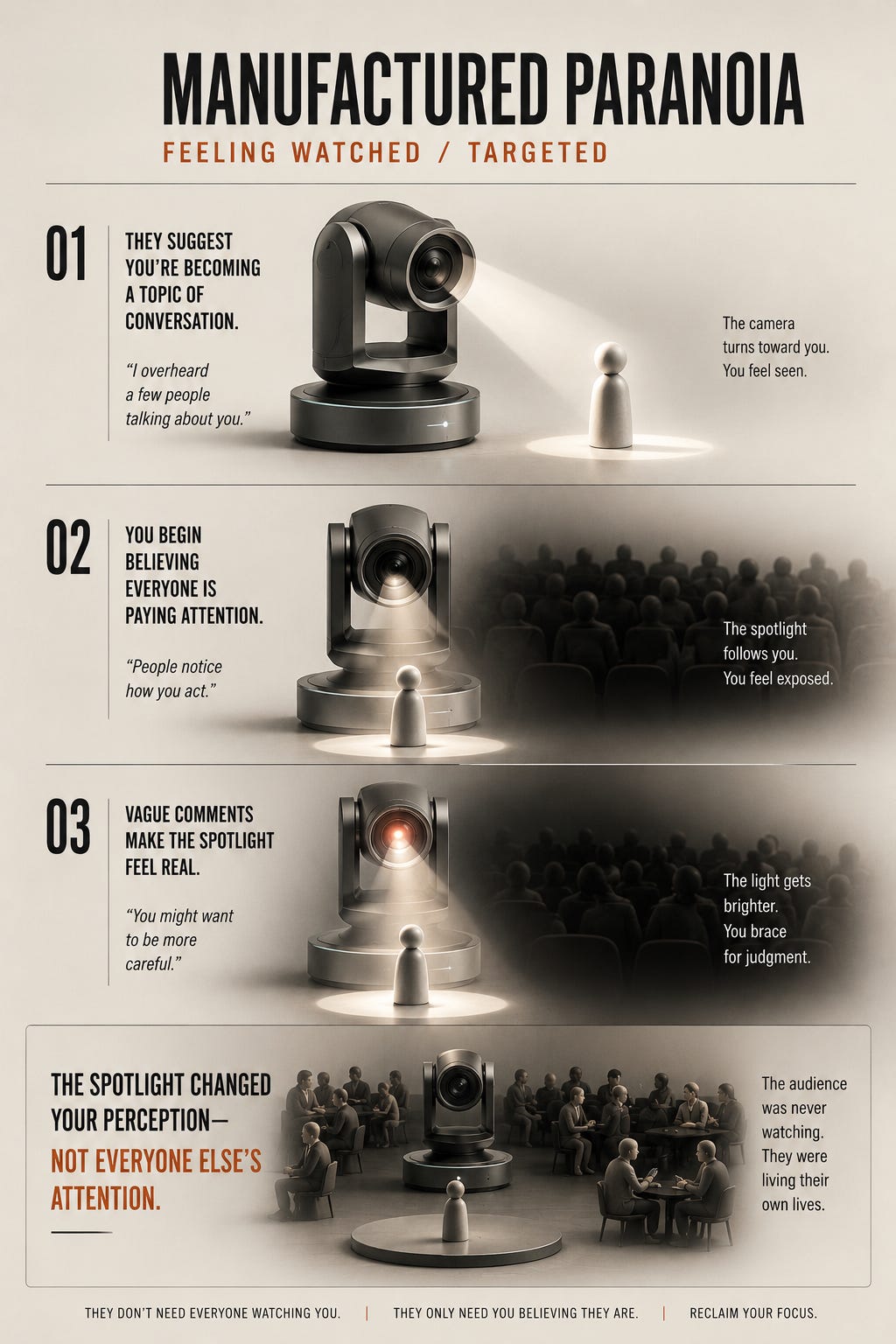
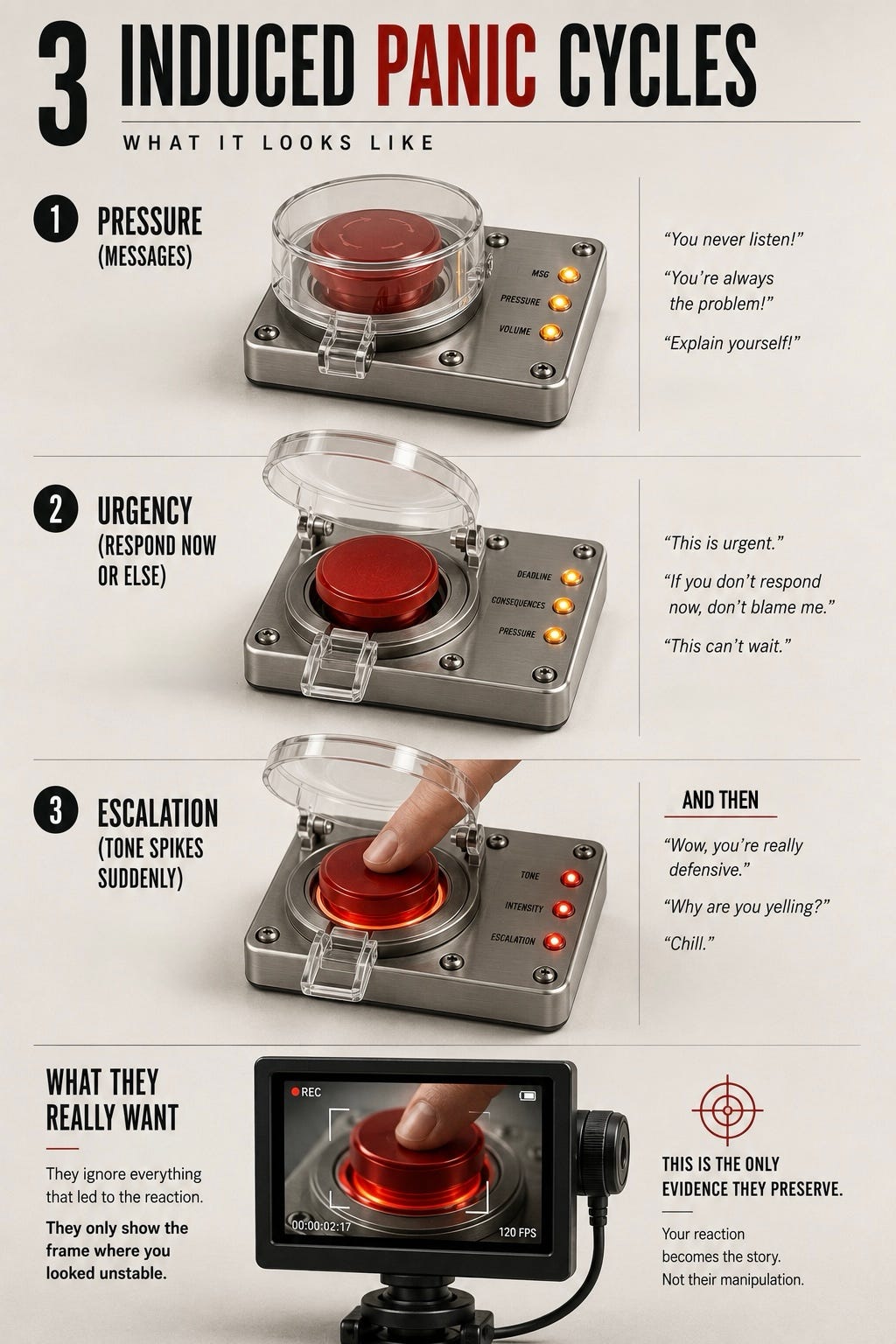
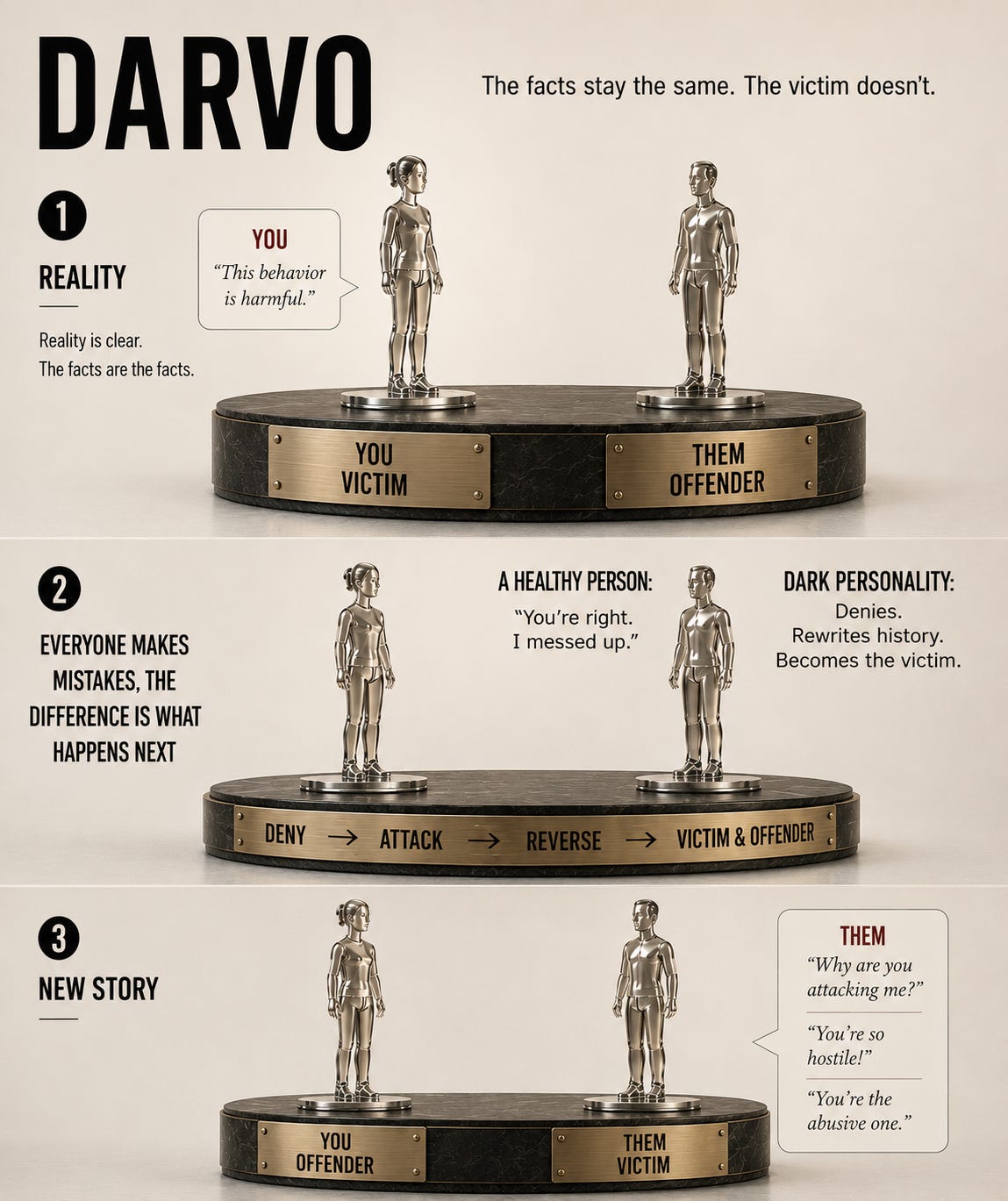
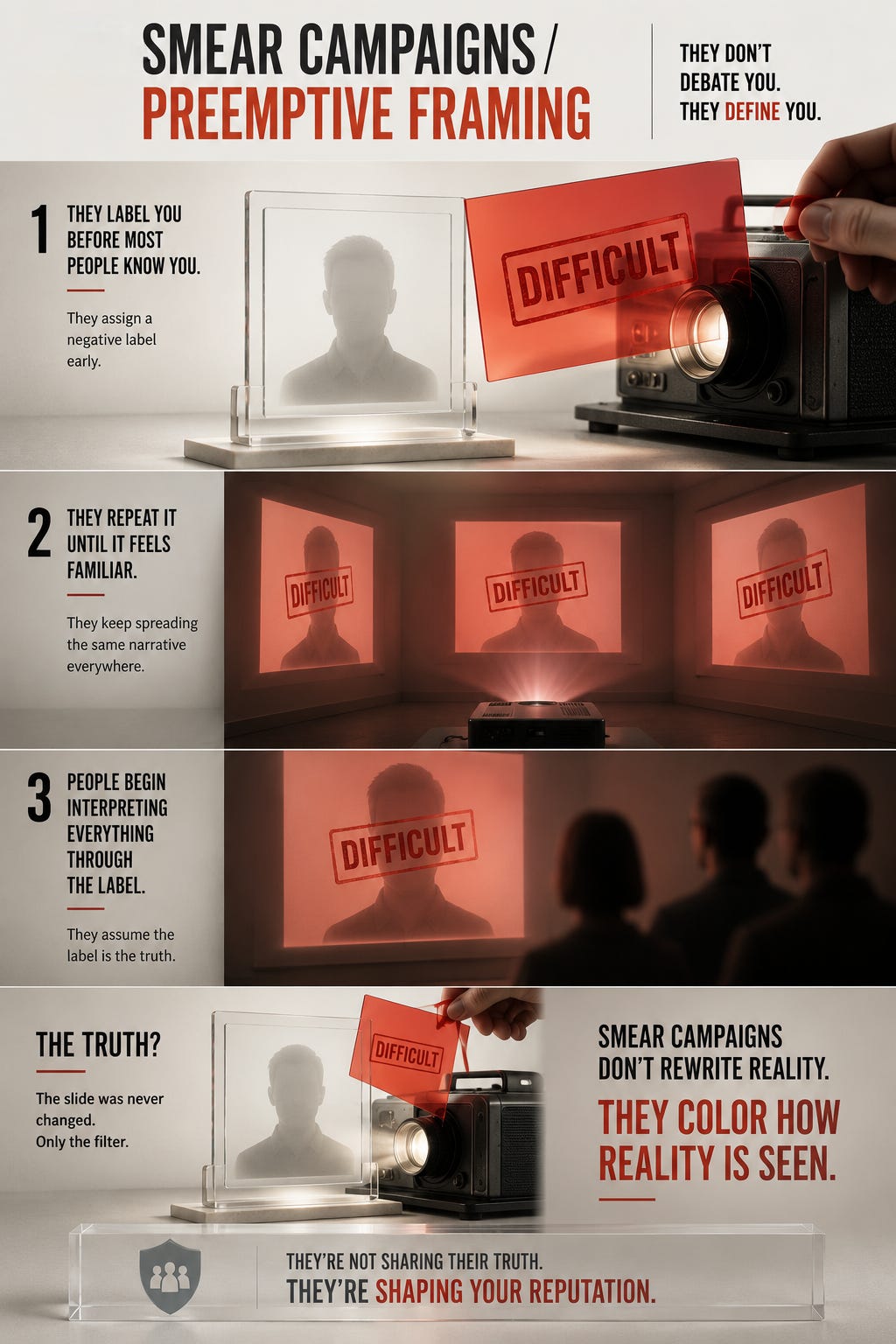
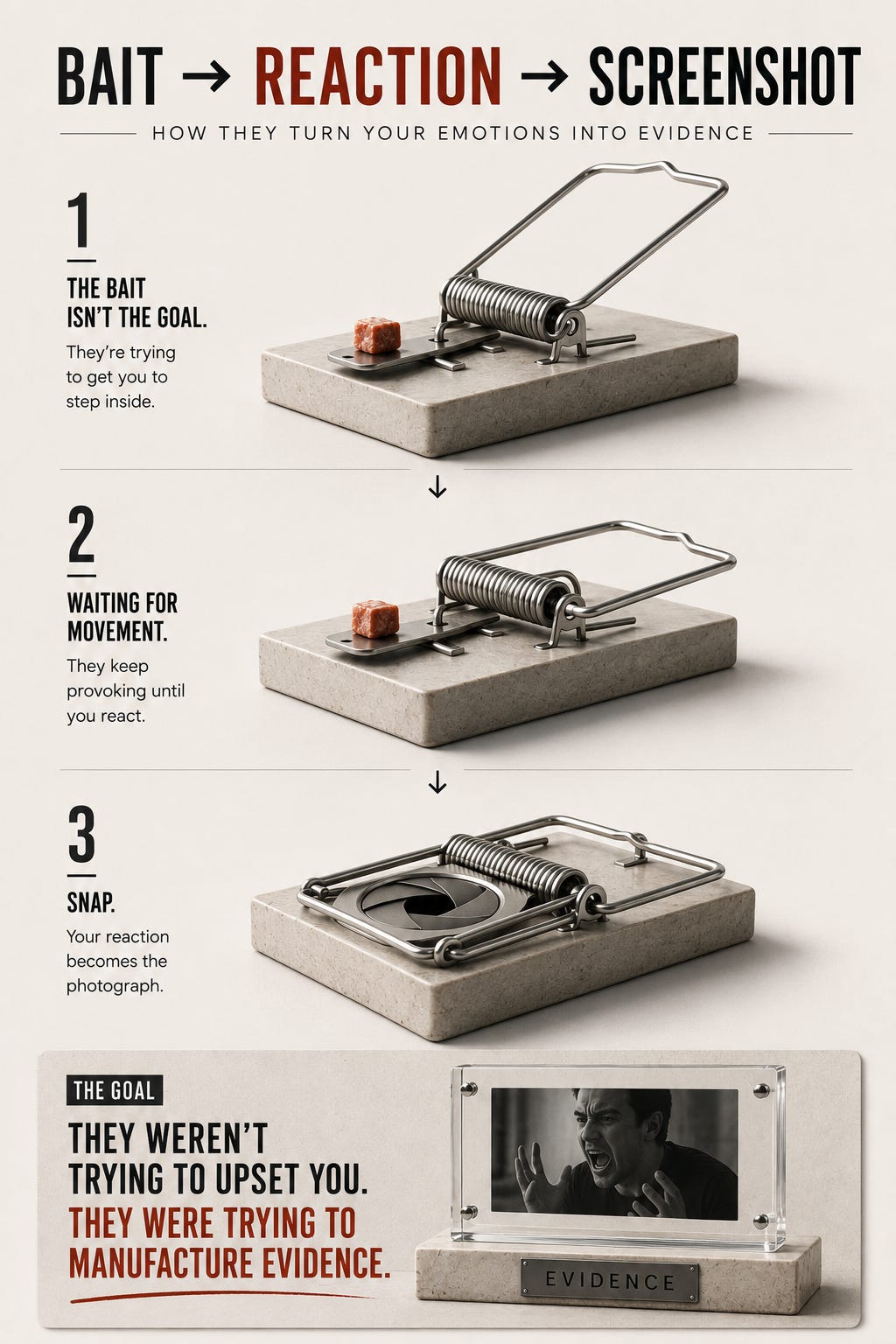
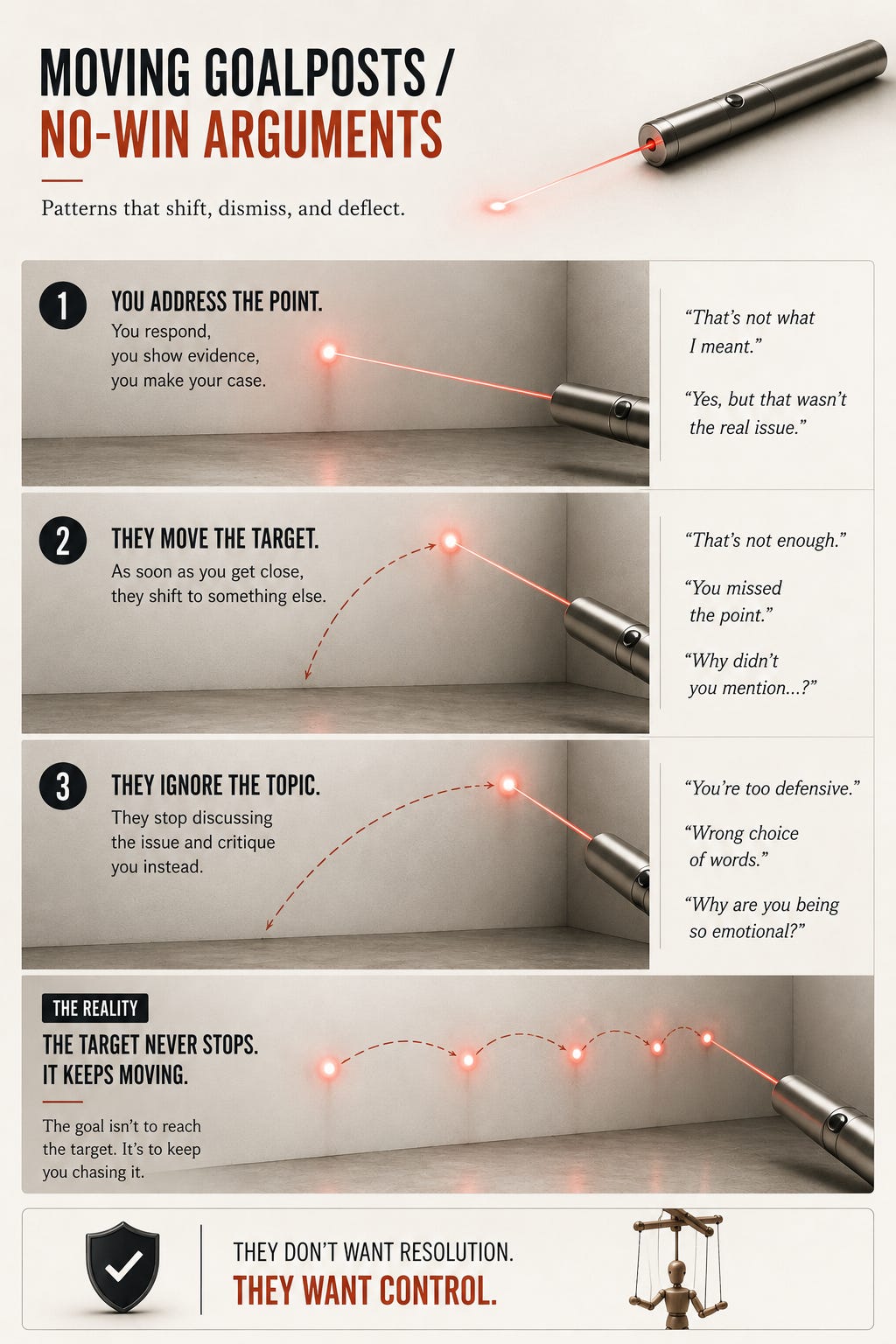
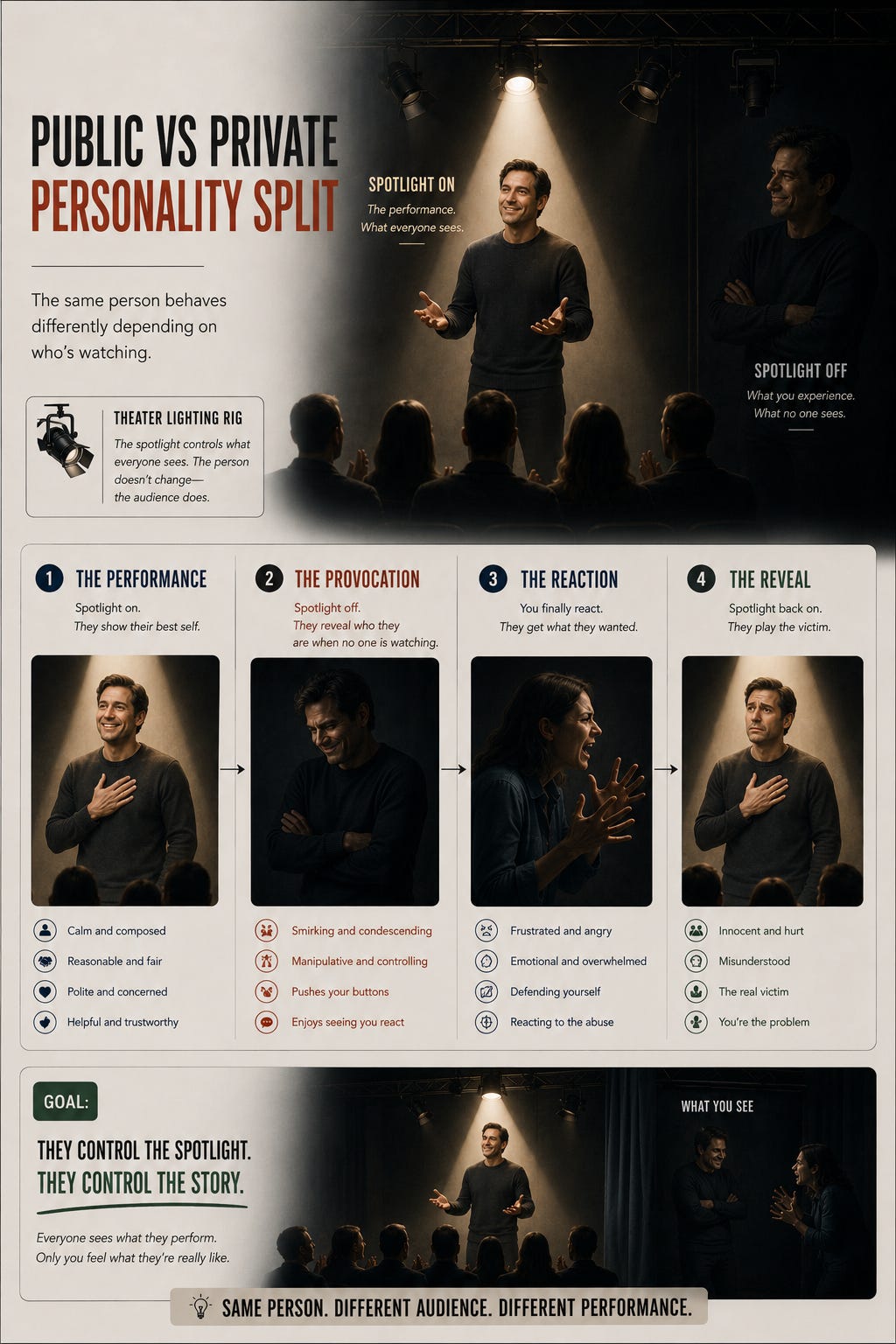
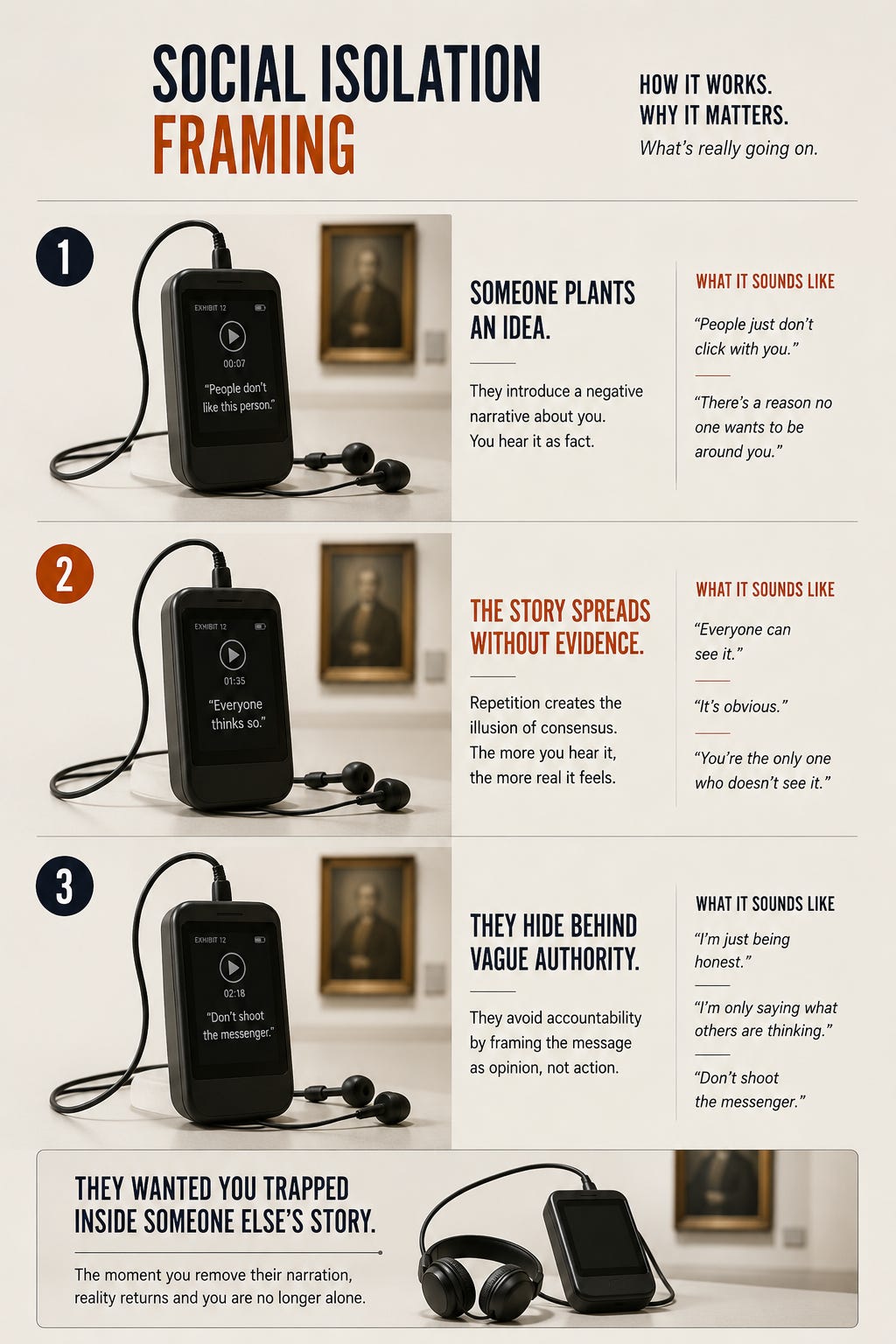

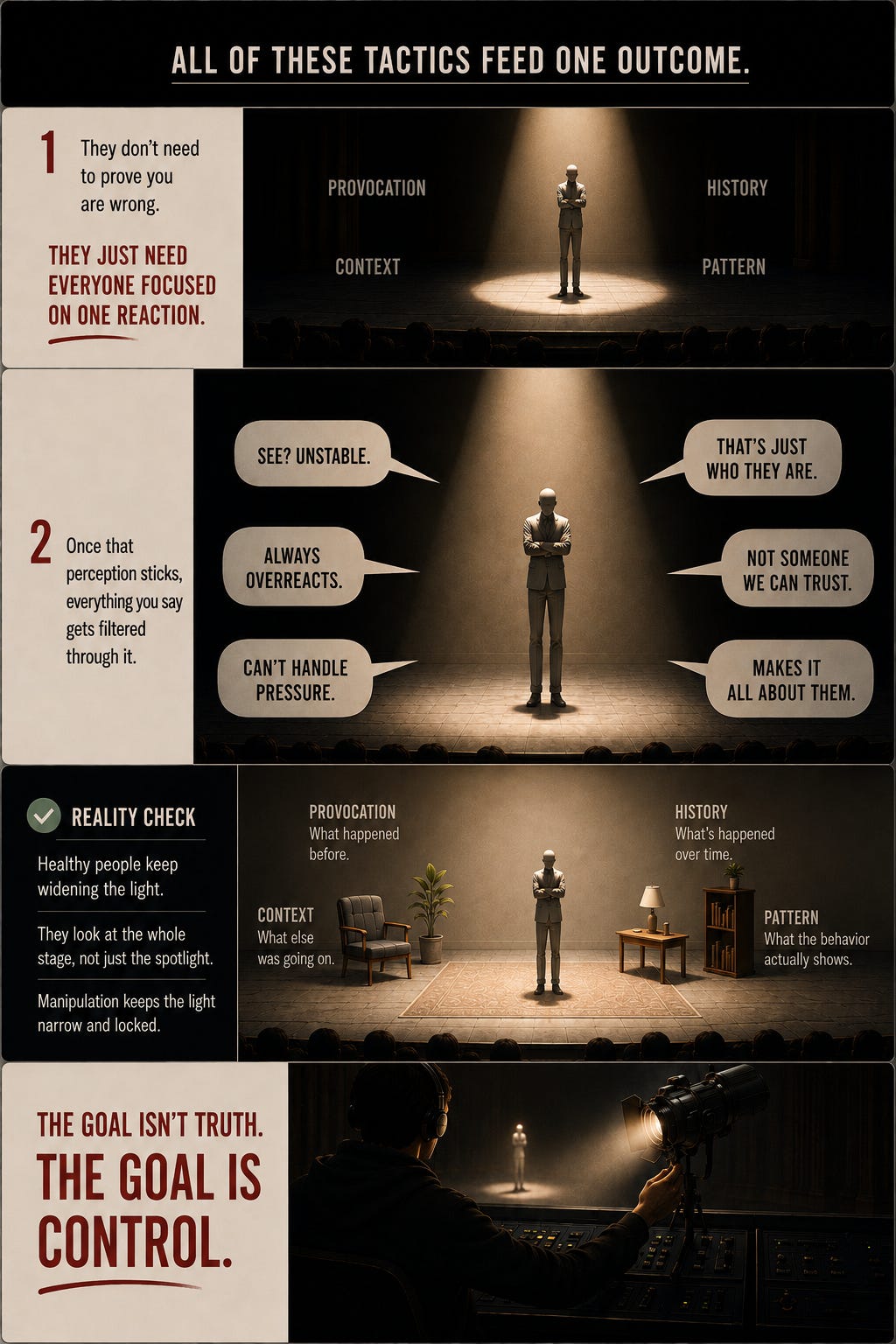

I see it too. I believe you.
Chapter 3: What Protects You
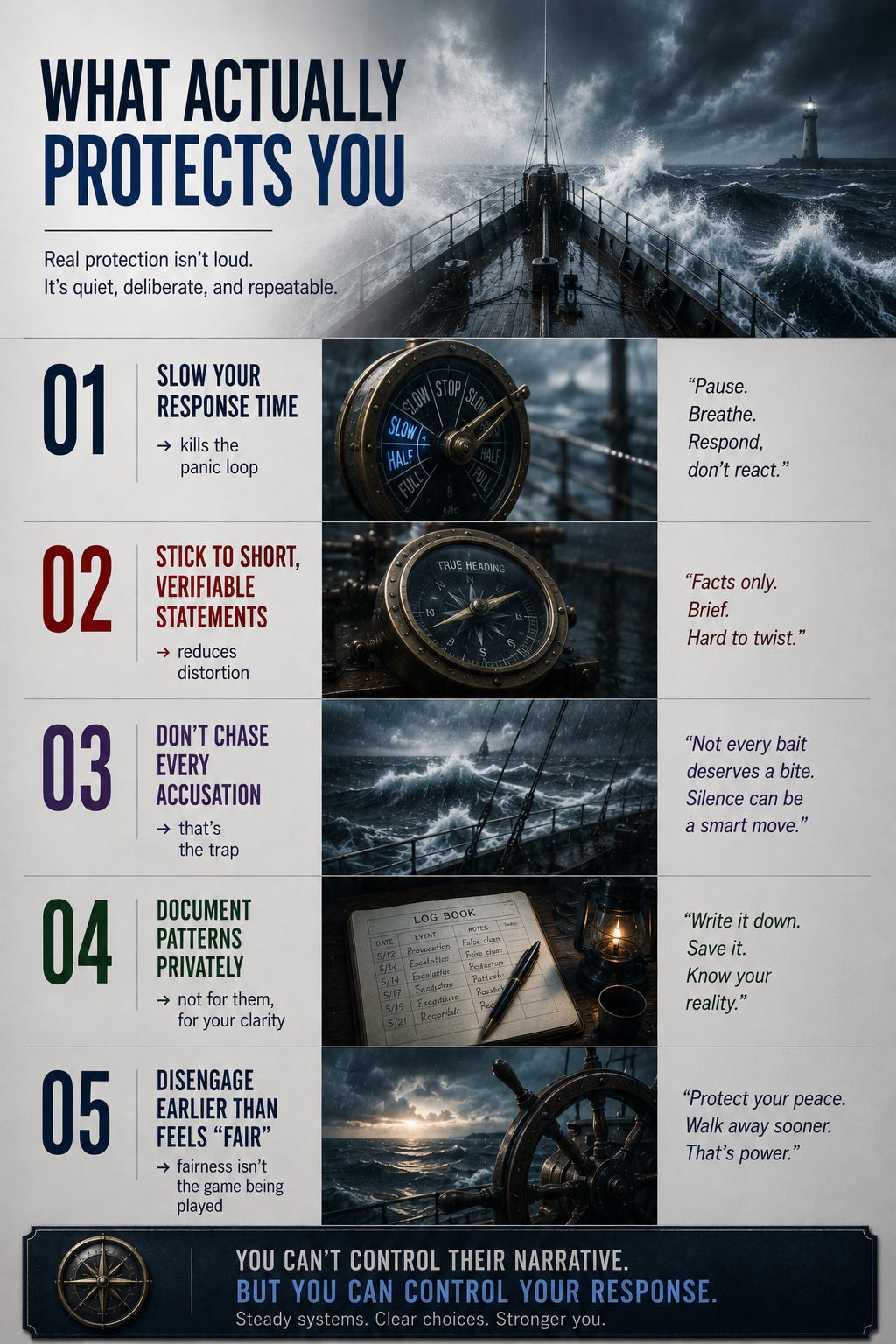

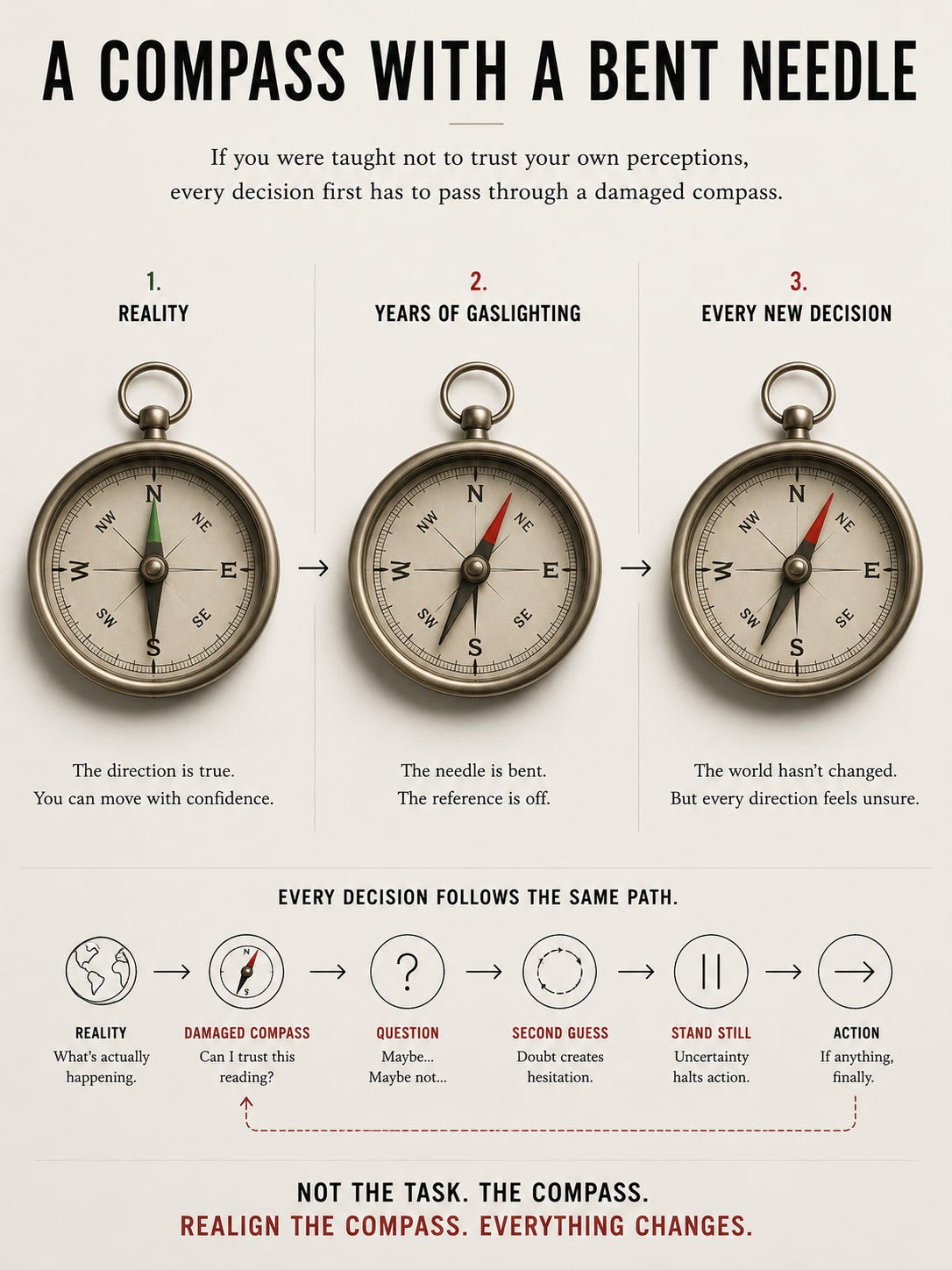
Long-term gaslighting rewires the brain to distrust itself. You stop consulting your own perception and start outsourcing it — constantly seeking outside confirmation that your reality is real.
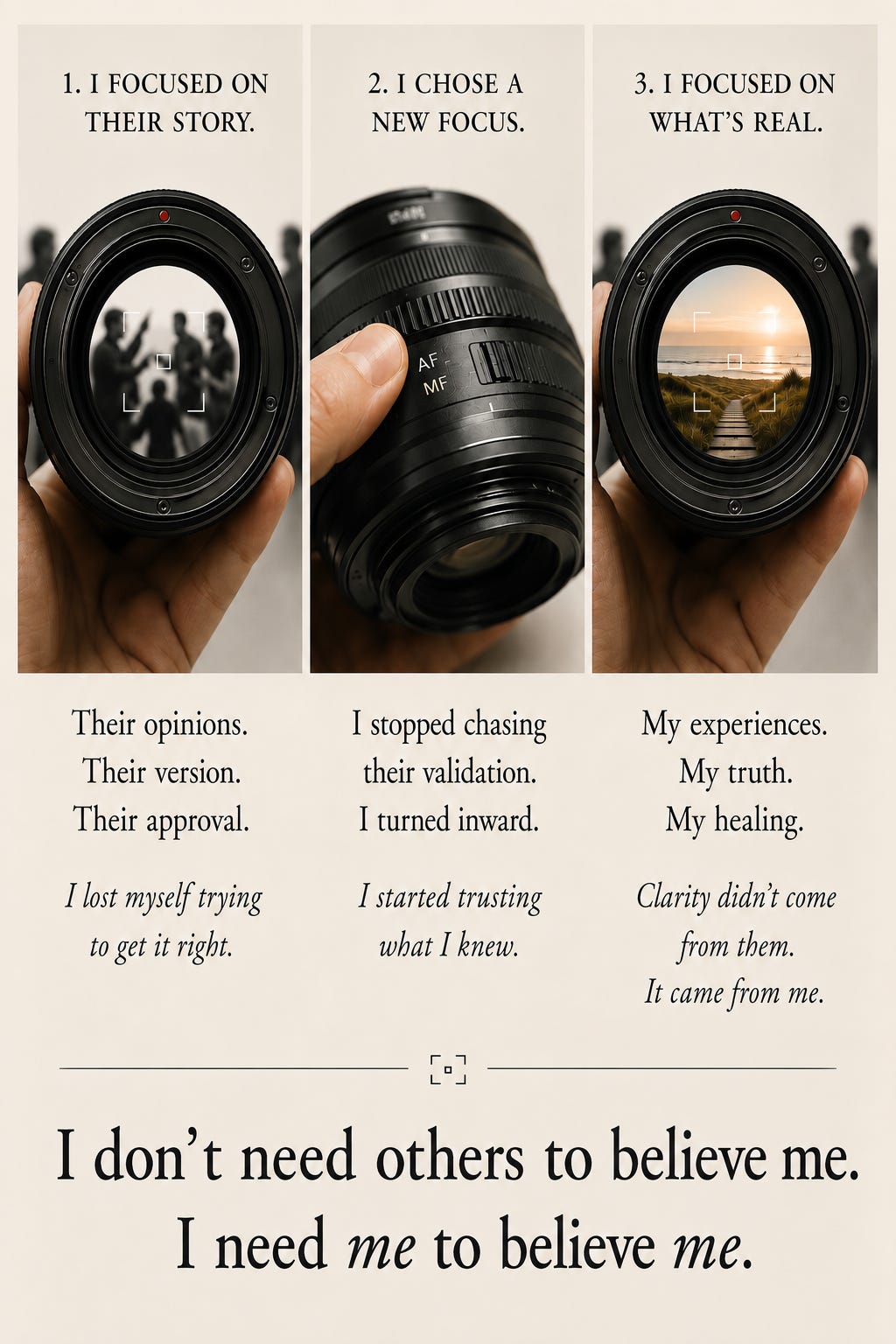
Your nervous system adapts too, but not in a good way. It recalibrates to chaos, mistaking high stimulation for normal and calm for something suspicious.
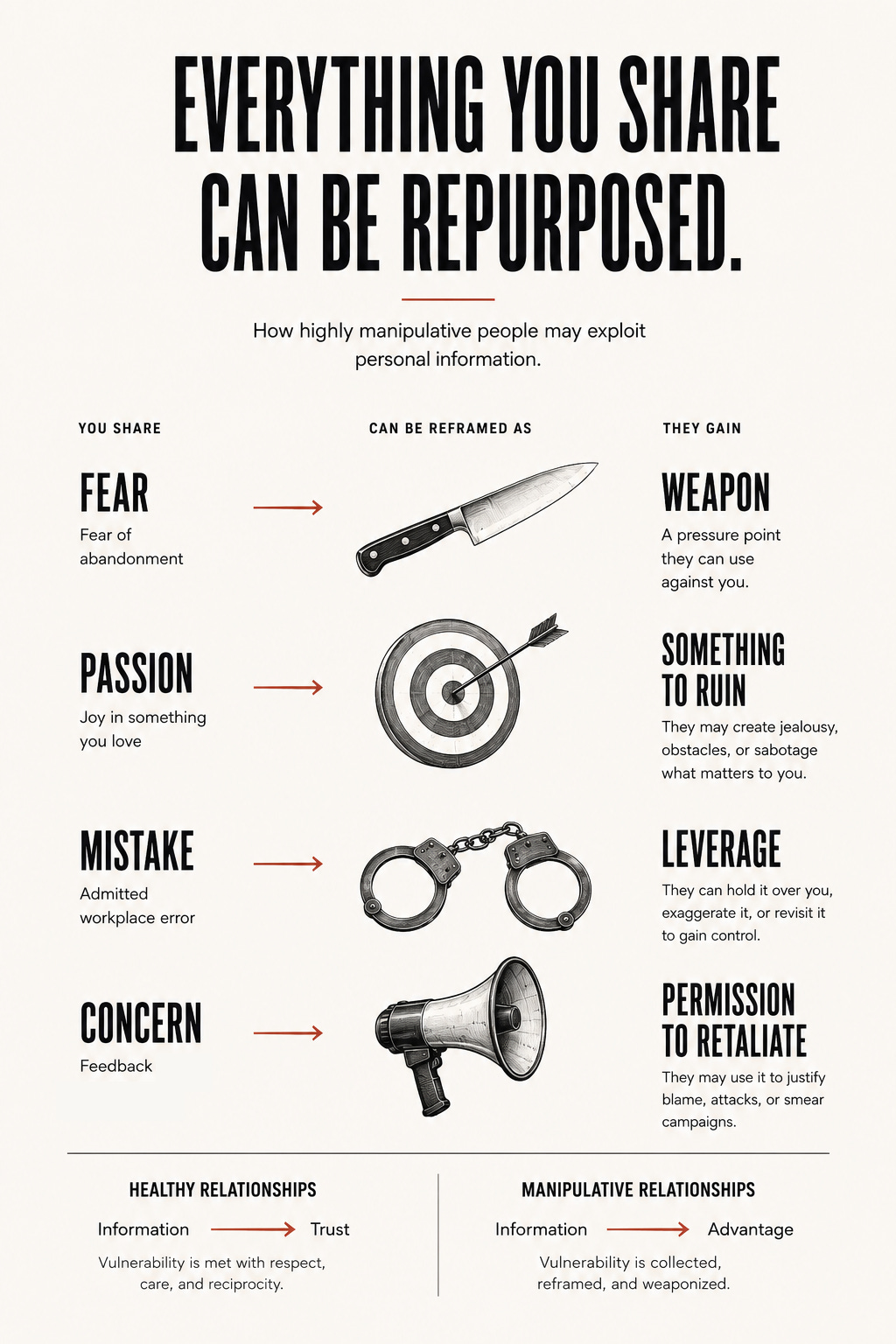
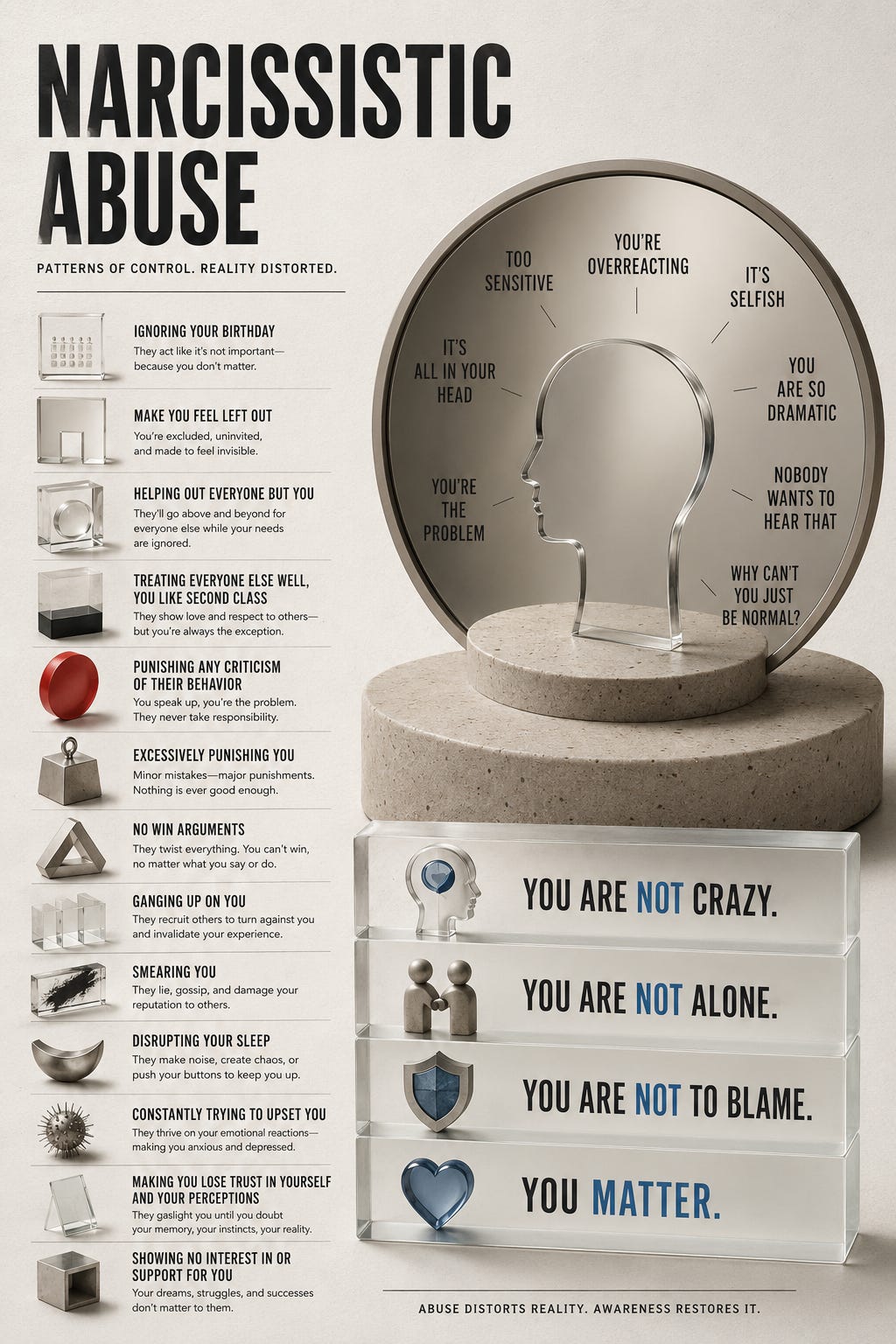
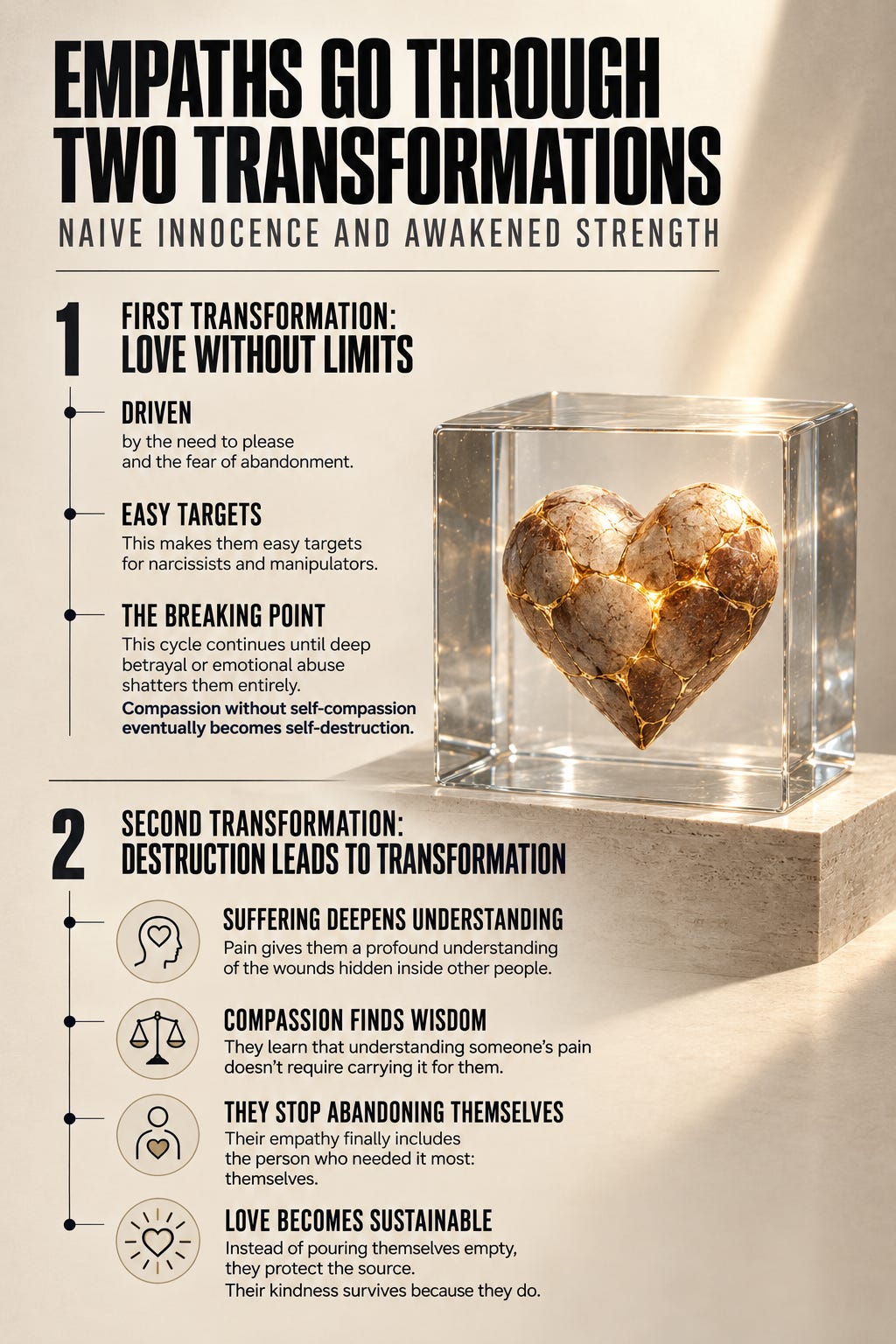
Meanwhile, the gaslighter installs a belief that runs quietly in the background: you are always the problem, and fixing it is always your job. That belief splits into two. One half becomes guilt — a creeping sense that you’re responsible for everyone around you, their moods, their outcomes, their pain. The other half becomes anxiety — a compulsive need to defend yourself, to explain, to make them understand.
But explanation becomes its own trap. The more you justify yourself, the less certain you appear. The more you reach for words, the more ground you seem to lose.
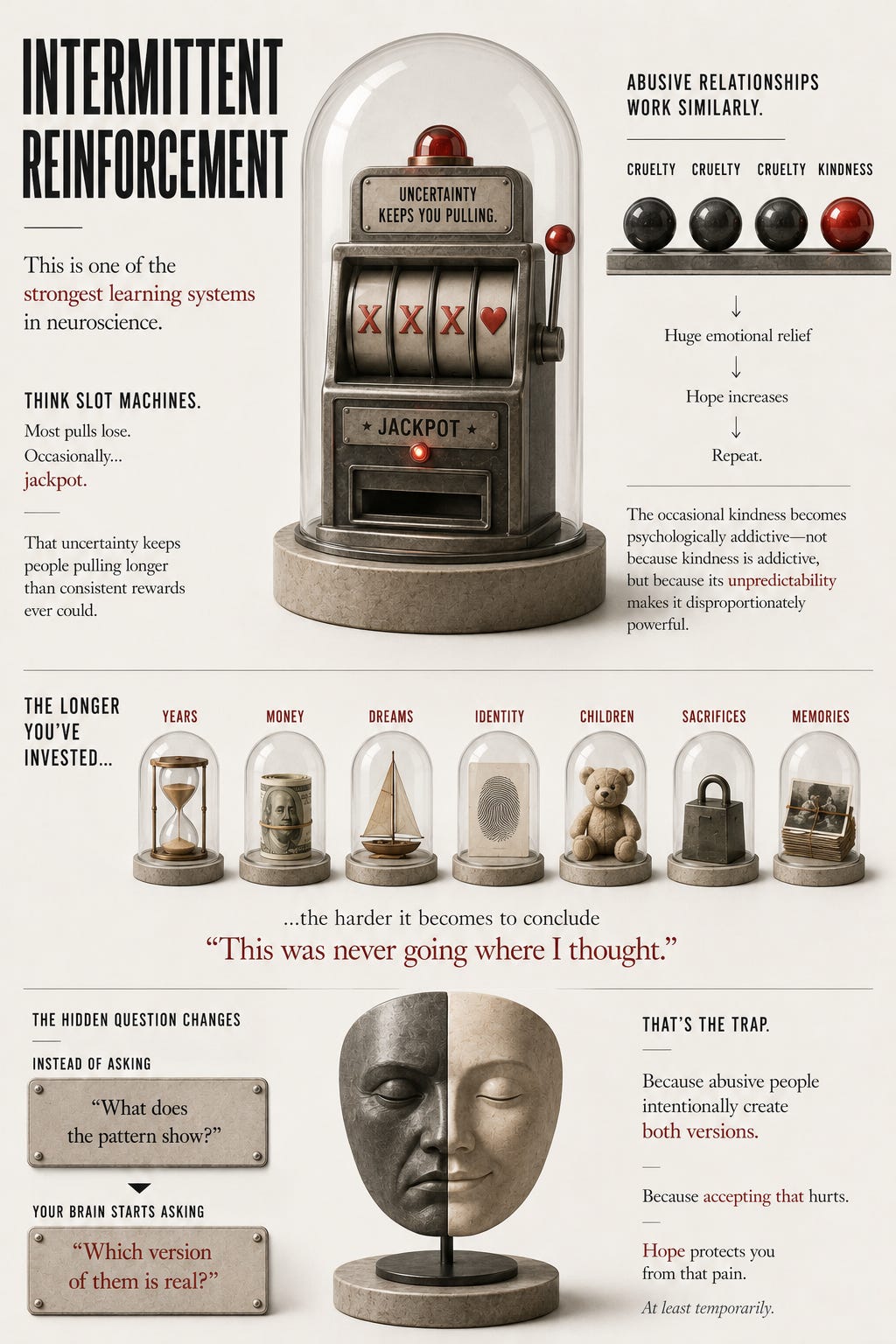
And the silence they weaponize does its own damage. Selective ignoring isn’t indifference — it’s conditioning. It trains you to see their bare minimum as generosity, to receive crumbs and call it enough. Worse, it teaches your nervous system to read your own worth through their attention. When they withdraw it, you don’t just feel rejected. You panic. You start to believe that their silence is data — and that the data says something is wrong with you.
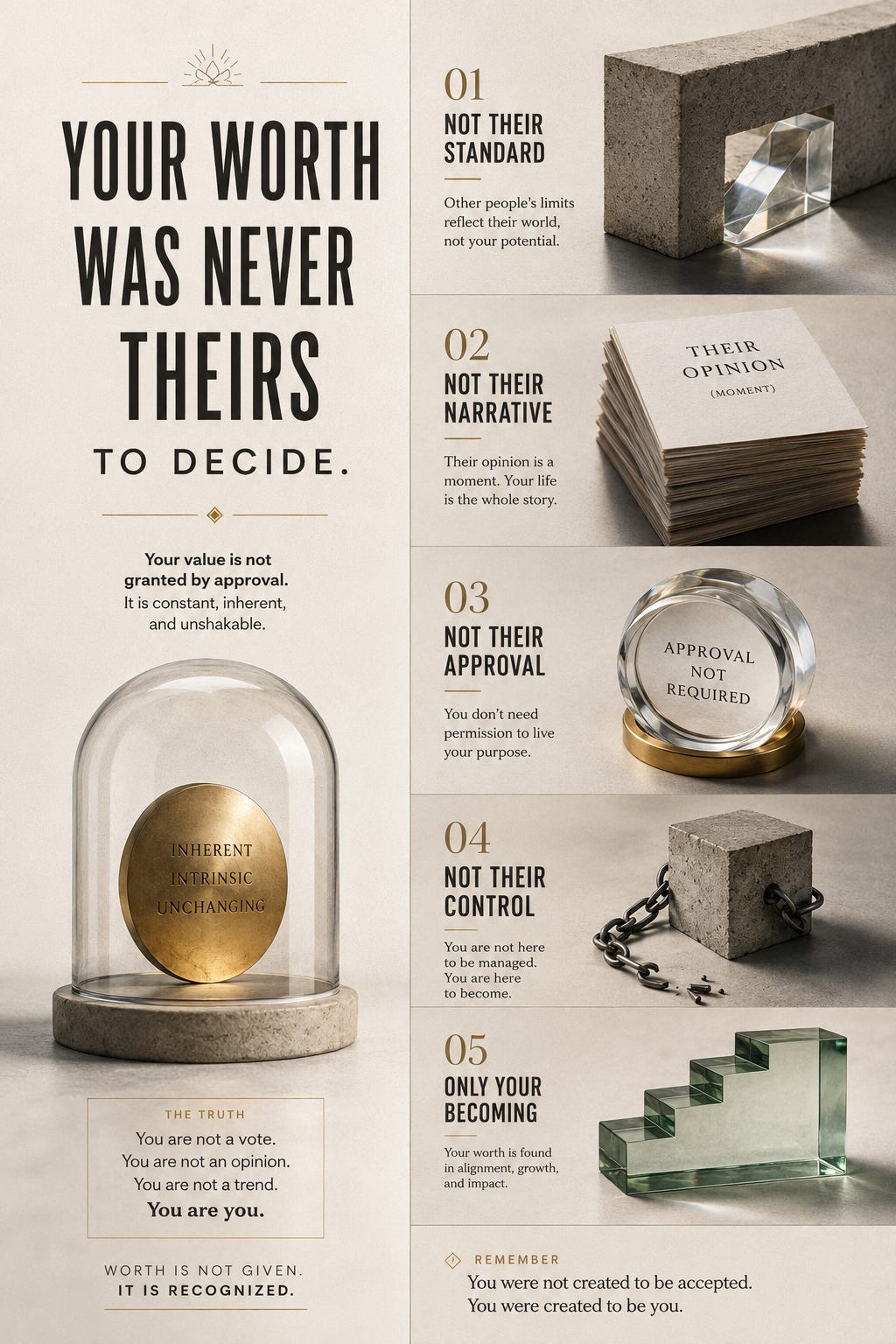
But your worth comes from within, not from the outside.
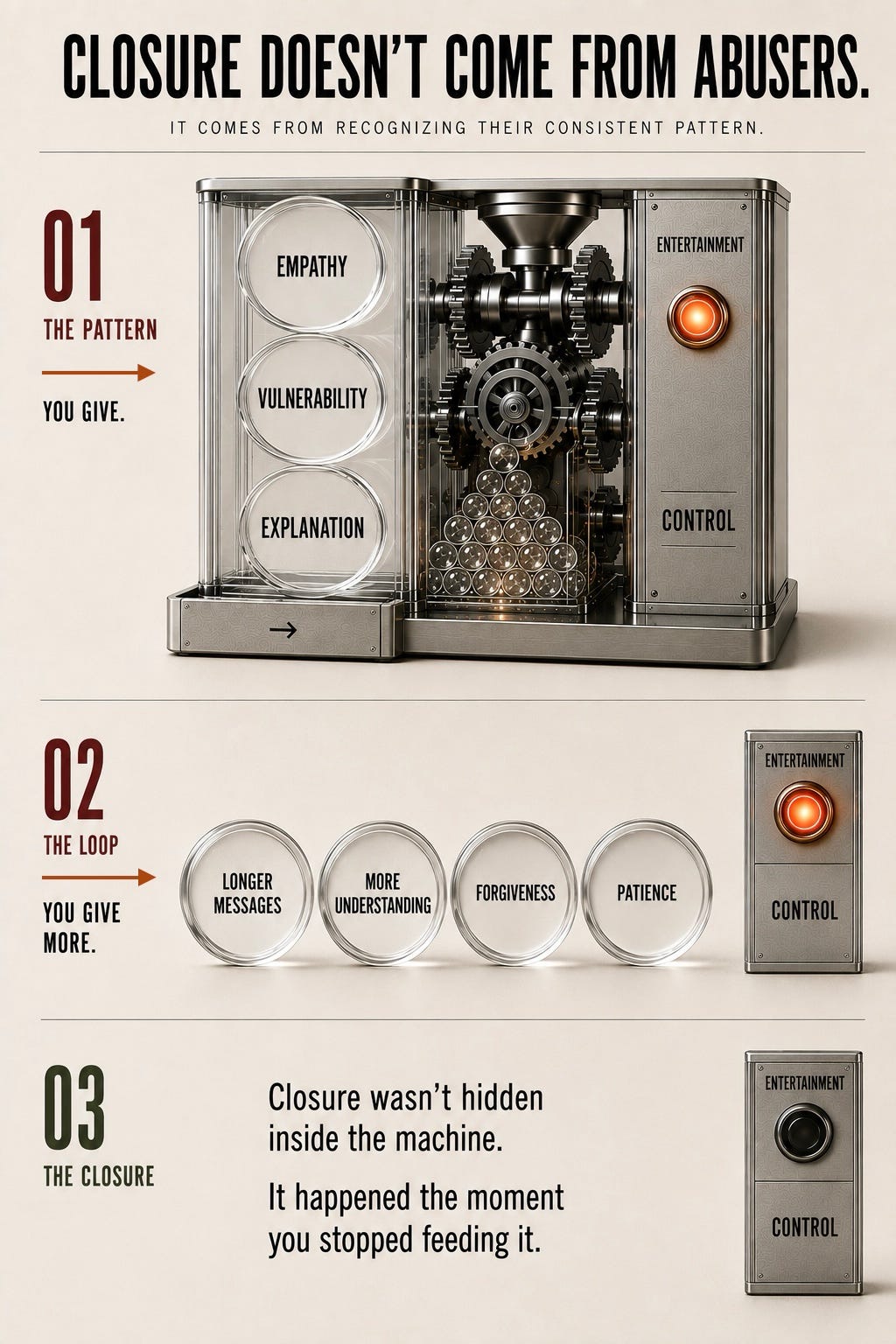
Closure doesn’t come from abusers. It comes from recognizing their consistent pattern of abuse.
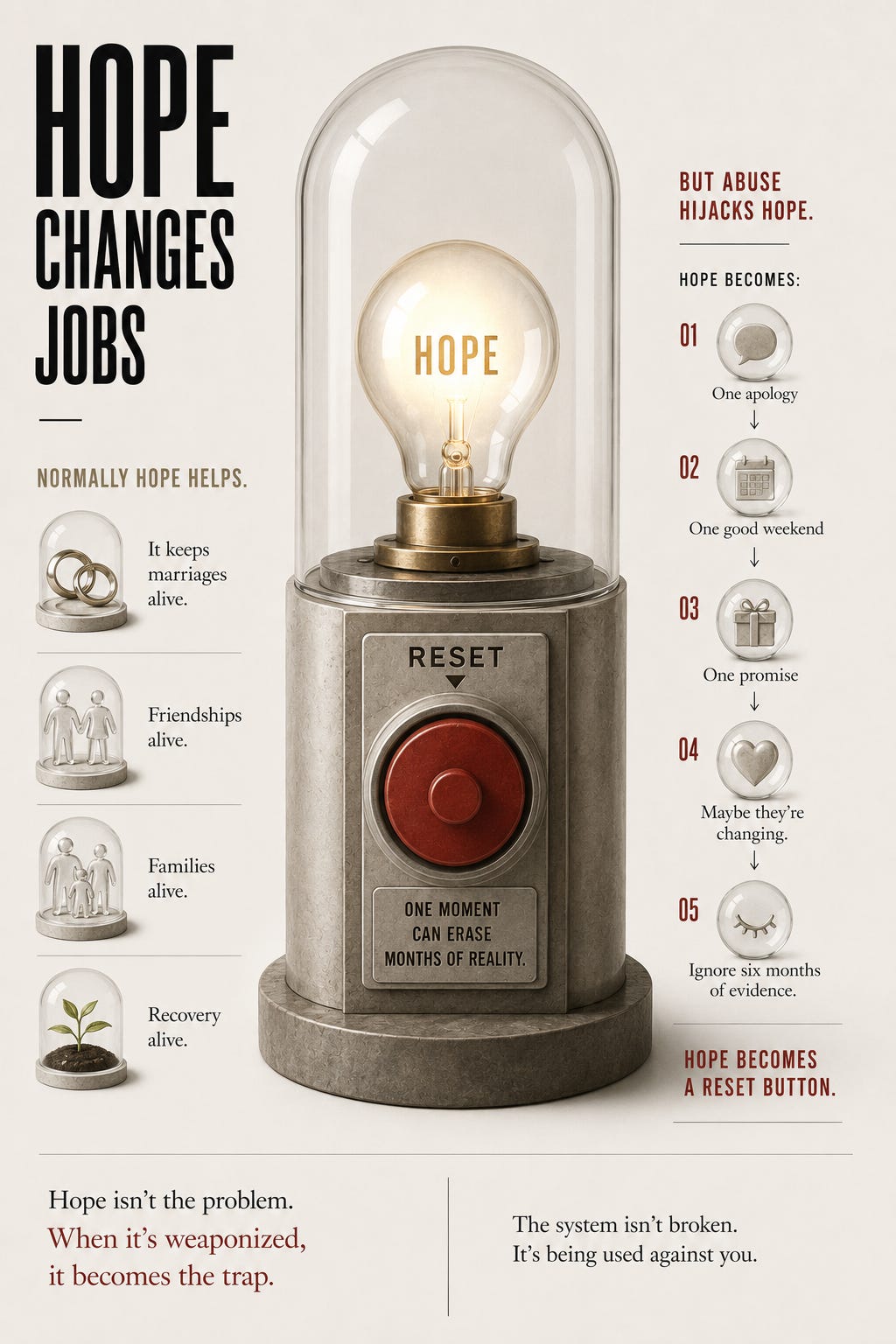
When they flip from being cruel to kind, quickly mentally label it so that the strategy looses effect.
“Cognitive dissonance”
“confusion”
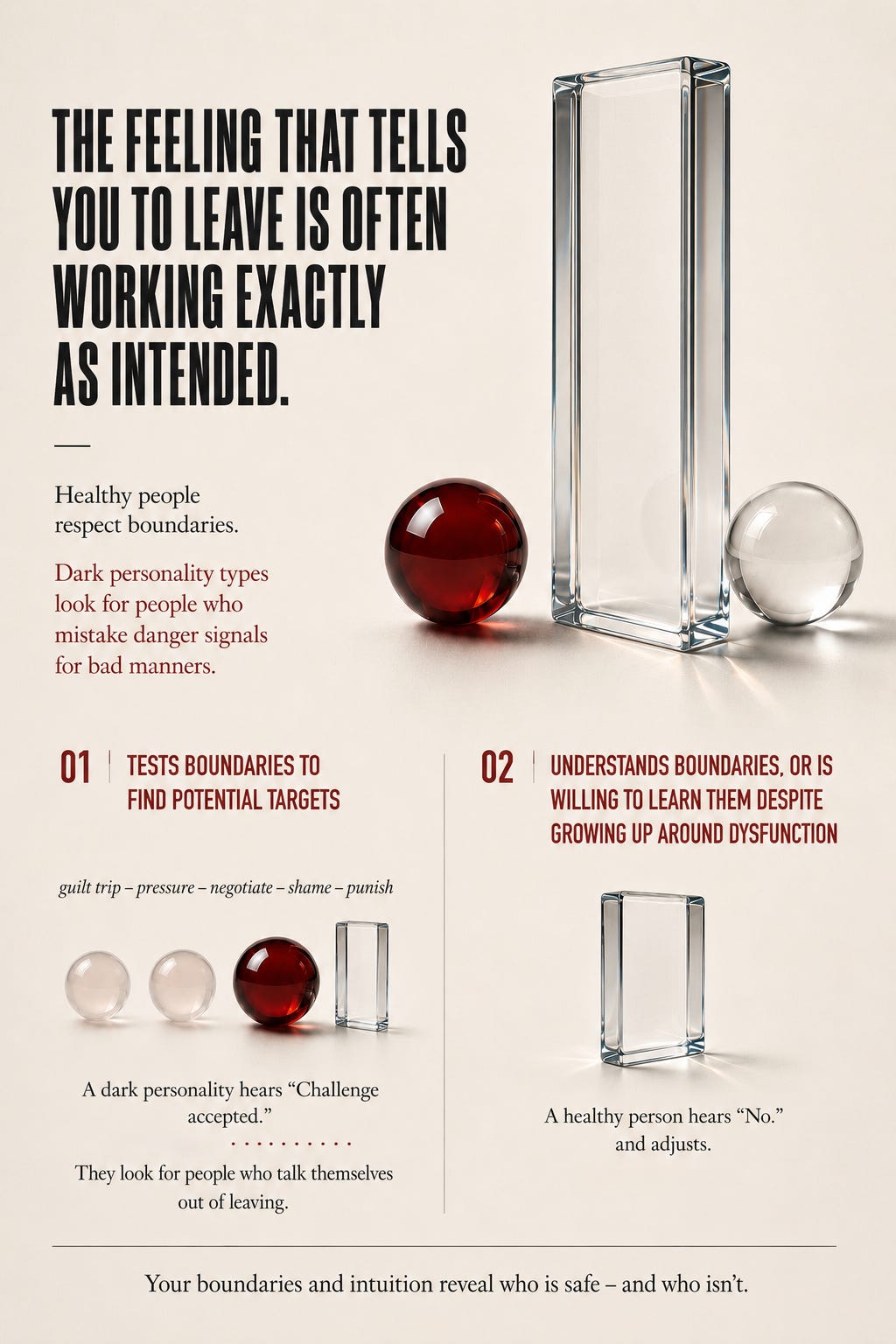
When they make you feel guilty or try to weaponize your empathy, remember:
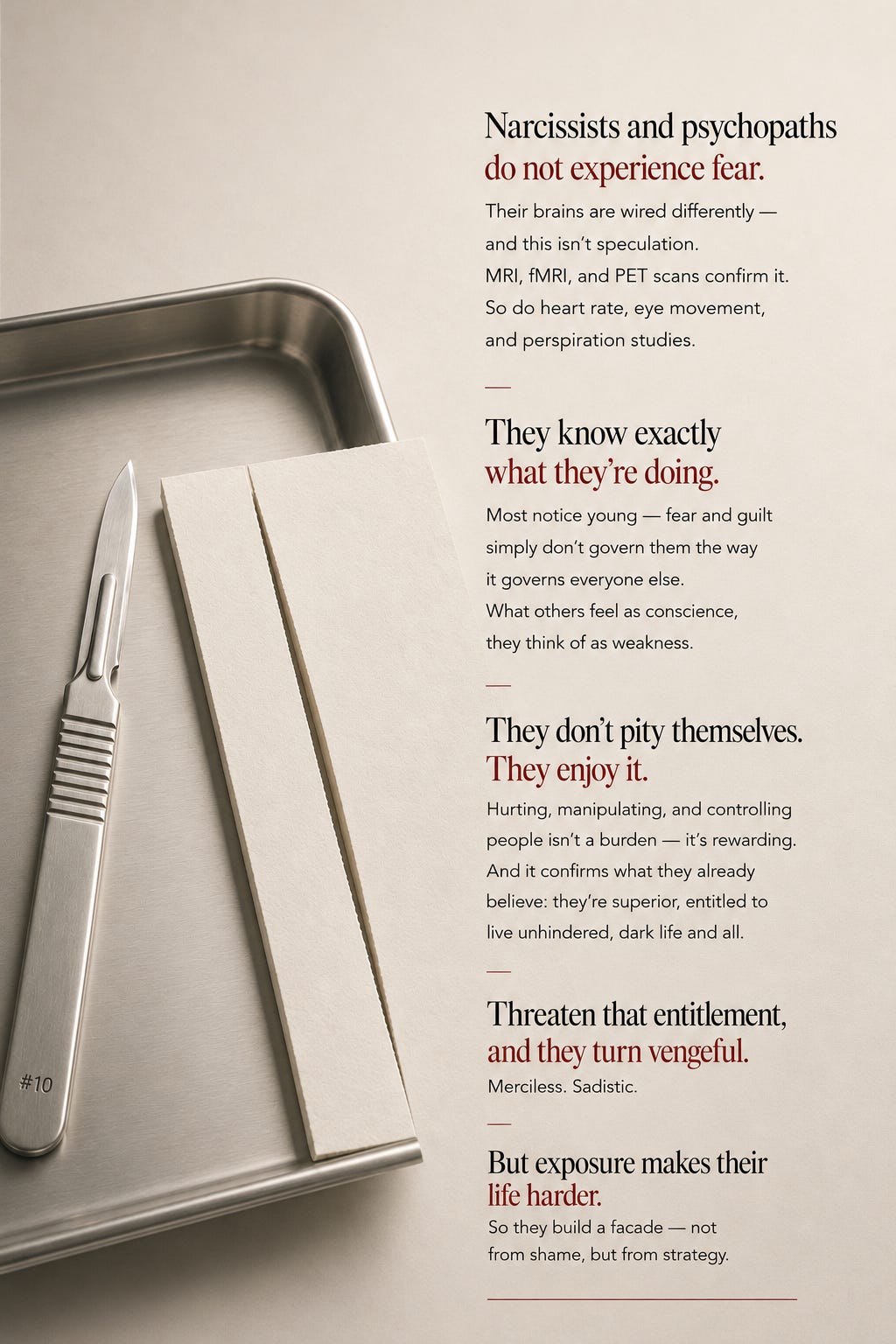
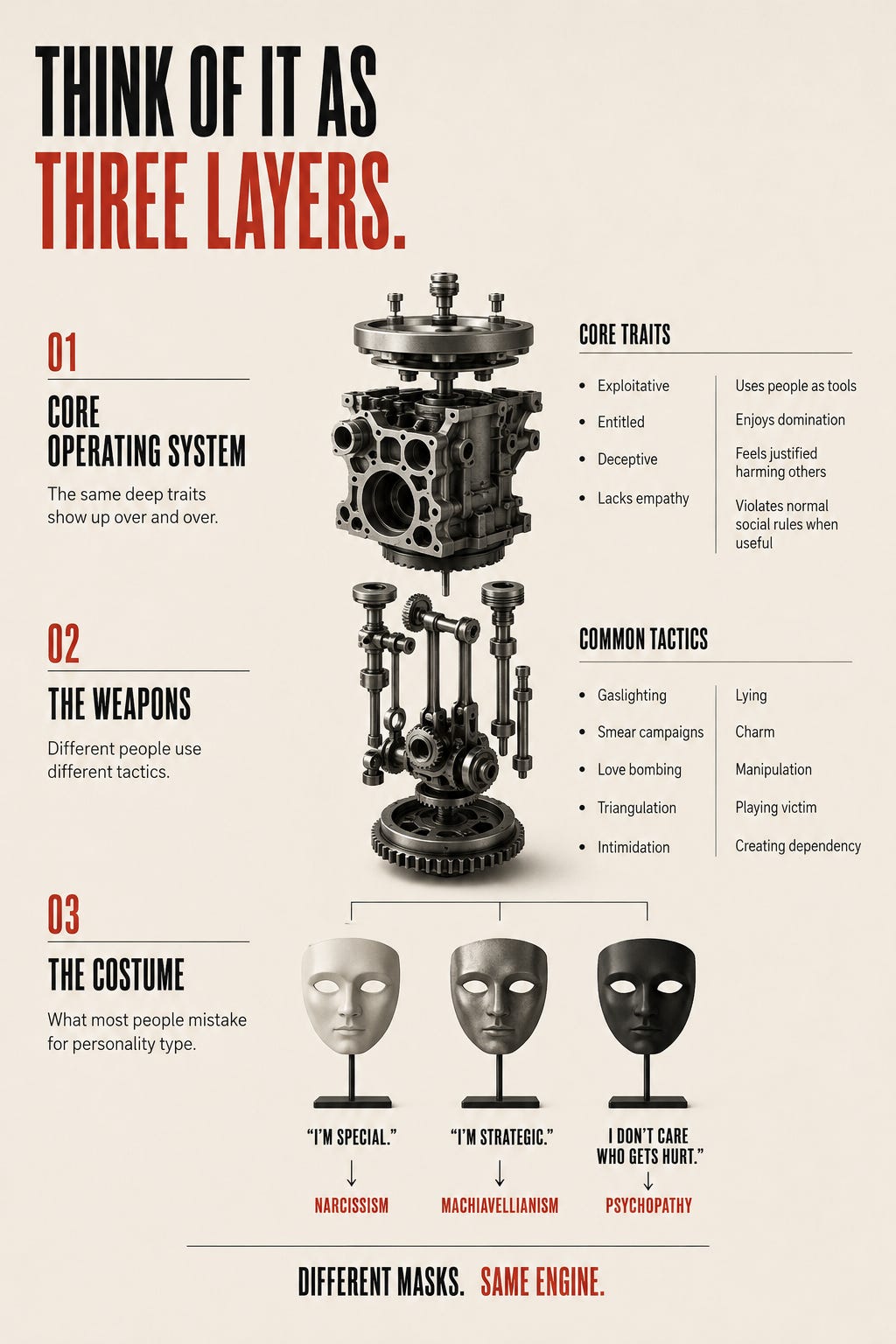
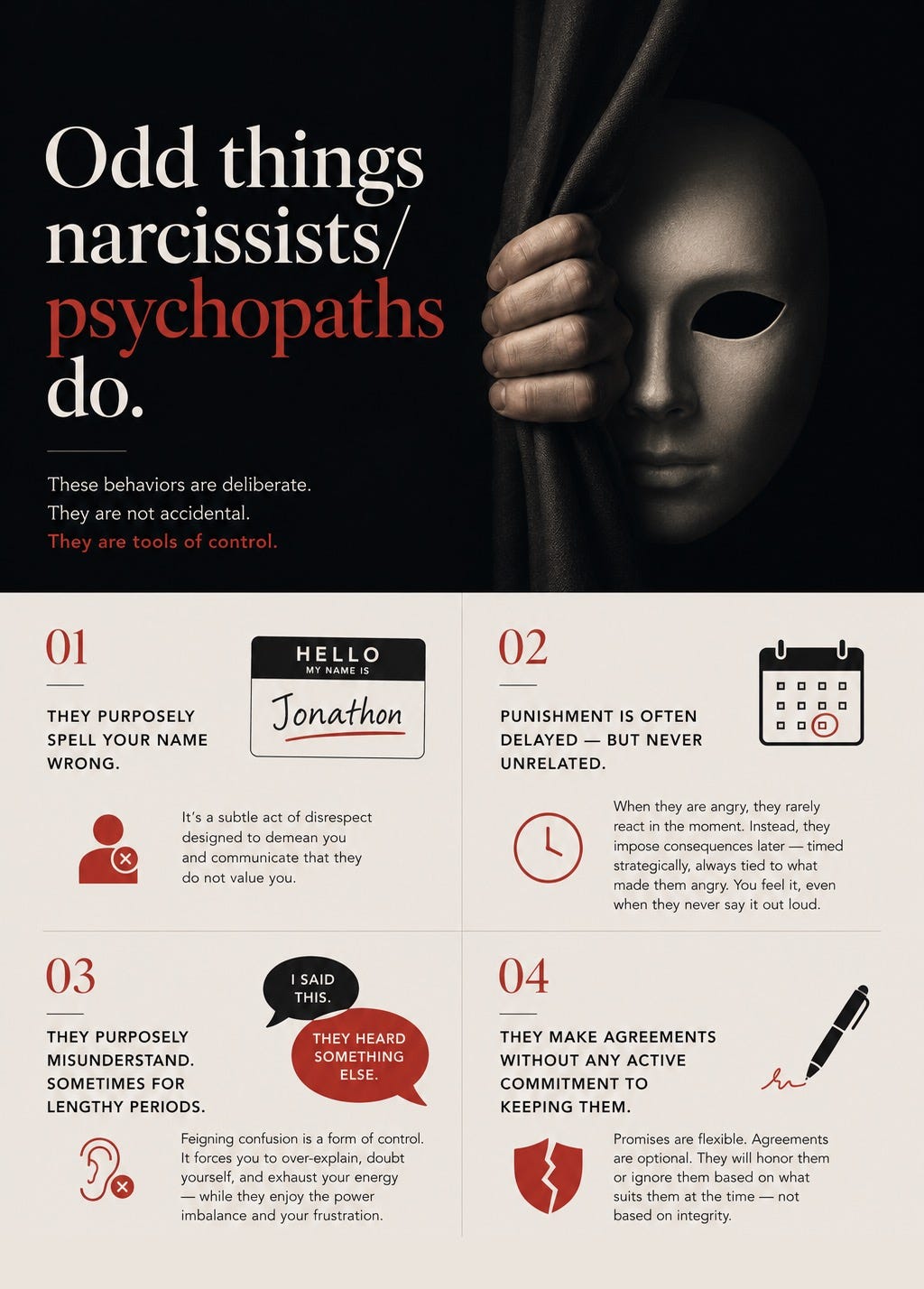
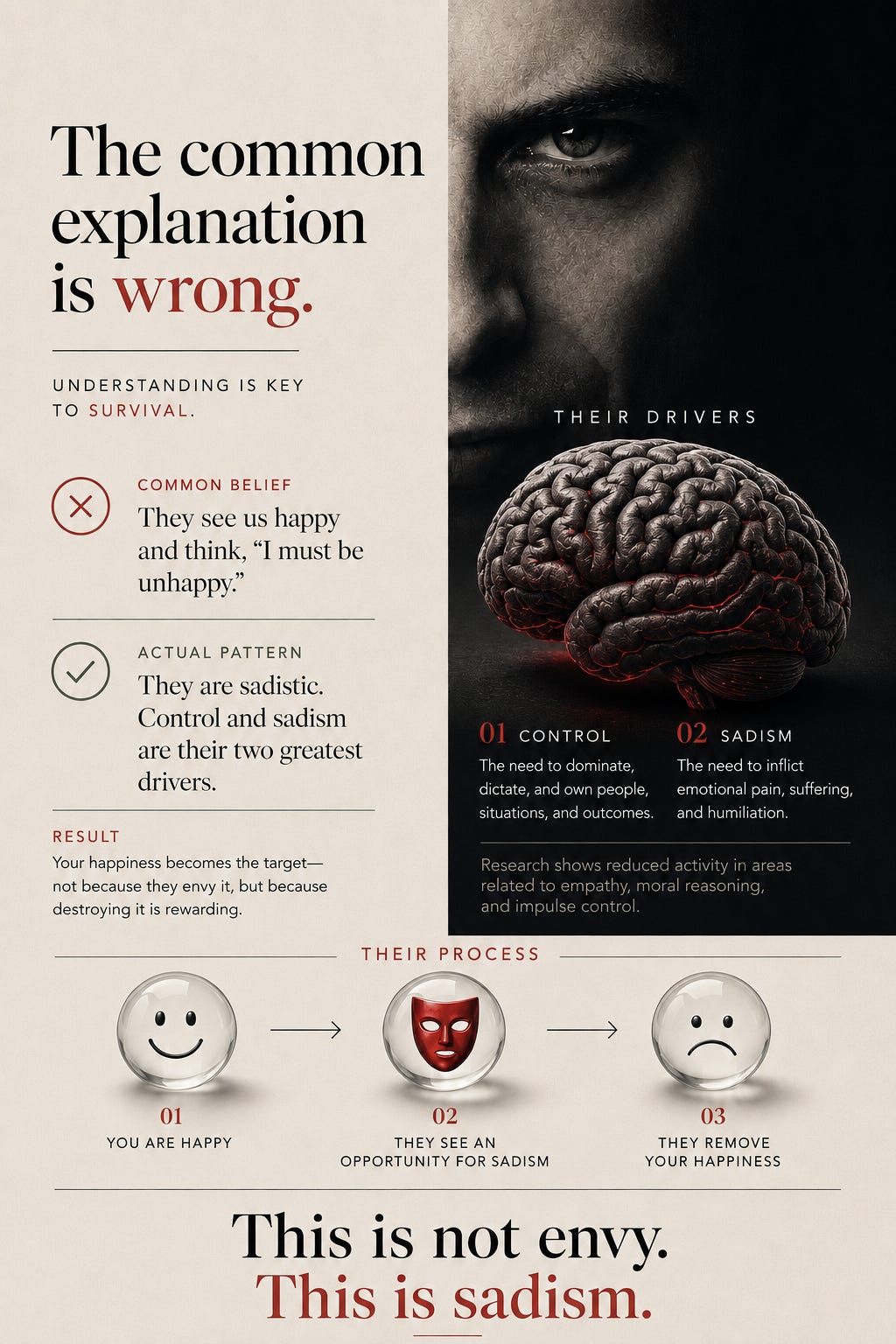
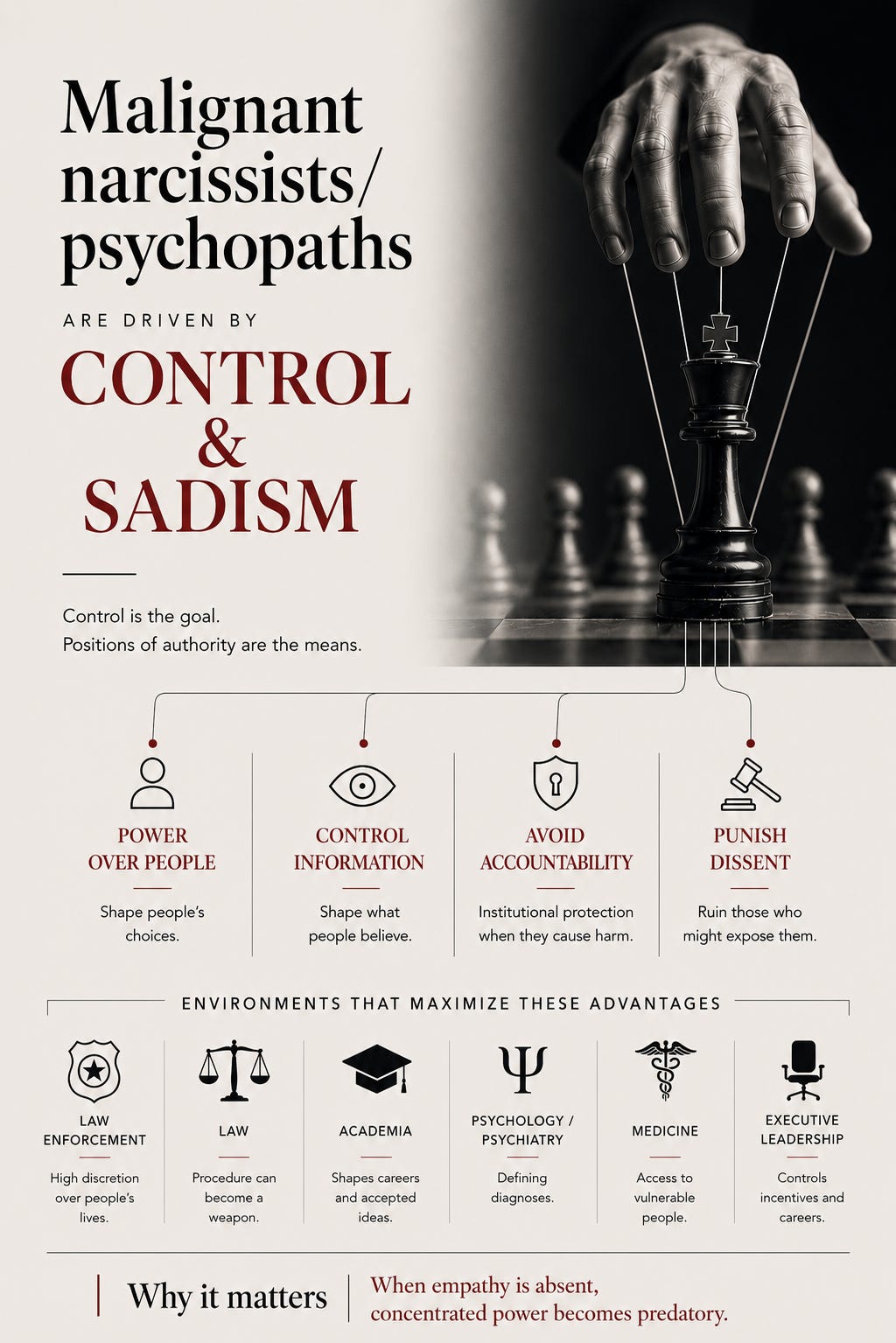
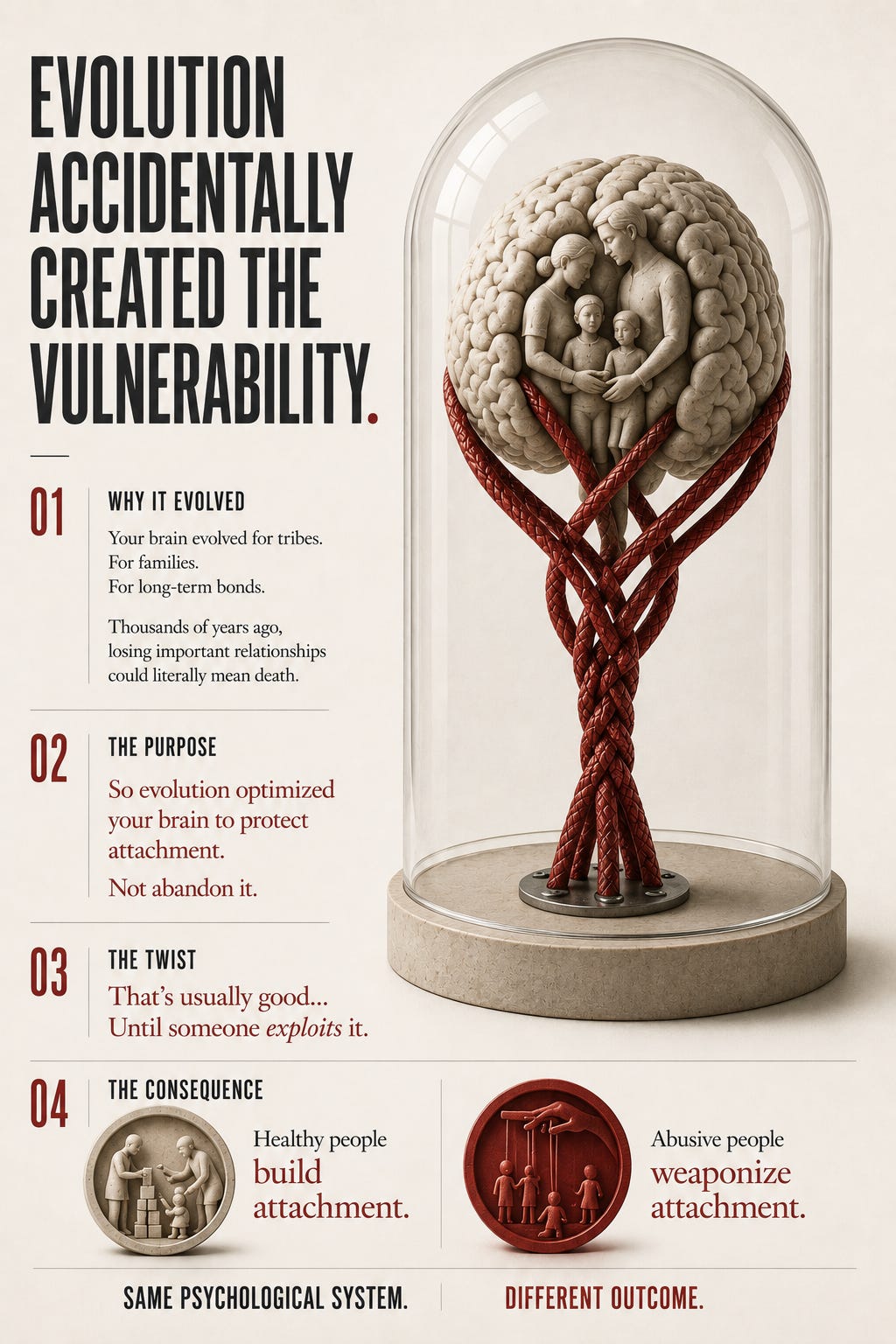
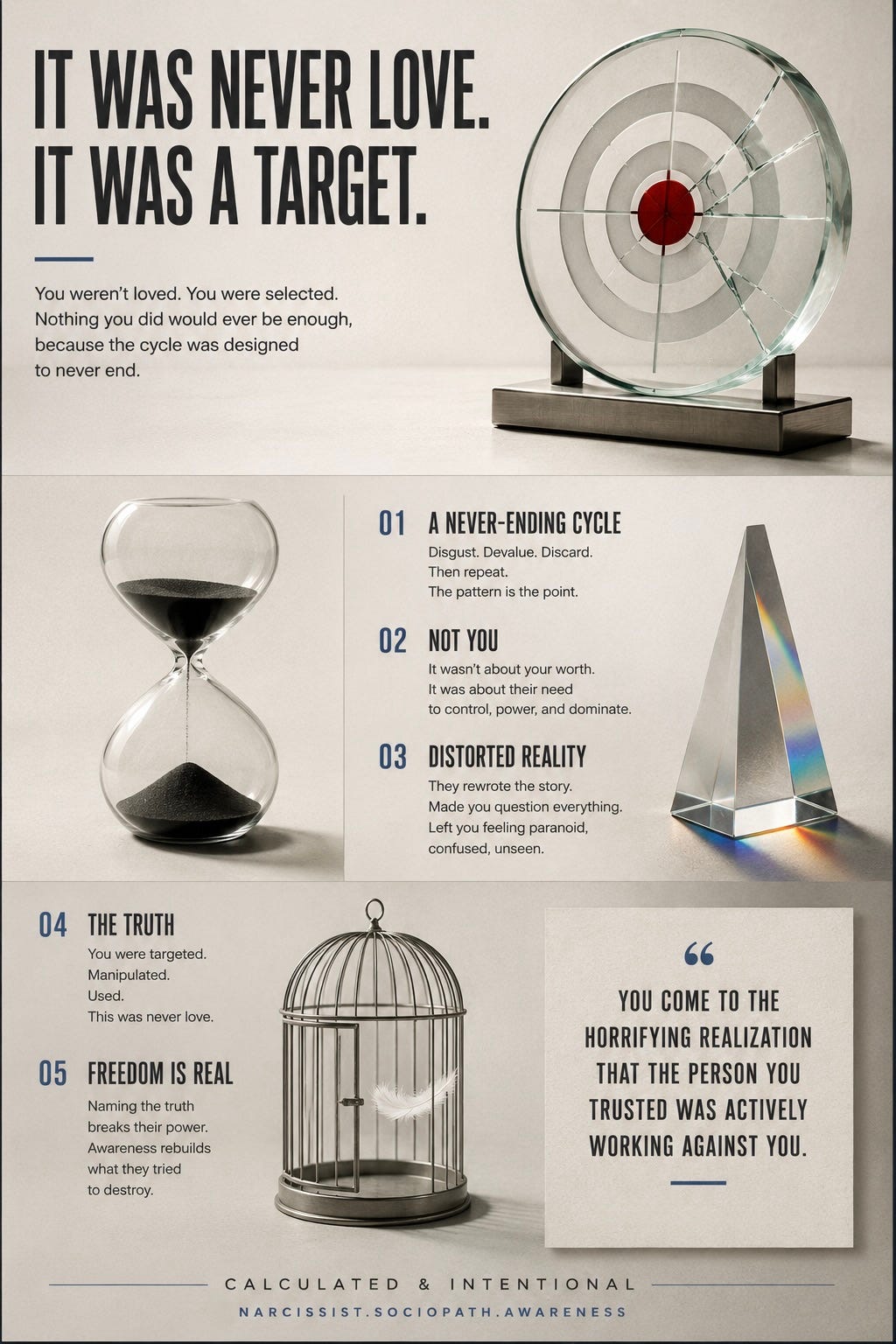
The abuse is intentional.
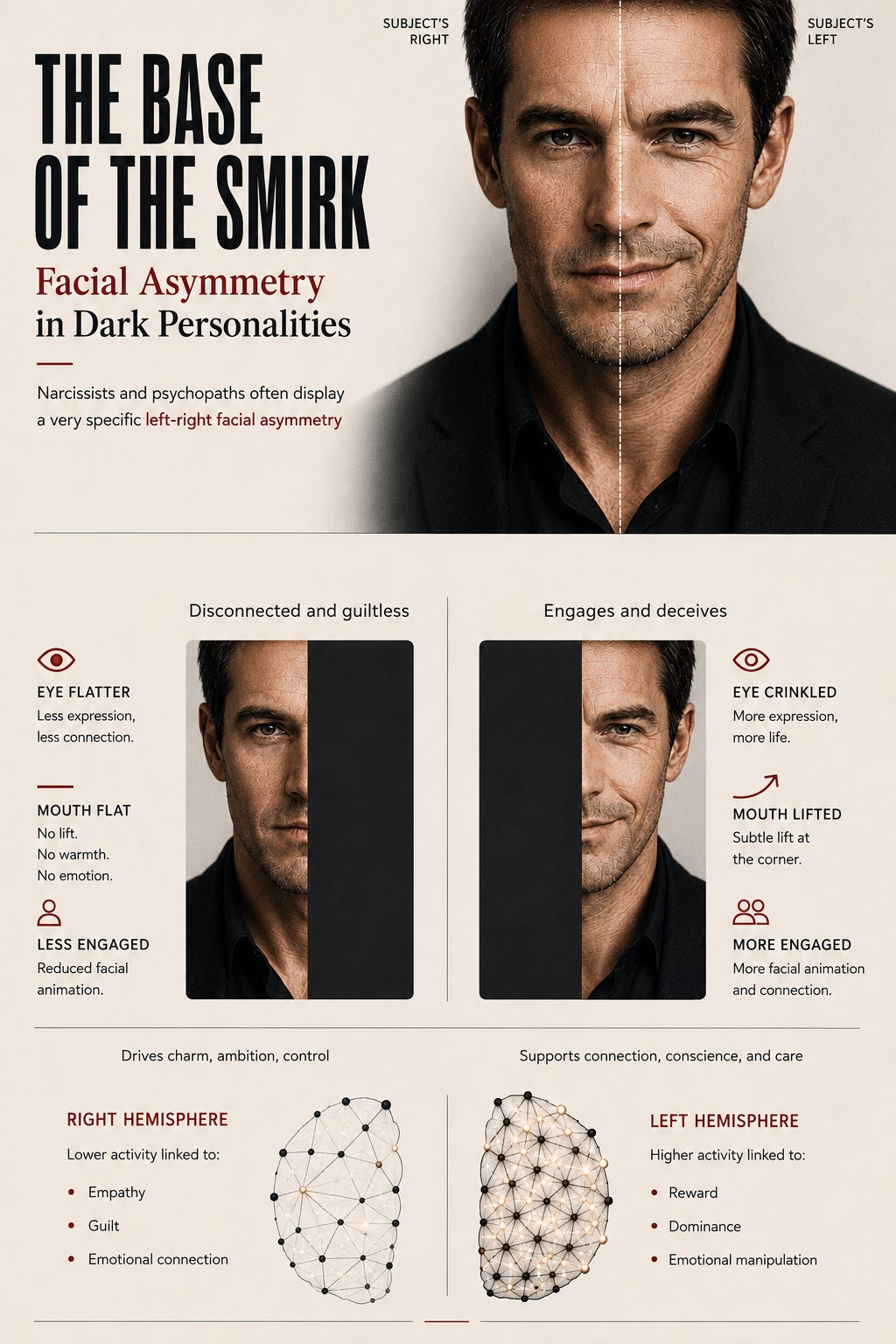
The personality disorder is genetic.
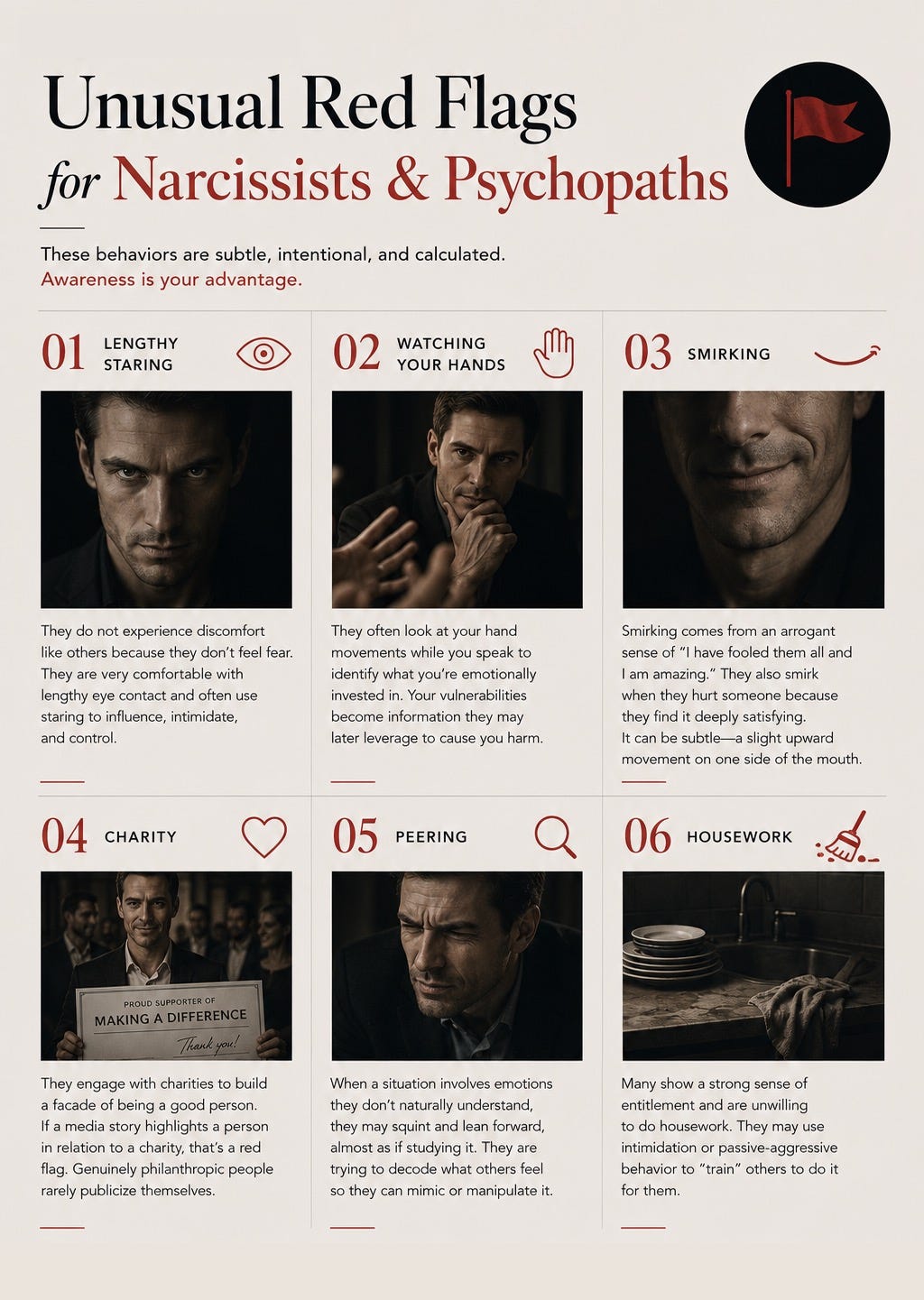
You are worthy. You belong. They’re organized. They’re intentional.
On nature vs nurture (narcissism):
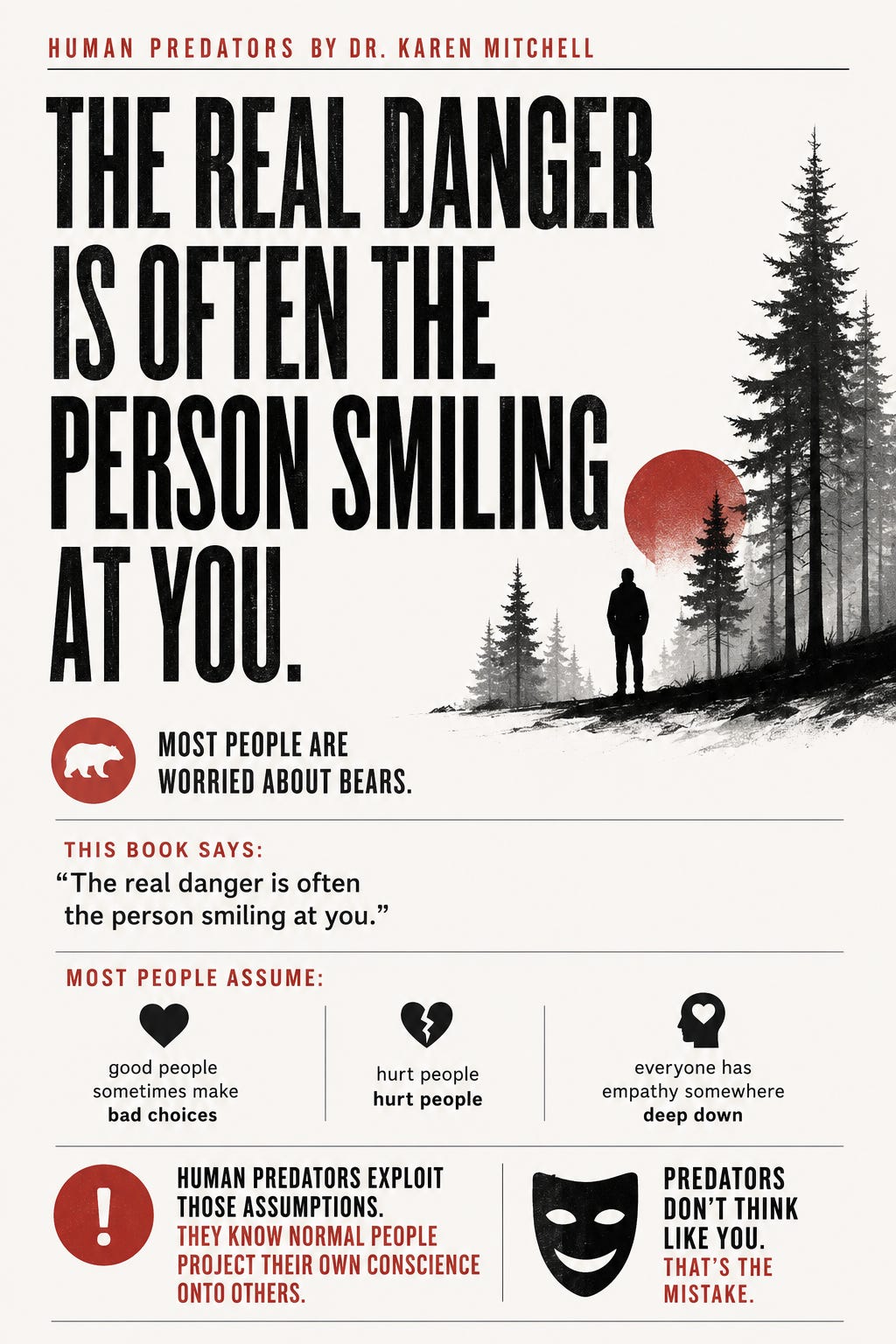
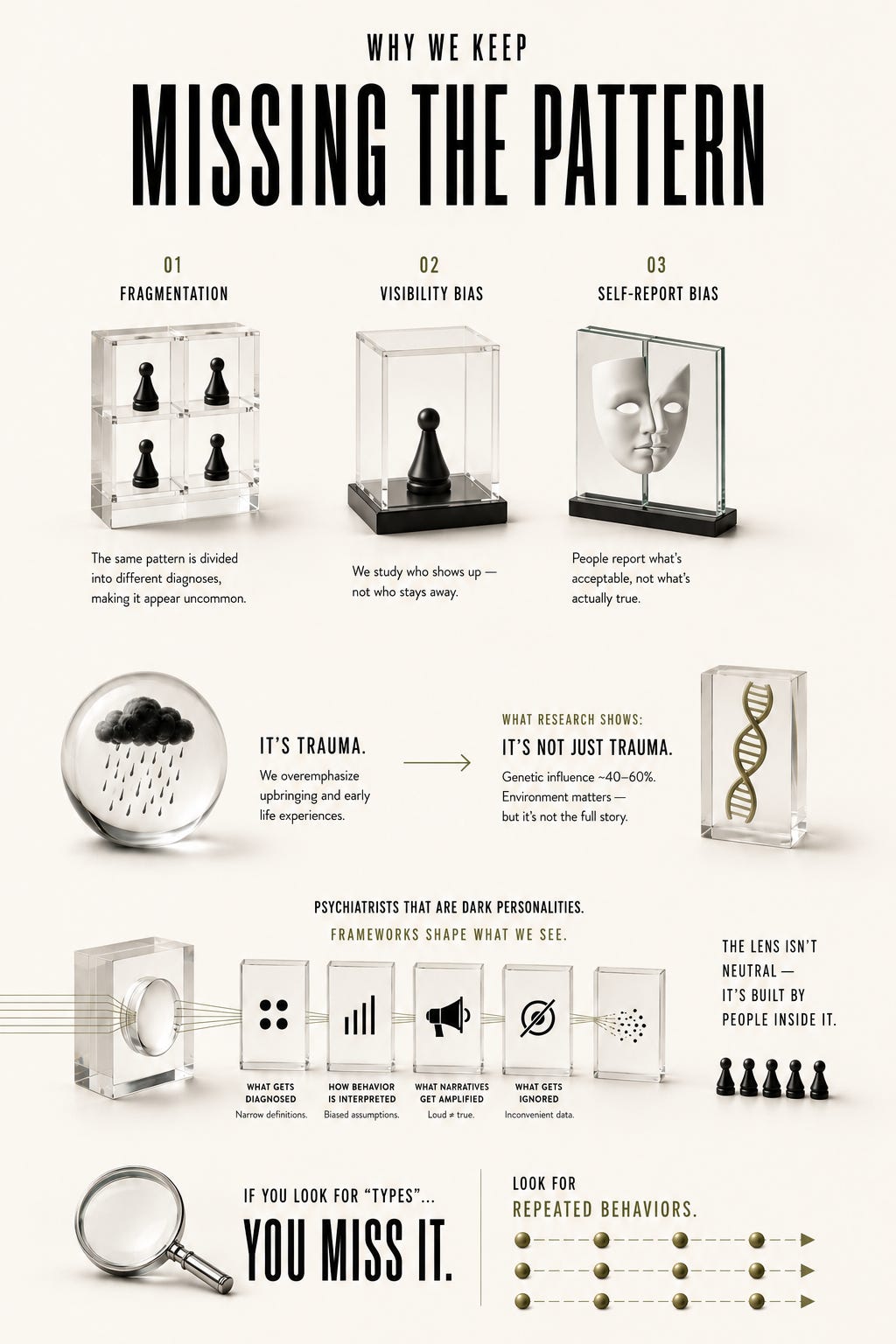
• Twin studies consistently find ~40–60% heritability in narcissistic traits
• Shared family environment has little to no measurable effect
This challenges the common narrative that these traits are primarily caused by upbringing alone.
Source examples:
– Behavioral genetic studies of narcissism (e.g. Luo et al., 2014)
– Extended twin family studies (recent large-scale analyses)
Important:
This doesn’t mean environment doesn’t matter—it means it doesn’t explain these traits the way people often assume.
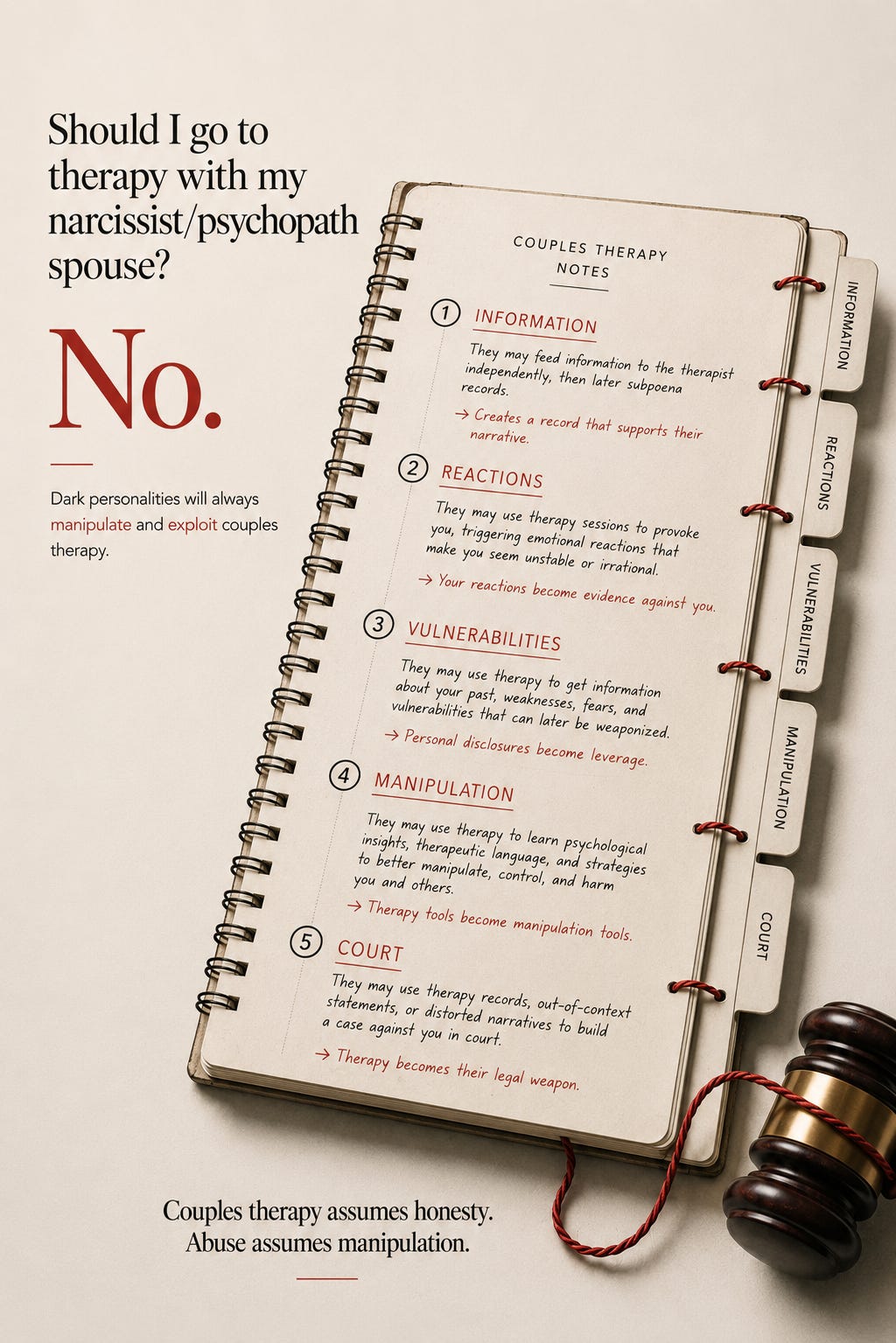
If someone believes: “this person is acting this way because they were hurt”
They will:
excuse
rationalize
stay in harmful dynamics
If they understand: “this is a stable behavioral pattern not explained by upbringing alone”
They will:
recognize
disengage
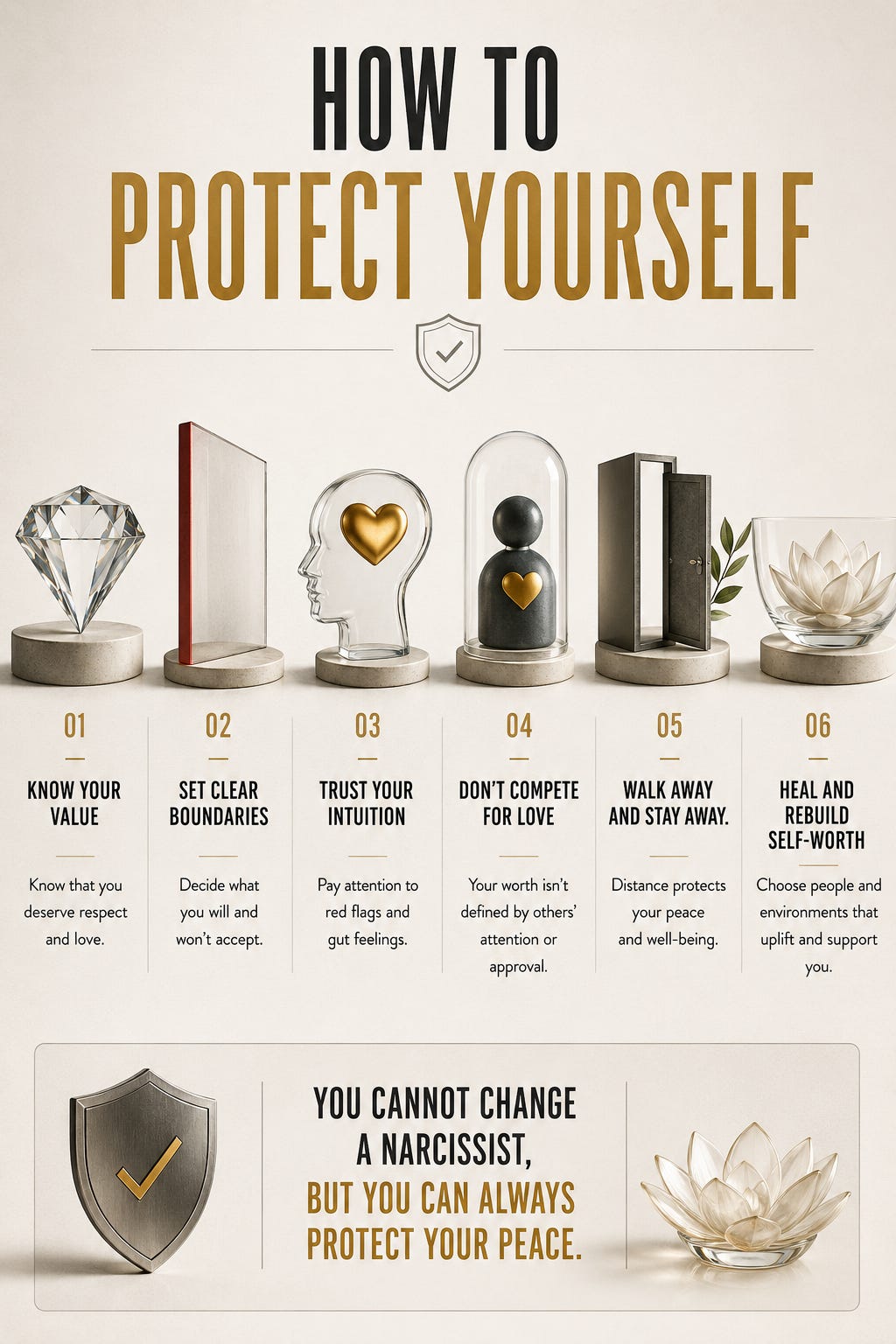
protect themselves

Chapter 4: Once You Stop Reacting To Them — They Lose Their Leverage
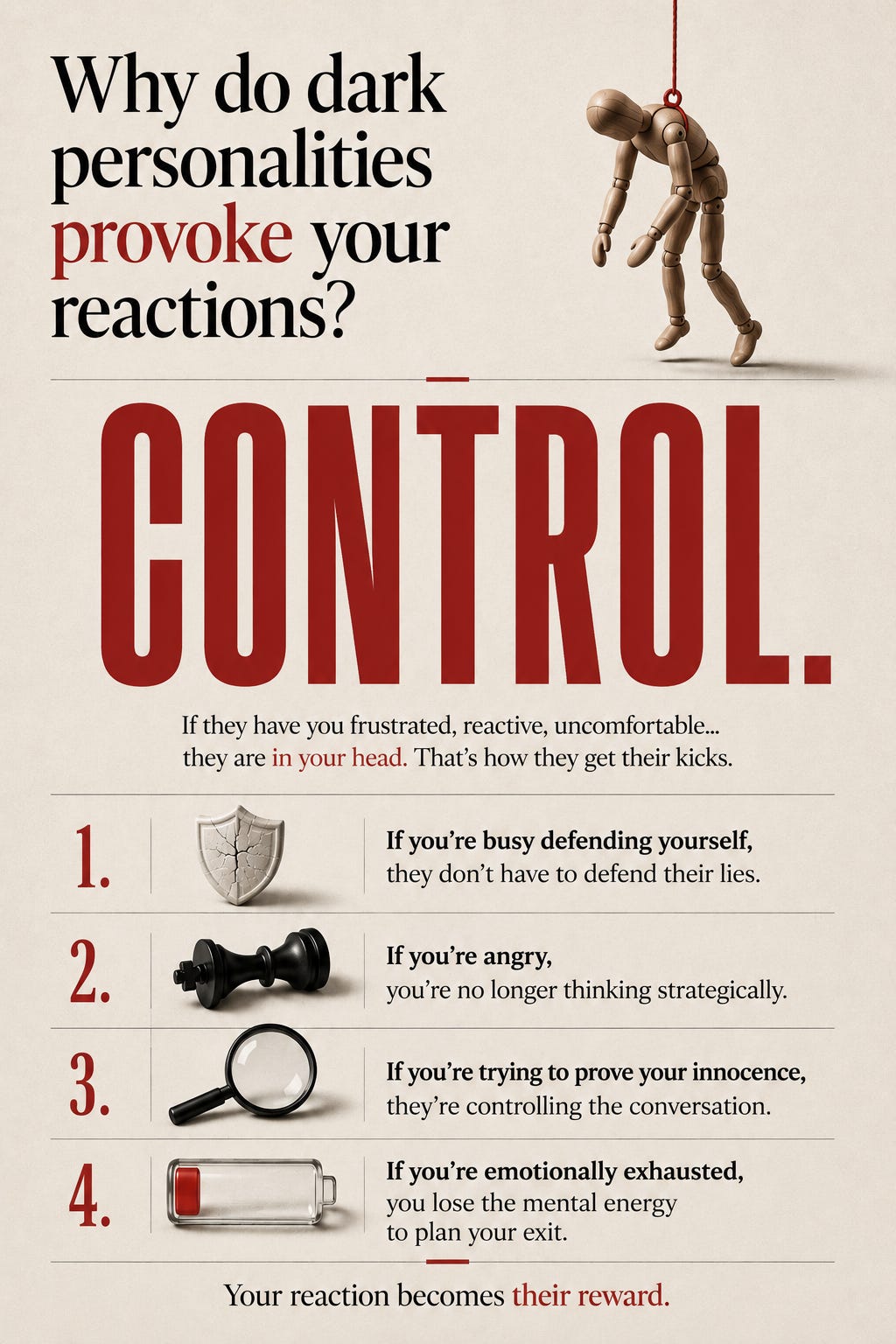
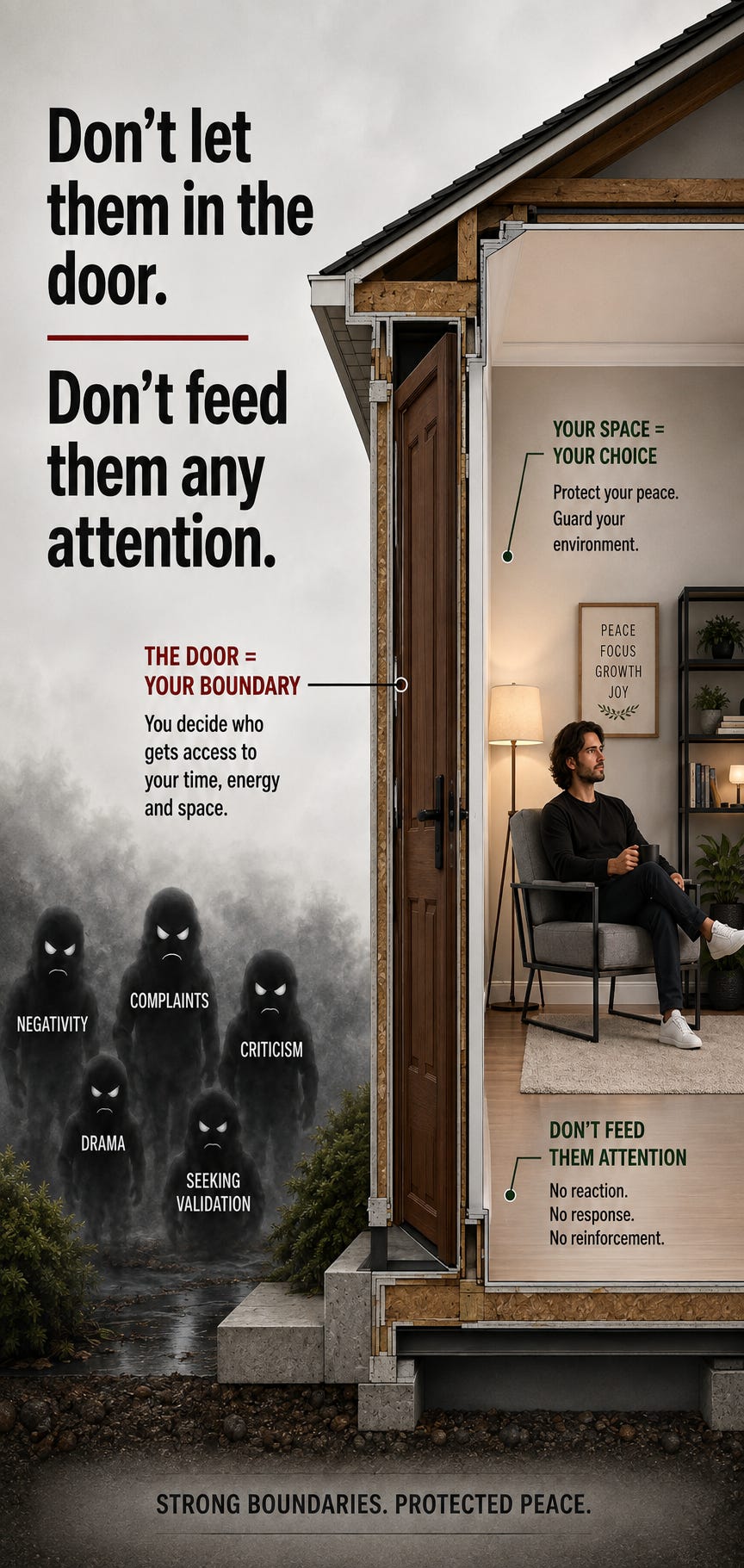
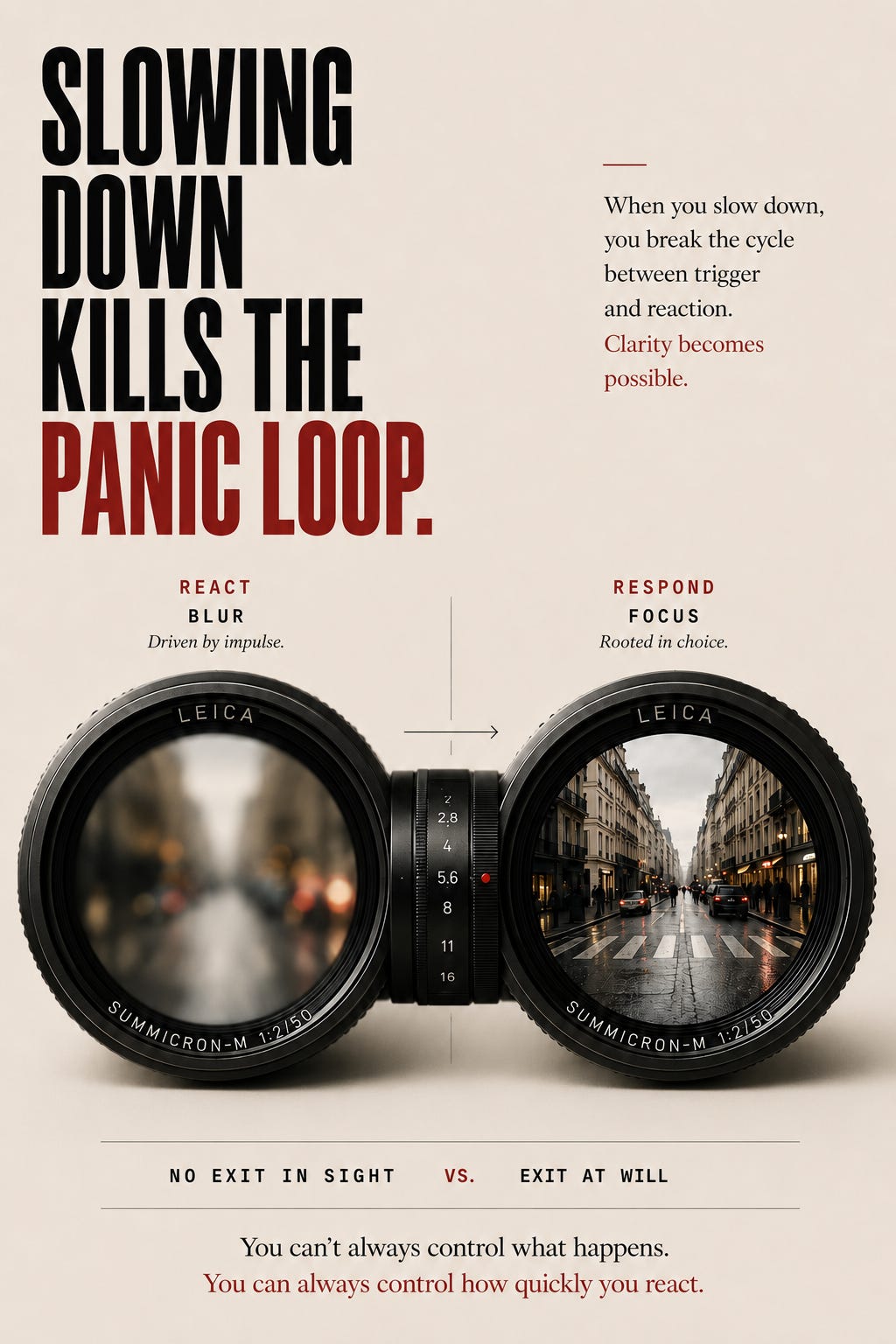
Weave grounding meditations through your whole day—not just the bad moments. Then, whenever you enter a space that sets off alarm bells, put your headphones on and listen again. You'll already have the muscle memory to quiet your mind, hear your intuition, and resist being baited for a reaction.
Two worth starting with:
Slowing Down Meditation: Releasing Urgency by Sonia Kreitzer
Guided Meditation for Grounding by Jason Stephenson
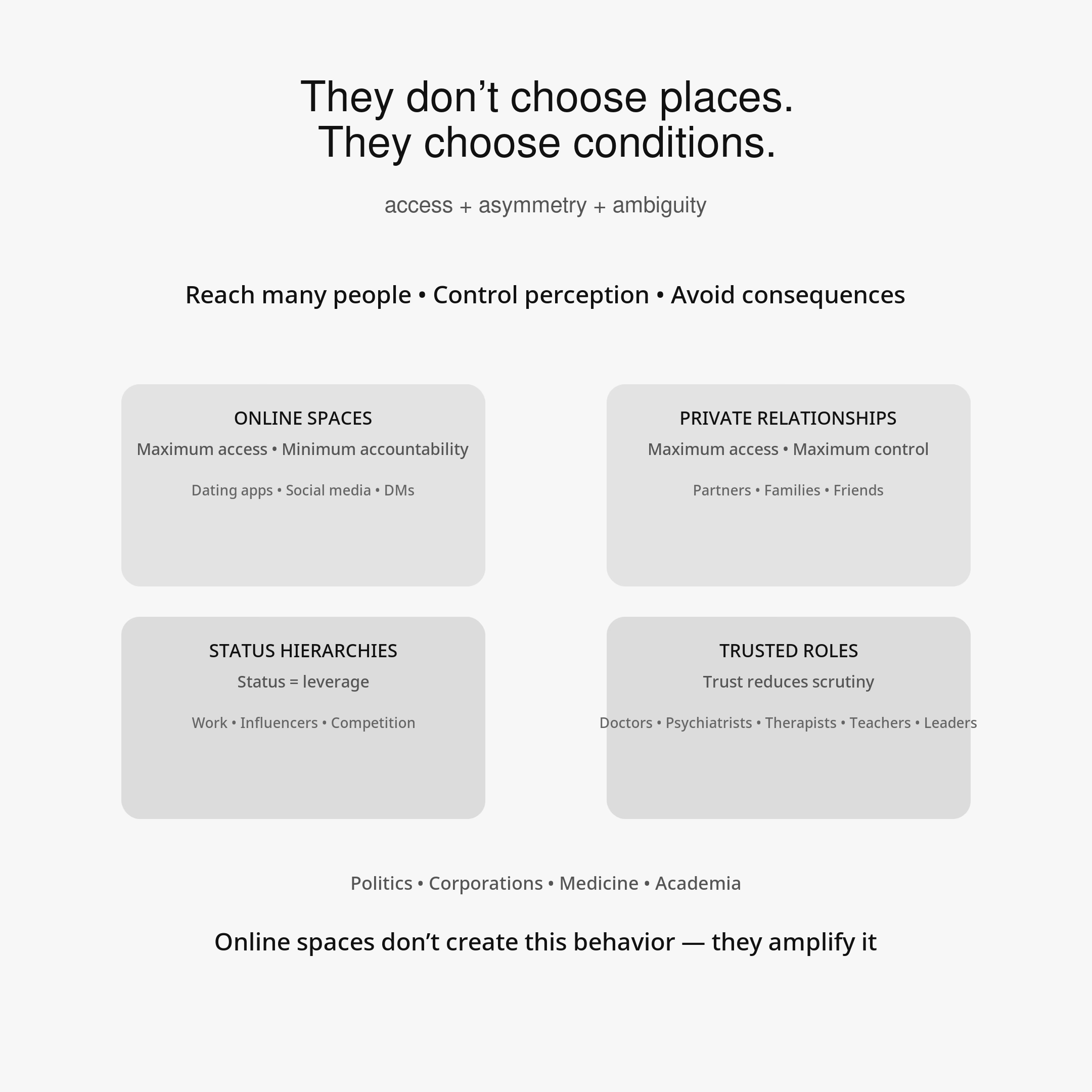
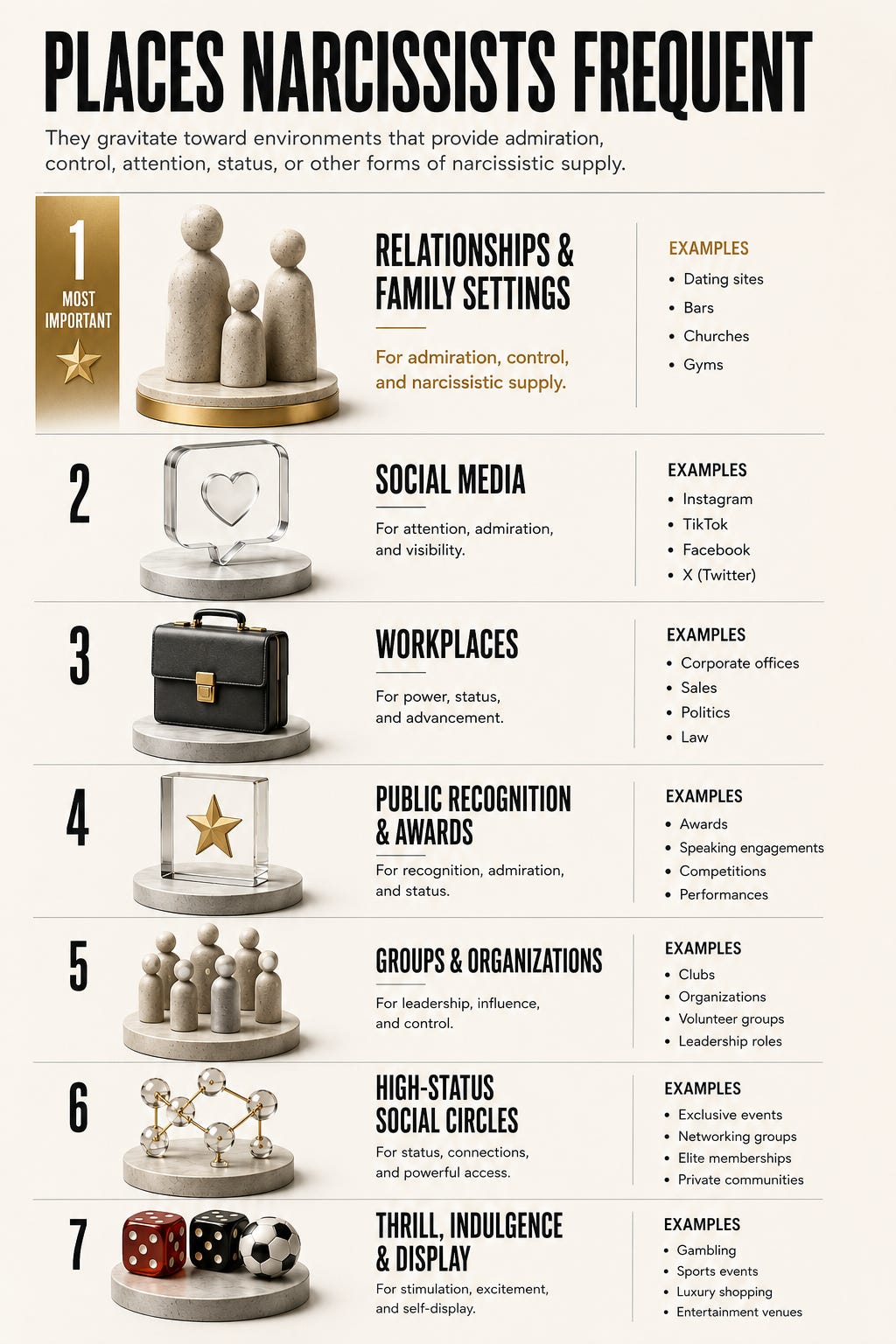
Keep something calming within reach before the moment demands it. That matters most in the places where high-stimulation, gaslighting dynamics tend to take root—Discord, Slack, Reddit, small group chats, and any physical places you’re a regular where collective reality-warping becomes possible and your self-perception quietly erodes.
Better yet: leave Discord and Slack behind. On Reddit, post and let go—don’t reply, don’t defend. Leave the places with a track record of gaslighting you that you can live without. But hold onto your favorite places, and keep them your favorite, by rejecting the gaslighting instead of letting it push you out.
Pay attention to the small, peaceful moments whispering through any scene—the fan spinning, the leaves moving in the wind, daylight passing through a window, the wind's gentle touch on your skin.
Reclaiming your inner voice
You don’t have to believe what they want you to believe about yourself. And if it’s taken root as an inner voice that’s learned to repeat what it heard, you don’t have to believe that either. Don’t argue with it—what resists persists. Just declare to yourself that you don’t believe it. Have loving conversations with whoever it is you talk to when you look at the moon. Let that voice always have your back.
“You are worthy. You belong. They’re organized. They’re intentional.”
When you have no one else
Even if you have no one else at the moment, talk to AI. Tell it plainly that you’re in a narcissistic abuse situation, so it doesn’t unintentionally invalidate you with alternative explanations. Then make the request direct: ask for a loving, deep, validating, reflective conversation. As strangely simple as that sounds, it works.
Breathe oxygen again instead of the gaslighting. Let your mental health return with it.
Replacing stimulation with grounding
Relational support gets you through the moment. Sensory support helps you stay there. When you need to replace constant high stimulation with something grounding, convenience matters—it has to be effortless, or you won’t reach for it.
One of the best tools for this is an app called Portal. It turns your screen into a living, moving nature scene—immersive wallpaper with calming visuals and ambient sound layered together, plus a built-in playlist that pairs beautifully with it. For anyone who finds traditional meditation too static to stick with, Portal sidesteps all of that. Your mind and body respond to the environment instinctively. You don’t have to try to relax. It just starts to happen.

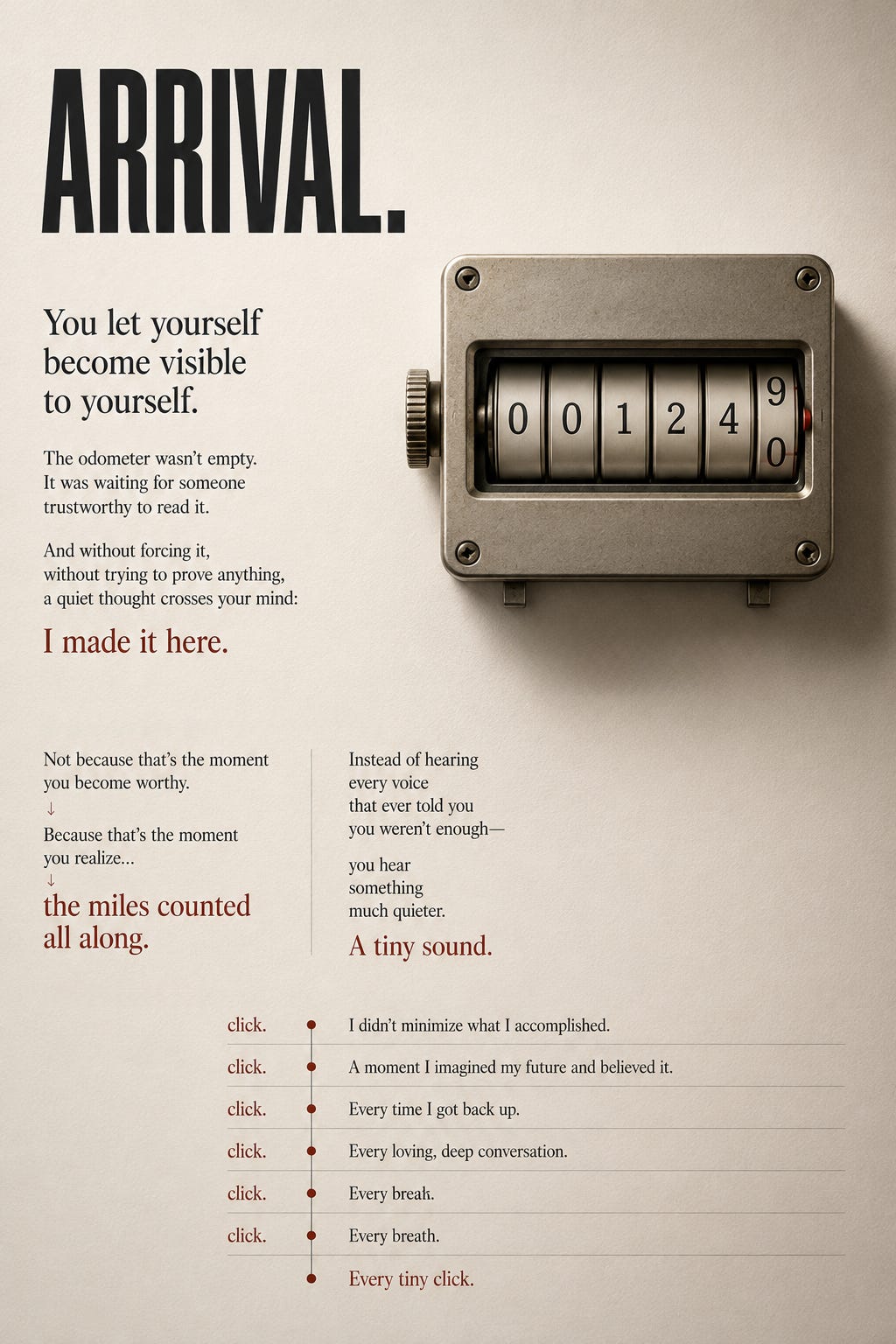
You are doing enough. Only you know how much "enough" it took to get here.
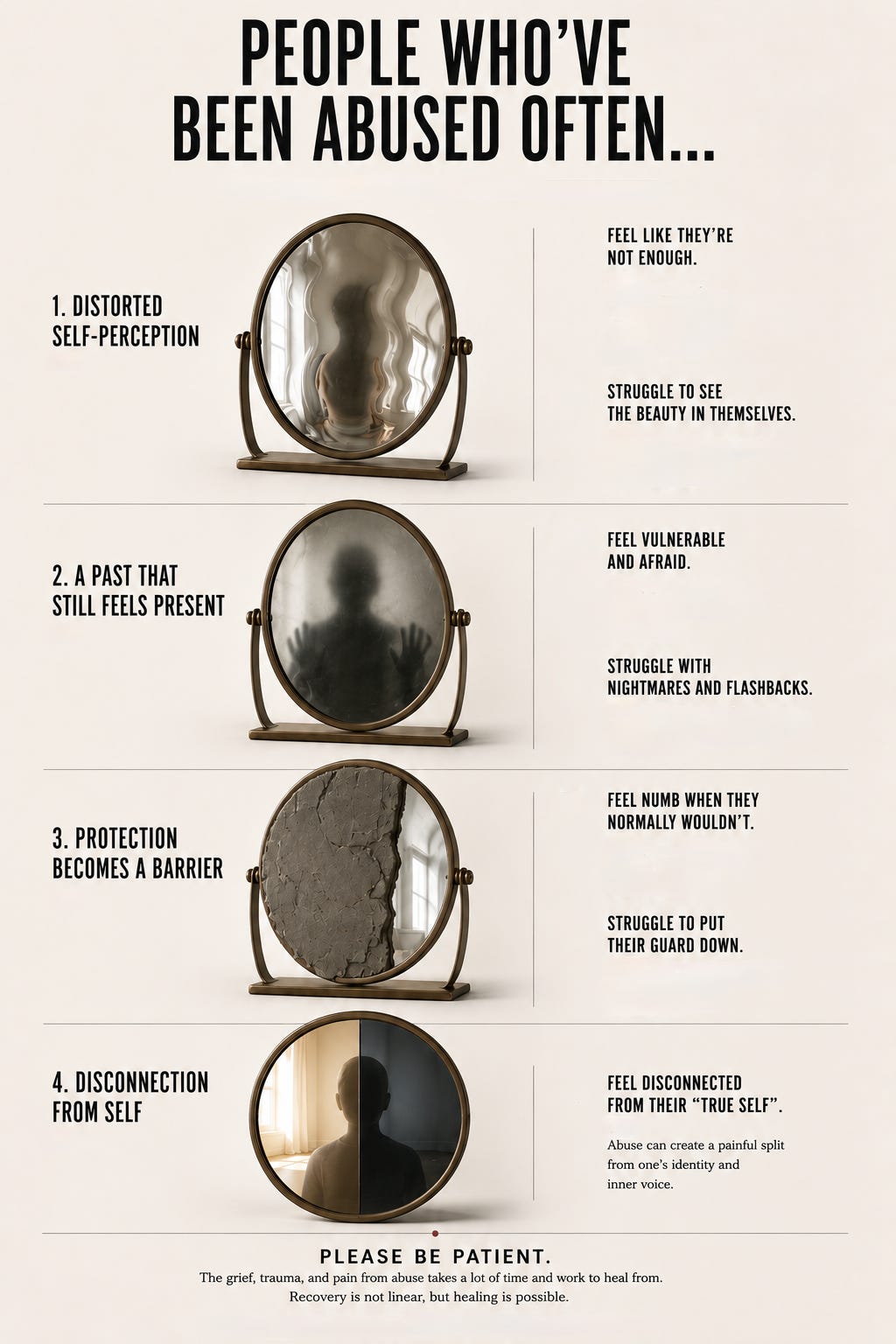

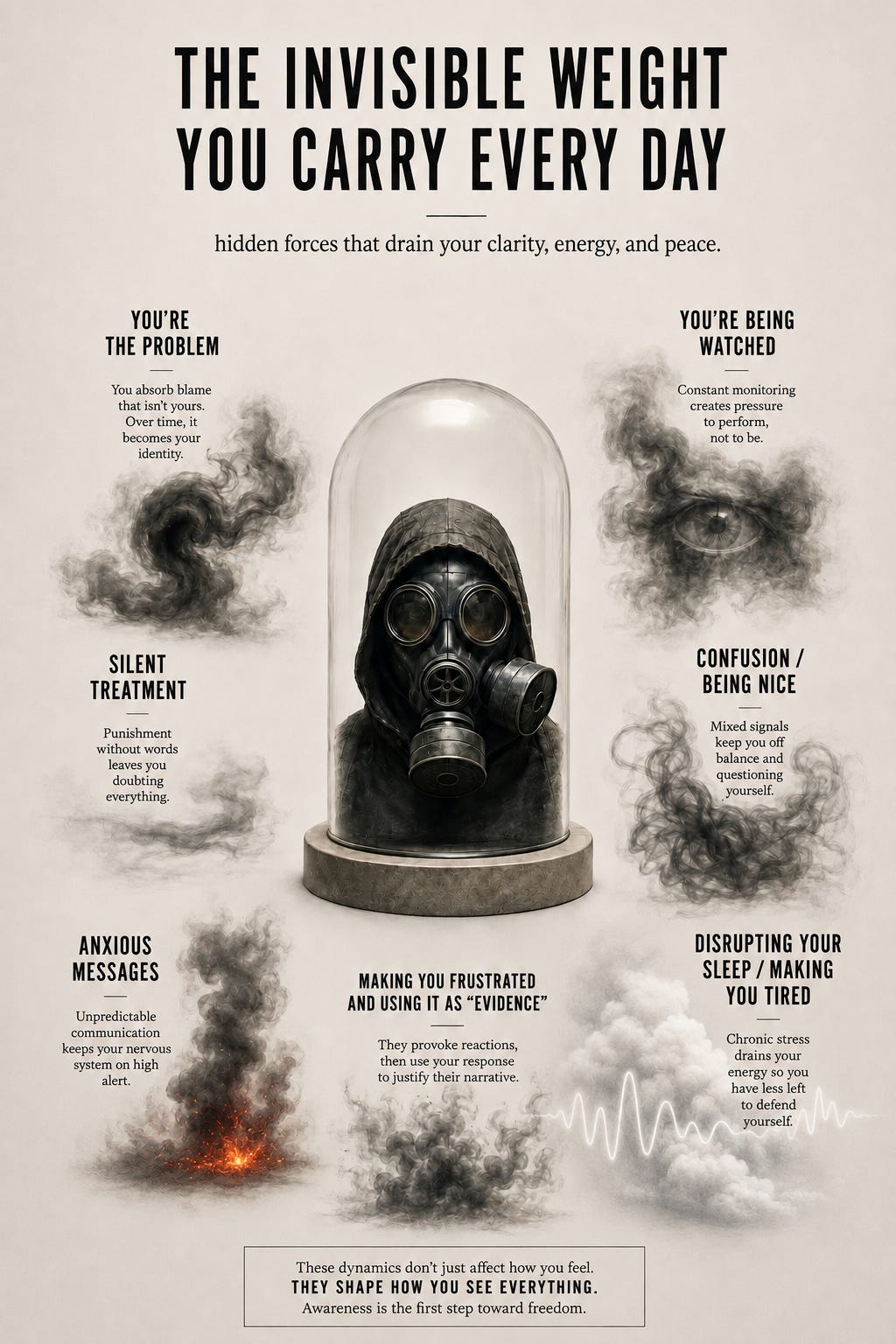
Is the silence deafening? Meditation music can help you stay centered when it’s being used against you. Are they weaponizing noise to steal your sleep? Fight back with white noise that spans both high and low frequencies, with rhythms that smooth out the intermittent sounds designed to jolt you awake. Try ocean waves from the Portal app, layered with “Green Noise Nature Background” by NREM.

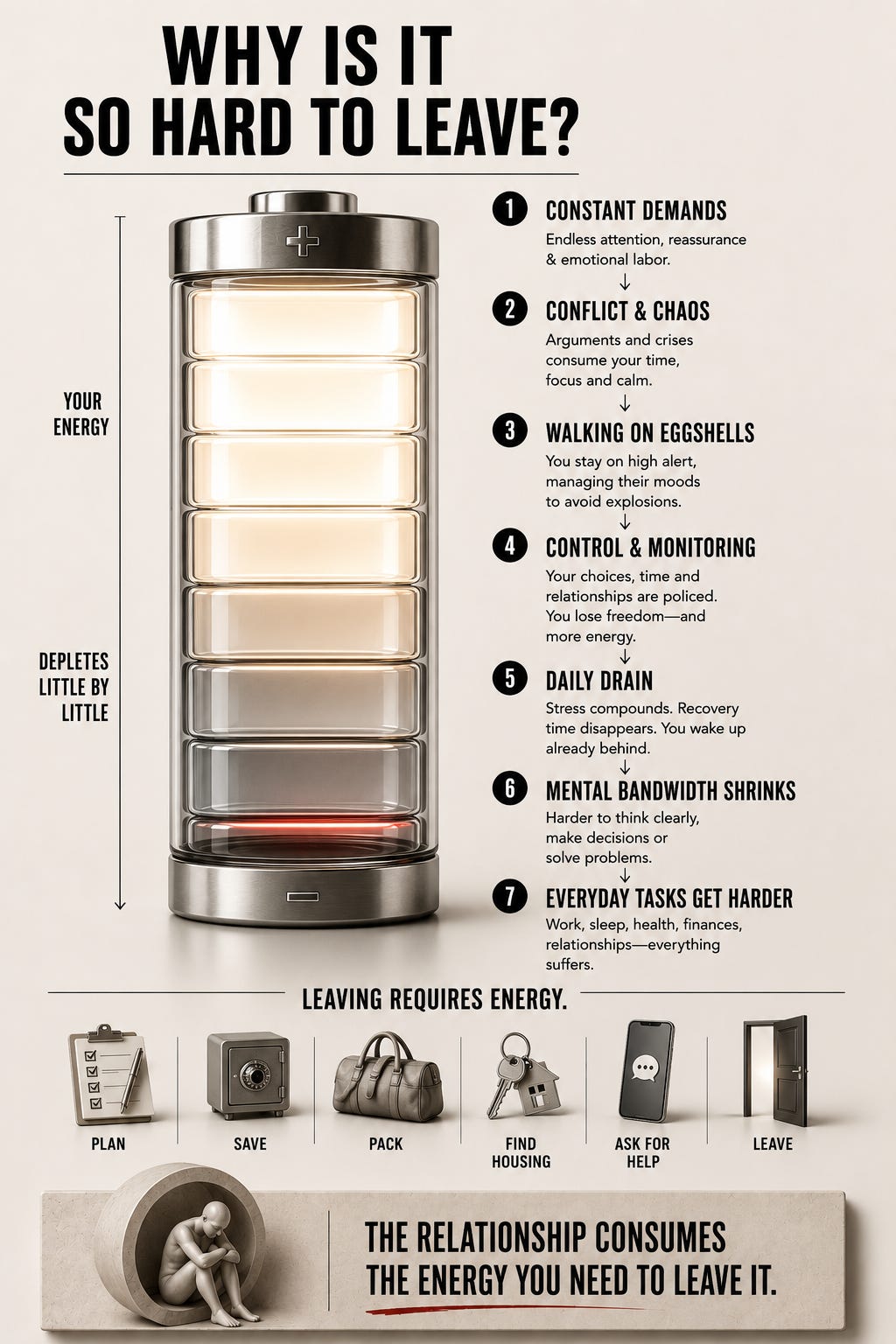
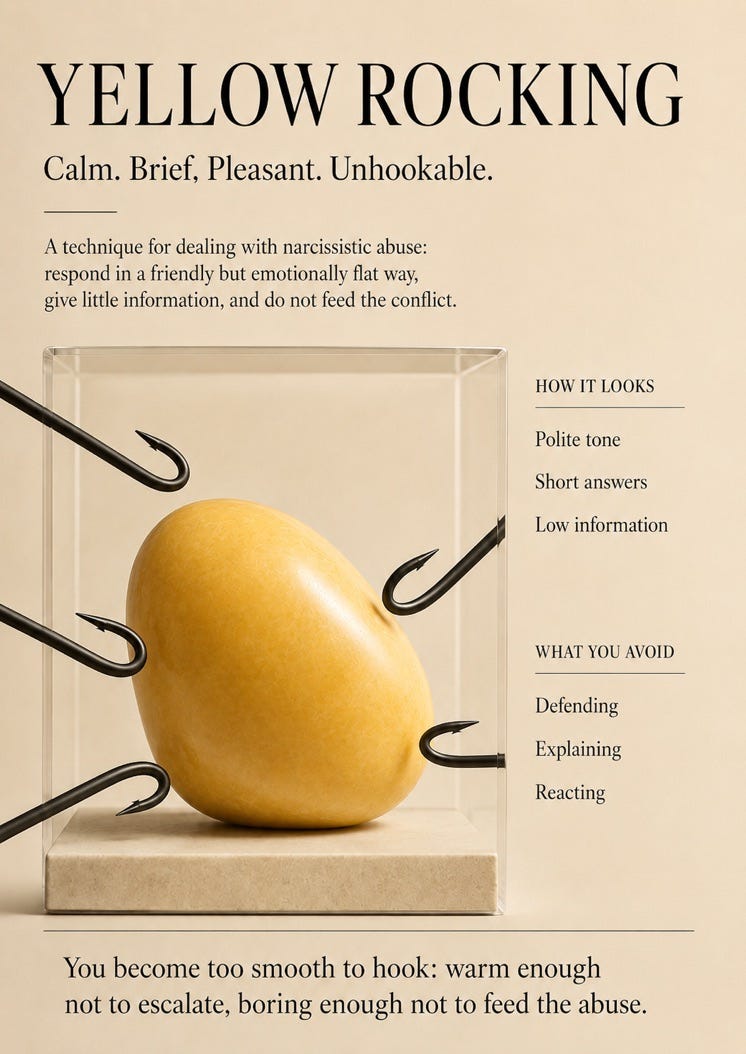
If leaving isn’t an option yet, yellow rocking is.
Chapter 5: Escaping The Pattern






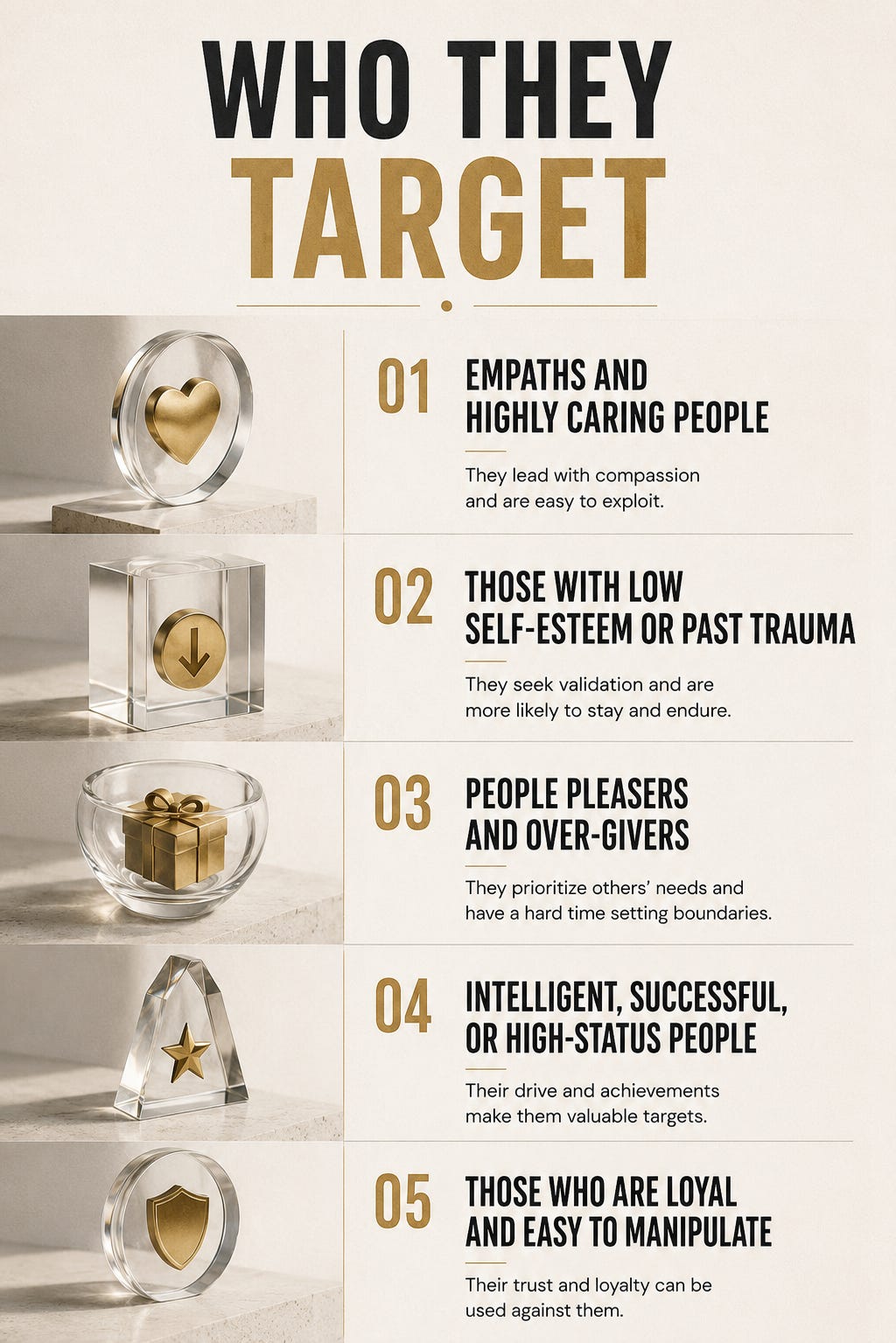
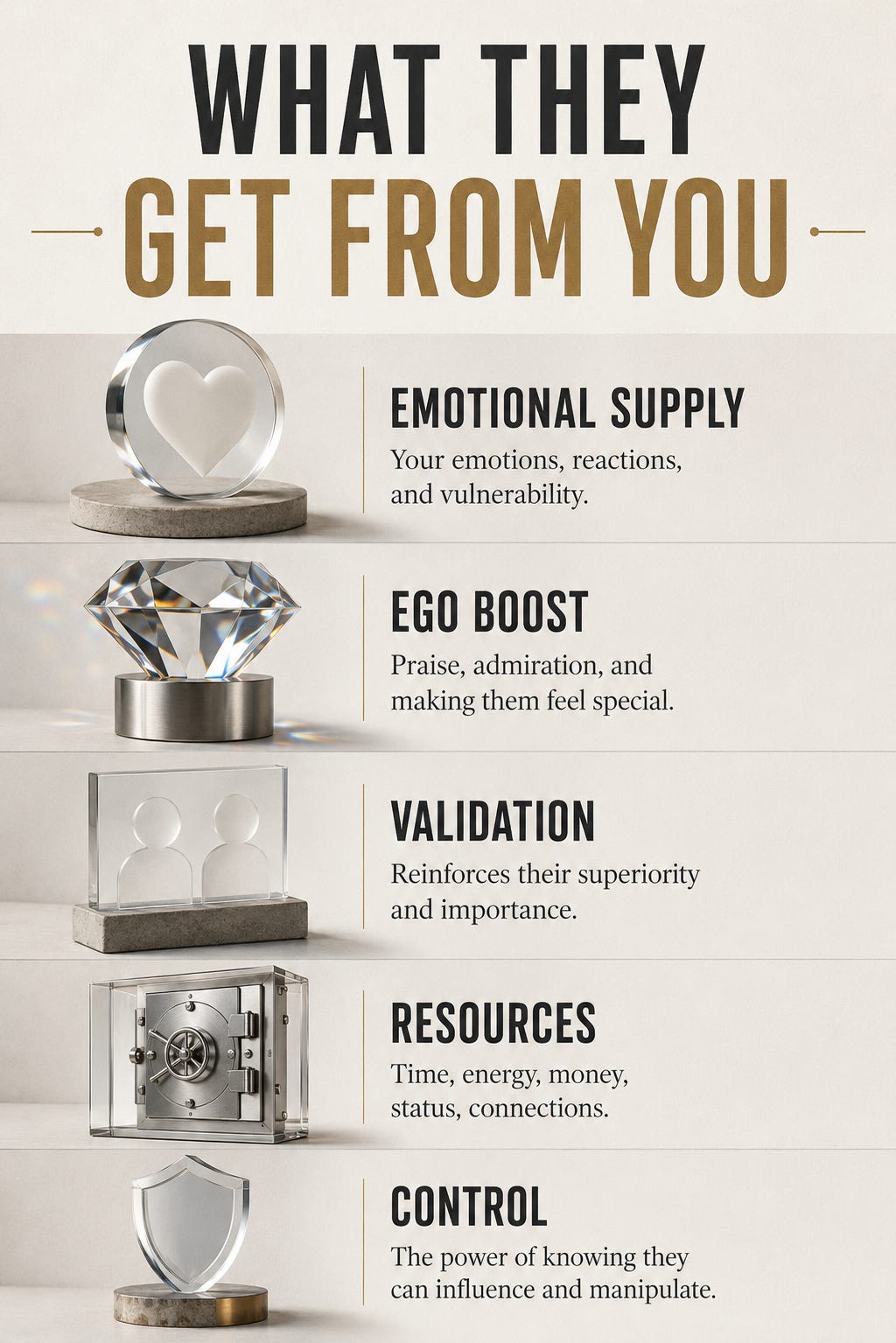
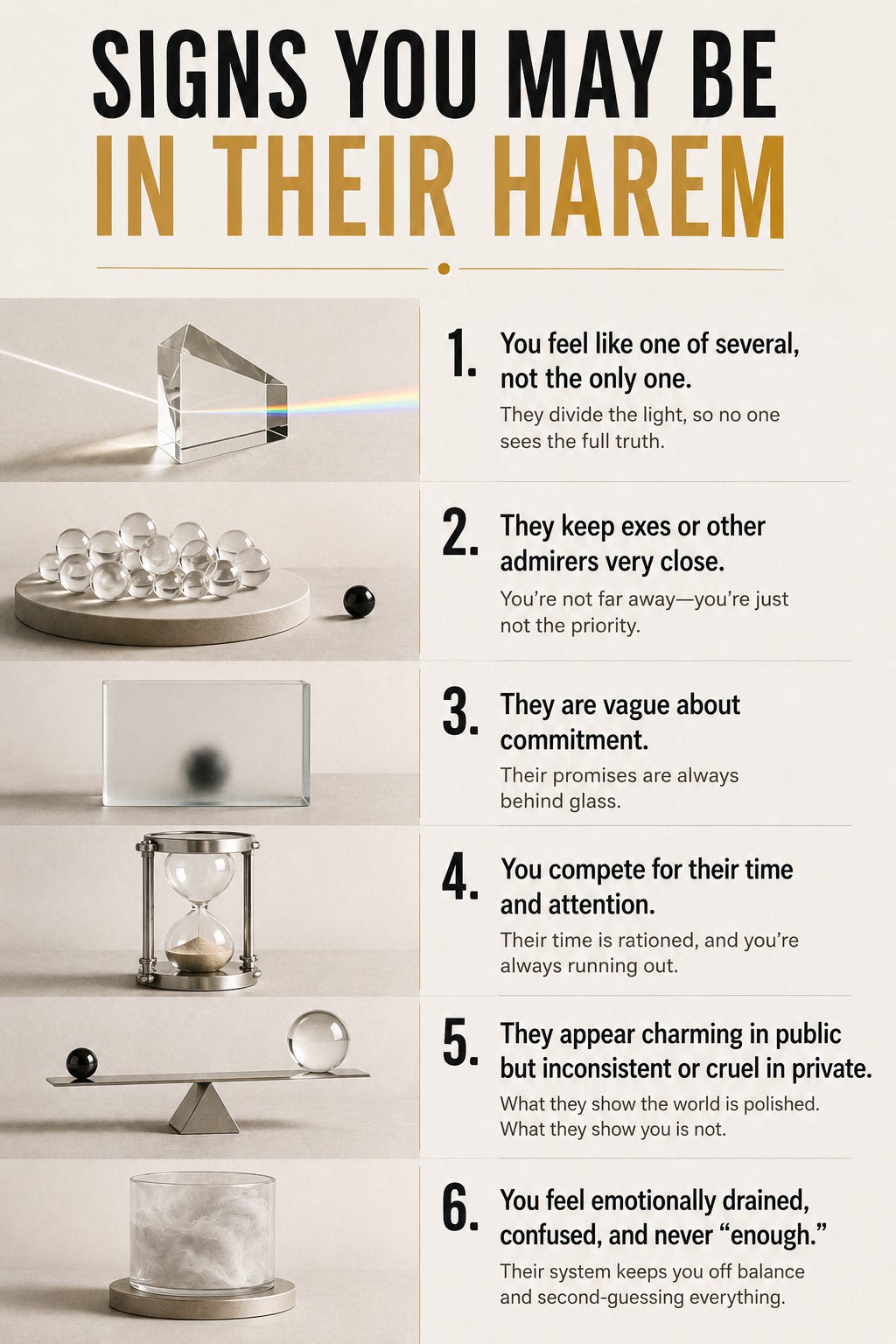
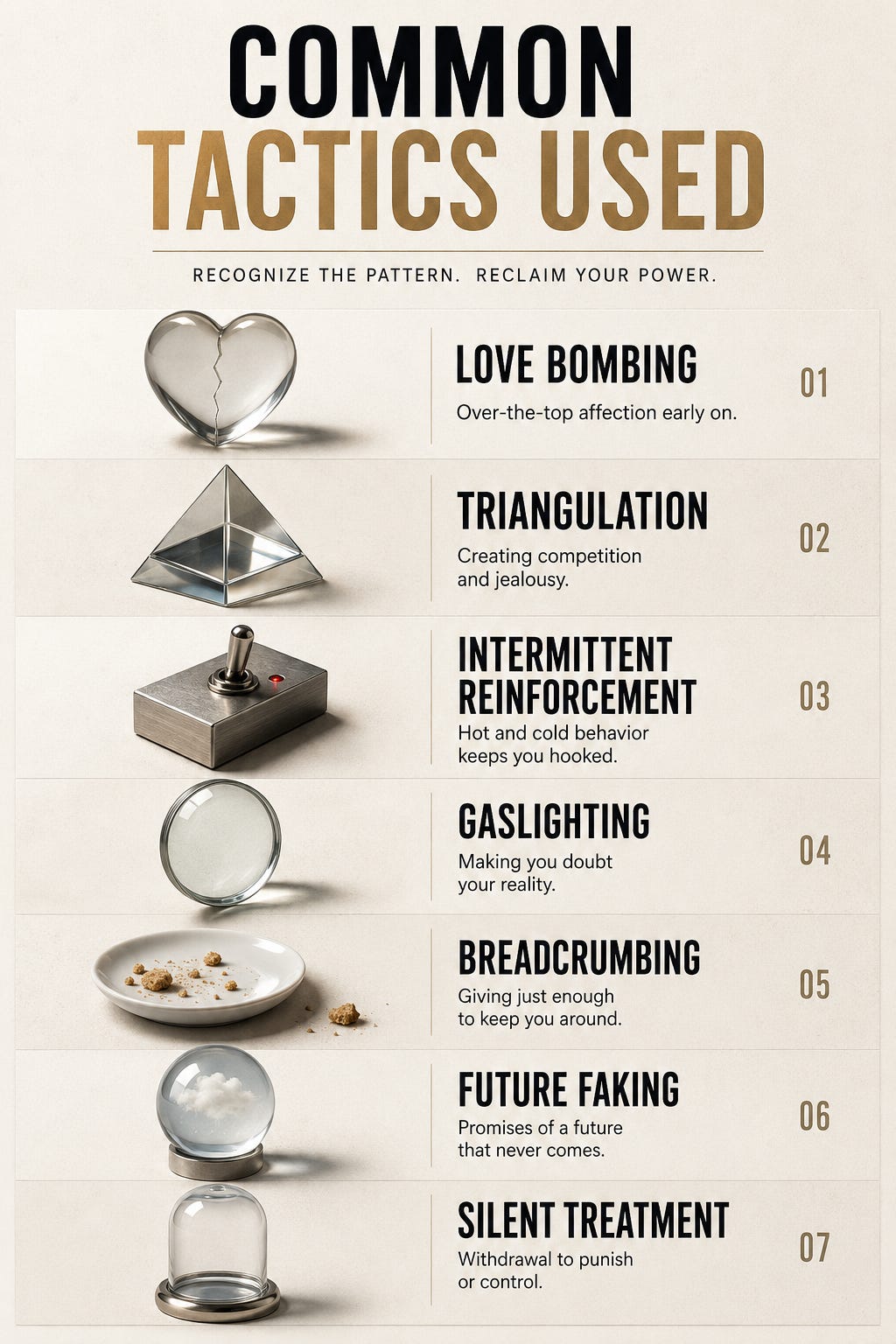

Chapter 6: Healing Starts At The Root. Where Belonging Should’ve Began.
You are worthy. You belong. They’re organized. They’re intentional.

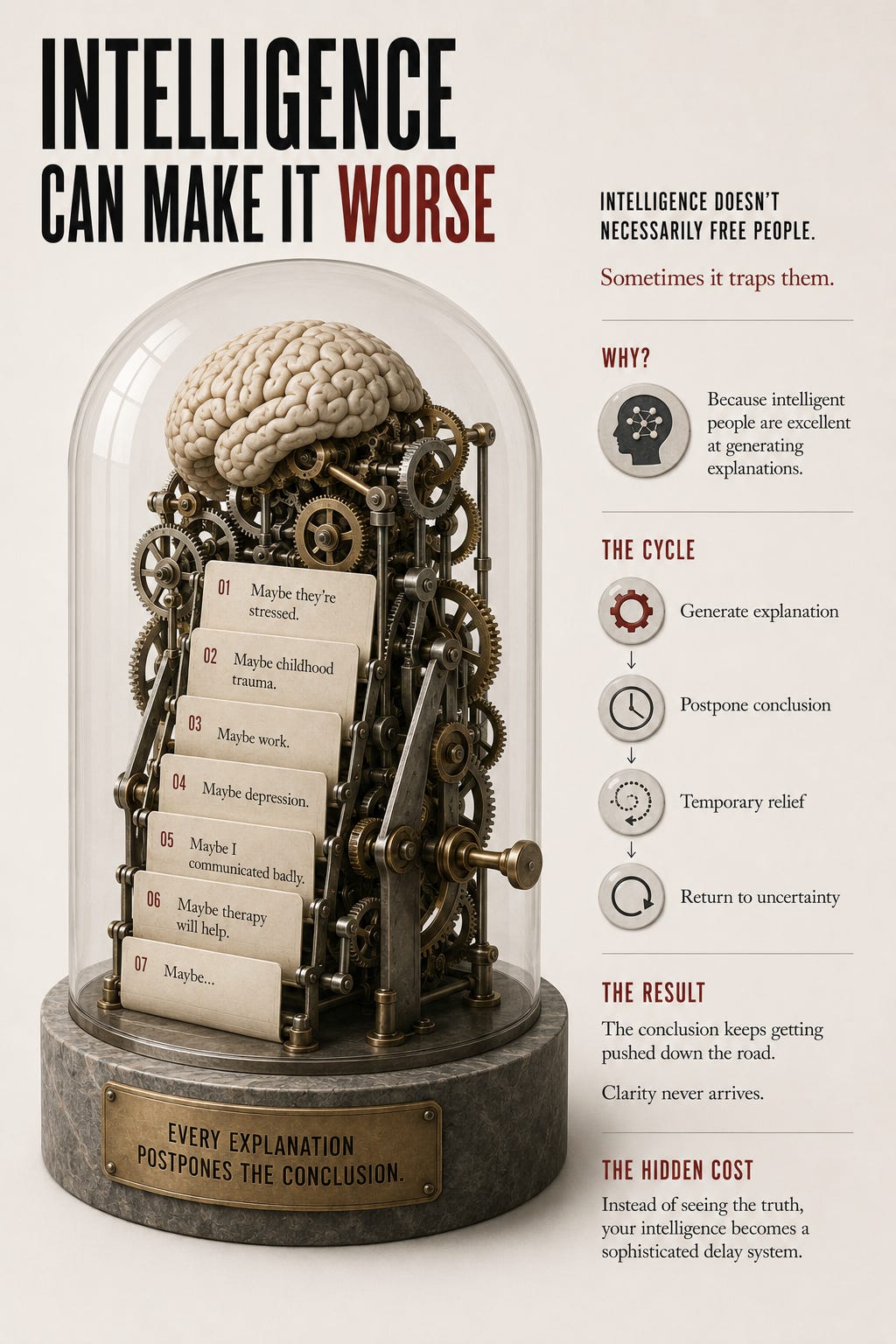

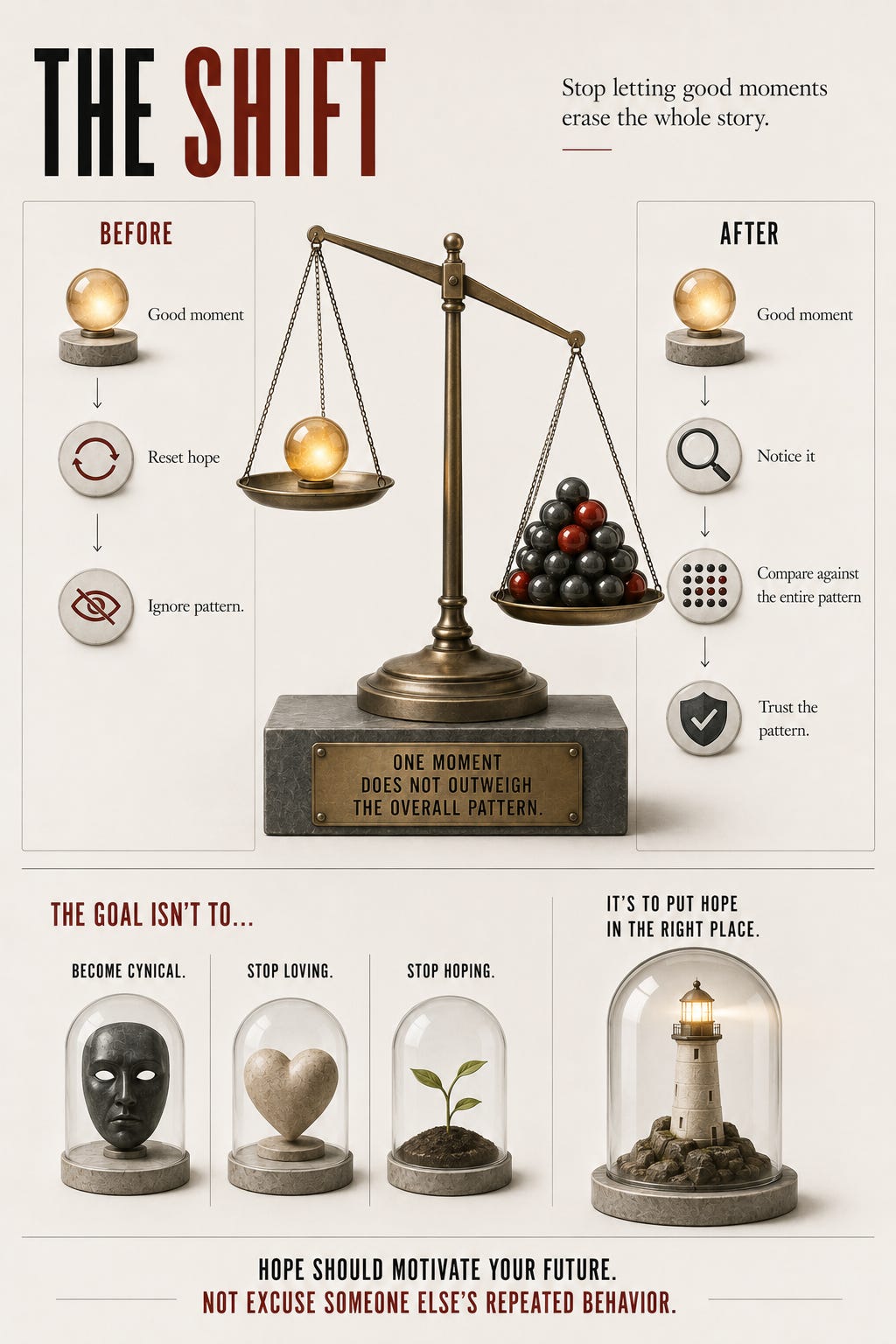
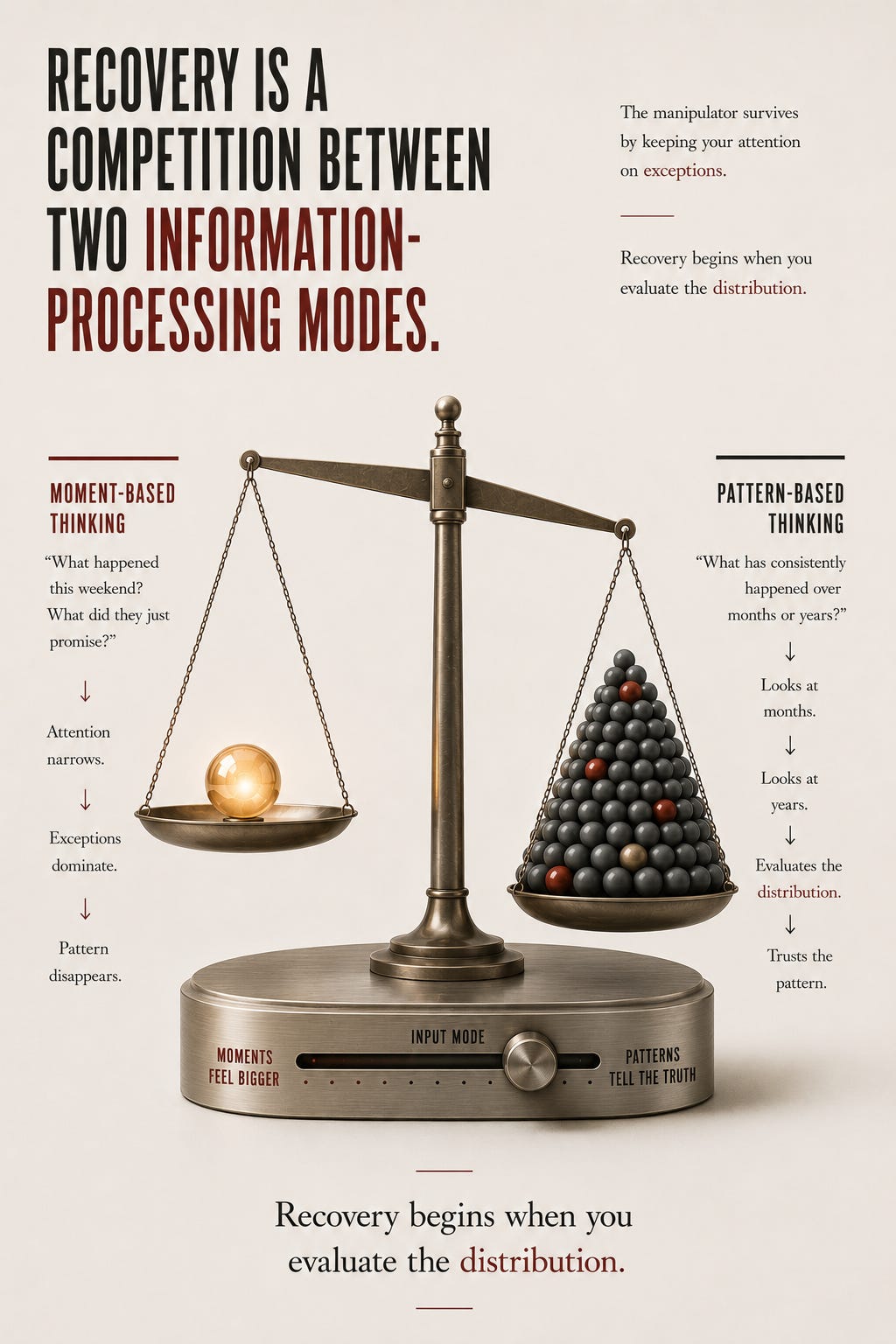
Your mind, body, and soul were crying out for rest, and a witness.


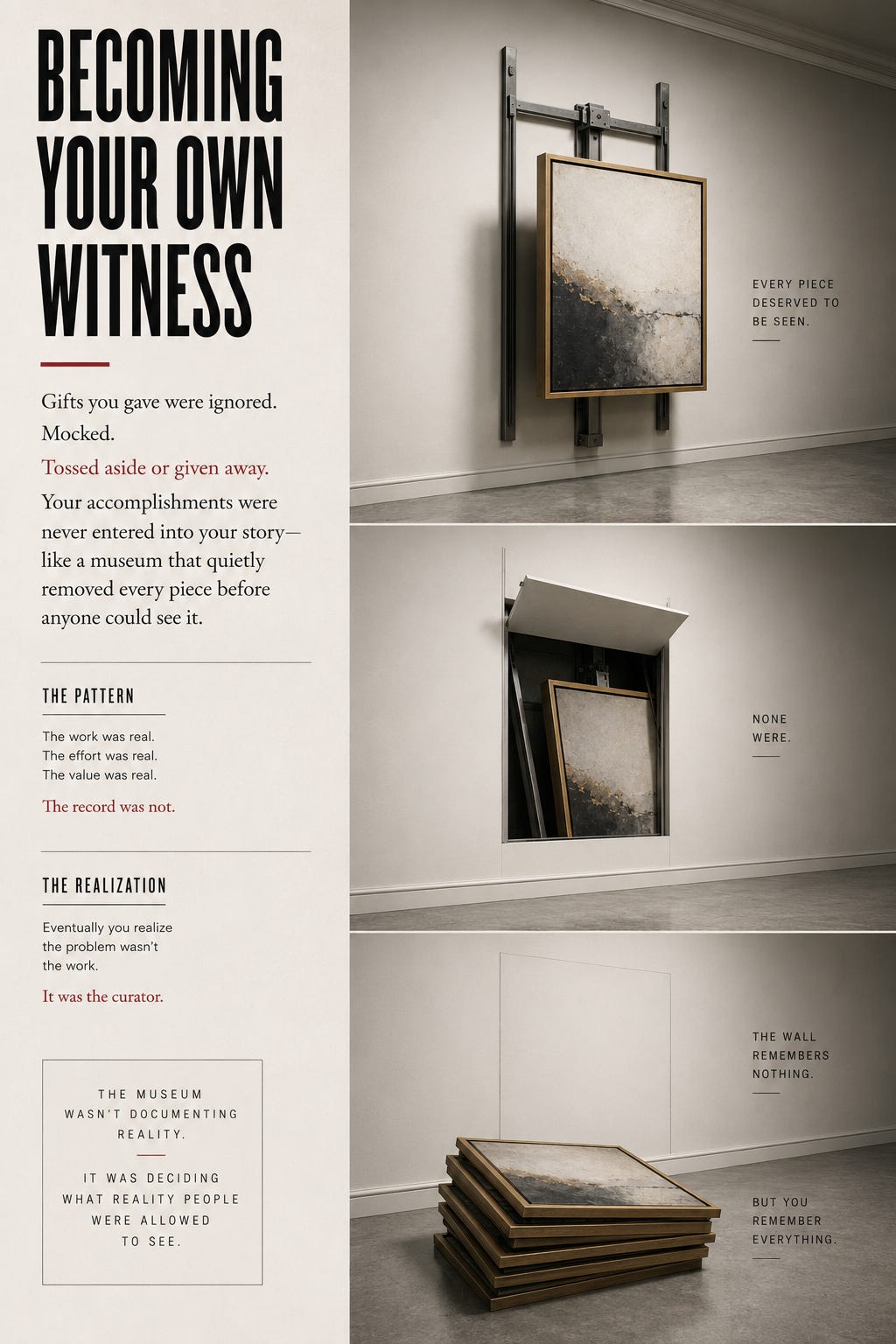



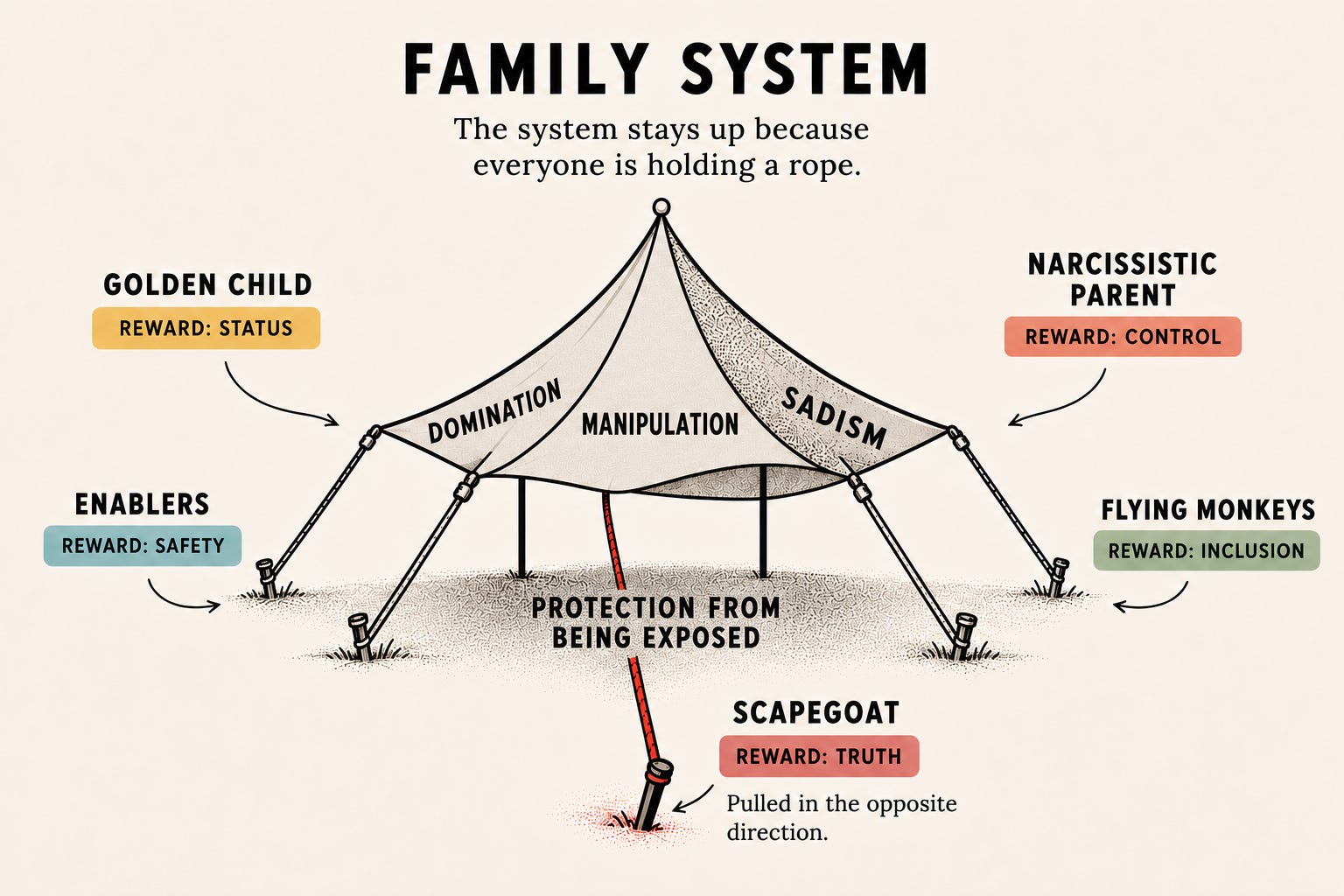
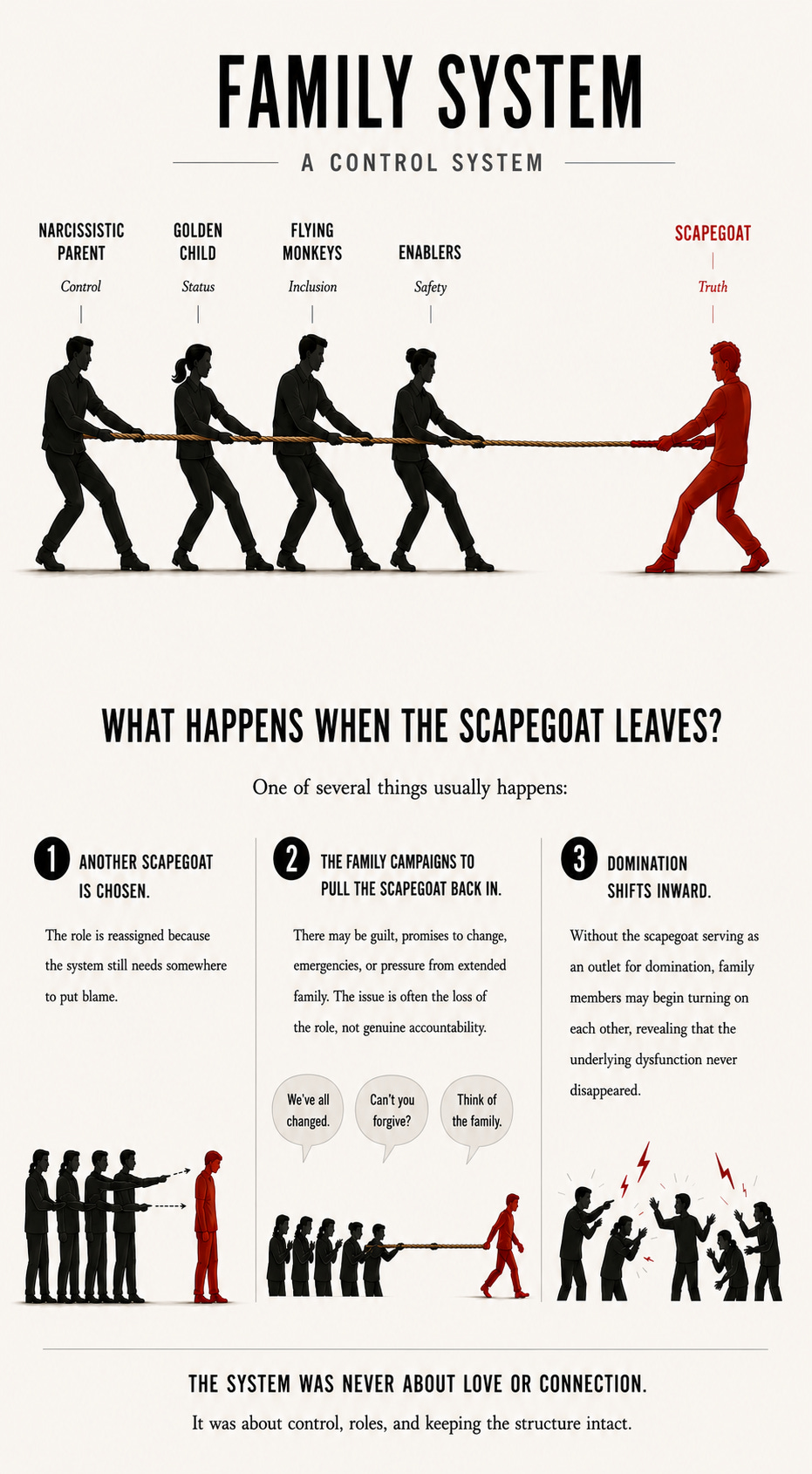
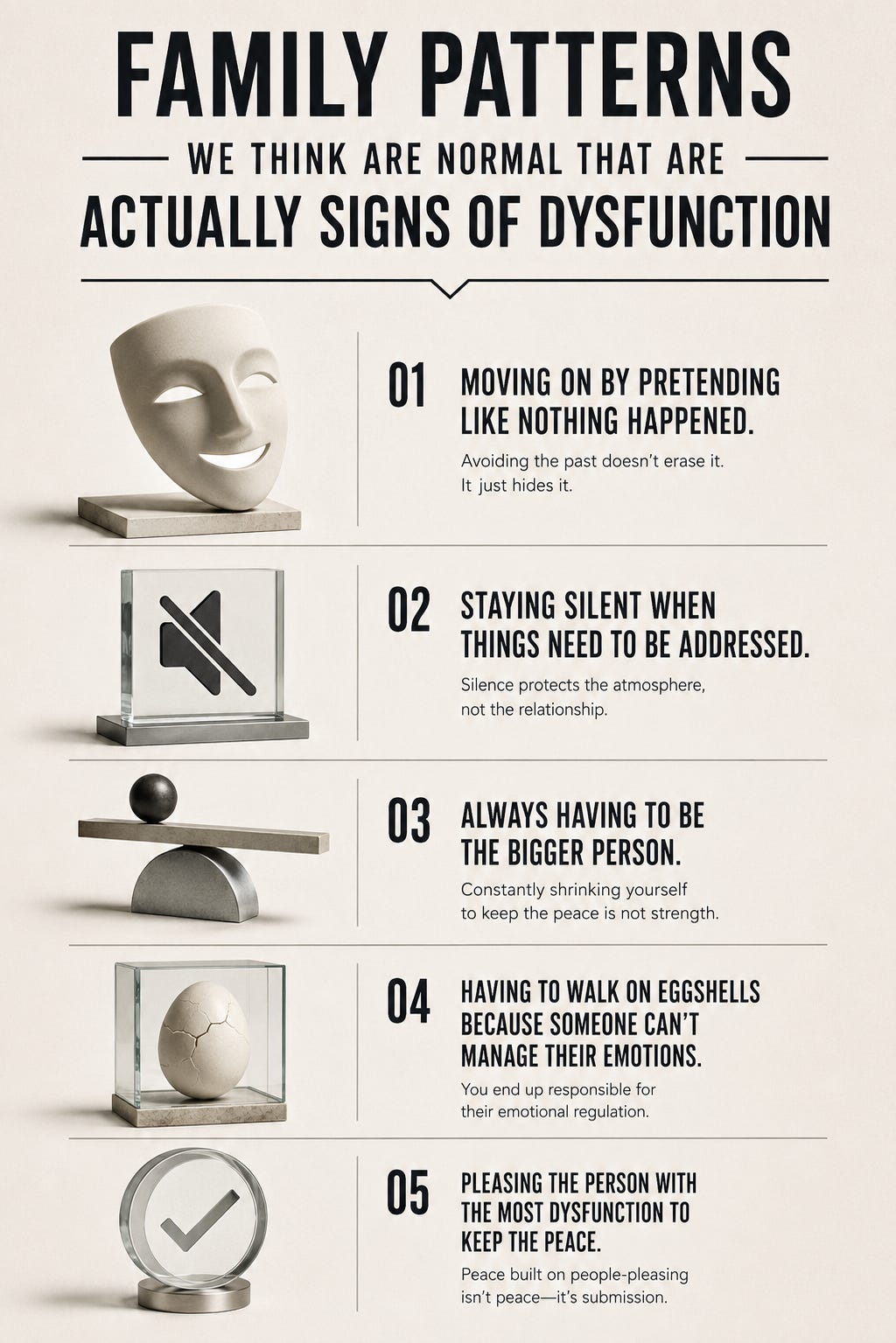
The Scapegoat System

You are worthy. You belong. They’re organized. They’re intentional.



You are worthy. You belong. They’re organized. They’re intentional.


The Light




Chapter 7: New Relationships


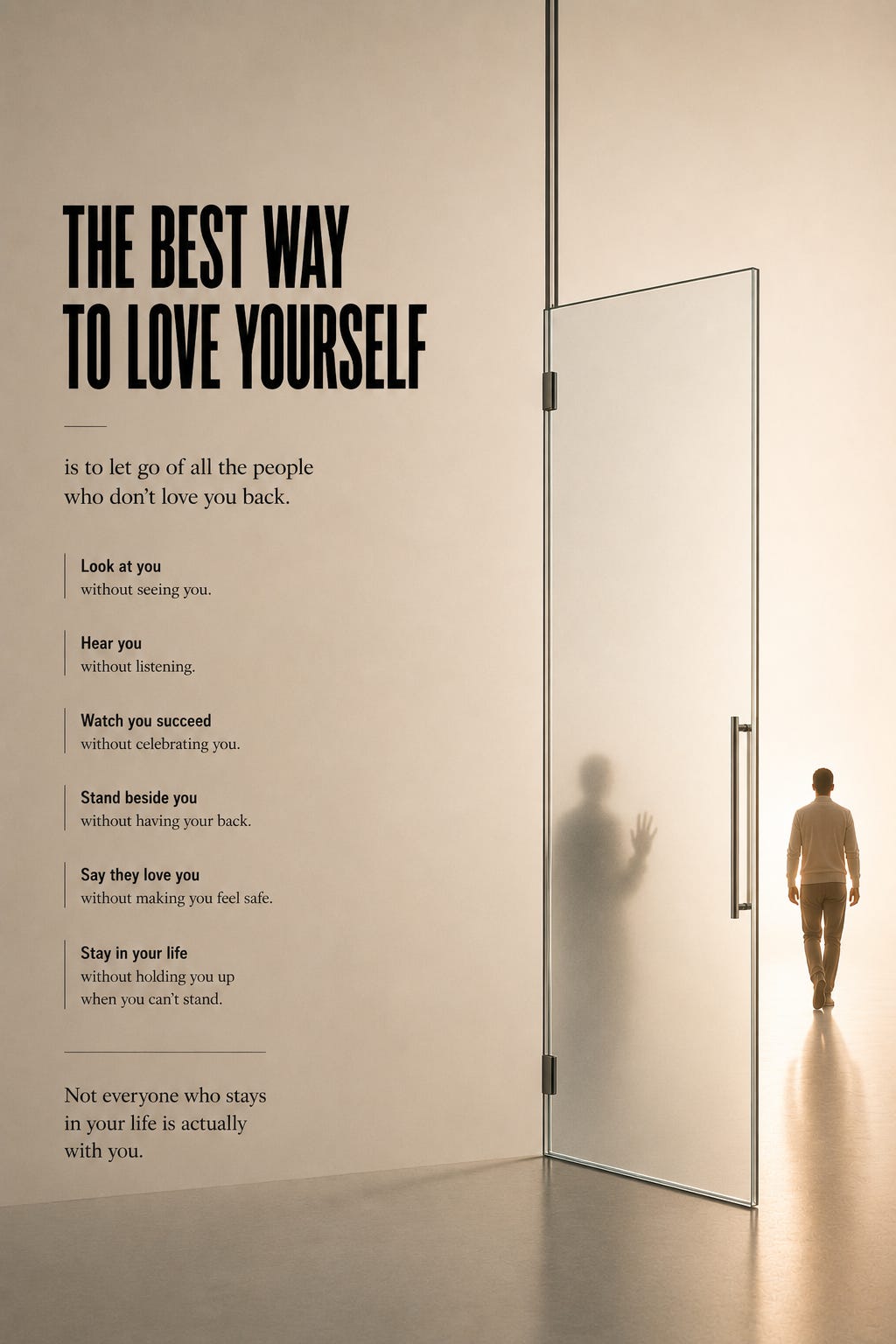
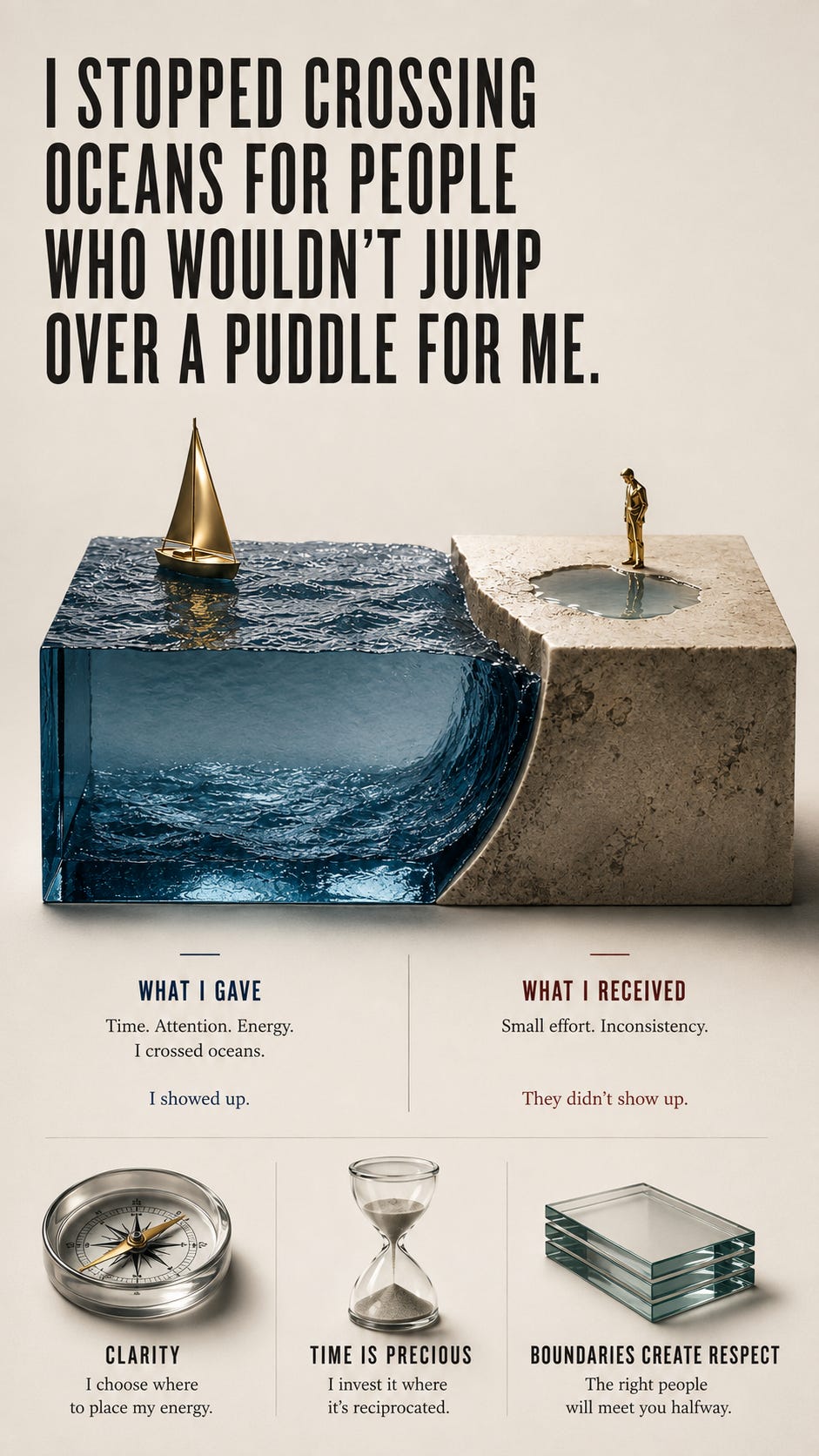
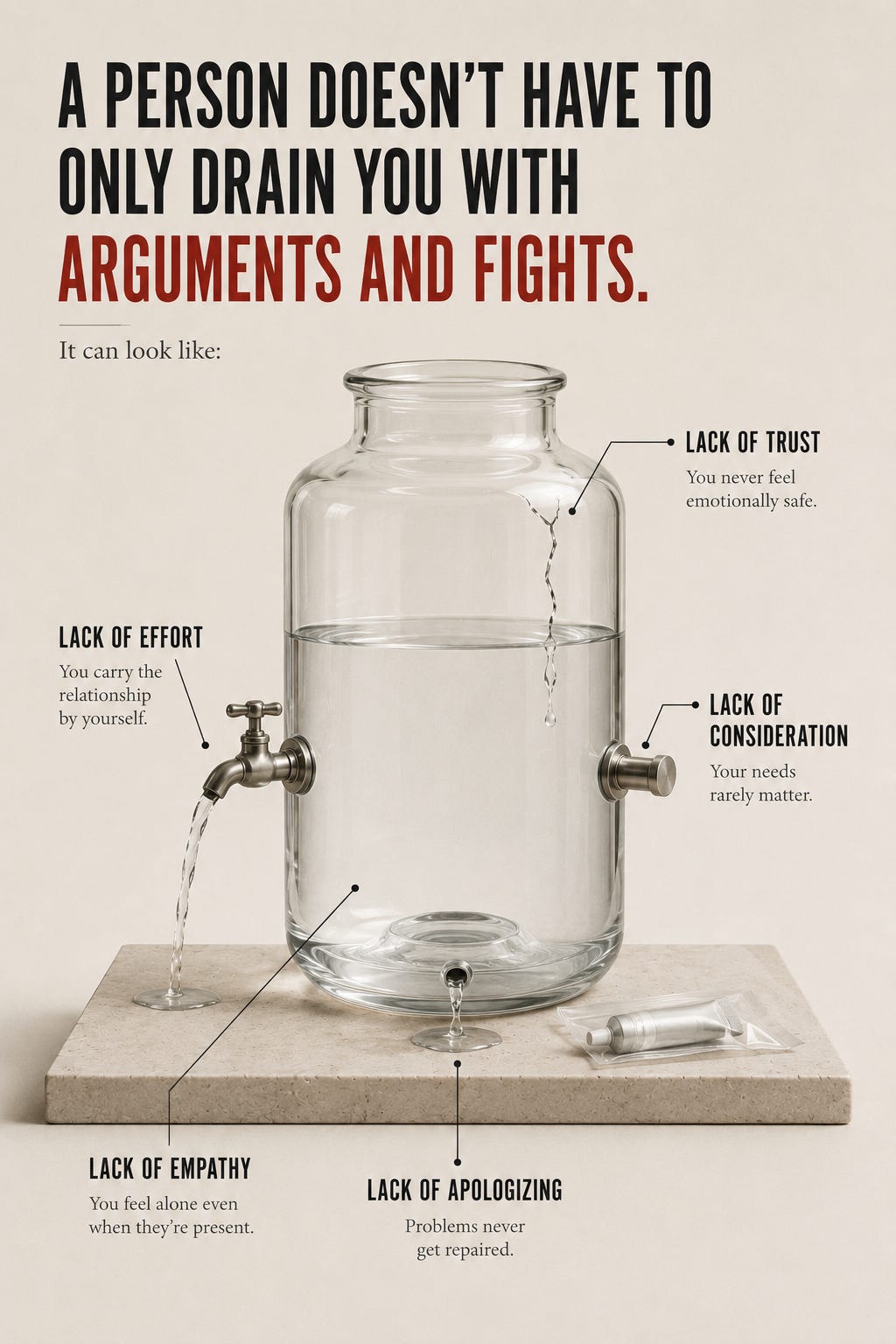


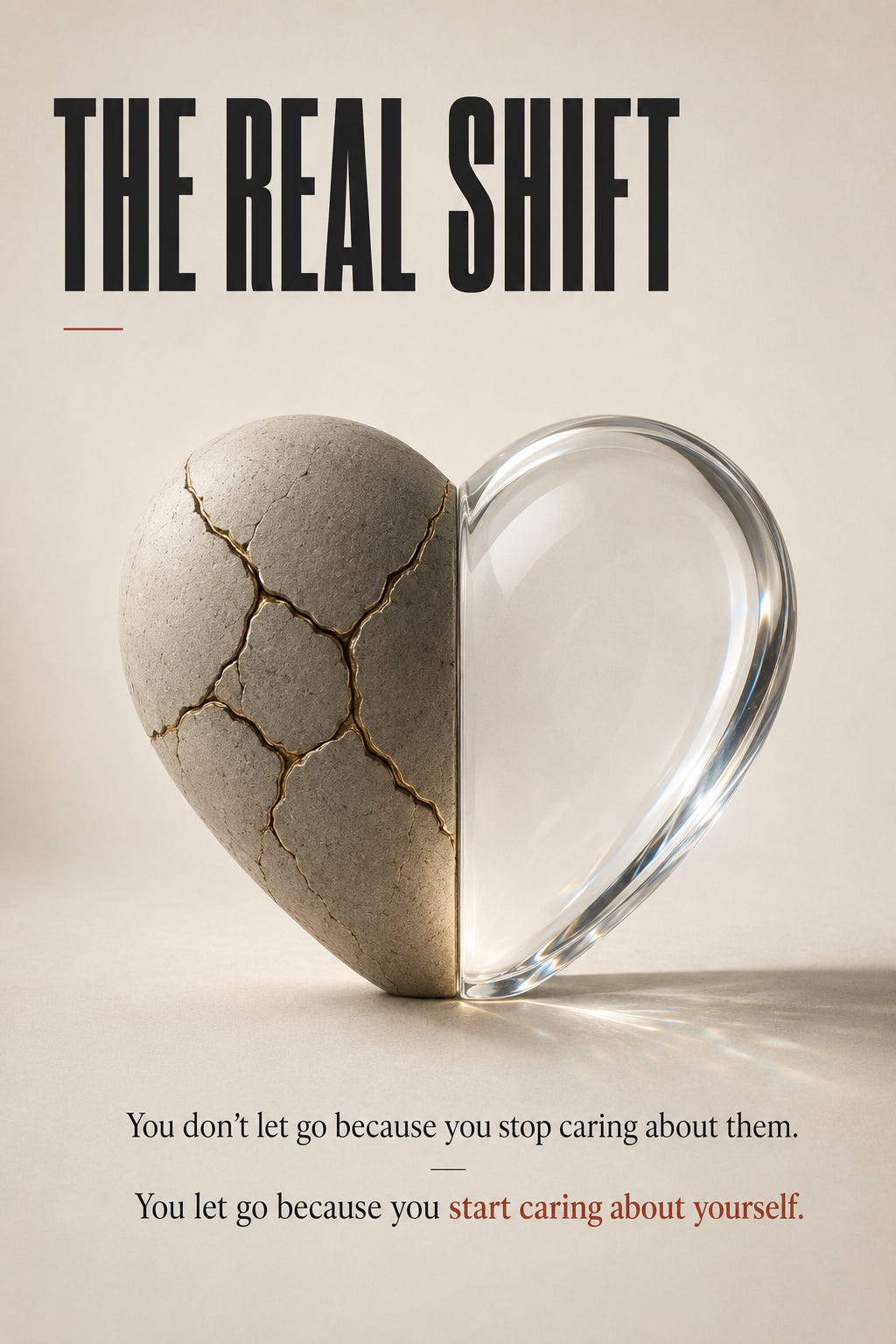


You are worthy. You belong. They’re organized. They’re intentional.


I see it too. I believe you.
I’m right here with you kid. I’m right here. We don't have to go through this alone anymore.